
The Changing Face of Bauls of Bengal
By S. Arshad, NewAgeIslam.com
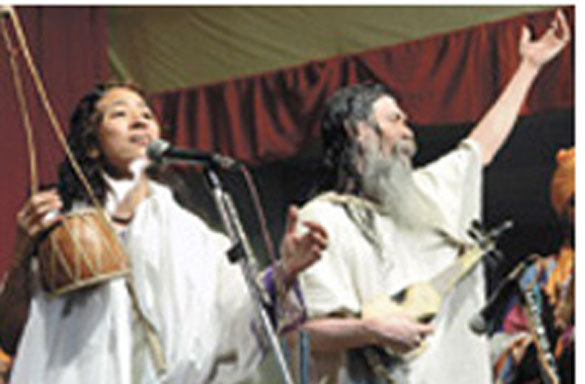
Bauls are the members of a religious sect having its origins in West Bengal. They are wandering minstrels who believe in living on alms. Doing work is against the principles of this sect.
Though the word baul is found in Bengali literature as far back as in the 15th century, the researchers believe that the sect originated in the 17th century. The earliest mention of the work baul is found in Maladhar Basu’s Shri Krishna Vijay (1473- 80). The book Shri Chaitanya Charit Amrit (1580-81) has the word baul used nine times. The word has also been used in Roop Goswami’s Sanskrit play “Bidagdha Madhab’ (1615). The word has also figured in Bahram Khan’s poem ‘Laila Majnu’ composed in 1615).
The word was used in the poem to mean crazy, addicted, mad etc.
These mention of the word baul in old Bengali literary writings led many researchers to conclude that Baulism originated in the 15th century. But later day researchers have come to the conclusion that Baulism originated in the first quarter of the 17th century. Bengali literateur and researcher Upendra Nath Bhatterjee is of the opinion that the Baul sect came into existence between 1625 and 1675.
It is believed that baulism originated as a result of the alienation of the lower caste people in the feudal society. Both the backward caste people from Hindu and Muslims formed a common platform to share their joys and sorrows as the upper castes of both the Hindus and Muslims did not give equal status and respect to them, rather treated them as untouchables. Another theory is that the Baul sect came into existence out of the interaction between Muslim fakirs and Vaishnav Sahajiya sadhus.
Mr. Upendra Nath Bhattacharjee, however, holds a different view. He believes that Muslim sufis and fakirs founded the baul sect.
Whatever be the fact about the origins of the sect, it is a truth that both the Muslim and Hindu fakirs and sadhaks have contributed to the growth of the sect. There is no discrimination in the sect on grounds of religion. The sect is based on Guru-shishya tradition much like the sufi orders. In Baulism, a Muslim can be a guru of a Hindu disciple and vice versa.
Bauls have their own groups called akharas. Akharas hold their periodical festivities or machhab (mahotsab) where they sing and dance and have traditional khichdi. Their greatest congregation is held in Jaidev (Kenduli gram) in Birbhum district of West Bengal each year.
Jaidev, an otherwise sleepy village of religious and historical importance, situated on the banks of the river Ajoy in Birbhum district wakes upon to be the host of the colourful Baul Mela on Makar Sankranti every year. The fair starts on the day with over one lakh devotees taking a holy dip in the Ajay and lasts for three days. About 170 akharas of bauls, aghories and kirtaniyas take part in the mela over two thousand stalls.
The original name of the village where the mela is held is Kenduli which was named Jaidev after the great Bengali poet-saint Shri Jaidev Goswami, the author of Geetgobind. H e was born in Kenduli and was the court poet of Raja Lakshman Sen who ruled the undivided Bengal in the 12th century. Legend has it that Goddess Durga herself appeared before the poet in the guise of a lotus on the Makar Sankranti day. Hence the origin of the mela.
In the beginning the fair was held along the banks of the Ajay. In the 17th century, the mahants of the Nimbark Ashram, the oldest ashram in Kenduli who were the organizers of the mela shifted it to the heart of the village. The mela was organized by the Nimbark Ashram till 1980. In 1981, the district administration took over and has been at the helm since then.
The village has a number of historical and religious buildings like the Radhbinod Mandir, Kusheswar Mandir, and Radhaballav Mandir etc. Radhabinod Mandir which is also known as Jaidev Mandir and was built by the then queen of Burdwan, Rani Nairani Devi in the 17th century. The temple was built where Jaidev used to live.
The fair is popularly known as the baul mela because it is dominated by the bauls. The historians believe that Madhab Bibi and Aul Chand were its founders and Madhab Bibi’s disciple, Nityananda popularized it. In the 19th century, the Baul movement witnessed its peak as the greatest baul Lalan Fakir whose mazaar is situated in Sheuri (now in Bangladesh) contributed to the growth of the sect through his inspiring songs and spirituality. He composed innumerable songs in sixty years. The sons deal with the mortality of the human body, devotion to God, love and attaining nirvana by overcoming sexual weaknesses etc. Apart from him, there were Duddu Shah, Fakir Panju Shah, Jadu Bindu, Padmalochan, Haure Gosain and others whose songs have attained a timeless appeal. The bauls are wandering minstrels entertain, educated and enlighten the masses with their inspirational songs in accompaniment of their typical instrument, dotara or khamak. They live mainly on alms. A traditional baul wears saffron kurta called alkhalla, white dhoti, a turban and ties ghungroos to his legs.
To the bauls, the sexual powers, if controlled completely, can lead one to divine knowledge, true love, highest spirituality and nirvana. And the semen is the most precious possession which must not be let go of at any cost because the loss of semen through natural or unnatural practices can weaken the body affecting the power of concentration. That is why, the sadhaks are discouraged to marry and have children. Instead, they are advised to have sadhan-sanginis (female partners in meditation) with whom they can practice performing of sexual intercourse sans ejaculation. According to their ‘shastras’, if the sadhak lost control and ejaculated even if a single drop of semen into his sadhan- sangini, all his meditation and devotion would go to waste and he would be condemned to go to hell. So, through meditation and practicing prescribed yogasanas and techniques, he develops within himself the power to have copulation for hours without coming off.
However, this practice is now being misused by some immoral and corrupt elements in the community. Moreover, the western culture has also taken its toll on the new generation of bauls. A baul now does everything he is supposed not to do: he marries, has children, eats eggs, drinks wine, builds pucca houses, rides a bike etc. Now baulism has become a profession. Today practicing bauls are few as baulism has turned into a lucrative profession. Many popular bauls have got international fame. The media exposure has added glamour to this once lesser known sect. The greatest living baul, Purna Das has got a French wife and lives a luxurious life as an international folk artist. A Japanese girl, Maki Kajumi who joined the baul sect has married another baul of Burdwan and has now attained the status of a guru and is called Maa by her disciples. Parvathi Baul is another baul who does not belong to the baul community but comes from a middle class family. She joined baulism as a profession after doing her graduation. She attends national and international concerts and has her own website. Thus bauls of Bengal have come a long way from the dusty village streets of Bengal to the international stage.
URL: https://newageislam.com/islamic-culture/the-changing-face-bauls-bengal/d/5919