
A Comprehensive Concept of Environmental Pollution in Islam- Part-3

By Dr. Zafar Darik Qasmi, New Age Islam
23 April 2026
Abstract:
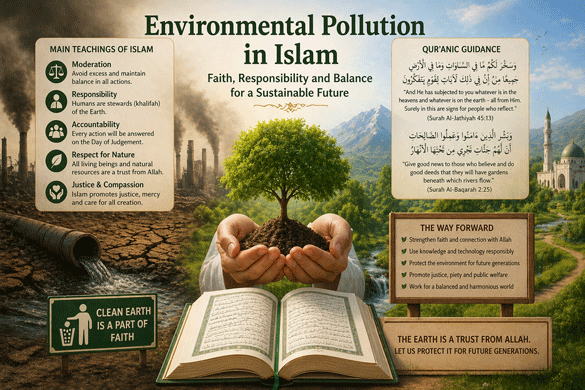
Environmental pollution is mainly caused by imbalance created by human actions. Islam teaches that science and technology are gifts from God, but their misuse without moral and spiritual values leads to harm. Modern development, focused only on material progress, has disturbed environmental balance. True benefit comes when knowledge is guided by faith, justice, and responsibility. Religion creates awareness of accountability, especially belief in the Hereafter, which encourages humans to act carefully and protect nature. Without faith, selfishness and exploitation increase, causing environmental damage. Islam promotes moderation, responsibility, and respect for nature. It also presents Paradise as a place of complete peace and fulfilment. Therefore, strengthening faith and following religious guidance can help maintain environmental balance and reduce pollution in society.
Main Points:
· Environmental pollution increases when humans ignore balance, moderation, and responsibility in using science and technology.
· Islam teaches science is a divine gift, but misuse without morality leads to harm.
· Belief in God and Hereafter creates responsibility, reducing selfishness, greed, and environmental destruction in society.
· Materialistic progress without spirituality disturbs natural balance and causes serious environmental and social problems.
· Strong connection with religion promotes justice, piety, and proper understanding of environmental protection and care
—
Environmental pollution is often caused by imbalance. We can see signs of imbalance in our daily lives.
Think about it: Allah has given human beings intelligence and the ability to learn and research. As a result, many fields have developed, including science and technology. However, when the use of scientific knowledge and inventions moves away from balance and moderation, and is driven only by power and control, it begins to harm humanity instead of benefiting it. This leads to serious environmental pollution and disorder. The effects of such pollution on society can be very damaging and difficult to repair.
It cannot be denied that the environmental crisis has increased with the development of science and technology. The destruction caused in a short time during the modern scientific age can be greater than what happened over thousands of years before it. However, this does not mean that science itself is guilty. In reality, science is a gift from God. It has made it easier for us to understand and benefit from the universe. As Allah says:
وَسَخَّرَ لَكُمْ مَّا فِى السَّمَاوَاتِ وَمَا فِى الْاَرْضِ جَـمِيْعًا مِّنْهُ ۚ اِنَّ فِىْ ذٰلِكَ لَاٰيَاتٍ لِّـقَوْمٍ يَّتَفَكَّـرُوْنَ ۔ ( الجاثیہ: 13)
“And He has subjected to you whatever is in the heavens and whatever is on the earth – all from Him. Surely in this are signs for people who reflect.”
The real issue is that modern science has largely developed under the influence of materialism and lack of belief in God, especially in the West. Because of this, it often appears to be disconnected from moral values. Its main focus has been material progress, and this is what disturbs the balance of the environment. If spirituality and concern for public welfare were given more importance than material gain, the results would be far more positive.
Any knowledge that is separated from belief in God and the Hereafter cannot truly benefit humanity. Without faith, selfishness, greed, and exploitation enter human behaviour. These lead people towards laziness, luxury-seeking, and uncontrolled desires. Therefore, if balance and moderation are maintained in science, and if moral and spiritual values are included, then science can truly become beneficial for all of humanity.
History shows that whenever modern tools and technologies have been used for destruction, the results have always been harmful and disappointing. This is why connection with religion and faith helps protect the environment and creates a sense of responsibility in human beings.
Today, humans have achieved great material progress, but as spirituality and religion have been removed from life, negative effects have appeared.
Cressy Morrison, in his book “Man Does Not Stand Alone”, writes that qualities such as respect, generosity, high character, morality, and noble thinking cannot come from atheism. Atheism is a kind of extreme self-centredness in which a person places himself in the position of God. Without faith and belief, civilisation will collapse, order will turn into chaos, self-control will disappear, and evil will spread everywhere. Therefore, it is necessary to strengthen belief in God again.
Maulana Wahiduddin Khan, in his book “ Mazhab Aur Jadeed Challenge” , explains that belief in the Hereafter is essential for building a responsible and balanced personality and a healthy society. Religion guides us to the true lawgiver, provides a strong foundation for law, and offers the best principles for organising life. It also creates a supportive social environment necessary for implementing laws. In this way, religion provides everything needed for building a strong civilisation, while irreligion cannot provide these things.
It is clear that any society which is free from religion and faith cannot maintain balance and moderation. When a person follows religion, they live according to its guidance, and this helps protect the environment. In this sense, connection with faith is an effective way to reduce environmental pollution.
When a person believes in religion, they also believe in the Hereafter. This belief encourages respect for nature. Damaging nature cuts off both human life and the natural system from a secure future.
Human beings naturally desire a beautiful environment, comfort, happiness, and peace. However, this world alone is not enough to fulfil all these desires. Religion presents the concept of Paradise, where all such wishes will be fulfilled. As Allah says:
نَحْنُ اَوْلِيَآؤُكُمْ فِى الْحَيَاةِ الـدُّنْيَا وَفِى الْاٰخِرَةِ ۖ وَلَكُمْ فِيْـهَا مَا تَشْتَهِىٓ اَنْفُسُكُمْ وَلَكُمْ فِيْـهَا مَا تَدَّعُوْنَ. ( الفصلت: 31)
“We were your companions in the worldly life and will be so in the Hereafter. There you will have whatever your souls desire and whatever you ask for.”
And:
وَبَشِّرِ الَّـذِيْنَ اٰمَنُـوْا وَعَمِلُوا الصَّالِحَاتِ اَنَّ لَـهُـمْ جَنَّاتٍ تَجْرِىْ مِنْ تَحْتِـهَا الْاَنْـهَارُ ۖ كُلَّمَا رُزِقُوْا مِنْـهَا مِنْ ثَمَرَةٍ رِّزْقًا ۙ قَالُوْا هٰذَا الَّـذِىْ رُزِقْنَا مِنْ قَبْلُ ۖ وَاُتُوْا بِهٖ مُتَشَابِهًا ۖ وَلَـهُـمْ فِيْـهَآ اَزْوَاجٌ مُّطَهَّرَةٌ ۖ وَّهُـمْ فِيْـهَا خَالِـدُوْنَ۔ ( البقرہ: 25)
“Give good news to those who believe and do good deeds that they will have gardens beneath which rivers flow… They will live there forever.”
True satisfaction of human desires is only possible when a person believes in the Hereafter. Human nature seeks peace, happiness, and success in both this world and the next. This can only be achieved when a person follows religion and lives a pure and righteous life.
Faith and belief in the Hereafter bring balance into the environment. On the other hand, when we study societies that are not connected to religion, we often find unrest, corruption, and moral decline. This is because they lack a sense of accountability. Religion teaches that on the Day of Judgement, every person will be held responsible for their actions. This belief creates a strong sense of responsibility.
A scholar of environmental history, in his work “Interpreting Nature: Cultural Constructions of the Environment”, highlights the importance of belief in the Hereafter:
“All human activities must be based on the idea that the Earth is only a temporary home… These include justice, piety, and proper understanding of environmental problems.”
In the light of all this evidence, it is clear that religion and faith play a key role in maintaining environmental balance. When humans try to satisfy their desires without limits and interfere unnaturally with the system of the universe, they damage environmental balance. This behaviour develops when a person is not connected to religion or responsibility.
Therefore, one major cause of environmental pollution is distance from religion and its values. To protect the environment from pollution and all forms of disorder, human beings must strengthen their relationship with religion.
—
Dr. Zafar Darik Qasmi is an Islamic Scholar, author and Regular Columnist for New Age Islam.
New Age Islam, Islam Online, Islamic Website, African Muslim News, Arab World News, South Asia News, Indian Muslim News, World Muslim News, Women in Islam, Islamic Feminism, Arab Women, Women In Arab, Islamophobia in America, Muslim Women in West, Islam Women and Feminism