
Kashmir Is Certain of Reclaiming Its Crown As 'Heaven on Earth' Once Again
By
Vishnu Prakash
Aug 11,
2020
Upon
setting foot in Kashmir in the 17th century, Mughal Emperor Jehangir
spontaneously recited an evocative couplet “Gar Firdaus Bar-Rue Zamin Ast,
Hami Asto, Hamin Asto, Hamin Ast” (If there is a paradise on earth, it’s
here, it’s here, it’s here) -- which continues to resonate with millions of
visitors every year.
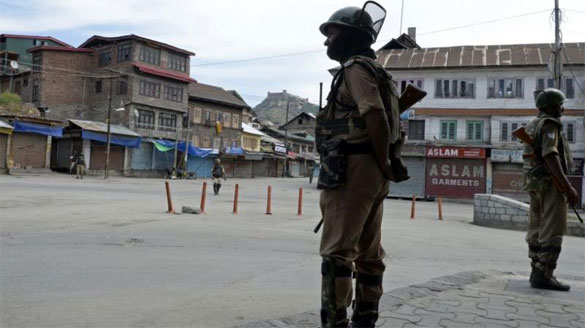
Representational image (AFP)
------
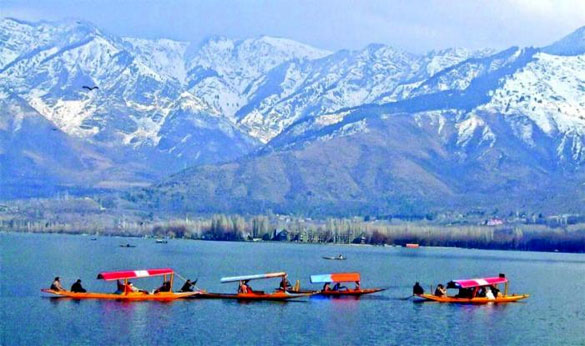
The spell
of mother nature’s craftmanship inlaid with snow-capped mountains, golden sun
rays, fabled valleys, lush meadows, glistening water bodies, manicured gardens,
captivating flora and fauna endures a lifetime.
The region,
traditionally home to Muslims, Hindus and Buddhists, had been an abode of
multiculturism, tranquility and harmony, thanks to its culture of “Kashmiriyat”
(secularism, amity and brotherhood).
Alas, that
idyllic way of life was rudely disturbed by external inimical elements in
October 1947 itself, within weeks of India’s Independence. The UN commission
hammered out a ceasefire agreement in August 1948, but without restoring the
status quo ante.
At the
behest of Sheikh Abdullah, a friend of Prime Minister Jawaharlal Nehru, Article
370 was introduced in the Indian Constitution, temporarily according a special
status to Jammu and Kashmir.
In
retrospect, this act of appeasement, that too on religious and political
considerations, widened the emotional chasm between Kashmiris and other Indian
citizens, besides preventing a seamless integration of J&K with India.
To compound
the folly, Article 35A was inserted by a presidential order in May 1954,
barring Indians living outside J&K, from buying immovable property,
applying for state government jobs or seeking permanent residency in the state.
Such privileges were reserved only for J&K’s so-called permanent residents,
otherwise called “state subjects”.
In the
process a short shrift was given to the foundational and fundamental right to
equality enshrined in the Indian Constitution. The state was also exempted from
all the laws of the land, unless specifically adopted by its own Legislative
Assembly.
Before long
it became evident that these special provisions were damaging the national
fabric. Kashmiri Muslims, in particular, began shunning their Indian identity.
Vested interest groups gradually sprung up across the spectrum, to accentuate
the divide for political and monetary gains.
They
unabashedly played the religious card to further their purpose, thereby also
tempting external forces to fish in troubled waters.
Articles
370 and 35A started acquiring a façade of permanence. Though elections were
held regularly in J&K and the electorate spoke its mind; peace, progress
and stability eluded the state due to the machinations of disruptive forces,
corruption and nepotism.
While the
miniscule elite lined its pockets, the ordinary people of J&K, especially
women and the under-privileged, faced discrimination and suffering. They lost
out on socio-economic empowerment initiatives becoming available to the rest of
their countrymen.
Ending
almost seven decades of injustice due to political dithering, on August 5,
2019, the NDA government led by Prime Minister Narendra Modi made bold to
accord similar rights, benefits and duties on the residents of J&K, as available
to all other citizens in India. The offending “temporary” provisions under
Articles 370 and 35A were removed.
The
separatists and the state’s political elite were stunned. To deter them from
creating any kind of mischief, some short-term restrictions were imposed, most
of which have since been lifted.
Barring the
usual suspects, the global community recognised that the full integration of
J&K with the Indian Union, in consonance with its Constitution, was an
internal matter of India.
Ahmad Al
Banna, the UAE’s ambassador to India, voiced the expectation that “the changes
will improve social justice and security and confidence of the people in local
governance and will encourage further stability and peace”.
The
historical move ushered in “a new dawn in the region”. It was decided to create
two Union territories -- namely J&K and Ladakh. J&K would have its full
statehood restored at the earliest.
A blueprint
to provide gainful employment, promote tourism and establish quality
infrastructure, centres of educational excellence like IITs and IIMs, as well
as top grade medical and sports facilities was unveiled. Ladakh is to become a
solar powerhouse and play a crucial role in the International Solar Alliance.
“Promises
are never kept” … did you say? Why not examine the actual implementation during
the preceding 12 months. For the first time, the J&K government has
launched an accelerated recruitment drive.
Some 10,000 vacancies are being filled and 25,000 more are in the
pipeline.
Thousands of
additional employment opportunities are being generated through power and
infrastructure projects, especially under the Prime Minister’s Development
Programme (PMDP). Of the 6,000 jobs earmarked exclusively for Kashmiri
migrants, nearly 4,000 have already been filled.
Under the
PMDP, 54 and nine projects have been allocated to J&K and Ladakh
respectively. The pace of work has picked up dramatically. Seventeen projects
have already been fully or substantially completed.
The rest
including the construction of highways, bridges and flyovers, transmission
lines, hospitals and educational institutions, and hydro power generation
projects are being fast-tracked. Kashmir is to be connected with the rest of
India, by rail, by December 2022.
Every
effort is being made to strengthen grassroots democracy to empower panchayats,
in particular. Implementation of the Centre’s welfare schemes like MGNREGA,
Swachchh Bharat Mission and the mid-day meals have been entrusted to them.
A
commendable “Back to Village” programme has been initiated, under which a
gazetted officer actually stays for two days in every village, to take stock of
implementation, review constraints and receive feedback.
Particular
attention is being given to empower the underprivileged. Welfare schemes like
Ujjwala, Ujala (100 per cent electrification achieved), income support to poor
farmers, placement linked vocational training, scholarships, etc are being
provided.
Since
becoming an UT, Ladakh's socio-economic, educational and development needs are
getting utmost priority. Steps have been initiated to prepare a vision document
titled “Ladakh 2050”.
In sum, the
government’s farsighted decision on August 5, 2019, has heralded a new era of
hope, equity and empowerment. Kashmiris are witnessing purposeful efforts by
the state and Union governments to instil greater dignity, development and
democracy in the region.
Consequently,
the green shoots of peace and aspiration are beginning to sprout. With the
government and people determined to stay the course, Kashmir is certain of
reclaiming its crown as “heaven on earth” once again.
Vishnu
Prakash is a foreign affairs analyst and a former Indian ambassador to South
Korea and high commissioner to Canada
Original
Headline: Will Kashmir turn into ‘heaven
on earth’ again?
Source: The Asian Age
URL: https://newageislam.com/current-affairs/kashmir-certain-reclaiming-its-crown/d/122597