
The Jamaat-e-Islami and the Pakistan Army
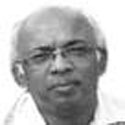
By Syed Badrul Ahsan
December 18, 2013
CERTAIN Jamaat-e-Islami politicians have been speaking of history, in a rather intriguing way. The Awami League, they have warned, will be judged in the dock of history someday. And why will that happen? Well, the government has sent in its joint forces to neutralise the Jamaat-Shibir men who have been terrorizing people in Satkhira, hasn’t it? That is an unpardonable sin. After all, why must the government or the ruling party have the temerity to go after the Jamaat, an organization which now shows all the signs of turning into a terrorist outfit? The monopoly for ferocity, or so it appears, ought to be the Jamaat’s alone. Its activists ought to have all the right in the world to wield machetes and hack away at people because these Awami people have the gall to ask that the Jamaat be dealt with severely over the murder and mayhem it has been engaged in for long.
These Jamaati men invoking history have done something else as well. The manner in which the joint forces have gone after Jamaat terrorists in Satkhira, they proclaim, beats even the record of the Pakistan occupation army in 1971. Ah, that’s indeed a discovery! And it is surely very revealing. Perhaps unwittingly, the Jamaatis have let slip the truth that their friends the soldiers of Pakistan were indeed an occupation army whose record of brutality remains etched in millions of minds, including those that belong to the men of the Jamaat. You tend to wonder. If the Pakistani establishment, which of late has been vocal in condemning Bangladesh over the execution of the war criminal Abdul Quader Mollah, should now chance on the Jamaat’s reference to the Pakistan army as an instance of historical brutality, how might it react?
While you mull over a possible response, on your part, to that query, do not forget that the Jamaat has friends in high places and in powerful countries. You have veteran journalists and smooth-tongued academics here at home whose obscene defence of the Jamaat, in the name of democracy, turns out to be revolting. One of these defenders of the Jamaat, a journalist, wonders if the Mollah who was hanged last week was actually the Mollah who committed all those crimes in occupied Bangladesh in 1971. The response to his bizarre inquiry comes from a caller right on that television talk show. She wonders when the day will come when such men, strutting around in the garb of false intellectuality, will be tried in Bangladesh for their dishonesty. She speaks for all of us.
And the powerful countries? There are the Americans, there are the Europeans, there are the Pakistanis, people who have come forth with that old question of human rights in the matter of a handling of the Jamaat. Mollah’s execution, one of these powerful men had the audacity to suggest last week, could jeopardize the upcoming general elections in Bangladesh. It was a wrong message he was conveying to Bangladesh’s prime minister. He should have been asking her what the government was doing about cracking down on an outfit which freely murders people who do not agree with its convoluted interpretation of politics, whose armed cadres have been terrifying Bangladesh’s Hindus into leaving their hearths and homes in yet another demonstration of communal hate.
Diplomats from the European Union based in Dhaka did not think it proper to pay their respects to Bangladesh’s freedom martyrs at the Savar national memorial on Victory Day. You certainly can’t compel people to visit a place they don’t want to, but there is something called diplomatic norms. If foreign diplomats are upset with the government of the host country for any reason, there are a good number of ways in which such displeasure can be expressed. In the present instance, the EU diplomats have not only snubbed the Bangladesh government but also attempted to humiliate the sovereign state of Bangladesh. Besides, by staying away from the national memorial, what message were they conveying and to whom? If their act leads to a subverting of our embattled democratic process, how will they explain the ramifications of their action? If their act emboldens the Jamaat into committing newer criminality, encourages the Bangladesh Nationalist Party in hardening its bellicosity, compels the ruling Awami League into adopting an even more harsh position on the question of elections, what might their response be?
Perhaps it is not quite relevant here, but here’s an aside to explain the predicament the world’s poorer nations are often prey to. Not long ago, a CNN anchor asked Zimbabwe’s Robert Mugabe if he didn’t think, seeing that he had crossed eighty, the time had come for him to retire from politics. You may not like Mugabe for a whole treasury of reasons, but you salute him for the response he gave to that CNN question: was he being asked that question because he was a black man? And if retirement and age were important, why didn’t the anchor put that question to the reigning British monarch?
Come back to Bangladesh. There are two imperatives before us. The first is firm, ruthless action against those who have been engaged in violence and murder over the past many months. In Satkhira, in Nilphamari, indeed everywhere these men of terror have struck, the government must strike back harder. There are times when democracy needs to be saved through pitiless action against those who perpetrate violence in the name of democracy. And the second, of course, relates to the need for fair and credible elections in the country. When you have more than half of parliament elected without voting, it is not an election. The Awami League, having championed the cause of democracy in the Pakistan era and then led the War of Liberation, must not replicate the record set by General Ershad’s Jatiyo Party in 1988 and the Bangladesh Nationalist Party in February 1996.
Finally, as Bengalis, we have a daunting challenge before us. And that is to reclaim a country as we fashioned it in 1971 from the hands of the predators who have systematically sought to push it down the precipice.
Syed Badrul Ahsan is Executive Editor, The Daily Star.
Source: http://www.thedailystar.net/beta2/news/the-jamaat-and-the-pakistan-army/
URL: https://newageislam.com/islam-terrorism-jihad/the-jamaat-e-islami-pakistan/d/34878