
Faiq Says Reports of Forced Marriage and Abuse of Women Reflect Oppression in Afghanistan
New Age Islam News Bureau
17 May 2026
• Faiq Says Reports of Forced Marriage and Abuse of Women Reflect Oppression in Afghanistan
• Woman abducted, tied to tree, 'assaulted' after rejecting marriage proposal in UP
• 80-year-old kills sleeping wife with axe, then walks to cops in Ghaziabad
• Inside Iran's crackdown at home: Women arrested, protesters executed amid the war
• Muslim NHS worker said her discrimination case victory over bosses who allowed trans woman to use single sex toilets as a win 'for all women'
• “Charlie spoke repeatedly against women”: Candace Owens challenges Charlie Kirk succession story surrounding Erika Kirk and TPUSA future
• HêlînKobanê, a fighter who led Arab women
• Afghanistan’s Women’s Rights Crisis Is Deepening Into Humanitarian Collapse
• Pakistan Name 15-Member Squad For Women's T20 World Cup 2026; Fatima Sana To Captain
• Iran’s women’s volleyball team beat Thailand in friendly
Compiled by New Age Islam News Bureau
-----
Faiq Says Reports of Forced Marriage and Abuse of Women Reflect Oppression in Afghanistan
17-05-2026
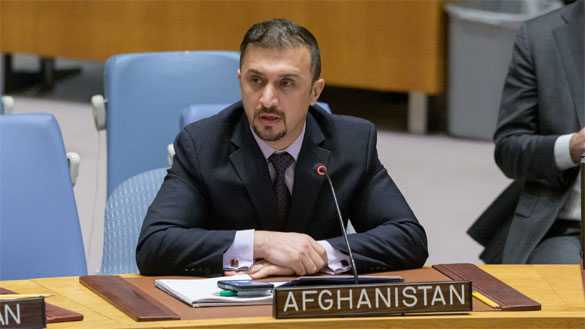
The Kabul Tribune (KT) — Nasir Ahmad Faiq, Afghanistan’s acting permanent representative to the United Nations, said reports of forced marriage and alleged abuse of women reflect “corruption, oppression and authoritarianism” in the country’s current situation.
Writing on X on Saturday, Faiq cited cases including the reported forced marriage of a married woman in Daykundi, the detention of journalists from TOLOnews, and the arrest of women in Herat as examples of conditions he said are marked by repression and injustice.
Faiq said women in Afghanistan face not only restrictions on education and employment but also threats, violence and exploitation.
He called for documentation of such cases and urged human rights organizations and the international community to pay serious attention to the situation of women in Afghanistan.
According to Faiq, the misuse of power to pressure and abuse women constitutes a clear violation of human rights, while the silence of victims reflects a climate of fear and the absence of the rule of law.
Separately, a woman from Daykundi alleged that some individuals linked to the Taliban have made coercive and inappropriate demands toward both unmarried and married women.
She said women in some government offices and health centers face such pressure and threats but are unable to file complaints or speak publicly due to fear.
Earlier, the account of a 26-year-old woman identified as “Tawoos” from Daykundi was also reported. She said she had been pressured by an individual linked to the Taliban to accept a second marriage and is now living in hiding due to fear.
Source: thekabultribune.com
https://thekabultribune.com/en/0008751
-----
Woman abducted, tied to tree, 'assaulted' after rejecting marriage proposal in UP
May 17, 2026
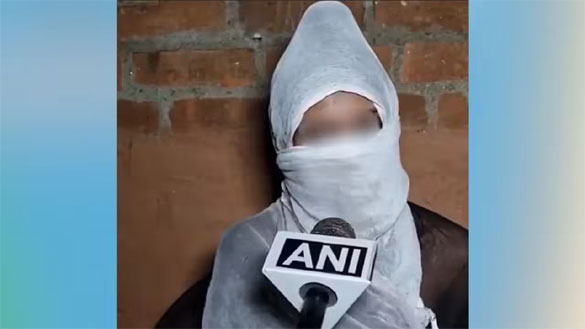
LUCKNOW: A woman in Uttar Pradesh’s BeniganjKotwali area has alleged that she was abducted, tied to a tree and assaulted by a man after she rejected his marriage proposal, police said on Sunday.According to circle oficerAjit Chauhan, the incident took place on May 11. Police said a case was registered based on a complaint filed by the victim’s brother, and the woman was immediately sent for medical examination.
The officer said the victim later informed police about additional injuries that were not mentioned in the initial medical examination, following which further investigation was initiated.
Source: timesofindia.com
-----
80-year-old kills sleeping wife with axe, then walks to cops in Ghaziabad
May 17, 2026
GHAZIABAD: An 80-year-old man allegedly hacked his 72-year-old wife to death with an axe as she slept outside their daughter’s house in Rawli Kala village in Muradnagar, then walked into a nearby police outpost to confess on Saturday.
Police said the accused, Harpal, a resident of Morta village, arrived at Rawli police outpost around 4 am and told officers that he had killed his wife with an axe. Police teams accompanied him to the house, where they found the body of his wife, Urmila, lying on a blood-soaked cot. She had suffered multiple deep axe wounds to the head, neck and shoulder. The woman was rushed to a community health centre, where doctors declared her dead on arrival.
The elderly couple had been living with their daughter, Kanchan. At the time of the incident, Kanchan and her husband were away in Meerut for a relatives wedding. Two of Kanchan’s sons, Ajay and Kunal, were asleep in another room, but said they heard nothing during the night.
Returning home to news of her mother’s death, Kanchan said the couple had fought throughout their lives. “Lately, they had also stopped interacting with us. But we did not think the matter was this serious,” she said. Kanchan, one of the couple’s three children, said she lost her elder brother a few years ago.
Her sons told police that Harpal had been suffering from mental health issues and that arguments between him and Urmila were frequent. They cited an incident earlier that week in which Harpal had slapped Urmila after she made a remark that angered him. He had also been verbally abusive towards his grandsons, they said.
Senior police officials said Harpal has been arrested and is being questioned. The axe was recovered from the scene. Preliminary investigation suggests prolonged domestic disputes may have contributed to the killing. The body has been sent for autopsy, and statements of family members and neighbours are being recorded.
Source: timesofindia.com
-----
Inside Iran's crackdown at home: Women arrested, protesters executed amid the war
By Tarun Mishra
May 16, 2026
While the world watches Iran's standoff in the Strait of Hormuz, a brutal internal crackdown is intensifying. Women face mass arrests, political prisoners are being executed, and families of the dead are being silenced. Here's what's happening inside Iran.
Iran's Islamic Republic has long used periods of external conflict to tighten its grip internally. The ongoing war with the United States and Israel, which began in February 2026, is no exception. Human rights organisations monitoring Iran report that the pace of arrests, trials, and executions of political prisoners, protesters, and dissidents has sharply accelerated since the conflict began — with the war providing the regime a convenient justification for emergency security measures that bypass even Iran's own limited judicial procedures.
Iran's security forces have launched what activists describe as a ‘planned intensification’ of repression against women. Mass arrests of women who removed their hijabs in public — a form of protest that surged during the 2022 MahsaAmini uprising — have resumed at scale. Reports from inside Iran describe women being detained at checkpoints, dragged from cars, and in some cases taken from their homes at night. The National Council of Resistance of Iran (NCRI) documented hundreds of such arrests in the weeks following the February 2026 military escalation.
The most alarming development is the execution of individuals who were arrested during the January 2026 nationwide uprising that erupted in the weeks before the US-Israel air campaign. Protesters condemn these executions as political killings dressed up as terrorism convictions. Iran's judiciary has moved with unusual speed, processing cases in closed sessions with state-appointed lawyers, and carrying out death sentences in prison facilities rather than public squares — a change from earlier practice designed to reduce visibility and international attention.
Families who have lost relatives to IRGC gunfire during protests, or whose children have been executed, are being systematically pressured to remain silent. Security forces have visited homes, confiscated phones, and threatened further arrests of surviving family members if they speak to journalists, foreign media, or human rights organisations. In several documented cases, families were told they could not hold public funerals or post mourning notices on social media without prior approval from local security authorities.
The January 2026 uprising was one of the largest waves of civil unrest in Iran since the 2019 November protests. Triggered by economic collapse, fuel shortages, and rage at government corruption, the protests spread from provincial cities to Tehran within days. The IRGC and Basij militia responded with live ammunition, killing dozens and arresting thousands. The uprising was still ongoing when the US-Israel air campaign began in February — and the regime has since used wartime powers to conduct mass trials of those arrested during that turbulent period.
Iran has imposed rolling internet blackouts in provinces with the highest levels of domestic unrest — including Kurdistan, Sistan-Baluchestan, and parts of Khuzestan. The blackouts, nominally justified as wartime security measures to prevent ‘enemy intelligence gathering,’ effectively blind the outside world to what is happening on the ground. Citizen journalists who managed to smuggle footage out of the country describe scenes of extraordinary fear — empty streets after dark, arbitrary checkpoints, and a pervasive atmosphere of surveillance that has silenced even private conversation.
Source: www.wionews.com
-----
Muslim NHS worker said her discrimination case victory over bosses who allowed trans woman to use single sex toilets as a win 'for all women'
By CLAUDIA JOSEPH
16 May 2026
An NHS England employee has described winning a discrimination case against bosses who allowed a trans woman to use single–sex toilets as a win 'for all women'.
The Muslim woman, who was granted anonymity at her employment tribunal, suffered from post–traumatic stress disorder after a historic sexual assault, and said she had found it 'very alarming' and 'quite triggering' to learn she would have to share the women's bathrooms at work with a male colleague who was transitioning to become a woman.
The policy advisor, who has worked for the Government body for nine years, said she was 'gobsmacked' to learn that it was NHS England policy for trans employees to use facilities that corresponded with their gender, rather than their biological sex.
But after making a complaint to her line manager, the case ended up before a tribunal, which ruled last week that she had suffered indirect discrimination and harassment. She is expected to receive up to £25,000 in compensation.
'This is a massive weight off my shoulders,' she said. 'It has been going on for three and a half years and has taken countless hours at night–time. While I've been feeding my baby, I've been awake and taking notes on my phone.
'It's definitely had this huge strain on me, but I had to take a leap of faith with the courts and hope that the common sense just prevails and it has. It's for all women as well.
'Being successful on the indirect discrimination related to sex, covers all women, including women with PTSD, including women with faith, and also women with no trauma and no faith or no religion. So, I just feel it's such a huge win. I'm very happy with that.'
A Muslim NHS worker has won a discrimination case against her bosses who allowed a trans woman to use single–sex toilets (file image)
A Muslim NHS worker has won a discrimination case against her bosses who allowed a trans woman to use single–sex toilets (file image)
Eight nurses at County Durham and Darlington NHS Foundation Trust won a landmark tribunal against their bosses in January after it was found they had created a 'hostile, humiliating and degrading environment' by forcing them to share a changing room with a trans colleague.
And last month, devoutly Christian nurse Jennifer Melle won a settlement against Epsom and St Helier University Hospitals Trust after she was disciplined for misgendering a transgender patient who racially abused her on a ward.
This has implications for workplaces which allow transgender people to use facilities designed to be single sex, such as toilets and changing rooms.
In the latest case, the woman was asked to attend a Trans Awareness session by her NHS England bosses in 2022 after a male colleague – a father of two – announced he would be transitioning.
After studying the organisation's policy, she discovered the colleague would be entitled to share the women's bathrooms and changing rooms.
She raised it with her line manager, who was supportive, and made an official complaint in 2024. Her six–day case was heard at Leeds Employment Tribunal in March.
'I've been just absolutely marinated in stress hormones,' she added. 'I have had sleepless nights, staring at the ceiling, thinking: 'Am I absolutely mad doing this, taking my own employer to court?'
A remedy hearing, to determine how much compensation she is due and whether recommendations should be issued to NHS England, will be held in August.
Her solicitor, Elizabeth McGlone, managing partner at Didlaw, said: 'It's whether or not NHS England now has the guts to change its position or still wait for the EHRC guidance and be lily–livered about it.'
The Equality and Human Rights Commission (EHRC) submitted updated draft guidance to the government on single–sex spaces in April, and it is expected to be laid before Parliament imminently. Equalities Minister Bridget Phillipson said it would be published after the local elections, which were held earlier this month.
Source: www.dailymail.com
-----
“Charlie spoke repeatedly against women”: Candace Owens challenges Charlie Kirk succession story surrounding Erika Kirk and TPUSA future
May 17, 2026
“Charlie spoke repeatedly against women”: Candace Owens challenges Charlie Kirk succession story surrounding Erika Kirk and TPUSA future
The fight around Candace Owens, Charlie Kirk, and Erika Kirk took another turn after political commentator Jammles shared a long post defending Turning Point USA’s leadership decision online. Jammles wrote that people should stop treating TPUSA like “public property” and argued that Charlie Kirk built the organization himself and trusted the people around him before his death. The post quickly gained attention after Candace Owens directly replied and raised questions about whether Charlie Kirk truly wanted Erika Kirk to take over the organization.
Candace Owens pointed to past public comments where both Charlie Kirk and Erika Kirk reportedly spoke against women climbing the corporate ladder. Because of that, she said it was hard to believe Charlie Kirk would suddenly change his position shortly before his death. She also questioned claims surrounding an alleged video message connected to the leadership announcement.
“Charlie spoke repeatedly against women climbing the corporate ladder, even those with living spouses. Erika reinforced this position repeatedly by his side in multiple appearances.
You don’t get why this matters? Because if Charlie did not legally put her in charge via his documents and corporate will— plus they lied about the existence of an authentic video, instead of which she callously walked out to an A.I-created audio to gloriously accept his position, then we’d be looking at the seeds of a motive.”
Candace Owens continued her response by arguing that the reported transition did not make sense based on Charlie Kirk’s past beliefs and family situation.
“Beyond that, the premise is simply ridiculous. No rational man in the world would say, ‘if I die on the job and leave behind my wife and children, please install my widowed wife in the 80 hour per a week, dangerous position I formerly occupied, thereby leaving my children effectively orphaned.’”
The debate quickly spread across political social media circles, with many users discussing whether the organization had officially shown legal proof of Charlie Kirk’s wishes before Erika Kirk’s public appearance connected to the announcement.
As of now, no public legal documents connected to the succession discussion have been released. There is also no independently verified evidence proving the claims about an AI-created audio made by Candace Owens. TPUSA has not publicly responded in detail to Owens’ latest remarks at the time of writing.
The exchange has now turned into one of the biggest online political debates surrounding Turning Point USA since the questions around its future leadership first surfaced.
Source: timesofindia.com
-----
“Charlie spoke repeatedly against women”: Candace Owens challenges Charlie Kirk succession story surrounding Erika Kirk and TPUSA future
May 17, 2026
“Charlie spoke repeatedly against women”: Candace Owens challenges Charlie Kirk succession story surrounding Erika Kirk and TPUSA future
The fight around Candace Owens, Charlie Kirk, and Erika Kirk took another turn after political commentator Jammles shared a long post defending Turning Point USA’s leadership decision online. Jammles wrote that people should stop treating TPUSA like “public property” and argued that Charlie Kirk built the organization himself and trusted the people around him before his death. The post quickly gained attention after Candace Owens directly replied and raised questions about whether Charlie Kirk truly wanted Erika Kirk to take over the organization.
Candace Owens pointed to past public comments where both Charlie Kirk and Erika Kirk reportedly spoke against women climbing the corporate ladder. Because of that, she said it was hard to believe Charlie Kirk would suddenly change his position shortly before his death. She also questioned claims surrounding an alleged video message connected to the leadership announcement.
“Charlie spoke repeatedly against women climbing the corporate ladder, even those with living spouses. Erika reinforced this position repeatedly by his side in multiple appearances.
You don’t get why this matters? Because if Charlie did not legally put her in charge via his documents and corporate will— plus they lied about the existence of an authentic video, instead of which she callously walked out to an A.I-created audio to gloriously accept his position, then we’d be looking at the seeds of a motive.”
Candace Owens continued her response by arguing that the reported transition did not make sense based on Charlie Kirk’s past beliefs and family situation.
“Beyond that, the premise is simply ridiculous. No rational man in the world would say, ‘if I die on the job and leave behind my wife and children, please install my widowed wife in the 80 hour per a week, dangerous position I formerly occupied, thereby leaving my children effectively orphaned.’”
The debate quickly spread across political social media circles, with many users discussing whether the organization had officially shown legal proof of Charlie Kirk’s wishes before Erika Kirk’s public appearance connected to the announcement.
As of now, no public legal documents connected to the succession discussion have been released. There is also no independently verified evidence proving the claims about an AI-created audio made by Candace Owens. TPUSA has not publicly responded in detail to Owens’ latest remarks at the time of writing.
The exchange has now turned into one of the biggest online political debates surrounding Turning Point USA since the questions around its future leadership first surfaced.
Source: timesofindia.com
-----
HêlînKobanê, a fighter who led Arab women
ZİNARÎN MESKEN
16 May 2026
Kurdish leader Abdullah Öcalan created a new life especially for women in Kurdistan. He presented all women with an identity of willpower, faith, courage, and freedom. In doing so, he both avenged women and showed the world his bond with them. He shared comradeship with Sara, shaped the women’s freedom line with Zilan, and established the women’s army YJA Star with Bêrîtan. He brought together thousands of women from every nation, religion, and sect. The name of every heroine became the name of a newborn child. HêlînKobanê, whose family name was ŞemsaAdilFeyyad, followed in the footsteps of the heroes of Kurdistan, led Arab women, and inscribed her name in the resistance history of the Freedom Movement.
HêlînKobanê was originally from the city of Manbij and belonged to the Arab people. When ISIS mercenaries intensified their attacks on Rojava, her family was also targeted and massacred. The Kurdish youth who put up great resistance against ISIS drew the attention of Hêlîn. The young women carrying weapons to defend their land and country deeply affected HêlînKobanê. Bowing to the occupation and ignoring the cries of children and heartbroken mothers weighed heavily on her emotions; she could not accept it. For this very reason, she first received ideological and military training. Once she developed herself in the military field, she took up arms and joined operations against ISIS. Every time she punished a mercenary, she felt honor and pride. That honor opened a new path, new goals, and a new life for her.
Hêlîn set out on the roads, making the moonlight her companion at night, walking step by step toward guerrilla life. Every single day, she lived through the heroism of the guerrillas resisting banned weapons, rejoiced in their smiles, and moved toward an honorable life through their march. The guerrilla struggle in the free mountains opened the way to a new life for her, and on this basis, she joined the guerrilla ranks in 2023. Seeing the mountains of Kurdistan created great excitement in her. The beauty of the mountains, water, and springs surged in her heart like a storm. Her walks across the peaks, hills, and trails became an expression of the march toward freedom. The sweat running down her forehead, exhaustion, and sleeplessness were, for comrade Hêlîn, the determination of an honorable life.
Within the ranks of YJA Star (Free Women’s Troops), she struggled along the democratic nation line that Abdullah Öcalan had gifted to all peoples. Hêlîn saw the beauty of differences, and she shaped herself through this thought and built the course of her life on this basis. Hêlîn turned her face toward truth. Comradely relations were an indispensable principle for her. She gave meaning to her own existence and consciousness through the existence of her comrades. In every comrade’s smile, Hêlîn saw the meaning of a new life, and she nurtured and beautified comradeship with love. Every comrade martyred as a result of chemical weapons deepened in Hêlîn feelings of revenge, anger, and hatred against the enemy. The resistance of her comrades became a school of struggle for her. Their cry and smile entered her nights like a dream.
Through the images of those comrades, she questioned in her conscience the responsibility of taking revenge. With the words, “We are late, and the longer we delay, the more history will hold us accountable,” she carried the burden of the revolution on her shoulders. For Hêlîn, an easy life was not a life worth living. Like martyrs Sara and Rûken, she decided to follow in the footsteps of her self-sacrificing comrades. In order not to remain distant from the resistance carried out in Western Zap, she requested to go to the battlefield. As a YJA Star guerrilla taking part in the Zap resistance, HêlînKobanê astonished the enemy with her actions. Despite being separated from her comrades and under siege, she dealt heavy blows to the enemy with the accumulated fury of revenge she had carried in her heart for years.
This self-sacrificing and courageous fighter welcomed the martyrdom of her comrades with the dignity of a new life, but she never accepted the enemy taking possession of their bodies. While trying to retrieve the bodies of her comrades, Hêlîn joined the caravan of martyrs together with her comrade LêgerînCanfeda on November 20, 2024. As a resilient woman, HêlînKobanê lived every moment through struggle. She knew that what truly mattered was raising the flag of freedom with millions; they would never allow any power to lower that flag, they would resist, and together with their leader, they would achieve free lives.
Source: english.anf-news.com
https://english.anf-news.com/women/helin-kobane-a-fighter-who-led-arab-women-85412
-----
Afghanistan’s Women’s Rights Crisis Is Deepening Into Humanitarian Collapse
16 MAY 2026 Share:
The Afghanistan women’s rights crisis has become far more than a rights issue; it is now a humanitarian emergency shaped by Human Rights abuses and State Policy restrictions that touch every part of women’s lives. Since the Taliban’s return to power in 2021, women and girls have faced growing exclusion from education, work, movement, healthcare, and public life, turning discrimination into a daily condition of survival.
What makes this crisis especially severe is that it is not isolated or accidental. It is the result of a deliberate system in which restrictions on women are tied to governance, meaning that State Policy itself has become the mechanism through which Human Rights are being stripped away. That combination has created a situation where women’s rights violations are directly fueling poverty, dependence, and humanitarian distress.
The crisis is marked by sweeping limits on women’s mobility, education, employment, and participation in public life. Girls have been barred from secondary and higher education, women have been pushed out of many jobs, and in many situations they cannot move freely without a male escort. These controls have reduced women’s ability to study, earn, travel, or seek services independently.
The language used by rights groups and international institutions reflects the seriousness of the situation. The women’s rights emergency has been described as a
on women’s dignity and existence, while other observers have warned that the system amounts to gender-based exclusion on a national scale. In practical terms, that means Afghan women are not simply facing discrimination; they are being placed under a restrictive order that turns State Policy into a tool of repression.
The scale of the crisis is visible in the data. Afghanistan has been described as having one of the worst gender gaps in the world, with a 76% disparity between women’s and men’s achievements in health, education, financial inclusion, and decision-making. The country has also been ranked last out of 181 countries for women’s wellbeing, showing how deeply the crisis has affected everyday life.
Humanitarian indicators are equally alarming. Around 45% of the population needs humanitarian assistance, and millions of people remain dependent on aid for basic survival. Women and girls are especially vulnerable because the restrictions around them limit access to clinics, schools, jobs, and safe movement. In this sense, the crisis is not only about inequality; it is about the collapse of access to Human Rights protections in a country already under extreme strain.
The humanitarian impact is severe because restrictions on women intensify nearly every other crisis. When women cannot travel freely, work, or access health services without obstacles, families are hit first through lost income, then through poorer nutrition, weaker healthcare access, and greater social dependence. This is why the women’s rights crisis and humanitarian collapse are now tightly connected.
Healthcare is one of the most damaging areas. Afghanistan already faces major maternal health challenges, and restrictions on women’s education and training have reduced the pipeline of female health workers. That means the country is not only struggling to serve women today; it is also weakening the future system that would care for them. In this way, State Policy is shaping health outcomes, while the erosion of Human Rights is making the crisis harder to reverse.
The exclusion of women from the public sphere has become a defining feature of the crisis. Women have been blocked from political participation, limited in their access to offices and institutions, and in many cases separated from public services by rules requiring a male chaperone. Such restrictions do more than reduce opportunity; they erase women from decision-making and normalize their absence from civic life.
This is why many analysts now frame the issue as a governance problem, not only a social one. When State Policy is designed to restrict women’s presence in schools, workplaces, and public spaces, it creates a closed system in which Human Rights violations are built into administration itself. The result is a society where women are treated as exceptions rather than full citizens.
The international reaction has been consistent in its condemnation, even if the response has been uneven. The crisis has been described by UN-linked voices as a severe and deliberate assault on women’s rights, while diplomatic statements have repeatedly condemned systemic gender discrimination and called for the full participation of women in Afghan society. The language used by global institutions makes clear that Afghanistan’s treatment of women is being viewed as a major test of Human Rights norms.
At the same time, aid agencies face a hard dilemma: humanitarian support must continue, but aid alone cannot fix a system built on exclusion. Relief efforts are weakened when women cannot safely receive assistance, move around, or participate in programs designed to support them. That is why the crisis is often described as both a Human Rights emergency and a State Policy failure.
The situation keeps worsening because the restrictions reinforce one another. Educational bans reduce long-term opportunity, job restrictions destroy household income, movement limits prevent access to care, and social exclusion cuts women off from public life. Each rule strengthens the next, producing a system that is harder to challenge over time.
This is also why the crisis cannot be treated as temporary or symbolic. The impact is cumulative and structural, shaping the future of girls, women, families, and the wider economy. If State Policy continues to exclude women, then Human Rights abuses will keep generating humanitarian consequences far beyond the immediate target group.
Afghanistan’s women’s rights crisis matters because it shows how quickly rights can be dismantled when exclusion becomes policy. It is not only a story about one country; it is a warning about what happens when governance is used to erase half the population from public life. The deeper lesson is that humanitarian collapse is often preceded by rights collapse.
The crisis now stands as one of the starkest examples of how Human Rights violations, when embedded in State Policy, can reshape an entire nation’s social and economic future. Unless that framework changes, Afghan women and girls will continue to bear the heaviest cost of a system that denies them freedom, safety, and participation.
Source: impactpolicies.org
-----
Pakistan Name 15-Member Squad For Women's T20 World Cup 2026; Fatima Sana To Captain
May 16, 2026
Fatima Sana will continue to lead Pakistan which will have five players set to make their maiden appearance in next month's Women's T20 World Cup 2026 in England and Wales. The selectors announced Pakistan's 15-member squad on Saturday, which will also take part in a triangular T20I series in Ireland before the T20 World Cup. The West Indies will be the third team in the tri-series. Eyman Fatima, Natalia Pervaiz, RameenShamim, SairaJabeen and TasmiaRubab are the players bound for their first appearance in the T20 World Cup.
The tri-series will be played in Dublin from May 28 to June 4, following which Pakistan will take on Sri Lanka on June 6 and Scotland on June 9 in the two warm-up matches before the 12-team T20 World Cup.
Squad: Fatima Sana (c), Aliya Riaz, Ayesha Zafar, Diana Baig, Eyman Fatima, Gull Feroza, IramJaved, Muneeba Ali Siddiqui (wk), NashraSundhu, Natalia Pervaiz, RameenShamim, Sadia Iqbal, SairaJabeen, TasmiaRubab and Tuba Hassan.
Support staff members: Ayesha Ashhar (manager), WahabRiaz (mentor/head coach), AbdurRehman (spin bowling coach), Umaid Asif (fast bowling coach), Abdul Majeed (fielding coach), Imran Farhat (batting coach), Muhammad Arslan (media manager for tri-series only), RazaKitchlew (media manager for World Cup), Waleed Ahmed (analyst), Moeen (strength and conditioning coach), AlveenaAwan (team doctor), TehreemSumbal (physiotherapist) and KiranShahzadi (masseuse).
Source: sports.ndtv.com
-----
Iran’s women’s volleyball team beat Thailand in friendly
May 16, 2026
TEHRAN – Iran’s women’s volleyball team defeated Thailand in a friendly match as part of preparation for the 2026 CAVA Women's Volleyball Championship.
The CAVA 2026 will be held from May 22 to 29 in Kathmandu, Nepal, and the Iranian women's national team are holding their training in Thailand.
Coach Lee Do-hee's players faced the Thai national team in a friendly match on Thursday, where the Team Melli defeated their opponents in four sets with scores of 25-16, 25-14, 26-24, and 25-20.
Source: www.tehrantimes.com
https://www.tehrantimes.com/news/526478/Iran-s-women-s-volleyball-team-beat-Thailand-in-friendly
-----
URL: https://newageislam.com/islam-women-feminism/afghanistan-forced-marriage-women-abuse-reports/d/140056