
AirAsia to Allow Hijabs For All Female Cabin Crew From 2026
New Age Islam News Bureau
09 December 2025
· AirAsia to Allow Hijabs For All Female Cabin Crew From 2026
· Sabah Harmoush and al-Ainiya, Syrian Women Freed From Detention, Face A Second Trial
· Zara Qairina Mahathir Trial Begins With Testimony From Two Teachers
· Heydar Aliyev Foundation VP Leyla Aliyeva Attends Launch Of AI Index For Islamic World International Conference
· UN Warns Up to 30% of Staff in Afghanistan Women-Led Organisations Could Be Laid Off
· ‘I Write Because Acceptance Is Impossible’: Afghan Farida Faryad On Memory, Violence, And Women’s Voices
· Nepal PM Karki’s Comment On Sorry State Of Muslim Women Ruffles Fundamentalist Feathers
Compiled by New Age Islam News Bureau
URL: https://newageislam.com/islam-women-feminism/airasia-hijabs-female-crew/d/137952
------
AirAsia to allow hijabs for all female cabin crew from 2026
09 Dec 2025
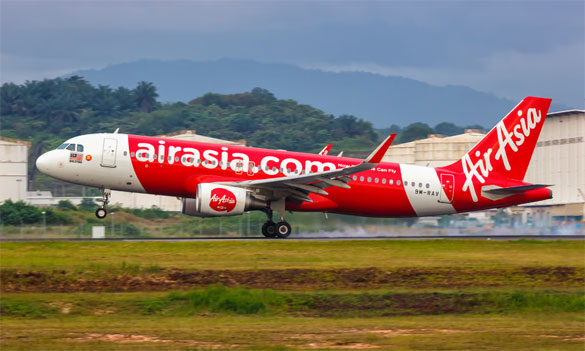
Female cabin crew members of AirAsia will be allowed to wear hijab while on duty, thanks to an updated uniform policy planned for next year.
Wearing a hijab was previously only permitted on select routes, such as Jeddah, where local regulations mandate it.
But AirAsia's latest update to its uniform policy will roll out this hijab option to all female cabin crew members who choose to wear it.
"I am proud that this latest update reflects AirAsia's growth and expansion as a global airline with a diverse workforce that mirrors the communities and cultures we connect every day," said Bo Lingam, Group CEO of AirAsia Aviation Group.
"Our uniforms have always reflected professionalism, safety and comfort, and this evolution builds on that foundation by giving our people the confidence to represent AirAsia in ways that align with their beliefs."
AirAsia is currently working with its staff, which it calls "Allstars," on the detailed design and implementation before the roll-out, according to Suhaila Hassan, group head of cabin crew.
"We hope to start during Ramadan in 2026," Hassan added.
Listening to employees
The major change to AirAsia's uniform policy comes after cabin crew members reached out to its leaders, according to the airline.
"When our cabin crew raised this with management, it was important for us to listen," said Tony Fernandes, CEO of AirAsia's parent company Capital A.
"Respecting different views and beliefs is not only part of our culture but what has shaped our success over the years. This is how we grow: by evolving together, guided by the voices of our people."
With its updated policy, AirAsia joins the growing list of airlines that are introducing flexible uniform policies for employees.
In 2023, British Airways revamped its uniforms, which include new jumpsuits for women, as well as a tunic and hijab option.
In 2022, Virgin Atlantic also gave employees permission to choose between a male or female uniform as part of its updated inclusivity policies.
Source: hcamag.com
https://www.hcamag.com/asia/specialisation/diversity-inclusion/airasia-to-allow-hijabs-for-all-female-cabin-crew-from-2026/559413
------
Sabah Harmoush and al-Ainiya, Syrian Women Freed From Detention, Face A Second Trial
By Bushra Alzoubi
8 December 2025
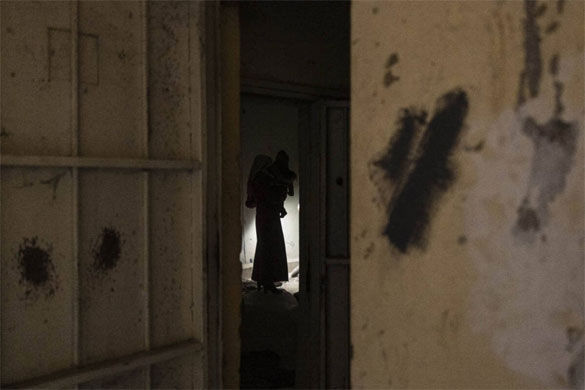
A Syrian woman carries a child as she inspects Saydnaya prison, north of Damascus, in the days after the fall of the Assad regime on December 8, 2024, 16/12/2024 (Sameer al-Doumy/AFP)
------------
DAMASCUS — Sabah Harmoush sits in the cramped apartment she shares with her three children and in-laws in Jdeidat al-Fadl, a village just outside Damascus, and remembers. At 37, torture has left her with physical wounds that still burn and psychological scars that make earning a living nearly impossible.
It has been one year since Harmoush came home. In the hours before dawn on December 8, 2024, opposition fighters forced open the door of her cell at the Mezzeh military airport. “We were liberated by rebels,” she said. “I called my mother-in-law first and said I was free and heading home with my friend Umm Muhammad.” Together, they walked for two and a half hours through the darkness, the sound of gunfire echoing in the distance.
Images of women and men freed from Assad’s detention centers were among the most dramatic scenes to emerge from Syria during the 11-day offensive that toppled the regime last year. In city after city, as opposition forces pushed towards the capital, cell doors were torn open and those inside, their bodies thin and their faces pale, poured out.
Harmoush had been detained by the regime since March 2024, at first held in Adra Central Prison alongside her three children: 13-year-old Fawaz, five-year-old Anoud and four-year-old Omar. After three months, “they told me they were sending my children to an orphanage,” she said, and transferred her to Mezzeh alone.
She was not arrested for anything she had done, but as leverage to force her husband, an opposition fighter in Idlib, to turn himself in. Harmoush also believes her detention was punishment for being the niece of Hussein Harmoush, the first officer to defect from Assad’s army in 2011.
Her story is one among thousands. Throughout Syria’s nearly 14-year conflict, women like Harmoush were detained for reasons ranging from participating in anti-regime demonstrations to simply crossing a checkpoint or having a relative involved in the opposition. These arrests were rarely incidental; they were strategic, used as a weapon of war. Once detained, women endured beatings, humiliation, threats or acts of sexual violence, and, as in Harmoush’s case, the use of their children as blackmail.
According to a November 2025 statement by the Syrian Network for Human Rights (SNHR), at least 10,257 women remain detained or forcibly disappeared in Syria, including 8,501 women detained by the Assad regime. At least 29,358 women and girls have been killed since March 2011, including 22,123 by the former regime and its allies. The network has also documented 11,583 incidents of sexual violence against women and girls, nearly 70 percent of which were committed by regime forces.
“Women were detained to break families, to break communities,” psychologist Ahmad Arafat, who previously worked supporting formerly detained women in Idlib, told Syria Direct. “The regime understood that detaining a woman sends a shockwave through an entire family to hurt their honour. It was deliberate.”
When Harmoush finally reached Jdeidat al-Fadl on December 8, she learned her husband had been killed just one week earlier during the opposition push to topple the regime, leaving her alone. But she was reunited with her children, who were among hundreds taken from detained parents and placed in institutions.
The children’s uncle had gone to the Dar al-Rahma orphanage to retrieve them as soon as the regime fell and employees fled. The Air Force Intelligence Directorate, which held Harmoush, hid more than 300 children in this manner, including at Dar al-Rahma. “One did not recognize me, it took him a while to accept me,” she said.
A year has passed, and Harmoush and her children are still struggling, like many former detainees who have found little concrete support. Her dreams are simple, but feel out of reach. She wants a home of her own, a steady income and a dignified life. She wants those who did not survive what she did to be commemorated through accurate documentation, so history cannot be erased. “I have many demands, but nobody is listening,” Harmoush said.
The regime is gone, but the story did not end on December 8, 2024. The lives of the women who survived its darkest corners have been shaped by imprisonment, torture and social stigma—challenges that persist long after the prison doors opened.
‘A double injustice’
Noura (a pseudonym) steps quietly off a bus that drops her in the middle of one of Damascus’s largest avenues, just across from the National Museum. Tall and slender, she moves as if trying to disappear, hoping to become invisible in a country whose war wounds will take years to heal.
Still, she wants to be heard. “I want the outside world to know what I went through,” she said, settling into a café table.
Noura was arrested in January 2018 at a checkpoint in Damascus, along with her two young daughters, her mother- and father-in-law and her sisters-in-law, just three days after her husband and his brothers were detained. Accused of terrorism, she was interrogated and tortured for days by Air Force Intelligence at Mezzeh.
“They wanted me to confess I was part of an armed group—a terrorist,” she recalled. She refused, and the beatings intensified. “It was very difficult,” she said softly, looking down and stirring her fresh juice with a straw. “I would rather not get into details. Some wounds I can’t reopen. Not now.”
After a long silence, she lifted her head. “They beat me in front of my daughters. During some interrogations, they hung me on the wall and beat the girls too.” Her daughters were two years old and six months old at the time. Back in her cell, she no longer had milk to feed her youngest, whose body twisted in pain from hunger.
“The hardest thing was when they stripped me of my girls. They broke my heart. I will never forget when they took them away,” Noura said. “They told me they were in the hospital, but it was a lie.” Her daughters were taken from her for around three months, and returned after she was transferred from Mezzeh to Adra, where she would remain with them for five years.
Noura was released in 2022, alongside her in-laws, but found little relief. Integrating back into society became another kind of punishment.
“It’s as if I did something terrible. No one understands it wasn’t my fault, and it wasn’t my daughters’ fault either,” she said. “I suffered a double injustice—one in prison and one outside. The one outside is harder, because in prison, you know your torturers. Outside, it’s your own people who don’t believe you.”
Her in-laws pressured her husband, who was freed when the regime fell on December 8, to take another wife, something he refused to do. Other women avoided her. “Women don’t come close to me because they think I was raped,” Noura said. “The fact that women don’t believe me is even harder than when men don’t. As women, they should understand what I went through.”
Freedom alone does not end the ordeal. Instead, stigma replaces the physical cell, perpetuating the violence long after release.
Many women are hesitant to come forward about what they have experienced or register for what support is available, said Hala Haitham Alhaj, head of Women Survivors, an organization based in Turkey that supports formerly detained women.
“Many women face social rejection after their release,” Alhaj told Syria Direct. “Numerous divorce cases occur, and many survivors are forced to distance themselves from their communities” and “face threats of violence and ‘honour crimes’ from their own families,” she added. “They also struggle to find employment for the same reasons, and because they often receive no protection or support.”
When Doctors Without Borders (MSF) launched a clinic supporting survivors in the Damascus area earlier this year, less than 15 percent of its consultations over the first two months were for female patients. “The very low number of female patients in our cohort is worrying, and even fewer children are seeking treatment,” the organization said in a report.
“I do not believe reintegration has become easier after Assad’s fall,” Alhaj said. “There are success stories, before and after December 8, where women rebuild their lives…but this only happens when they receive strong social and psychological support.”
‘I made my place in society’
In a quieter corner of Damascus, another former detainee has carved out a more public path. In an office tucked inside the Faculty of Law at Damascus University, 55-year-old Maisaa al-Ainiya sits behind a large wooden desk, at her new post as chief legal officer of the Association of Detainees of the Syrian Revolution.
Founded in January 2025 under a decree by the Ministry of Social Affairs and Labor, the association provides humanitarian support for former detainees. Al-Ainiya’s work mainly revolves around helping survivors navigate legal issues such as property confiscation orders and false death certificates issued by the regime.
Visitors come and go, seeking al-Ainiya’s guidance, and she receives them—women and men alike—with the quiet authority of someone who has rebuilt her place in the world from the ground up.
For al-Ainiya, the path to a prison cell began with a personal dispute over her dowry in the early days of the revolution. “I had problems with my husband, and we decided to separate, but he refused to pay my dowry,” she told Syria Direct. “They wrote a report and had the police accuse me of helping revolutionaries.” She was arrested and taken to the military security headquarters in Nabak, her town in Reef Dimashq.
Over the next four months—the first of three experiences of detention over the course of around two years—she endured interrogations, intimidation, and the cold, overcrowded cells characteristic of the regime’s early crackdown. Humiliation was constant. During this period, her then-14-year-old son Mahmoud was also arrested. “They tortured him and crushed his toes to force him to incriminate me,” al-Ainiya said.
Ultimately she was released in 2016, subject to a travel ban and confiscation of her property. On the outside, society turned its back on her, treating her as though she had disgraced her family. But in her case, everything changed the day Assad fell.
“My relatives, who had treated me like a pariah, kissed my forehead to congratulate me on the regime’s fall,” she said. “They began calling me professor [as a term of respect], because they understood I had been right. It was my personal victory. We lived in humiliation, and it was incredible to get rid of this tyrant. I made my place in society by force, despite all the pressure.”
Her experience reshaped her outlook on relationships. “I never remarried,” she said. “I received many proposals, but I want to devote myself to my children and my professional ambitions. What I went through with my husband destroyed any desire for marriage—marriage can be hell. I no longer trust men, except my father, my son and my son-in-law, who supported me through everything. They believed in my abilities.”
Before she was detained, al-Ainiya was a housewife and caregiver for one of her daughters, who is disabled. After she was released, she pursued an education, studying side by side with her children. “I started studying with my son Mahmoud, who had not obtained his [high school] baccalaureate. We started together on our own, and passed at the same time. A few years later, my daughter joined us. The three of us continued our studies and graduated on the same day [in 2022]. It was incredible,” she said, proudly showing a graduation picture.
“To every girl, I say—aspire to be proud of the black gown of accomplishment, not of the white bridal gown,” al-Ainiya added.
‘Actual reparation’
As Syria enters a new chapter without Assad, the voices of women like Harmoush, Noura and al-Ainiya serve as both testimony and warning. The end of a regime does not erase decades of suffering, and justice must extend beyond the walls of prisons to the streets, schools and communities that make up society.
“The role of society and the government is acceptance as a priority, and we need to treat women as victims who need support and empowerment to rebuild their lives normally,” psychologist Arafat said. “They need psychological, physical and mental assistance, and should not be treated as ‘guilty.’ Otherwise, detention becomes two prisons and two punishments: one by the regime, and one by society.”
“Even the women who react harshly toward a survivor are themselves victims—triggered by memories or experiences. They try to save themselves and draw attention away by judging others,” he added.
Tangible support for former detainees remains far below the level that survivors and advocates say is needed, in part due to international funding cuts that have eaten into the capacity of organizations working to support detainees. In June, Amnesty International noted survivors faced a “critical lack of support” and called for concrete action to guarantee the right to “reparations, including rehabilitation, and to justice.”
In May, Syria established the National Commission for Transitional Justice and National Commission for the Missing, independent bodies tasked with investigating human rights abuses, pursuing accountability and providing reparations. However, the presidential decree establishing the transitional justice body singled out violations by the former regime, not other perpetrators.
Until today, there are no official statements or mechanisms specifically addressing the needs of formerly detained women.
For survivors, the work of rebuilding is ongoing, and it demands more than symbolic gestures. Arafat emphasizes the importance of structured support: “Women need compensation, jobs, and specialized spaces for psychological support. Without support, survivors may become destitute. Economic support is essential and is a government responsibility. Compensation must be both material and symbolic—actual reparation, but also moral and emotional recognition.”
“The government must recognize that what we are living today is the result of the sacrifices of all Syrians—especially women,” Alhaj of Women Survivors said. “They must acknowledge the violations committed against women in detention and guarantee survivors an active role in defending their rights within transitional justice processes.”
“The government bears responsibility for real accountability for criminals from all parties,” she added. “The security situation in Syria, with criminals roaming free and some even becoming part of the government, has caused fear among many survivors….We can’t deny that even those in power today are mostly perpetrators.”
For Noura, there is only one form of justice she still believes in. “I want them all to be judged because they were cruel to us. But even if they were tried, it would never be enough, it would not restore the justice we lost,” she said at the end of her conversation with Syria Direct. “I only believe in heavenly justice—that is the only justice that can satisfy me. Earthly justice will never compensate us for what we went through as it should.”
Source: syriadirect.org
https://syriadirect.org/two-prisons-freed-from-detention-syrian-women-face-a-second-trial/
-------
Zara Qairina Mahathir Trial Begins With Testimony From Two Teachers
8 Dec 2025
Two teachers testified as the first witnesses in the Children’s Court trial of five teenagers accused of verbally abusing student Zara Qairina Mahathir.
KOTA KINABALU: Two teachers from SMK Agasi Tun Datu Mustapha testified on the first day of a Children’s Court trial involving five teenage girls.
The accused are charged with using abusive words against Form One student Zara Qairina Mahathir under Section 507C(1) of the Penal Code.
According to the Court Registrar, one witness is an academic teacher and the other is the school’s Guidance and Counselling teacher.
The proceedings are being held under a gag order before Sessions Court Judge Marlina Ibrahim, with access restricted to directly involved parties.
Cross-examination of the second witness is scheduled to continue on Tuesday.
The prosecution is led by Deputy Public Prosecutor Nor Azizah Mohamad, assisted by three other DPPs.
The first accused is represented by lawyer Datuk Ram Singh, with four other lawyers representing the remaining teenagers.
The five girls were charged on Aug 20, with the offence carrying a maximum penalty of one year in jail, a fine, or both.
Zara Qairina died at Queen Elizabeth I Hospital on July 17 after being found unconscious in a drain near the school dormitory a day earlier.
Source: thesun.my
Please click the following URL to read the text of the original Story
https://thesun.my/news/malaysia-news/courts/zara-qairina-trial-begins-with-testimony-from-two-teachers/
-------
Heydar Aliyev Foundation VP Leyla Aliyeva Attends Launch Of AI Index For Islamic World International Conference
8 December 2025
BAKU, Azerbaijan, December 8. On December 8, an opening ceremony of the international conference on the theme Launch of the AI Index for the Islamic World was held at the Heydar Aliyev Center in Baku, Trend reports.
Co-organized by the Heydar Aliyev Foundation, Azerbaijan’s Ministry of Science and Education in partnership with the Islamic World Educational, Scientific and Cultural Organization (ICESCO), the conference aims to enhance cooperation on artificial intelligence (AI) in the Islamic world, as well as discuss the ethical, social and economic impacts of AI.
The document on the “AI Index for the Islamic World” is also presented in Baku for the first time.
In her opening remarks, Leyla Aliyeva, Vice-President of the Heydar Aliyev Foundation, founder and head of the IDEA Public Union, noted that the AI had already become an integral part of everyday life. According to her, this area, which creates vast opportunities, also raises new questions and responsibilities. She highlighted the importance of the society’s proper assessment of the impacts of AI, protecting the youth from the existing risks and directing them through the opportunities offered by this technology.
The Heydar Aliyev Foundation Vice-President highlighted Azerbaijan’s consistent steps undertaken in this direction. She said that the National Artificial Intelligence Strategy for 2025–2028 envisages establishing the national artificial intelligence ecosystem, developing the AI model in Azerbaijani for public services, defining the standards for government agencies, and establishing the Artificial Intelligence Academy.
Recalling that the Heydar Aliyev Foundation had identified education as the priority area for 20 years, Leyla Aliyeva said that during this period, the Foundation built and reconstructed over 500 schools, as well as modernized kindergartens and boarding schools in Azerbaijan, providing thousands of children with modern educational facilities.
She noted that transitioning to the AI era further increases the importance of this mission, adding that AI is not just a technology, but a new opportunity for every child.
Leyla Aliyeva also emphasized that AI could play a crucial role in environmental protection, namely tracking rare animal species; monitoring climate change; protecting forests, conserving water resources, and developing sustainable agriculture.
Highlighting the cooperation with ICESCO, Leyla Aliyeva underscored several ongoing projects in Africa, including construction of school for the internally displaced girls in Burkina Faso, as well as projects in Mali, Chad, and the Comoros. In this vein, she outlined the establishment of regional information and communication technology centers for youth and people with disabilities, in collaboration with the United Nations Development Program (UNDP).
Emin Amrullayev, Azerbaijani Minister of Science and Education, stressed that the Heydar Aliyev Foundation had been promoting the excellence in education for many years, supporting innovative initiatives, and creating vast opportunities for children and youth. He pointed out the Foundation’s unparalleled contributions to boosting education in Azerbaijan and the Islamic world. He also mentioned the Azerbaijani Education Ministry is taking pride in the implementation of common goals together with the Heydar Aliyev Foundation, contributing to the social and cultural development.
In his remarks, Salim bin Mohammed Almalik, ICESCO Director-General, noted that humanity is on the verge of a new stage - the age of AI. According to him, this is a force that can shape skills and influence. The Director-General mentioned that AI had already become a strategic target: those who accept it accelerate development, while those who oppose it will see progress go in other directions and will be left behind.
He said AI is not only a technology, but also an enabling tool, whose application provides innovative solutions in education, healthcare, management and other spheres.
The ICESCO Director-General hailed the high-level cooperation among the member states.
The conference also featured the 4th joint “Hamdan-ICESCO” award ceremony of ICESCO and the Hamdan Bin Rashid Al Maktoum Foundation. The award recognizes contributions to developing educational facilities and supporting the educational environment across the Islamic world. The Heydar Aliyev Foundation received this award in recognition of its educational and social support projects aimed at the construction and reconstruction of schools both in the Islamic world and other countries.
The award was also presented to the Hadhramout Foundation – Human Development of Yemen and the First Education Foundation of Morocco.
Addressing the event, Sheikh Rashid bin Hamdan bin Rashid Al Maktoum, Supreme Chairman of the Hamdan Bin Rashid Al Maktoum Foundation, congratulated the winners of the “Hamdan-ICESCO” prize, saying: “Today, you have become a source of pride and inspiration for charity organizations, donors and benefactors who care about the educational environment and students. We will not hesitate to take on the responsibility of promoting the culture and impact of volunteer efforts in supporting education.”
The conference continued with a panel discussion on "Innovation in education: The impact and opportunities of AI in the Islamic World."
Prior to the discussions, the speakers emphasized that AI is already influencing various aspects of our lives and is set to play a crucial role in the development of future generations.
The discussions highlighted AI's ability to drive progress by opening new avenues for research, enhancing economic efficiency, and encouraging the development of future job market-relevant professions.
Another panel session, moderated by Ouiam Chafik, a representative of the Foresight and AI center at ICESCO, underscored the importance of exchanging experiences among countries, collaboration and enhancing regional initiatives in the field of AI.
During another panel, the participants emphasized the significance of strengthening cross-border coordination in the field of AI, exploring its ethical and socio-economic aspects, and ensuring sustainable and inclusive technological development. It was mentioned that these initiatives contribute not only to technological progress, but also to the human capital development, improvement of education quality, and advancement of regional cooperation.
The conference culminated with the adoption of the Baku Declaration on the AI Index for the Islamic World.
The document mentions that the Islamic world recognizes AI’s profound impact on societies and economies, welcomes the AI Index as a vital new tool, aligned with ICESCO's mission, to advance education, science, and culture in the digital age, while also recognizing the potential of AI to advance education, health, cultural preservation, economic development and environmental management, as well as acknowledging the risks of abuse, inequality and lack of safeguards.
ICESCO member states and international partners reiterate their determination to enhance cooperation and their commitment to ensuring that the values and aspirations of the Islamic world are represented in international discussions on AI. The member states declare that the launch of the AI Index in Baku lays the foundation for a new stage of cooperation for the Islamic world.
The document encourages constructive cooperation with international organizations, supports the implementation of joint projects, and confirms a commitment to ensuring peace, development, and the well-being of future generations. Based on the Declaration, Member states will be able to develop national artificial intelligence strategies that incorporate ethical safety measures, define sector priorities, and ensure inclusive development.
As part of the conference, the guests also viewed the exhibition “My Seas, My Oceans” presented at the Heydar Aliyev Center, which highlights the importance of protecting one of the most vital resources of the planet – water - amid climate change, global warming, and fragile ecosystems.
Source: trend.az
Please click the following URL to read the text of the original Story
https://www.trend.az/azerbaijan/politics/4127403.html
-------
UN Warns Up to 30% of Staff in Afghanistan Women-Led Organisations Could Be Laid Off
By Fidel Rahmati
December 8, 2025
The United Nations warned that up to 30% of staff in Afghanistan’s women-led organisations could be laid off due to severe funding shortages.
UN Women has warned that women-led organisations in Afghanistan may be forced to lay off up to 30 percent of their female employees due to severe funding cuts, raising fears of an even deeper humanitarian and protection crisis for women and girls.
In a statement posted Monday on X as part of the global 16 Days of Activism Against Gender-Based Violence campaign, the agency said these organisations form the “backbone” of Afghanistan’s support network for women and girls, providing legal aid, safe spaces, counselling, and access to basic services.
The UN added that many women-led civil society groups are now operating with sharply reduced budgets. Earlier assessments showed that these organisations have already lost around one-fifth of their funding since the Taliban returned to power.
The warning comes at a time when access to services for women has sharply deteriorated. With previous protection systems dismantled and civil society restricted, millions of Afghan women and girls now have nowhere to turn for help, UN Women said.
Humanitarian conditions in Afghanistan continue to worsen. OCHA warned on Monday, December 8 that more than 17 million people are expected to face hunger and severe humanitarian need in 2026, driven by economic collapse, drought, displacement and shrinking aid supplies.
The situation has further deteriorated due to Taliban restrictions banning Afghan women from working with the United Nations and aid agencies in most provinces for nearly three months, a policy that has severely limited humanitarian access to vulnerable families.
At the same time, the return of displaced Afghans has intensified pressure on already strained services. Iranian media reported that more than 1.8 million Afghan migrants were deported or forced to return from Iran this year alone, with thousands more returning from Pakistan.
UN agencies and rights groups warn that without urgent funding and the reinstatement of women’s participation in humanitarian work, millions of Afghanistan women and girls risk becoming “invisible, unprotected, and unreachable.”
Humanitarian organisations are calling on the international community to restore funding, protect frontline Afghanistan women-led groups, and ensure that aid operations remain inclusive and gender-responsive despite escalating restrictions.
Source: khaama.com
https://www.khaama.com/un-warns-up-to-30-of-staff-in-afghanistan-women-led-organisations-could-be-laid-off/
------
‘I Write Because Acceptance Is Impossible’: Afghan Farida Faryad On Memory, Violence, And Women’s Voices
by Khadija Haidary
December 8, 2025
Farida Faryad was born in 1992 in Kabul and later moved to Jaghori district of Ghazni province, where she completed her primary and secondary education in 2011. In 2015, she earned a bachelor’s degree in Persian language and literature from Kabul Education University. She then continued her studies at the master’s level at the Kabul branch of Payam-e-Noor University, where she graduated in 2019.
Today, Farida is a Ph.D. student at the University of Gilan in Iran and is researching Persian language and literature. She currently lives in France and has recently published two books: The Collector of Sorrows in French, and then The Women’s love-sorrow in Persian.
Zan Times’ Khadija Haidary interviewed Farida about memory, forced displacement, trauma, meaning of women’s sorrow, and why she thinks of writing as an act of survival and resistance. This interview has been edited for clarity and length.
Zan Times: Who is Farida Faryad? How do you describe yourself as a writer?
Farida Faryad: To be honest, the word “writer” feels overwhelmingly large to me. It is a title that immediately evokes the giants of Persian and world literature, and gives the term a profound weight in my mind. At the same time, I can’t deny that, perhaps unconsciously, this word has nestled itself somewhere between the lines of my books. But given the small and unripe knowledge I have, I see myself as too insignificant to deserve such a title.
When I introduce myself, I must say: Farida is a girl like thousands of Afghan girls born in the heart of war, and raised in the shadow of ruins and bigotry. When she came to know herself, she found herself drawn into the sorrows of her own people and before she could even pack her bags, she was forced out of her home and her homeland, a place where guns are placed in the hands of children instead of pens.
Now, living in another corner of the world, I write to be the echo of those voices. My experience was not formed in a vacuum but in the midst of structural violence, forced migration, and the systematic erasure of marginalized voices. That is why I want to recount these experiences — experiences that political equations have always pushed to the margins.
ZT: When and how did you end up in Paris, and did that migration give you the space to confront the sorrows ahead of you, the sorrows behind you, and the sorrows of Afghan women today?
Faryad: Coming to Paris, even though it was the city of my dreams, wasn’t a conscious decision. It was the result of the same sudden, unwanted rupture I mentioned earlier. Like the fate of thousands who were cast into uncertainty after the rise of Taliban to power, my arrival happened within an extremely short window of time and without preparation, so fast, so unbelievable, that I am still trying to understand its psychological mechanisms.
This forced geographical displacement was initially very difficult. It created a kind of conceptual homelessness, not just a physical rupture from my homeland, but also a rupture from language, oral history, and collective memory. Yet, as Homi Bhabha describes the “in-between space,” it is precisely this borderland that allows for rethinking, rereading oneself, rewriting the past, and redefining the future.
Since I had been immersed in the themes of women’s love and sorrow in recent years, this “third space” gave me the opportunity to rethink both. Distance from home did not lead to forgetting, that will never happen. Instead, the world of migration became a ground for seeing past sorrows more clearly, for understanding present challenges, and for confronting the growing terror that Afghan refugees, especially women and children, face each day. Maybe this distance also became a way to scream out what remained silenced and is still suppressed on our own soil.
ZT: In a previous interview you said your mother left you in a mosque during the war when you were a three-month-old infant. How did you come to terms with it? Do you believe that a terrified mother who left her baby in a mosque to save her own life deserves the respect, forgiveness, and love of her daughter?
Faryad: I heard this story from my mother herself, who occasionally spoke about the Afshar massacre [in which mujahideen gunmen killed scores of Hazara civilians in the Afshar district of Kabul in 1993]. I never asked her “Why?” because I never wanted to judge her for her decision, and I still don’t.
As for respect, forgiveness, and love toward such a mother, for me, there is no doubt at all. Afshar was not just an “incident.” In this bloody chapter of our history. A chapter in which the human body, especially the female body, was not only the target of bullets, but the site of plunder, assault, and violation by the same people who today pose as heroes.
What can a mother do in that horrifying moment, surrounded by violence, with six small children? She was voiceless, defenseless, without refuge. Her decision may be painful, even unbearable, but morally and historically, it must be understood within the context of conditions that stripped her of every human option.
She acted not out of neglect or coldness, but out of a primal instinct for survival, a decision that in itself is a scream against injustice. The scream of a frightened, trembling woman abandoned among bullets.
ZT: Have you ever wondered whether, if you had been a baby boy, your mother might not have left you in the mosque?
Faryad: The role of gender in my mother’s decision undoubtedly has roots in patriarchal structures that assign different values to sons and daughters. However, my mother’s experience cannot be judged by the usual scales of gendered values. That moment was not a time for choosing between a boy or a girl. It was a moment of survival, an explosion of reality, a moment in which she stood between life and death.
In such conditions, maternal love surpasses the symbolic order of patriarchy. What moved my mother in that terrifying moment was not a conscious gender-based preference, but a reflex of fear and survival, a decision she might have made even if the baby had been a boy, because I was at the time gravely ill and on the edge of life and death.
That is why I believe that not only my mother, but any mother confronting such circumstances would hold her child beyond the boundaries of gender. Such decisions must be analyzed within the traumatic context of the Afshar massacre and the structural violence inflicted on women, within the framework of gendered psychology.
ZT: You’ve spoken about the long period of depression you experienced in adolescence and your preference for isolation. Did this prolonged confrontation with yourself turn you into a “collector of women’s sorrow”?
Faryad: Yes. The depression that darkened my teenage years was not merely a psychological state, but an existential response to the violent and discriminatory society in which I lived. It was a society whose structural violence targeted women and children above all. I am one among thousands of others like me who became victims of collective and historical violence.
My depression was a reflection of constant insecurity, of ethnic–religious and gender marginalization, and of wounds that never had the chance to heal. My confrontation with sorrow was not voluntary; it arose from the necessity of understanding.
What I wrote in The Collector of Sorrows is not only a depiction of women’s suffering, but a map of the systemic discriminations that have placed ethnicity, religion, the female body, the female voice, and women’s choices as their primary targets.
As for isolation, it was never a choice for me, but a forced habit. The result of a situation in which children, especially girls, are deprived of choice, experience, and even movement. Girls must learn caution from their earliest days to avoid “bringing shame” to society — a traditional, patriarchal, controlling society. For me, isolation was a form of “forced safety,” a place beyond judging eyes.
In short, this isolation, depression, and confrontation with painful sorrows has allowed me to narrate women’s suffering not from the outside, but from within.
ZT: As an Afghan woman writer who collects women’s sorrows, how did you confront your own sorrow and decide that “women’s sorrow” is something that must be addressed?
Faryad: We cannot come to terms with collective sorrow. In my view, accepting it means surrendering to it. The sorrow I speak of is historical, social, and gendered — the sorrow of women who were pushed aside in the past and who are still pushed aside today. In such situations, silence cannot be the answer, and acceptance cannot be the solution.
I write because moving on is impossible. Writing, for me, is an attempt to expose what has been hidden, to disobey the rule of the powerful, and to build a collective memory of pains that have been denied.
This sorrow must be narrated because it carries an erased memory, a language of resistance, and the possibility of rewriting history.
ZT: Tell us more about The Collector of Sorrows. How was it received and understood by French-speaking readers?
Faryad: Although a bit more than a year has passed since its publication, the book has sparked remarkable and unexpected reactions in French-speaking society — so much so that it is already in its fourth printing.
For me, this reception was not merely a literary success; it affirmed that the voices of women from my homeland can be heard and can have impact even in the most distant places — but only if we do not stop trying and do not allow their cries to be silenced.
After the book was published on October 4, 2024, we decided to have parts of it performed musically by the French comedian Odile Bertotto, and to stage the program wherever possible. So far, we have successfully held 16 performances across different French cities.
At many events, French-speaking audiences reacted deeply — sometimes with shock — to the book’s content. They not only sympathized with the stories of ethnic discrimination and gendered violence in Afghanistan, but engaged in critical reflection. One reader wrote to me: “This book is a kick to the silence of the international community and the indifference of world powers toward the situation of Afghan women. It is as if your words scream the wounds.”
I am glad that, in my own small way, I helped awaken people for whom human suffering simply matters to the sorrow of Afghan women.
ZT: Tell us about your second book, The Love-Sorrow of Women. How did you decide that working on women’s folk couplets and the theme of women’s love-sorrow could help portray Afghan women today?
Faryad: My research began with the question of “woman,” viewed through the lens of sorrow. I wanted to understand the issue before approaching it more deeply. Reading women’s folk couplets, especially among the Hazaras, which I relate to most because they reflect my own lived experience, pushed me to continue.
With my limited knowledge, I picked up the pen, and the sorrow of my fellow women compelled me not to stop. Through reading these couplets, I realized that oral literature in general and folk couplets and tales can be powerful tools to introduce the contemporary condition of Afghan women, because they act as repositories of collective memory.
Culture is not an instant phenomenon; it is a historical process shaped over time and passed from generation to generation. Women’s oral couplets — especially those created and preserved by women — contain layers of lived experience, love, sorrow, resistance, and silence.
I believe cultural research brings women closer to the modern world and removes obstacles so that systems of domination can no longer maintain control over women’s lives or manipulate reality to serve themselves.
Oral literature is one of the few cultural arenas where we can trace women’s presence across history and observe diverse dimensions of their lives. So while my analysis of Hazara folk couplets may not have immediate practical impact, it undoubtedly carries immense significance for cultural and historical awareness, for re-recognizing women’s identity, emotional memory, and hidden structures of pain.
These couplets are not merely a medium of expressing women’s emotions, they are living documents of our social reality. Future generations, by returning to them, can gain a deeper understanding of the suppressed history of Afghan women.
ZT: In reading these couplets, I often felt that women — Hazara women and Afghan women in remote villages who have more access to mountains and fields than to cities and institutions — are the real creators of these verses. From what perspective did you study women’s couplets?
Faryad: Yes, I believe that most creators of folk couplets and tales are women who lacked access to formal cultural institutions but were deeply connected to nature, suffering, and oral language.
Folk couplets and stories have a distinctly feminine perspective. But with societal changes and the influence of power structures, these narratives sometimes undergo distortion as men alter them to serve their own interests. I’ve explained this in The Love-Sorrow of Women.
I did not study couplets merely as literary forms. I read them as social and political texts about power and control, in whose hidden layers lie relationships of authority, gender, control, and women’s lived experience.
My analysis drew on theories such as Kate Millett’s sexual politics and Stephanie Gert’s sociology of gender — frameworks that examine how one group (men) establishes dominance over another (women) through cultural, social, and linguistic structures, and distinguish between sex (biological reality) and gender (a social construct).
These distinctions allow us to see how couplets, which appear to be about love or daily life, actually reflect mechanisms of control, resistance, and women’s lived realities.
ZT: In Hazara couplets, you discuss how a woman’s identity in Afghanistan is tied to the men of her family. How long do you think it will take and what will it require for women to gain identities independent from their male family members?
Faryad: A woman’s identity is not only defined in Afghanistan but across patriarchal and authoritarian societies in relation to the men of her family. Hazara couplets also reflect this. But this dependency is not natural; it is the product of systems of power and cultural structures.
These structures are deeply rooted in a society’s culture. As I said earlier, they do not change overnight.
But an independent identity becomes possible when a woman recognizes her own authority, not the authority granted to her by men, but the real authority she claims for herself, when she thinks of herself, and simply considers herself “human,” beyond gender. When her humanity is not defined through a man.
The awareness that women, like men, have rights, will, and human dignity is the starting point of liberation. Achieving this transformation requires rethinking cultural narratives, reforming educational systems, and expanding women’s access to knowledge, language, and public spaces.
Source: zantimes.com
https://zantimes.com/2025/12/08/i-write-because-acceptance-is-impossible-farida-faryad-on-memory-violence-and-womens-voices/
------
Nepal PM Karki’s comment on sorry state of Muslim women ruffles fundamentalist feathers
December 9, 2025
On 23 November 2025, Nepal’s Prime Minister Sushila Karki, speaking at the launch of the 16 Days of Activism Against Gender-Based Violence, uttered a phrase that ignited fury of the local Muslims.
“Tendencies and behaviours of Muslims in certain countries seem so unjust. Burying women alive, dragging them, not granting them freedom, not even allowing them to study,” she said. Her words, meant to highlight global gender inequities, was on the mark.
Muslim leaders swiftly condemned the remarks as irresponsible and factually flawed, with voices like Seema Khan of the Nepal Muslim Women’s Welfare Society pleading for nuance. “This is irresponsible and not based in truth,” she claimed.
Muslims, who comprise 5 percent of the popultaion, staged protest programmes in different cities of the country demanding PM Karki to take back her statement and apologize for the “gaffe”. Bowing to the sustained pressure, PM Karki has apologized to the Muslim community and said that she did not intend to hurt anyone’s religious sentiments.
The controversy surrounding PM Karki’s statement peels back layers of a larger and thornier issue in the country. Although the ruling elite is in denial, Nepal faces the insidious rise of Islamo-fascism and its tangled alliances with left-liberal circles. Radicalization of the Nepali Muslim youth is on the rise.
Islamo-fascism is a phrase popularized in the wake of 9/11 by thinkers like Christopher Hitchens to describe a totalitarian strain within Islamist ideology that mirrors fascism. Its features include authoritarian control, suppression of dissent, glorification of violence and a theocratic vision that brooks no pluralism. It is not an indictment of Islam’s peaceful adherents but a spotlight on extremists who twist sacred texts into weapons.
In places like Afghanistan under Taliban rule, girls like 15-year-old Malala Yousafzai are shot for daring to learn. Their dreams are snuffed out not by faith but by its fascist perversion. Yet, here’s the paradox that chills the spine. This ideology finds unlikely bedfellows in segments of the left-liberal ecosystem, those self-proclaimed champions of tolerance and human rights.
Picture Amina, a fictional composite of countless young Muslim women anyone has encountered in reports from Cairo to Karachi. Raised in a devout family, she cherishes the Quran’s early edict granting women inheritance rights 1,400 years before Western suffragettes marched. But in the shadow of Islamo-fascism, her world narrows.
Oppression in Muslim communities is not monolithic. It is a spectrum, from cultural norms in secular Turkey to outright tyranny in Saudi Arabia’s guardianship system, where women need male permission to travel.
Honour killings, female genital mutilation in parts of Somalia or Iran’s morality police beating unveiled women are not relics of medieval times. As PM Karki referenced, they are living nightmares for contemporary women in various countries, fuelled by fundamentalist interpretations. In Pakistan, the Hudood Ordinances once blurred lines between rape and adultery, jailing victims like Mukhtaran Bibi, gang-raped on her village elders’ orders in 2002. She survived and founded schools for girls. But many women do not survive this ordeal. The UN estimates 5,000 honour killings annually worldwide, disproportionately in Muslim-majority regions where tribal customs masquerade as piety.
This oppression seeps into the everyday life of women in Muslim countries. Imagine Fatima, a 22-year-old in rural Bangladesh, forbidden from university because her uncle deems it “immodest.” Her dreams of becoming an engineer dissolve into forced marriage at 16, her voice silenced in a home where polygamy is normalized, leaving her as one of four wives. Left-liberals, in their rush to combat “Islamophobia,” often downplay these realities. They frame all criticism of Muslim oppression as bigotry.
The unholy alliance between Islamo-fascists and left-liberals has produced sickining results. Western academics and activists who equate Charlie Hebdo cartoons with terrorism or university campuses where pro-Palestine rallies veer into justifying Hamas’s October 7 atrocities as “resistance.”
It is a selective solidarity. Feminism for all, except when it indicts theocracies. As Hitchens once quipped, this is “the enemy of my enemy,” where anti-imperialist zeal blinds progressives to the fascism within Islamism. In Europe, leftist leaders have hesitated to crack down on Sharia courts that undermine women’s rights, fearing accusations of racism. The British government jails anyone who talks about rape gangs in the UK but lets the real culprits scot-free. This ecosystem normalizes the abnormal, leaving women like Amina voiceless.
Coming back to Nepal, this global malaise manifests locally. The Prime Minister’s remarks, echoing her 2016 controversy over “ghumto” veils and women’s court access, underscores a delicate issue that remains undebated due to the fear of hurting the faithful. Muslim leaders like Mohammadin Ali of the National Muslim Commission argue such rhetoric wounds the soul of a community contributing doctors, engineers, and activists like Roshan Ara who rose from Tarai’s dusty fields to heal her people.
He may be partially correct but the oppression of women in Nepal’s Muslim community cannot be brushed under the carpet. UN Women’s data shows that Nepali Muslim women (comprising about 2.5 percent of the population), face intersecting vulnerabilities including poverty, low education, child marriage and limited political representation. This is exacerbated by cultural norms in the Tarai region.
Overall female literacy in Nepal is 70.1 percent, but for Muslim women, only 20 percent access basic education. This has hindered their economic participation (mere 6 percent in formal sector). Gender-based violence affects 51.9 percent of Muslim women over their lifetime. Child marriage at 33 percent for girls is a haunting reality. Community practices like unregistered marriages and unilateral talaq persist, despite civil laws.
The elephant in the room is the radicalization of Nepali youth by Islamic fundamentalists. Nepal, with its porous borders to India and digital connections, is a fertile ground for radicalization. The Tarai region, home to most of Nepal’s 1.4 million Muslims, has seen an exponential growth of mosques which operate without any government supervision. The whole Tarai region functions with remittances from Gulf workers returning with Wahhabi-influenced views including strict veiling and curtailed freedoms. This hardening of attitudes has climbed to the hills and radicalized the indigenous Muslims who threaten any Hindus who talk about the destructive ideology of Ghazwa-e-Hind.
Radicalization in Nepal is not about bomb vests and fatwas. It is insidious, digital and heartbreakingly personal. Imagine Saleem, a 19-year-old Muslim from Syangja distict in western hills, scrolling WhatsApp late at night. What starts as memes about economic woes spirals into propaganda. Those viral memes from India or Pakistan (from genuine or fake IDs) peddling jihadist glory, anti-Hindu screeds and promises of paradise. Seema Khan warned of this in her response to Karki. “We must consider the sensitivities of our Tarai and the misinformation mills across the border,” she said.
How does this connect to Islamo-fascism’s left-liberal tango? Nepal’s “progressive” NGOs, funded by Western donors, champion “decolonized” narratives that portray radical Islam as a bulwark against “Hindu majoritarianism.” Student groups at Tribhuvan University host panels decrying “Zionist imperialism” while glossing over Hamas’s charter calling for Jewish extermination. This moral equivalence emboldens recruiters: if the West is the devil, why not join the “resistance”? Leftists, who see colonial ghosts everywhere, justify this ghastly ideology as a fight against imperialism. Nepali communists’ fondness for Pakistan and demonization of India stems from this crooked worldview.
As the 16 Days campaign marches on, PM Karki’s statement sparks a vital conversation. In a world where Islamo-fascism preys on the vulnerable, radicalization of the youths can bring about national and regional instability. To counter this, the governmnet needs to impart critical media literacy. Funding women’s cooperatives in the Tarai region and turning Gulf returnees’ skills into local jobs can starve radicalization of its economic fuel.
Source: hindupost.in
https://hindupost.in/world/nepal-pm-karkis-comment-on-sorry-state-of-muslim-women-ruffles-fundamentalist-feathers/#
-------
URL: https://newageislam.com/islam-women-feminism/airasia-hijabs-female-crew/d/137952