
‘Pro-Gay’ Female Archbishop Sarah Mullally Appointment Signals A “Moral Decline”: Anglican Church Of Nigeria
New Age Islam News Bureau
07 October 2025
· ‘Pro-Gay’ Female Archbishop Sarah Mullally Appointment Signals A “Moral Decline”: Anglican Church Of Nigeria
· ‘She’s Just A Troublemaker’ – Trump On Greta Thunberg Arrest In Israel
· Conservatives Clash Over Hijab Law As Tehran Streets Move On
· 'Sharaa To Act' To Balance Syria Parliament With Six Women Elected
· Fear And Unequal Treatment Grip Muslim Schoolgirls As Austrian Government Seeks To Reintroduce Hijab Ban
· Former Students Sue ASU, Others For Removing Hijabs During Encampment Arrests
· Iranian Court Upholds 90-Year Prison Sentences for 10 Baha'i Women
Compiled by New Age Islam News Bureau
URL: https://newageislam.com/islam-women-feminism/anglican-church-nigeria-female-archbishop/d/137140
----
‘Pro-Gay’ Female Archbishop Sarah Mullally Appointment Signals A “Moral Decline”: Anglican Church Of Nigeria
October 6, 2025
By Enioluwa Adeniyi
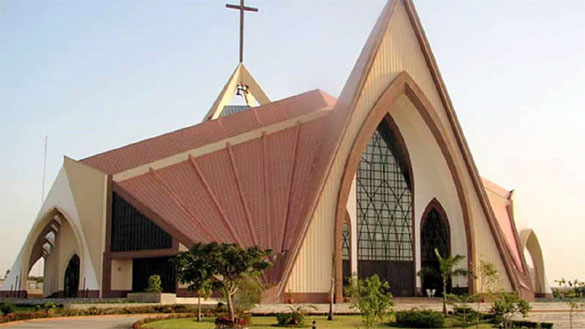
The Church of Nigeria (Anglican Communion) has formally declared spiritual independence from the Church of England following the appointment of Bishop Sarah Mullally as the new Archbishop of Canterbury.
Naija News reports that the Nigerian Church said Mullally’s elevation as the first female to occupy the position, coupled with her support for same-sex marriage, signals a “moral decline” within the leadership of the Anglican Communion.
In a statement signed by its Primate, the Most Rev’d Henry C. Ndukuba, the church described the October 3 announcement as “devastating” and “insensitive.”
The statement read, “This election is a double jeopardy. First, it disregards the conviction of the majority of Anglicans who cannot accept female headship in the episcopate; and second, it is more disturbing that Bishop Sarah Mullally is a strong supporter of same-sex marriage.”
The Church recalled Mullally’s remarks in 2023 after the Church of England approved blessings for same-sex couples, where she called the outcome “a moment of hope.”
The Nigerian Church warned that her stance further deepens divisions across the global Anglican family.
“It remains to be seen how the same person hopes to mend the already torn fabric of the Anglican Communion by the contentious same-sex marriage, which has caused enormous crisis across the Communion for over two decades,” it said.
Declaring that the global Anglican world could no longer look to Canterbury for leadership, the Church of Nigeria reaffirmed its allegiance to the Global Anglican Future Conference (GAFCON).
“On our part, as a member of the GAFCON family, the Church of Nigeria affirms the GAFCON position unreservedly and reaffirms our earlier stance to uphold the authority of the Scriptures, our historic creeds, evangelism and holy Christian living, irrespective of the ongoing revisionist agenda,” the statement said.
The Church also encouraged Anglicans in England and beyond to stand firm against teachings it described as “ungodly.”
“We encourage all faithful brothers and sisters in the Church of England who have consistently rejected the aberration called same-sex marriage and other ungodly teachings by contending for the faith that was once delivered to the saints (Jude 1:3),” the statement added.
Source: naijanews.com
Please click the following URL to read the text of the original Story
https://www.naijanews.com/2025/10/06/just-in-pro-gay-female-archbishop-anglican-church-of-nigeria-breaks-from-canterbury/
--------
‘She’s Just A Troublemaker’ – Trump On Greta Thunberg Arrest In Israel
6 Oct, 2025
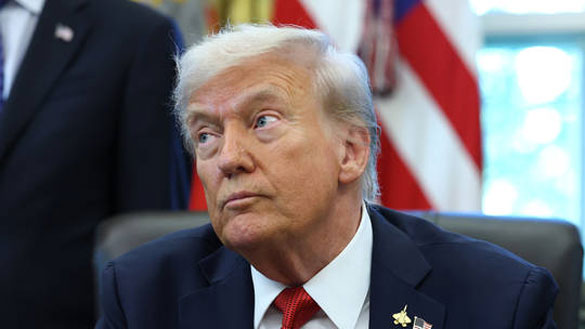
US President Donald Trump speaks in the Oval Office on October 6, 2025. © Anna Moneymaker/Getty Images
---------
US President Donald Trump has mocked activist Greta Thunberg for her second failed attempt to reach Gaza aboard an aid flotilla, which led to her arrest and deportation by Israeli authorities.
Thunberg had joined over 400 activists in trying to sail to the blockaded enclave, only to be detained by the Israeli navy on Friday. More than 130 of them were deported to Türkiye over the weekend. The young environmentalist was among a group deported to Greece and Slovakia on Monday.
When asked about the Swedish activist, Trump responded “she is a troublemaker.”
“She’s no longer into the environment, now she’s into this… She needs to see a doctor. She has an anger management problem,” he told journalists at the Oval Office on Monday.
On Saturday, fellow activists and lawyers claimed that Thunberg, along with others, was subjected to “torture” and “harsh treatment” in an Israeli desert prison after their arrest.
West Jerusalem rejected the claims, while National Security Minister Itamar Ben Gvir said he was “proud” of the harsh conditions the activists were being held in.
Thunberg and Trump have sparred online for years, often throwing each other’s words back as counter-arguments.
In 2019, the US president ribbed the activist for her “anger management problem” after she was named Time’s Person of the Year. Thunberg responded by updating her Twitter (now X) biography to include: “A teenager working on her anger management problem.”
Source: rt.com
Please click the following URL to read the text of the original Story
https://www.rt.com/news/626007-shes-just-troublemaker-trump-thunberg/
--------
Conservatives clash over hijab law as Tehran streets move on
Maryam Sinaiee
October 7, 2025
A senior conservative’s assertion that Iran’s Islamic system is “softly reforming” its stance on the hijab has triggered furious backlash from ultra-hardliners demanding full enforcement of the Hijab and Chastity Law suspended earlier this year.
The remarks by Expediency Council member Mohammad-Reza Bahonar come as Iran’s leadership struggles to contain public discontent while facing renewed UN sanctions.
The fierce subsequent backlash underscores deepening fractures within Iran’s conservative establishment over how far the state should go in policing morality and religious codes.
Speaking to reporters on October 3, Bahonar said the Hijab and Chastity Law—quietly shelved by Iran’s Supreme National Security Council (SNSC) in May—is “no longer legally enforceable.”
It was likely shelved due to concerns it would inflame tensions after the 2022 death of a young woman, Mahsa Amini, in morality police custody sparked nationwide protests which were quashed with deadly force.
“The paradigms of the Islamic Republic are being gradually and softly reformed,” Bahonar said, adding there is currently no binding or enforceable law regarding hijab. “The system’s general decision is that there is no compulsory hijab law in force.”
The veteran conservative bashed ‘Hezbollahis’—hardline Islamist loyalists—for attempting to dictate their preferences to the 90 percent of Iran's citizenry who “want to live” as they choose.
‘Savage, naked' West
At Saturday’s heated parliament session, ultra-hardline lawmakers launched a coordinated attack.
“Which system’s interests are you defending in the Expediency Council—the Islamic Republic’s or that of the savage, naked Western system?” senior MP Ahmad Rastineh said, addressing an absent Bahonar.
“Those who promote and defend nudity and say there is no hijab law are no different from those who frighten the nation with the shadow of war. Both target the Islamic system,” he added.
Amirhossein Bankipour, one of the law’s architects, blamed Speaker Mohammad-Bagher Ghalibaf and President Masoud Pezeshkian for blocking its enforcement, saying on state TV that both men had “failed to communicate Parliament’s decision to executive bodies.”
In a recent Fox News interview, Pezeshkian reaffirmed his opposition to coercion, saying he “does not believe in forcing women to wear the hijab.”
Bankipour invoked Supreme Leader Ali Khamenei’s position, insisting: “The Leader has stated several times—publicly and unambiguously—that there will be no retreat on the issue of chastity and hijab.”
Hossein Shariatmadari, editor of the hardline daily Kayhan, denounced Bahonar’s terminology, saying the phrase “compulsory hijab” was “fabricated by the enemies of Islam and the Revolution.”
“Mr. Bahonar has not explained what he means by using the term ‘compulsory hijab,’” Shariatmadari wrote. “If the hijab is a legal requirement—and it is—why should it not be enforced?”
Quiet retreat
Khamenei last forcefully touched on the issue in an April 2023 when he declared that disregarding the hijab was both “religiously and politically haram (forbidden).”
Meanwhile, the reformist outlet Ensaf News reports that Iran’s urban landscape has already moved past the old debate.
In Tehran and some other cities, the number of women wearing headscarves has markedly decreased, while many others wear loose scarves on their shoulders and the back of their hair.
The once-ubiquitous manteau coat has nearly vanished, replaced by long blouses and trousers. Crop tops and open shirts have become increasingly visible among young women—a quiet but unmistakable shift in daily life.
Source: iranintl.com
https://www.iranintl.com/en/202510068611
------
'Sharaa to act' to balance Syria parliament with six women elected
07 October, 2025
Syrian President Ahmed Al-Sharaa is expected to respond to preliminary parliamentary election results released on Monday, which saw modest results for women and minorities, in order for the assembly to meet the touted 20 percent quota of seats for women.
Six women were elected in the vote, and one of those, Lina Aizouki from Tartous, was also the only Christian to win a seat. At least one Ismaili Muslim, two Alawites, three Turkmen, and three Kurds will also be represented in the upcoming parliament.
The other women to win seats were Mai Khalouf from Safita, Rankin Abdo from Afrin-Aleppo, Nour Jandali from Homs, Momena Arabo from Hama, and Rola Daya from Latakia, according to a list released by the electoral body and checked by The New Arab.
Earlier, authorities said that only three percent of the vote went to women candidates, despite making up 14 percent of the 1,578 people who ran in the indirect elections.
Syria's election saw appointed committees vote for 140 seats in the Syrian parliament, two-thirds of the total, with the remaining third selected by the president himself.
The Chairman of the High Elections Commission, Mohammed Taha al-Ahmad, indicated that Sharaa might step in and appoint more women to the 210-seat People's Assembly of Syria to ensure a more balanced chamber.
"We were keen to represent all components, and we were also keen to include women in the People's Assembly," he told Syria TV. "Unfortunately, women's representation was only 3 percent after the counting process."
The format has led many to describe the vote as "selections, not elections" due to the president hand-picking 70 seats and the centralised process for the remaining seats. But few Syrians who spoke to The New Arab believed the time was right for formal elections, due to the huge number of unregistered displaced Syrians, insecurity, and Syria's nascent political scene.
Parts of Syria remain wracked by instability or outside government control, with Suweida province and North East Syria not taking part in the elections, and the 19 seats allocated for these regions remaining empty.
One Alawite candidate in Tartous province was assassinated over the weekend, which the government indicated was carried out by remnants of the former Assad regime.
The Syrian Democratic Council, the political body in the north east, which remains under the control of the Syrian Democratic Forces, slammed the election as a "farce" and said it will serve to deepen divisions in the country.
"Syrians aspire to genuine elections that express their will and represent them all, as this is a national right that cannot be waived or dispensed with, and a fundamental pillar in the process of building a unified democratic state based on justice, citizenship, and equality among all Syrians," the group said in a statement.
"No electoral process can be legitimate unless it is conducted with the participation and representation of all Syrians, both at home and abroad, and under international supervision that guarantees integrity and transparency, on the path to ending the division and achieving a just and lasting peace in Syria."
Sharaa hailed the elections, which come ten months after the fall of the authoritarian Assad regime, describing the vote as "historic".
It is hoped that free and fair parliamentary elections will take place at a later date, when displaced Syrians are registered to vote, and institutions and infrastructure are rebuilt.
Syrians remain mostly pragmatic about the current elections, understanding that this is far from what they envisioned for a democratic process, but a necessary step for now.
"It was an imperfect election, of course, as many even in developed countries are, but expected given that we are transitioning from decades of authoritarianism to what we hope will be more representative governance, but it is a start nonetheless," Dr. Noor Ghazal Aswad, Assistant Professor at the University of Alabama, told The New Arab.
"Syrians are beginning to see politics as something that belongs to them, not to the intelligence branches or a single ruling family, but to ordinary citizens who dare to imagine governance as collective responsibility. From it we can outline the beginnings of Syria's political landscape."
Source: newarab.com
https://www.newarab.com/news/sharaa-act-balance-syria-parliament-six-women-elected
-------
Fear and unequal treatment grip Muslim schoolgirls as Austrian government seeks to reintroduce hijab ban
06 October, 2025
Austria’s government is once again moving to impose a headscarf ban targeting Muslim girls in schools — reviving a policy first introduced in 2019 by the former right-wing coalition led by then-Chancellor Sebastian Kurz and Vice-Chancellor Heinz-Christian Strache.
That original law applied to primary school pupils aged six to ten and imposed fines of up to €440 on parents who failed to comply, or even short prison sentences as substitutes.
However, in 2020, Austria’s Constitutional Court struck down the measure, ruling that it breached both religious freedom and the principle of equality before the law. The judges found the ban explicitly targeted Muslim girls and therefore violated the state’s duty of neutrality.
Despite that ruling, the current government is again pushing for a similar ban — this time extending it to all schools, both public and private, up to the eighth grade. If passed, it would apply to girls up to the age of 14.
Under the new proposal, penalties are harsher than before: parents who allow their daughters to wear the headscarf could face fines of between €150 and €1,000, or up to 14 days in prison. The measure could come into effect as early as February 2026.
A notable difference from the 2019 attempt lies in the political makeup behind it. While the earlier law was driven by the far-right Freedom Party (FPÖ) and the conservative People’s Party (ÖVP), this new proposal is being advanced by the ÖVP in cooperation with the Social Democrats (SPÖ) and the liberal Neos.
The fact that parties branding themselves as centrist or liberal are now advancing such policies underscores a broader European trend: ideas once confined to the far right are being normalised within the political mainstream.
Austria’s Islamic Religious Community (IGGÖ) has condemned the proposal, warning that it places Muslims under “collective suspicion.”
Legal experts have voiced similar concerns, arguing that the revised draft still breaches the principle of equality by targeting a single religious group.
Freedom for some, suspicion for others
The Austrian government insists the law is designed to protect girls, with a spokesperson for Minister Claudia Plakolm of the ÖVP, who heads the Federal Ministry for Europe, Integration and Family, saying, “The aim of the law is to strengthen the self-determination of underage girls in schools.”
When asked why the ban does not apply to other religious symbols — such as the Jewish kippah or the Sikh dastar (turban) — the spokesperson said the “children’s headscarf” was a “symbol of oppression” that limited girls’ freedom. The ministry added that this did not apply to the kippah or dastar.
Critics say such arguments expose the discriminatory nature of the proposal. By labelling one religious practice as oppressive while exempting others, they argue, the government is reinforcing Islamophobic stereotypes under the guise of promoting gender equality.
This selective characterisation of the Muslim headscarf is also the reason why Austrian constitutional lawyers such as Heinz Mayer believe that the new draft law will likely be overturned — just as it was in 2020 — since it again constitutes a violation of the principle of equality.
Amnesty International Austria has also condemned the measure.
“Amnesty International considers a blanket ban on headscarves to be an obvious violation of the rights of Muslim girls who wear a headscarf — including the right to freedom of expression and the right to freedom of religion,” the organisation said in a statement. “Furthermore, this sweeping interference with the human rights of a specific group — in this case, Muslim girls exclusively — is discriminatory.”
The headscarf as a marker of ‘the other’
Above all, many Muslims see the proposal as another example of unequal treatment of their religion.
Aya Elghanam, a social and vocational educator living in Vienna who is an Austrian Muslim and wears the hijab, is similarly critical of the government’s claim that the measure is about the welfare of children.
As Aya points out, the assumption that girls under 14 would never choose to wear the headscarf is factually incorrect.
“Especially at a time when young people are going through a phase of identity formation, such a ban can send the message that a part of their identity is not accepted,” says Aya.
This rejection, she adds, also undermines Muslim youths’ trust in institutions, politics, and society.
Austrian philosopher and author Amani Abuzahra shares this view, calling the proposal an expression of anti-Muslim racism.
“The headscarf is deliberately misused as a marker of a ‘foreign’ religion and turned into a symbol of what supposedly does not belong,” she said. “It is precisely this unequal treatment of religious symbols that shows this is not about neutrality, but about questions of power.”
She added that while other children are encouraged to explore different aspects of their identities, Muslim girls are being denied that same right.
Previously, Austria’s IGGÖ voiced growing concern over comments made by Minister Claudia Plakolm. In July, she broadly described the headscarf as a sign of “extremist tendencies” — a statement that drew criticism from Muslim groups.
“Linking the headscarf, as an expression of religious practice by a legally recognised religious community in Austria, with ‘extremist tendencies’ unsettles not only many young Muslim women but also all those who rely on the protection of freedom of religion and equal treatment,” the IGGÖ’s press office said.
The organisation also reiterated its stance against any form of coercion. “As the IGGÖ, we continue to oppose any form of coercion — both the coercion to wear a headscarf and the coercion to remove it,” the statement added.
Edina Husović, a representative of the IGGÖ, emphasised that wearing the headscarf should always be a personal choice.
“It should be voluntary and based on personal conviction,” she said.
A double standard
The hypocrisy of Austria’s discourse on the headscarf and Muslims is highlighted by a recent visit from Taliban representatives, who came to identify Afghan refugees held in the country, even though the regime is recognised only by Russia.
For many observers, the contradiction is striking. The very Austrian government that justifies the headscarf ban by claiming to protect schoolgirls is simultaneously cooperating with a regime that excludes women and girls from schools and universities, and has even begun banning books written by women from university curricula.
Yet the Austrian government’s approach is part of a broader pattern: The government knowingly accepts the high likelihood that the headscarf ban for schoolgirls will once again be overturned — because its primary purpose is to lend credibility to an anti-Muslim agenda and to continue appealing to right-wing voters.
Critics say Austria’s anti-migration policies go hand in hand with Islamophobia, and it makes little difference if this means cooperating with a misogynistic regime to accelerate deportations.
Ultimately, the supposed protection of girls is highlighted only when it can be instrumentalised to advance an anti-Muslim agenda.
Source: newarab.com
https://www.newarab.com/features/fear-muslim-schoolgirls-rises-austria-pushes-hijab-ban
------
FORMER STUDENTS SUE ASU, OTHERS FOR REMOVING HIJABS DURING ENCAMPMENT ARRESTS
By Mia Osmonbekov
October 6, 2025
Muslim women arrested during the Old Main pro-Palestine encampment last year — including three former ASU students — filed a lawsuit against the University on July 11 alleging ASU police violated their constitutional rights by removing their hijabs.
The complaint alleges male officers from ASU Police Department, Tempe Police Department, Maricopa County Sheriff's Office and the Arizona Department of Public Safety demanded the removal of the head coverings of Fatima Jabardi, Noor Odeh, Noura Abdalla and Salam Jabaieh after arrest. Everyone but Abdalla was a student, according to an emailed statement from their attorneys.
Defendants include the Arizona Board of Regents, the University, school officials such as President Michael Crow, Arizona Department of Public Safety, multiple police officers and current MCSO Sheriff Jerry Sheridan.
Despite the plaintiffs' explanation about the religious significance of the hijab, law enforcement forcibly removed the head coverings and did not return them, leaving the women uncovered during the bus ride to and at the jail, according to the complaint.
David Chami, one of the attorneys representing the four women, said police lacked justification for removing the hijabs, since the protest was nonviolent and the "tight fitting garment on someone's hair" cannot hide weapons.
"They're fully aware of the religious significance of the hijab and for the religious importance of male officers not physically touching a female hijabi woman," Chami said in reference to the police. "There's no need to do so. It just violates common decency and the rights of that woman."
Sabreen Abdirahman, a sophomore studying criminal justice and history who was not involved in the case, said she started wearing the hijab at a young age and would feel "very violated" if someone removed it against her will.
"The hijab is such an important part of my life, and I wear it for religion, and so having someone feel the need to take it off for whatever reason would not elicit the best feelings for me," Abdirahman said. "It's just really wrong, especially considering the fact that most people at this point understand that people who wear the hijab wear it because of faith and not because they're trying to hide anything."
The U.S. Department of Justice launched an investigation into ASU PD for potential civil rights violations regarding the removal of the hijabs around six months after the encampment.
Police reports examined by The State Press showed MCSO instructed ASU PD officers to remove the hijabs. Email correspondence, also obtained by The State Press, showed ASU PD requested assistance from MCSO to transport arrested protesters to jail.
Jabardi was apprehended by an ASU PD officer on April 27 at 1:42 a.m. and was placed in zip tie handcuffs before being searched. The officer noted that Jabardi was searched prior by MCSO.
According to the police report, the officer informed Jabardi he would leave her hijab on while searching her due to the "great importance to her culture." He explained MCSO might force him to take it off, although he disagreed, "due to their own policy on what is allowed to be brought into jail."
MCSO told the officer to remove Jabardi's hijab despite his objections and attempts to persuade them otherwise, according to the police report. The officer wrote that he explained to Jabardi that MCSO required him to take off the hijab, but he used her jacket's hood as a replacement to "preserve her cultural belief" and "ensured her hair would not be shown and was successful in doing so," according to the report.
Abdalla, the plaintiff who was not a University student, was arrested and searched by a different ASU PD officer who removed her head covering that had been secured with hair pins, according to the police report written by that officer.
The officer said in the report that Abdalla requested the hood of her jacket to be placed over her head. The report also stated no female officer was available to conduct the search. It was also noted that an on-scene MCSO detention supervisor said the headwear counted as Abdalla's property and was placed into a property bag.
There was no mention of the religious significance of the hijab within this police report.
Odeh was arrested at 1:40 a.m. and sent to MCSO for processing, but the police report by the officer did not include more details about what happened with her head covering.
In the report detailing the processing of Jabaieh, an ASU PD officer stated she was "wearing a religious head wrap" but MCSO told him it "needed to be removed before she was placed on the transport bus." The officer said MCSO removed the head wrap "out of view of other men."
The University and The Maricopa County Attorney's Office both declined to comment, citing active litigation.
A spokesperson for the Arizona Muslim Police Advisory Board said in an email that MCSO's religious head covering policy was "finalized and implemented" in October 2024. The policy directs officers to remove and search religious head coverings, or RHCs, "in private" while emphasizing that a removal is essential procedurally.
"For safety purposes, the temporary removal of a RHC from an individual during a search for weapons or contraband during an arrest or during incarceration, is subject to occur, as required or as necessary," the policy states.
The American Civil Liberties Union previously successfully sued MCSO for violation of religious freedom in 2009 for requiring a Muslim woman to remove her religious head covering while in custody.
Michael Yancey, another attorney representing the four women, said in an email statement that the lawsuit is still in its early stages and it's unclear when it will go to trial, with months of litigation ahead.
"The average federal civil rights case doesn't reach trial until two to three years after filing, depending on a plethora of factors," Yancey said in the statement. "This is a factually simple case on the surface, but legally complex. I don’t anticipate it moving rapidly."
Source: statepress.com
https://www.statepress.com/article/2025/10/asupd-hijab-removal-lawsuit
-------
Iranian Court Upholds 90-Year Prison Sentences for 10 Baha'i Women
OCTOBER 6, 2025
Iran's judiciary has upheld prison sentences totaling 90 years against 10 Baha'i women in Isfahan, a human rights organization reported.
Branch 47 of the Isfahan Court of Appeal confirmed the lower court's verdicts against the women, who were charged with propaganda against the state and promoting Baha'i beliefs, according to the Hengaw Organization for Human Rights.
Eight of the women - Negin Khademi, 34; Shana Shoghi-Far, 27; Yeganeh Agahi, 31; Parastoo Hakim, 47; Mojgan Shahrzayi, 32; Yeganeh Rouhbakhsh, 19; Arezoo Sobhaniyan, 48; and Neda Badakhsh, 60 - received 10-year prison terms and fines.
Two others, Bahareh Lotfi, 27, and Neda Emadi, 42, received five-year terms and fines.
All 10 also face travel bans and social media restrictions.
The women were charged with "propaganda against the Islamic Republic of Iran," "deviant proselytizing and educational activities contrary to Islam through promoting and teaching Baha'i beliefs among Muslims," and "collaboration with hostile groups against the government."
The verdicts were issued in absentia and communicated only verbally to legal representatives, citing the security and confidential nature of the case.
According to Hengaw, the women reported being tortured during interrogations by Isfahan's Intelligence Department, including threats of rape, sexual assault, and other abuses.
They said interrogators sought to extract forced confessions against themselves, other detainees, and their families.
The women were arrested on October 23, 2023, and released on bail after two months in detention.
Source: iranwire.com
https://iranwire.com/en/bahais-of-iran/145348-iranian-court-upholds-90-year-prison-sentences-for-10-bahai-women/
-------
URL: https://newageislam.com/islam-women-feminism/anglican-church-nigeria-female-archbishop/d/137140