
Australian Female Muslim Boxer, Tina Rahimi, Opposes France Hijab Ban at Olympics
New Age Islam News Bureau
30 July 2024
·
Australian Female Muslim Boxer, Tina Rahimi,
Opposes France Hijab Ban at Olympics
· FIFA Confirms Iran’s Progress in Accepting Women to Football Stadiums
· Woman Athlete Raises Flag of Solidarity Between Iran, Palestine
· Saudi Arabia’s RSIFF Hosts ‘Women in Cinema’ Gala in Cannes
· Kingdom Honors Saudi Women in Ireland for ‘Remarkable Achievements’
· Final four battle it out for MLBB Women’s Invitational title at Esports World Cup in Riyadh
·
Afghan Female Professors Condemn Salary
Reduction as Humiliating and Unjust
· 4 Facts You Didn’t Know About Egypt’s Olympic Beach Volleyball Women’s Team
· A Pay Cut for Afghan Women Working in The Public Sector: “What Can You Do with 5,000 Afghanis?”
·
UNICEF: Over 40% Of Women In Afghanistan
Affected By Anemia
Compiled by New Age Islam News Bureau
URL:
Australian Female Muslim Boxer, Tina Rahimi, Opposes France Hijab Ban at Olympics
29th July 2024
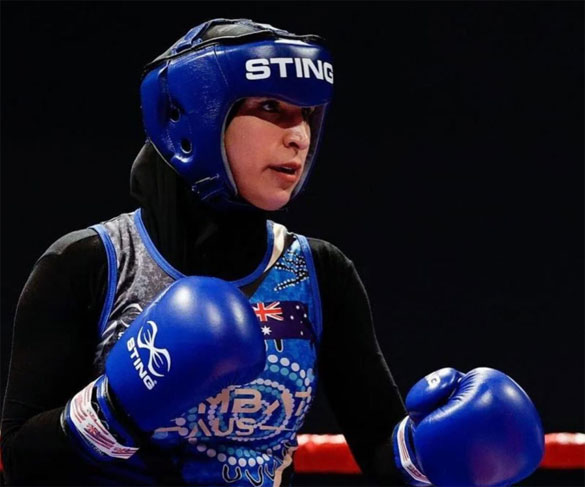 Tina Rahimi. Pic: Instagram
--------
Australian boxer Tina Rahimi has released a statement opposing France’s ban on the hijab for French athletes at the 2024 Paris Olympics.
Her comments come after French sprinter SounkambaSylla, who is a competitor in the 4×400 meters relay, was banned from taking part in the opening ceremony on Friday with her hijab on.
“Women have the right to choose how they want to dress. With or without (the) hijab. I choose to wear the hijab as part of my religion, and I am proud to do so,” 28-year-old Rahimi wrote on her Instagram account.
“You shouldn’t have to choose between your beliefs/religion or your sport. This is what the French athletes are forced to do. (The hijab ban only affects French athletes). No matter how you look or dress, what your ethnicity is or what religion you follow, we all come together to achieve that one dream: to compete and to win. No one should be excluded. Discrimination is not welcome in sport, specifically in the Olympics and what it stands for.”
Rahimi is Australia’s first Muslim boxer to compete in the Olympic Games and will make her debut on Friday in the women’s featherweight division.
She won bronze for Australia at the 2022 Commonwealth Games in Birmingham, and is the reigning Pacific Games champion.
Following a backlash from some athletes and social media users, French Sports Minister Amelie Oudea-Castera allowed SounkambaSylla to participate in the opening ceremony by wearing a cap to cover her hair.
France’s hijab ban only applies to French athletes competing at the Games – it does not apply to visiting competitors.
In June, a coalition of groups including Human Rights Watch and Amnesty International wrote to the International Olympic Committee condemning the ban and urging IOC intervention.
“The bans imposed by the French sports authorities are discriminatory and prevent Muslim athletes who decide to wear the hijab from exercising their human right to play sport without discrimination of any kind,” the letter said.
“The bans also fly in the face of the human rights requirements for host countries and the IOC Strategic Framework on Human Rights, as well as being antithetical to the fundamental principles of Olympism.”
France has a long history of seeking to regulate or ban the wearing of religious items – especially Islamic symbolism – in the name of laïcité (secularism).
Source: 5pillarsuk.com
https://5pillarsuk.com/2024/07/29/australian-muslim-boxer-opposes-france-hijab-ban-at-olympics/
--------
FIFA confirms Iran’s progress in accepting women to football stadiums
Jul 29, 2024
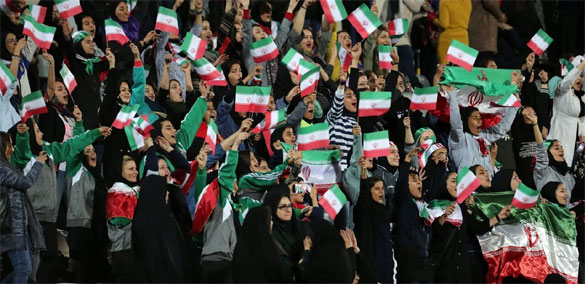 Tehran, IRNA - The International
Federation of Association Football (FIFA) has confirmed that Iran has made
progress in recent years in allowing women to attend stadiums to watch football
matches.
Tehran, IRNA - The International
Federation of Association Football (FIFA) has confirmed that Iran has made
progress in recent years in allowing women to attend stadiums to watch football
matches.
------------
Tehran, IRNA - The International Federation of Association Football (FIFA) has confirmed that Iran has made progress in recent years in allowing women to attend stadiums to watch football matches.
“This progress has been gradual, with international matches, then domestic league matches in Tehran, and finally more and more domestic league matches across Iran now seeing women in attendance,” FIFA said in a statement to The Athletic published on Monday.
The statement came in response to claims that Iran is still barring women from attending football matches as spectators.
“FIFA believes in engagement and dialogue and this approach has shown results as demonstrated by the obvious progress since 2018” said the world football’s governing body.
FIFA said, however, that Iran had allocated enough space to female fans of football teams during the past edition of its professional football league.
“According to the latest reports, close to half of all stadiums and matches in Iran’s top league saw women attending matches in the past season,” it said.
Source: en.irna.ir
https://en.irna.ir/news/85552222/FIFA-confirms-Iran-s-progress-in-accepting-women-to-football
--------
Woman athlete raises flag of solidarity between Iran, Palestine
Jul 29, 2024
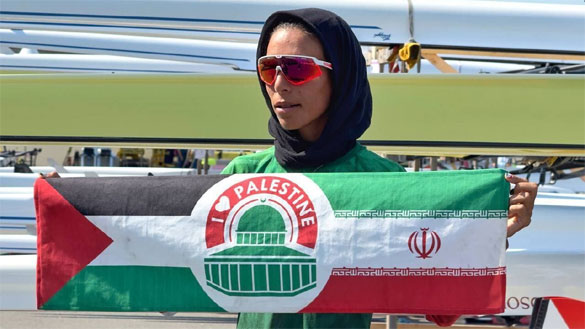 Paris, IRNA - Iran's Olympic rowing
woman athlete raised the flag of solidarity between Iran and Palestine during
the Paris Olympic Games.
Paris, IRNA - Iran's Olympic rowing
woman athlete raised the flag of solidarity between Iran and Palestine during
the Paris Olympic Games.
----------
Iranian rowing athlete ZeinabNorouzi appeared in the competitions with the flag of solidarity between Iran and Palestine in support of the oppressed people of Palestine.
This important event took place during today's rowing competition at the 2024 Paris Olympics.
Source: en.irna.ir
https://en.irna.ir/news/85552367/Woman-athlete-raises-flag-of-solidarity-between-Iran-Palestine
--------
Saudi Arabia’s RSIFF hosts ‘Women in Cinema’ gala in Cannes
May 19, 2024
DUBAI: Saudi Arabia’s Red Sea International Film Festival (RSIFF) hosted the “Women in Cinema” Gala in partnership with Vanity Fair Europe in Cannes on Saturday, attracting celebrities from across the world.
The glitzy gala dinner took place after RSIFF presented the “Women in Cinema” panel discussion during the Variety Global Conversations event earlier in the day.
The panel featured Egyptian actress and model Salma Abu Deif, Indian actress Kiara Advani, Thai actress, model and singer SarochaChankimha (also known as Freen), Saudi actress Adhwa Fahad, Saudi singer and actress AseelOmran, and French-Senegalese director RamataToulaye-Sy. The talents spoke about their early beginnings, their career breakthroughs and their sources of inspiration during the panel talk.
Those stars and many more attended the evening’s festivities at the iconic Hotel Du Cap.
“The Ministry of Ungentlemanly Warfare” actress Eiza González, model Ikram Abdi, supermodel Naomi Campbell and actress DorraZarrouk were among the star-studded guest list.
Rosie Huntington Whitley, Richard Gere, Minnie Driver, Raya Abirashed, Alexa Chung, Wallis Day, Lucas Bravo and Uma Thurman also attended the event.
“The Red Sea International Film Festival (#RedSeaIFF) and Vanity Fair Europe reunited to host the #WomenInCinema Gala, championing the achievements of rising female talent on both sides of the camera who are reshaping the film industry in Saudi Arabia, Africa, Asia and the Arab world,” the Red Sea Film Foundation posted on Instagram.
Saudi Arabia is playing a key role at the 77th edition of the Cannes Film Festival, having supported four projects that are screening at the event.
“Norah,” “The Brink of Dreams,” “To A Land Unknown” and “Animale” will screen as part of the Un Certain Regard, Directors’ Fortnight and Critic’s Week programs at Cannes. The Red Sea Film Foundation supported the projects through the Red Sea Fund and the Red Sea Souk.
RSIFF CEO Mohammed Al-Turki has been spotted on multiple red carpets throughout the event so far and walked the opening night’s red carpet alongside Jomana Al-Rashid, CEO of the Saudi Research and Media Group.
Source: arabnews.com
https://www.arabnews.com/node/2512911/lifestyle
--------
Kingdom honors Saudi women in Ireland for ‘remarkable achievements’
July 30, 2024
DUBAI: The Kingdom’s envoy in Ireland honored several Saudi Arabia women on Monday for their “remarkable achievements” in various fields.
At the meeting with the achievers, Abdulsalam bin Abdullah Al-Mushaiti, the acting charge d’affaires, said this was a result of the Kingdom’s empowerment of females.
The event was attended by Dr. Abdulaziz bin Fahd Al-Fuhaid, the acting head of the cultural attache’s office in Dublin, the Saudi Press Agency reported.
Those honored included Dr. Janan Al-Dihan for supporting Saudi Arabia students in Ireland; Samar bintAbdulmohsen Al-Sultan for her work in technology at Meta; and student Wad Adnan Bakdam, who won a gold medal at the ITEX 2024 competition for inventors in Malaysia.
Source: arabnews.com
https://www.arabnews.com/node/2559236/saudi-arabia
--------
Final four battle it out for MLBB Women’s Invitational title at Esports World Cup in Riyadh
July 27, 2024
RIYADH: Audiences are set to witness a monumental moment in professional women’s esports history as the Esports World Cup hosts the Mobile Legends: Bang Bang Women’s Invitational 2024 semifinals and Grand Final on Saturday.
One of the most highly anticipated competitions heading into the eight-week tournament at Boulevard Riyadh City, the MLBB Women’s Invitational debuted on Wednesday by welcoming 12 clubs on the world stage.
After three days of matchups, the last four standing are within touching distance of legacy status — with one assured of a place in the women’s esports hall of fame come Sunday morning.
The first semifinal between hometown heroes Falcons Vega and French club Team Vitality is at midday on Saturday. Saudi Arabia’s Falcons Vega head into the contest with confidence sky-high after whitewashing every opponent that they have faced — and many are tipping them to go all the way.
Awaiting the victors are the winners of the other semifinal featuring Victory Song Gamers of Russia and Filipino outfit Omega Empress. This showdown starts at 3 p.m. live from the SEF Arena where the grand final takes center stage hours later at 6 p.m.
The Esports World Cup is running from July 3–Aug. 25 with 22 tournaments across 21 titles during its eight-week duration.
Alongside the MLBB Women’s Invitational, audiences can also catch the Overwatch 2 quarter-finals and main tournament action from the PUBG Mobile World Cup 2024 on Saturday. Both these competitions end on Sunday before new tournaments headline Week 5, starting on Wednesday, July 31.
Source: arabnews.com
https://www.arabnews.com/node/2557506/sport
--------
Afghan Female Professors Condemn Salary Reduction As Humiliating And Unjust
July 29, 2024
Female professors at Afghanistan universities have declared that the reduction of their salaries to 5,000 Afghanis is “humiliating.”
These professors assert that while students need to benefit from their expertise and experience, the Taliban has decided to confine female staff to their homes.
A group of female professors from Afghanistan universities, who are members of the academic staff at the Ministry of Higher Education, state: “We studied for at least twenty years, conducted research, and engaged in scientific research, but for the past two years, we have been sitting at home, struggling with the worst mental and emotional conditions.”
These university professors add that in a society where customs replace reason, human needs, and even religion, no more can be expected.
These female experts say: “We waited hoping that the Taliban would recognize that the children of Afghanistan need us and end the humiliation and insults at the university gates. However, not only has nothing changed, but the salaries of academic staff have been aligned with those of the laborers.”
On June 5, the Taliban administration announced that HibatullahAkhundzada, the group’s leader, has set the salaries of all female employees in government offices at 5,000 Afghanis.
The Taliban’s salary reduction for female government employees initially caused confusion and delays, including for teachers. Protests by female employees from hospitals and schools led the Taliban to clarify that only the salaries of those confined at home would be cut.
Among these employees are female professors at Afghanistan universities, who, according to the Taliban’s decision, are not allowed to teach male students at universities. The Taliban has banned higher education and advanced learning for girls beyond the sixth grade.
Female university professors in Afghanistan have described the 5,000 Afghani salary allocation for female academic staff as an act of oppression and injustice by the Taliban, expressing uncertainty about how long the humiliation and disrespect towards female university professors will continue.
The ongoing situation highlights a severe disregard for the contributions and rights of female academic professionals in Afghanistan. The reduction of salaries, coupled with restrictions on their professional activities, underscores a broader pattern of systemic discrimination and suppression.
As these female professors continue to face these adversities, there is a pressing need for international attention and intervention to address these injustices and advocate for the rights of women in Afghanistan’s education sector.
Source: khaama.com
https://www.khaama.com/afghan-female-professors-condemn-salary-reduction-as-humiliating-and-unjust/
--------
4 Facts You Didn’t Know About Egypt’s Olympic Beach Volleyball Women’s Team
July 30, 2024
Egypt is set to take beach volleyball by storm as MarwaAbdelhady and DoaaElghobashy prepare to compete against Italy and Spain in the coming days. The pair are known for their impressive track record within the sports, having recently won gold at the 2023 African Games in Accra, Ghana, but it’s the fact that they refuse be swayed by pressures to conform that make them a truly inspiration pair.
Historically, women’s beach volleyball players wear swimwear when competing – however, both Marwa and Doaa will be donning their hijabs while playing at the Paris 2024 Olympics.
Just days ago Team France announced it would ban its competing members from wearing the hijab during the games.
“I have worn the hijab for 10 years. It doesn’t keep me away from the things I love to do, and beach volleyball is one of them,” Doaa told British newspaper The Independent back in 2016.
In the lead up to their game today, Bazaar Arabia shares a few little-known facts about these inspirational athletes here.
4 Facts You Didn’t Know About Egypt’s Olympic Beach Volleyball Women’s Team
Doaa’s Previous Olympic Impact
When Doaa made her debut in the games in Rio 2016 at the tender age of 19, she (along with her partner at the time) became the first Arab and Egyptian athletes to compete in women’s beach volleyball at the Olympics. Though she was on track to qualify for the Tokyo 2020 games, Doaa unfortunately had to sit them out when a fellow competitor on the men’s beach volleyball team contracted Covid.
A dynamic pair
Doaa has returned to make history with her new teammate, Marwa, who is making her Olympic debut at the Paris 2024 games.
The power of friendship
Marwa and Doaa are close friends on and off the sandy courts – and its their friendship that Doaa believes makes for a strong foundation for the team, helping them perform to the best of their abilities at the Olympics.
“We are friends away from volleyball, which really helps us understand each other on the court. Being in sync is the most important thing, because it’s just the two of us on the court, we need to be able to communicate just by looking at each other, without talking,” she told The National in a recent interview.
Unmatched chemistry
This is not the first time they’ve been teamed up together. Marwa and Doaa have played numerous matches of beach volleyball together before reaching the Olympic Games, achieving significant success each time.
Being teammates first at the Al Ahly Sporting Club, then at El Shams club, their consistent victories truly highlight their remarkable chemistry.
Source: harpersbazaararabia.com
https://www.harpersbazaararabia.com/culture/people/egypt-olympic-volleyball-team
--------
A Pay Cut for Afghan Women Working in the Public Sector: “What can you do with 5,000 afghanis?”
29 Jul 2024
The order by the Supreme Leader of the Islamic Emirate of Afghanistan (IEA), HibatullahAkhundzada, to cut the salaries of women on the public payroll to just 5,000 afghanis (70 US dollars) a month was a bombshell. The Amir’s order was short and ambiguously worded, driving anxiety and speculation: did it apply to all women working in the public sector – bureaucrats, teachers, doctors, policewomen, prosecutors – who go to the office every day? Or only those the Emirate has barred from coming to work, but who, up until now, have been paid in full? JelenaBjelica and Roxanna Shapour (with input from the AAN Team) have been hearing from women who are or were working in the public sector about the Amir’s order and how it has affected their lives and family finances. They told AAN about the difficulties they already had making ends meet and their concerns about how they would weather the financial pressure if their salaries were cut.
News of the pay cap emerged in the last days of May 2024 after the acting Director of the Prime Minister’s Office of Administrative Affairs (OAA), Sheikh Nurul-Haq Anwar, issued a circular instructing all government departments to set the salaries of all female staff at 5,000 afghanis. The circular had been prompted by an order signed by the Islamic Emirate’s Supreme Leader, HibatullahAkhundzada, which said:[1]
The salaries of all female workers who were employed by the previous government and are currently receiving a salary from the Islamic Emirate should be set at 5,000 afghanis in all budgetary and non-budgetary units,[2] regardless of their previous wages (their salaries should all be the same).
This sentence appears to have been the order in its entirety. It alone was quoted by many media outlets, on social media and in official letters, which were widely distributed (see, for example, BBC Pashto on 6 June and a letter from the Ministry of Economy below).
The news sparked confusion, concern, indeed fear, among Afghan women working in the public sector, which in Afghanistan is referred to as the civil service (see, for example, this report on teachers from ToloNews).[3] Women employed in the health sector in Herat and Kabul held protests, calling on the government not to reduce what they said were their already meagre wages (see, for example, Amu TV here). There was also condemnation from international human rights bodies; the United Nations Human Rights Commissioner, Volker Türk, called on the IEA to rescind the measure, saying “[t]his latest discriminatory and profoundly arbitrary decision further deepens the erosion of human rights in Afghanistan,” (the full statement, issued on 13 June 2024, can be read here).
The vagueness and lack of specificity in the Amir’s one-sentence order sparked questions by employees, the media, social media users and apparently even some state institutions, which urgently sought clarification. For example, the Ministry of Education’s internal correspondence, which was widely shared on social media (see the picture below), asked “whether the decree of His Excellency, the Supreme Leader, applies to all female employees or only those who are not reporting for duty.” The letter also explained that it would take time for the ministry to amend its automated salary payment system to accommodate the change. In response, the acting Minister of Education ordered that “the salaries of all female employees should be suspended until further notice,” presumably until the Amir’s office provided further guidance (see this post on X from 30 June and an English translation below).
The confusion was only cleared up a month later, and then just partially, when on 7 July, ToloNews tweeted some “breaking news”:
[T]he Ministry of Finance confirms to Tolonews that female employees who come to work every day are currently receiving their salaries just like male employees.
The spokesperson of the Ministry of Finance adds that the monthly salaries of female employees who do not show up for their duties have been set at five thousand afghanis.
The following day, Pajhwok quoted the spokesperson of the Ministry of Finance, Ahmad Wali Haqmal: “Only those women who have been compelled to stay at home will be paid 5,000 afghanis … all [other] female government employees, including teachers and doctors, who report to their duties, will receive their salaries as before.”
However, as of this writing, no official written statement or new order clarifying the particulars of the Amir’s instructions has been issued.
The situation is still confused, because it is not clear how the order will be implemented. As the interviews below show, a month after the order, most female employees still did not know how much they would be paid.
What women say
To understand how the order is affecting female civil servants and their families, we interviewed 18 women. Our sample was based on accessibility, that is, we interviewed women in places where we had contacts and/or our network had access. Our interviewees included women who were currently working, those who had been told to stay at home, but were still receiving a salary, and two women who have lost their jobs since the Emirate takeover. We ensured geographic diversity by talking to women in the provinces – Daikundi, Kandahar, Zabul, Ghazni, Balkh, Bamiyan, Panjshir, Sar-e Pul, Farah and Paktia— both in rural and urban areas – and in the capital. The interviewees included a mix of professions – midwife, teacher, prosecutor, administrator, health professional, school principal, etc. The interviews were conducted between 2 and 11 July 2024 and comprised the following questions:
How many people are contributing financially to your household?
How much was your salary under the Republic?
How much is your salary under the Emirate?
Are you working from the office? Are you being paid, but not going to work?
When did you last receive your salary?
Was it 5,000 afghanis or was it the same amount you had been receiving under the Emirate?
Do you normally get a salary top-up in addition to your base salary (for length of service, rank, qualifications, etc)?
Have you been officially informed that your salary will be reduced?
If there was a reduction in your salary, how will it affect the economy of your household and your life?
The table below highlights answers to some of these questions. We have intentionally omitted the occupation and location of interviewees from the table below to protect their privacy. Quotes later in this report do indicate the interviewee’s profession and province while providing no other identifying information.
As can be seen, 16 of our 18 interviewees were still on the public payroll. Of the remaining two, one had been fired in May 2022 and the other said she had not heard from her employer since January 2024. However, of the 16 employed women, only 11 were going to work; five had been sent home after the IEA came to power but continued going to the office to sign their attendance sheets as instructed by the Emirate. Of the 11 that were going to work, one had been hired after August 2021 and another who was told to stay home in August 2021, had, in the meantime, been called back into the office because of an increased workload.
The average number of members in a family in our sample was 7.2. Half of the interviewees – nine – were the sole breadwinners for their families.
Most of the women in our sample had already seen cuts in take-home pay in line with the Ministry of Finance’s December 2021 salary reductions, which applied to all workers, men and women. The cuts varied according to grade, but the average was a 9.8 per cent cut.[4]
Three women said they were still receiving the same salaries as under the Islamic Republic of Afghanistan (IRA). Three others had seen their salaries significantly reduced after August 2021 – one after being demoted from grade 2 to grade 3.
One interviewee said the Emirate had increased her salary, and later her pay was effectively increased again by an additional 1,000 afghani (USD 14) a month after the Emirate stopped deducting pension contributions in April 2024.[5]
None of our interviewees had received the reduced salary of 5,000 Afghani at the time of the interview, nor had they received their salary for the month of Saratan (22 June – 21 July). 10 out of the 16 had received their Jawza (22 May – 21 June) wages. Three had last been paid in Saur (22 April – 21 May), one in Hamal (21 March – 21 April) and two not since the final month of the last financial year, in Hut (22 February – 20 March). Such delays in the payment of salaries are not unusual.
How did the women find out about the cut?
Only three interviewees said their superiors had officially told them that their salaries would be reduced. A teacher in Farah province said they had been informed about the cut at an official meeting at the Department of Education and told to prepare themselves. She said the payment of salaries for the month of Saratan (21 June – 20 July) had been deliberately delayed because of the new order.
All other interviewees had heard about the planned reduction from their co-workers, group chats, the news or social media. Every interviewee described how anxious and fearful it had made them. For example, one woman working for the Ministry of Labour and Social Affairs in Sar-e Pul had heard about the news on a group chat:
An official letter [maktub] saying that the salaries of women who aren’t working will decrease to 5,000 afghanis was posted in a [WhatsApp] group. I don’t know much about it because I haven’t been officially informed, but the letter was posted in a WhatsApp group that was created to deal with the central government’s budgetary issues. There are employees from different government offices in the group.
An employee of the National Statistic and Information Authority (NSIA) in Daikundi said she heard about the planned reduction on the news and social media. She was at a loss to explain why women civil servants who did the same job as their male colleagues would have their salaries reduced:
We haven’t received any official letters … but I’ve heard on the news and also on social media that a decree has been issued to reduce the salaries of female staff. It’s really upsetting for us because we work as hard as [our] male [colleagues], so why do they want to reduce our salaries? This is discrimination against women. Today, the finance manager said a letter had come saying women’s salaries will be 5,000 afghanis from the month of Jawza [22 May-21 June]. I hope it’s not true. Instead of [giving us] an increase, they [plan to] reduce our salaries! They shouldn’t do it. Delays in paying our salaries are normal, but the work pressure is the same as it was in the past…. This news will cause women psychological difficulties.
A prosecutor in Kabul who goes to work every day said she had heard about the salary cut from the media and despite her colleagues’ reassurances that the order would not affect her, the threat of a reduction in her wages had left her acutely anxious:
I first heard the news through the media. Later, an order came to our office. But officials in the department said it can’t be implemented [because] the decree doesn’t have a wareda and sadera [date of receipt or execution]. Until the issue is clarified, [they said]: Don’t worry. But it did really worry me. A few days later, an official letter did come from the Ministry of Finance and made it clear that the salaries of those who stay at home would be 5,000 afghanis and those who come to work every day would have the same salary as before – there would be no changes in their salaries.
A midwife in Ghazni told a very similar story.
We haven’t been informed officially, but I heard from different sources and saw on social media that the government has decided to reduce the salaries of female employees. They’d already done it once [the December 2021 cuts to all employees’ wages] when they came to power and that’s already had its [ill] effects. People’s financial circumstances aren’t good. They can hardly manage to cover their daily expenses as it is. So, they shouldn’t reduce [our salaries] again.
If our interviews are any indication, the vagueness of the order’s wording caused a great deal of distress to female employees and their families, even those who might eventually discover they were not targeted for a wage cut. The fact that the order was not transmitted directly or officially to female employees, but was rather widely reported and discussed on media and social media, only exacerbated the confusion and concern.
Women in the public sector
The public sector in Afghanistan has been the biggest employer of women in the last 20 years. Under the last government, the number of women working in both the public and private sectors had been rising, precipitated in part by the Republic’s plans and policies designed to facilitate their access to jobs and other economic opportunities.[6] In those years, 18.5 per cent of Afghan women participated in the country’s labour force, but only 13 per cent of those women were in salaried positions, mainly in the public sector.[7]
The proportion of women working in the public sector, Afghanistan’s biggest source of paid work for both men and women, has fluctuated over the last 20 years between 18 and 26 per cent. In 2005 and 2020, for example, women accounted for 26 per cent of public sector workers, but in every year between 2014 and 2018, as well as in 2021, they accounted for 22 per cent.[8] A year after the fall of the Republic, the proportion was still 21 per cent (this was measured for the Afghan year, then 1401, equivalent to March 2022 to March 2023).[9]
Far fewer women were ever employed in higher grade positions; see the 2020 data in the graph below as an example. Furthermore, women’s participation varied significantly between ministries, with women underrepresented in all ministries except the Ministry of Women’s Affairs (MoWA) and the Ministry of Labor, Social Affairs, Martyrs and Disabled. The IEA abolished Women’s Affairs in 2021 and transferred most of its female staff in the provinces to the provincial Directorates of Vocational Training, which itself has recently been merged with the Ministry of Labour and Social Affairs.
The total number of women working in the public sector under the Islamic Emirate remains elusive, with far higher figures than NSIA’s being reported by some government officials. For example, in its 23 July 2023 accountability session, the Ministry of Economy (MoE) said that “92,000 women work in the education sector and 14,000 in the health sector, they work in airports, banks, but as already mentioned, efforts are ongoing to prepare a suitable environment for women.” This would mean that some 106,000 women work in the education and health sectors alone, not taking into account women employed in other sectors. The figures are drawn from the AAN 2024 report ‘How The Emirate Wants to be Perceived: A closer look at the Accountability Programme’ (p 57). The same AAN report quotes the Ministry of Interior (MoI) saying that around 1,955 policewomen were serving in different fields and receiving salaries and the Ministry of Public Health reporting that women accounted for 22 per cent of its personnel (p 60).[10] It is not known, therefore, the potential number of women hit by the Amir’s order, but it is clear it is substantial.
Anxieties about an uncertain future
The abrupt nature of the Amir’s order put a spotlight on the precariousness of many Afghan women’s lives, in this instance, those working in the public sector. Their lives were already difficult, but they would have counted themselves among the lucky few who still had a regular income. Trying their best to keep their heads above water and provide for their families, this latest incursion on their right to a livelihood threatens to remove a safety net because, as one said: What can you do with 5,000 afghanis?
The quotes below reflect answers to the last question from our questionnaire: If there was a reduction in your salary, how would it affect the economy of your household, and your life? All interviewees said a salary cut would affect their lives dramatically. Many said they would have to leave their jobs because they could not survive on the reduced income. The midwife from Ghazni, for example, was concerned about how the anxiety was affecting their quality of work.
If someone is worried about their own life and expenses, how could they think about doing their job properly? People are already anxious about the news and, if it really happens, they’ll be hit hard. I’m the only person working in my family. No one else works because unemployment has increased. The cost of everything is very high – there’s the house rent, the electricity bill and other expenses. How can we manage if they reduce our salaries? They should have a thought for the people and if they don’t help or increase their salaries, at least, they should not reduce them.
Another midwife, from Kandahar, who sometimes gets paid by an NGO,[11] said she would leave her job if her salary was cut:
We hope the reduction won’t take place. We’re barely keeping on top of the necessities now. If the salaries are reduced, this’ll definitely harm the economy of our household badly. I’ll leave my job. So far, the salary [I get] from the NGO has supported our household. But if the NGO stops paying my salary and the government reduces my wages, I won’t go to the hospital even though leaving the job and losing even this 5,000 afghanis will badly affect my family’s finances, but it’s also very difficult to work full-time and do night shifts.
A policewoman from Kabul, who had already taken her son out of school so that he could work and help support the family, told us that if the Islamic Emirate really does reduce salaries, it will be extremely hard for women, especially widows like her who have no adult man to support them and are not qualified for any work other than their current occupation:
My son sells plastic bags because I can’t cover all the family’s expenses with my income. He has to work even though it’s not his time to work – he should be in school. He only makes 50 afghanis (USD 71) a day, with a lot of difficulty, and sometimes he can’t sell any bags. It’s been a month since he fell ill and we’re wondering what to do. The cost of living is very high and our income is low. 5,000 afghanis would only be enough for the rent and electricity. The taxi for me to go to and from work is expensive. Sometimes, I get sick and have no money to go to a doctor. 5,000 afghanis can’t cover all our expenses. I hope this is only a rumour or a lie and they won’t reduce my salary.
I ask the Islamic Emirate not to reduce the salary of any employee who’s working, whether she’s a policewoman, a doctor or a teacher. We’ve been serving our country. We carried on with the wages we got and lived with many problems. If they don’t increase the salaries, at least I hope they don’t reduce them.
The NSIA employee in Daikundi said that reducing the salaries of female civil servants amounted to an injustice:
If they really reduce the salaries of female employees, it will be a great disservice to women. It’s an injustice that’s done to them. Instead of reducing salaries, they should increase them because everything is expensive and we manage our lives with the wages they pay us. For example, from my salary, I pay 1,500 [USD 21] a month for the car fare to and from work. I also pay 1,500 afghanis a month for lunches. All our colleagues pay this much for lunches because the government doesn’t provide us with lunch and doesn’t pay for it either. My family is big and we have a lot of expenses. The price of goods has reached its peak. I spend 5,000 afghanis a month to buy flour, rice and oil. If the government pays us 5,000, we can’t do anything with it. It is really upsetting and so discouraging.
She appealed to the government:
We ask the government, if it has made such a decision, they should change it. Let us work in our country alongside men. Women work like men, so why should their income be reduced?
A teacher in Paktia said that all female teachers in her province were working because there was a teacher shortage:
The salaries that I and other teachers receive are very low and not enough for our families. We have teachers who are their families’ breadwinners. What can they do with a salary of 5,000 afghanis? They cannot meet their needs…. What should they do with their children’s school expenses, illnesses, food and clothes? These decisions cause problems for everyone.
She went on to talk about the plight of female public sector workers who have been forced to stay home since the re-establishment of the Emirate:
In general, all women [civil servants], whether they go to work or [have to stay] at home, should return to their duties because women have [only] stayed at home according to the decision of the Emirate. I have friends who are suffering immensely because they’re at home. They want to return to their duties. We need women in every department and they should pay the salaries of all women.
She went on to expand on the overall economic situation and compared the current circumstances for public sector workers to life and work under the Republic:
In general, the people’s economy has been badly damaged. People have become unemployed…. government offices are closed to women. Most of those who worked in the previous government are now unemployed. They’ve not been asked to come to their duties again. People’s purchasing power is weakened. Security is good, but security alone cannot change people’s lives…. Poverty and hunger can also kill people. Unemployment is a big problem that all people struggle with … but especially women. This recent decree regarding the reduction of women’s salaries will make their lives worse…. Under the previous governments, if the salaries were low, they provided other facilities for their employees. For example, they gave them coupons. The rents were lower, the price of goods was not so high and people could manage their lives with lower wages.
The prosecutor in Kabul talked about the entreaties of her female colleagues who are still forced to stay at home and came to the office only to sign their attendance sheets:
Many of them developed psychological problems when they heard their salaries were going to be reduced. Most are the only breadwinners of their families – they’re widows, or they don’t have anyone else [in the household] who can work, or they can’t find work. Every day, our colleagues call and ask what changes have been made regarding salaries. Just last week, our colleagues who had come in to sign [their attendance sheets] were crying and begging the head of our department to convey their message to the authorities not to reduce their salaries. You can’t do anything with 5,000 afghanis. They asked the head of our office to ask the authorities how women who are breadwinners can live with 5,000 afghanis.
The teacher in Farah said news of the salary cut had been a blow coming on top of the cost of transport to faraway locations where teachers had been transferred to:
Recently, there have been forced transfers. The IEA has forced some of us to go to teach in the districts and villages. They say: You should go and teach in remote areas; that is your jihad and if you don’t have a mahram, you should leave your job. A lot of women did leave their jobs because the locations were far away and they didn’t have a mahram. For women who teach far away [from their home] areas, 5,000 afghanis can’t cover even the car fare. What about their other expenses? Most women like me are the only breadwinners of their families because their husbands are unemployed now. It’s also natural that we get sick sometimes and we need to pay for doctors and medicine. How can we cover all these expenses?
A high school teacher from Mazar-e Sharif who, like everybody else, had already seen her salary reduced since the Emirate took power, was particularly bleak about the future:
My salary has already been cut and that has had an ill effect. My purchasing power has already weakened. It’s not my fault. They’ve forced us to stay home and not teach. Now, they’re going to reduce [the salary] again. They want us to die gradually, and that is all it is.
From being told to stay home to cuts in pay
Two days after it took power, spokesperson ZabihullahMujahid said that men and women would be working “shoulder to shoulder” in the Islamic Emirate.
The issue of women is very important. The Islamic Emirate is committed to the rights of women within the framework of Sharia. Our sisters, our men have the same rights; they will be able to benefit from their rights. They can have activities in different sectors and different areas on the basis of our rules and regulations: educational, health and other areas. They are going to be working with us, shoulder to shoulder with us. The international community, if they have concerns, we would like to assure them that there’s not going to be any discrimination against women, but of course within the frameworks that we have (see full transcript on Al Jazeera).
The pledge had been echoed earlier in the day by a member of the Taleban’s Cultural Commission, EnamullahSamangani, when he announced not only the IEA’s general amnesty for those who had worked for the Republic, but also that they were ready to “provide women with [the] environment to work and study, and the presence of women in different (government) structures according to Islamic law and in accordance with our cultural values” (see France 24).
A week later, the IEA appeared to change its stance: Mujahid said women should stay at home, the BBC reported on 24 August 2021: “Our security forces are not trained (in) how to deal with women – how to speak to women (for) some of them,” MrMujahid said. “Until we have full security in place … we ask women to stay home.” He called it a “temporary procedure.” Reports soon started emerging in the media that women working in government were being denied access to their places of work (see, for example, The Guardian on 19 September 2021).
In televised debates, in news and on social media, women raised concerns about their future under IEA rule and predicted that the qualifier “according to Islamic law and in accordance with our cultural values” would be used to deny them their rights as would the IEA refrain that they merely wanted to create an appropriate environment for women to be active in the workforce (see for example this 27 August 2021 Afghanistan International debate between the Republic’s last Deputy Minister of Education, Victoria Ghauri and a member of the Emirate’s Cultural Commission, AnamullahSamangani and this 10 September 2021 ToloNewsFarakhabarprogramme with women’s rights activist, TafsirSiaposh and Islamic scholar Abdul Haq Emad debating the right of women civil servants to return to work).
Finally, on 20 September 2021, the Emirate ordered women working for the government to stay home until further notice.[12] What emerged was a situation where most jobs previously filled by women were handed over to men and only those women whose jobs could not be carried out by a man, such as primary school teachers and health workers, were allowed to continue working.
The situation continued much the same until the recent order, although with greater pressure on women workers created by the Amir’s ban on women working for NGOs, international organisations and embassies issued in December 2022, the closure of universities to girls in the same month and the firming up of the ban on girls’ education beyond primary school. In the Accountability Sessions in summer 2023, there was even boasting about continuing to pay women who were at home, for example, by Director of the Secretariat of the Supreme Court Mufti Abdul Rashid Saeed:[13]
Despite these limits [imposed by foreigners, presumably a reference to sanctions], the Islamic Emirate continues to pay the salaries of all the employees who serve in the government. Women are at home, but the Islamic Emirate is dedicated to upholding their rights and according them the privileges they once enjoyed. Women continue to occupy the majority of office positions. In accordance with sharia, we grant women full rights.
Statements from various officials indicate that the plan to reduce salaries will affect only those women who have been forced to stay at home. The government’s motivation must be cutting costs. Pressure on the budget, which was only approved two months into the financial year, indicating a wrangling over the public finances, has been reported elsewhere, for example by the World Bank, which said in May that increased planned spending for 1402/March 2023-24 had left a budget deficit of 18.4 billion afghanis (USD 2.6 m). In earlier years since the Emirate took power, it said, quoting “anecdotal information,” the deficit had been covered by “treasury cash reserves left over from the republic era.” However, especially given the Emirate lacks borrowing options to finance its deficit, “the only viable strategies are to increase domestic revenues or cut unnecessary spending.”[14]
Cutting the wages of women compelled to stay at home may make budgetary sense and it is a relatively easy way, politically, to cut costs, given they are a group with little political clout or public voice. However, for the women themselves, the loss of income will be a heavy blow, especially as they have been forced to be economically inactive through no fault of their own. They feel they are left out in the cold. Moreover, it should be stressed that, nearly two months after news broke that the IEA planned the salary cap, there is still no official word about how it is to implement its plan and who, exactly, it applies to. Even if women fortunate still to be working in the public sector continue to be paid their salaries in full, the vaguely worded order and lack of clarity ever since has left them and their families needlessly racked with anxiety about the future.
Source: reliefweb.int
https://reliefweb.int/report/afghanistan/pay-cut-afghan-women-working-public-sector-what-can-you-do-5000-afghanis
---------
UNICEF: Over 40% Of Women In Afghanistan Affected By Anemia
July 30, 2024
The United Nations Children’s Fund (UNICEF) has reported that over forty percent of women in Afghanistan suffer from anemia.
On Monday, July 29th, UNICEF shared a video on X stating that forty percent of women in Afghanistan are affected by anemia.
The organization distributes minerals and vitamin supplements to pregnant women to prevent anemia and nutritional deficiencies, with support from various institutions in different regions of Afghanistan.
UNICEF explains that Multivitamin Mineral Supplements (MMS) protect mothers from anemia and nutritional deficiencies, ensure safe and healthy pregnancies, and result in babies being born at a healthy weight.
The high prevalence of anemia among women in Afghanistan underscores a critical public health issue that requires immediate attention and intervention.
UNICEF’s efforts to provide essential supplements are vital in addressing nutritional deficiencies and improving maternal and infant health. Continued support and collaboration with local and international organizations are essential to combat anemia and ensure the well-being of women and children in the region.
Source: khaama.com
https://www.khaama.com/unicef-over-40-of-women-in-afghanistan-affected-by-anemia/
--------
URL: https://newageislam.com/islam-women-feminism/australian-female-muslim-boxer-hijab-ban/d/132827