
Want To Ban The Burqa? Try Asking The Women Like Me First, Sarah Pochin, the UK Reform MP
New Age Islam News Bureau
22 July 2025
· Want To Ban The Burqa? Try Asking The Women Like Me First, Sarah Pochin, the UK Reform MP
· Austrian Interior Minister, Claudia PlakolmSays It Will Ban Hijab In Schools For Girls Under 14
· Killing Of Rahma Ayad, An Algerian Nurse: Germany Has An Islamophobia Problem – And It’s Costing Muslim Women Their Lives
· Meet Dr. Abeer Al Obaidi, Saudi Arabia’s First Female Professor Of International Law And Human Rights
· TMoCATo Hold Exhibition By Modern Iranian Women Artists
· In First For Canada, Woman Convicted For ‘Family Support’ Role In ISIS
· UN ‘concerned’ as Afghanistan women arrested over Taliban dress code
· UNAMA Voices Concern Over Arrest of Women and Girls in Kabul
Compiled by New Age Islam News Bureau
URL: https://newageislam.com/islam-women-feminism/ban-burqa-women-asking-reform-mp/d/136252
------
Want To Ban The Burqa? Try Asking The Women Like Me First, Sarah Pochin, the UK Reform MP
Rabina Khan
21 July 2025
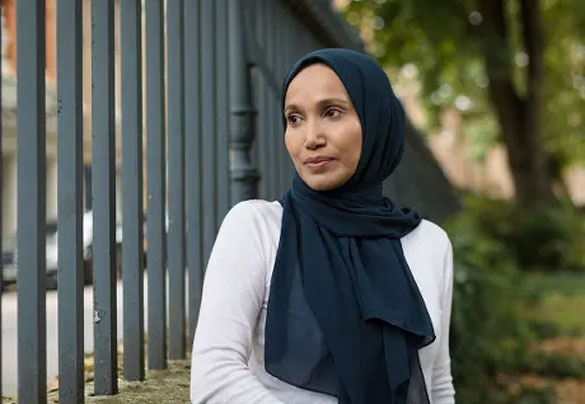
Rabina Khan, who wears the hijab, has criticised the political debate over burkas in the UK. (Shutterstock)
------------
When Sarah Pochin, the Reform MP, recently asked prime minister Keir Starmer whether Britain should follow France, Belgium, and Denmark in banning the Burqa, my mother - watching the clip beside me - tilted her head and asked, “What is she saying? 'Burger'?”
It wasn’t just a mishearing.
It was a reminder that in this country, politicians feel entitled to debate our clothing, our faith and our freedom - yet still stumble over the word Burqa. They discuss what Muslim women wear, but can’t pronounce it correctly. It’s not burger, and it’s not burk-ah. It’s boorkah.
The very least politicians can do, before legislating our lives, is get the name right.
Some might argue that since some Muslim-majority countries have banned the Burqa - that makes it a legitimate position. Morocco, Tunisia, and others have imposed restrictions, often in the name of modernisation, national unity, or security.
But authoritarianism should not be confused with liberation. The outcome is the same: women's agency is erased, and the state decides how we appear in public. That isn’t empowerment - it’s control, dressed up as reform.
In 2015, a white man approached me and asked: “What colour is your hair under your veil?” I replied: “It’s pink,” but didn’t ask him what colour his hair had been before he went bald.
That moment stayed with me because it revealed how people feel entitled to interrogate Muslim women.
I later wrote a book about that experience, My Hair Is Pink Under This Veil, chronicling my decision to wear the hijab and the questions, assumptions, and aggressions that came with it. The Burqa, like the hijab, has become a symbol onto which people project their fears, fantasies and frustrations.
But behind every veil is a person - thinking, choosing, living.
So when politicians like Sarah Pochin suggest banning the Burqa, they’re not just mispronouncing a word, they’re speaking for women like me without asking our opinion. Women like me who are voters, writers, public office holders and community builders. Our identities cannot be legislated away and our voices won’t be silenced - not by policy, not by prejudice, not by fear.
This is discrimination, and it’s happening in a country where 61% of young women from racial minorities already report facing bias at work.
The debate around Islam, inequality and integration shifts with every headline, political soundbite, crisis or act of violence.
Against this backdrop, Muslim women have had to fight to carve out our place in society.
How can we speak of integration in a Brexit era when Muslim women are still labelled "submissive" and white men feel emboldened to tear veils from our heads in public? When Muslim girls grow up amid poverty, deprivation, drug abuse and exploitation? When gender-based Islamophobia intensifies under the guise of national cohesion?
We must ask what the veil means - not just to Muslim women, but to those who react to it. Is it a personal expression of faith and identity? A misunderstood political symbol? Or a mirror exposing the anxieties of modern Britain?
Right-wing and nationalist forces have long exploited the veil as either a symbol of oppression or defiance, and labelled it something to fear.
I remember working on the Isle of Dogs in East London when the British National Party had a councillor elected. Combat 18 roamed the streets. A Muslim grocer had a pig’s head flung into his shop in broad daylight.
There was one estate where I had to support two Bangladeshi families to relocate after repeated hostilities. One mother had her headscarf pulled off while walking her children to school. The racists shouted: "Rights for whites".
A local police station had to assign female officers to escort children to Quranic classes. In another case, a white woman filed a complaint against her elderly Muslim neighbour for planting coriander instead of roses in her garden. When I asked if the woman had broken any tenancy rules or caused disturbance, the complainant said no, but insisted: "She’s gotta learn to be like us. British."
When Boris Johnson made his "letterbox" comment in 2018, several older Muslim women asked me if he owned a hairbrush, and said they’d gladly send him one if not.
That same weekend, I was travelling with a group of women when a man let us board the train first. One of the women wearing a niqab was the last to get on. As she stepped through the doors, he laughed and said: “Hold on, you forgot the letterbox.”
He thought it was a joke, just quoting the former prime minister.
This is the landscape Muslim women navigate: a Britain where our plants, our clothing, our languages and even our presence are subject to judgment.
And still, we show up - as doctors, nurses, teachers, CEOs, activists, artists, engineers, journalists, scientists, academics, councillors, carers and community organisers.
Because we believe in a Britain where Muslim women are trusted to define our own visibility - not questioned, not punished and not erased.
Source: yahoo.com
https://uk.news.yahoo.com/Burqa-ban-debate-muslim-women-uk-155958649.html
-------
Austrian Interior Minister, Claudia PlakolmSays It Will Ban Hijab In Schools For Girls Under 14
21 July 2025
A generic image of a Muslim pupil.
------------
The Austrian Interior Minister, Claudia Plakolm, has said the Islamic headscarf is a “sign of oppression” which has “no place in our schools.”
Plakolm, a member of the ruling coalition Austrian People’s Party (OVP), said on Sunday in an Instagram video: “The headscarf is a symbol of oppression. Girls are hidden behind headscarves at a critical stage in their personality and physical development, and extremist tendencies, particularly among children, have no place in our schools.”
Plakolm’s statement is apparently connected to a bill proposed by the Austrian government to prohibit headscarves in kindergartens and schools for girls under 14. According to Plakolm, the law will be passed in the fall of 2025.
In response, the Islamic Religious Community in Austria (IGGO) criticised Plakolm, saying: “We are deeply disturbed by a recent statement by Minister of Culture Claudia Plakolm on the Islamic headscarf.”
The IGGO said that “linking the headscarf, which is an expression of the religious practice of a religious community recognised by law in Austria, with ‘extremist tendencies’ unsettles not only many young Muslim women but also all those who trust in the protection of religious freedom and equal treatment.”
According to the IGGO: “Those who deny girls religious self-determination across the board are missing the core of child protection.”
The organisation also expressed its willingness to engage in dialogue by inviting the minister to have a private discussion with Muslim educators, parents, and youth.
“If the statement was misleading, a public clarification would be urgently needed, also in the interests of respectful social dialogue,” according to the IGGO statement.
History of Islamophobia
The Austrian government has a history of attempting to regulate the wearing of hijabs in schools.
In 2019, Austria passed a law banning headscarves in primary schools for girls up to the age of 10, which was framed as prohibiting “ideologically or religiously influenced clothing” covering the head.
This law was criticised for targeting Muslim girls specifically, as it explicitly exempted Jewish yarmulkes and Sikh patkas.
The Austrian Constitutional Court overturned this ban in December 2020, ruling it discriminatory and a violation of religious freedom, as it disproportionately affected Muslim girls.
More broadly, Islamophobia in Austria has intensified in recent years, driven by political rhetoric, discriminatory legislation, and societal attitudes targeting the country’s Muslim population, estimated at 8-9% (700,000-800,000 people, mostly of Turkish, Bosnian, and Arab descent).
Beyond hijab bans, institutional measures have fueled Islamophobia. The 2015 Islam Law imposed strict regulations on Muslim organisations, requiring German-speaking imams and limiting foreign funding, measures not applied to other religions.
Operation Luxor (2020) saw raids on over 70 Muslim individuals and groups without resulting charges, widely criticised as a politically motivated attack.
The 2021 “Islam Map” publicised mosque addresses, stigmatising Muslims as security risks and enabling far-right harassment.
These actions reflect a broader trend of securitising Muslim communities, often justified by vague references to “political Islam.”
A 2024 EU survey ranked Austria as the most Islamophobic EU country, with 71% of Muslims reporting discrimination in employment and housing.
Schools are a hotspot, with Muslim students and teachers facing bias, particularly since the 2023 Israel-Hamas conflict.
Public opinion reflects this hostility, with 40% of Austrians supporting unequal rights for Muslims in 2021.
Source: 5pillarsuk.com
https://5pillarsuk.com/2025/07/21/austrian-government-says-it-will-ban-hijab-in-schools-for-girls-under-14/
--------
Killing Of Rahma Ayad, An Algerian Nurse: Germany Has An Islamophobia Problem – And It’s Costing Muslim Women Their Lives
Yousra Samir Imran
July 22, 2025
When a Muslim woman is murdered in Europe, it rarely makes headline news. For example, I only learned about the killing of 26-year-old Rahma Ayad, an Algerian nurse living and working in Germany, through a social justice Instagram account, not through mainstream media. On the morning of July 4, Ayad was stabbed to death by a German man who lived in her building.
When I tried to find out more information, only TRT World and a couple of other pan-Arab news outlets had reported on this monstrous crime. Despite the severity of the crime, mainstream European media largely ignored the case.
Many Arabs and Muslims living in Europe will be following closely to see what the German authorities do next.
Will they openly recognise the racially and religiously motivated nature of this homicide? Ayad’s family has said the 31-year-old suspect had been harassing her in the lead-up to her murder, including verbal abuse regarding her hijab and Arab origin.
As is often the case when white men commit murder, will Western media excuse the killer by attributing his actions to mental illness? A 2018 US study found that 95 percent of white mass shooters were more likely to be portrayed sympathetically and described as mentally ill compared to Black shooters. As one protester put it during a rally near Ayad’s home, speaking to Al Araby TV: “If the killer had been a Muslim and the victim German, this would be headline news everywhere.”
The truth is, Germany has a serious Islamophobia problem and it is already costing visibly Muslim women like Rahma Ayad their lives. CLAIM, a German alliance monitoring anti-Muslim hate crimes, recently reported a 60 percent increase in incidents, with an average of eight incidents a day throughout 2024.
Not the first
This is not the first time that a Muslim woman in Germany has been murdered for wearing the hijab.
In 2009, 31-year-old Marwa El-Sherbini was stabbed to death inside a German courtroom by the very man she was testifying against for making offensive comments about her faith and her hijab. In her native Egypt she became known as the “hijab martyr”. Her case sparked outrage across the Arab world and among Muslims globally due to the stark media silence in Europe.
Since the horrific far-right shootings at two shisha bars in Hanau in 2020, which claimed the lives of nine Muslims, anti-Muslim hate incidents in Germany have been on the rise. In 2022, the organisation CLAIM recorded 898 such incidents—up from the 732 reported by the German Ministry of the Interior in 2021. That number nearly doubled to 1,926 in 2023 and surged to 3,080 in 2024. This sharp increase, particularly between 2022 and 2024, has been linked to the events of October 7, 2023.
This upward trend also corresponds with the growth of far-right political parties such as the AfD, Germany’s second-largest party, which openly declares that Islam is alien to the country and that the hijab and niqab do not belong in Germany.
At the end of 2023, former German Interior Minister Nancy Faeser admitted that the country had an Islamophobia problem and said every second person in Germany agreed with anti-Muslim statements.
German Muslims say that Islamophobia is a daily occurrence and politicians openly express anti-Muslim views both within state parliaments and the Bundestag.
The biggest culprits are Germany’s far-right MPs, such as AfD Deputy Leader and member of the Bundestag Beatrix von Storch, who once called Muslim immigrants “barbaric, gang-raping hordes of Muslim men.”
When Islamophobia is propagated by elected politicians, is it any wonder that German men feel emboldened to murder Muslim women, or that the murder of Ayad has been so underreported and received such little sympathy outside of Arab and Muslim communities?
The hijab as a target
Hijab-wearing Muslim women, who are the most visible in their “Muslimness” suffer the brunt of anti-Muslim hate crime in Germany. CLAIM recently reported that 71 percent of anti-Muslim incidents in 2024 were against Muslim women, in particular those wearing the hijab.
Anti-Muslim hate crimes in Germany are also becoming more violent - last year the alliance documented two murders, three attempted murders or serious injuries and 198 cases of bodily harm. Last year, one Muslim woman in Berlin was pushed onto train tracks after being asked if she belonged to Hamas. CLAIM says German authorities often overlook anti-Muslim hate crime incidents.
What is worrying is that Muslim women in Germany are seldom recognised as victims. Instead, they are frequently framed as the problem, reinforcing a cycle of victim-blaming.
At a societal level, the hijab is perceived as a threat to the country’s social order and homogenous culture. Germans see it at odds with their culture. It has become a visible and symbolic reminder of Germany’s anti-immigration, anti-refugee sentiment. In Ayad’s case, her hijab became a visible target marking her for hate.
On a legal level, Germany’s stance on the hijab is very confusing. The country’s judicial system seems to be constantly to-ing and fro-ing over hijab bans, with laws surrounding “neutrality” enabling employers to ban Muslim employees from wearing the hijab in some instances and not in others, and with some state professions having the hijab ban lifted, like school teachers, and others still having it in place, such as judges.
As Germany is a federal republic, hijab bans differ from state to state, but one thing is clear – since the late ‘90s, there have been multiple attempts at both individual state and federal levels to ban the hijab.
In a country that views the Muslim woman as the problem and not the victim, I wonder how Ayad’s murder will be perceived by the German government. Will they perceive her murderer as the problem or the hijab?
For years, countries in the EU such as France, Belgium, Austria, Spain, Luxembourg and Germany, have been trying to use every excuse in the playbook to exert nationwide hijab bans, from asserting bans will eradicate oppression against Muslim women forced to wear it, to suggesting that bans will ensure the safety of the public-at-large.
I would not put it past a European country like Germany to assert a hijab ban would keep Muslim women safe from violence, even though that violence is being perpetrated by white German men.
How Ayad’s killer is trialled and sentenced by German courts and portrayed by domestic and international media will be very telling.
Will German courts recognise her murder for what it is – the highest level of anti-Muslim hate crime? And will Chancellor Friedrich Merz make a statement about the country’s commitment to tackling rising anti-Muslim sentiments? Or will Ayad’s death be brushed under the carpet and quickly forgotten, while German politicians continue with their rhetoric of the Muslim threat?
Only time will tell whether justice will be served, or whether Ayad’s death will become yet another forgotten statistic in Germany’s growing Islamophobia crisis.
Source: trt.global
https://trt.global/world/article/f4309c327431
-------
Meet Dr. Abeer Al Obaidi, Saudi Arabia’s first female professor of International Law and Human Rights
July 21, 2025
Dubai: Dr. Abeer bint Hassan Al Obaidi has become the first Saudi woman to earn the prestigious title of Professor in International Law and Human Rights.
Dr. Al Obaidi, a graduate of Emory Law School in the United States, one of the world’s most renowned legal institutions, has long been regarded as a leading voice in international law.
Her latest achievement positions her as a trailblazer not only for Saudi women in academia but for the broader legal community across the region.
Known for her rigorous scholarship and policy work, Dr. Al Obaidi has contributed extensively to the field through a series of specialized research studies that have shaped legal discourse and bolstered Saudi Arabia’s presence in international legal forums.
Her academic journey is marked by distinction: she has held various leadership roles and participated in high-level scientific and advisory committees, both within the university system and on national platforms.
In 2017, she was honoured with the Saudi Woman Excellence Award in recognition of her impact in the legal field and her role in advancing women’s empowerment in the Kingdom.
Her professorship comes amid a wave of success for Saudi women, as the country continues to invest in their advancement under Vision 2030.
Source: gulfnews.com
https://gulfnews.com/world/gulf/saudi/meet-dr-abeer-al-obaidi-saudi-arabias-first-female-professor-of-international-law-and-human-rights-1.500205534
-------
TMoCA to hold exhibition by modern Iranian women artists
July 21, 2025
Curated by Afsaneh Kamran, TokaMaleki, and Sajjad Baghban Maher, the exhibition will put on show works by artists such as MonirFarmanfarmaian, Behjat Sadr, Iran Darroudi, ParvanehEtemadi, FaridehLashai, and LeylyMatinDaftari, IRNA reported.
At a press conference for the exhibition, held on Sunday at the site of the museum, director of TMoCA Reza Dabirinejad said: “In this exhibition, we have tried to present a cohesive narrative of the presence of modern women artists in contemporary art from among the works collected at the museum’s treasured collection”.
“In the museum’s collection, 270 works by 65 modern women artists have been identified, and a selection of these, according to the space available, will be displayed in the ‘In Women’s Words’ exhibition,” he added.
“Today, women artists play an important role in Iran’s contemporary art scene. They are present at art auctions and exhibitions inside the country and at the international level. Since the establishment of the museum, we have never had a female director; therefore, TokaMaleki has been chosen as the honorary director of the museum for the official opening of the exhibition,” Dabirinejad noted.
“During the exhibition, the book of the women’s exhibition will also be unveiled. Additionally, we will hold research sessions and screen documentary films as side events of the exhibition. Their content will be published in various formats and made available to the public. We will also pursue virtualizing the exhibition,” he asserted.
Also speaking at the session, TokaMaleki, writer, researcher, and one of the exhibition’s curators, emphasized the importance of women’s position in Iranian visual arts, especially modern art, and said: “Writing the history of art without considering women’s perspectives is impossible. The viewpoints of women artists, and the angles from which they have looked at life, certainly complete the history of art”.
“We must also examine their similarities with the artistic behaviors of male artists. This does not mean gender segregation or exaggerating the role of women or hiding them, but rather re-reading the qualities that each artist’s work possesses, and without acknowledging them, this art history would undoubtedly remain incomplete,” she added.
Regarding the exhibition’s structure, she said: “The works of women artists in this event are divided into several sections; from pioneering women of modern art such as ShokouhRiazi, to portraiture, abstract art — with examples by Behjat Sadr and MonirFarmanfarmaian — and nature painting, which holds a special place among women painters. Overall, contemporary Iranian women’s art is presented in formats such as portrait, abstract nature, everyday life, neo-traditionalism, and social themes, in the mediums of painting, sculpture, photography, and video art”.
Afsane Kamran, writer, university lecturer, and another curator of the exhibition highlighted the importance of research in the field of visual arts, particularly the work of women artists and said: “In the side programs of this exhibition, various research sessions have been planned, aiming to examine the works of women artists from political, social, and interdisciplinary perspectives. I believe with this exhibition, the approach to studying the works of visual artists will shift from mere representation. We tried to address four thematic axes: the historiography of women’s art and their challenges, methods and media, experiences with media for women, and women artists, their profession, and their income”.
Further in the session, Sajjad Baghban Maher, museum curator and another curator of “In Women’s Words,” said: “In this event, 121 selected works by 65 artists will be shown, some of which have never been exhibited before. In addition, 14 exhibitions and events in the side programs will be held, featuring contemporary women artists’ works not present in the museum’s collection”.
The exhibition “In Women’s Words” will run for two months at the Tehran Museum of Contemporary Art.
Source: tehrantimes.com
https://www.tehrantimes.com/news/515887/TMoCA-to-hold-exhibition-by-modern-Iranian-women-artists
--------
In first for Canada, woman convicted for ‘family support’ role in ISIS
Stewart Bell
July 21, 2025
A Montreal woman was handed a one-day sentence on Monday after admitting she traveled to Syria in 2014 to join the Islamic State.
OumaimaChouay is the first of several Canadian women who were captured in Syria during the war against ISIS to be convicted of terrorism.
Chouay admitted to participating in the activities of a terrorist group. The Crown dismissed three other terrorism charges against her.
She must serve a single day in custody, in addition to the 110 days she was held before trial. She will also be on probation for three years.
“Ms. Chouay is the first person convicted for providing support to a terrorist entity through family support as a spouse,” the Public Prosecution Service of Canada said in a statement.
The sentence reflected her steps “to demonstrate remorse, take responsibility, commit to fundamental change and a rejection of extremist ideology,” said Public Prosecution director George Dolhai.
In a joint statement of facts, Chouay said she left Canada for Turkey in October 2014 and crossed into Syria with the aim of joining ISIS.
Less than a month later, she married Dominic Alexander Reitz, a German citizen “who was also a member of the Islamic State,” according to the document.
She initially lived in Mosul, Iraq, where ISIS gave her a house. Her husband also received an allowance from the terrorist group.
On Feb. 2, 2015, Chouay made the ISIS flag her Facebook profile picture. She then changed it to a photo of a woman in a niqab handling a firearm.
Around this time, she reconnected on Facebook with her Canadian friends and confided that she was living in ISIS-controlled territory.
She told them she had “no intention of returning to a country of kuffars,” according to the statement, using the Arabic term for non-believers and infidels.
Chouay then moved to Tel Afar, Iraq, where ISIS gave her a new home that had been taken from Shiites, who opposed the Islamic State.
Just over a year after joining ISIS, Chouay gave birth to her first child with Reitz. She returned to Mosul and then returned to Syria.
As ISIS began to lose ground to Kurdish fighters backed by an international coalition, Chouay told her mother she wanted to leave, the document said.
She was captured by the U.S.-backed Syrian Democratic Forces in November 2017 after trying to flee ISIS territory. She then gave birth to a second child. The Canadian government flew her home in October 2022.
She was arrested upon her arrival and charged with four terrorism offences.
Two other women brought back to Canada from camps for ISIS captives, B.C. resident Kimberly Polman and Ontario’s Ammara Ahmad, have also been charged and are awaiting trial.
The rest have not been charged, although most were placed on terrorism peace bonds that imposed restrictions on them in the name of public safety.
The preamble of the joint statement of facts in the case described what it called the “distinct” role women played in ISIS before its collapse in Syria in 2019.
While men joined “with the goal of becoming fighters,” women were expected to take part in security, defense, fundraising and propaganda, it said.
“One of the main roles of women in the caliphate, generally described by the Islamic State as supporting their fighting husbands, is to ensure and maintain morality and religious faith at home, as well as to raise and educate their children under the values of the Islamic State in order to create the next generation of fighters,” the statement said.
“The presence of women in the territories conquered by the Islamic State also allows this terrorist group to increase its capacity to recruit men. The contribution of women is essential to achieve the ultimate goal of this terrorist group: to create an Islamic state.”
Source: globalnews.ca
https://globalnews.ca/news/11297403/montreal-woman-isis-oumaima-chouay-sentence/
-------
UN ‘concerned’ as Afghanistan women arrested over Taliban dress code
Jul 22, 2025
The United Nations expressed its "concern" on Monday over a series of arrests of Afghan women in the capital Kabul who were accused of breaching the Taliban government's strict dress code, with officials denying such detentions.
Since their return to power in 2021, the Taliban authorities have imposed a severe interpretation of Islamic law and require all women to be covered from head to toe.
The UN Assistance Mission in Afghanistan (UNAMA) said it was "concerned by the arrest of numerous women & girls in Kabul between 16-19 July due to their alleged non-compliance with the de facto authorities' hijab instructions".
"These incidents serve to further isolate women and girls, contribute to a climate of fear, and erode public trust," the agency wrote on X, adding that they had contacted the authorities about the matter.
A witness told AFP last week that while driving in central Kabul, he saw a unit of the Ministry for Promotion of Virtue and Prevention of Vice (PVPV) "telling two women to go with them in the car".
The women were wearing flowing abaya robes and wearing make-up. They resisted getting into the vehicle but were forced to do so by a PVPV official who was holding a gun, the witness said on condition of anonymity.
The Taliban authorities denied the arrests and said they have "only campaigned for (the) hijab" dress code.
"But there's nothing like arresting someone or taking anyone to jail," PVPV spokesman Saiful Islam Khyber told AFP.
Over the past four years, women have been progressively isolated by the Taliban authorities, which have banned them from universities, public parks, gyms and beauty salons, in what the UN has denounced as "gender apartheid".
The Taliban government says that their interpretation of Islamic law "guarantees" everyone's rights and that allegations of discrimination are "unfounded".
On Monday, UNAMA called on the Taliban authorities "to rescind policies and practices that restrict women and girls' human rights and fundamental freedoms".
Source: hindustantimes.com
https://www.hindustantimes.com/world-news/un-concerned-as-afghanistan-women-arrested-over-taliban-dress-code-101753133552977.html
-------
UNAMA Voices Concern Over Arrest of Women and Girls in Kabul
By Fidel Rahmati
July 21, 2025
UNAMA expresses deep concern over the recent arrests of women and girls in Kabul, urging respect for human rights and immediate clarification.
The United Nations Assistance Mission in Afghanistan (UNAMA) has expressed concern over the recent detention of women and girls in Kabul. The arrests have reportedly been carried out by the Taliban authorities.
According to a statement released by UNAMA on Monday, July 21, the women were detained for allegedly not adhering to the dress code imposed by the Taliban regime.
UNAMA warned that such actions contribute to the further isolation of women and girls in Afghanistan and foster a climate of fear among them.
The UN mission has called on the Taliban to reverse policies that restrict the freedoms and rights of women in the country.
Earlier reports from local sources in Kabul indicated that Taliban morality police had arrested dozens of women and girls in recent days. These arrests occurred in areas including Dasht-e-Barchi, Qala-e-Fathullah, KoteSangi, and Shahr-e-Naw, with detainees taken to unknown locations.
These developments have sparked outrage among human rights groups and the Afghan diaspora, who view them as part of a broader crackdown on women’s freedoms.
The international community continues to urge the Taliban to respect human rights and uphold basic freedoms, particularly for women and girls, who have faced increasing restrictions since the group returned to power.
Source: khaama.com
https://www.khaama.com/unama-voices-concern-over-arrest-of-women-and-girls-in-kabul/
--------
URL: https://newageislam.com/islam-women-feminism/ban-burqa-women-asking-reform-mp/d/136252