
British Columbia Tribunal Rules Photos Of Muslim Woman Without Hijab Don't Qualify As 'Intimate Images'
New Age Islam News Bureau
16 September2025
· British Columbia Tribunal Rules Photos Of Muslim Woman Without Hijab Don't Qualify As 'Intimate Images'
· Paris Special Court Opens Trial For Jennyfer Clain, Christine Allain And Mayalen Duhart, Accused Of Joining Islamic State Group
· Palestinian Graduate, Hadil Khalil, Aims To Empower Muslim Women As She Pursues Dream Of Becoming A Detective
· Iranian Political Prisoner Fatemeh Sepehri’s Health Deteriorates in Detention, Brother Says
· UAE Jobs: Over 40% Of New Hires In GCC Are Women, Says Report
· Returning To Work After Long Break? UAE Women Told To Upskill To Close Career Gaps
· 'This Girl Can' Calls Out Erasure Of South Asian Muslim Women From UK Sport With Bold New Visibility Drive
· Guards Storm Women’s Political Prison Ward in Iran
Compiled by New Age Islam News Bureau
URL: https://newageislam.com/islam-women-feminism/british-columbia-muslim-woman-hijab/d/136858
-------
British Columbia Tribunal Rules Photos Of Muslim Woman Without Hijab Don't Qualify As 'Intimate Images'
15 Sep 2025
Jarryd Jäger
Source: Unsplash / @framesbynad
------------
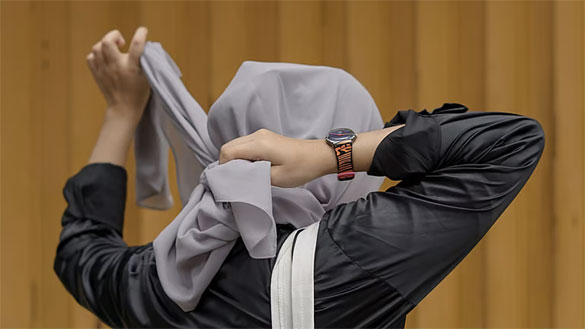
British Columbia's Civil Resolution Tribunal has ruled that photos of a Muslim woman without her hijab do not qualify as "intimate images."
The claim was brought by a woman, IB, whose ex-husband, AZ, had submitted the photos in question to court during family law proceedings following the end of their marriage.
According to the tribunal, IB argued that because, as a Muslim woman, she does not appear without her hijab in front of men unless she knows them, "the involuntary exposure of her hair, arms, or body to unrelated men is equivalent to public nudity."
In her decision, Tribunal Vice Chair Andrea Ritchie declared that "none of the images depicted the applicant nude, nearly nude, engaged in a sexual act, or exposing her genitals, anal region, or breasts."
One of the images depicted IB kissing AZ in bed. Both were fully clothed, leading Ritchie to determine that it did not constitute a "sexual act." She cited R v. H.O., 2019, which found that "making out, or even a deep or prolonged kiss, is distinguishable from a “quick and innocent peck that one might exchange with a loved one."
"Although the applicant subjectively believes the images were 'intimate' as defined by the [Intimate Images Protection Act], I found the legislation's intent was not to cover such a situation," Ritchie added. "In the commentary to the definition of 'intimate images,' the [Uniform Law Conference of Canada] noted that because individuals hold a variety of views on what is considered 'intimate,' it is not possible in this targeted legislation to accommodate all conceptions of intimacy."
IB's claim for damages of $5,000 was dismissed.
Ritchie did not rule on IB's claim that AZ had committed other torts, and breached the Privacy Act and the Canadian Charter of Rights and Freedoms, noting that this is outside the jurisdiction of the tribunal.
Source: westernstandard.news
https://www.westernstandard.news/news/bc-tribunal-rules-photos-of-muslim-woman-without-hijab-dont-qualify-as-intimate-images/67493
------
Paris Special Court Opens Trial For Jennyfer Clain, Christine Allain And Mayalen Duhart, Accused Of Joining Islamic State Group
15/09/2025
Copyright AP Photo
-----------
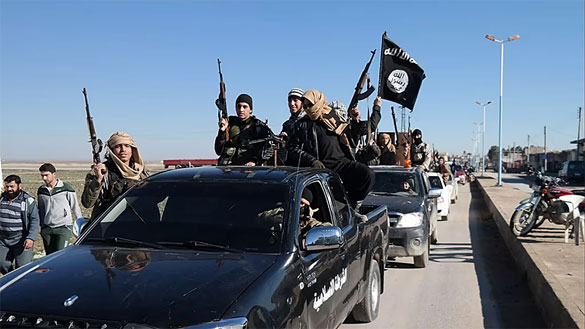
The trial of the three women, all from the Clain family, opened in Paris on Monday. They are accused of being members of the so-called Islamic State terrorist group.
The trial of three women accused of joining the so-called Islamic State (IS) terror group opened at a special court in Paris on Monday.
The trial, which is expected to run until 26 September, is taking place at a special court with no jury, a standard practice in terrorist cases in France.
The defendants are part of what investigators are calling the "Clain Clan", which refers to more than 20 members of the family who left France with their partners and children to go to Iraq and Syria between 2014 and 2015.
According to the indictment, the three women's departure to Syria was part of "a trajectory that had been ideologically committed for over ten years to Salafi-jihadism".
Who are the women?
Jennyfer Clain is the 34-year-old niece of Jean-Michel and Fabien Clain, who were responsible for disseminating IS propaganda and claimed responsibility for the 13 November 2015 series of attacks across Paris, which killed 130 people.
Another defendant is Christine Allain, 67. A former special education teacher, she converted to Islam before joining IS.
The third defendant is Mayalen Duhart, Christine Allain's sister-in-law by marriage, who left France in 2014 and went to Syria.
Jennyfer Clain, Christine Allain and Mayalen Duhart were deported to France in 2019 along with nine children aged between three and 13 and were formally charged.
They had been arrested in Turkey, close to the Syrian border.
The three defendants' departures for Syria were the culmination of "a journey that began around 10 years ago in the Salafo-jihadist ideology," magistrates at the National Anti-Terrorist Prosecutor's Office said in their indictment.
They will also be prosecuted for endangering the health, safety, morals and education of their nine children by taking them to war zones controlled by known terrorist groups.
What is at stake?
The court will have to assess the actual involvement in IS activities of each of the defendants, their level of commitment, their share of responsibility for terrorist attacks and the position they held within the organisation.
One of the challenges is to prove without reasonable doubt that the three women be considered victims of indoctrination or as active members who voluntarily participated in the activities of a terrorist group.
The children of the accused will also play a role in the trial as civil parties. Mayalen Duhart's four children and the five children Jennyfer Clain has, all of whom were born in France, are being represented by the SOS Victimes 93 association, which supports minors repatriated from Syria.
Jennyfer Clain and Mayalen Duhart are also facing charges of parental neglect, a charge that has existed since 2017 and applies to any parent who takes their children to conflict zones.
Source: euronews.com
https://www.euronews.com/2025/09/15/trial-of-three-women-from-same-family-accused-of-joining-islamic-state-opens-in-paris
------
Palestinian Graduate, Hadil Khalil, Aims To Empower Muslim Women As She Pursues Dream Of Becoming A Detective
16 July 2025
A Palestinian woman who came to the UK as an asylum seeker, graduates today from Leeds Trinity University, aiming to empower Muslim women and challenge stereotypes, as she pursues her dream of joining the police as a detective.
Hadil Khalil, who is graduating with a first-class degree in Criminology, has shown resilience and determination in overcoming the barriers that prevented her from accessing higher education. Having faced uncertainty for many years, Hadil secured a sanctuary scholarship at Leeds Trinity, which is one of 80 higher education institutions in the UK (out of over 260) that offer financial aid for students who are refugees, asylum seekers or have limited leave to remain in the country.
Hadil explained: “When I first arrived in this country, I didn’t speak a single word of English. Being an asylum seeker comes with a weight that is hard to describe. I faced discrimination, experienced racism, received threats, and lived in constant fear. And on top of that, there were so many barriers that controlled my life, my opportunities, and my future, including going into university.”
Despite her limited university options, Hadil found at Leeds Trinity an environment where she could reach her potential, believe in herself, and achieve her goals.
“One thing about Leeds Trinity that truly sets it apart, is that, when I got there, I finally found a place where lecturers and staff put students first,” Hadil said. “In a world where education can sometimes be only about rankings, discipline, or chasing prestige, here, it's always been about people.”
Hadil added: “In the past, I was told I wasn’t going to make it to university. I was known as a person who's not academically clever, so it pushed me down a lot. But when I came to Leeds Trinity, I felt like they truly saw my potential. I don't think I'll ever find this anywhere else.”
Professor Tony Blockley, Head of School of Criminology, Investigation and Policing at Leeds Trinity University supervised Hadil’s dissertation and helped her reach her goal of achieving a First. He said: “Hadil is an incredibly hardworking and determined individual, and her journey is a powerful example of what can be achieved when someone believes in themselves.
“She has shown resilience, intelligence, and drive throughout her studies, and I have no doubt that she will go on to achieve anything she sets her mind to. She has the ability and strength to make a real difference, not only in policing but in inspiring others to follow their ambitions.”
Praising Tony’s unwavering support, which positively impacted her studies, but also her self-confidence and wellbeing, Hadil said: “If I wasn’t sure of myself, he made me believe in myself. When other people told me getting a First in Criminology is rare, Tony said that if I wanted a First, we’d make it happen. He gave me the emotional strength to achieve that goal.”
Becoming a detective has been a lifelong dream for Hadil, who has always wanted to make a change in the world and help people. She hopes other Muslim women will feel empowered by her story and seeing her in uniform will send a powerful message about what hijabi women are capable of, despite societal stereotypes.
“If I’m seen as a police member, it might change the idea that Muslim women can’t work or do certain things. If I’m a policewoman in the uniform, doing my job, protecting my community, it will hopefully make people reconsider the stereotypes they believe about Muslims,” Hadil explained.
Hadil’s hard work and determination will not stop with Graduation, as she is in the process of securing a job in the police. Her advice to other students is to never let others bring them down and always seek to surpass their limits.
“Once you graduate, you might think this is it. But there's still so much more you can do. If you think you’ve reached the highest level, create an even higher one and aim for it. Don't stop. Don't limit yourself. There's always something more you can achieve,” Hadil said.
Criminology at Leeds Trinity University is ranked 4th in the UK and 1st in Yorkshire for academic support (National Student Survey 2024, in the subject of Sociology). To find out more about studying Criminology at Leeds Trinity, visit the website.
Source: leedstrinity.ac.uk
https://www.leedstrinity.ac.uk/news/archive/2025/palestinian-graduate-aims-to-empower-muslim-women-as-she-pursues-dream-of-becoming-a-detective.php
-------
Iranian Political Prisoner Fatemeh Sepehri’s Health Deteriorates in Detention, Brother Says
SEPTEMBER 15, 2025
The brother of an Iranian political prisoner has reported that his sister is facing severe health problems and harsh prison conditions.
Asghar Sepehri said his sister, Fatemeh Sepehri, is suffering from severe pain in both hands while in detention.
Her left hand has undergone three surgeries, while her right hand requires surgery but has so far only been treated with cortisone injections, he said.
According to her brother, painful masses have also developed in her shoulder and chest. Despite undergoing ultrasound and mammography tests, no treatment plan has been provided.
Sepehri added that prison conditions have created additional psychological pressure, citing the nine-month closure of Ward Five and restrictions on telephone calls.
Fatemeh Sepehri has also criticized the inconsistent treatment by Iranian authorities. She said that the state media refer to a person detained in France for supporting Hamas as a “political prisoner,” while she is labeled a “security prisoner” for criticizing the government.
She faces charges of “cooperation with hostile states,” allegations for which no evidence has been presented during her three years of detention, her brother said.
According to him, prison official Fariba Hatempour has repeatedly cut off Fatemeh’s phone calls.
In March 2023, Mashhad’s Revolutionary Court sentenced Fatemeh Sepehri to three years and nine months in prison along with her brother, Mohammad Hossein Sepehri.
In June 2024, she was handed an additional 18 years and six months in another case involving Mohammad Hossein and Hossein Sepehri.
A Mashhad criminal court had earlier sentenced her to one year in prison and a fine for “spreading falsehoods and disturbing public opinion.”
In a separate case, she received 10 years for “cooperation with hostile states,” five years for “assembly and conspiracy,” two years for “insulting the leadership,” and one year for “propaganda against the system.”
An appeals court upheld the sentences. Under Iranian law, 10 years of the sentence are enforceable.
Source: iranwire.com
https://iranwire.com/en/prisoners/144808-iranian-political-prisoners-health-deteriorates-in-detention-brother-says/
-------
UAE Jobs: Over 40% Of New Hires In GCC Are Women, Says Report
16 Sept 2025
More than 4 in 10 new hires – 42 per cent – at the top companies across the UAE and the wider GCC region are women, according to a new report released on Monday.
The study, published by workplace culture consultancy Avtar Group, also found that women currently represent 33 per cent of the workforce at the best-rated companies in the GCC. However, less than three out of 10 — 28 per cent — were promoted.
Encouragingly, 95 per cent of companies in the UAE and GCC now offer leadership training for women. Additionally, 79 per cent provide formal mentoring and executive coaching to support women's career advancement.
“Why a company should have more women is still not fully understood by many organisations. Because of that, the kind of positions that are filled by women are what we call the ‘easy positions’ that you can quickly fill it. These are not high positions. This is why only 42 per cent of the entry-level positions are filled by women,” Dr Saundarya Rajesh, founder-president of Avtar Group, told Khaleej Times in an interview on Monday.
Dr Saundarya highlighted that while 42 per cent of entry-level roles are filled by women, this is still not enough – especially considering the overall population distribution.
“That’s not even 50 per cent. If it were 50 per cent or probably more, we would be happy,” she said, noting that female representation tends to diminish further up the corporate ladder.
According to Global Insights, of the 11.35 million residents in the UAE, 63.8 per cent are male, while 36.2 per cent are female. Across the broader GCC region, males make up approximately 62.8 per cent of the population (around 38.5 million), while females represent 37.2 per cent (22.7 million), according to data from the GCC Statistical Center. A significant portion of the male population comprises blue-collar workers who migrate to the region to support families back home.
Dr Saundarya emphasised the importance of balanced hiring from the outset.
“If 100 people join a corporation at the entry level, with 60 per cent women and only 40 per cent men, over the years, you will find that the number of women will slowly shrink. So, if you have only 42 per cent women at the entry level, it will come down to single digits in the higher positions,” Dr Saundarya said on the sidelines of the launch of Best Companies for Women in the Gulf 2025 report released on Monday.
These insights were shared during the launch of the Best Companies for Women in the Gulf 2025 report, which identifies the top organisations supporting gender diversity and inclusion.
The 2025 top 10 best companies in Gulf, listed alphabetically are AA Al Moosa Enterprises Car Rental Division (Thrifty & Dollar), Al Shirawi Facilities Management, Diversey- A Solenis Company, Dkhoon Al Emiratia, Easa Salel Al Gurg Group, Ecolab, EY, Finastra UK Limited, Kone Middle East and TruKKer. Some of the other standout companies (in alphabetical order) include Apparel Group, Beauty Steps, Canon Middle East, CBRE Advisory Services, GIG GULF Insurance, House of Shipping Management Consultancies FZCO, Ingram Micro Company, MCA Management Consultants and MCA Auditing, Wipro Limited.
Challenges in male-dominated industries
Dr Saundarya noted that women still face barriers entering traditionally male-dominated sectors in the GCC, particularly oil and gas.
“In the GCC oil and gas sector, for example, women are rarely hired into technical entry-level roles — whether upstream or downstream,” she explained. “Instead, they’re often restricted to HR, customer service, secretarial, or front-desk roles. But will they be hired as engineers, scientists, chartered accountants, and legal advisor roles? Not very likely.”
However, she noted the landscape is beginning to shift. When asked whether qualified female talent is available in the region for these high-skill roles, Dr Rajesh was optimistic:
“Previously, the talent pool wasn't there. But today, thanks to significant investments in education across the GCC, we’re seeing a rise in qualified women — Emiratis, Arabs, and expats alike.”
She urged employers to proactively seek out female candidates and invest in gender-balanced hiring practices:
“Corporates must go the extra mile to ensure more women are brought into the workforce — especially in sectors and roles where they’ve traditionally been underrepresented.”
Source: khaleejtimes.com
https://www.khaleejtimes.com/jobs/new-hires-gcc-women-report-2025
------
Returning to work after long break? UAE women told to upskill to close career gaps
16 Sept 2025
After taking a career break for personal or family reasons, many women face significant challenges when re-entering the workforce. These hurdles range from diminished self-confidence and concerns about outdated skills to difficulties in balancing professional and family responsibilities.
“The most difficult barriers are personal: rebuilding confidence, reaffirming the importance of their skills, and balancing personal and professional lives,” said Maha Gorton, Head of the Women’s Pavilion at Expo City Dubai.
She explained that a career break can make even competent women question their worth, despite solid experience. Skill atrophy, especially in rapidly changing industries, can exacerbate these doubts.
Some employers also continue to view career gaps as a red flag, allowing time out of the workforce to overshadow years of valuable experience. “This bias is misplaced,” Gorton noted.
“Women returning to work bring proven skills, fresh perspectives, adaptability, and resilience,” she added.
Gorton added that while many women worry their skills may be outdated, most only need targeted upskilling, such as improving digital fluency, updating LinkedIn profiles, or re-familiarising themselves with industry practices. These focused interventions enhance confidence and employability, preparing participants to succeed in today’s fast-paced environment.
She also highlighted how family responsibilities and limited workplace flexibility often make it difficult for women to return to work. “Women spend 17 to 34 hours per week on unpaid care work, far more than men. Without hybrid or remote work options, flexible hours, or supportive parental leave, returning to work can feel impossible,” she said.
The UAE has been at the forefront of advancing women’s workforce participation, with many initiatives supporting women in building sustainable careers. The Women’s Pavilion’s Return to Work Programme is among the pioneering efforts, offering women the skills, confidence, and networks needed to re-enter the corporate world.
By partnering with companies that embrace flexible policies, the programme helps unlock both personal and economic potential. “The aim is not for women to start over, but to start strong,” Gorton stressed.
Looking ahead, the initiative plans to expand across multiple sectors, strengthen employer partnerships, and continue driving diversity, inclusion, and national economic resilience.
Source: khaleejtimes.com
https://www.khaleejtimes.com/uae/uae-women-returning-to-work-career-gaps-upskilling
------
'This Girl Can' calls out erasure of south Asian Muslim women from UK sport with bold new visibility drive
Pooja Pillai
Sep 15, 2025
This Girl Can has unveiled a powerful new campaign spotlighting South Asian Muslim women in sport, aiming to redefine what being active looks like and tackle deep-rooted barriers. The We Like the Way You Move drive, launched by Sport England, uses strong visuals with community-driven storytelling to encourage participation and promote inclusivity. It comes alongside new data exposing how women of colour remain overlooked in public representations of physical activity.
Why does the new This Girl Can campaign matter?
The We Like the Way You Move campaign seeks to correct years of invisibility for South Asian Muslim women in British sport and physical activity. While they make up 6.8% of the population, a study analysing over 4,000 publicly available images from gyms, parks, swimming pools and sports clubs found only 61 featured South Asian women.
Almost half of those rare images came from London facilities, with many other regions showing none at all. This lack of representation, campaign organisers say, contributes to feelings of exclusion and reinforces barriers to participation for women who already face cultural and logistical challenges.
What barriers do South Asian Muslim women face in sport?
Findings from Sport England reveal that cultural and structural obstacles discourage South Asian Muslim women from getting active. Forty-seven per cent of respondents said they would feel more comfortable attending women-only sessions, while 31% cited the need for greater flexibility around clothing and dress codes, and 25% called for staff who understand their specific needs.
These women also emphasised holistic health benefits, such as improved sleep, social connection and self-empowerment as major motivators. Campaign leads stress that inclusive, culturally sensitive environments are crucial to helping more women take their first steps towards sport and fitness.
Who is featured in the campaign?
Thirteen women from across England, street-cast for their authentic stories, appear in the We Like the Way You Move advert. Their activities show real life, from family bike rides and dancing in the kitchen to wheelchair rugby, pregnancy yoga, boxing and walking football.
One participant, Sara from Walsall, is a 32-year-old mother of three who wears a headscarf and is reclaiming movement for her mental health. “After struggling with my mental health, I realised I needed to look after myself as well as my family,” she said. “Movement has lifted me, whether that’s cycling with my kids or carving out time on my own, it boosts my energy and reminds me that health is wealth.”
How are community organisations helping?
Yashmin Harun, founder and chair of the Muslimah Sports Association, welcomed the campaign and highlighted the need for safe, supportive environments where Muslim women can be active without compromising their cultural or religious values.
“South Asian Muslim women have long faced barriers to being active, from a lack of women-only spaces to limited flexibility with clothing,” she said. “When provided with the right environment, many women are motivated to overcome their barriers and get active. With This Girl Can’s campaign bringing to light what South Asian Muslim women need, it’s an exciting time to create spaces where we can move, belong, and thrive on our own terms.”
Source: easterneye.biz
https://www.easterneye.biz/this-girl-can-asian-muslim-women/
------
Guards Storm Women’s Political Prison Ward in Iran
SEPTEMBER 15, 2025
Human rights activists reported that prison guards raided the women’s political prisoners’ ward at Qarchak Prison.
Male and female prison guards at Qarchak Prison in Varamin stormed the women’s political prisoners’ ward on Sunday morning, the reports said.
The guards’ purpose was to forcibly remove prisoners from their cells and transfer them to the outdoor area, according to the accounts.
The female prisoners resisted the forced action.
Keyvan Mohtadi, a labor activist and former political prisoner, wrote on his Instagram account that prison officials threatened political prisoners with cutting off phone calls and restricting visits.
Qarchak Prison holds many of Iran’s female political prisoners and has been the subject of previous reports of poor conditions and mistreatment.
Source: iranwire.com
https://iranwire.com/en/prisoners/144813-guards-storm-womens-political-prison-ward-in-iran/
-------
URL: https://newageislam.com/islam-women-feminism/british-columbia-muslim-woman-hijab/d/136858