
Family Alleges 17-Year-Old Christian Girl Abducted In Kaduna, Forcibly Converted To Islam, Married Off In Kano
New Age Islam News Bureau
03 May 2026
• Family Alleges 17-Year-Old Christian Girl Abducted In Kaduna, Forcibly Converted To Islam, Married Off In Kano
• Karnataka shocker: Man kills 2 minor sons, dies by suicide over wife’s affair
• UN Warns Restrictions on Girls’ Education and Women’s Work Threaten Afghanistan’s Future
• World Press Freedom Day: Bennett Says Afghan Women Journalists Face Discrimination
• Hyderabad man hits mother-in-law with helmet during ride, fakes ‘seizure’ fall; wife uncovers truth on CCTV, gets him arrested
• The pressures of theocracy on Kashmiri, Pak and Afghan women
• Mukesh Khanna on being single at 67: ‘The woman I’m destined to marry exists—when destiny brings us together, it will happen’
• Woman charged after killing Indian-origin schoolgirl in London car crash after initially being dropped of all charges
• Indian-origin man in critical condition after saving sister in Australia restaurant fire: '70 per cent burns all over his body'
• Muslim Women's Council founder dies age 52
• Iran: Jailed Nobel winner NargesMohammadi hospitalized
• In a rare feat, 92-year-old woman in Iran had gallbladder removed without anesthesia
Compiled by New Age Islam News Bureau
-----
Family Alleges 17-Year-Old Christian Girl Abducted In Kaduna, Forcibly Converted To Islam, Married Off In Kano
May 3, 2026
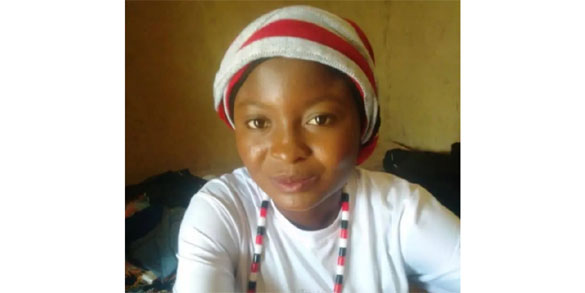
Jinkai, a student of St. Bartholomew’s Secondary School, Wusasa, Zaria, was declared missing on March 9, 2026, after she left home for school but never returned.
------------
Afresh controversy has erupted in Kaduna State following allegations that a 17-year-old Christian girl, Jinkai Yusuf Simon, was abducted, forcefully converted to Islam, and married off in Kano, while authorities reportedly look the other way.
Jinkai, a student of St. Bartholomew’s Secondary School, Wusasa, Zaria, was declared missing on March 9, 2026, after she left home for school but never returned.
According to her elder sister, Jennifer Yusuf Simon, suspicion began after a neighbour revealed that Jinkai’s belongings had been quietly moved to a friend’s residence, identified as Rukkaiya. When confronted, Rukkaiya initially denied any knowledge.
Further findings showed Jinkai had allegedly been communicating with a man identified as “Abdulsamad,” who later gave conflicting identities when contacted.
The family escalated the matter to religious and traditional authorities, including the SarkinWusasa (village head of Wusasa in Zaria), who directed community leaders to produce the girl. The case was subsequently reported to the Department of State Services (DSS).
Shockingly, the family was later shown a photograph allegedly depicting Jinkai dressed in a hijab, alongside documents said to have originated from Kano State where her identity had been changed to “Aisha Sani” and “Aisha Abdulsamad.”
The documents reportedly altered her age and listed a Muslim guardian and husband, raising serious legal and human rights concerns, including possible abduction, coercion, and identity falsification.
The SarkinWusasa, speaking on the matter, said he promptly alerted the DSS but no action was taken at the time, adding that the family was later confronted with images showing the girl under a new identity.
"When this disturbing issue was brought to my attention, I promptly alerted the DSS. However, no action was taken, and we were later confronted with images showing Jinkai, now reportedly renamed Aisha," SarkinWusasa (Wusasa village head) said.
The family’s pastor, Rev. Mohammed Mohammed, described the situation as involving the abduction of a minor, forced conversion, and child marriage, calling for urgent intervention by security and child protection agencies.
“This is a case involving the abduction of a minor, coercion into religious conversion, and forced child marriage. We strongly condemn these actions and will not accept such violations of a child’s rights,” he said.
"We are calling on the DSS, the police, relevant child protection agencies, as well as religious and human rights organizations, to act urgently to investigate this situation and ensure the immediate safety and protection of the girl."
The family insists Jinkai is 17 years old and not legally capable of consenting to such actions. They have presented her birth certificate, which shows she was born on January 8, 2009, to Yusuf Simon and Yakubu Rhoda.
“They produced fake documents where they falsified my sister’s age in order to get legal backing for their evil act; they were about to send me the pictures of my sister in hijab, and they erroneously sent one that several officials of Kano State Hisbah Board took with her,” Jennifer said.
“They did affidavit and changed her age. They wrote my name and my parents name on the court documents indicating that we consented to the marriage, which is a lie.”
However, an affidavit of facts and declaration of age, reportedly sworn by Jinkai at the High Court Registry of the Kano State Judiciary on March 18, 2026, has also surfaced.
It states, “I formerly known and called as Jinkai Simon Yusuf (when I am a Christian) now wish to be known and called as Aisha Simon Yusuf, female, adult, Muslim, of PankshinKubau LGA, Kaduna State, Nigeria, do hereby make oath and declare as follows: That I am 19 years of age; that I was born on the 10 JULY, 2006 in PankshinKubau LGA in Kaduna State; that at the time of my birth there was no any declaration of age or birth certificate issued to me; that I hereby depose to this affidavit all what I stated is true and correct; that this affidavit is made for official and record purposes; that I therefore want the authority concerned to take note; that I make this solemnly declaration conscientiously believing same to be true to the best of my knowledge and by virtue of provision of the Oath Act 2004.”
When contacted, Kano State Hisbah spokesperson, Auwal Ado, said he was out of town and requested time to verify the information before responding.
Observers say the apparent silence in Jinkai’s case contrasts sharply with the widely reported case of WalidaAbdulhadi Ibrahim, a Muslim girl from Jigawa State.
The contrast between both cases has triggered widespread criticism, with human rights advocates questioning why a ‘Christian minor’ allegedly abducted and married off has not received the same urgency, despite the matter being formally reported to the DSS in Kaduna State.
Source: saharareporters.com
-----
Karnataka shocker: Man kills 2 minor sons, dies by suicide over wife’s affair
May 3, 2026
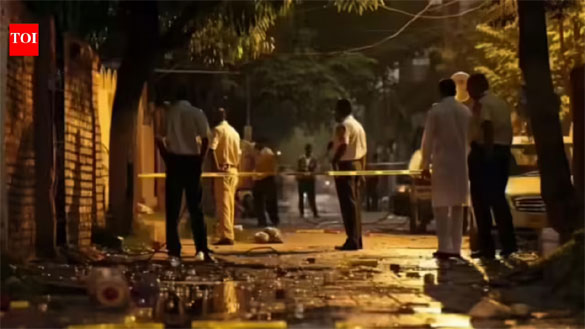
NEW DELHI: A 40-year-old man allegedly smothered his two young sons before dying by suicide in Karnataka’s Tumakuru district, police said on Saturday.
The incident took place in Alakere village under Kunigal police limits, where Shivanna and his sons, aged six and eleven, were found dead at their home.
Police said Shivanna, who worked at a private factory and also served as a temple priest, was reportedly distressed over his wife Kavya’s alleged relationship with a man identified as Hemanth. The issue had led to frequent domestic disputes, prompting a prior counselling session involving police and local community members.
Despite the intervention, the alleged affair continued, which reportedly pushed Shivanna into severe distress. Taking advantage of the absence of others at home, he allegedly smothered his children before hanging himself.
A murder case has been registered against Shivanna based on a complaint filed by a relative. Additionally, police have booked Kavya and Hemanth for abetment to suicide. Further investigation is underway.
Source: timesofindia.com
------
World Press Freedom Day: Bennett Says Afghan Women Journalists Face Discrimination
03-05-2026
Richard Bennett, the UN Special Rapporteur on the situation of human rights in Afghanistan, has warned about media restrictions in the country, saying that the situation for women journalists has become significantly more difficult.
On Sunday, May 3, marking World Press Freedom Day, Bennett said that women journalists in Afghanistan face discrimination, restrictions on movement, and mandatory dress code requirements.
The UN Special Rapporteur on Afghanistan’s human rights situation has once again emphasized the need to support journalists, especially women journalists, and to ensure their job security.
Bennett said that in 2025 alone, the Afghanistan Journalists Center (AFJC) documented at least 32 cases of journalist arrests, indicating that pressure on the media continues to increase.
He added that these developments are taking place while civic space in Afghanistan is becoming increasingly restricted, freedom of expression is being further suppressed, and human rights activists are facing serious risks.
Bennett also pointed to censorship of books and publications and restricted access to information, saying that journalists are even being punished for their activities on social media.
Source: 8am.media
https://8am.media/eng/world-press-freedom-afghan-women-journalists/
-----
Hyderabad man hits mother-in-law with helmet during ride, fakes ‘seizure’ fall; wife uncovers truth on CCTV, gets him arrested
May 3, 2026
HYDERABAD: A 19-year-old woman has helped police arrest her husband for causing her mother's death and then lying about it.Based on K Kavya's complaint, Medipally police arrested K Snehit, 28, on May 1 for culpable homicide after he allegedly hit his mother-in-law, K Aruna, 39, while she was riding pillion on his bike. Aruna fell down from the bike and sustained severe head injuries, causing her death.
Medipally inspector ChShankaraiah said the accused worked at an NGO and had married Kavya last year. Snehit was unhappy with his marriage and complained to Aruna about Kavya's unhealthy attitude to different issues.
On April 29, Snehit reached Aruna's home at around noon and offered to buy her food from a hotel nearby. Snehit forced her to ride pillion on his bike.
"En route, the two again argued about family issues. During the argument Snehit, who kept the helmet on the fuel tank, picked it up and hit Aruna on the head. Aruna lost balance, fell off the bike and suffered head injuries," the inspector said.
Snehit, however, told his wife that Aruna had suffered an epileptic seizure and had fallen off the bike. Aruna died on April 30 while being treated at a private hospital.
Kavya, however, did not believe her husband. She verified CCTV camera footage from a house near the accident spot and realised that Snehit had hit her mother while they were riding on the bike, causing her death.
Source: timesofindia.com
https://timesofindia.indiatimes.com/articleshowprint/130723783.cms
------
The pressures of theocracy on Kashmiri, Pak and Afghan women
By: Bashir Assad
May 3, 2026
When societies are organised around absolutist narratives, religious, nationalist, sectarian, or militarized, the autonomy of women is among the first casualties and among the last priorities of reform.
The condition of women in societies shaped by extremist or theocratic pressures is often misunderstood through two flawed lenses. One treats women as humanitarian symbols of suffering, inviting pity without understanding. The other uses women’s rights selectively for geopolitical agendas. Neither captures the deeper truth: in conflict-ridden or ideologically rigid societies, control over women becomes central to how coercive orders sustain themselves.
Kashmir, Pakistan, and Afghanistan differ in history, institutions, and culture, yet they reveal a common pattern. When societies are organised around absolutist narratives, religious, nationalist, sectarian, or militarized, the autonomy of women is among the first casualties and among the last priorities of reform. Women’s bodies, movement, education, labour, and speech become battlegrounds for larger ideological struggles.
Patriarchy exists globally. What distinguishes extremist environments is that patriarchy gains sacred or existential justification. Restrictions are defended not merely as custom, but as necessary for honour, morality, identity, or communal survival. Once that happens, dissent by women is treated not as disagreement but as betrayal.
Radicalization must be understood more broadly than armed militancy. It also includes shrinking plural space, normalizing rigid worldviews, and turning daily life into a test of loyalty. In such climates, women face intensified scrutiny because they are burdened with representing communal authenticity. Dress, behaviour, education, mobility, and even tone of voice become politically charged.
Afghanistan under Taliban rule offers the starkest example. Women have faced exclusion from education, severe employment restrictions, movement controls, and dismantling of legal protections. These are not isolated policies but expressions of a governing philosophy that treats women as politically disposable and socially subordinate. The damage is generational, depriving society of future teachers, doctors, scholars, and leaders.
Yet Afghan women have shown extraordinary resilience. Underground schools, informal networks, digital testimony, and daily acts of endurance demonstrate that repression does not erase agency. It only raises the cost of exercising it.
Pakistan presents a more complex case. It has universities, women judges, parliamentarians, media institutions, and a vibrant civil society. Yet these gains coexist with structural vulnerabilities: honour crimes, forced conversions in some regions, blasphemy accusations, sectarian intimidation, and digital harassment. Formal rights often exceed lived security.
Women in Pakistan who enter public life are frequently judged not only on competence but on respectability, family honour, bodily conduct, and conformity to moral expectations. Participation may be legally available, yet socially conditional. Theocratic pressure in Pakistan often operates not through total state capture but through clerical veto power that intimidates reform and narrows debate. Women’s rights in inheritance, marriage, workplace equality, and bodily safety remain vulnerable to male custodianship disguised as moral order.
Pakistani women’s movements have challenged this framework with courage. Their significance lies in insisting that citizenship cannot remain symbolic while daily life remains governed by fear.
Kashmir requires sharper attention because women’s condition there is often submerged beneath geopolitical narratives of sovereignty, insurgency, diplomacy, and security. The silent transformation of society especially regarding women receives far less scrutiny.
Kashmiri women have shown remarkable resilience. They sustained households amid disappearances, incarceration, militancy, economic uncertainty, and prolonged instability. Many pursued education under difficult conditions and became anchors of family survival. Yet alongside this resilience, a subtler regression has unfolded: growing moral regulation under religious conservatism, imported cultural symbolism, and social intimidation.
One underexamined aspect is the gradual Arabisation of public culture. This must be distinguished from Islam itself. Islam historically accommodated diverse civilizations from Indonesia to West Africa and South Asia. Arabisation refers instead to adopting specifically Arab cultural codes, dress patterns, linguistic preferences, and symbols as if they alone represented authentic religiosity.
Kashmir historically possessed its own composite Islamic culture shaped by Persianate influences, Sufi traditions, shrine culture, vernacular spirituality, and indigenous rhythms. Religious life was once local in expression even when universal in faith. What changed in recent decades was not simply piety, but displacement of local forms by imported signalling.
The early signs appeared among male students in institutions run by religious groups. Dress codes, beard norms, speech patterns, and notions of proper conduct increasingly reflected Gulf models rather than Kashmiri inheritance. Young men adopted garments associated with Arab societies not because they were universally obligatory, but because they came to signify authenticity.
This symbolism gradually moved into clerical culture. Preachers adopted Arabstyle robes and headscarves historically alien to Kashmiri religious life. Appearance itself became pedagogy. Clothing was no longer incidental; it communicated authority.
Once male authority normalized these symbols, the shift entered wider society. What begins with men in hardening ideological climates often ends as regulation for women. In Kashmir this is increasingly visible in educational institutions where girls are subtly, and sometimes overtly, encouraged to conform to dress expectations rooted less in local culture than imported conservative aesthetics.
The pressure rarely comes through formal directives. It works through atmosphere. Students understand what is admired, what is questioned, and what is morally superior. A girl may technically retain choice, yet the social cost of exercising that choice can be high.
This distinction between policy and pressure is crucial. Modern coercion often works through soft enforcement rather than law. A student may not be officially punished for resisting conformity, but may face exclusion, commentary, discomfort, or moral judgment. Such systems endure precisely because they appear voluntary.
The deeper concern is educational. Schools and colleges should cultivate confidence, reasoning, and civic equality. When they become spaces where girls learn that conformity is safer than individuality, education itself is compromised. The classroom transmits hierarchy alongside knowledge.
For many young Kashmiri women, the burden is double. They are encouraged to excel academically yet discouraged from embodying autonomy. Families may celebrate grades while remaining uneasy about independent mobility, friendships, careers away from home, or refusal of prescribed codes. Education is welcomed so long as it does not fully translate into agency.
The result is a contradictory model of empowerment: the educated but supervised woman, the qualified but monitored student, the ambitious daughter whose success is admired so long as it remains obedient.
Extremist ordering in Kashmir has therefore not always appeared through spectacular violence or legal decrees. It often works through everyday conditioning: suspicion toward autonomy, reputational policing, pressure around dress, limits on movement, and framing independent female agency as culturally destabilizing.
This narrowing intensifies when Arabisation is confused with religiosity. A young woman who chooses local forms, plural lifestyles, or personal interpretation may be judged less committed than one displaying imported symbols. The moral scale is reorganised around appearance rather than ethics.
Across all three societies, women’s plight cannot be reduced to headline abuses alone. It is sustained through mundane mechanisms of control. Mobility requires permission. Education is tolerated only if it does not generate independence. Employment is accepted when economically necessary but resisted when it threatens dependency structures. Reputation becomes a disciplinary tool. Marriage regulates boundaries. Digital spaces reproduce older intimidation through harassment and character assassination.
Reform often falters because political elites invoke women’s rights selectively while avoiding deeper redistribution of power. Security narratives postpone equality. Cultural defensiveness dismisses autonomy as foreign or anti-religious.
This is historically false. Women in South Asia and Afghanistan have long produced indigenous reform movements, legal arguments, educational initiatives, and theological reinterpretations. Equality is not foreign to these societies; resistance to equality is often a modern political strategy dressed in cultural language.
Meaningful change requires more than symbolism. In Kashmir, educational institutions must become civic spaces free from conformity tests. In Pakistan, law and policy must be insulated from coercive clerical vetoes. In Afghanistan, women’s full citizenship in education, work, and public life must be restored.
The central error of much international commentary is to ask merely whether women are oppressed. A better question is how women continue to think, study, work, organise, negotiate, and resist under conditions designed to limit them.
Women in Kashmir, Pakistan, and Afghanistan are not merely casualties of extremist orders. They are among the clearest diagnosticians of those orders. They understand, often before men do, how fear enters households, how ideology colonizes intimacy, and how public extremism survives through private compliance.
If these societies are to become more plural, peaceful, and humane, it will not be because coercive actors become enlightened. It will be because women, already carrying disproportionate burdens, are recognized not as symbols to be controlled or protected, but as equal authors of public life.
Source: sundayguardianlive.com
-----
Mukesh Khanna on being single at 67: ‘The woman I’m destined to marry exists—when destiny brings us together, it will happen’
May 3, 2026
Mukesh Khanna, who is best known for his iconic roles as Shaktimaan and BhishmaPitamah, may be 67, but his views on marriage, relationships and life remain deeply rooted in spirituality and personal conviction. In a recent conversation, the veteran actor opened up about why he never married, his belief in destiny, and why he rejects the idea of masculinity being tied to multiple relationships.
Addressing perceptions around masculinity, Khanna recalled how filmmaker Ravi Chopra once told him, “A man is someone who has affairs.”
Disagreeing strongly, the actor told The Filmy Charcha, “Everyone had affairs in that group—I didn’t. I don’t believe you need 10 girlfriends to prove your manhood. There are other ways to prove it.”
He emphasised that his stance has often been misunderstood, especially when it comes to women. “I am not against women. In fact, I respect women a lot,” he clarified.
“People say a woman should be pativrata. But has anyone said a man should also be pativrata? I say that,” he said, adding, “If you are married, you are committed. Two souls have met. But people don’t believe this… they say ‘I love my wife’ and still move around. That is cheating.”
“People think if you don’t marry, you don’t believe in marriage. That’s not true. I believe in the institution of marriage more than most people,” he said.
“If it was meant to happen, it would have happened by now. The woman I am destined to marry already exists somewhere. When destiny brings us together, it will happen,” he said, adding that age is not a factor.
Source: timesofindia.com
-----
Woman charged after killing Indian-origin schoolgirl in London car crash after initially being dropped of all charges
May 3, 2026
A woman has been charged in connection with a tragic car crash that killed two eight-year-old girls, including Indian-origin schoolgirl NuriaSajjad, after a vehicle ploughed into a primary school celebration in London.
49-year-old Claire Freemantle from Edge Hill in Wimbledon, faces two counts of causing death by dangerous driving and seven counts of causing serious injury by dangerous driving following the incident in July 2023 at The Study Prep school in Wimbledon.
The crash took place during a summer term end-of-year celebration when a Land Rover drove through a fence and into the school grounds. NuriaSajjad and her classmate Selena Lau, both aged eight, were killed, while more than a dozen others were injured.
Freemantle was initially investigated, but in June 2024 police said she had suffered an epileptic seizure and would not face charges. That decision was later overturned after concerns were raised by the victims’ families, prompting a reinvestigation.
Her lawyers have questioned the reversal of the earlier decision to take no further action. A statement from her legal team said there are "serious questions to be answered" over why the case was reopened.
Mark Jones, criminal defence partner at Payne Hicks Beach LLP, said she would be "tortured for the rest of her life by the dreadful loss and injury" and "remains utterly devastated" by what happened.
He added: "We believe that initial decision by the CPS [Crown Prosecution Service] was the right one in these tragic circumstances and that there are serious questions to be answered about the reasons for its reversal today."
The Metropolitan Police has acknowledged shortcomings in its initial handling of the case. In a statement, it said: "We are sorry for how we initially dealt with the incident and for the impact on those affected.
It added: "We must now let both criminal proceedings and the independent investigation run their course. However, following a review of the Roads and Transport Policing Command we will be fundamentally resetting how the Met investigates fatal and serious collisions."
Separately, the Independent Office for Police Conduct (IOPC) is examining the conduct of 11 Metropolitan Police staff over the investigation, including allegations that officers provided misleading information to families and failed in their handling of the case. The watchdog is also investigating claims of possible racial bias in the way the case was managed.
Source: timesofindia.com
-----
Indian-origin man in critical condition after saving sister in Australia restaurant fire: '70 per cent burns all over his body'
May 3, 2026
47-year-old Baljeet Singh is being treated in the burns unit at the Royal Adelaide Hospital after sustaining burns to around 70 per cent of his body in the blaze at the Mustard Seed restaurant in Hahndorf on Tuesday night.
Inderjeet said: “My brother-in-law… he got a lot of fire on him and saved my wife. He’s a brave man.”According to the family, the pair had gone inside the restaurant after hearing an unusual noise when a sudden burst of flames erupted.
Baljeet Singh has undergone emergency surgery as doctors continue efforts to stabilise his condition. His relatives described his injuries as extremely serious and said they are holding onto hope for his recovery.
The family deals with the trauma and at the same time they are also pushing back against online rumours suggesting they were involved in causing the fire.
The owners of the Mustard Seed restaurant said the establishment was more than a business, describing it as a second home built on memories and regular customers.
Police in South Australia are still investigating the cause of the blaze. The family has also raised concerns that the fire may have been suspicious and has urged anyone with information or CCTV footage to assist investigators.
Source: timesofindia.com
-----
Muslim Women's Council founder dies age 52
Hayley Coyle
03-05-2026
The co-founder and CEO of the Muslim Women's Council, Bana Gora, has died aged 52, it has been confirmed.
News of the "true visionary's" death was announced by the Bradford-based organisation on Friday.
Paying tribute they described her as a source of "strength, guidance and inspiration" who worked tirelessly to empower women and "challenge harmful social norms".
In a statement the Muslim Women's Council said: "Our heartfelt condolences and sincere prayers go out to her mother, family, friends, colleagues, and all those whose lives were touched by her leadership, service and kindness.
Gora helped found the Muslim Women's Council in 2009, with the aim of ensuring Bradford could "excel at being a vibrant city" by understanding and responding to the "complexity of the problems facing the city, its inhabitants, and by helping to celebrate its strengths".
She also worked with charities and the not for profit sector, including domestic violence services in Keighley and the Joseph Rowntree Foundation for 30 years.
"People like Bana are hard to find. I know she will be a huge loss to her family and friends but also to the Muslim Women's Council which she has so ably led for many years."
Source: www.bbc.com
https://www.bbc.com/news/articles/cgjp7pg2jlwo
-----
Iran: Jailed Nobel winner NargesMohammadi hospitalized
Timothy Jones
05/02/2026
Iranian human rights activist NargesMohammadi, who won the 2023 Nobel Peace Prize, was taken to hospital after her health deteriorated suddenly in prison, her lawyer and family said Friday.
According to her family, Mohammadi, 54, suffered a heart attack in late March and has been in a weakened state since then, with the medical care in prison inadequate to her needs.
Mohammadi received the Nobel prize for her activities promoting women's rights and opposing the death penalty — activities that have, however, caused Iranian authorities to imprison her several times.
The NargesMohammadi Foundation, run by her family, said Friday that she was hospitalized "following a catastrophic deterioration of her health, including two episodes of complete loss of consciousness and a severe cardiac crisis."
Her family called for all charges against her "to be dropped immediately and for all sentences imposed for her peaceful human rights work to be unconditionally annulled."
Mohammadi has been arrested and imprisoned many times over the past decades. She was first jailed in 1998 for criticizing the Iranian government.
Her latest spell in prison comes after she was arrested in December for denouncing the death of human rights lawyer KhosrowAlikordi, who died in that month under circumstances considered suspicious by his family, colleagues and activists.
Mohammadi was then accused by prosecutors of having made provocative remarks at Alikordi's memorial ceremony and of having urged those in attendance to vocally express their concerns.
In February, she was sentenced to an additional six years in prison for conspiracy and 1 1/2 years for propaganda activities, her lawyer reported. She was also banned from leaving Iran for two years.
Source: www.dw.com
https://www.dw.com/en/iran-jailed-nobel-winner-narges-mohammadi-hospitalized/a-77017010
-----
In a rare feat, 92-year-old woman in Iran had gallbladder removed without anesthesia
02 May 2026
In a major medical breakthrough, surgeons at a hospital in central Iran’s Kohgiluyeh and Boyer-Ahmad province have successfully performed a complete gallbladder removal surgery without anaesthesia.
According to Iran’s national broadcaster IRIB, the surgery was performed on a 92-year-old woman at BibiHakimeh Hospital in Gachsaran city without using any sedatives or anesthesia, a procedure doctors say has rarely been documented anywhere in the world.
"The patient, a 92-year-old woman, suffered from very advanced heart and lung failure, underlying diseases, and a gallbladder condition," he was quoted as saying by IRIB.
According to the surgeon, doctors had previously performed multiple diagnostic tests on the elderly patient. However, due to the severity of her underlying diseases and the advanced state of her heart and lung conditions, they were unable to administer anesthesia.
‼️In a major medical breakthrough, for the first time in world, gallbladder removal surgery was successfully performed at BibiHakimeh Hospital in Iran’s Gachsaran.
"According to various studies, until now, it has been rare – and has not been done anywhere in the world – to perform a complete, therapeutic gallbladder removal surgery without administering sedatives or anesthesia, with the gallbladder extracted from the patient's body," the surgeon elaborated.
The successful operation, performed on a patient with multiple high-risk factors, represents a significant breakthrough and offers new possibilities for treating elderly patients with complex underlying conditions who cannot tolerate anesthesia, according to doctors.
Source: www.presstv.ir
-----
URL: https://newageislam.com/islam-women-feminism/christian-girl-allegedly-abducted-forced-to-islam-married-in-kano/d/139878