
'Hidden Crisis' Of 40,000 Women and Girls Going Missing Every Year Due To Violence in UK
New Age Islam News Bureau
21 December 2025
• ‘Hidden crisis’ of 40,000 women and girls going missing every year due to violence in UK
• Pakistan court hands ex-PM Imran Khan, wife 17-year jail terms in another graft case
• Women’s Movement Towards Freedom: Deprivation of Afghan Women Requires Global Action
• Three women killed and two missing in Gaza home collapse
• After the Rape: The challenges of monitoring sexual violence in Gaza
• Women’s Authority in Raymah holds protest condemning insult to Holy Qur’an, in Support of Gaza
• Arab women directors reshape storytelling at the Red Sea Film Festival
• Bus helper arrested for stealing Iranian woman's purse in Delhi
• How a child bride escaped Afghanistan and became a bodybuilding champion
• Pakistan winter rain chaos: Two women killed in Balochistan crash; cities struggle with power crisis
Compiled by New Age Islam News Bureau
URL: https://newageislam.com/islam-women-feminism/crisis-women-missing-violence-uk/d/138092
-----
‘Hidden crisis’ of 40,000 women and girls going missing every year due to violence in UK
Tara Cobham
21 December 2025
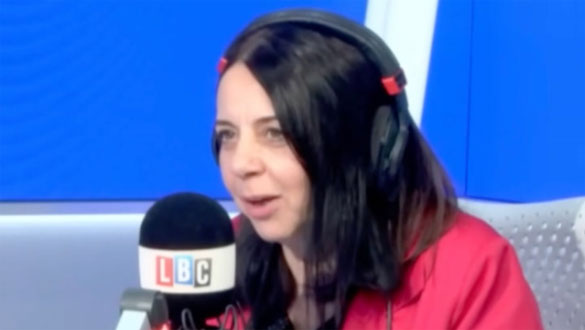
Missing People CEO on why SafeCall will be a lifeline for children
------------
More than 40,000 women and girls go missing every year because of violence in a “hidden crisis” that must be tackled now, a leading charity has warned.
Missing People said women and girls are then at extremely high risk of harm if they are missing, with an estimated 27,000 being victims of sexual assault, harassment or exploitation.
Campaigners also warn that the government’s strategy to halve violence against women and girls (VAWG) in a decade does not go far enough, after the plan to deal with this “national emergency” was finally unveiled this week. Charities had written to safeguarding minister Jess Phillips earlier this year, calling for the “strong links” between VAWG and missing to be recognised “as a means to prevent further harm” in the strategy.
As Missing People issued the urgent warning, women opened up about facing abuse that led to their disappearance, saying they are pushed to the point where it feels as if the only options are “either attack their abuser and end up in jail, stay and be the victim and probably die, or they can go missing”.
One woman, who remains anonymous for safety reasons, said her ex-husband was so coercively controlling that he dictated what she ate, drank and wore, how she styled her hair and made a cup of tea, and once even prevented her from medical treatment when she was unwell.
“I had been so annihilated as to who I was, I as a person didn’t exist anymore, I had no control over any aspect of my life,” she told The Independent. “I convinced myself that my children would be better off if I were dead, because what did I bring to them? I didn’t see that it was ever going to get better... it was just getting worse. And I did not know how to get out. I was so overwhelmed, I thought I had to get out.”
More than 40,000 women and girls go missing every year because of violence in a ‘hidden crisis’ that must be tackled now, a leading charity has warned (Missing People)
The woman said she not only went missing several times during that marriage, but also as a teenager, having suffered “extreme violence” including sexual violence. “I just couldn’t figure out how I was going to get out of this situation, so to me it was the most logical thing,” she said.
Especially during the period when she was a girl, the woman said she received little support. Decades later, many young people at risk of going missing still say there is no service designed to meet their needs.
Alongside Missing People, The Independent is raising money to launch a new national lifeline for missing young people. SafeCall, a free, round-the-clock service, aims to reach the more than 72,000 children who disappear in the UK every year, offering them support, safety and connection when they need it most.
Source: www.independent.co.uk
-----
Pakistan court hands ex-PM Imran Khan, wife 17-year jail terms in another graft case
December 21, 2025
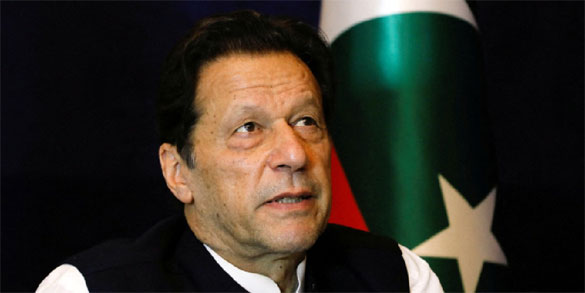
Former Pakistani Prime Minister Imran Khan pauses as he speaks with Reuters during an interview, in Lahore, Pakistan, on March 17, 2023.
PHOTO: Reuters
-------------
LAHORE - A Pakistani court on Saturday (Dec 20) sentenced former Prime Minister Imran Khan and his wife Bushra Bibi to 17 years in prison each in a corruption case involving the under-priced purchase of luxury state gifts, the court and Khan's lawyers said.
The latest conviction adds to a series of legal troubles for Khan, who has been behind bars since August 2023, and is currently serving a 14-year sentence in a separate land graft case.
He faces dozens of cases filed since he was ousted from office in 2022, ranging from corruption to anti-terrorism and state secrets charges. Khan has denied wrongdoing in all the cases, which his party says are politically motivated.
"The court announced the sentence without hearing the defence and sentenced 17 years imprisonment to Imran Khan and Bushra Bibi with heavy fines," Khan's family lawyer Rana Mudassar Umer told Reuters.
They were handed 10 years' rigorous imprisonment under Pakistan's penal code for criminal breach of trust and a further seven years under anti-corruption laws, the special court of Pakistan's Federal Investigation Agency said in its verdict.
Khan's jail term from Saturday's ruling would begin after he has served the 14 years from the land graft case, Information Minister Attaullah Tarar said.
The case relates to luxury watches gifted to Khan by Saudi Arabia's Crown Prince Mohammed bin Salman during official visits, which prosecutors said Khan and his wife then purchased from the state at a heavily discounted price in violation of Pakistan's gift rules.
Zulfi Bukhari, a spokesperson for Khan, said the verdict "ignores basic principles of justice" and turns the process into "a tool for selective prosecution."
Khan has told his legal team to appeal the decision at the Islamabad High Court, Salman Safdar, another one of his lawyers, told reporters outside the jail where the trials were being held, Geo News reported.
The case is separate from an earlier state gifts prosecution linked to Khan's August 2023 arrest. Earlier sentences of 14 years for Khan and seven years for Bushra Bibi were later suspended on appeal. The couple denies wrongdoing.
The cases are commonly known in Pakistan as the Toshakhana cases, referring to the state repository where gifts received by public officials are deposited.
Khan's party also says routine family and legal visits have been blocked in recent weeks despite court orders. Authorities deny any mistreatment and say he is receiving all facilities available to prisoners.
Khan, a former cricket star turned politician, remains one of Pakistan's most polarising figures, with his legal battles unfolding as his Pakistan Tehreek-e-Insaf party remains sidelined from power.
Source: www.asiaone.com
-----
Women’s Movement Towards Freedom: Deprivation of Afghan Women Requires Global Action
Mohammad
21-12-2025
On the occasion of Yalda Night, the “Women’s Movement Towards Freedom” has stressed that the systematic deprivation of Afghan women requires urgent action by the international community.
In a statement issued on Saturday, December 20, the movement said that women and girls under Taliban rule have been deprived of their most basic human rights, including education, employment, freedom of movement, social and political participation, and the right to live with human dignity.
Members of the movement emphasized that these deprivations are the result of the Taliban’s targeted policies and must be recognized as “gross human rights violations and gender apartheid.”
They also criticized the silence of the international community, warning that indifference could contribute to the continuation of oppression.
The statement calls on the United Nations, international human rights organizations, and governments to recognize the deprivation of Afghan women as a serious violation of human rights, hold the Taliban accountable, and ensure that women’s voices are included in all decision-making processes related to the country’s future.
The “Women Toward Freedom” movement emphasized that Afghan women are not silent victims, but living symbols of resistance, who, despite repression, continue to demand freedom.
Source: 8am.media
-----
Three women killed and two missing in Gaza home collapse
21/December/2025
GAZA, December 21, 2025 (WAFA) — Three women from the same family were killed and two others went missing on Sunday morning after their home collapsed in the Sheikh Radwan neighborhood of Gaza City, according to medical sources.
The sources identified the victims as Eman Lubbad, Jana Akram Lubbad, and Sundus Muhammad Lubbad, while the missing were the couple Mohammad Saeed Lubbad and Rania Mohammad Lubbad. The collapse was caused by structural damage resulting from ongoing Israeli shelling, which caused the building to crumble on its residents.
Dozens of homes have collapsed recently due to direct damage from continuous shelling on Gaza since October 2023. The situation has worsened with recent severe weather, resulting in casualties, injuries, and significant material losses.
Residents, however, refuse to leave their damaged and collapsing homes, citing the catastrophic conditions and the growing hardships caused by the ongoing airstrikes and severe weather, which have affected thousands of homes across the Gaza Strip.
Source: english.wafa.ps
https://english.wafa.ps/Pages/Details/165533
-----
After the Rape: The challenges of monitoring sexual violence in Gaza
By Majd Jawad
December 20, 2025
The story of N.A., a Palestinian woman detained and allegedly raped by four Israeli soldiers, sent shockwaves through a community already ravaged by war. Detailed in the shocking report by The Palestinian Centre for Human Rights (PCHR) last month, N.A.’s story was one of many, revealing the systematic rape and sexual torture of Palestinian detainees in Israeli captivity.
Her subsequent refusal to seek follow-up medical care after her release, retreating back into a circle of silence, highlights a pervasive and devastating reality in the Gaza Strip. Despite repeated attempts by human rights organizations to document her case and provide support, N.A. declined any further interviews, embodying the fear that paralyzes countless survivors.
“The cases that do speak to us fundamentally do not feel safe disclosing their experiences,” says Yasser Abdel Ghafour, deputy head of the documentation unit at a local human rights center. “They prefer not to expand the circle of people who know about their situation, which would further expose their identity.”
Local and international human rights organizations indicate that the use of sexual violence by occupation forces is not a collection of isolated incidents but part of a repeated pattern of behavior within detention centers. While no international body has yet conducted a full investigation, the recurring patterns in testimonies, especially from female detainees, reflect a systematic practice of sexual humiliation, degradation, and identity destruction.
“What is required is not just documenting violations, but establishing a neutral international mechanism to investigate the use of sexual violence as a weapon of war,” Abdel Ghafour insists. “What is happening to women in detention is part of a widespread and systematic attack, not individual transgressions by soldiers.”
In a statement, the BADIL Resource Center for Palestinian Residency and Refugee Rights asserted that Israeli sexual assault must be treated as a political and societal issue, not an individual one. “As a political-societal issue connected to colonial policies of oppression,” the statement reads, “it is akin to assassinations or the use of extreme force. The victim must not be isolated or degraded; rather, she should be embraced, her struggle honored, and all necessary support provided.”
For released detainees, the psychological and physical devastation is immense. The trauma of their experience lingers long after they return home. One testimony documented by the PCHR captures this despair: “In terms of my mental health, I am not myself anymore. I am talking to you now about my tragedy and I feel unstable, I cry and laugh at the same time. I have become soulless when I look at my children and fear that one day they will go through what I went through.
Another survivor describes her shattered mental state: “They violated our dignity and destroyed our spirits and our hope for life. I had wanted to continue my education; now I am lost after what happened to me”
According to professionals, despite such profound trauma, very few survivors seek medical or psychological care. The constant threat of reprisal from Israeli occupation forces for speaking out prevents them from fully disclosing their experiences.
This fear is corroborated by the May 2025 GBV Trends Analysis: Gaza report from the United Nations Population Fund (UNFPA), which noted that survivors “are often reluctant to name armed perpetrators due to fear of retaliation.”
This climate of fear extends beyond gender-based violence to all forms of documentation. Munir al-Bursh, a director within the Gaza health ministry, confirms this trend to Mondoweiss. He says he has encountered cases where individuals repeatedly insisted that their identity and medical details remain confidential, citing direct threats of revenge from the Israeli occupation if their stories were made public.
The threat is not limited to survivors. Human rights workers, monitors, and local civil society organizations—such as PCHR, Al-Mezan Center for Human Rights, and the Women’s Affairs Center, are also systematically targeted for their work exposing Israeli crimes. These organizations, already struggling to operate, face constant intimidation by Israel.
This includes direct physical attacks, such as the complete destruction of Humanity & Inclusion’s (HI) office in Gaza City in January 2024, despite its coordinates being registered with the UN’s notification system. Human Rights Watch (HRW) has also documented at least eight Israeli strikes on aid worker convoys and premises, even after their locations were provided to Israeli authorities.
While reported cases of rape and sexual exploitation and abuse (SEA) remain low, these incidents are severely underreported. GBV case managers on UNFPA in Palestine have shared concerning testimonies in task force meetings and trainings, including cases involving adolescent girls and women with disabilities raped by family members and strangers.
Despite rape appearing as 0% in the data, there has been severe underreporting due to fear of retaliation, stigma, and lack of awareness about available services and the collapse of justice system, with survivors not consenting to the recording of their cases. “Many women prefer silence,” says Zainab Al-Ghunaimi, director of Hayat Center for the protection of battered women, considered the primary safe house in Gaza, “not because their experience is any less real, but because speaking out can mean exposing themselves and their families to renewed violence, social ostracism, and practical ruin.”
This challenge cripples reporting mechanisms. An August 2025 report from the Gender-Based Violence Area of Responsibility (GBV AoR) “reported severe disruption to women’s specialized service centers, with the majority either non-operational or only partially functioning,” while access to what remains of reproductive and mental health services is fraught with danger.
In the absence of formal systems, some organizations have sought alternative justice and protection methods. Al-Ghunaimi, describes their efforts.
“We tried to find alternative ways to protect abused women during the war,” she says. “We established a tent to shelter women facing first-degree threats, meaning those at risk of being killed. We resorted to temporary solutions like a mediation system instead of the judiciary.” This system, she explains, involves committees of respected community figures, such as displacement center managers and family elders—to resolve conflicts and offer protection.
However, Al-Ghunaimi refuses to call these shelters completely “safe.” In the presence of the occupation, there is no real safe place. Recently, as this report was being written and despite a ceasefire, an Israeli strike hit a house next to the Hayat Center’s camp, destroying more than half of it. While no one in the camp was physically harmed, the bitter trauma of losing shelter was felt once again.
International investigations into sexual violence in Gaza cannot proceed without witnesses. Yet, those who might testify live under constant fear, persistent threats, displacement, and deep psychological trauma.
The relentless insecurity, compounded by the destruction of homes and essential services, has made it nearly impossible for survivors to safely come forward. This creates a staggering gap between the sheer scale of the violations and the ability of human rights organizations to document and pursue justice for them.
“We have collected numerous testimonies over the years, but we lack witnesses willing to step forward,” says Abdel Ghafour, deputy head of the documentation unit at PCHR. “The silence forced by fear and social stigma means that files on rape and sexual torture remain some of the most challenging, and heartbreaking—to work on. Without witnesses, accountability remains almost entirely out of reach, and survivors continue to bear the weight of these crimes alone.”
https://mondoweiss.net/2025/12/after-the-rape-the-challenges-of-monitoring-sexual-violence-in-gaza/
-----
Women’s Authority in Raymah holds protest condemning insult to Holy Qur’an, in Support of Gaza
20 Dec 2025
Raymah - Saba:The Women’s Authority in Raymah Governorate organized a protest rally today to condemn the American insult to the Holy Qur’an and to express solidarity with Gaza, under the slogan “Indeed, it is a Glorious Qur’an.”
Participants in the rally described the insult as an isolated incident and an overt act of hostility against the Holy Book of Allah, constituting an assault on the Islamic Ummah.
A statement issued by the rally affirmed that the repeated and systematic campaigns insulting the Holy Qur’an are part of a comprehensive Zionist-Jewish war targeting Islam, Muslims, and their sacred symbols, led by the United States, Israel, Britain, and followed by their allies.
The statement renewed affirmation of the Yemeni people’s faith-based stance, rooted in their faith identity, to make the world hear the angry and rejecting voice against the repeated American and Zionist insults to Islamic sanctities, declaring a clear and categorical rejection of any insult or targeting of the Holy Qur’an.
It held the United States, Britain, and the Zionist enemy fully responsible for the repeated insults to the Book of Allah, which reflect their deep-seated hatred and open hostility toward Islam , Muslims, and are consistent with their long criminal record of aggression, occupation, violation of sanctities, and the killing of innocents and prophets without right.
The statement called on the Islamic Ummah to mobilize and remain vigilant to express intense anger and absolute rejection of this heinous crime targeting the most sacred sanctities of Islam, stressing the continuation of the boycott of American and Israeli products.
It also strongly condemned the largest gas deal in the history of the enemy, concluded by the Egyptian authorities with the Zionist entity, describing it as a reward for what it has committed against the Palestinian people, as well as in light of its declared aggressive intentions toward Egypt , the rest of the Arab and Islamic countries through the “Greater Israel” scheme.
Source: www.saba.ye
https://www.saba.ye/en/news3611565.htm
-----
Arab women directors reshape storytelling at the Red Sea Film Festival
21 Dec 2025
Arab women filmmakers are increasingly shaping the language and concerns of contemporary Arab cinema, telling stories that have long remained on the margins. At this year’s Red Sea Film Festival in Jeddah, four influential women directors presented work that reflected both personal histories and broader social realities, marking a noticeable shift in who gets to tell stories on screen.
Palestinian American filmmaker Cherien Dabis premiered All That’s Left of You, a multigenerational narrative tracing one family’s journey from the 1948 Nakba to the present day. Moving across decades, the film explores themes of displacement, loss and survival, anchoring political history in intimate family memory. Dabis has often spoken about her motivation to tell stories she rarely encountered while growing up in the United States. The absence of authentic Arab and Palestinian representation in Western media, coupled with her experiences of racism in the diaspora, pushed her towards filmmaking as a means of reclaiming narrative space. Even so, she has acknowledged the challenges women directors face, including the pressure to counter assumptions about authority on set. Her film was awarded the Silver Yusr Feature Film prize at the festival.
Saudi filmmaker Shahad Ameen also emerged as a key voice with Hijra, which won the Yusr Jury Prize. The film follows three women — a grandmother and her two granddaughters — travelling from Taif to Mecca to perform Hajj, only for the journey to take an unexpected turn when one of them disappears in the desert. Ameen’s interest in cinema began in childhood, inspired by historical television dramas. For her, filmmaking has been a way to speak from within the culture rather than have stories interpreted by outsiders. She describes directing as a continual process of starting over, with each film requiring renewed belief from collaborators and audiences alike.
Filmmaker Cherien Dabis speaks during an interview with The Associated Press about her early career in cinema at the Red Sea International Film Festival in Jeddah, Saudi Arabia, Monday, Dec. 8, 2025.Baraa Anwer
Amira Diab’s route into cinema was less conventional. Formerly working in financial investment in New York, she found her way to filmmaking after encountering Omar, directed by Palestinian filmmaker Hany Abu-Assad. She later studied film production in Los Angeles and directed short films, including As a Husband, part of Netflix’s Love, Life, and What’s Between. Her work often captures emotional contrasts — joy alongside grief — reflecting lived realities in the region. Diab’s feature Wedding Rehearsal evolved from a Palestinian setting to Egypt, a shift she felt expanded the story’s cultural resonance. Despite international exposure, she remains committed to telling Arab stories, particularly those centred on women.
Jordanian director Zain Duraie premiered her debut feature Sink at the festival, a film addressing motherhood and mental health, subjects rarely explored in Arab cinema. Drawn to filmmaking from an early age, Duraie worked across multiple roles behind the scenes before directing, often confronting gendered expectations along the way. Her storytelling focuses on psychological depth and challenges stereotypes around women’s experiences.
Source: www.indulgexpress.com
-----
Bus helper arrested for stealing Iranian woman's purse in Delhi
Dec 21, 2025
Delhi Police have arrested a bus helper and recovered USD 1,600 allegedly stolen from the purse of an Iranian woman who had forgotten it on a private bus at ISBT Kashmere Gate, an official said on Sunday.
The incident came to light on December 15, when a complaint was lodged at the ISBT Kashmere Gate police post by Dr Ali Akbar Shah, a Delhi University professor and a resident of Mukherjee Nagar. He informed the police that his guest, Fareshteh Sayanjali, an Iranian national, had arrived in India on December 13 and was staying at his residence.
According to police, the woman had travelled to Rishikesh and was returning to Delhi on December 15. While deboarding at ISBT Kashmere Gate around 1.45 pm, she inadvertently left her purse on a seat inside the bus.
After some time, she received a call from the bus operator informing her that the purse had been found. However, when it was returned to her, she discovered that USD 1,600 in cash kept inside was missing.
Based on Dr Shah’s complaint, an FIR was registered at Kashmere Gate police station on December 16, and an investigation was initiated. During the probe, police questioned the driver and conductor of the bus.
The conductor told investigators that Monish, the bus helper, had found the purse lying on a seat and handed it over to him. Monish initially attempted to mislead the police but later confessed to stealing the cash from the purse.
Following his disclosure, Monish was arrested on December 17, and the entire stolen amount was recovered. The accused, Monish (26), is a resident of Jahangirpuri in north Delhi. He has studied up to Class 10 and has been working as a helper with the private bus service for the past year, police said.
Source: www.tribuneindia.com
-----
How a child bride escaped Afghanistan and became a bodybuilding champion
By Daniele Hamamdjian
Dec. 21, 2025
LONDON — Onstage, wearing a small, sparkling bikini, Roya Karimi projects an image of strength as her tanned, well-defined muscles glisten under the bright lights and she shows off the result of countless hours in the gym.
But her physical prowess is matched by her mental fortitude and a steely determination to both represent and help women in her home country of Afghanistan, where Taliban leaders have barred education for girls beyond the sixth grade, banned most employment for women and have prohibited them from many public spaces.
“We are born free and when somebody takes your freedom, I know the pain,” she said. “You never choose where you will be born. You never choose your religion,” she added, insisting that her heart was with Afghan women and girls “that have the same pain as I had before.”
While the Taliban was not in power for most of her childhood, having been ousted by the U.S.-led invasion in October 2001, many still abided by a strict interpretation of Islamic or Sharia law promoted by the group.
Attending school, she said she had to “learn about religion,” but she noticed at an early age that human rights didn’t “exist in my childhood or in general in Afghanistan.” Children, particularly girls, “don’t have any rights,” she said.
A husband and a new baby would be a challenge for any teenager, but Karimi said she also felt additional pressure from the pervasive social restrictions in the country, which, in 2011, were considerably more lenient than under Taliban rule.
Aided by her mother, Mahtab Amiri, who coordinated her escape, she left the country with Erfaan and was driven to Iran. From there, she made her way to Turkey and then Greece before she eventually settled in Norway, where she was granted asylum.
“It was very scary. But when you are in that situation, you will just, I don’t know how, but you will manage with your feelings,” Karimi said, adding that she spent most of her time focusing on her son, who “was the only thing.”
Later, she said her mom made her way to Europe and built a life in Germany. Amiri, who died of a heart attack 10 years ago at the age of 54, “was my first hero, a beautiful woman and human,” Karimi said. “She would tell me, you must be independent, you must earn your degree,” she added.
During her first difficult years in Norway, Karimi said she had to learn a new language and adapt to a completely different culture. Slowly but surely she found her footing, completing her nursing training and following her mom into the profession.
She said her regular trips to the gym quickly became her main passion and also her therapy. Regular workouts helped her with struggles sleeping at night, a symptom of the trauma triggered by her childhood in Afghanistan.
In Afghanistan she said there was no culture of women “bodybuilding or going to the gym,” she said, adding that in Norway it was normal. Working out, she said, helped her both mentally manage her stress and become more strong physically.
It was at the gym that she met longtime bodybuilder and fellow Afghan Kamal Jalaluddin, who would go on to become her husband and who would support her when she decided last year to leave the nursing career and take up bodybuilding professionally.
While many embraced her decision, Karimi said she has received online death threats and abuse and her social media accounts have been hacked.
“They don’t like women raising their voice, they don’t like women to go to school,” she said. “It’s about their mentality that they want to remove women from the society.”
She compared her abusers to the Taliban which, after retaking power in 2021, have imposed strict laws governing women requiring them to wear veils and cover their bodies entirely in public. The group has also decreed that women should always be accompanied by a male relative when not in their homes and has banned education for teenage girls.
The Taliban have defended their approach to justice by claiming they are implementing Islamic sharia law, but Islamic scholars and others have said their interpretation surpasses restrictions in other Muslim-majority countries and does not adhere to Islamic teachings. They say protecting the legal rights of women is a priority.
Since she started competing three years ago, Karimi has won and placed highly in several competitions in Norway and other parts of Europe, as well as Dubai.
She plans to continue competing, she said, and hopes to attend next year’s world championship in Saudi Arabia, where rights groups say women continue to face discrimination, despite a raft of social, political and economic changes in recent years.
“This is my body and I know what’s too far from me,” she said, adding that women in Afghanistan should be given their freedom too.
Source: www.nbcnews.com
-----
Pakistan winter rain chaos: Two women killed in Balochistan crash; cities struggle with power crisis
Dec 21, 2025
At least two women were killed and several others injured in Balochistan’sNoshki district after a passenger waggon skidded on a rain-soaked highway and collided with an oncoming truck, Dawn reported. The vehicle was travelling from Quetta to Chagai when the crash occurred near the Sher Jan Agha area.
Five passengers sustained injuries, with two shifted to Quetta for critical care. Hospital officials said at least eight people hurt in rain-related incidents were brought to the Civil Hospital.
The rainfall, which began on Saturday, ended a prolonged dry spell in the Quetta valley, offering brief relief to drought-hit farmers. However, it also caused widespread disruption. Despite forecasts ruling out significant rainfall, showers intensified by noon, flooding roads, halting traffic and plunging large parts of Quetta into darkness after electricity supplies were suspended. Mobile networks were also disrupted, leaving residents without communication for hours.
Low-lying neighbourhoods, particularly areas with mud houses and weak construction, were badly affected as rainwater entered homes. Heavy rainfall was reported across several districts, including Ziarat, Pishin, Kalat, Zhob, Mastung and Sibi, with power outages lasting for hours in many areas.
Meanwhile, experts warned that Pakistan’s water-quality crisis is worsening. Speaking at a seminar organised by the Pakistan Institute of Development Economics (PIDE) in Islamabad, specialists said only 47 per cent of the population has access to safe drinking water, according to The Express Tribune.
Dr Hifza Rasheed of the Pakistan Council of Research in Water Resources said per capita freshwater availability has dropped from 5,260 cubic metres in 1951 to below 1,000 cubic metres in 2024, placing Pakistan among water-scarce nations. Unsafe water, experts said, accounts for nearly 40 per cent of illnesses nationwide and contributes to tens of thousands of child deaths each year.
Source: timesofindia.indiatimes.com
-----
URL: https://newageislam.com/islam-women-feminism/crisis-women-missing-violence-uk/d/138092