
An ‘Ex-Muslim’ Woman Safiya P M’s Fight For A Secular Property Law
New Age Islam News Bureau
31 Jan2025
· An ‘Ex-Muslim’ Woman Safiya P M’s Fight For A Secular Property Law
· Nigerian Muslim Women Seek Policy Makers’ Intervention Over Hijab Discrimination
· Preserve Fertility, Delay Menopause: UAE Women Cheer Empowering Solution
· Why Some Muslims In Melbourne's CBD Don't Feel Safe Praying In Public
· On World Hijab Day, Canadian University Explores Islam From A Shia Mosque
Compiled by New Age Islam News Bureau
URL: https://newageislam.com/islam-women-feminism/ex-muslim-woman-secular-property-law/d/134490
-------
An ‘Ex-Muslim’ Woman Safiya P M’s Fight For A Secular Property Law
by Nikhila Henry
January 31, 2025
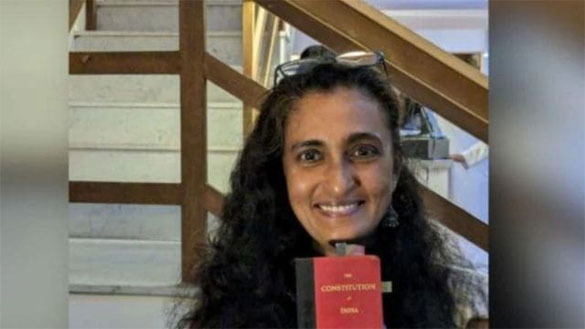 Safiya P M is fighting for property rights of Muslim women who are now non-believers. (Express Photo)
--------------
Wearing a huge smile and holding a copy of the Constitution, Safiya P M says, “I support a secular Uniform Civil Code (UCC)”.
A 51-year-old resident of Kerala’s Alappuzha district, Safiya is an activist who identifies as an “ex-Muslim”. She is also the general secretary of the Ex-Muslims of Kerala. Registered in 2020, the organisation was founded by 10 people.
Safiya, however, was thrust into the limelight because she is at the heart of a legal battle for property rights of Muslim women who are now non-believers.
Based on her writ petition, which says that she, a non-believer, would like to be governed by the Indian Succession Act, 1925, and not the Muslim Personal Law or Sharia, the Supreme Court had on January 28 asked the Centre to file a reply.
Her petition reads, “The practices under Sharia law (Muslim Personal Law) are discriminatory towards Muslim women and violate the fundamental rights guaranteed under the Constitution. The reason why the petitioner is not following the tenets of Islam is discriminatory practices of Sharia law. It will be a failure of justice if the petitioner is to be governed by Sharia law, even if she officially leaves the religion”. Moreover, Sharia dictates that if a person renounces Islam, they are to be excommunicated and are not entitled to any share in the family estate.
Safiya says her journey to the Supreme Court has been an arduous one. “My fight is not just for myself, but for Muslim women who cannot leave all of their property to their daughters. The Muslim Personal Law does not allow me to leave all my property to my daughter. Only 50% of the property can be left to a girl child (under Sharia), while the rest is divided among male relatives,” she tells The Indian Express.
A divorcée since 2004, she says she raised her daughter, who is now 25 years old, single-handedly.
She says that under Sharia, her father U A Muhammed, 71, a communist and a non-believer himself, will not be able to divide his property equally between his children — Safiya and her autistic brother. As per the Muslim Personal Law, a Muslim woman cannot inherit more than one-third of her family’s estate if there are other heirs. If she is the only heir, a Muslim woman can inherit only 50% of the family estate, even as the rest goes to male relatives.
“Under the personal law, my father cannot write a will that leaves the property to my brother and me,” she says.
Safiya says she was unaware of the pitfalls of the personal law till she faced discrimination under it. “If a secular UCC can help solve the issue, I am all for it,” Safiya says.
However, several Muslim organisations, including the All India Muslim Personal Law Board, have opposed UCC, calling it “discriminatory”. As per these Muslim organisations, UCC prevents Muslims from practicing the tenets of Islam, including its personal law.
Safiya says her organisation has thrown its weight behind her in her fight. “We are called ‘ex-Muslims’ because we face discrimination from the community if we leave the religion. On the other hand, we also have to deal with the phobia towards Muslims since we were born Muslims,” Safiya says, adding that her organisation had received support from ordinary people who had left the tenets of Islam.
She says her organisation raises awareness about patriarchal practices in various religions, including Islam. Talking about how most religions do not give equal rights to women, she says, “If a religion keeps telling you that you are only half a human being with half the rights, why would you want to follow it?”
Source: indianexpress.com
https://indianexpress.com/article/india/an-ex-muslim-womans-fight-secular-property-law-9808425/
--------
Nigerian Muslim Women Seek Policy Makers’ Intervention Over Hijab Discrimination
January 31, 2025
By Sophie Ochia and ChidinmaNnamdi
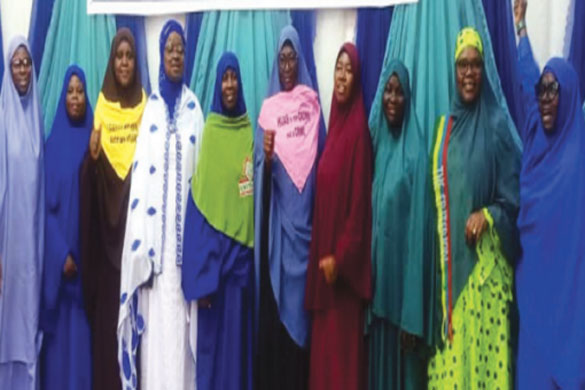 Despite Supreme Court judgment and awareness of the significance of wearing hijab, Nigerian Muslim women, on Wednesday lamented public discrimination against women in hijab.
At a briefing to commemorate this year’s World Hijab Day (WHD) in Alausa, a coalition of Muslim Women in Nigeria, under the aegis of the Hijab Right Advocacy Initiative, has called on policymakers, law enforcement agencies, educators and service providers to urgently adopt policies and provide training to officers on respecting religious expressions, including the right of Muslim women to adorn their hijabs in public places.
The group comprises Hijab Rights Advocacy Initiative (HRAI), Al-Mu’minaat (The (Believing Women Organisation), Nasru- llahi- L- Fathi Society (NASFAT), Muslim Students’ Society of Nigeria (MSSN) Lagos State Area Unit, Federation of Muslim Women Associations in Nigeria (FOMWAN) Lagos chapter, The Criterion, Lagos District, International Muslim Women Union (IMWU), Islamic Medical Association of Nigeria (IMAN), Lagos Secretariat Community Central Mosque, Muslim Public Affairs Center (MPAC) and AkhwaatMuslimat Organisation.
Others are: Muslim Rights Concern (MURIC), Guild of Muslim Professionals for Peace and Development (GMP), Muslim Media Practitioners of Nigeria (MMPN), Pure Heart Islamic Foundation, An Nujabau Female Forum, Muslim Lawyers Association on Nigeria (MULAN) and Izharul Haq Movement of Nigeria.
The World Hijab Day is a yearly event marked every February 1 in over 140 to raise awareness against discrimination on hijab-wearing women.
Executive Director of HRAI, HajiaMutiatOrolu-Balogun, said: “Since its inception, World Hijab Day has been a movement that champions freedom of thought, conscience and religion, and the rights of Muslim women to practice their faith without discrimination.”
She noted that this year’s theme, ‘Hijabis Unsilenced’ amplifies the voices of Muslim women who have long been marginalised, mistreated and faced discrimination because of their religious dress.
She said: “In Nigeria, where religious pluralism should be celebrated, Muslim women continue to face structural, legal, and social challenges that undermine their rights and dignity.
“We find it pertinent to reiterate that the issue of dressing, while it may be a means of cultural identity for some, for Muslims is legislation from God. It is not Arabian culture, neither it is a fashion accessory one may discard at will. It has also been protected by our laws. Wearing the Hijab by the Muslim female is the practical application of this constitutional provision. The supreme court in the case of Miss AsiyatAbdulkareem VS Lagos State has upheld the use of the hijab as being protected by the provisions of Section 38(1) of the 1999 constitution (as amended), hence, a fundamental right.”
NASFAT National Women Affairs Secretary, AlhajaGaniyatBabalola, called on the Director General of the National Identity Management Commission (NIMC), Ms Abisoye Coker- Odusote, to incorporate the provision of the regulation concerning the use of Hijab in the retraining of the commission’s officials.
According to her, “Muslim women should not be asked to compromise their religious beliefs or have their fundamental human rights infringed upon during their biometric process.”
She recommended that government agencies adopt protocols allowing private biometric capture by female officials to protect the dignity and religious rights of Muslim women.
Amirah (female president) of MSSN Lagos State Area Unit, HajiaRofiah Tijani, lamented the incessant harassment of female Muslim pupils in hijab.
She said: “Even when the hijab is allowed, some teachers and school principals compel students to tuck their hijabs into their uniforms, effectively diluting the full exercise of their constitutional rights. Our pupils in the primary schools are also being harassed, particularly those from disadvantaged and less educated backgrounds where their parents feel helpless in asserting their rights.”
She commended the Lagos State Commissioner of Basic and Secondary Education, Mr JamiuTolaniAlli-Balogun, and the Tutor-Generals as well as the Lagos State House of Assembly for acting swiftly to correct these infractions as soon as they are reported. “While the Lagos state government under the Leadership of Governor BabajideOlusolaSanwo- Olu has made significant strides in protecting the rights of Muslim Women and girls, the same cannot be said for Ogun and Oyo states,” she said.
Amirah of Akwaat Muslimah, HajiaMonsuraBankole, urged the Ministry of Education to ensure compliance with the Supreme Court judgment on hijab by continuously sensitizing school authorities and taking disciplinary action against those who persist in violating students’ rights.
She urged parents, caregivers and guardians to continue to educate their wards on the etiquettes of Hijab and not to participate in trends that go contrary to the spirit and intent of the hijab.
Welfare Officer of The Criterion, Lagos District, HajiaRisqiat Adam-Adedimeji, condemned the violation faced by Muslim women in Nigeria, the forceful removal of hijabs by law enforcement officers during arrests, whether in civil or criminal matters.
Source: thenationonlineng.net
https://thenationonlineng.net/muslim-women-seek-policy-makers-intervention-over-hijab-discrimination/#google_vignette
---------
Preserve fertility, delay menopause: UAE women cheer empowering solution
: January 31, 2025
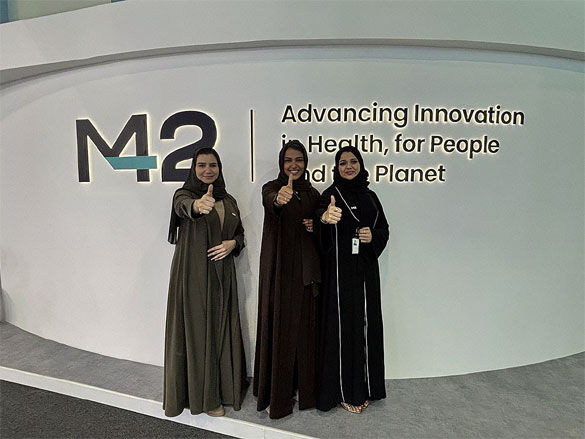 Attendees of Arab Health 2025 in Dubai, which concluded on Thursday, also welcomed the development
------------
Dubai: Women in the UAE have hailed an innovative new solution that offers them options to naturally delay menopause and preserve fertility.
Celebrating the 50th edition of Arab Health, a new collaboration announced between Abu Dhabi’s Danat Al Emarat Hospital for Women and Children, part of the M42 group, and UK-based ProFaM, will focus on ovarian tissue cryopreservation (OTC). This process involves freezing a small piece of ovarian tissue, ideally before the age of 35. The tissue can later be re-implanted in the perimenopause or before menopause to maintain hormonal balance, postpone menopause and its effects, and, if required, preserve fertility.
Unlike egg freezing, which requires hormone stimulation and an in vitro fertilisation (IVF) treatment cycle, OTC is minimally invasive and can be performed as a short day-case procedure. It offers hope to women undergoing cancer treatments and those with endometriosis or other benign conditions.
‘A huge relief’
Dorothy-Anne De Freitas, a resident in her 30s diagnosed with breast cancer, is relieved to have an option to preserve her fertility.
“This has been a huge relief. It’s empowering to have a solution that lets me take control of my future despite my health challenges,” De Freitas said.
The solution helps women seeking to postpone menopause naturally or as an alternative to hormone replacement therapy (HRT). It meets a growing need to provide women with innovative options for hormonal health and fertility preservation.
ShaikhaAlhmoudi, a mother of three children who is approaching menopause, is looking forward to the option of maintaining her health and quality of life.
“I love being a mom, but as I approach menopause, I’ve started thinking about the changes ahead. OTC offers a natural way to manage those changes without relying on synthetic hormones. It’s comforting to know I have options,” Shaikha noted.
‘Gives us freedom’
This service will provide women with greater autonomy over their reproductive and hormonal health. Natural hormone restoration through re-implanted ovarian tissue is superior to synthetic hormone replacement therapies, reducing the risk of side effects and improving overall quality of life.
Nichola Stones, a 45-year-old professional who delayed her pregnancy to build her career, noted that such revolutionary reproductive health services allow women to conceive later in life.
“If I had been presented with the option to preserve my fertility through OTC, it would have taken away much of the pressure of the ‘ticking clock’. It would have given me the freedom to pursue my goals while keeping the door open to starting a family when the time felt right,” Stones said.
How it works
The project is set to launch in the first half of this year. Initially offered as an elective service, OTC will be integrated into laparoscopic procedures, such as surgeries for endometriosis. Abu Dhabi Biobank is a key partner for this engagement, which will receive the ovarian tissue and cryogenically store it at -196 degrees Celsius in its laboratories. The preserved ovarian samples will be provided back to the Danat Al Emarat Hospital physicians as required, to support the patient’s own hormonal therapy journey for a period of up to 15 years.
Dr Summia Zaher, CEO of Danat Al Emarat, said the solution helps women regain control over their health and well-being and addresses their unmet needs.
“OTC meets a growing need in the region and offers a much-needed option for preserving reproductive health.”
Professor Simon Fishel, co-founder of ProFaM, underscored that the innovative service empowers women to make proactive choices about their health and future.
“Ovarian tissue cryopreservation offers not only a groundbreaking solution for fertility preservation but a natural approach to hormonal health management,” Fishel added.
Source: gulfnews.com
https://gulfnews.com/uae/people/preserve-fertility-delay-menopause-uae-women-cheer-empowering-solution-1.500025967
--------
Why some Muslims in Melbourne's CBD don't feel safe praying in public
January 31, 2025
In a busy parent's room at a Melbourne shopping centre, YelizDeveci swiftly manoeuvres past spirited children and parked strollers, in search of a quiet place to pray.
She sets her sights on an empty feeding room, separated from the noise only by a curtain.
Once inside, she unfurls a mat and began to pray.
While it's not an ideal location, she said she felt safer here than she had on some occasions praying publicly in Melbourne.
Ms Deveci recalled a time when she was targeted by an onlooker while praying behind a tree at the Royal Botanic Gardens.
"I have been … physically spat on while praying," she said.
On another occasion, Ms Deveci said she was called a "terrorist" while performing her prayers in public.
"This is why it's not comfortable as a Muslim female to be praying in public places in the city."
She would love to see more multifaith rooms made available in public places in Melbourne's CBD, including segregated spaces for women.
"It would make me feel more safe and mostly it would make feel like I belong and that I'm respected … it would mean a lot," she said.
Ms Deveci's dilemma is shared by many Muslims in Melbourne's CBD, according to the Islamic Council Victoria's Adel Salman.
"I think Muslims have become very creative in terms of finding space [to pray]," he said.
Mr Salman said the lack of prayer rooms in the CBD had made it difficult for practising Muslims who work or visit the CBD, to observe their religious obligations.
"This actually does impact the ability for Muslims to spend time in the city, whether it's for work purposes, or for shopping purposes or just to do their business in the city," he said.
Prayer times and rituals are spread across the day
There are five daily prayer times for Muslims, with each prayer falling within a specific timeframe.
The first prayer, Fajr, starts just before sunrise and the final prayer, Isha, starts around one-and-a-half hours after sunset.
"The prayers that probably are the ones that we have the most need for prayer spaces, are the afternoon prayers — the noon, the early afternoon, late afternoon prayers — and maybe the evening prayer, "Mr Salman said.
"Typically, people will pray the early morning prayer at home and the night prayer at home. But it's those prayers in the middle, where people sometimes get caught out."
Before praying, Muslims need to perform wudu or ablution, where they cleanse parts of their body, Board of Imams Victoria secretary Sheikh Muhammad Saleem said.
Sheikh Saleem said while Muslims could pray anywhere, women should ideally pray in a more secluded area.
"The nature of the prayer is that you have — not just standing making a prayer — you have to bow down and prostrate," he said.
"Those things would be quite uncomfortable for Muslim women to do in public."
Calls for local and state government to influence change
The Islamic Council of Victoria is pushing for more multifaith rooms "strategically located" in Melbourne's CBD.
"We have written to shopping centres throughout metropolitan Melbourne as well as regional Victoria, encouraging them to provide prayer spaces for Muslim shoppers," Mr Salman said.
"We got a mixed response."
The ICV is now calling on the Victorian government and local councils to join the push.
Mr Salman said he hoped that by taking the lead, the government and local council could encourage more proprietors to include multifaith rooms in shopping centres and office buildings.
"I think it would be great if the City of Melbourne and the state government … put out a very public message that they are looking to cater for the needs of not only Muslims but all those who require these types of quiet spaces," Mr Salman said.
"And hopefully others will follow."
Question over government's role in supporting interfaith spaces
Deakin University's chair of Islamic studies, Ihsan Yilmaz, said in a secular society it was not the responsibility of the government to create religious spaces.
Normally in a secular society, it's the responsibility of civil society to do these things," Professor Yilmaz said.
"This is a multifaith society, so a state cannot really create spaces for every religious congregation.
But Professor Yilmaz said for many Muslims, the availability of more prayer spaces was also a matter of wellbeing.
"They need worship places, and this helps with their wellbeing, their spirituality, their mental health," he said.
"It's a complicated question … it's a matter for public deliberation."
Professor Yilmaz said more multifaith rooms could be a good compromise.
In a statement, the Victorian government said it recognised that prayer rooms were "important for Muslim and other faith communities".
It said it now required new public service buildings or leased spaces to include prayer rooms to support the public service to be safe and inclusive.
The City of Melbourne said there were two "reflection rooms" at narrmngarrgu Library near Queen Victoria Market and one at the Kathleen Symes Library and Community Centre in Carlton.
The State Library of Victoria and Melbourne Town Hall contain prayer rooms for staff, but do not have the same facilities available to the public.
How migration patterns have shaped cities around the world
Professor Yilmaz said many western cosmopolitan cities that had catered to their Muslim populations had done so because of a "longer history of immigration".
"In many western cosmopolitan cities, Muslims have been there for more than a century," he said.
"In London for instance, from the British colonies, people have been arriving in the UK for many decades, same in Paris, that's the case from the French colonies."
But the differing migration pattern in Australia meant many Muslims arrived here much later, he said.
"Muslim arrivals here — in big numbers — started in the 1960s and increased in [the 1970s] when the White Australia policy ended," he said.
"Compared to western European cities, I think Muslims in Melbourne are a little disadvantaged on that front."
Islamophobia is rising in Australia
Amid concern about rising social tensions in Australia, the federal government last year appointed a special envoy to combat Islamophobia.
A 2024 report on social cohesion by the Scanlon Foundation Research Institute found the ongoing conflict in the Middle East has sparked protest and division in Australia.
In July 2024, 34 per cent of respondents said they had a "somewhat or very negative attitude" towards Muslims — up 7 per cent from the year prior.
"That's a huge number, I think this is one of the highest in western democracies," Professor Yilmaz said.
The figures from the Mapping Social Cohesion Report show that between 2019 and 2023, the proportion of adults with a "somewhat or negative attitude towards Muslims" dropped from 41 per cent to 27 per cent.
The report's authors have called the increase to 34 per cent in 2024 "significant".
For a growing community, prayer spaces aren't a 'niche requirement'
EssamKotb is a member of Victoria's growing Muslim population.
Originally from Egypt, Mr Kotb moved to Australia eight years ago.
When he first arrived, Mr Kotb remembers having to make some adjustments in his day-to-day life to observe his religion.
"We had to make many adjustments; the first one is to activate reminders to your phone to remind you because there is no [prayer] announcement that you can hear," he said.
"And you need to travel, by car or public transportation, to reach a prayer room or mosque."
To maintain his faith, Mr Kotb said he started praying in unoccupied meeting rooms at his office.
"It wasn't natural and it's still not natural," he said.
For Mr Kotb, the introduction of multifaith rooms in public spaces and offices would foster a sense of belonging in the country he now calls home, he said.
"It will make it an actual home," he said.
While there are some prayer rooms in and around the CBD, many are subject to restrictions, Mr Salman said.
He said access to multifaith rooms at university campuses, for example, was typically limited to staff and students — something he would like to see change.
Some of the places near Melbourne's CBD with prayer rooms include Southern Cross Station, the University of Melbourne Islamic Society Musallah, Queen Street Musallah and Melbourne Convention and Exhibition Centre.
Mr Salman said the introduction of more multifaith rooms around the CBD would make Muslims in Victoria feel "more included, more welcome and more valued".
"We don't expect that Melbourne will be similar to a Kuala Lumpur or any city in the Middle East, we don't expect that," he said.
"But what we are looking for is some level of catering and inclusivity for the over 300,000 Muslims here in Victoria.
"It would make a very tangible difference to their quality of life."
Source: net.au
https://www.abc.net.au/news/2025-01-31/praying-in-public-muslims-melbourne-cbd/104782508
---------
On World Hijab Day, Canadian university explores Islam from a Shia Mosque
January 30, 2025
As part of an initiative to promote cultural and religious dialogue, Concordia University’s Office of Religious and Spiritual Life is organizing an educational visit to the Ahlulbayt Mosque, a local Shia Islamic center, in celebration of World Hijab Day.
Under the theme “Unveiling the Truth About the Hijab Experience in the Western World,” the event offers participants a chance to hear firsthand from Muslim women about their experiences wearing the hijab, the challenges they face, and the spiritual and cultural significance of the headscarf.
The visit includes gathering at the university’s central library, followed by a metro ride to Plamondon station, leading to the Ahlulbayt Mosque, where the main event will take place.
The university has invited researchers and interested individuals to join the discussion, fostering a deeper understanding of Islamic culture and the experiences of Muslim women in Western societies.
Source: shiawaves.com
https://shiawaves.com/english/news/117878-on-world-hijab-day-canadian-university-explores-islam-from-a-shia-mosque/
-------
URL: https://newageislam.com/islam-women-feminism/ex-muslim-woman-secular-property-law/d/134490