
Meet Farah Malik: Richest Muslim Woman of India
New Age Islam News Bureau
09 July 2025
· Meet Farah Malik: Richest Muslim Woman of India
· Does Iranian Cinema Construct Its Own Cinematic Veil for Women? Pulling Back Hijab in Recent Films
· Muslim Woman Complains They Don't Allow Her to Wear Hijab On Morocco Beach
· Knox County Sheriff's Office Deletes Mug Shot Of Woman Without Hijab
· ICC Issues Arrest Warrants for Taliban Leaders for Persecuting Women And Girls
· African Women Leaders Call for Reformed Global Finance Through Inclusive Economic Justice
Compiled by New Age Islam News Bureau
URL: https://newageislam.com/islam-women-feminism/farah-malik-muslim-woman-india/d/136127
-----
Meet Farah Malik: Richest Muslim Woman of India
July 9, 2025
By Abhijeet Sen
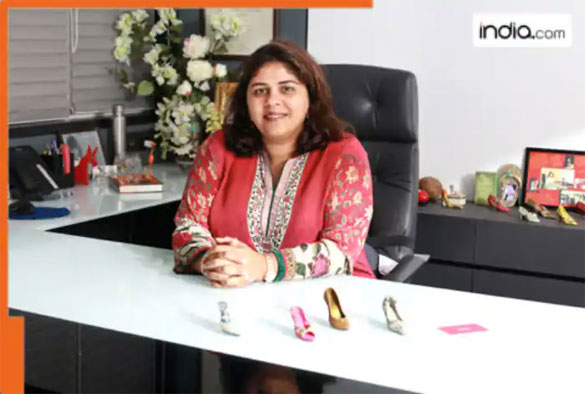
Farah Malik
----------
Richest Muslim woman of India: You must have heard many stories about Elon Musk, the richest man of the world, and even Mukesh Ambani, who is the richest man of India. However, do you know who the richest woman of India is. More notably, this article is about Farah Malik, who is known for being India’s richest Muslim woman. Farah Malik is the daughter of billionaire Rafique Malik who is currently serving as the Managing Director of Metro Shoes. Here are all the details you need to know about Farah Malik, the richest Muslim woman of India.
Who is Farah Malik?
Starting her journey with the company in 2000, Farah Malik Bhanji fought hard and ultimately became the MD of the company. Talking about the educational qualifications, Farah is a distinguished alumnus of the University of Texas at Austin. Due to her commitment to continuous learning, she also attended the President Program at the prestigious Harvard School of Business.
The Metro brand was founded by her grandfather, Malik Tejani, in 1955 and from then on, their brand Metro Shoes flourished under Farah’s leadership. Due to Farah’s successful role as the Managing Director, Metro brand saw a transformative journey, which is continued till date.
How did Farah Malik rise to success?
Fashion experts say that that Farah’s keen attention to detail and quality has helped the brand compete with her competitors. Moreover, Farah Malik Bhanji has also played a key role in developing Metro Brands’ relationships with foreign brands such as Clarks, Crocs, and Skechers. Notably, Farah enjoys a staggering net worth of Rs. 26,000 crores.
What is Farah Malik currently upto?
The official website of the Metro brands says that “Ms. Bhanji serves as a Director on the Board of Metro Shopping Arcade Private Limited, Metro House Private Limited, M.V. Shoe Care Private Limited, Metro Plaza Arcade Private Limited and Metro Athleisure Limited (Formerly known as Caravatex Brands Limited)”.
Source: india.com
https://www.india.com/news/india/who-is-farah-malik-meet-indias-richest-muslim-woman-india-her-business-is-metro-brand-shoes-net-worth-is-rs-26000-crores-7932692/
--------
Does Iranian Cinema Construct Its Own Cinematic Veil for Women? Pulling Back Hijab in Recent Films
BY ALI FARAHMAND
JULY 8, 2025
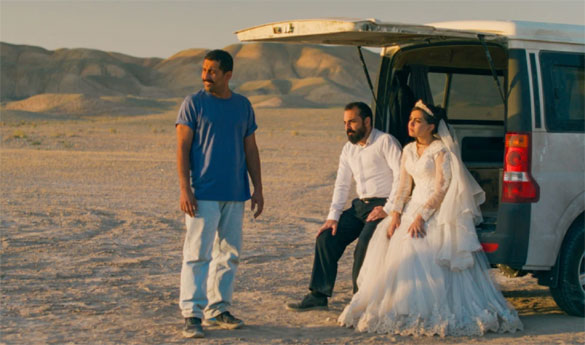
'It Was Just an Accident'Neon
------------
“One is not born a woman, but becomes one.” Nearly eighty years after this statement by Simone de Beauvoir, it’s still true that womanhood is not a biological or natural given, but a product of upbringing, culture, and social structures. In Iran, hijab constitutes a central part of this patriarchal structure — an order in which women are not merely veiled, but defined through the hijab. The veil functions as a mythic halo that wraps around the female body, concealing it from view while simultaneously subjecting it to control — reducing the woman from a subject to an object, assigning her the status of a commodity imbued with cultural value.
Iranian cinema plays a dual role in representing and reinforcing the hijab. On one hand, due to official laws, women are invariably depicted wearing the veil — even in private settings. This leads to the hijab becoming normalized and conventionalized in the viewer’s imagination. For the Iranian spectator, it is as if the woman on screen is defined through her mythical halo. On the other hand, this enforced representation has evolved into a visual, cultural, and aesthetic code: a system that dictates how the female body is seen and perceived within the cinematic frame. Over time, these codes have shaped the visual language of Iranian films, determining to a significant extent what is permissible on screen, and what must be erased, hidden, or replaced.
However, throughout the history of Iranian cinema, perceptive filmmakers have sought to challenge the dominant masculine structure that governs visual language. “Fireworks Wednesday,” directed by AsgharFarhadi, is a clear example of how compulsory hijab influences the representation of women on screen. Farhadi, fully aware of the restrictions imposed by censorship and the male visual order, constructs a narrative that directly engages with these constraints.
From the very beginning, the female character shouts, protests, and accuses her husband. Yet the controlled gaze of the camera — and, by extension, the viewer’s mind — operates in such a way that the man appears to be in the right until the very end. The woman, lacking the visual means to become a full subject, is not easily believed. Only when the man’s infidelity is finally revealed does the viewer awaken, as if confronted with their own unconscious complicity.
In this sense, the film is not merely shaped by the limitations of hijab; it transforms those very limitations into dramatic elements. The camera, much like the social structure it reflects, does not see or trust the woman.
The uprising under the banner of Woman, Life, Freedom fundamentally questioned this “symbolic order” for the first time. Out of this movement — not only in the streets but also in art and cinema — a pressing question emerged: Can Iranian cinema represent women as subjects and agents in their own right?
In recent years, some filmmakers have wrestled with these questions. In his latest film, “It Was Just an Accident,” JafarPanahi, for the first time, places women on screen without the mandatory hijab. Similarly, Mohammad Rasoulof does so in “The Seed of the Sacred Fig.” Yet in both films, the presence or absence of the veil makes little difference — because the woman is still not a subject. She remains under the control and subjugation of a male-dominated order.
The central issue is not the physical veil on the woman within the frame, but the internalized veil within the filmmaker’s gaze. In these male-authored narratives, women are either traditional homemakers or warriors clad in masculine heroism — two roles that are equally fetishized. In both cases, women behave in ways that reflect male fantasies.
Take, for example, the character of Wonder Woman in blockbuster cinema. Rather than affirming the essence of womanhood — as a human being, not as an object of the male gaze — she gravitates toward the aesthetic of BDSM, one of the many expressions of male fetishism.
In contrast to the Cannes-acclaimed films by Rasoulof and Panahi, “The Witness,” directed by Nader Saei-Var and co-written by Panahi, offers a rare example of a film that genuinely grants identity to women. The film portrays the transformation of women who, in the aftermath of a liberation movement, begin to reclaim their humanity and agency from a male-dominated world. The female protagonist is neither a self-sacrificing mother nor a fearless warrior. Instead, she is hesitant, vulnerable, yet ultimately decisive and agentive.
Speaking to IndieWire, Saei-Var said, “It’s only natural that the public culture of a society, like a river, will eventually find its way and keep flowing. There may be dams built to block it temporarily, but over time, cracks begin to form, and water starts enlarging those cracks until the dam collapses. This has been the historical experience of all peoples. The seepage began nearly twenty years ago, and now we’ve entered a phase where movement is increasingly possible. Any film that opposes the dictated order and aligns with lived reality contributes to this current. From this perspective, Iran’s dissenting cinema seems even slower than the cultural transformations already unfolding within society. Once we pass this stage, it’s unlikely that audiences will continue to accept the old forms and themes in cinema.”
Yet a significant portion of Iranian cinema continues to operate within the boundaries of official censorship and the visual language dictated by the Islamic Republic. Many films — even those in the realist genre — fail to present an authentic depiction of everyday life. Women appear with headscarves in bed, in the bathroom, and fully covered in the privacy of their own homes. These images, however skillfully crafted, ultimately promote a mythical and imaginary world: one in which the prevailing order functions seamlessly and without disruption.
On the other hand, some filmmakers working within the framework of officially sanctioned cinema have recently begun to show signs of a shifting perspective. The female characters in their films have become more complex, more active, and less stereotypical. However, these changes largely remain at the level of narrative, not visual structure. The image of an unveiled woman — as a reflection of social reality — still has no place in the official space of Iranian cinema.
One example is “Nightwalker” by FarzadMotamen, in which a woman (though still under compulsory covering) seeks to break free from traditional structures. At times, filmmakers explore alternative strategies to escape the false representations of women. In past decades, Abbas Kiarostami, for instance, often omitted women from his narratives altogether, or focused on rural women who wear the veil naturally and by choice. Similarly, AsgharFarhadi now prefers to shoot his recent films outside Iran. Nader Saei-Var is also preparing to make his next film abroad.
“All in all, the challenges of making a film outside the country have, at least for me, been far less than producing one inside Iran — because the way I used to work (underground), I had to give up many of my ideas or execute them in a compromised and incomplete way due to restrictions. It feels like now, for the first time, I am truly making a film in the full sense of the word,” Saei-Var said.
Some filmmakers have emphasized that any genuine depiction of hijab or the female body is immediately met with removal during the licensing or distribution stages, often accompanied by legal punishment. BehtashSanaeeha and Maryam Moghaddam, for instance, were sentenced to a 26-month suspended prison term, a monetary fine, and the confiscation of filming equipment for making the film “My Favorite Cake.” A similar fate befell Ali Ahmadzadeh, whose film “Critical Zone” led to serious restrictions, prompting him to leave Iran — at least temporarily.
But does cinema truly matter so much that the law responds with such severity? The answer is not merely about hijab itself. Rather, films that portray women without the compulsory veil disrupt the symbolic, legal-religious order. This apparatus is not purely political — it is also a form of aesthetic control: the enforcement of hijab on screen serves as the imposition of a visual regime.
Iranian cinema is now crossing a historical threshold. The issue of hijab is no longer just an external or governmental concern; it is entangled with the image itself, with form, and with narrative structure. In this context, a filmmaker who wishes to speak about women must also speak of their bodies, their points of view, and their voices. Though this path is difficult and costly, it is the only inevitable route toward restoring Iranian cinema to reality — and to the truth of freedom.
Source: indiewire.com
https://www.indiewire.com/features/commentary/iranian-movies-hijab-woman-life-freedom-1235137370/
-------
Muslim Woman Complains They Don't Allow Her To Wear Hijab On Morocco Beach
SIBY JEYYA
09/07/2025
The video posted on X features a woman, dressed in a hijab and sunglasses, expressing frustration over the restriction of wearing hijabs on beaches in Morocco. This incident, set against the backdrop of a sunny resort area, has prompted a broader discussion about how such policies impact both local and international perceptions of the country.
Morocco, a predominantly Muslim country, has a complex relationship with religious attire in public spaces, particularly in tourist areas. While the hijab is a common sight in many parts of the country, some beach resorts have implemented policies that limit or prohibit such attire, often citing concerns about maintaining a certain aesthetic or adhering to international tourism standards. These policies have been controversial, with some viewing them as a form of cultural assimilation or discrimination, while others see them as necessary for attracting a diverse clientele.
Morocco's tourism industry is a vital part of its economy, with millions of international visitors drawn to its beaches, historical sites, and cultural offerings. The country's approach to religious attire in tourist areas is often shaped by the need to cater to a broad audience, including non-Muslim tourists who may have different expectations about beach culture. This has led to tensions between preserving Islamic identity and promoting a secular, inclusive environment that appeals to global travelers.
The incident has also sparked a debate about how european countries handle similar issues. Some argue that if a Muslim-majority country like morocco can restrict hijabs in certain contexts, then european nations should have the right to implement their own policies regarding religious attire in public spaces. This argument is often tied to concerns about integration, security, and the preservation of secular values in Europe, where debates over hijab bans in schools, workplaces, and other settings have been ongoing.
Source: indiaherald.com
https://www.indiaherald.com/Breaking/Read/994832881/Muslim-Woman-Complains-They-Dont-Allow-Her-To-Wear-Hijab-On-Morocco-Beach
-------
Knox County Sheriff's Office Deletes Mug Shot Of Woman Without Hijab
Allison Kiehl
JULY 8, 2025
More than a year after the Knox County Sheriff's Office published online a booking photo of a Muslim woman without her hijab, the agency deleted the mug shot from its internal database under pressure from a pending lawsuit.
Layla Soliz was arrested with 11 other demonstrators at the University of Tennessee campus on charges of criminal trespass on May 15, 2024. During Soliz's booking, KCSO deputies took her mug shot with and without her hijab, a head covering worn by Muslim women as part of their faith, according to a federal lawsuit Soliz filed against the sheriff's office on Oct. 7.
The sheriff's office chose to publish the photo of Soliz without her hijab, violating agency policy not to make public photos showing a person without their religious head covering. After Soliz complained, the sheriff's office replaced the mug shot with one showing her with her hijab, but not before it was obtained by third-party websites that publish booking photos.
KCSO certified on June 13 that it had expunged the uncovered booking photo of Soliz and all videos from its internal database.
On July 7, KCSO moved to dismiss the case for "mootness," or a lack of live practical significance.
"Knox County’s voluntary deletion of the images moots that claim," says the motion to dismiss. "Plaintiff’s disagreement that voluntary cessation does not moot the case is frivolous."
The motion to dismiss the lawsuit is pending. Soliz and her lawyer, Daniel Horwitz, "are exploring all options at this time," including whether to agree to end the lawsuit or continue to challenge KCSO's standing policy on religious head coverings, Horwitz told Knox News in an email sent July 8.
The lawsuit has persisted for 10 months. Soliz and her lawyer sued to force KCSO to change its booking procedure to never force a person to remove a religious head covering for a booking photo as well as to get Soliz's uncovered booking photo expunged from the KCSO internal database.
"If we just let things that aren't OK continue to happen without saying something, then that's only going to encourage those who abuse their authority," Soliz told Knox News in March.
This is not the first time KCSO has sought to dismiss the lawsuit against Soliz. The agency tried in December to get the case dismissed for "failure to state a claim." Judge Thomas Varlan denied the motion April 9.
The suit was filed in U.S. District Court for the Eastern District of Tennessee. Soliz had sued for at least $250,000 in damages after KCSO originally published her mug shot without her hijab in 2024. The photo was then obtained by third-party websites.
"Requiring an observant Muslim woman to remove her hijab in front of men who are not her family members is humiliating and degrading – akin to requiring a woman to take off her shirt in public," the lawsuit says.
Hijabs are worn by women in the Muslim community for modesty and as a symbol of faith. The hijab prevents men outside a woman's family from seeing her hair.
The lawsuit asserts that there was no reason to publish Soliz's uncovered mug shot on the KCSO website, let alone take the booking photo without the hijab in the first place. Additionally, the suit says that KCSO and Sheriff Tom Spangler had originally "retained Mrs. Soliz’s uncovered booking photo and refused to destroy it."
The case was partially settled on March 11, when Soliz was awarded $71,500 in damages, according to the lawsuit documents.
Source: knoxnews.com
https://www.knoxnews.com/story/news/local/2025/07/08/kcso-deletes-mug-shot-without-hijab-knoxville-layla-soliz/84503960007/
--------
ICC issues arrest warrants for Taliban leaders for persecuting women and girls
Flora Drury
9 JULY 2025
The International Criminal Court has issued arrest warrants for two of the Taliban's top leaders, accusing them of persecuting women and girls in Afghanistan.
The Hague-based court said there were "reasonable grounds" to believe Supreme Leader HaibatullahAkhundzada and chief justice Abdul Hakim Haqqani had committed a crime against humanity in their treatment of women and girls since seizing power in 2021.
In that time, they have implemented a series of restrictions, including on girls over 12 accessing education, and barring women from many jobs.
In response, the Taliban said it doesn't recognise the ICC, calling the warrant "a clear act of hostility" and an "insult to the beliefs of Muslims around the world".
There have also been restrictions on how far a woman can travel without a male chaperone, and decrees on them raising their voices in public.
In a statement, the ICC said that "while the Taliban have imposed certain rules and prohibitions on the population as a whole, they have specifically targeted girls and women by reason of their gender, depriving them of fundamental rights and freedoms".
The United Nations has previously described the restrictions as being tantamount to "gender apartheid".
The Taliban government has said it respects women's rights in accordance with their interpretation of Afghan culture and Islamic law.
Akhundzada became the supreme commander of the Taliban in 2016, and has been leader of the so-called Islamic Emirate of Afghanistan since US-led forces left the country in August 2021. In the 1980s, he participated in Islamist groups fighting against the Soviet military campaign in Afghanistan.
Haqqani was a close associate of Taliban founder Mullah Omar and served as a negotiator on behalf of the Taliban during discussions with US representatives in 2020.
The ICC investigates and brings to justice those responsible for genocide, crimes against humanity and war crimes, intervening when national authorities cannot or will not prosecute.
However, it does not have its own police force and so relies on member states to carry out any arrests.
The prospect of warrants being issued for the two Taliban leaders was first raised in January, when the ICC's top prosecutor, Karim Khan, alleged they were "criminally responsible for persecuting Afghan girls and women, as well as persons whom the Taliban perceived as not conforming with their ideological expectations of gender identity or expression, and persons whom the Taliban perceived as allies of girls and women".
At the time, the Taliban's foreign ministry responded to the threat of arrests, saying the ICC had turned a blind eye to what it described as "numerous war crimes and crimes against humanity committed by foreign forces and their local allies", referring to US-led forces present in the country before 2021.
Human Rights Watch welcomed the arrest warrants for the two Taliban leaders.
It called on the ICC "to extend the reach of justice to victims of other Taliban abuses, as well as victims of the Islamic State of Khorasan Province forces, former Afghan security forces and US personnel".
"Addressing cycles of violence and impunity in Afghanistan requires that victims of all perpetrators have equal access to justice," it said in a statement.
Source: bbc.com
https://www.bbc.com/news/articles/c98jn0ry8jqo
-------
African Women Leaders Call for Reformed Global Finance Through Inclusive Economic Justice
8 JULY 2025
Seville, Spain — On the margins of the Fourth International Conference on Financing for Development (FfD4), the African Women Leaders Network (AWLN) convened a powerful High-Level Side Event titled: “Bridging the Global Financing Gap: African Women’s Leadership for Economic Justice and Effective Implementation of Agenda 2063 and Agenda 2030.”
The event took place at the FIBES Conference & Exhibition Center in Seville, Spain, at a critical time when the world faces widening financing gaps, entrenched inequalities, and unsustainable debt burdens—particularly in emerging and developing economies.
This gathering placed a spotlight on African women as central drivers of transformative change in the global financing architecture. It emphasized that addressing today’s global challenges requires an inclusive approach rooted in justice, equity, and solidarity. In her opening remarks, AWLN Co-Convener H.E. Mme BinetaDiop underscored the urgency of recognizing women’s economic rights, stating, “We are advocating for access to capital, to land, to markets, and to boardrooms. Not as a favor, but as a right.”
Keynote speaker H.E. Cristina Duarte, UN Under-Secretary-General and Special Adviser on Africa stressed that structural reforms must center women’s access to productive assets and impactful decision-making roles. H.E. Amina J. Mohammed, Deputy Secretary-General of the United Nations, reinforced this vision, declaring, “We are not just speaking up—we’re changing the system.”
The session featured a high-level panel moderated by Justice MeazaAshenafiMengistu, former President of the Federal Supreme Court of Ethiopia, and Dr. Loubna Karroum, CEO of KARDEV, who co-chair the AWLN Economic and Financial Inclusion (EcoFin) Pillar. Panelists included H.E. AmeenahGurib-Fakim, former President of the Republic of Mauritius and AWLN Elder; H.E. Ms. Nardos Bekele-Thomas, CEO of AUDA-NEPAD; Dr. James Mwangi, CEO of Equity Group Holdings, who stressed the importance of viewing investment in gender equality as impactful for economic rights and progress, not only a social benefit; Dr. Fatima Farouk Elsheikh, Secretary-General of BADEA; and Dr. JideOkeke, Director of the UNDP Regional Programme for Africa. The discussion addressed innovative and inclusive financing models, the role of women in domestic resource mobilization (DRM), gender equity in economic governance, and barriers to women’s access to capital and land.
The event highlighted that sustainable development cannot be achieved without financial systems that empower women and promote equity.
Key outcomes included a strong call for the reform of global financial systems through a gender equity lens, the development of a post-FfD4 advocacy roadmap, and renewed momentum for strategic partnerships between AWLN and financial institutions. The event reaffirmed AWLN’s role as a leading African platform in global dialogues on economic justice and financial governance.
Speakers and participants collectively emphasized that African women are indispensable in achieving sustainable peace, economic growth, and resilience. From driving agricultural productivity to shaping climate-responsive finance and public investment, women play vital roles. However, limited access to land, finance, and formal economic systems continues to hinder this potential. AWLN stressed the need to remove these structural barriers and ensure women-led MSMEs have access to Africa’s vibrant domestic financial markets.
The event also reinforced the importance of gender balance in global decision-making structures. AWLN echoed the draft FfD4 outcome document’s call to ensure gender parity on the executive boards of international organizations through strategic nominations, while also advocating for bottom-up strategies to support and resource women leaders at all levels.
Organized by AWLN in collaboration with the African Union, UN-OSAA, UNDP, BADEA, and AUDA-NEPAD, this side event underscored that economic transformation must be inclusive and African-led. It contributed meaningfully to the FfD4 agenda and to broader efforts aimed at implementing both Agenda 2063 and the 2030 Sustainable Development Goals.
Source: allafrica.com
https://allafrica.com/stories/202507080538.html
--------
URL: https://newageislam.com/islam-women-feminism/farah-malik-muslim-woman-india/d/136127