
Forced Marriages Remain a Serious Crisis for Girls in Afghanistan
New Age Islam News Bureau
28 May 2026
• Forced Marriages Remain a Serious Crisis for Girls in Afghanistan
• Family of ISIS-linked woman Nesrine Zahab welcomes her return to Sydney from Syrian camp
• Australian woman linked to Islamic State charged with terror offences
• Women's Body Pushes Muslim Law Reform, Seeks Fair Divorce Rules
• Reopen schools and universities for girls, allow women to work: Former Afghan President
• UN Raises Alarm Over Taliban Child Marriage Regulations
• Selling children to survive: Afghan fathers forced to make impossible choices
• WHO Representative Calls for Peace in Afghanistan on the Occasion of Eid al-Adha
• Crash after Aidiladha prayers kills woman in Machang, husband seriously injured
• Arab women's voices 'must be heard' in AI revolution
• Women protest in central Tokyo opposing revisions to Japan’s pacifist constitution
• Menstruation: Hidden Suffering Between Poverty and Women’s Silence
• UN Women warns Taliban decree could normalize child marriage
• Women with weapons: Why the IRGC arms Iranian civilians
• New Book Chronicles Social History of Iranian Women’s Basketball in Landmark Tehran Launch
• Fatima Sana features in special episode of PCB Podcast
• Girod'Italia Women team analysis: Do UAE Team ADQ have enough firepower to beat Demi Vollering?
Compiled by New Age Islam News Bureau
-----
Forced Marriages Remain a Serious Crisis for Girls in Afghanistan
May 27, 2026
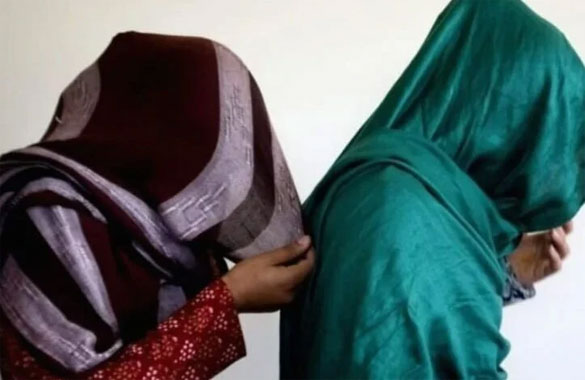
Forced Marriages Remain a Serious Crisis for Girls in Afghanistan
------------
Recent reports from Afghanistan indicate that forced marriage remains one of the most painful social problems facing girls in the country.
Victims and human rights activists say the practice has led to increased violence, psychological pressure, and the destruction of many girls’ futures.
Amid growing concern over the situation of women and girls in Afghanistan, some victims of forced marriage say life has lost its meaning for them, and many of their dreams have been sacrificed because of decisions imposed by their families.
Victims say that in many cases, girls are forced into marriage without personal consent and at a young age, often to men far older than them.
Some girls affected by forced marriage say they faced severe physical and psychological violence after opposing their families’ decisions. They report threats, confinement at home, and being denied the right to choose, adding that traditional and social pressures leave them with little room to object.
Social experts warn that the continuation of this situation has serious consequences for girls’ mental health and future, including increased depression, domestic violence, and deprivation of education.
They stress that preventing forced marriage requires broad public awareness, social support, and stronger legal protections for women and girls.
Civil society activists have also called for greater attention from international institutions and human rights organizations to the situation of Afghan girls, warning that continued silence over this crisis could seriously endanger the lives of a large generation of girls.
Source: shiawaves.com
-----
Family of ISIS-linked woman Nesrine Zahab welcome her return to Sydney from Syrian camp
By DanutaKozaki
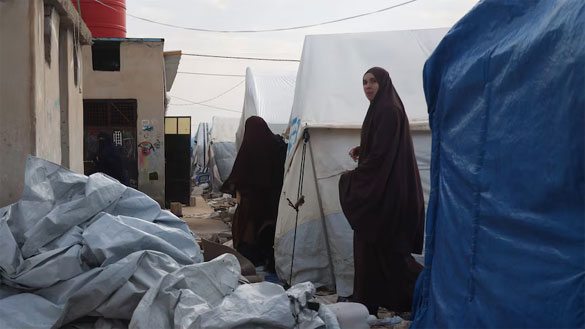
Nesrine Zahab is one of the IS-linked women who have returned to Australia from Syria. (ABC News: Baderkhan Ahmad)
-----------
The father of a woman linked to the Islamic State group says his daughter is "happy to be home" in Sydney's south-west but she is exhausted after more than a decade stranded in Syria.
Two separate groups of women, referred to by media as "ISIS brides", have returned to Sydney and Melbourne this month along with their children.
Some of the women are believed to have accompanied their husbands to the war zone, but others came with family and married ISIS fighters once they arrived. Some say they got stuck in Syria by accident.
MsZahab has previously told ABC Four Corners she did not realise she was entering Syria and the so-called Islamic State caliphate as a 21-year-old.
Her 71-year-old father, ZachariaZahab, said his family had been together for the first time in years on Wednesday, including with his mother, aged 98.
"The guards at the [Syrian] camps sometimes kept the women and children outside the tents for hours in the hot sun or rain for hours when they were checking things," he said.
"When my grandson was handed a glass of water yesterday, my daughter said 'don't give him that' as he was only used to plastic cups in the camp," MrZahab said.
MrZahab said his daughter was still tired, and the family had yet to have a long talk about the future, especially with a family celebration yesterday to mark the Muslim festival of Eid al-Adha.
MrZahab said his daughter had made a mistake going to a dangerous area on the Turkish side of the Syrian border to give aid to refugees.
Source: www.abc.net.au
-----
Australian woman linked to Islamic State charged with terror offences
May 28, 2026
SYDNEY – An Australian woman who returned home in September 2025 from a Syrian refugee camp has been charged with allegedly joining the Islamic State group, and entering and remaining in a declared conflict zone, the authorities said on May 28.
The 34-year-old travelled to Syria between 2013 and 2014 with others, including a man, to allegedly join ISIS, the Australian Federal Police (AFP) said in a statement.
The police said she returned to Australia from Lebanon with another woman, 36, and that investigations into both women were ongoing.
“It is important to note that a period of time without charges being laid is not an indicator that investigations have ceased,” AFP Deputy Commissioner of National Security Investigations Hilda Sirec said.
Visitors at Kyo Cards Con at Singapore Expo on May 2. The trading card event drew about 10,000 visitors, matching its February debut.
Mr Andy Chua (second from right) roped in (from left) Mr Gab Chua, Mr Glenn Chua, and Mr Bryan Leong to start Pokemakase, a family-run venture that buys, sells and trade Pokemon cards.
Vessels in the Strait of Hormuz seen from the beach of Iran's Bandar Abbas. The military site that was struck was an Iranian ground control station in Bandar Abbas that was about to launch a fifth drone.
The charges follow the return earlier in May of two women charged with slavery-related offences and a third with terror offences, including allegedly joining Islamic State.
The return of both groups has drawn criticism from political opponents, who say the centre-left government failed to stop their travel to Australia.
The government says it did not assist their travel and that there are “very serious limits” on preventing citizens from re-entering the country.
Between 2012 and 2016, some Australian women travelled to Syria to join their husbands who were allegedly members of ISIS. Following the collapse of the caliphate in 2019, many were detained in camps. REUTERS
Source: www.straitstimes.com
-----
Women's Body Pushes Muslim Law Reform, Seeks Fair Divorce Rules
by: Shreya Ghosh
May 28, 2026
The National Commission for Women (NCW) has recommended comprehensive codification of Muslim personal laws, calling for an end to fragmented practices and full alignment with the principles of gender justice enshrined in the Indian Constitution.
The NCW has formally submitted its comprehensive recommendatory report titled "Rights of Muslim Women in India" to the Ministry of Home Affairs, Ministry of Women and Child Development, and Ministry of Minority Affairs. The report is the outcome of an extensive national-level consultation process aimed at addressing persistent gaps in legal protection and empowerment of Muslim women.
A high-level Round Table Consultation was organised by the Commission on 1st August 2025 in New Delhi in the presence of the Minister of Minority Affairs. It brought together senior government representatives, legal experts, academicians, women's rights organisations, religious scholars, social activists, and civil society members from across the country. The deliberations focused on reviewing existing laws, identifying implementation failures, and proposing concrete reforms.
Currently, Muslim personal law in India remains largely uncodified. It is primarily governed by the Muslim Personal Law (Shariat) Application Act, 1937, which applies Shariat principles to matters of marriage, divorce, maintenance, inheritance, and custody, supplemented by a few specific statutes such as the Dissolution of Muslim Marriages Act, 1939, and the Muslim Women (Protection of Rights on Marriage) Act, 2019. Unlike the personal laws of Hindus, which were comprehensively codified through the Hindu Code Bills in the 1950s, Muslim personal law relies heavily on judicial interpretations, customary practices, and community opinions. This has often led to inconsistencies, arbitrary application, and misinterpretations that disadvantage women.11
The NCW has highlighted that this non-codified status creates significant challenges. Without a clear, consolidated statutory framework, practices such as child marriage, instant triple talaq (now criminalised but with enforcement gaps), unequal inheritance shares, and unregulated polygamy persist in varying degrees across regions and sects. Courts frequently adjudicate based on classical Islamic jurisprudence as interpreted by scholars, leading to unpredictability and prolonged litigation for women seeking justice.
"The non-codified nature of Muslim personal law has led to misinterpretation and posed significant challenges for Muslim women," the Commission has consistently maintained in its observations. Codification would not alter core religious tenets but would consolidate, clarify, and reform procedural aspects to ensure they conform to constitutional guarantees of equality (Article 14), non-discrimination (Article 15), and personal liberty (Article 21).
"The consultation has made it clear that personal laws cannot remain insulated from the constitutional values of equality, dignity, and justice. Muslim women deserve the full protection of the Constitution like every other citizen," the report stated.
The discussions examined key legislations including the Muslim Personal Law (Shariat) Application Act, 1937, the Dissolution of Muslim Marriages Act, 1939, the Muslim Women (Protection of Rights on Divorce) Act, 1986, and the Muslim Women (Protection of Rights on Marriage) Act, 2019, along with important judicial pronouncements.
Legal Reforms & Codification: Enactment of a comprehensive legislation to codify Muslim personal law on marriage, divorce, maintenance, custody, and inheritance.
Marriage & Divorce: Mandatory registration of marriages with free and informed consent; complete prohibition of child marriage; and regulation of divorce practices ensuring fairness, due process, and equal remedies for women.
Financial Security: Strengthened maintenance rights during and after marriage, protection of mehr, and women's share in matrimonial assets.
Institutional Mechanisms: Creation of gender-sensitive dispute resolution bodies with adequate women's representation, accountable to civil courts.
End to Exploitative Practices: Immediate crackdown on harmful customs such as the "Paaro" system, with rehabilitation and livelihood support for victims.
The NCW has urged the Union Government and all stakeholders to implement these recommendations swiftly to ensure meaningful access to justice and socio-economic empowerment for Muslim women.
Source: www.ndtv.com
-----
Reopen schools and universities for girls, allow women to work: Former Afghan President
27th May 2026
Kabul, May 27 (IANS): Former Afghanistan President Hamid Karzai on Wednesday reiterated his call for reopening of schools and universities to girls and allowing women to work in the country.
While extending wishes to people on Eid, he described Afghanistan as the shared home of all its people and said that all the citizens should feel a sense of ownership in their homeland.
"Afghanistan is the shared home of all the people of this ancient land. Our country needs prosperity and progress. But we can achieve progress and a prosperous life only when we become a united and educated nation, all our compatriots feel a sense of ownership in their homeland, and we have a strong human resource equipped with knowledge, technology, and expertise among our youth," Karzai stated.
"To reach this goal, once again I express the hope that the doors of schools and universities be opened before our girls as soon as possible, and opportunities for participation in work and affairs be provided to women and trained cadres," he added.
In another part of his message, Karzai expressed sympathy with families affected by recent floods in Afghanistan. He also paid tribute to those killed in Pakistan's recent attacks on Afghanistan.
"It is worth noting that due to the floods resulting from recent rains in various provinces of the country, a number of our dear compatriots have suffered human and material losses. While offering prayers for the souls of those who lost their lives and expressing sympathy with the affected, and with appreciation to charitable compatriots and relief agencies, I hope that their assistance to the victims of these floods and also to the compatriots who have recently returned to the country and are in dire need will continue," Karzai posted on X.
"In the same vein, I commemorate the memory of the martyrs of the aerial and artillery attacks by Pakistan during the Eid days and express my condolences to their bereaved families," he added.
Karzai's call for reopening schools for girls comes as the new academic year in Afghanistan schools began without girls returning to classrooms above sixth class for the fifth consecutive year.
Taliban has barred girls from studying above sixth class in schools. Furthermore, authorities have barred girls from studying in universities, institutes and many other learning spaces. Afghan women also face employment restrictions in many sectors.
The UN agencies have repeatedly urged Taliban to allow girls to study in schools and universities and women to work in Afghanistan.
Source: morungexpress.com
-----
UN Raises Alarm Over Taliban Child Marriage Regulations
May 28, 2026
United Nations Children's Fund has expressed concern over the Taliban’s new marital separation regulations, warning that the decree raises serious concerns about the rights of children and women.
Catherine Russell, UNICEF's Executive Director, wrote in a post on X: “Any law that contains provisions that appear to permit child marriage or interpret a girl's silence as consent is unacceptable.”
Human rights groups and international monitoring organisations have also warned that the regulations open the door to child marriage and could significantly further weaken the rights of women and girls in Afghanistan.
The decree, introduced as part of regulations concerning family matters and marital separation, has already drawn criticism from the European Union and human rights organisations.
UNICEF stressed that such regulations could have serious long-term consequences for children, particularly girls, and are incompatible with international principles protecting children’s rights.
Source: www.afintl.com
https://www.afintl.com/en/202605276423
-----
Selling children to survive: Afghan fathers forced to make impossible choices
YogitaLimaye
19 May 2026
As dawn breaks, hundreds of men gather at a dusty square in Chaghcharan, the capital of Ghor province in Afghanistan.
They line the roadside with weary faces, hoping someone will come along offering any work. It will determine whether their families eat that day.
Juma Khan, 45, has found just three days of work in the past six weeks that paid between 150 to 200 Afghani ($2.35-$3.13; £1.76-£2.34) per day.
"My children went to bed hungry three nights in a row. My wife was crying, so were my children. So I begged a neighbour for some money to buy flour," he says.
In Afghanistan today, a staggering three in four people cannot meet their basic needs, according to the United Nations. Unemployment is rife, healthcare struggling and the aid that once provided the basics for millions has dwindled to a fraction of what it once was.
The country is now facing record levels of hunger, with 4.7 million - more than a tenth of Afghanistan's population - estimated to be one step away from famine.
Imogen Anderson/BBC Juma Khan stands in the middle of a group of labourers who say they have all been struggling to find work Imogen Anderson/BBC
"We are starving. My older children died, so I need to work to feed my family. But I'm old, so no one wants to give me work," he says.
When a local bakery near the square opens up, the owner distributes stale bread among the crowd. Within seconds, the loaves have been pulled apart, half a dozen men clutching onto precious pieces.
Suddenly another scrum occurs. A man on a motorcycle comes by wanting to hire one labourer to carry bricks. Dozens of men throw themselves at him.
In the communities nearby - bare homes scattered over barren, brown hills, set against the snowy peaks of the SiahKoh mountain range - the devastating impact of unemployment is clear.
Abdul Rashid Azimi takes us into his home and brings out two of his children – seven-year-old twins Roqia and Rohila. He holds them close, eager to explain why he's making unbearable choices.
"I come home from work with parched lips, hungry, thirsty, distressed and confused. My children come to me saying 'Baba, give us some bread'. But what can I give? Where is the work?"
Abdul tells us he is willing to sell his girls for marriage, or for domestic work. "If I sell one daughter, I could feed the rest of my children for at least four years," he says.
The choice to sell daughters over sons, is because culturally sons are widely seen as future breadwinners, and here in Afghanistan, with the Taliban's restrictions on education and work for women and girls, it is even more pronounced.
Additionally, there is a tradition in which a marital gift is given to the family of the girl from the family of the boy during marriage.
Two of Abdul and Kayhan's teenage sons work polishing shoes in the town centre. Another collects rubbish, which Kayhan uses as fuel for cooking.
Saeed Ahmad tells us he has already been forced to sell his five-year-old daughter, Shaiqa, after she got appendicitis and a cyst in her liver.
"If I had taken the whole sum at that time, he would have taken her away. So I told him just give me enough for her treatment now, and in the next five years you can give me the rest after which you can take her. She will become his daughter-in-law," explains Saeed.
Shaiqa puts her tiny arms around his neck. Their close bond is evident, but in five years, when she is just 10, she will have to leave and go to the relative's home to marry one of his sons.
"Giving away your child at such a young age, carries a lot of anxiety. Underage [marriages] have their problems; however, because I couldn't pay for her treatment, I was thinking, at least she will be alive."
The practice of underage marriage remains widespread in Afghanistan and is increasing due to the Taliban government's bar on education for girls.
Back then, he and his family – like millions of other Afghans - received food aid: flour, cooking oil, lentils and supplements for children.
The US – once the top donor to Afghanistan – cut nearly all aid to the country last year. Many other key donors have also significantly reduced contributions, including the UK. Current UN figures show that the aid received so far this year is 70% lower than in 2025.
The Taliban government, which seized power in 2021, also places blame at the door of Afghanistan's previous administration – forced out as foreign forces withdrew from the country.
"During the 20 years of invasion, an artificial economy was created due to the influx of US dollars," HamdullahFitrat, deputy spokesman for the Taliban government, tells the BBC.
However, the Taliban's own policies, particularly its restrictions against women, are also a key reason why donors are turning away.
When asked, the Taliban government rejected any responsibility for donors walking away, stating instead that "humanitarian assistance should not be politicised".
Fitrat also points to Taliban plans "to reduce poverty and create jobs by implementing major economic projects", naming a few infrastructure and mining projects.
But while long-term projects might help one day, it is clear that there are millions who will simply not survive without urgent assistance.
Here, though, there are no formal records of deaths. The graveyard is the only place to find evidence of a surge in child deaths. And so, like we've done in the past, we counted the small and big graves separately. There were roughly twice as many small graves as big ones – suggesting twice as many children as adults.
The neonatal, or newborn, unit is the busiest. Every bed is full, some with two babies in them. Most of them are underweight and a majority are struggling to breathe on their own.
"She is weak because she had barely anything to eat when she was carrying them, just bread and tea," the twins' grandmother Gulbadan explains. "That's why the babies are in such a condition."
"But because of poverty, the patient load is increasing every day," he says. "And here we also don't have the resources to treat the babies properly."
In the paediatric intensive care unit, six-week-old Zameer is suffering from meningitis and pneumonia. Both are curable, but doctors would need to conduct an MRI scan and they don't have the right equipment.
But perhaps the most shocking thing the medics tell us is that the public hospital doesn't have medicine for most patients, with families having to buy their medication from pharmacies outside.
"Sometimes, if medicines are left over from the baby of a better-off family, we use it for the babies whose families cannot afford it," Fatima says.
Gulbadan's surviving granddaughter put on a little weight and her breathing stabilised. But a few days later, her family took her home. They simply couldn't afford to keep her in hospital.
Source: www.bbc.com
https://www.bbc.com/news/articles/c0q25dwj807o
-----
WHO Representative Calls for Peace in Afghanistan on the Occasion of Eid al-Adha
28-05-2026
Edwin Ceniza Salvador, the World Health Organization (WHO) Representative in Afghanistan, has congratulated the people of Afghanistan on the occasion of Eid al-Adha.
The WHO representative, in a message posted on X on Tuesday, May 26, on the occasion of Eid al-Adha, emphasized peace and stability in Afghanistan.
Eid al-Adha is being observed at a time when many citizens of Afghanistan are facing poverty, hunger, and severe economic challenges.
At the same time, with the arrival of Eid al-Adha, some citizens say that compared to previous years, the enthusiasm for celebrating Eid among people has decreased.
Many families say that in recent years, instead of preparing for Eid, they are mostly focused on meeting basic needs of life, and therefore, affording Eid expenses has become difficult for many people.
Source: 8am.media
-----
Crash after Aidiladha prayers kills woman in Machang, husband seriously injured
28 May 2026
MACHANG, May 28 — A woman died while her husband was seriously injured after the motorcycle they were riding was involved in an accident with a car at KM 29.4 of Kota Bharu-Kuala Krai Old Road near PulaiChondong here yesterday.
Machang district police chief Supt AzuharMd Nor said in the incident at about 8.30am, the victim Yusnita Yusuf, 47, died at the scene while riding a motorcycle with her husband after performing Aidiladha prayers.
“As a result of the accident, the 47-year-old woman who was motorcycle pillion rider, was confirmed dead at the scene, while her husband, 44, who was the motorcyclist suffered serious injuries and is being treated at the red zone of Machang Hospital Emergency Unit,” he said in a statement yesterday.
He said, however, that the driver and passenger of the car did not suffer any injuries and the case is being investigated under Section 41(1) of the Road Transport Act 1987.
The public with information related to the accident can contact investigating officer InspKhairulanwarAdamb at 011-10085165 to assist in the investigation.
Source: www.malaymail.com
-----
Arab women's voices 'must be heard' in AI revolution
Lemma Shehadi
May 27, 2026
Women risk being “left behind twice over” in the transition towards artificial intelligence-powered economies in the Arab world if the technology is developed without their voices in the room, the founder of a leading Arab women’s organisation has warned.
Haifa Al Kaylani, a development economist who has dedicated more than two decades to empowering Arab women, said the need to address these gaps was urgent.
“If AI is developed without Arab women's voices in the room, it will encode the biases of the past into the technologies of the future. We simply cannot allow this to happen,” she told The National.
The programme seeks to equip female entrepreneurs with the skills, networks and policy advocacy needed to navigate future AI-driven economies. “We would like to see a sustained pipeline of Middle East and North African women [going] into AI and deep-tech roles, accessible capital for women-led tech start-ups in the region,” she said.
Policy work was needed to ensure equal access to digital education and addressing “algorithmic bias that disproportionately affects women", she said.
Although there are more women than men at studying at universities in many Arab countries, there are fewer of them in jobs. The female labour force in the Middle East and North Africa is the lowest in the world at about 20 per cent compared with a world average of 50 per cent.
“The gap is between graduation and employment, and it represents an enormous waste of human capital,” Mrs Al Kaylani said. “No economy can reach its full potential while half its talent sits on the sidelines."
Haifa Al Kaylani, right, founder of the Arab International Women's Forum, speaks with Queen Rania of Jordan during an event to mark the forum's fifth anniversary, in London, 2006. The National takes a look back through AIWF events over the years. Photo: Haifa Al Kaylani
SheikhaLubna Al Qasimi, who became the UAE’s first female Cabinet minister in 2004, with Ms Al Kaylani at the oppening of the AIWF conference at DIFC in 2007. Photo: Haifa Al Kaylani
The AIWF conference in 2003, with Queen Sabeeka Al Khalifa of Bahrain, and Suzanne Mubarak, at the time the first lady of Egypt. Photo: AIWF
Women still face legal constraints in some countries across the region, although “real progress” had been made, she said. “Until women can sign a lease, secure a loan, register a business and travel on the same terms as men, economic equality will remain aspirational,” Ms Al Kaylani added.
There is also the devastation brought about by recent wars. "The women of Syria, Yemen, Sudan, Libya, Gaza and Lebanon have endured circumstances that no economic empowerment agenda can address on its own, and we must not lose sight of them," she said.
“I have watched the Arab world change profoundly over 25 years. The young women I meet today are more confident, more connected, more entrepreneurial and more globally minded than any generation before them,” she said.
Mrs Al Kaylani looks back with pride on the journey of the AIWF, which has long sought to build bridges between Arab women and the rest of the world.
She launched the organisation in London in 2001, holding its first conference on the growing economic role of women in Arab society the following year, with the support of Queen Rania of Jordan.
She recalled how Sheikha Fatima bint Mubarak, Mother of the Nation, brought 12 Emirati women technology students from the UAE in 2003 to attend what had by then become an annual event for London's Middle Eastern business and diplomatic community.
The AIWF was then invited to Madrid by Spain’s first female foreign minister, Ana Palacio, for the first conference bringing women of the Arab world, Spain and Latin America together. Its 2004 conference on women in agriculture was the first of its kind to be hosted at the League of Arab States in Cairo.
The Young Arab Women Leaders programme was launched in 2011 by the AIWF, in collaboration with PwC Middle East, working with more than 2,200 young women to help them build their businesses.
In recent years, the AIWF has focused on sustainability and the environment, teaming up with Masdar's global initiative, Women in Sustainability, Environment and Renewable Energy, better known as WiSER, to produce a report for Cop28 in Dubai, among other events.
In recognition of her services to women and young people, Ms Al Kaylani was appointed an Officer of the Most Excellent Order of the British Empire (OBE) in 2023.
"I admire the women who have built businesses and institutions from the ground up in environments where the path was not laid out for them, and who have then turned around to widen that path for the next generation," she said. “I always say that we cannot achieve anything worthwhile in silo, and that it is only through working in coalitions of partnership that we can move mountains and achieve the unimaginable."
Source: www.thenationalnews.com
-----
Women protest in central Tokyo opposing revisions to Japan’s pacifist constitution
27 May 2026
TOKYO: A women-led group took to the streets on Tuesday to oppose proposed revisions to Article 9 of Japan’s Constitution, which renounces war.
The demonstration unfolded before the bustling crowds at Yurakucho Station, under the banner “No Constitutional Revision to Article 9! Women’s Action.”
Around 400 people took part in the protest, according to the organizers. Participants held placards and voiced opposition to military expansion, increased surveillance measures and rising living costs.
Participants chanted slogans encouraging public engagement, including “Raise your voice,” “You are not alone,” and “Oppose wars.”
The event was organized by a women’s project team affiliated with a broader anti-war civic coalition known as “Don’t Let Them Go to War, Don’t Destroy Article 9,” and “Don’t Legislate the National Intelligence Bill to Spy on People,” and “All Women: Let’s Unite.” They urged the Japanese opposition parties to “do their best.”
Article 9 of Japan’s Constitution renounces war and prohibits solving disputes by military force. Debate over revising the clause has remained one of Japan’s most divisive political issues for the past few decades, with critics arguing changes could expand Japan’s military role abroad, while supporters say revision is necessary to address increasing regional security threats.
Source: www.arabnews.jp
https://www.arabnews.jp/en/japan/article_170910/?v1
-----
Menstruation: Hidden Suffering Between Poverty and Women’s Silence
AdrinaBehzad
28-05-2026
Several girls say that in Afghanistan, serious attention is not given to the problems and challenges women face during menstruation. They add that in many remote provinces and districts, women and girls still do not have access to sanitary pads, and some are forced to use cloth pieces or other unhygienic materials. According to these girls, many women do not even have sufficient awareness about the proper use of sanitary pads, while others lack the financial means to afford them. They say that menstruation is still considered a taboo topic in many families, and many girls are forced to keep this situation hidden.
Meanwhile, some doctors emphasize that proper awareness about menstrual hygiene, the use of safe sanitary products, healthy nutrition, and psychological support can play an important role in improving the physical health, mental well-being, and self-confidence of girls and women.
Kawsar, a resident of Kabul, said that in Afghanistan, serious attention is not given to the problems and difficulties women face during menstruation, especially in traditional families where women are expected to continue all household chores even when they are physically unwell.
“In many families, there is still an expectation that women continue doing household chores even when they are experiencing pain and physical discomfort, while also concealing their menstrual status, as discussing menstruation is still considered shameful in some environments,” she added. “On the other hand, in most cases, men do not help with household work even when they are aware of the situation.”
“During menstruation, I experience severe pain—pain that sometimes leaves me so weak that I need IV drips and injections. No matter how much treatment I have tried, my health has not improved. During this period, I become irritable, lose my appetite, and feel anxious, and I prefer not to talk to anyone because all my energy is spent on enduring the pain,” ZahidaEbrahimkhel, another resident of Kabul, said.
She also pointed to economic problems and a lack of health facilities and added, “Perhaps in cities, relatively good-quality sanitary pads can be found, but in the outskirts and especially in villages, access to these items is very limited. In addition, many families’ economic conditions do not allow them to use proper sanitary pads every month. These are some of the problems that women in Afghanistan are still facing.”
This woman said, “In Afghanistan, women still do not receive adequate attention during menstruation, and most are forced to continue all their household and daily responsibilities as usual, without having any opportunity to rest.”
Nora (pseudonym), a resident of Badakhshan province, also shares a similar account. She said that menstruation is still considered a shameful topic for women in Afghanistan, and many girls are forced to hide this condition from male family members.
“During this period, I experienced fatigue, irritability, severe leg pain, body chills, and psychological pressure. We expect at least understanding and support from our families, but unfortunately, in most cases, this does not happen,” she said. “Women are forced to continue their daily chores despite their poor physical and mental condition.”
She further emphasized that many girls still lack sufficient knowledge about menstruation and related healthcare. According to her, one of the major challenges in Afghanistan is the lack of access to standard and hygienic sanitary pads.
“Even during Ramadan, women are forced to eat in secret so that no one realizes they are menstruating. Sometimes we are pressured by our fathers or brothers about why we are not praying or fasting. These psychological pressures are very heavy, yet many women cannot speak about them,” Nora said. “In many remote areas, women are not even familiar with sanitary pads. Moreover, the sanitary pads available in the market are often of poor quality. Due to poverty, lack of awareness, or lack of access to hygienic materials, some women are forced to use cloth and other unhygienic materials, which can lead to irritation, infections, and various diseases among women.”
Meanwhile, Khadija Misbah, an obstetrician-gynecologist, said that Menstrual Hygiene Day is an important opportunity to raise awareness, promote respect, and support the health and dignity of girls and women.
“Menstruation is a natural, healthy, and important process in every woman’s life and should not be a source of shame, discrimination, or restriction for women and girls,” she stated. “Proper awareness of menstrual hygiene, the use of appropriate sanitary products, healthy nutrition, and psychological and emotional support can play an important role in improving physical health, mental well-being, and increasing the confidence of girls and women.”
Misbah further stated that in many societies, discussion about menstruation is still accompanied by fear, silence, and secrecy, whereas proper education and awareness can prevent many health problems, infections, and misconceptions. According to her, Menstrual Hygiene Day is a reminder that every girl and woman has the right to access health information, proper hygiene facilities, and a safe, healthy, and respectful environment.
“We must eliminate taboos and misconceptions about menstruation by increasing awareness, respect, and support, and promote a healthy culture of discussion about this natural process in society,” she emphasized.
However, ZakariaBarakzai, a psychologist, said that menstruation is an important and valuable phase in women’s lives; however, in Afghanistan, due to the presence of superstitions and a lack of awareness, it is often viewed in a degrading and incorrect way.
“Some believe that when women are menstruating, they are impure, and even their movement to sacred places is restricted; whereas menstruation is a completely natural bodily process and should be viewed with proper respect and understanding,” he added.
According to him, during this period, hormonal and physical changes occur in women’s bodies that can affect their mood, energy levels, and emotional state.
“Irritability, weakness, fatigue, and a relative sense of hopelessness are more commonly seen during this time; therefore, women need attention, empathy, and support from those around them and should not be subjected to insult, humiliation, or pressure,” Barakzai said.
He further notes that menstruation is still considered a taboo topic in Afghanistan, and many girls and women feel ashamed to even discuss it within their families. In his view, this mindset contributes to increased feelings of hopelessness and psychological isolation among women.
“In many cases, women even feel embarrassed when purchasing sanitary products for this period and are forced to ask others to buy them or to use non-standard materials at home,” Barakzai said. “There should be no shame or embarrassment surrounding menstruation. It should be recognized as a natural and important process in women’s lives, and women should be treated with respect during this time. Special attention to nutrition, physical health, and emotional well-being is also essential.”
Meanwhile, girls and women in Afghanistan continue to suffer from poor menstrual health conditions, as menstruation is still considered taboo in society, and necessary knowledge and awareness are not properly conveyed in homes, schools, and other educational institutions.
Source: 8am.media
https://8am.media/eng/menstruation-hidden-suffering-between-poverty-and-womens-silence/
-----
UN Women warns Taliban decree could normalize child marriage
bySiyarSirat
May 27, 2026
UN Women has warned that a recently issued Taliban decree could further undermine the rights and safety of women and girls in Afghanistan, raising concerns that it may normalize child marriage and make it more difficult for women to leave unwanted marriages.
In a statement, Susan Ferguson, UN Women’s special representative in Afghanistan, said Decree No. 18, published by the Taliban’s Ministry of Justice on May 14, represents “another serious development” in the erosion of women’s rights nearly five years after the Taliban returned to power.
The decree outlines rules governing separation between spouses but does not establish a minimum age for marriage, according to UN Women.
The agency said the decree marks a departure from laws that were in force before the Taliban takeover in August 2021, when Afghanistan’s law established a minimum age for marriage and criminalized forced and child marriage.
According to UN Women, the new regulation instead describes procedures through which a marriage involving a child could be annulled after the individual reaches puberty, prompting concerns among rights advocates that the decree effectively accepts the legality of child marriage.
Under the new rules, women must meet stricter evidentiary requirements than men, including providing multiple witnesses to support their claims. In some cases, a husband’s statement or refusal to consent can override a woman’s request for separation, according to the statement.
“This again highlights that men and women are no longer equal before the law in Afghanistan,” Ferguson said, referring to another Taliban decree issued earlier this year that also drew criticism from rights groups.
The agency called on Taliban to ensure that laws and policies comply with Afghanistan’s international human rights obligations and protect women from violence, discrimination and coercion.
Last week, the United Nations Assistance Mission in Afghanistan (UNAMA) expressed “grave concern” over the regulation and urged Taliban to uphold Afghanistan’s international human rights commitments. Richard Lindsay, the UK’s special envoy for Afghanistan, later echoed those concerns, calling the decree “another oppressive measure” and urging the Taliban to rescind it.
Since returning to power in 2021, the Taliban have barred girls from attending secondary schools and universities, restricted women from many forms of employment, curtailed their participation in public life and imposed wide-ranging limitations on movement and personal freedoms.
The UN has described the cumulative impact of those policies as one of the most severe women’s rights crises in the world, while several UN experts and human rights organizations have argued that the restrictions amount to systematic gender discrimination.
The Taliban have defended their policies as consistent with their interpretation of Islamic law and Afghan cultural values. However, restrictions on women and girls remain one of the principal obstacles to broader international recognition and engagement with the Taliban administration.
UN Women said Afghan women and girls are entitled to live free from violence and discrimination and should have equal access to justice, dignity, safety and participation in society.
“Legal frameworks must uphold equality before the law,” Ferguson said, “and ensure meaningful access to justice without discrimination.”
Source: amu.tv
-----
Women with weapons: Why the IRGC arms Iranian civilians
Jo Elizabeth
May 27, 2026
Footage of hijab-clad women loading assault rifles emerged from Tehran last week, trained and equipped by the Iranian regime ostensibly to defend Iran from the United States, but dissidents suspect a more sinister motive.
One video showed IRGC soldiers coaching civilians to shoot at life-size pictures of U.S. President Donald Trump and key figures with target markings on their foreheads. However, the true target, dissidents fear, is the Iranian people in the event of another uprising.
“They want to use the people against their own people because they know these children, women, they cannot fight against the Israelis or Americans,” said dissident and campaigner GioEsfandiary of the Lotus Advocacy group.
“They worry about another round of national protests across the country. So they train them to use these guns against the people. Which is very sad,” he added, referring to the IRGC’s new scheme.
Many thousands of Iranians were killed earlier this year after nationwide protests and reports suggest that mercenaries from neighboring countries had been paid to crush the uprising. But now the regime is fast running out of money.
In what has been named the “Janfada” movement, revolutionary guards are teaching ordinary civilians how to assemble, disassemble, load and fire an AK-47 at military training booths, leading to the surreal scenes of flowing burkas with the sound of weapons being charged.
"The aim ... is to promote the culture of martyrdom and avenging the blood of the leader," said Nasser Sadeghi, a member of the IRGC at a booth in Haft-e Tir.
"The response from people, from women and men, has been extraordinary. It is entirely voluntary," Sadeghi told AFP, adding that more weapons could be introduced in the near future.
"We bring our children and teenagers alongside us so they can see the military training, and whenever our leader, dearer than our lives, gives the command, we will all come to the field," she said, adding that they would continue fighting "until we take our rightful revenge for the blood of our dear leader."
“It is our duty to at least learn how to shoot and work with weapons,” said another mother of three who was learning to wield a Kalashnikov.
The stated aim of the Janfada movement is to “help the people of Iran play an effective role in confronting the American Zionist enemy and defending Islamic Iran.” According to Turkey Today, the official campaign encourages Iranians to sacrifice their lives for the cause.
The Iranian regime claims that millions have already registered, and that the Janfada campaign is being extended to Iranians living overseas.
However, many Iranians have expressed strong opposition to the regime, especially in the diaspora, where they are free to do so without fear of reprisals.
California-based Iranian artist and campaigner, HoomanKhalili, said he was “dead against” the regime’s new campaign but has instead created artwork on the same theme with the opposite message.
“My point is about self-defense, deterrence, and the imbalance of force – not promoting indiscriminate violence,” he said, referring to his latest mural, which ironically also calls for the armament of Iranian women.
Invoking biblical characters Deborah the judge and Yael, who struck down Sisera, a commander of the Canaanite army, he also quotes from Deuteronomy 32:35: “Vengeance is mine, and recompense, for the time when their foot shall slip; for the day of their calamity is at hand and their doom comes swiftly.’”
“When I use the phrase 'Arm the Women of Iran,' it comes from a place of heartbreak over what Iranian women and civilians have endured for decades,” said Khalili. “My murals have always had three goals: to inspire the people of Iran to keep fighting for freedom, to give a voice to the voiceless, and to remind the world of the ancient spiritual connection between Persians and Jews.”
Khalili, whose art has been displayed throughout the land of Israel, recently completed a piece now hanging in Indiana, USA, which includes the charge, “Arm the women of Iran,” alongside the cedar of Lebanon on a flag, with the words, “An appeal to heaven.”
“One of the painful realities in Iran is that ordinary civilians – especially women protesting oppression – stand overwhelmingly defenseless against a heavily armed state apparatus. Young women have marched into the streets carrying courage, conviction, and hope, while facing batons, prisons, bullets, and in many cases death,” stressed Khalili.
“My murals are declarations that the struggle of the Iranian people is being witnessed. They are reminders that tyranny is not permanent, that freedom matters, and that women risking everything for liberty should not be forgotten,” he added.
Source: allisraelnews.com
https://allisraelnews.com/women-with-weapons-why-the-irgc-arms-iranian-civilians
-----
New Book Chronicles Social History of Iranian Women’s Basketball in Landmark Tehran Launch
May 27, 2026
TEHRAN — On the evening of Sunday, May 17, 2026, a distinguished gathering at the Yas Conference Hall in Shoa Square, Khedri Street, celebrated the official unveiling of The Social History of Iranian Women’s Basketball, a comprehensive 292-page volume that traces the sport’s evolution and its deep ties to Iranian society.
AfshinRezapour, the book’s author — a veteran sports journalist, former basketball player, and coach — addressed attendees and provided an overview of the work. The book divides the history of women’s basketball in Iran into four distinct periods: 1923–1953, 1953–1978, 1978–2017, and 2017 to the present. It examines the sport’s development from the early years of Reza Shah Pahlavi’s reign through to contemporary times, highlighting how women’s participation in basketball has intersected with broader social, economic, cultural, and religious dynamics.
Rezapour’s research underscores the consistent and influential presence of women in Iranian basketball. Despite societal shifts across different eras, female players have achieved notable social successes and played a pivotal role in the growth and popularization of the sport for more than a century. The volume positions women’s basketball not merely as athletic competition but as a lens for understanding women’s broader roles in Iranian public life.
This launch comes at a time of growing interest in the documented history of women’s sports in Iran. Women’s basketball has roots dating back to the early 20th century, with the national team joining FIBA in 1947 and achieving early international appearances, including a notable 4th-place finish at the 1974 Asian Games. The sport has navigated significant historical transitions — from the modernization efforts of the Pahlavi era, which promoted greater visibility for female athletes, to the post-1979 Islamic Revolution period, which introduced new frameworks for participation while maintaining a continuous presence in domestic and regional competitions.
Rezapour’s book is expected to serve as a valuable resource for sports historians, sociologists, and enthusiasts interested in the intersection of gender, sports, and Iranian society.
Source: cardbiz.ca
-----
Fatima Sana features in special episode of PCB Podcast
May 27, 2026
Lahore, 27 May 2026: Pakistan women’s team captain Fatima Sana is the special guest in the two-part 78th episode of the PCB Podcast, which has been released today. The podcast featuring Fatima is available here for free download and editorial purposes.
Fatima spoke at length about Pakistan women’s team’s current standing, how the team has upskilled itself with respect to the upcoming challenges and her own all-round skills.
Source: www.pcb.com.pk
-----
Girod'Italia Women team analysis: Do UAE Team ADQ have enough firepower to beat Demi Vollering?
28-05-2026
The Girod'Italia Women is now only a few days away, and the team line-ups are starting to come together, with the start list shaping up to be one of the best yet.
Topping our list of Giro contenders, Elisa Longo Borghini (UAE Team ADQ) and Demi Vollering (FDJ United-Suez) are expected to be key players in the battle for pink, but they won't win on their own. In the modern era of women's cycling, having a strong and powerful team is becoming more important than ever.
Whilst FDJ are yet to formally confirm their support squad for Vollering, UAE Team ADQ unveiled their Giro team on Wednesday, and the riders who will be trying to help Longo Borghini secure a third consecutive victory.
Whereas Vollering is also aiming at the Tour this year, Longo Borghini's main focus will be the Giro, and that's reflected in their team here. UAE Team ADQ also fielded reduced squads at all of the Spanish stage races, to allow their Giro team to rest and train – though even with lighter squads, the team still won the Vuelta with Paula Blasi and took two big wins with DominikaWlodarczyk. So imagine what they can do with their A-team in Italy.
The main word that comes to mind when casting an eye over UAE's Giro team is experience. Between them, the seven riders have a whopping 50 Giro starts, with Lara Gillespie the only debutant. The rest of the team are strong climbers and committed domestiques, and it's very clear the team has just one goal: to help Longo Borghini win pink.
That commitment to one goal and ability to unite as a squad, sacrificing oneself for another's ambitions, has been one of the crowning strengths of UAE Team ADQ this year, and there's nothing to say that ethos won't continue to reward them at the Giro.
They also have a large Italian contingent in the squad, which was part of Longo Borghini's motivation to transfer there in 2024 – they ride under a UAE flag, but the heart of the team is Italian. This will make Longo Borghini feel right at home, especially with her long-term personal coach Paolo Slongo in the team car.
With an uphill time trial and the mighty ColledelleFinestre on the menu in this year's Giro, individual strength will absolutely be important, but the smaller differences will come down to the support on the road, the ability of a team to come back from problems, or support a leader that bit further up a climb. So, as Longo Borghini prepares to go head-to-head with Vollering in Italy this weekend, here are the riders who will be helping her.
OUDENAARDE, BELGIUM - APRIL 05: (L-R) Silvia Persico of Italy and Elisa Longo Borghini of Italy and UAE Team ADQ cross the finish line during the 23rd Tour of Flanders 2026 - Ronde van Vlaanderen - Women's Elite a 164.1km one day race from Oudenaarde to Oudenaarde / #UCIWWT / on April 05, 2026 in Oudenaarde, Belgium. (Photo by Dario Belingheri/Getty Images)
LIEGE, BELGIUM - APRIL 26: MagdeleineVallieres of EF Education Oatly of Canada, Juliette Berthet of FDJ United Suez of France during the match between 10th Liege v Bastogne - Liege Femmes 2026 - Women's Elite at the Liege on April 26, 2026 in Liege Belgium (Photo by PimWaslander/Soccrates/Getty Images)
'We can all take our opportunities' – EF Education-Oatly and world champion MagdeleineVallieres go stage hunting at Girod'Italia Women
Vuelta a Burgos Feminas contenders - ÉvitaMuzic a potential favourite but GC likely to be open and exciting with lack of big names
Elisa Longo Borghini will be the undisputed leader at UAE Team ADQ as she searches for her third overall victory in her home Grand Tour. Despite starting the Giro 14 times – this will be her 15th – her success here has only come relatively recently. After winning the youth classification in 2012, she didn't win a stage until 2020 (stage 8 individual, stage 1 in the TTT) and has only won two stages individually since then.
However, in the last two years – first with Lidl-Trek and then with UAE – she's been a force to be reckoned with at the Giro, making the race her own and exerting her strengths exactly where needed to win in clinical fashion. This year, Vollering will pose perhaps her biggest challenge yet, but Vollering is inexperienced at the Giro, and likely to field a slightly softened team as FDJ save their luxury domestiques for the Tour. Vollering may back herself for the Finestre, but when it comes to reading the rest of the race and conquering the Italian chaos, Longo Borghini and her team definitely win out.
Source: www.cyclingnews.com
-----
URL: https://newageislam.com/islam-women-feminism/forced-marriagesremain-serious-crisis-forafghanistan-girls/d/140188