
Fourth Muslim American, Lateefah Simon of California joins US Congress
New Age Islam News Bureau
17 Aug 2024
· Fourth Muslim American, Lateefah Simon of California joins US Congress
· Bhopal Begum Sultan Jahan Travelled The World In 20th Century—Veil To Voyage
· Women-Led Organizations Advocate For Rights In Afghanistan
· Nine Female Political Prisoners In Tehran Denied Family, Lawyer Visits
· SiSTEM: How Muslim Women are Reclaiming Space in the STEM Classroom
· Saudi Author Samya Al-HarbiDiscusses New Book ‘Not Like Other Women’
Compiled by New Age Islam News Bureau
URL: https://newageislam.com/islam-women-feminism/fourth-muslim-american-california-congress/d/134361
------
Fourth Muslim American, Lateefah Simon of California joins US Congress
16 January, 2025
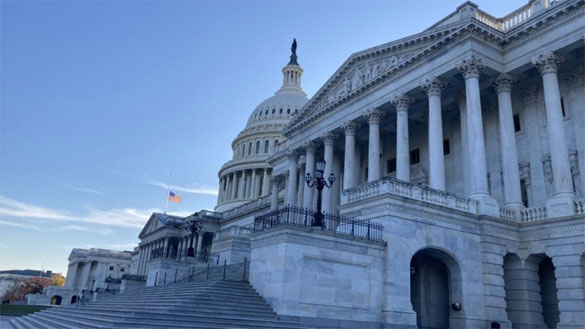 Lateefah Simon has become the fourth Muslim member of US Congress. [Brooke Anderson/TNA]
------------
The US House of Representatives has just seen a fourth Muslim American added to its ranks, as Lateefah Simon of California begins her term in the 119th Congress.
Simon, who took office on 3 January, joins Representatives Rashida Tlaib of Michigan, Ilhan Omar of Minnesota and André Carson of Indiana as part of a small but growing representation of Muslims in US Congress.
"Lateefah Simon's election is a powerful reminder that American Muslims are making strides and finding their voices in the halls of Congress. Especially during a time when many in our community feel the weight of rising Islamophobia," Robert McCaw, government affairs director for the Council on American-Islamic Relations, said in a public statement shortly after her election.
"Her presence, alongside Representatives Carson, Tlaib, and Omar, demonstrates our community’s resilience and commitment to justice. This achievement should inspire every American Muslim to have faith in their ability to create positive change and to contribute to a more inclusive and just society," he said.
The 47-year-old long-time community organiser from the San Francisco Bay Area is filling the shoes of Barbara Lee, who left her position in California's 12th Congressional district to run for US Senate (losing to Adam Schiff).
She comes to Congress after having worked in criminal justice reform, serving on the board of California's state university system, and most recently served on the board of the Bay Area Rapid Transportation (BART), the commuter train system between San Francisco, Oakland and other towns and cities.
Since taking office earlier this month, Simon, whose background is African American and who represents a deep blue district, has joined the House Committee on Oversight and Accountability and the House Committee on Small Business, and she has become a member of the Congressional Progressive Caucus, the Congressional Black Caucus, the Reproductive Rights Caucus and the Labour Caucus.
Source:newarab.com
https://www.newarab.com/news/fourth-muslim-joins-us-congress-first-california
------
Bhopal Begum Sultan Jahan Travelled The World In 20th Century—Veil To Voyage
ALMINA KHATOON
17 January, 2025
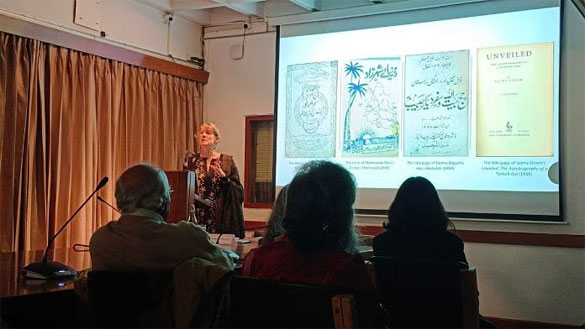 Professor Siobhan Lambert-Hurley on how Muslim women explored the world and wrote about their journey | Almina Khatoon, ThePrint
-----------
New Delhi: A Muslim Iranian woman travelled alone from Tehran to France? How did your government allow you to leave? Where did you get this passport? You can’t be Muslim. Are you Jewish? These are some of the welcoming reactions that Iranian feminist Siddique Dolakabadi received from a French immigration officer in 1923 as she travelled from Iran to France.
When it comes to Muslim women, they are often shaped by stereotypes of veiling and restriction. However, the book Three Centuries of Travel Writing by Muslim Women disrupts this narrative in a ground-breaking way. At the India International Centre in New Delhi, Professor Siobhan Lambert-Hurley, cultural historian and professor of Global History at the University of Sheffield, UK, unveiled how Muslim women explore the world and how their observations provide a unique perspective on religious practices in different parts of the world, social customs, and political landscapes across different eras, from 17th to 20th centuries.
“These women shatter the stereotype of the cloistered Muslim woman, who’s often portrayed as hidden away in her home,” said Lambert-Hurley, reflecting on how the travellers featured in her edited work break the stereotypes of female seclusion often associated with Muslim societies. “Through these writings, we don’t just get their perspective on the outward journey; we also gain a wealth of descriptions, ideas, and discussions about the women they encounter and what they understand of their lives as well.”
Lambert-Hurley emphasised that what distinguishes women’s writing from men’s is the attention to detail, even in the smallest aspects. “While men, in their travel writing, would simply map out where they travelled, women were describing their everyday lives and the things around them with great simplicity and detail, making their writing come alive,” she said.
The professor gave an example from Begum Sarbuland Jang’s travel account, Duniya Aurat Ki Nazar Mein, where she recalls the chaos of trying to bathe in a Hammam in Damascus. Jang was astonished to find that there were no Hammam in homes, as in India, but instead, there were public ones in the town where many women bathed together. These simple experiences and their descriptions by women writers reveal the unfamiliar, highlighting cultural clashes and the complexity of connections made through travel.
The book features 45 chapters, each focusing on a woman traveler who wrote about her experiences. The chapters are organised thematically—pilgrimage, emancipation, politics, education, obligation and pleasure—each revealing different dimensions of these women’s travel motives and experiences.
Lambert-Hurley also talked about regional specificities that emerged from the project. “When we sought pilgrimage narratives, we found none from the Arab world or Southeast Asia before 1950. Meanwhile, all of our Arab and Turkish texts fell into the category of emancipation and politics. It also became clear that South Asia produced more travel writing than any other regions that we looked at,” she said.
Exploring the world
The women mentioned in the book, who authored these travel writings, mostly came from privileged backgrounds, such as the ruling families of Bhopal or the royal family of Hyderabad. However, their reasons for traveling were different. For example, Sultan Jahan Begum, the ruler of Bhopal, traveled to Europe and undertook the Hajj pilgrimage in the early 20th century, while Begum Inam Habibullah traveled to Britain in the 1920s to visit her three sons at a boarding school. NyonyaAuliasSelim, from Indonesia, traveled with her doctor husband to American medical facilities in the early 1950s. These stories highlight the diverse reasons Muslim women have traveled—whether seeking personal freedom, fulfilling religious obligations, or exploring different cultures.
Additionally, South Asian Muslim women ventured across regions such as Arabia, the Levant, Egypt, Turkey, Iran, and even Western countries like Britain, France, Germany, and the US, reflecting their broad and varied experiences throughout history.
There are examples available of women from more modest backgrounds as well. Dilshad, an author and teacher, was forcibly deported as a prisoner of war from what is now Tajikistan to the Khokhan Khanate in the early 19th century. She was an orphan, raised by her grandmother in poverty. She was married to an Imam who taught her to read and write. Through her writings, she recounts the extraordinary circumstances that led to her deportation and migration, providing glimpses into the struggles faced by women from less privileged backgrounds.
“Many historians have also collected data showing that a significant number of less elite Muslim women were traveling in the early 17th or 18th century,” said Lambert-Hurley.
The book also sheds light on the gendered nature of travel writing. While men often focused on grand narratives of exploration, many of the women chose to write in form of diary entries, autobiographies, letters, and even magazine articles—revealing a more nuanced and localised perspective. One Kayseri Begum found joy in the shared experience of worship at the Kaaba during Hajj.
Travel, learning and reform
One audience member asked if these women faced specific challenges related to their identities, especially in terms of gender and religion. “Some of these women were traveling to other parts of the Muslim world, so it wasn’t such an issue,” Lambert-Hurley said.
However, while traveling to Europe or North America, many often encountered stereotypes, particularly surrounding the veil. For example, Safiyyah Jabir Ali, in her travel account, addresses how people in Britain judged her. She said, “We are not anything as you imagine”.
An audience member raised another question about how these writings impacted other women, particularly in sparking curiosity and travel. “While few women wrote about their travels, many still traveled, especially within social networks like those in London, which included many Indian women often linked to princely families,” said Lambert-Hurley. “These writings likely circulated within these networks, inspiring and motivating future generations of women.”
Travel played a significant role in shaping the educational and reformist ideas of women. Sultan Jahan viewed travel as a form of informal education. During her time in Britain, she explored educational institutions, needlework clubs, and other activities, gathering knowledge as she promised to come back with new ideas for reform. When she came back to Bhopal, she applied what she learned, especially in the curriculum for girls’ schools. She famously referred to her journey as moving “from this land of ignorance to the land of refinement and learning”, illustrating how travel was closely tied to ideas of education and emancipation.
Source: theprint.in
https://theprint.in/feature/around-town/bhopal-begam-sultan-jahan-travelled-the-world-in-20th-century-veil-to-voyage/2449528/
----------
Women-led organizations advocate for rights in Afghanistan
By Milad Sayar
17 Jan 2025
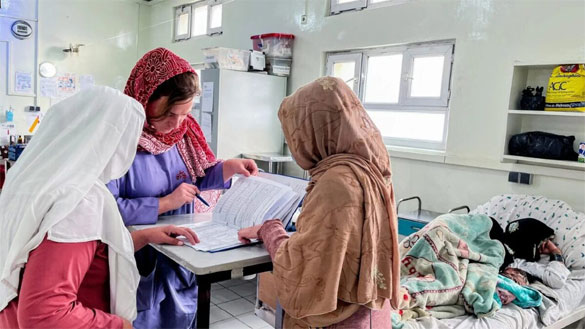 A hospital in Afghanistan. File photo.
-----------
A detailed report, “Leadership in Adversity: Women-Led Organizations’ Strategies for Effective Advocacy in Afghanistan,” examines how women-led organizations have adapted their strategies to advocate for women’s rights under oppressive conditions following the Taliban’s return to power.
Authored by the Women and Children Legal Research Foundation (WCLRF) in collaboration with the Women’s Voice and Leadership in Humanitarian Settings (WHS) project, the report highlights efforts by Women-led organizations both inside Afghanistan and in the diaspora to sustain advocacy, amplify women’s voices, and secure resources amidst severe restrictions.
The report notes significant progress in women’s rights prior to August 2021, driven by increased recognition of women’s roles in decision-making and the emergence of women-led organizations advocating for gender equality. This progress was bolstered by international initiatives, which enhanced the capacities of Afghan women leaders to champion their causes.
However, the Taliban’s return to power reversed these gains, introducing “harsh limitations on women and their participation in public life, creating a hostile environment full of threats and violence,” the report states.
According to the report, the Taliban’s restrictive environment has forced women-led organizations to shift from public advocacy to community-level initiatives. The report explains that many Women-led organizations have incorporated their advocacy into humanitarian projects, often including livelihood or income generation components to address women’s immediate needs while maintaining their efforts discreetly.
Despite decreased international support, women-led organizations have leveraged their resilience to continue operating. They have adopted global advocacy strategies to amplify Afghan women’s voices and secure resources. The report highlights that “women-led organizations found new platforms for communication and outreach” using tools like Zoom, X (formerly Twitter), and Microsoft Teams to sustain their efforts.
Women-led organizations have expanded their advocacy to the international stage. The report cites September 2024 as a key moment when Canada, Germany, Australia, and the Netherlands announced plans to file a complaint against the Taliban at the International Court of Justice under the Convention on the Elimination of All Forms of Discrimination Against Women (CEDAW). This achievement resulted from coordinated efforts by Afghan women-led organizations, both inside the country and in the diaspora.
The report further notes that consultations with over 2,100 Afghan women and activists have informed international advocacy, ensuring that the realities faced by Afghan women are reflected in global initiatives.
The report identifies significant challenges, including limited digital literacy among grassroots Women-led organizations and a lack of access to technology, which restrict their ability to engage with international stakeholders. Additionally, Women-led organizations often face exclusion from decision-making platforms concerning Afghanistan at the global level, coupled with insufficient flexible funding for local initiatives.
The report emphasizes the critical role of women-led organizations in sustaining advocacy efforts despite oppressive conditions. Coordination between Women-led organizations in Afghanistan and the diaspora has improved, enabling collective action and increased participation in international events. “The WHS project has empowered cohort members to actively participate in advocacy, establishing themselves as credible sources of support for women and girls,” the report highlights.
The report concludes with a call for increased global support for Afghan women-led organizations, stressing the need for flexible funding and their meaningful inclusion in decision-making processes. It highlights the ongoing resilience of Afghan women leaders, who continue to adapt their strategies to ensure their voices are heard in the face of adversity.
By documenting these efforts, “Leadership in Adversity” underscores the unwavering determination of Afghan Women-led organizations to advocate for women’s rights and address the humanitarian and gender crises their country faces.
Source: amu.tv
https://amu.tv/151201/
----------
Nine female political prisoners in Tehran denied family, lawyer visits
16 Jan 2025
Nine political prisoners in the women’s section of Tehran’s Evin Prison, including two sentenced to death, are being denied the right to meet with their families and lawyers, according to information obtained by Iran International.
The prisoners include VarishehMoradi and Pakhshan Azizi, whose death sentences have sparked widespread condemnation from human rights organizations.
These women, previously prohibited from family visits in the summer due to their protests against the Islamic Republic's use of death penalty to silence dissent, had been informed that the visitation ban had been lifted. However, as of Sunday, January 12 this year, they have once again been denied contact with their loved ones.
In addition to the visitation ban, two of these women—Maryam Yahyavi and fellow political prisoner SakinehParvaneh—have also been deprived of the right to contact their families by phone.
Source: iranintl.com
https://www.iranintl.com/en/202501167690
---------
SiSTEM: How Muslim Women are Reclaiming Space in the STEM Classroom
January 16, 2025
In Western cultures, science, technology, engineering and math (STEM) research is known for its rigid procedural methodology. Most experimental research in STEM relies on objectivity and the removal of bias. However, Vivian Ali Zohery ’17, M.A. ’20, Ph.D. ’24, who recently completed her doctorate in teaching and learning, policy and leadership, mathematics and science education specialization, at the University of Maryland, believes that instilling elements of faith and culture can enhance meaningful research.
Zohery, who comes from a rural Egyptian background, began her mission to incorporate Eastern practices and methodology into Western STEM education by exploring how science is taught and discussed within Western schools and universities. For her, STEM is not as rigid as most Western scientists believe but can include unique cultural contexts and the engagement of local communities.
“Science for me has always been a spiritual thing, not devoid of faith,” said Zohery.
In her dissertation research, Zohery organized a group of four Muslim women undergraduate STEM students and studied their experiences as they examined both their own and other Muslim women students’ experiences in STEM fields. The group used an approach called participatory action research (PAR), which helps remove unequal power dynamics between researchers and participants, while allowing the researchers to study issues that directly affect them.
When Nusrat Meetul ’25 first heard that Zohery was recruiting students for the project, she felt inclined to learn more. Entering UMD as a freshman nearly four years ago, she felt detached from her Islamic heritage. As a computer science major, she felt isolated; among the small number of women in her classes, she rarely met any who shared her Islamic identity.
“I thought it would be a good way of getting that Islamic exposure that I wasn’t getting,” said Meetul.
Meetul, along with fellow researchers Shafa Alam ’26 and Yusra Husain ’26 (both public health majors) and Mariam Khan ’23 (who recently completed her master’s degree in bioethics at Johns Hopkins University), call themselves SiSTEM, or Sisters Interrogating STEM. In Fall 2023, Zohery and the SiSTEM team met with 16 Muslim women, all with backgrounds in STEM, from across campus to engage in conversations about the relationship between Islamic values and the STEM fields. The three-hour discussion focused on how Muslim women in Western cultures incorporate their faith into STEM careers.
The SiSTEM researchers used a traditional form of Islamic information exchange known as halaqah to structure their gathering. In halaqah, conversations are often based on real-life experiences that can relate to traditional Islamic teachings. By using the culturally relevant format of halaqah, the researchers were able to create a safe space for Muslim women STEM students to share their experiences.
The use of halaqah in the study was intentionally aimed at redefining what are considered to be traditional Western scientific research methods, shared Meetul.
“Halaqah [is] not something that’s done in [Western] classrooms, especially STEM classrooms, so it’s our twist on stepping out of the standards of STEM,” said Meetul.
Meetul shared that using halaqah helped her and the rest of the SiSTEM team better understand their own identities as Muslim women in STEM and fostered what they now consider to be lifelong bonds.
The SiSTEM team was given the opportunity to write a chapter on their research on cultural integration in STEM fields in the forthcoming book series “The Criticality of Research for and about Women in Education: A Call to Empowering Women and Girls for the Present and the Future,” which will be published by the Research on Women and Education Special Interest Group of the American Educational Research Association.
Zohrey wants to focus on sharing the team’s work throughout local communities. In December 2024, Zohery gave a presentation at the Islamic Schools League of America’s Annual Research Symposium on how SiSTEM’s PAR approach has impacted local communities.
As they continue to analyze the data they collected over their nearly two-year study–including from a campus-wide survey of Muslim women STEM students, from the halaqah, and from a post-halaqah poll–they have found that study helped many of the participants discover more about their own Islamic identity and history. For example, Meetul said that during small group conversations at the halaqah, many participants reported that they had not previously learned much about the history of Islamic contributions to science and that they appreciated learning about this topic during the gathering.
Zohery explained, “One of the main core findings from the halaqah was that … there is this systematic building of a mindset that prioritizes Western frameworks and perspectives, which can cause individuals [from] marginalized communities to undervalue or disconnect from their own identities in academic spaces.”
The project has left a strong impression on both its participants and researchers.
Meetul recounted, “We’ve all grown because of this project, religiously, academically, spiritually, in every way.”
Source: education.umd.edu
https://education.umd.edu/news/01-16-25-sistem-how-muslim-women-are-reclaiming-space-stem-classroom
---------
Saudi author Samya Al-Harbi discusses new book ‘Not Like Other Women’
SHYAMA KRISHNA KUMAR
January 17, 2025
DUBAI: Dubai-based Saudi entrepreneur and author Samya Al-Harbi tells the stories of resilient Arab women, including herself, in her new book “Not Like Other Women.”
“The women around me have inspired me. Friends, colleagues, family, women I met in my work, in my troubles. I believe every woman has a story,” Al-Harbi tells Arab News.
“(My book) talks about women who have struggled in life and faced so many difficulties, and they overcome those struggles and difficulties, and they become wiser. These are women who have really challenged themselves to become stronger.”
“Not Like Other Women” features 12 stories of such women interspersed with Al-Harbi’s own experiences of balancing her personal and professional life. One of the most emotional and challenging chapters to write, she says, was “Munifa.”
“The story was very emotional for me because I always thought Munifa was my friend’s mother and never doubted it. But on the night of her funeral, I found out she wasn’t his real mother; she was actually his mother’s neighbor and best friend. What touched me the most was the strong friendship between the two women and the loyalty they showed to each other. It’s a bond that truly moved me.”
When asked if there was any pushback when it came to telling these personal stories, Al-Harbi is quick to point out that, in fact, the opposite happened.
“There are women who want to tell the world their story. Society doesn’t accept discussion of sensitive issues when it comes to women and their feelings, especially in the Arab world,” she says. “So, they always need women who have the ability to take their stories to an audience and tell them that there are women who face these problems, but fight to overcome them.
“As a woman, as a mother — as a grandmother now — I believe that, with the position I have now, it's my responsibility to talk about these issues.”
While putting the stories together for “Not Like Other Women,” Al-Harbi noticed a common thread. “I have traveled a lot, and I have seen so many women in different cultures and countries,” she says. “I noticed that we share most of these issues. If I'm talking about a lady in China, she has the same problems as a lady in Africa. We have certain problems in common, whether it is finance, respect, passion… These problems remain the same no matter where we are from.”
As an example, Al-Harbi pointed out Indian-American author Chitra Banerjee Divakaruni’s “The Palace of Illusions,” a retelling of the Indian epic “Mahabharat,” from the point of view of Panchaali, the wife of the legendary Pandava brothers.
“The message I got from her book is that women are facing the same problems they did 3,000 years ago. Still. We are being treated the same way. So, will that change? I don't think so. Yes, it's not like before, and yes, it will take time. But still there are women afraid to come out and express their feelings or talk about their issues. In fact, when I gave these stories to the publisher, there were three that they deleted. They said, ‘No, you cannot publish these stories because they’re very sensitive, and society will not accept this kind of story yet.’”
The Makkah-born businesswoman, who also acts as a mentor to up-and-coming entrepreneurs, said she has one piece of advice for all the young women she speaks to, including her daughters.
“They have to keep on dreaming, but, at the same time, they have to work on their dreams,” she says. “They should not listen to anyone if they believe that what they are doing is right for them and for other people — without crossing the line, especially here in the Arab world.”
Source: arabnews.com
https://www.arabnews.com/node/2586756/lifestyle
--------
URL: https://newageislam.com/islam-women-feminism/fourth-muslim-american-california-congress/d/134361