
Hijab or Ghoonghat? Identity, Respect, and Power in the Nitish Kumar Controversy
New Age Islam News Bureau
18December 2025
· Hijab or Ghoonghat? Identity, Respect, and Power in the Nitish Kumar Controversy
· Why Denmark wants to ban burqa, niqab in schools, universities
· Iran curbs women's rights further by changing dowry law
· Marhamah aims to empower Muslim women and strengthen religious institutions
· Taliban ban on Afghan women working for UN agencies surpasses 100 days
· The Great Shamsuddin Family: Where Muslim women are allowed to just be
· Meet the young Emirati entrepreneur empowering Emirati women through his app “3bayti”
· Body of Iranian Solo Climber Found on Mount Damavand
· Justice for Zara Qairina fund is fully accounted for, says late Zara’s mother
· Female Arab directors usher in change at Red Sea Film Festival in Saudi Arabia
Compiled by New Age Islam News Bureau
URL: https://newageislam.com/islam-women-feminism/hijab-ghoonghat-identity-respect-controversy/d/138057
-----
Hijab or Ghoonghat? Identity, Respect, and Power in the Nitish Kumar Controversy
Raheel Dhattiwala
December 18, 2025
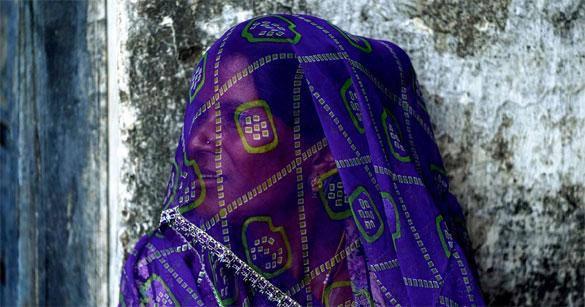
On Monday, Bihar Chief Minister Nitish Kumar pulled down a Muslim doctor’s hijab leading to an uproar. Opposition leaders from the Congress criticised Kumar while some politicians from the Bharatiya Janata Party have defended him. Kumar’s Janata Dal (United) is part of the BJP-led National Democratic Alliance at the Centre and in the state.
A BJP politician immediately made a comparison with Ashok Gehlot of the Congress who had done the same with a Hindu woman’s ghoonghat a few years ago.
It is true that both the Islamic veil in all its forms and the Hindu ghoonghat are patriarchal tools with the sole function of creating submissive women. There is one difference though: unlike the Islamic veil, the ghoonghat is politically benign. The ghoonghat is deemed socially oppressive, and rightly so. But the hijab and the burqa are not only seen as socially oppressive but also part of some diabolical Islamic stratagy that will, one day, overthrow Hindu civilisation.
If there is pity for the Hindu woman in the ghoonghat, there is contempt for the Muslim woman in burqa or hijab.
It is this difference that makes the Gehlot example deceptive. In 2019, when Gehlot set out onhis anti-ghoonghat campaign, he had targeted the practice itself. The BJP, however, targets the very identity of the Muslim: what they wear, what they eat, where they live, whom they marry, everything begets suspicion.
When identity is targeted, the actual culprit – patriarchy – gets brushed under the carpet.
A couple of years ago during research for my book on purdah, I had met several Hindu women in cities in Rajasthan. Many had voiced their protest against the ghoonghat. In a beautiful Hindi poem, Mamta Jaitley, an activist from Jaipur, lamented how late she was to realise that “the purdah you hurled over my face obscured my mind too… made me see things as you wanted me to see, hear things as you wanted me to hear.”
For the Muslim woman, even voicing an opinion, let alone protest, is not as straightforward. In the shadow of Hindutva, she encounters a much deeper struggle than her ghoonghat-clad counterpart. She is not dealing merely with a social norm or religious practice within her community, but a political leviathan that seeks to codify prejudice against the entire community.
Yes, patriarchy must be resisted. But when women’s reforms are steeped in malicious intent, they cause more harm to the very women they seek to help. For example, the Indian government’s ban on triple talaq only added to the woes of Muslim women. Muslim men who could no longer divorce their wife quickly began to abandon them. These women could neither ask for maintenance nor remarry.
When dress codes are attacked, regardless of how patriarchal they are, often women willingly bypass their own subordination and adopt visible symbols that bind them to a collective identity. The hijab and the burqa are the perfect visual signals of Muslim solidarity and belonging. I met Muslim women in various cities who had taken up some or the other form of the Islamic veil to signal defiance against prejudice, although they acknowledged the patriarchal purpose of hijab.
A young abaya-clad forensic sciences student I met in Mangaluru last year had adeptly explained the catch-22: “If I abandon the veil, I please the government (which I would never do); if I adopt the veil, I abide by my religion but also lose a part of myself, my own identity.”
Besides, patriarchy as an institution is old. Very old. Its origins date back 300,000 years. The practice of veiling itself is 4,000 years old. One cannot simply will away deeply-embedded practices through sudden expurgations: change has to come from within society. Veiling is part of the system of purdah (seclusion), a system so normalised that even Mohandas Gandhi, as a young married man, would refuse to allow his wife, Kasturba, to go anywhere without his permission.
He had been made a jealous husband by the thought, “If I should be pledged to be faithful to my wife, she also should be pledged to be faithful to me” – a fallibility he later regretted. So, ata public address in Fatehpur in 1947, when he said, “True purdah should be of the heart. What is the value of the outer veil?”, it is likely that his words ordained a focus on the inequality of sexes rather than just a sanction against a dress code.
Whether a woman wears a veil out of coercion, which is very common, or willingly adopts it in political protest or piety, paternalistic bans and attacks are likely to fail. Just as paternalistic mandates that make hijab compulsory have failed – as in Iran. The problem is that the woman in whose name bans and abstruse verdicts are passed is universally ignored.
Unless there is a political ideology targeting an entire group of people, leading to defiance, mainstream education can significantly help in breaking harmful practices. Most Muslim women I met in India who had rejected the veil were educated and financially independent. But forcing students to remove their veils stops this progress midway.
Many girls and women who went to school and college in Karnataka in their hijab dropped out when forced to remove it. The French hijab ban in 2004, too, led to increased perceptions of discrimination, which hindered Muslim girls from finishing school.
Attacks on the hijab will likely worsen the status of Muslim women because the only option that would leave for many is religious education. It is more accessible, less restrictive – and patriarchal. Is that the objective?
Source: scroll.in
https://scroll.in/article/1089374/pity-contempt-and-identity-the-difference-between-the-hijab-and-the-ghoonghat
------
Why Denmark wants to ban burqa, niqab in schools, universities
December 18, 2025
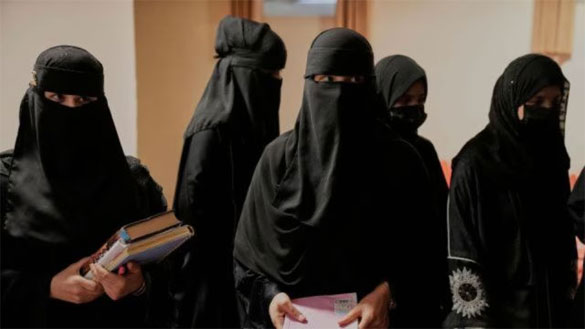
The bill to extend the ban on full-face veils is scheduled to be presented in the Danish parliament in February 2026. (AP Photo/ Representational)
-----------
Denmark’s government on Wednesday announced that it plans to extend its already existing ban on full-face veils to schools and universities across the country.
The development comes after the Danish administration, in August 2018, completely disallowed face coverings in public spaces which included full-face Islamic veils like the burqa and niqab. The offenders of the rule were subject to a fine.
Denmark’s Minister for Immigration and Integration, Rasmus Stoklund, in a statement said, “Burqas, niqabs, or other clothing that hides people’s faces have no place in a Danish classroom.”
“There is already a ban on face coverings in public spaces, and this should of course also apply in educational institutions,” Stoklund added, reported news agency AFP.
The bill to extend the ban on full-face veils is scheduled to be presented in the Danish parliament in February 2026. Another European country, Austria, adopted a law banning headscarves in schools for girls under the age of 14 as the country’s parliament passed it on December 11.
DENMARK PM ON FACE COVERINGS BAN
Denmark’s Prime Minister Mette Frederiksen had said in June that she sought to extend the ban on face coverings to educational institutions and even remove prayer rooms from the educational space, citing concerns about social control and oppression.
Frederiksen, who is also the leader of the country’s Social Democrats party, said that implementing a limited ban on full-face veils in the country had been a mistake by her government.
“There are gaps in the legislation that allow Muslim social control and oppression of women at educational institutions in Denmark. You have the right to be a person of faith and practice your religion, but democracy takes precedence,” Frederiksen had said earlier, Euro News reported.
Supporters of the face covering ban have argued that the rule enables the Muslims of immigrant backgrounds to integrate in a better manner into Danish society.
Source: indianexpress.com
https://indianexpress.com/article/world/denmark-expand-ban-on-burqa-niqab-to-schools-universities-10425937/
-------
Iran curbs women's rights further by changing dowry law
Shabnam von Hein
18 Dec 2025
The Iranian parliament has adopted changes to the dowry law, with members of parliament describing them as "urgently necessary."
The proposal's swift passage stands in stark contrast to other legislative measures, such as the draft bill for better protection of women against domestic violence, which has been under discussion for 14 years.
In Iran, a groom or his family usually pays a dowry, or "Mehrieh," to his wife. It often takes the form of gold coins, but it can also include cash, property and other items. The dowry, which is negotiated before marriage and legally treated as debt, can be claimed by the wife at any time during a marriage or when getting divorced.
The new, more lenient policy sharply lowers the threshold for the amount a man must pay his wife in the event of divorce to avoid imprisonment — from 110 gold coins to just 14 coins. Each coin is about 8 grams of gold.
The dowry, which is voluntarily agreed upon before marriage, remains the only legal tool to provide a modicum of financial security for women in Iran, in the event of divorce and in inheritance law.
'Deeply misogynistic system'
In the event of divorce, unlike in the West, Iranian law does not provide for the division of property. If the husband dies, the wife receives only one-eighth of his movable property.
Real estate such as houses or land goes to the children or, if there are none, to the parents of the deceased. If there are neither children nor parents, the wife receives one-quarter of the property, with the remainder taken over by the state.
"We are dealing with a system that is deeply misogynistic in its ideology," women's rights activist Mahdieh Golrou told DW.
The 40-year-old, who has been living abroad since 2019, has been arrested several times in Iran for her campaigning in favor of women's rights and democracy.
Golrou underscored how Iranian women have been resisting the Islamic theocratic regime and fighting for self-determination since the death of 22-year-old Jina Mahsa Amini in police custody and the resulting nationwide protests under the slogan "Woman, Life, Freedom” in 2022.
Women who refuse to wear the mandatory headscarf in public have had a major impact on the image of women in Iranian society.
"Their struggle and civil resistance are far from over, because this system is always finding new ways to undermine women's rights, such as through the reform of the dowry law," said Golrou. "Women's desire for more rights is in fundamental conflict with the ideology and identity of the Islamic Republic's political system, which does not recognize women as equal citizens."
Iranian women lack protection against domestic violence
The draft bill on domestic violence is a case in point. For 14 years, Iranian lawmakers have been debating a bill designed to protect women from violence in the family.
The draft has been amended and watered down several times, but has still not been passed.
A tragic case is that of journalist Mansoureh Ghadiri Javid, who was brutally murdered in November 2024 by her husband, a lawyer.
Ghadiri Javid was known for her well-researched articles on women's rights.
Her family says she had been subjected to domestic violence for years.
If she had taken legal action, she would have lost custody of her only child, as in Iran, custody of children is generally granted to the father.
Due to a lack of state support, many victims do not even report incidents to authorities, making it difficult to compile reliable statistics on domestic violence.
"There is surprisingly quick agreement within the political system when it comes to the oppression of women," Nasrin Sotoudeh, human rights lawyer and Sakharov Prize winner, told DW. "The women's issue is one of the few points on which all political camps agree and a means by which the government seeks to consolidate its authority," she added.
The lawyer, who lives in Tehran and has not worn a headscarf in public for a long time, said that Iran's clerical regime has repeatedly shown how it demonstrates its power in times of crisis. "When the government faces unsolvable problems, it turns to issues it considers controllable. The oppression of women has become a central instrument of state power demonstration."
Resisting patriarchal norms
Making changes to the dowry law should also be seen as a signal to conservatives who support the theocratic system for religious and traditional reasons.
Iranian women have been resisting these norms for years, which is also reflected in the rising divorce rates in the country.
According to the ISNA news agency, around 42% of marriages in Iran currently end in divorce. In the capital Tehran, the rate is over 50%. By comparison, the divorce rate in Germany stands at around 35%.
In the event of divorce, many women use the agreed dowry as a bargaining chip, for instance to obtain custody of the children.
At the same time, according to Iranian sources, the proportion of women who actually receive the dowry is extremely low, at around 3%. And the number of men currently imprisoned for non-payment of the dowry stands at less than 3,000.
Still, Iranian parliamentarians deemed it necessary to change the dowry law and lower the threshold for criminal enforcement in case of non-payment to 14 gold coins.
Although the husband still owes his wife the full agreed dowry, he no longer faces imprisonment for non-payment above this level.
In practice, however, it now remains unclear when and how these debts will be settled.
Mitra Shodjaie contributed to this report.
Source: dw.com
https://www.dw.com/en/iran-curbs-womens-rights-further-by-changing-dowry-law/a-75203300
------
Marhamah aims to empower Muslim women and strengthen religious institutions
17 Dec 2025
Deputy Minister Marhamah Rosli pledges to make religion more accessible and empower Muslim women, focusing on community welfare and institutional support.
KUALA LUMPUR: Deputy Minister in the Prime Minister’s Department (Religious Affairs) Marhamah Rosli is determined to use her welfare and community experience to strengthen religious institutions and empower Muslim women.
Describing her recent appointment as a significant responsibility, she pledged full commitment to supporting policy development and making religious affairs more accessible.
“My focus is on bringing religion closer to the people,” Marhamah said.
She expressed a desire for society to view religion as a natural part of daily life rather than something overly punitive.
Marhamah was among eight new deputy ministers who took their oath of office before His Majesty Sultan Ibrahim at Istana Negara.
She also thanked Prime Minister Datuk Seri Anwar Ibrahim for the trust placed in her.
Marhamah assured she would fulfil her mandate to the best of her ability and sought support from all parties to develop Islamic institutions.
“I hope to be given the opportunity and space to give my full commitment,” she added. – Bernama
Source: thesun.my
https://thesun.my/news/malaysia-news/people-issues/marhamah-aims-to-empower-muslim-women-and-strengthen-religious-institutions/
-------
Taliban ban on Afghan women working for UN agencies surpasses 100 days
By Milad Sayar
17 Dec 2025
More than 100 days have passed since the Taliban barred Afghan women from entering United Nations offices in Afghanistan, the UN human rights office said, warning that the restriction harms both humanitarian operations and the country’s future.
In a post on X, the UN Office of the High Commissioner for Human Rights urged the Taliban to immediately lift the ban and end what it described as systematic discrimination against women and girls.
“After 100 days since Afghan women colleagues were prevented from entering UN premises in the country, we call on the de facto authorities to lift all restrictions so vital support can reach everyone in need,” the office said. “Systematic discrimination against women and girls is not in Afghanistan’s interest and must end immediately.”
The restriction was first enforced in western Herat province, according to sources, and has since disrupted the work of the United Nations and its affiliated agencies, particularly in humanitarian response and aid delivery.
Women who lost their jobs due to the ban said the restrictions have deepened their economic hardship while also limiting access to aid for vulnerable women and families.
“I used to work for a UN-affiliated institution, but under the current conditions women are no longer allowed to work or study,” said a former female staff member, who asked not to be named for security reasons. “I lost my job and income, and I can no longer support my family financially.”
Human rights activists say the ban comes at a critical time, as Afghanistan faces recurring natural disasters including floods and earthquakes, where female aid workers play a key role in reaching women and girls.
“We call on governments and international institutions to increase targeted political and legal pressure on those responsible for these violations,” said Tamana Sultani, a human rights activist. “They must refrain from recognising any system that violates basic human rights.”
Residents have also appealed for stronger international action, saying the cumulative restrictions on women’s education, work and movement have taken a severe toll on families and mental health.
“Women and girls were restricted from studying and working, and many of us were supporting our families,” said a resident of Kunduz province. “We ask the world to hear our voices and not remain silent.”
The Taliban have not commented publicly on the UN statement. Since returning to power in August 2021, they have barred girls from secondary schools and universities, restricted women’s employment and movement, and imposed sweeping limits that now include access to UN-related workplaces.
The measures have drawn repeated condemnation from the United Nations, rights groups and foreign governments, who say the restrictions undermine humanitarian operations and violate fundamental human rights.
Source: amu.tv
https://amu.tv/216510/
------
The Great Shamsuddin Family: Where Muslim women are allowed to just be
Dec 18, 2025
In the cramped, chaotic barsaati of Delhi’s Jangpura, with the quiet dome of Humayun’s Tomb watching from a distance, lives a family that feels instantly familiar. There are deadlines to meet, tempers to manage, money to worry about, and relatives who arrive unannounced with opinions and baggage. They are the Shamsuddins, and in The Great Shamsuddin Family, they gently but firmly rewrite how Muslim women are seen on Indian screens.
Nearly 15 years after Peepli Live, director Anusha Rizvi returns with a film that doesn’t announce itself as political, even though it quietly is. Her biggest intervention is simple: she centres on Muslim women without turning their faith into a problem to be solved. In doing so, she dismantles the long-standing idea that Muslim women characters must either perform tragedy or constantly explain their existence.
Here, faith is present, but it is not the plot. The women pray, argue, smoke, drink tea, plan trips, and fight over money – sometimes all in the same afternoon. The Muslim experience, Rizvi suggests, does not always need a disclaimer. Sometimes, it is just life.
The power of the flawed women ensemble
At the heart of the film is what can best be described as a “Shero” ensemble – women who are allowed to be messy, difficult, and occasionally wrong. This is where The Great Shamsuddin Family finds its sharpest voice.
Leading the pack is Farida Jalal as Akko, the family matriarch who is nothing like the soft, saintly mothers she once played. Akko is sharp-tongued, opinionated, and often hilarious. Whether she is passing judgement on her sisters’ hijabs or making dry observations about bribery needing to be “secular”, Jalal plays her with the confidence of someone who knows exactly who she is. It is a reminder of what happens when veteran actors are finally given characters instead of symbols.
Alongside her, Sheeba Chadha and Dolly Ahluwalia play sisters who feel deeply lived-in. They carry tradition with them but are not frozen by it. Their plans for a pilgrimage to Mecca sit comfortably alongside their very worldly calculations. These women are not written as moral anchors; they have wants, fears, and quiet manipulations of their own.
The brilliance of this ensemble lies in its refusal to chase likeability. These women love each other fiercely, but they also interrupt, judge, and compete. It feels less like representation and more like recognition.
The 21st-century hustle, Indian-style
At the centre of the storm is Kritika Kamra as Bani Ahmed, a divorced academic racing against time. Bani is trying to finish a presentation for a possible job in the US, balancing Orwell and the Quran on her desk, while her house fills up with relatives and unresolved crises.
Bani represents the modern Indian woman’s relationship with the 21st-century hustle, not the glamorous version, but the exhausting one. She is capable, practical, and constantly interrupted. The work doesn’t stop when the laptop opens. It continues when the maid asks about salt, when a cousin needs help, when emotional labour is silently assigned to her.
That cousin is Iram, played by Shreya Dhanwanthary with reckless charm, who arrives with Rs 25 lakh in cash and a romantic mess. It is Bani who must fix things, not because she wants to, but because she always does. Kamra plays her with restraint, letting fatigue and responsibility sit just below the surface.
Layers of Indian womanhood
Through the Shamsuddins, Rizvi peels back the idea that Indian womanhood can be reduced to a single story. Age, class, and opportunity shape these women differently, but none of them exist in isolation from family expectations.
There is Juhi Babbar Soni’s Humaira, the eldest sister and quiet mediator, carrying her own disappointments without spectacle. There are younger women pushing for autonomy, and older ones adapting more than they are given credit for. Tradition is not discarded, but it is constantly negotiated.
The film also acknowledges minority anxiety without letting it dominate. Bani’s desire to leave India because it feels “safer” is presented not as drama, but as a fact of her emotional landscape. It sits alongside career ambition, family guilt, and exhaustion.
The movie masterfully captures the "modern Indian woman’s relationship with the 21st-century hustle." For the Shamsuddins, work isn’t just about a paycheque; it is an identity crisis. They represent a generation of women caught between the weight of a family name and the desperate urge to build something of their own.
The "hustle" here isn't the romanticised version we see on social media. It is gritty and exhausting. It’s the late-night phone calls, the boardroom battles where they are underestimated, and the constant mental load of maintaining a legacy they didn't ask for but cannot abandon.
The film highlights that for the modern Indian woman, "having it all" often feels like "doing it all," and the toll it takes is etched on their faces in the quieter moments of it.
A quiet kind of revolution
The beauty of the Shamsuddin arc is its refusal to provide easy answers. There is no neat resolution where every conflict is mended with a hug. Instead, it ends where it began, with women who are still figuring it out, still fighting for their space, and still unapologetically themselves. They are tired, ambitious, irritated, affectionate, and funny. They do not claim to represent everyone. They simply exist.
And that, perhaps, is Anusha Rizvi’s most radical choice. By letting Muslim women be ordinary – flawed, contradictory, alive – she dismantles stereotypes without announcing it. In a television landscape hungry for extremes, the Shamsuddins offer something far rarer: the dignity of being human.
And, by grounding these themes in the specific world of the Shamsuddins, it avoids the trap of being a "feminist lecture." Instead, it is a living, breathing portrait of resilience.
Source: indiatoday.in
https://www.indiatoday.in/entertainment/ott/story/how-anusha-rizvi-the-great-shamsuddin-family-normalises-muslim-womanhood-on-screen-2837760-2025-12-18
-------
Meet the young Emirati entrepreneur empowering Emirati women through his app “3bayti”
December 17, 2025
Dubai: In a city that never stops innovating, Rashed Al Mansoori found inspiration in something deeply traditional, the abaya. From that simple yet powerful symbol of Emirati identity, he built 3bayti, an app created to give Emirati women a bigger stage for their creativity and businesses.
“I just wanted to help them reach people without having to pay too much,” he explains. “If I can make their journey easier, that’s enough for me.” His app connects homegrown vendors with customers, making it easy for women to sell their creations and for buyers to explore a variety of Emirati fashion in one seamless platform.
Vision born from a mall walk
The idea came to Rashed not in a classroom or boardroom, but during a casual walk through a shopping mall. “I saw pop-ups everywhere,” he recalls. “I asked one of the women how much she pays for rent, and she said around Dh6,000. But her sales were about the same amount. That’s when I realized, she’s not even covering her costs.”
For most people, that might have been the end of a passing thought. But for Rashed, it became the spark that ignited 3bayti, a mobile app designed to bring Emirati women’s products together in one seamless, scrollable experience.
“Why can’t I create something that helps them reach a bigger audience, without having to pay upfront?” he asked himself. The answer became his mission.
From gaming to a growing business
Rashed’s entrepreneurial journey wasn’t pre-planned. “I wasn’t always thinking about business,” he admits with a laugh. “I used to run a gaming server when I was younger, but after a while I stopped and focused on my studies.”
While studying finance at the University of Dubai, Rashed began to feel a pull toward entrepreneurship.
“I started sketching the app on paper, page by page, the way I imagined it,” he says. “I didn’t know if people would believe in me, but I believed in the idea.”
Building trust, one vendor at a time
At first, vendors didn’t believe him. “We would message people, and they wouldn’t reply,” Rashed says. “Some even blocked us.”
But then, one TikTok video changed everything. “It went viral,” he smiles. “Suddenly, everyone started replying. They saw a real Emirati face behind the app, someone who was trying to help, not just profit.”
That transparency became his strength. Rashed put himself at the front of the brand, building trust through sincerity and consistency.
3bayti: One app for every Emirati woman’s need
At its core, 3bayti (stylized with the number “3” to represent the Arabic letter Ain in “abaya”) is about convenience and culture. Even the name carries a story. 3bayti means “my abaya”, a word Rashed chose to make every Emirati woman feel seen. “I wanted each girl to know she’s buying something for herself, something made with her in mind,” he described.
“It’s one app that brings together all women’s needs,” Rashed explains.
It's explore page, inspired by TikTok and Instagram Reels, allows users to swipe through abayas and accessories effortlessly. “Instead of searching store by store, you can just scroll,” he says. “We made shopping fun, but also focused on our local identity.”
Unlike other fashion platforms such as Ounass or Namshi, 3bayti is intentionally homegrown. “We’re not trying to compete,” Rashed says. “We’re trying to uplift Emirati women, to take our local brands to the world Inshallah.”
A team that feels like family
Though Rashed is the driving force behind 3bayti, he’s quick to share credit with his small, all-Emirati team, including his co-developer, Essa Arif Al Mutawa, a university student who helped turn the concept into a working product.
“I told him I’d be there for him,” Essa says. “We’d meet in cafés, spend nights fixing bugs, and celebrate every small success. It wasn’t just coding, it was building a dream.”
Today, five Emirati women work alongside Rashed, driving his vision forward and inspiring him to keep pushing ahead. “They push me,” he confides. “They remind me of meetings, follow-ups, everything. They make me feel like I’m not alone in this.”
Beyond business: A movement
For Rashed, 3bayti isn’t just a company, it’s a cause. “We cover marketing, delivery, everything,” he revealed. “We take only a small commission; 15%. Our focus isn’t on profit. It’s on solving a problem.”
He’s already seen proof that it’s working. Within days of launch, 3bayti topped 84,000 impressions on the App Store, briefly surpassing regional giants like Temu in the UAE’s shopping category. “When I saw that, I knew people believed in what we were doing,” he says.
But Rashed refuses to call it success, not yet. “Even if I make a million dirhams, that’s not success to me,” he affirms. “Success is when Emirati women start getting sales, when 3bayti reaches the world. That’s when I’ll say I’ve made it.”
Redefining modesty, redefining the entrepreneurship
Through 3bayti, Rashed is helping redefine what modest fashion means for a new generation. “Before, abayas were only black,” he says. “Now, we have multicolored designs, patterns, something for everyone. We’re connecting the old generation with the new.”
That balance, between tradition and innovation, is what makes 3bayti so uniquely Emirati.
From a mall observation to a viral app, Rashed’s story embodies the UAE’s vision for youth-led innovation and homegrown tech. He’s part of a new wave of Emiratis who are not waiting for opportunities, they’re creating them.
“From Dubai to the world”
When asked to sum up his mission, Rashed doesn’t hesitate.
“From Dubai to the world,” he stated.
It’s not just a tagline, it’s a promise.
A promise that the creativity of Emirati women, once confined to pop-up stalls and Instagram accounts, will now have a regional stage, thanks to one young Emirati man who believed their dreams deserved a digital home.
Source: gulfnews.com
https://gulfnews.com/uae/people/meet-the-young-emirati-entrepreneur-empowering-emirati-women-through-his-app-3bayti-1.500382878
-------
Body of Iranian Solo Climber Found on Mount Damavand
DECEMBER 17, 2025
Search teams have recovered the body of a female climber who attempted to summit Mount Damavand alone, Iranian Red Crescent officials announced on Tuesday.
Tahereh Haseli’s body was found at approximately 4,600 meters on the mountain’s southern side, according to Gholam Ali Fakhari Ashrafi, director of the Mazandaran Red Crescent Society.
Red Crescent teams received a missing person report at 2:35 p.m. on Sunday from the Polour mountaineering base camp.
Specialized mountain rescue teams from the Rineh base and Amol branch deployed ground crews and aerial equipment, including drones, to search multiple routes.
Mohammad Hossein Kabadi, deputy director of rescue operations for the Iranian Red Crescent, said Haseli had stopped behind one of the shelters on the southern face and left her personal belongings there, but never descended.
Her body was discovered in an area known as Kafer Dareh.
Severe weather conditions and extreme cold complicated the search operation, Fakhari Ashrafi said.
Haseli had previously said she possessed complete equipment in response to warnings about the dangers of solo winter climbing on Damavand, Iran’s highest peak at 5,610 meters.
The mountain, located about 78 kilometers northeast of Tehran, attracts climbers year-round but presents significant hazards during the winter months.
Source: iranwire.com
https://iranwire.com/en/women/147001-body-of-iranian-solo-climber-found-on-mount-damavand/
-----
Justice for Zara Qairina fund is fully accounted for, says late Zara’s mother
17 Dec 2025
The mother of the late Zara Qairina says all money from the Justice for Zara fund is recorded and an audit will follow the inquest’s conclusion.
KOTA KINABALU: Money used from the Justice for Zara Fund is clearly recorded and accounted for, according to the late girl’s mother.
Noraidah Lamat, 45, stated that her side had been advised to only conduct an audit of the fund once the inquest proceedings and her daughter’s case are concluded.
She urged all parties to stop defaming Deputy Minister in the Prime Minister’s Department (Religious Affairs) Marhamah Rosli, who initiated the Justice for Zara movement.
“To those who enjoy defaming her, please read and understand this,” Noraidah said in a Facebook post.
“The fund was only open for two days and has since been closed.”
She added that every use of the funds is clearly recorded.
Earlier in Kuala Lumpur, Marhamah stressed that no funds were misused in managing the Justice for Zara Fund account.
She explained the fund’s account is completely segregated and not mixed with other NGO accounts she previously chaired.
The account has specific nominees, including Noraidah and several lawyers.
Marhamah was among the first to offer support to Noraidah after her daughter’s death.
Zara Qairina, a Form One student at a religious school in Papar, was confirmed dead on July 17.
She had been found unconscious at the base of her school’s hostel building. – Bernama
Source: thesun.my
https://thesun.my/news/malaysia-news/people-issues/justice-for-zara-qairina-fund-is-fully-accounted-for-says-late-girls-mother/#google_vignette
-------
Female Arab directors usher in change at Red Sea Film Festival in Saudi Arabia
12-18-2025
Four influential female directors took part in this year's Red Sea Film Festival in Jeddah, paving the way for more diverse narratives in Arab cinema.
The festival, bringing together 38 directors, showcases Saudi Arabia's heavy investment in film, gaming and sports as part of its broader transformation efforts.
Cherien Dabis: ‘Because I couldn’t find us anywhere’
Palestinian American filmmaker Cherien Dabis premiered her new film “All That’s Left of You,” a multigenerational story tracing one family’s experience from the 1948 Nakba, Arabic for catastrophe, the mass expulsion of Palestinians before and during the Arab-Israeli war that followed Israel’s establishment, to 2022. The film deals with themes of Palestinian displacement and personal loss.
“It tells the story of one family over three generations and how they survive the Nakba in 1948 and the ongoing occupation,” she said. “It gives people context for how we got to where we are today and shows how much Palestinians have had to endure throughout the decades.”
Dabis, born and raised in the United States to Palestinian-Jordanian parents, said her passion and inspiration to become a filmmaker grew from a lack of authentic Arab and Palestinian representation in Western media. “I became aware that I wanted to go into storytelling in order to tell our authentic stories, because I couldn’t find us anywhere,” she said.
She said growing up in the US offered better opportunities for a career in cinema than the Arab world, but the racism her family faced reinforced her desire to challenge harmful stereotypes. “My experience in the diaspora is really what compelled me to become a storyteller,” she said.
And she still struggled to be taken seriously, feeling pressure to adopt a more authoritative, even masculine tone to counter assumptions about women directors. "There is this image of women filmmakers as overly emotional or unable to command a set,” she said. “A lot of us felt we had to overcome these unfair ideas.”
Her film “All That’s Left of You” won the Silver Yusr Feature Film award, which comes with a $30,000 prize, at the Red Sea Film Festival.
Shahad Ameen: ‘We need to make our voices heard’
Saudi filmmaker Shahad Ameen emerged as one of the standout voices at this year’s festival. Her latest film, “Hijra," won the Yusr Jury Prize, marking another milestone in her career.
“Hijra” tells the story of three women — a grandmother and her two granddaughters — on a journey from Taif to Mecca to perform Hajj, the Islamic pilgrimage. When one of the granddaughters suddenly disappears in the desert, the film follows the search for her across southern Saudi Arabia.
Ameen traces her passion for filmmaking back to her childhood, inspired by the historical television dramas that once dominated Arab screens. “I felt that as Arabs, we need to make our voices heard by ourselves, not have someone else speak on our behalf," she said.
Ameen said the changes unfolding in Saudi Arabia and the growth of the Red Sea Film Festival have directly shaped her journey in filmmaking. “Ten years ago, we couldn’t have dreamed of this,” she said, calling the festival a turning point for cinema in the kingdom.
She said filmmaking remains an uncertain path for Arab women, demanding constant perseverance with no guarantees of success. “Every film is a new beginning,” she said, noting that directors must repeatedly convince investors, festivals and audiences of their vision.
Amira Diab: ‘Women see the world differently’
Amira Diab's journey into filmmaking wasn’t traditional. A former financial investment professional based in Manhattan, she found her calling after watching “Omar," the Oscar-nominated film by Palestinian director Hany Abu-Assad — who would later become her husband. The film, and their connection, pulled her into the world of cinema.
Diab went on to study film production in Los Angeles, working with Abu-Assad as a producer. She directed two short films and collaborated with her husband on a series. One of her breakout moments came with the short film “As a Husband," part of the Netflix anthology “Love, Life, and What’s Between."
The film resonated deeply with audiences for capturing the emotional duality of life in the Palestinian territories. “People told me they saw so much of themselves in it. It’s how life is in Palestine — joy turns into mourning, then back into joy. But there’s always a glimmer of hope,” she said.
Diab’s feature film “Wedding Rehearsal” began as a story rooted in the Palestinian territories but evolved to take place in Egypt — a decision she felt expanded the story’s cultural reach. “Egypt has such a rich, diverse social fabric,” she said. “And I worked with amazing people like Nelly Karim and Sherif Salama. Egypt really embraced me.”
Zain Duraie: ‘I carried heavy equipment up mountains’
Zain Duraie said her love with filmmaking began as a 10-year-old watching “Titanic” with her father in Amman, Jordan. She found herself captivated not by the love story, but by how the ship sank — how the film was made. That spark turned into a passion nurtured by school theatre and later refined at the Toronto Film School.
At the Red Sea International Film Festival, Zain premiered her first feature film, “Sink,” about a mother struggling with her mentally ill son, a subject often overlooked in Arab cinema.
Duraie started her career at the bottom, taking on every role she could from production assistant, assistant director, producer, before directing her own films. “I carried heavy equipment up mountains,” she recalled. “People told me, ‘This isn’t a woman’s job,’” but that only pushed her further. “I worked in everything in filmmaking. I wanted to learn it all.”
Duraie is known for tackling deeply personal and social issues, especially around mental health and the female experience. “I love to work in the psychology of drama, and I want to tell stories about women — but break stereotypes too,” she said.
Source: trtworld.com
https://www.trtworld.com/article/d19896263367
--------
URL: https://newageislam.com/islam-women-feminism/hijab-ghoonghat-identity-respect-controversy/d/138057