
Stop Harassing Indian Sikh Woman, Sarabjeet Kaur, 48, Who Married Local Muslim Near Lahore: A Pakistan High Court To Police
New Age Islam News Bureau
19 November 2025
· Stop Harassing Indian Sikh Woman, Sarabjeet Kaur, 48, Who Married Local Muslim Near Lahore: A Pakistan High Court To Police
· 'We'll Kidnap Your Daughter': Iran's New Intimidation Playbook
· 'Every Step Is A Confrontation With Death': On The Frontlines With Syrian Women Clearing Landmines To Reclaim Their Homeland
· Lack Of Conversion Ritual Of Muslim Woman No Bar For Divorce Under Hindu Marriage Act: Madras HC
· An Intellectual Gathering Of Thousands Of Muslim Women In The UK
· Saudi Craftswomen In Spotlight At Banan Festival
· We Live Beneath A Dark Roof: What It Means To Be An Afghan Woman Today
Compiled by New Age Islam News Bureau
URL: https://newageislam.com/islam-women-feminism/indian-sikh-woman-married-muslim-lahore/d/137700
----
Stop Harassing Indian Sikh Woman, Sarabjeet Kaur, 48, Who Married Local Muslim Near Lahore: A Pakistan High Court To Police
Nov 19, 2025
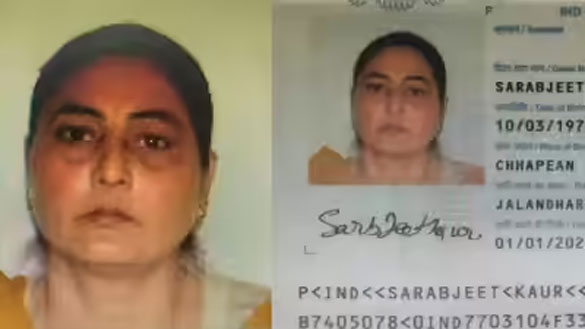
A high court in Pakistan has ordered authorities to stop harassing a Sikh woman who converted to Islam and married a local Muslim man after meeting him on social media, news agency PTI reported.
------------
CHANDIGARH: A high court in Pakistan has ordered authorities to stop harassing a Sikh woman who converted to Islam and married a local Muslim man after meeting him on social media, news agency PTI reported.
Sarabjeet Kaur, 48, was among around 2,000 Sikh pilgrims who entered Pakistan via the Wagah border earlier this month to attend Guru Nanak’s birth anniversary celebrations.
While most pilgrims returned to India on 13 November, Kaur went missing.
A senior Lahore police officer said Kaur married Nasir Hussain from Sheikhupura district, about 50km from Lahore, on 4 November, a day after her arrival in Pakistan.
She reportedly skipped a Sikh gathering at Nankana Sahib and went to Sheikhupura with Hussain.
Kaur and Hussain later petitioned the Lahore high court, claiming police had conducted an illegal raid at their home in Farooqabad, Sheikhupura, and pressured them to end the marriage. Justice Farooq Haider directed the authorities to stop harassing the couple.
In her petition, Kaur said a police officer had caused “undue harassment” and tried to force the marriage to be dissolved.
She said her husband is a Pakistani citizen and that she has approached the Indian mission to extend her visa and obtain Pakistani nationality.
A video circulating on social media shows Kaur saying she had known Hussain for nine years via Facebook. “I am a divorcee and wanted to marry Hussain; therefore, I came here for the purpose,” she said.
She also said she was given the Muslim name Noor before the nikah ceremony and that she “happily married Hussain.”
Kaur, a native of Amanipur village in Kapurthala district, has two sons.
Source: indiatimes.com
https://timesofindia.indiatimes.com/city/chandigarh/stop-harassing-indian-sikh-woman-who-married-local-muslim-near-lahore-pakistan-court-to-police/articleshow/125428780.cms
------
We'll Kidnap Your Daughter': Iran's New Intimidation Playbook
NOVEMBER 18, 2025
ROGHAYEH REZAEI
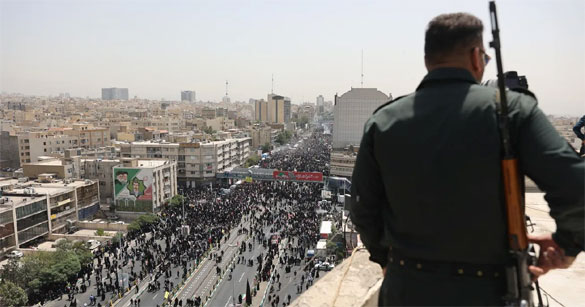
When authorities lack coherent or reliable information about a target, they use summons and interrogation to fill in the gaps
------------
The phone call came with an ultimatum: report to the Intelligence Ministry, or agents would kidnap your 9-year-old daughter from school.
The threat, documented in a video shared by former political prisoner Hossein Shirzad, reflects what human rights observers describe as an escalating pattern of extrajudicial intimidation tactics used by Iranian security forces to coerce citizens into appearing for interrogation without legal warrants.
Shirzad posted the video on X, calling it “the new method of telephone summons” when targets ignore calls from intelligence agents.
“You won’t find this degree of evil from a regime, even in the darkest pages of history,” he wrote.
The post prompted dozens of similar accounts from Iranians detailing their own experiences with irregular summons.
One user recounted how agents called workplace managers when a target didn’t respond. Another described a 2009 incident in which agents told a mother that if her protesting son appeared at demonstrations again, “you’ll have to find his corpse under a bridge.”
These tactics, legal experts and activists say, violate Iranian law as well as international human rights standards. But they have become increasingly common as security forces struggle to manage widespread dissent while circumventing judicial oversight.
IranWire has documented several cases of such irregular summons over the past two years, particularly after the nationwide Woman, Life, Freedom protests that erupted in 2022 following the death of Mahsa Amini in police custody, and again after the 12-day war in June.
The tactics range from psychological pressure to outright deception.
In one case, security agents pursued 38-year-old Pejman Yousefi - who posted anti-war content on social media - through multiple phone calls before contacting one of his friends.
Through that intermediary, they lured Yousefi from his fiancée’s father’s house and arrested him. He now faces an eight-year prison sentence.
In December 2023, agents in Yazd attacked a housewarming party for a young Baha'i couple with such violence that an ambulance was required.
Days later, authorities revealed the raid’s purpose: to force the bride, Samiyeh Gholinezhad, to report for interrogation. Instead of issuing a formal summons, agents instructed her father-in-law to relay the message.
The Azerbaijan Human Rights Association reported a similar pattern in July 2023 involving Azeri activists in northwestern Ardabil.
After widespread telephone summons went unanswered, agents called the elderly and often ill parents of activists Towhid Amiramini, Yousef Kari, Farshid Pichganloo, and Mehrdad Sheikhi, warning that their children would face “harsh treatment” and that authorities would accept no responsibility for what followed.
A former student activist, who spoke to IranWire on condition of anonymity for security reasons, said such family-destroying tactics have been used for years against lesser-known protesters and activists.
In the 2000s, when she was 22, Intelligence Ministry agents bypassed contacting her directly and instead called her “highly traditional” father.
“Believe me, they deliberately called ten days in advance and summoned me,” she told IranWire. “Usually they summon five days before, but for me they called my father ten days earlier and said they had indecent photos of me with male classmates.”
Agents falsely claimed she had been suspended from the university and was visiting men’s homes instead of attending classes. In reality, she had been going to work.
“Those few days at home were like hell for me,” the activist said. “They did this to pressure me and force me to tell them whatever they wanted. They’ve done a lot of this.”
Another protester, who participated in demonstrations against the disputed 2009 presidential election, described how agents tracked protesters through mobile phone GPS technology.
“They tracked my mobile phone at the gathering,” the protester told IranWire.
The phone was prepaid and registered under someone else’s name, so agents initially didn’t know the owner’s identity. But because the protester attended demonstrations with friends, agents called one friend for a summons and instructed that person to tell “the owner of this number to come too.”
When the protester did not respond, agents escalated by calling the protester’s mother, whose phone was also registered under another person’s name.
“They told my mother they knew all her details. They said if she didn’t come, they would arrest all of us,” the protester said.
This account highlights the technology the Islamic Republic has used for years: tracking protesters through mobile phone GPS to identify attendees at demonstrations.
Digital security activists now advise protesters to leave their phones at home or turn them off entirely, as airplane mode may not prevent all tracking.
The infiltration of security forces into educational institutions is another dimension of irregular summons, particularly during the Woman, Life, Freedom protests, when students sustained demonstrations for months.
Motahereh Goonei, a well-known student activist and former political prisoner, told IranWire that despite having a case open with judicial authorities, the Ministry of Intelligence influenced her university.
“One day I would take an exam, one day they wouldn’t let me,” Goonei said, describing how the Intelligence Ministry's influence affected her academic record. “Several course units I wasn’t allowed to take exams for received zero marks.”
On days she went to campus for exams, her interrogator would summon her for questioning at the university itself.
“The interrogator who had questioned me in [Ward] 209 called me. The place wasn’t strange - so many security forces had come into the university that they would interrogate inside the campus,” she said.
She described how her interrogator, identified as Moghaddasi and listed as responsible for Ministry of Health personnel affairs, told her to “put aside political work and live your life.”
Goonei, who was married at the time, later discovered that the interrogator had developed a close relationship with her ex-husband.
A civil activist in Iran said irregular summons often serve case-building purposes when authorities lack solid evidence.
“There have been cases where they wanted to lure someone to a place and arrest them, especially in small towns where everyone knows each other,” the activist said. “For example, they called pretending to be from an office and said the person needed to come sign something, and on the way, they abducted them in a quiet place.”
The activist added that these tactics operate entirely outside legal boundaries.
“None of the tricks they use are legal, but they don’t consider themselves bound by law either. They consider themselves in charge of everything in the country.”
When authorities lack coherent or reliable information about a target, they use summons and interrogation to fill in the gaps.
“In fact, by summoning and interrogating you, they want to complete their information - information that will be used against you or your friends,” the activist said. "Therefore, the emphasis is always that if you are summoned in informal ways, don't go."
Mohsen Borhani, a legal scholar and university professor, addressed the issue in a June 2023 article published on the legal website Vokalapress.
He identified two types of summons: legitimate summons issued by judicial authority after a case is opened, and illegal summons by a security agency for case-building purposes.
“Only the judicial authority has the right to summon,” Borhani wrote, adding that legitimate summons typically come through the judiciary system or via official documents.
If police or security agencies summon someone without judicial referral, the summons has no legal standing and citizens are under no obligation to comply, Borhani explained.
“Basically, going and complying with this request is an own goal - by doing so, you help them build a bigger case.”
Legal experts say that security agencies require a judicial process to obtain legitimate summons or arrest warrants, which can take time, especially if investigators resist security pressure.
The civil activist who spoke with IranWire warned that responding to irregular summons carries serious risks, including the possibility of death in custody.
Legal expert Musa Barzin said irregular summons have existed for years but have become far more common recently as security forces handle high volumes of cases amid widespread public dissatisfaction.
“Because the workload of security forces is high, and those summoned are countless, and because they lack evidence in many cases, it’s difficult for them to get a court summons and open a case for every instance,” Barzin said.
Source: iranwire.com
https://iranwire.com/en/features/146379-well-kidnap-your-daughter-irans-new-intimidation-playbook/
--------
'Every step is a confrontation with death': On the frontlines with Syrian women clearing landmines to reclaim their homeland
18 November, 2025
On a cloudy autumn morning, Reem al-Rahmoun carefully puts on her blue uniform, tightly fastens her helmet strap, and picks up her heavy bag before stepping out of her small home in northern Idlib.
Outside, her young son waves from the window, his eyes a mix of fear and pride, as Reem walks toward the Civil Defence vehicle, aware that the day may bring danger.
Reem walks without hesitation, having grown accustomed to the mix of fear and determination. She explains, "Every step I take in the field is a confrontation with death, but it is also a step toward saving lives."
Since Syria’s liberation from the former regime, Reem has dedicated herself to the Syrian Civil Defence’s unexploded ordnance clearance programme. She chose this path after witnessing explosions that tragically claimed the lives of many civilians, including women and children from her own village.
“The pain I felt became a powerful motivation to pursue this work,” she says, “despite society’s opposition and my family’s fear.”
In a land ravaged by war and littered with its remnants, Syrian women now carry detection and clearance equipment into the field.
With every step among rubble and unexploded ordnance, they face death, yet sow safety in the hearts of children and families, restoring life to villages and lands once off-limits to residents.
Challenging community perceptions
According to the Syrian Civil Defence, north-western Syria is among the areas most heavily contaminated with remnants of war. Cluster bombs and landmines lie scattered across agricultural fields, among the ruins of homes, and even near schools and roads.
It is estimated that one-third of farmland in the countryside of Idlib and Aleppo is contaminated to varying degrees, making these areas some of the most dangerous in the country due to the risk of accidental explosions.
Since March 2011, landmine explosions have killed around 3,700 civilians, including 180 in the first quarter of 2025, according to reports by the Syrian Network for Human Rights (SNHR), which has been documenting violations since the start of the Syrian revolution.
The SNHR also reported that at least 10,400 civilians have sustained injuries, many requiring prosthetic limbs, long-term rehabilitation, and psychological support.
Raed al-Hassoun, head of war remnants operations in the Syrian Civil Defence, told Al-Araby Al-Jadeed, the Arabic-language sister edition of The New Arab: “Explosions caused by remnants of war have become a painful reality we live with every day, with most of the victims being women and children.
“After monitoring the recurrence of these incidents, we found that many of the victims belong to groups that are difficult for male teams to reach due to the social norms of local communities.
“So, we decided to include female members in non-technical survey and community awareness programmes, and later in the actual field clearance teams.”
Raed notes that this strategy has “achieved tangible results, as the presence of women has improved communication with local residents and reduced the number of victims in targeted areas.”
He adds, “The local community has come to recognise the vital role of women and has changed its views after seeing how female members contribute to making life safer for children and women.”
Courage amid danger
Reem is one of the women volunteering with the Syrian Civil Defence’s unexploded ordnance clearance programme. She chose this work fully aware of the dangers involved in every mission.
“The high number of explosions caused by remnants of war among civilians, especially children, deeply hurt me,” Reem says. “Each victim was a wake-up call, and I felt it was my duty to help protect innocent lives.”
The path has not been easy for her, as her family and community initially opposed her choice, fearing for her safety.
“Their reaction was harsh at first, especially from my children,” Reem recalls with a sad smile. “My young son once asked me to quit. He told me he was afraid a bomb might explode, because he couldn’t live without me. But I convinced him that I’m trying to save mothers like me, and that my work helps prevent such tragedies. Gradually, he came to understand; now, he encourages me and feels proud of me.”
Reem also remembers a critical situation she faced during fieldwork: “We were clearing unexploded ordnance in one of the villages when a civilian man unknowingly approached the security cordon. I acted quickly, alerted my colleague in charge of the area, and together we calmly handled the situation, moving him to safety before anything could happen.”
She affirms, "There is no difference in performance between male and female volunteers. While men may have greater physical strength, women often have a keener eye for detail, which is essential in our work that demands a high level of precision."
Under pressure
Despite their successes, female volunteers face several challenges, from the direct dangers in the field to balancing their work with family life.
“I try to organise my time to give my children and family the attention they deserve, but the pressure is immense. Sometimes I feel exhausted, yet I keep reminding myself that my work is important, that I am strong, that I am capable, and that I can do it,” Reem says.
Samar al-Hajj, a psychological and social counsellor, explains that female volunteers on the clearance teams face “intensified psychological pressure.”
As she puts it, “They don’t only deal with instruments of death, but also with tragic images of children who have lost their limbs or widows who have lost their husbands.
“That’s why they need regular psychological support sessions and emotional release programmes, as their mental health is a prerequisite for them to continue working safely and effectively.
“Providing ongoing psychological support, including emotional release sessions and stress management workshops, is essential, especially since many volunteers suffer from nightmares or a constant sense of worry about their families.
“Our focus is on strengthening their coping skills and helping them maintain a balance between their work and personal life.”
Samar adds, “Society often doesn’t realise the magnitude of the psychological burden these women carry. Every successful clearance mission not only removes explosives from the land but also helps them overcome fear and the traumatic memories of war.
“In doing so, these women are rebuilding trust — between people and the land, and between humans and life itself.”
Rebuilding trust
The efforts of the women’s Civil Defence teams have begun to yield tangible results.
Since the fall of the Assad regime, the programme has cleared dozens of hectares of agricultural land and removed thousands of unexploded ordnance, according to reports from the White Helmets.
Wiam Khalil, a displaced woman who returned to her village in southern Idlib countryside after it was cleared of landmines, recalls the fear that ruled their lives before the arrival of the Civil Defence teams.
According to Wiam, residents did not dare return to their destroyed homes or cultivate their lands, which had become 'fields of death,' and children lived in constant terror, afraid to play or go to school for fear of stepping on remnants of bombs or buried mines.
Wiam says the arrival of the Civil Defence team, especially the female volunteers, was a turning point for the village. The presence of women in the teams encouraged residents to engage with awareness campaigns, understand safety measures, and learn how to identify and report suspicious objects.
She adds, “The female volunteers enter homes and sit with mothers and children. They explain in simple steps how to stay safe, which makes us feel secure.”
Amidst the rubble and dangers, the women of the Syrian Civil Defence are proving day after day that courage is not only about carrying weapons, but also about protecting life.
They face landmines every day, not with physical strength, but with faith in the human capacity to create change, transforming fields contaminated with death into fertile, safe land.
They are writing a new story for Syria: a story of women carrying life on their shoulders in the face of danger.
Source: newarab.com
https://www.newarab.com/features/syrian-women-brave-landmine-clearance-save-their-homeland
------
Lack Of Conversion Ritual Of Muslim Woman No Bar For Divorce Under Hindu Marriage Act: Madras HC
19 Nov 2025
CHENNAI: Holding that mere absence of any ceremony for conversion from Muslim to Hindu religion cannot be a ground to dismiss the divorce petition filed under the Hindu Marriage Act, the Madras High Court has overturned an order of a sub-court that dismissed a mutual divorce petition by a couple where the wife had converted from Muslim to Hindu religion and professed the faith since marriage.
Justice P B Balaji passed the orders to set aside the order of the sub-court in Ambattur that dismissed on March 28, 2024, the mutual divorce petition filed by K Krishnapriyan and Aayisha Siddiqua.
They had filed the petition under Section 13 (B) of the HM Act, 1955. However, the sub-judge refused to hear the petition stating that Aayisha Siddiqua, being a Muslim, cannot seek dissolution of the marriage under the HM Act. Challenging this order, the couple approached the HC.
Justice Balaji concurred with the arguments of the counsel for the petitioners thatt it would be sufficient that the woman had shown her religious conversion and the specific averments in the divorce petition that she is a Hindu by religion.
He noted that the marriage was solemnised at the Balamurugan temple in West Mogappair and the photographs clearly evidence the marriage was solemnised only as per Hindu rites and customs.
Pointing out that the petitioners have invoked the provisions of the HM Act conscious of the fact that they are professing Hindu religion, the judge said there was absolutely no necessity for the court to conduct any roving enquiry in such circumstances merely because the woman’s name continues to be her original Muslim name.
In fact, the petitioners having solemnised their marriage in a Hindu Temple and in accordance with Hindu rites and customs, will also not be in a position to seek divorce under the Special Marriage Act as well.
“As already held, the second petitioner (Aayisha), though by birth is a Muslim, by conduct, has clearly demonstrated that she has converted to Hindu faith and mere absence of any ceremony cannot be a ground to dismiss the application for divorce by mutual consent,” the judge said in the order.
Setting aside its order, he remitted the matter back to the sub-court to decide the divorce petition on merits and in accordance with the law in four weeks.
Source: newindianexpress.com
https://www.newindianexpress.com/states/tamil-nadu/2025/Nov/19/lack-of-conversion-ritual-of-muslim-woman-no-bar-for-divorce-under-hindu-marriage-act-madras-hc
--------
An Intellectual Gathering of Thousands of Muslim Women in the UK
18 November, 2025
Recently in Puttenham, Surrey, over 8000 women and girls from around the UK assembled at a unique event. This was no ordinary gathering, and these were no ordinary women.
Equipped with pens, notebooks, and a desire to expand their horizons, Ahmadi Muslim women – part of the Ahmadiyya Women’s Auxiliary Organisation – were ready for their annual gathering, known as an Ijtema, an Arabic word which means a ‘congregation’ or ‘conference’.
The agenda was abundant with educational and sports competitions; presentations and lectures on an array of religious and secular topics, including science exhibitions and even medical insights from professionals.
A glance around the venue showed a mosaic of women of all different ages and backgrounds channelling their competitive spirits for the various competitions. A mother took the stage for the speech competition, ready to deliver the words she’d spent hours researching and preparing. A teenage high school student sang melodiously in the poem recitation competition comprising poems written by the Founder of the Ahmadiyya Muslim Community (as) and his Caliphs. Girls as young as seven years old could be seen with their mothers, revising verses for the Holy Qur’an memorisation competition.
Everyone put their best foot forward not only in vying for the top positions in these competitions, but also to foster and build a bond of sisterhood with women and girls from across the country. This is nothing new for Ahmadi women, as they’ve been raised amongst constant academic celebration. For them, these competitions, public speaking, and creative pursuits...
Source: reviewofreligions.org
https://www.reviewofreligions.org/47484/an-intellectual-gathering-of-thousands-of-muslim-women-in-the-uk/
------
Saudi craftswomen in spotlight at Banan festival
NADA ALTURKI
November 18, 2025
RIYADH: In the Year of Handicrafts, no other event highlights heritage more than the annual Banan festival, which is celebrating handicrafts from more than 20 countries until Nov. 26 in Riyadh.
The event underlines national efforts to spotlight Saudi handicrafts and empower practitioners, while it provides a space for artisans to come together, with women taking a leading role.
Rahaf Al-Harthi, who has visited the festival, said: “Banan is an amazing place because it shows just how capable Saudi women are in creating. That’s something we’re really proud of.”
Sadu weaving is a traditional Bedouin craft which uses wool to create brightly colored geometric shapes. The festival features Sadu weaving in abaya designs, clothing, keychains and other objects.
Al-Harthi and her sister Ohood, whose mother is a Sadu weaver participating at Banan, attended the event to witness the diversity in cultures and meet the special guests from around the world.
Al-Harthi said: “It’s a beautiful thing to grow up and observe this craft. Women back then didn’t have the resources to make clothing, jewelry, (and) tents, so they made everything from scratch.
“The Sadu weaving, (and) Al-Qatt Al-Asiri were things they used to decorate their homes, and when you look at the resources back then, they had very little. But the power of the Saudi woman enabled her to produce these things.”
Ohood said: “As visitors we see the diversity. We have people from Hail, Jouf, Madinah, and all the crafts from around the Kingdom are right here so we can see the diversity, whether it’s ancient crafts or new modernized versions of them.
“Banan has left a very beautiful mark on heritage and anyone who hasn’t visited, should do.”
Saudi artist Duha Akhdar, representing the Al-Qatif region in the Eastern Province, specializes in knot artistry and macrame. Inspired by fishnets, she creates handmade macrame hanging baskets, keychains, ornaments and decorative pieces using rope.
From tree branches commonly used in older houses as ceiling features, she creates a base, carved in decorative calligraphy, for a boat topped with a rope-knotted sail.
Akhdar’s creations are based on knotting techniques, and to date she has trained more than 600 people in the craft, including many with disabilities.
She told Arab News: “It’s beautiful to be here among a huge number of craftsmen and women from across the Kingdom and beyond, to give an introduction to this craft and its origins, seeing as this handicraft dates back to the 13th century.
“I was studying in Canada in 2015 and living with families, and one of them was a Mexican family and this was a craft that had been passed down for generations.
“It impressed me how they took a cotton reel and transformed it into large pieces and products. I was captivated by this and wanted to learn the art.”
After coming back to Saudi Arabia, she began researching the topic and found that a similar type of knot crafting was practiced traditionally by Arabs.
She has now been practicing it for 10 years. In some of her newer works she creates decorative pieces inspired by the Kaaba, one of which she presented to the Minister of Hajj and Umrah Tawfiq Al-Rabiah, while another features the name of Allah in Arabic, which she presented to Prince Saud bin Nayef Al-Saud, the governor of the Eastern Province.
Nata Nikoleishvili, who hails from Georgia, is in business with her mother to create unique handmade clothing.
They work with fabrics such as cotton, silk, and linen. Their technique includes wool felting, which has an ancient history in Georgia, and fabric pattern printing methods utilizing leaves and plants.
Nikoleishvili said: “We were excited to get an invitation (from Banan) and we tried for months to get everything ready for this event. I hope it will be something that will bolster our business.”
Afaf Dajam became interested in documenting the art of Al-Qatt Al-Asiri in 2017, as she was participating in a workshop in honor of the craft being included in UNESCO’s Representative List of the Intangible Cultural Heritage of Humanity.
She placed three designs in her studio and used them as inspiration to create modern takes of the craft in her work.
She told Arab News: “Al-Qatt Al-Asiri being recognized by UNESCO has revived the craft and brought it to the world’s attention, and the Ministry of Culture, and the Heritage Commission.
“It has prompted training workshops, some of which I have given.
“Banan is an international platform that brings together artists from across the globe. I myself am gaining inspiration from others, and vice versa. We’re benefiting from each others’ crafts … And I can see similarities between us and different regions, especially in India, North Africa, and Mexico.”
Source: arabnews.com
https://www.arabnews.com/node/2623109/saudi-arabia
-----
We live beneath a dark roof: what it means to be an Afghan woman today
18 Nov 25
Roma Ayuobi once had a promising career. Then the Taliban came back to power. Now she is jobless. She lives in Kabul, with her husband and young child. Her house is cold and her son is unwell. She’s worried that she can’t pay for the help he needs.
We asked Ayuobi to write about what it means to be an Afghan woman today as part of our new project, Letters from Afghan Women, where we offer a platform to women from inside the country to speak freely on whatever they feel those outside need to know. She said that writing this article was one of the best moments for her recently.
What is clear, and history bears witness to, is that life under the Taliban passes in hardship and anguish. Their second rule has brought endless trouble for all, but none more so than for the brave women and girls who dare to resist. Now we live in a time heavy with sorrow, with no light of hope ahead – for Afghan women have been pushed out of both public and private life, denied a full education, their once vibrant presence erased, their colours drained from the tapestry of society. The girls who once dreamed of shaping a brighter future instead live beneath a dark roof – a roof that has sealed away their light for 1,800 days and counting.
Is this what remains for us – Afghan women and girls – to stand outside the circle of our own rights, unseen in the world we helped build?
The courageous Afghan women, who have fought for their rights throughout history, struggle to even step outside their homes to earn a piece of bread for their displaced families. Because of their struggle, many have been arrested and subjected to brutal torture. Some have lost their lives; others have been forced to flee the country illegally, carrying nothing but their pain, surviving in the margins of foreign lands.
Even beyond Afghanistan’s borders, in neighbouring countries, safety remains an illusion. One Afghan woman activist was even recently attacked in Europe [in Germany] by those who cannot bear her voice.
For Afghan women, danger has never ended, it only changes its shape. What we are witnessing is not just a step back in time, but a calculated effort to erase women from every corner of public life.
These restrictions could have disastrous consequences for women with no mahram (‘male guardians’). Because the presence of women in a society is life-giving.
The obliteration of education stands as the Taliban’s most cruel and symbolic act – their war on knowledge, their battle against women. They cloak their prohibitions in the shadow of Sharia, but nowhere in true faith is there a command that strips women and girls of the right to learn or to work. Even the sacred texts speak of knowledge as a light meant for all, men and women alike.
They have chained women to darkness, to a life without knowledge, without voice.
Among all these injustices, women’s health stands on the edge of catastrophe. So many women are at risk, yet even the doctors who could save them are forbidden to work. Those who wish to travel into perilous, remote villages to reach suffering women are stopped – for they cannot move without a male guardian. And so, what might have been life-saving care becomes silence, and too often, becomes death. Indeed the deaths of mothers and children, once heartbreakingly common, is multiplying again.
What unfolds in Afghanistan is more than tragedy; it is a warning to the world. For a nation that silences its women silences its own future – leaving only darkness where hope once lived.
They may erase women from sight, but can they ever silence their voices? No, they can never silence the voice of a grieving mother whose cries echo across the world.
Even under such crushing silence, the fire of Afghan women has not gone out. In hidden rooms and secret schools, they still learn, dreaming of a day when life will be theirs again.
Afghan women cannot wait for the hands that oppress them to also deliver justice; their rights will not be handed down by corruption but reclaimed through their own courage.
They must take up the struggle themselves and reclaim what is theirs. But whenever they cry out, countless women and girls are struck – in body and spirit. Their families, too, suffer reprisals.
When women and girls step outside their homes, simply to walk, to breathe, even then, they cannot draw an easy breath. From every direction, harsh voices shout: “Where is your hijab? Why is your hair showing? Where is your mahram? You have no right to be here!”
If a girl dares to answer back to such words, she risks brutal violence – and defending herself only brings greater danger.
These very restrictions have forced many girls into early and arranged marriages, because continuing life under such conditions has become unbearable. Forced marriage is a deep wound in the lives of many girls in this sleeping land.
If we look closely, women make up half the body of humanity, yet throughout history, their rights have been trampled underfoot.
I wanted to hear from some of the anguished women and girls of this country whose voices have been silenced. A young woman, who always dreamt of serving her community as a capable doctor, says:
“Life feels unbearably heavy. Each day I ask myself: why have we become dimmed lamps in our own country? We are not even allowed to study unless a man shadows us. When the world turned against me, I had no choice but to work on the streets, earning what little I can to feed my family. Without a guardian, even my right to exist now belongs to them.”
A mother, who struggles to provide for her children, says:
“I work in a private office, but since the Taliban came to power, security has worsened. They dismissed many women from their jobs, and even those who remain have not received their salaries for months. Life has become twice as hard. Even as I scrub the floors, my mind wanders home – wondering what waits for me there?”
One more woman speaks, her voice carrying the weight of lost dreams, dreams she once held before this rule began:
“My pen was meant to fight for other women and girls. I always dreamed of being a voice for the voiceless, of carrying their silence to every institution that would listen. But with the arrival of this dark regime – a reality too painful even to imagine – all those dreams were buried alive. These endless horrors have doubled the hardship of my life. I have lost so much – even my home and belongings were taken from me because I was a woman who wrote and spoke in the media. I am no longer allowed to travel from one province to another without a male guardian. And the words that echo endlessly in my mind are always the same: ‘Where is your guardian? You are not allowed outside. Go back inside.’ They have locked the doors of life itself and with them, the end of my dreams.”
And so it is for many women, caught in the unending struggle of hardship and survival.
Is this the life we are meant to live, where even outside our homes we cannot witness life itself? Oh, this dark roof – it has smothered the air, choking the last traces of humanity!
Still we hold onto the hope that one day our country will break free from the chains of Taliban rule, and once again, its women will stand, fight and build a brighter, more progressive Afghanistan.
Source: indexoncensorship.org
https://www.indexoncensorship.org/2025/11/we-live-beneath-a-dark-roof-what-it-means-to-be-an-afghan-woman-today/
------
URL: https://newageislam.com/islam-women-feminism/indian-sikh-woman-married-muslim-lahore/d/137700