
Iran's Femicide Crisis Claims Lives of Women Seeking Independence
New Age Islam News Bureau
16 October 2025
· Iran's Femicide Crisis Claims Lives of Women Seeking Independence
· Pakistan Actress Hania Aamir Named Pakistan’s UN New Goodwill Ambassador
· Iran’s New Tactics to Crush Mandatory Hijab Resistance: Business Raids and Surveillance
· India-Taliban Rapprochement Sparks Women's Rights Debate
· African Women’s Empowerment Network Launched In Morocco
· When Absence Speaks Louder Than Presence: Muslim Women And India’s Parliament
· How Iranian Women’s Defiance Created Two Realities in Hijab Enforcement
Compiled by New Age Islam News Bureau
URL: https://newageislam.com/islam-women-feminism/iran-femicide-crisis-claims-women/d/137276
-----
Iran's Femicide Crisis Claims Lives of Women Seeking Independence
OCTOBER 16, 2025
MARYAM DEHKORDI
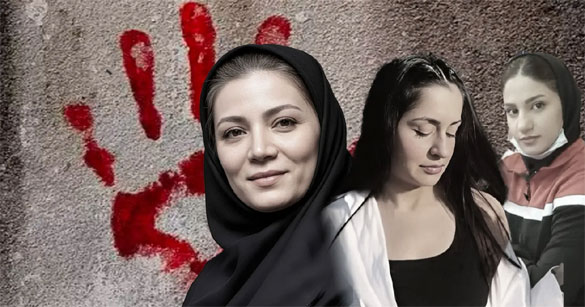
At 10:07 a.m., Elmira Aghajani, 22, rushed into her workplace and headed toward the same lift. What followed was a fatal encounter
------------
Iran's Femicide Crisis Claims Lives of Women Seeking Independence
The security cameras captured everything. A young man in a yellow shirt and cap repeatedly pressed the lift button again and again.
At 10:07 a.m., Elmira Aghajani, 22, rushed into her workplace and headed toward the same lift. What followed was a fatal encounter. He quickly escaped down the stairs.
What the cameras inside the lift cabin didn't record, because none had been installed there, were the final moments of a law student whose only "crime" was saying no to marriage.
Minutes later, Aghajani's colleagues at a restaurant in Qazvin's commercial complex found her bloodied body inside the elevator.
Emergency responders rushed her to the hospital, but she died from her injuries. It was September 29, and she became one of more than 65 women killed in Iran over the past six months, according to investigations by IranWire.
The pattern emerging from these deaths reveals a deadly cost for women who reject marriage proposals, seek divorce, pursue financial independence, or simply want to work.
In case after case documented by IranWire, women have faced baseless accusations from men close to them, allegations that too often end in murder.
"The cameras recorded everything," Aghajani's aunt told IranWire.
The suspect, a 25-year-old cook named Hossein who worked at the same restaurant, fled the scene by car and hid in the Alamut Mountains near Qazvin, authorities said. Police arrested him four days later while he was tending sheep in the highlands.
During interrogation and crime scene reconstruction, Hossein confessed to the killing, according to investigators.
He told authorities he had developed feelings for Aghajani after they began working together and had repeatedly proposed marriage.
After multiple rejections and after hearing rumors that she might be seeing someone else, he said he became angry and planned her murder.
Qazvin judicial authorities have officially listed the motive as "a negative response to a marriage proposal," although supplementary investigations are ongoing.
"Elmira wanted to study, to build her own life," her mother told IranWire. "She said many times, 'Mom, I want to build my future through education, not early marriage.' But Hossein wouldn't give up."
The rejection wasn't just verbal. Once, when Aghajani again declined his proposal, Hossein twisted her arm, her mother said. The restaurant fired him after that incident.
Aghajani's mother, who spent years working in Iran's judicial system, said she tried to handle the situation herself.
She told Hossein that her daughter wasn't ready for marriage. He replied, "I have both a house and a job. What more does Elmira want?"
Two weeks before her death, Aghajani underwent cosmetic nose surgery. Though still recovering, she returned to work 10 days later, her stitches not yet removed.
That was when the family discovered that Hossein had also returned to the restaurant, without their knowledge.
Most troubling to them, Hossein had threatened to kill Aghajani, but no one informed the family.
"If I had known, I would definitely have followed up," her mother said. "But no one said anything, not even the restaurant manager. We later discovered that some people were aware of the threats but chose to remain silent.
If they had taken them seriously, Elmira would be alive today."
The family is demanding what they call the "severest punishment" for Hossein.
"If justice is not served today, tomorrow another girl will become a victim," they said. "Until we see justice served, we will not rest."
According to relatives, Hossein repeatedly told friends and colleagues that "Elmira shouldn't belong to anyone else"- language the family says shows he confused love with ownership.
Aghajani's case echoes dozens of similar killings, including the murders of Mahrou Tondpour in Yasuj and Samira Nourbakhsh in Kermanshah.
Three days after Aghajani's death, another woman was killed in Nahavand, in Hamadan Province. However, this time, the family attempted to conceal the truth.
Raheleh Siavoshi, a champion in the martial art of wushu, was killed by her husband, according to a source who spoke to IranWire. She was 22 and the mother of a two-month-old baby.
Because Siavoshi and her husband, Homayoun Siavoshi, were cousins, and because the family wanted to preserve what they considered family honor, they initially tried to report her death as a traffic accident.
The source told IranWire that Homayoun Siavoshi stabbed his wife multiple times in the head. The motive, according to the source, was his opposition to her attendance at sports training camps and her continued athletic activities.
After Raheleh was taken to the hospital, her husband killed himself, the source said. Authorities officially classified the motive as "honor preservation."
Siavoshi had competed nationally for years and won third place in wushu competitions in 2021. She was both an athlete and a trainer in the martial art.
Nine days later, news broke of another murder - one that demonstrated how femicide cuts across social classes and education levels in Iran.
Zahra Ghaemi, an employee at Tehran University's Faculty of Family Sciences, was suffocated by her husband in her sleep on October 11, according to the Iranian newspaper Hammihan.
Khabaronline, another news outlet, confirmed the killing, citing Shiva Alinaqian, a former instructor at Tehran University's Faculty of Social Sciences.
Ghaemi was the mother of a 12-year-old daughter from her first marriage. Her family has remained silent about the details and motives behind the crime.
Official media coverage has been minimal, relying on familiar explanations: "They had an argument; they had family differences."
Source: iranwire.com
https://iranwire.com/en/women/145592-irans-femicide-crisis-claims-lives-of-women-seeking-independence/
------
Pakistan Actress Hania Aamir Named Pakistan’s UN New Goodwill Ambassador
October 16, 2025

Famous Pakistani actress and youth icon Hania Aamir is now the new UN National Goodwill Ambassador
------------
Dubai: UN Women Pakistan has appointed acclaimed actress and youth icon Hania Aamir as its new National Goodwill Ambassador, tasking her with raising awareness and driving action for women’s empowerment across the country.
In her new role, Hania will leverage her widespread popularity to amplify the voices of women and girls, promote gender equality, and inspire social change. “I am deeply honoured to be designated as UN Women National Goodwill Ambassador. This is more than a title, it is a responsibility to represent women and girls whose voices often go unheard,” Hania said.
International fame
The announcement comes as Hania enjoys rising international recognition, including her debut in the Indian Punjabi film Sardar Ji 3, which strengthened her cross-border appeal. She was also recently awarded the “Global Star Award” in Houston for her growing influence in entertainment and advocacy.
Jamshed M. Kazi, Country Representative of UN Women Pakistan, welcomed the appointment, noting: “Hania’s dedication, courage, and public outreach will be instrumental in advancing gender equality, promoting women’s economic empowerment, and amplifying the voices of women and girls across the country.”
Hania succeeds Muniba Mazari, who served as National Goodwill Ambassador until August 2025. In her new role, Hania will actively engage in campaigns supporting women’s leadership, digital inclusion, education, climate action, and the prevention of gender-based violence.
Social media influencer
With over 19 million Instagram followers, Hania is one of Pakistan’s most influential celebrities, making her an ideal figure to connect with youth audiences and champion meaningful change.
Known for her work in hit films and television dramas like Janaan, Anaa, Ishqiya, and Mere Humsafar, Hania continues to be a prominent voice in Pakistani entertainment and an emerging advocate for women’s rights.
Source: gulfnews.com
https://gulfnews.com/world/asia/pakistan/why-hania-aamir-named-un-women-pakistans-new-goodwill-ambassador-1.500309838
-----
Iran’s New Tactics to Crush Mandatory Hijab Resistance: Business Raids and Surveillance
OCTOBER 15, 2025
Closures, Undercover Agents, and Prosecutions Replace Street Patrols in New Phase of Mandatory Hijab Enforcement
October 15, 2025 — The battle over the mandatory hijab in Iran is far from over. Despite the stream of videos showing women walking unveiled on the streets, this defiance does not signal freedom—it reflects enduring, and often costly resistance to the state’s repressive domination of women.
Research by the Center for Human Rights in Iran (CHRI) indicates that mandatory hijab enforcement has, in fact, morphed in insidious ways. Key points:
Businesses serving women not wearing the hijab are increasingly being closed and their proprietors prosecuted, especially in smaller cities and towns outside Tehran;
Electronic surveillance and the deployment of undercover agents are intensifying, resulting in both fines and prosecutions for noncompliance with mandatory hijab, as well as for mixed-gender gatherings.
“Women in Iran are still being surveilled, fined, and jailed for exercising their fundamental right to freedom of expression and their right to peacefully refuse adherence to deeply discriminatory laws,” said Bahar Ghandehari, director of advocacy at CHRI.
“The Iranian authorities may be refraining—at least for now—from overt and violent public crackdowns on women for “improper hijab,” but they have in no way relinquished their fight against women’s freedom. They have only changed their tactics,” Ghandehari said.
CHRI calls on the UN and governments worldwide to continue to demand the repeal of the Islamic Republic’s mandatory hijab laws—as well as an end to its deeply repressive and discriminatory laws and practices, which continue to subjugate women.
Dozens of Establishments Closed, Surveillance Increased, Undercover Agents Deployed
CHRI has documented that at least 50 establishments, including cafes, restaurants, wedding halls, and clothing boutiques, have been sealed by the authorities between late June and early October 2025 under the pretext of “improper hijab” for serving unveiled women.
The closures have taken place in Tehran, Borujerd, Kashan, Shiraz, Fasa, Qom, Ahvaz, and Dezful, with authorities arresting citizens and business owners, and filing judicial cases against them.
The vast majority of these cases have taken place in towns and cities outside Tehran. For example, there have been at least ten closures in Kashan and eleven establishments closed in Borujerd (representing a high proportion of the restaurants and cafes there), compared to five in the much larger Tehran.
In several instances, cafe owners and customers were apprehended after authorities shuttered their business for hosting “mixed-gender” events, which violate the government’s public morality and mandatory hijab regulations.
While the laws in Iran criminalizing hijab noncompliance remain in force, their enforcement now varies widely across cities and regions of Iran, and often looks different from recent years. At times, enforcement is still carried out by the so-called “morality police,” but now it is increasingly through electronic surveillance cameras and fines rather than direct confrontation, and the shuttering of businesses that serve unveiled women.
Findings by CHRI also indicate that while hijab enforcement has become less visible in the streets and the capital Tehran, it continues aggressively in other parts of the country, particularly in smaller cities, where authorities have been intensively targeting local businesses as proxies for enforcing compulsory veiling.
“They threatened that if an unveiled woman was seen in the cafe again, I would face serious consequences.”
A cafe owner in Andimeshk, Khuzestan Province, described the climate of intimidation:
“In a small city like Andimeshk, everyone knows each other. We opened our cafe in late 2022 and gained recognition very quickly. From the very beginning, there was pressure over the hijab issue. Several times, officers entered while customers were inside to give warnings. Once it even turned into an argument, and when I tried to intervene, they treated me aggressively and threatened that if an unveiled woman was seen in the cafe again, I would ‘face serious consequences.’
“After that, I realized our cafe was under surveillance. About a year ago, one afternoon when the cafe was busy — and a few customers were not wearing scarves — three plainclothes agents suddenly stormed in aggressively. One of them shouted at everyone to leave and locked the door behind them. I recognized one of them from his boots — they were military. Without showing any warrant, they came behind the counter and told my brother and me that they had received reports that we were selling alcohol. I told the one I knew, ‘Tell your boss you’ve come to the wrong place. Everyone in this town knows where the alcohol sellers are. You’re just looking for an excuse to discredit us because young people hang out here.’
“Many customers were standing outside watching, and I’m sure some thought we were involved in drugs or crime. In a small town, rumors spread quickly — this hurt our business badly. I’m convinced that since authorities can’t easily target unveiled women in public spaces anymore, they are determined to shut down places like ours by any means. They know the hijab excuse alone isn’t enough to justify closing cafes or restaurants, so they use other pretexts — alcohol, drugs, anything. Eventually, they managed to file a case and shut us down.”
In Qom city, Qom province, residents report widespread closures under dubious claims of “public complaints.” A resident of Tehran who frequently travels between Tehran and Qom for work told CHRI:
“Since the Mahsa movement, I’ve seen many young women sitting in cafes without hijab. Despite strict pressure on cafe owners, I rarely saw them reprimand customers. That’s why many cafes have been shut down, temporarily or permanently. A key issue in Qom is that officers from the Office of Public Venues Supervision often claim to act ‘based on public complaints,’ but no one really knows if those complaints actually exist. That’s an important point.”
In Kashan, Isfahan province, a cafe owner recounted similar experiences:
“Our cafe is in an old house in the city center. Over the past year, authorities have repeatedly cracked down on cafes and restaurants under the pretext of hijab. As a woman, I can’t tell female customers to cover up, even though they are careful not to cause us trouble.
“A few months ago, however, our cafe was shut down for nearly a month because of unveiled customers. When I followed up, I learned that in their report, the Office of Public Venues Supervision claimed that ‘citizens had complained that we served alcohol’ — which was completely false. They told me these were ‘public reports,’ even though the official reason for sealing us was ‘failure to observe Islamic norms.’”
Authorities Also Shut Down Cafes and Arrest Citizens Over Mixed-Gender Gatherings
Despite growing public defiance, the state’s clampdown goes beyond mandatory hijab violations. Authorities across Iran continue to close businesses and arrest citizens over the broader “violations of Islamic values,” which include holding mixed gender gatherings.
On September 3, 2025, a cafe in Qods Town, Qom, was sealed by local police after hosting an opening event with live music and mixed-gender dancing, videos of which were shared online. Authorities said the event caused “public disturbance.” A judicial case has been filed against the cafe’s manager.
Ali Faramarzi, chief of Qom’s Public Places Supervision Police, announced that, according to a resolution by the Provincial Security Council, no new licenses for “cafes” will be issued in the city. Issuing such licenses will only be possible if the business changes its category.
He explained that following the closure of a cafe after its opening event, licenses for cafe businesses in Qom have been suspended.
Two teenage girls were arrested after a confrontation with a citizen enforcing the hijab law outside a cafe in Fasa, Fars Province, on August 19, 2025. A video of the incident, showing a veiled woman confronting the girls over their clothing, circulated widely on social media, prompting judicial action.
Fars Province Prosecutor Kamran Mirhaji stated that both girls were summoned, arrested, and charged and have been transferred to the Shiraz Juvenile Correctional Center. A judicial case has been opened, and the cafe where the incident occurred has been sealed by court order. Authorities also arrested the person who filmed and shared the video, and said investigations are underway to identify others who were present at the scene.
On October 5, 2025, the prosecutor of Kish Island announced the arrest of several organizers of a “coffee party” on International Coffee Day and the opening of judicial cases against them.
Ali Salimizadeh, the Public and Revolutionary Prosecutor of Kish, said that one of the island’s cafes had “held a mixed-gender outdoor party” in front of a shopping center and shared videos of it on social media, which was “against Islamic values.” He also warned officials who grant permits for such events, threatening them with “legal action” if they fail to enforce regulations.
Videos of the event circulating on social media showed unveiled women dancing with men present as well. Under Iranian law, such mixed-gender gatherings—especially those involving unveiled women—are considered violations of public morality and the country’s mandatory hijab regulations. Authorities routinely raid and prosecute participants in these events, particularly when footage appears online.
A video showing girls and women dancing without hijab at a children’s event in Jannat Garden in Shiraz, Fars Province, on September 9, 2025, led to the summoning and prosecution of the event organizers and several attendees. Prosecutor Kamran Mirhaji called the dance “immoral” and said everyone involved was under judicial investigation. He also added that those taking to social media to protest or criticize the authorities will be identified if they don’t follow “ethical and legal channels.”
Tehran Police Chief: Noncompliance Will Be “Beyond Public Imagination”
The chief of Tehran’s police unit, Ali Rafiee, who oversees public places, announced on October 7, 2025, that a network of undercover agents was now deployed in cafes, concerts, and cultural events to monitor “behavior contrary to Islamic laws and norms.”
The police chief said this surveillance was being conducted with “high sensitivity” and warned that the state’s response would be “beyond public imagination.” He added that public gatherings must fully comply with “legal regulations and Islamic norms,” and that organizers who fail to enforce them will face prosecution, the closure of businesses, and monetary fines.
It should be noted that enforcing mandatory hijab through business closures, intimidation, and surveillance violates women’s fundamental rights and freedoms and constitutes systemic gender-based discrimination. This organized repression blatantly violates Iran’s international responsibilities and obligations under the International Covenant on Civil and Political Rights (ICCPR), to which Iran is a State party, which forbids gender-based discrimination in multiple articles.
Mandatory Hijab Laws Remain in Place
It is also critical to note that despite public defiance by many women who continue to appear unveiled in public spaces across Iran, the mandatory hijab law has not been legally abolished. Indeed, it remains the law of the land—statements by some government officials regarding implementation notwithstanding.
No official decree or legislation has lifted the mandatory hijab requirement. The Expediency Council does not have the authority to annul penal laws, and Article 638 of Iran’s Islamic Penal Code, which criminalizes appearing in public without a hijab, remains in force.
It is only the level of enforcement that has changed, but even this is inconsistent and varies depending on the city and province in Iran. Punishments are still being handed down for hijab noncompliance, especially in the smaller cities and provinces outside Tehran and other major urban centers.
Additionally, last year, the Iranian parliament approved a law known as the Law to Support the Family by Promoting Chastity and Hijab to impose tougher punishments on women who violate hijab rules. Although the new stricter law has not yet been enforced because of public pressure and backlash (both domestically and internationally), the mandatory hijab requirement remains in effect.
Targeted Surveillance Weaponizes Technology to Enforce Hijab Laws
Electronic surveillance of women in public places, business establishments, and gatherings has also become a central component of the state’s strategy to enforce mandatory hijab and other aspects of the Islamic Republic’s so-called morality laws.
For example, a report by Filterwatch published on April 17, 2025, highlights the systematic use of advanced surveillance technologies in Isfahan Province to enforce mandatory hijab rules, despite government officials’ statements that the new Chastity and Hijab Law is not being implemented.
According to the report, the operation combines:
IMSI-Catchers (Stingrays) to track mobile phones and gather IMSI/IMEI data. Portable, vehicle-based, and stationary units cover pedestrian areas, streets, and key zones.
Contactless card readers to capture national ID numbers from citizens’ smart cards at a very close range.
Urban surveillance cameras monitored by police and cyber units to spot women violating dress codes, with locations relayed to field agents.
Data from these tools is linked to government databases and telecom operators, in order to identify individuals and their families, who then receive threatening SMS messages from the state’s “Promotion of Virtue and Prevention of Vice” headquarters, Filterwatch explained. Government officials have reported tens of thousands of messages sent, warning women to comply with the mandatory hijab.
Interviews Filterwatch conducted with nearly 20 affected individuals confirm that the system is coordinated among law enforcement, judicial, security, and cultural institutions. The report describes how the Isfahan case study signals a dangerous trend in which technology is weaponized and used to suppress civil liberties in Iran.
“Women and girls in Iran are continuing to refuse to wear the hijab in public, despite the clear risks of state retribution and punishment they still face,” Ghandehari said. “These everyday acts of defiance reflect a broader cultural revolution taking place in Iran.”
Source: iranhumanrights.org
https://iranhumanrights.org/2025/10/irans-new-tactics-to-crush-hijab-resistance-business-raids-and-surveillance/
-----
India-Taliban rapprochement sparks women's rights debate
15 Oct 2025
Taliban Foreign Minister Amir Khan Muttaqi began a week-long trip to India last Thursday in what's the first diplomatic visit by a top leader of the Islamic fundamentalist group since the Taliban seized power in Afghanistan in August 2021.
The trip was only made possible by the United Nations granting a temporary exemption to the travel ban imposed on Muttaqi.
It is seen as an attempt by New Delhi to shift its stance on the Taliban government in Kabul without giving them formal recognition.
After talks between Muttaqi and Indian Foreign Minister Subrahmanyam Jaishankar on Friday, New Delhi announced that it would upgrade ties with the Taliban and reopen the Indian embassy in Kabul.
But a press conference organized by the Taliban at the Afghan embassy in New Delhi on the same day drew sharp condemnation as only male reporters were invited. Indian journalists, media outlets and opposition politicians blasted the decision.
The Press Club of India "strongly condemned” it, while the Editors Guild of India lambasted it as "blatant gender discrimination on Indian soil."
Sujata Madhok, president of the Delhi Union of Journalists, told DW it was outrageous that the Taliban brought their misogynist politics to New Delhi. "Geopolitics is all very well but gender politics is important too. Why should it be sacrificed in the 'larger interest?'" she questioned.
Backlash forces Taliban climbdown
India's Foreign Ministry tried to distance itself from the controversy, stating that it "had no involvement in the press interaction held by the Afghan foreign minister in Delhi."
The ministry stressed that the event was organized solely by the Taliban side at the Afghan embassy, with no involvement from the Indian government.
The statement, however, did not quell the criticism, with some voices accusing the Indian government of tacitly permitting discriminatory norms on Indian soil.
Rahul Gandhi, a leading figure in the opposition Congress Party, wrote on X: "Mr. Modi, when you allow the exclusion of women journalists from a public forum, you are telling every woman in India that you are too weak to stand up for them. In our country, women have the right to equal participation in every space."
After the backlash, the Taliban held another press conference at the Afghan embassy in New Delhi — this time inviting even female journalists, who occupied front-row seats at the event and questioned the minister about the brutal subjugation of Afghan women and girls under Taliban rule.
Muttaqi blames 'technical issue' for lack of women
At the presser, Muttaqi tried to downplay the exclusion of women journalists from the previous media event, blaming it on a "technical issue."
"With regard to the press conference, it was on short notice, and a short list of journalists was decided, and the participation list that was presented was very specific. It was more of a technical issue," he said.
Smita Sharma, an independent journalist focusing on foreign affairs who attended the second press conference on Sunday, believes the Indian government had ways to avert the incident.
"The Indian Foreign Ministry could have avoided this fiasco and bad optics by a timely intervention or letting its objection known to the first discriminatory press conference," she said.
"The outrage in India really began with women journalists speaking up for their rights to not be discriminated in their professional duty based on gender by a visiting foreign delegation."
'Indian diplomacy missed an opportunity'
Suhasini Haidar, diplomatic affairs editor at the Indian English-language daily The Hindu, said the Taliban climbdown signaled that such gender discrimination was unacceptable in India.
"Muttaqi's behavior, including bringing the Taliban flag into the embassy despite India not recognizing the Taliban government, was intended as a political statement implying Taliban rules could apply in Delhi. Yet, the subsequent open press conference acknowledged this was a misstep," she told DW.
Haidar, who also attended the second press conference, said the change was not because of external diplomatic pressure, but rather due to public uproar and media solidarity.
"Public outrage played a key role, even though there were no rallies or activism beyond journalists' objections," she said.
"However, Indian diplomacy missed an opportunity during Jaishankar's talks with Muttaqi. There was no statement about gender discrimination, girls' education, or women's right to work in Afghanistan — issues that could have been addressed."
Taliban maintain 'gender apartheid' in Afghanistan
Since seizing power in August 2021, the Taliban have rolled back progress achieved in the previous two decades when it came to women's rights.
They have banished women and girls from almost all areas of public life.
Girls have been barred from attending school beyond sixth grade, and women have been prohibited from local jobs and nongovernmental organizations. The Taliban have also ordered the closure of beauty salons and barred women from going to gyms and parks. Women are not allowed to go out without a male guardian.
In August, the Taliban deepened the pervasive restrictions by ordering women to hide not only their faces and bodies but also their voices outside the home.
Against this backdrop, Haider said, India "must be cautious not to appear as appeasing a regime accused of grave rights abuses, including gender apartheid, and remains unrecognized globally."
Prioritizing India's interests over values?
The gradual thaw in India-Taliban relations seems to coincide with the souring of ties between Pakistan and the religious hardline group.
Islamabad has been increasingly angry with the Taliban regime over cross-border terrorism, among other issues, and has even launched airstrikes on Afghan territory.
The Pakistani military and Afghan Taliban forces engaged in fierce fighting over the weekend, marking the deadliest conflict between the neighbors in recent years.
Afghan refugees 'forced out' of Pakistan return with little
Ajay Bisaria, a former Indian high commissioner to Pakistan, said India and the Taliban are prioritizing their national security interests in their dealings with each other, while acknowledging their differences in terms of democracy, religion and gender policies.
It was right for Indian media and civil society to have pressed the Taliban minister on gender discrimination, he noted. "Muttaqi will go home with a better appreciation of the problem that the rest of the world will have with their attitude towards women," he told DW.
He said India should "continue pressing the Taliban on its gender policies at home," but stressed that if both sides' values do not align, "it should not be a dealbreaker in India's pragmatic engagement with the current rulers of Afghanistan."
Source: dw.com
https://www.dw.com/en/india-taliban-rapprochement-sparks-womens-rights-debate/a-74372036
-------
African Women’s Empowerment Network Launched In Morocco
15 October 2025
The African Women’s Empowerment Network was launched Tuesday in Sale, Morocco.
The objective of the Women’s Empowerment Network is to strengthen the socio-economic activity of African women through sustainable partnerships between women’s associations on the continent.
The structure was launched during an African Forum organised in the city of Sale, near Rabat, by the National Union of Moroccan Women (UNFM) under the theme “The Empowerment of African Women: A Pillar of Social Justice and Sustainable Transformation of the Continent.”
Moroccan Minister of Solidarity, Naima Ben Yahya, affirmed stakeholders that the creation of this network constitutes a lever for the empowerment of African women, contributing to the achievement of sustainable and inclusive economic and social development.
She added that “African women are not only agents of development, but also pillars of family cohesion and societal stability.”
The African Women’s Empowerment Forum provides an opportunity to reiterate commitment to women’s empowerment issues, assess achievements in various fields, identify challenges, and determine ways to address them, said Nicole Mokolo Mangaya, President of the Group of Wives of African Ambassadors to Morocco (GEAAM), emphasised that the creation of the network will help implement the recommendations of the Beijing Declaration and contribute to achieving SDG 5 on gender equality, noting that this initiative constitutes an African space for exchange, cooperation, and action for the continent’s development.
UNFM Vice-President Amina Oufroukhi, for her part, indicated that the launch of this network is part of the historic dynamic of cooperation between the union and African women’s associations, highlighting the UNFM’s role as a pioneering national actor with regional and continental influence.
The opening of the forum was marked by the signing of framework partnership agreements between the UNFM and GEAAM, aimed at strengthening cooperation in promoting women’s
empowerment on the continent.
African women still face numerous obstacles that limit their access to paid and formal employment and struggle to build stability and autonomy in their lives. Women’s economic empowerment is therefore fundamental to achieving gender equality and combating poverty.
By providing them with access to financial resources, training, and employment, women can become full-fledged players in the continent’s economic life.
Source: apanews.net
https://apanews.net/african-womens-empowerment-network-launched-in-morocco/
--------
When absence speaks louder than presence: Muslim women and India’s Parliament
15 Oct 2025
Indian democracy loves to flaunt its credentials as the world’s largest and most vibrant. It points proudly to seven decades of regular elections, the routine alternation of power, and the remarkable diversity of its electorate. Yet, there are silences embedded in its statistics that are harder to explain away. One such silence is the virtual absence of Muslim women in the nation’s highest elected forum.
Since the first Lok Sabha in 1952, only eighteen Muslim women have managed to cross the multiple thresholds that stand between political ambition and parliamentary presence. Eighteen, across seventy-five years, across seventeen general elections, across thousands of parliamentary seats filled by men of all faiths and classes. It is this silence, this stubborn under-representation, that journalists Rasheed Kidwai and political scientist Ambar Kumar Ghosh take up in their remarkable new book, Missing from the House: Muslim Women in the Lok Sabha (Juggernaut, 2025).
Excavating Forgotten Biographies
The book is both a biography and an archive, part excavation and part argument. Each of the eighteen women is given a chapter that traces her political journey, from local beginnings to party negotiations, to the Parliament benches. But Kidwai and Ghosh are too seasoned to treat these women as isolated exceptions. Each life story is braided with the institutional, cultural, and electoral context that shaped it.
We meet figures who came from politically prominent families, their candidacies often facilitated by dynastic connections. We also meet women who clawed their way into politics through activism, community leadership, or professional standing. What unites them is not similarity of background but the double burden of gender and faith. Being a woman in Indian politics is difficult enough; being a Muslim woman makes it doubly so — one is forced to carry the community on one’s shoulders while negotiating patriarchy at home and party gatekeeping outside.
The Tokenism of Representation
The authors are unsparing in their recognition of how tokenistic such representation often was. For many political parties, the candidature of a Muslim woman functioned as a symbolic gesture rather than a genuine attempt to empower. She was a signboard for pluralism, a talisman for the party’s secular credentials, or a convenient “soft” face in times of communal strain.
But when it came to the actual business of legislation, shaping debates, influencing policies, steering party strategies, these women were too often kept at the margins. The book chronicles how speeches went unheard, motions went unadopted, and careers ended prematurely once the symbolic function had been fulfilled. Presence, the book insists, is not the same as voice.
The Courage Beneath the Statistics
And yet, Missing from the House never collapses into pure lament. It gives us, instead, stories of extraordinary courage. Kidwai’s instinct for the telling anecdote and Ghosh’s institutional clarity combine to produce textured portraits. A speech in the Lok Sabha is read against the backdrop of constituency struggles. A successful election campaign is weighed alongside the midnight canvassing and community negotiations that made it possible.
We see women who endured derision from patriarchal elders, resisted pressure to remain within the “domestic” sphere, and battled the perception that a Muslim woman could only be a token. These details bring flesh and blood to what might otherwise have been a dry statistical exercise. They remind us that each parliamentary seat was won not only against rival candidates but also against centuries of social hierarchy.
Visibility Without Power
One of the most important threads the book teases out is the uneasy relationship between visibility and power. A Muslim woman MP might attract media spotlight, even party praise, as evidence of inclusivity. But when it came to real decision-making, candidate selection, policy priorities, cabinet posts, she was often sidelined.
Kidwai and Ghosh show how this dynamic was reinforced across parties and decades. Even those who managed to carve out some influence had to do so by navigating respectability politics, proving themselves “safe” and “loyal” in ways male colleagues were never asked to. Representation, in short, did not translate automatically into empowerment.
Beyond the Lok Sabha
The authors are candid about the limitations of their canvas. By focusing on Lok Sabha MPs, they leave largely unexplored the rich and varied world of Muslim women’s political participation in state assemblies, panchayats, municipal councils, and movements. These subnational spaces often provided training grounds and platforms where women could build durable reputations, even if they never entered Parliament.
That said, the choice to focus on the national legislature has its own logic. Parliament is the stage on which the Republic enacts its claim to pluralism. To show the absence of Muslim women here is to strike at the symbolic heart of Indian democracy.
Memory as Political Work
What the book achieves most powerfully is memory-making. It restores to public consciousness names and careers that might otherwise have disappeared into footnotes. This act of retrieval is itself political. In recording these eighteen biographies, the authors insist that they be acknowledged as part of the democratic narrative.
At the same time, the book also functions as an indictment. It raises uncomfortable questions: Why has the system failed to create pathways for more Muslim women to enter politics? Why have political parties, even those who speak the language of secularism and equality, done so little to nurture them?
Toward a Cautious Hope
Kidwai and Ghosh are not content to remain with critique alone. They gesture toward the possibilities of the present moment: a younger generation of Muslim women activists, lawyers, professionals, and students who are politically engaged, vocal, and ambitious. With institutional reforms — more transparent candidate selection, financial and organisational support for women candidates, and affirmative party practices, these women could be tomorrow’s parliamentarians.
This hope is pragmatic rather than utopian. The authors do not expect sudden epiphanies from political parties. What they argue for are cumulative changes that can shift incentives: lowering the cost of entry, ensuring security, and rewarding cross-community alliances rather than narrow communal tokenism.
Style and Tone
The writing is accessible, empathetic, and quietly sharp. Kidwai’s journalistic eye lingers on small details, the repeated refrain in a condolence letter, the stubborn slogan on a campaign banner, while Ghosh’s academic background ensures structural clarity. The book avoids both the trap of hagiography and the aridity of pure data. It reads as history with heart, and reportage with rigour.
Answering the Ethical Summons
Ultimately, Missing from the House is not just a book of political history. It is an ethical summons. By showing us who is absent, it asks us to imagine a democracy that could be fuller, richer, and more representative. It reminds us that the strength of a legislature is not merely in the laws it passes but in the range of stories it allows to be told from its benches.
The ‘missing’ of the title is not only a fact but a wound. To heal it will take deliberate effort: from political parties, from civil society, from voters themselves. Until then, absence will continue to speak, louder than presence, in the halls of Indian democracy.
Source: newindianexpress.com
https://www.newindianexpress.com/web-only/2025/Oct/15/when-absence-speaks-louder-than-presence-muslim-women-and-indias-parliament
------
How Iranian Women’s Defiance Created Two Realities in Hijab Enforcement
OCTOBER 15, 2025
ROGHAYEH REZAEI
In Tehran’s northern neighborhoods, young women ride motorcycles with hair flowing freely in the wind, their clothing barely distinguishable from what one might see in European capitals.
Yet 438 kilometers south in Isfahan, morality police vans still patrol metro stations, and women face threats from enforcement agents emboldened by hardline clerics.
This is the contradictory landscape of hijab enforcement in Iran today - a country where mandatory Islamic dress remains law but increasingly exists only on paper in some areas while being aggressively enforced in others.
The divide shows a deepening rift within Iran’s leadership over how to handle one of the Islamic Republic’s founding principles, even as women’s defiance of the dress code has become so widespread that videos of women without headscarves in public spaces no longer shock Iranians abroad.
“In whatever neighborhood I went to, the ladies were wearing such strange clothes,” said Shila, a young woman from northeast Tehran who herself wears a headscarf and comes from a religious family.
While President Masoud Pezeshkian blocked implementation of a strict new hijab law last year, calling it “unenforceable,” enforcement continues selectively through existing regulations, creating an atmosphere of legal ambiguity that varies dramatically by region.
In October 2024, Iran’s Guardian Council approved a comprehensive Chastity and Hijab Law after multiple revisions.
The legislation imposed strict monitoring of dress for both women and men, with penalties ranging from fines to prison sentences of six months to five years for dress code violations.
But Pezeshkian, elected on a relatively moderate platform just months earlier, obtained a resolution from Iran’s Supreme National Security Council preventing the law’s implementation.
In June, Parliament Speaker Mohammad Bagher Ghalibaf confirmed in a public session that the council had ordered the law not be enforced, responding to representatives who demanded its implementation.
The suspended provisions - Articles 48 through 50 - specifically prohibited women’s presence in public with “non-Islamic dress.”
Yet according to citizens’ reports and domestic media accounts, other parts of the hijab enforcement framework remain active through previous laws, directives and administrative circulars.
The result is a patchwork system where enforcement depends heavily on location, with powerful local religious figures often wielding more influence than national government policy.
Residents of the capital say public spaces have changed over the past year, with women with no headscarves now common across all neighborhoods—not just the traditionally liberal, affluent north.
“There’s no south city and north city,” Shila said. “North of the city, now due to cultural issues, they dress more openly, but in south Tehran too, many don’t have hijab, and especially teenagers dress however they like.”
One northwest Tehran resident reported her car received multiple warnings for hijab violations through automated license plate monitoring, but those citations have been “cleared” from the system.
“Hijab text messages no longer come,” she said. “Previous warnings have also been cleared, and there’s no need to keep the car parked in the garage.”
Still, enforcement hasn’t disappeared entirely even in Tehran. Another resident said she was fined twice this month for removing her headscarf.
“I thought they wouldn’t hit anymore, but they still record license plates for hijab,” she said.
The limitations become more apparent in official settings. Government offices, schools, and state-affiliated institutions continue enforcing dress codes strictly.
“Hijab has been freed at least in the streets and informal and non-governmental places,” the resident said. “They just can’t bring themselves to say it.”
Source: iranwire.com
https://iranwire.com/en/women/145582-how-iranian-womens-defiance-created-two-realities-in-hijab-enforcement/
------
URL: https://newageislam.com/islam-women-feminism/iran-femicide-crisis-claims-women/d/137276