
Iran To Lash Prominent Female Singer For Performing Online Without Hijab
New Age Islam News Bureau
21 June 2026
• Iran to lash prominent female singer for performing online without hijab
• Mymensingh imam arrested over alleged rape of 5-year-old girl
• Behind The Veil Of Silence: The Unfinished Struggle Of Afghan Women
• Israeli strikes in Gaza kill six, including two children and Al Jazeera cameraman
• NRL club boss Lorna McPherson reveals why Muslim officials put a fatwa out on her - leading to her fleeing Saudi Arabia
• The Women Running Businesses Under Taliban Rules
• Afghan Women’s XI Seek Cricket Recognition During England Tour
• Iranian women grab gold as Karate team finishes runner-up
• Nahida spins Bangladesh to comeback win over Pakistan
• The woman who turned cooking oil into soap in Gaza
Compiled by New Age Islam News Bureau
-----
lran to lash prominent female singer for performing online without hijab
20 June 2026

Iranian singer Parastoo Ahmadi in an online performance, which earned her and a group of seven fellow artists 74 lashes from the Islamic Regime, June 19, 2026. (Screengrab: Parastoo Ahmadi via Youtube)
-------------
An Iranian court sentenced a prominent singer named ParastooAhmadi and a group of seven fellow artists to 74 lashes each after theylivestreamed a performance on YouTube, according to her videographer and local media.
The concert featured Ahmadi singing powerful, mournful songs to an empty audience, on a dimly-lit stage adorned solely with a large Persian carpet in the grounds of a traditional caravanserai complex.
All the musicians wore black, with Ahmadi dressed in a long, strappy gown and wearing deep red lipstick, in a country where women are banned from singing in public.
Ahmadilivestreamed the concert on her own channel in December 2024, where it has been viewed three million times. It has also been viewed many thousands of times more on other channels.
“Two years banned from artistic activities, banned from leaving the country, and 74 lashes for all of us,” wrote videographer TahminehMonzavi in a post on Instagram on Thursday.
Ahmadi, Monzavi, the musicians and others involved in the production were first taken into custody in December 2024, days after the concert took place.
Local media had at the time said they were released on bail, while the judiciary’s Mizan Online news website said a case was filed for performing “music without observing legal and religious standards.”
Mizan and other official websites have not confirmed the latest sentencing, but Iran’s reformist Emtedad news platform also reported on the story on Thursday.
Women share a moment as they look at a smartphone at the main gate of the Tehran University as a banner shows portraits of the late Supreme Leader Ayatollah Ali Khamenei, right, and the late revolutionary founder Ayatollah Khomeini in Tehran, Iran, Sunday, April 19, 2026. (AP Photo/VahidSalemi)
Ahmadi and other participants “were sentenced to 74 lashes, a two-year ban on leaving the country, and a two-year ban on artistic activity,” according to a post on Emtedad’s Telegram.
“This verdict was issued by the Qom Provincial Criminal Court… The charge against them is hurting public decency by producing and publishing vulgar and immoral content on the internet.”
Increasing numbers of Iranian women are appearing without hijab, especially since protests erupted following the death in custody of a woman named MahsaAmini in September 2022. She had been arrested for allegedly violating the dress code.
MahsaAmini, 22, who died after being arrested by Iranian modesty police. (Social media.Used in accordance with Clause 27a of the Copyright Law )
Since then, Iran has once again erupted in nationwide protests, peaking in January before the United States and Israel launched a war against the Islamic Republic.
“The time of wine and blossoms came, the gardens dressed in Spring,” was one such line. “The captive birds, like my own soul that is in love with its homeland, are filled with longing.”
Source: www.timesofisrael.com
-----
Mymensingh imam arrested over alleged rape of 5-year-old girl
21 Jun 2026
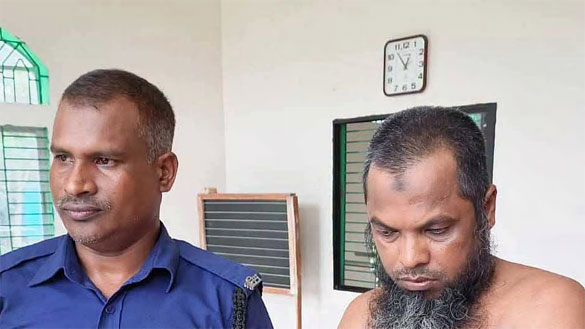
An imam has been arrested in Mymensingh’sTrishal after allegations that a 5-year-old girl was raped inside his mosque.
Locals also beat the suspect before handing him over to the police.
The victim’s father has filed a case over the incident, Trishal Police chief MonsurAhamed said.
According to the case statement, the incident took place at a village mosque around 2:30pm on Saturday.
The arrestee, 45-year-old Maulana Shahinur Islam, hails from GopalpurUpazila in Tangail district.
The girl’s family lives in a rented house near the mosque.
Police said the child had been attending lessons under the imam at the mosque for around three months.
On Saturday, when she did not return home at the usual time, her mother went to the mosque to look for her.
The mother later found the imam in an “objectionable situation” and raised an alarm, prompting locals to rush in, beat him and place a garland of shoes around his neck before informing police.
“I want the highest punishment, including the death penalty, for what he has done to my innocent daughter,” the victim’s mother said.
Officer Monsur said, “We have taken the imam into police custody after the incident was reported. He is being questioned. A rape case has been filed based on a written complaint from the victim’s father.”
He added that the victim has been sent for a medical examination and necessary support at Mymensingh Medical College Hospital’s One-Stop Crisis Centre based on the recommendation of doctors at TrishalUpazila Health Complex.
Source: bdnews24.com
https://bdnews24.com/bangladesh/d781a9820876
-----
Behind The Veil Of Silence: The Unfinished Struggle Of Afghan Women
Jun 20, 2026
During periods of political upheaval, societies often undergo big social and demographic changes. Afghanistan is a clear example after the Taliban’s return to power in August 2021. This shift followed the 2020 Doha Agreement between the United States and the Taliban, which led to the withdrawal of U.S. troops after nearly two decades. Soon after, the Taliban took control of Kabul, declared itself the ruling authority, and renamed the Islamic Republic of Afghanistan as the Islamic Emirate of Afghanistan.
The change in Afghanistan’s nomenclature was far more than political. The Taliban signalled the reimposition of governance based on a conservative interpretation of Sunni Islam and the Hanafischool of jurisprudence. HibatullahAkhundzada, the Supreme Leader of Afghanistan, has led the Taliban since 2016 and holds absolute control over the Islamic government. The present regime is dominated by men. This shift has brought tides of suffering for women and girls, who are the most vulnerable section of society. Women and girls in Afghanistan have been subjected to serious human rights violations, suffering behind the veil of silence.
The 2004 Constitution of the Islamic Republic of Afghanistan had empowered women’s rights and promoted their social, political and economic participation by legally establishing gender equality under Article 22. However, it was suspended by the Taliban as they saw the Afghan Constitution as incompatible with the strict interpretation of Sharia Law.
The shift of power was accompanied by the dismantling of the previous system, wherein constitutional guarantees were suspended, ministries were redeployed, and the public sphere was reshuffled according to the new ideology. Its impact was gendered, ending women’s access to education, employment and social life, which they had in the pre-Taliban era.
According to a 2023 assessment by the head of the UN Assistance Mission in Afghanistan, Afghanistan is the most repressive country in the world regarding women’s rights. The Taliban has stripped women of their basic fundamental rights and imposed restrictions in the form of gender-based persecution, unlawful confinement and public punishments.
In July 2024, the Taliban passed the “Law on the Propagation of Virtue and the Prevention of Vice”, a 35-article decree implementing radical restraints on personal conduct, broadcasting, journalism and public affairs. It entails restrictions on women’s dress, speaking or singing in public, making eye contact, and travelling without a male guardian. Men are required to grow beards, avoid western-style haircuts and refrain from listening to music. Intermingling between unrelated men and women is forbidden.
The UN Office of the High Commissioner for Human Rights documented systematic human rights crises in Afghanistan against women, reporting gender apartheid, gender-based violence, extrajudicial killings and inhuman punishments. The Taliban also closed the Ministry of Women's Affairs and imposed restrictions on women’s travel and movement. Women are prohibited from accessing public spaces like parks, gyms and beauty salons. Strict dress codes mandate that women must cover themselves from head to toe while leaving their homes. If these decrees are violated, male guardians may face punishment or imprisonment.
Education and employment have become privileged opportunities rather than undeniable rights. The regime has banned secondary schooling for girls above the age of 12 and promoted Madrasas for primary education. In December 2022, a nationwide ban was imposed on women entering public or private universities. Female professors were also banned from entering, teaching and conducting research. This leaves almost a generation of women deprived of their basic right to education and employment.
Women doctors are facing severe restrictions that are damaging the healthcare system. Female doctors are prohibited from working alongside male counterparts and attending male patients. Male doctors cannot attend female patients without a male guardian. Women are restricted from medical education and midwife training, reducing prospects for female healthcare providers.
According to the United Nations Women, the ban on education exposes women to child marriage, early pregnancy and high maternal mortality. Curtailing women’s rights and livelihood also triggers trauma and mental health concerns.
In December 2022, a ban was imposed on women working for national or international NGOs. This restricts humanitarian aid delivery, as female aid workers are unable to extend support and resources to women and girls in vulnerable sections.
The condition of women in Afghanistan after the Taliban’s return has attracted global attention. Major international organisations like the United Nations, UNESCO, Human Rights Watch, UNAMA and OHCHR have voiced alarm over diminishing women’s rights and the humanitarian crisis. However, Taliban leadership rejects international condemnation and claims that women are being granted their legitimate rights under Afghan cultural values and Sharia.
Living in the 21st century, women in Afghanistan have been stripped of their right to life, liberty, freedom and dignity. Violence persists in public and private spheres, where women are suppressed by an oppressive regime and a sharp patriarchy. Women are deprived of basic civil rights and face some of the harshest restraints ever imposed on humanity.
Source: www.shethepeople.tv
https://www.shethepeople.tv/opinion/afghan-women-taliban-12056022
-----
Israeli strikes in Gaza kill six, including two children and Al Jazeera cameraman
June 21, 2026
Israeli strikes in Gaza on Saturday (June 20, 2026) killed at least six people, including two children and a cameraman with broadcaster Al Jazeera, according to Palestinian health officials.
Despite an October ceasefire between Israel and the militant group Hamas, the enclave has seen near-daily Israeli attacks that have killed over 1,000 Palestinians, according to Gaza's Health Ministry.
Source: www.thehindu.com
-----
NRL club boss Lorna McPherson reveals why Muslim officials put a fatwa out on her - leading to her fleeing Saudi Arabia
By SHAYNE BUGDEN
21 June 2026
PNG Chiefs CEO Lorna McPherson has revealed she fled Saudi Arabia after a fatwa was issued against her.
The Scottish-born head of the Port Moresby-based NRL team was working in telecommunications when she moved to the country with her then-11-year-old son at a time when women weren't legally allowed to drive there.
She has previously said strictly enforced rules about what women could and couldn't do in Saudi Arabia at the time made her life 'difficult', and now she has revealed how badly those problems affected her life.
'You basically get a fatwa [a formal ruling on a point of Islamic law] when you're doing something that's not quite right in a religious way,' McPherson told The Australian.
Source: www.dailymail.com
-----
The Women Running Businesses Under Taliban Rules
By Elian Peltier
June 21, 2026
The Taliban have imposed some of the world’s toughest restrictions on women and girls, but to ward off economic collapse and isolation, they have let women start businesses in Afghanistan, as long as they comply with a cascade of debilitating rules.
More than 10,000 Afghan women have business licenses — a tenfold increase in the past five years, according to the Afghanistan Chamber of Commerce and Industry. With another estimated 120,000 working without licenses, small businesses are the largest employers of Afghan women, according to the World Bank.
Those who dreamed of becoming lawyers, engineers or university professors have turned to carpet weaving, cosmetics or vocational training because they cannot work in government administration or for many nonprofits.
The vast majority of Afghan women do not work at all — less than 7 percent of Afghan women were employed as of 2024, according to the U.N. Development Programme.
Those who do work have faced growing hurdles. The harassment and arrests of dozens of women by the morality police in June led to a rare public protest.
Still, as the Taliban approach the five-year anniversary of their return to power, Afghan women have turned to entrepreneurship as one of the last ways they can support their households and find a semblance of social life.
“The only remaining hope for women in Afghanistan is business,” said BehnazSaljughi, a representative for female business owners in the province of Herat.
On a recent morning in a warehouse in Mazar-i-Sharif, in northern Afghanistan, some 60 women knotted, trimmed and wove rugs under the watch of their boss, NasiraAzizi, 19.
Ms. Azizi was 14 when the Taliban swept back to power in 2021 and later barred millions of girls like her from studying beyond sixth grade. “I fell into depression,” Ms. Azizi said about the ban on education. “At home, you see the same faces all the time.”
The rug workshop opened up her world. “Here, there are at least more topics to discuss, more motivation to get the job done,” she said.
Ms. Azizi launched her business with financial support from the U.N. Development Programme, including a grant to create jobs for Afghan women who have been expelled from neighboring Iran and Pakistan in recent years.
Her two brothers handle the rugs’ design and the marketing. Her father runs one of the workshops, where male employees clean the rugs before they are sold.
RoqiaRezaei, 21, said she had dreamed of becoming a mining engineer before the Taliban took over Afghanistan. Unable to pursue that field, she taught English, but the Taliban government cracked down on private tutoring, and her students dwindled.
In 2022, she founded Magnolia, a soap business in Herat, one of Afghanistan’s largest cities. It now sustains her family of seven, she said.
The smell of turmeric wafted over Ms. Rezaei’s workshop on a recent afternoon as her mother stirred the simmering, gluey matter that would soon become soap. Rows of saffron-infused soap bars and dropper bottles filled with black seed oil sat in an adjacent room.
A woman in a white lab coat looks down at a child in a room with a large window. Another woman smiles behind a counter lined with dark red rectangular items.
The setup remains rustic — two large stockpots, no automation — but Ms. Rezaei has her eye on Iran and Tajikistan as the next frontiers for her business, which she wants to turn into an international brand by 2030. An avid reader of psychology and management books, she spoke as two dozen certificates and online diplomas pinned to a wall towered over her.
“This is one of the good things about the Taliban: The government is active in supporting women’s businesses. And yet, we face more restrictions by the day.”
Ms. Rezaei cannot travel alone to Kabul, the capital, to sell her soap. She needs a male companion. Ms. Azizi cannot advertise the care and finesse put into the rug-making process to male clients.
In Herat, GhonchaKarimi, 39, a beekeeper, said she sometimes dresses as a man when she travels to the outskirts of the city to tend to her bees.
With her husband struggling to find jobs as a day laborer, the honey Ms. Karimi produces from her 50 beehives makes up a significant portion of the family’s income. She is now known locally as the Bee Queen of Afghanistan.
Source: www.nytimes.com
https://www.nytimes.com/2026/06/21/world/asia/women-taliban-restrictions-jobs-education.html
-----
Afghan Women’s XI Seek Cricket Recognition During England Tour
21-06-2026
The Kabul Tribune (KT) — ABC reported that Afghanistan Women’s XI are set to tour England in a bid for international recognition, combining a cricket series with an advocacy campaign five years after players fled the country following the Taliban’s return to power in 2021.
Players, now based in countries including Australia and Canada, say the tour carries a clear message: recognition by the International Cricket Council (ICC).
“The ICC has always said women are equal to men. We have heard that a lot,” Canberra-based player BenafshaHashimi said. “If they recognize us, it will bring hope and energy to girls living inside Afghanistan.”
The team will play matches alongside the Women’s T20 World Cup schedule in June and July, though not as part of the official tournament. The Taliban-controlled Afghanistan Cricket Board does not recognize the women’s team, preventing the ICC from sanctioning their participation in official competitions.
Since returning to power, the Taliban have imposed sweeping restrictions on women’s education, employment and freedoms, a situation widely criticized by international human rights groups.
Team manager Emma Staples said the England tour was strategically timed to coincide with both the World Cup and the ICC’s annual conference in Scotland, where discussions on the team’s future recognition are expected.
Some players have called for alternative solutions, including the creation of a refugee team similar to those competing under the International Olympic Committee flag.
The Afghanistan Women’s XI first played together in January 2025 in an exhibition match in Melbourne, drawing international attention and support. The ICC later launched an Afghanistan women’s cricket initiative, providing financial support and development programs in partnership with cricket boards from Australia, England and India.
The initiative has enabled international exposure, including the England tour and participation in global events. Matches in England are scheduled at venues including Wormsley Cricket Ground and Cambridge University.
Funding for the program is set to end in August, with its future to be discussed at the ICC conference in July. Advocates are calling for long-term investment and pathways toward official recognition.
“This team is a light,” Canada-based player RoyaSamim said. “It can either be shut down or made brighter — for the girls in Afghanistan who are still living in darkness.”
Many players fled Afghanistan in 2021, some abandoning or destroying their cricket equipment as they escaped. Despite the challenges, they continue to speak out and push for inclusion in international sport.
Source: thekabultribune.com
https://thekabultribune.com/en/0009558
-----
Iranian women grab gold as Karate team finishes runner-up
Jun 21, 2026
The June 19-21 tournament brought together competitors from 33 countries across the continent.
Iran ended the championships with three gold medals, one silver and five bronze medals to finish second in the overall standings behind Japan. Kazakhstan placed third.
They defeated Chinese Taipei, Uzbekistan and Vietnam to reach the team kumite final before overcoming Japan 2-0 to claim the Asian title.
HananehSalehi opened the way to victory by winning on senshu after a 2-2 draw. Fatemeh Zahra Saeidabadi then sealed the gold with a commanding 10-2 victory over her Japanese opponent.
MortezaNemati captured the men's kumite -75kg title after defeating his Kazakh rival in the final. Minutes later, Mahmoud Nemati added another gold in the +84kg division with a convincing win over Saudi Arabia's representative.
Source: en.mehrnews.com
https://en.mehrnews.com/news/245496/Iranian-women-grab-gold-as-Karate-team-finishes-runner-up
-----
Nahida spins Bangladesh to comeback win over Pakistan
21-06-2026
NahidaAkter has claimed three wickets as Bangladesh's spinners helped their side secure a 23-run comeback T20 World Cup victory over Pakistan in Leeds.
After Bangladesh won the toss and elected to bat at Headingley, Pakistan captain Fatima Sana (2-18) struck two early blows, as DilaraAkterDola (5) chipped a catch straight to NashraSundhu at mid-on with her second ball, before she trapped SharminAkter (0) lbw with an in-swinger two deliveries later.
Captain Nigar Sultana Joty (36 from 38 balls) provided stability alongside Sobhana (22 off 19), with the pair adding 35 for the third wicket before Nashra's successful lbw review ended the latter's innings.
They reached 4-72 as drinks were taken at 14 overs, but RituMoni (7) fell on the first ball after the break, while Joty fell in the 18th over, as Bangladesh stumbled to 6-92.
The Pakistan openers made a strong start to their response, with Gull Feroza (23) and Muneeba Ali (25) taking their side to 0-41 at the end of the Powerplay.
At 1-49, Pakistan required less than a run-a-ball, but three quick wickets quickly swung the momentum Bangladesh's way as their rivals lost 6-14.
Nahida, Bangladesh's leading T20I wicket-taker, had Muneeba (25) caught at square-leg, before SanjidaAkterMeghla removed both Ayesha Zafar (11) and Aliya Riaz (0) in the 12th over to leave Pakistan 4-70.
The runs dried up and when leg-spinner Rabeya Khan (1-17) trapped IramJaved for nine and SairaJabeen (0) then edged Sanjida to backward point, Pakistan's task became even tougher at 7-66.
Source: www.cricket.com.au
https://www.cricket.com.au/news/4523021/bangladesh-pakistan-womens-t20-world-cup
-----
The woman who turned cooking oil into soap in Gaza
21-06-2026
After graduating with a degree in chemistry, Marwa envisioned a future of research labs and spotless white coats. Instead, she found herself displaced in a tent with no work, forced to resign herself to a different reality.
It was only when she noticed how shortages in soap and detergents were causing widespread skin diseases and itching among children in neighbouring tents that she realised it was time to put her skills to work.
Marwa imagined herself standing in a chemistry lab, placing silver nitrate into glass test tubes and preparing the simple saponification formula. She quickly rose to her feet and decided that the ground would be her laboratory, and that the discarded items people threw away would become her tools. Thus began her journey of searching for things others considered worthless.
Carrying a plastic container, Marwa moved from tent to tent collecting leftover cooking oil that had been burnt, darkened and left with a pungent smell. She then went on an exhausting search through devastated markets for hidden quantities of sodium hydroxide – the “magic” substance capable of turning waste oil into cleansing soap.
Squatting in front of a large metal pot set over a low flame, Marwa mixed the ingredients with scientific precision. Using an old piece of cloth, she filtered the blackened oil of food residue before pouring it into the pot. She then carefully added caustic soda to water, as choking fumes rose into the air. Covering her face with a worn scarf, she kept her eyes fixed on the saponification process.
She poured the thick mixture into wooden moulds and waited days for it to harden beneath Gaza’s scorching sun, before cutting it with a rusted knife into equal-sized bars. Thanks to her soap, women were finally able to wash their children’s clothes properly, significantly reducing the spread of scabies and skin infections within the displacement camp.
The faint scent of cleanliness lingering on clothes washed with Marwa’s soap gave displaced families a temporary sense of dignity and humanity amid the devastation.
Marwa charges displaced families only very small amounts, just enough to buy more caustic soda, and at times she exchanges bars of soap for a piece of bread or a few dates.
“My university degree was not meant to hang on a wall that has been destroyed,” she tells Independent Arabia. “It was meant for this day – to prove that science can wash away our pain when aid fails us.”
What forced Marwa to launch her project were the harsh conditions she faced after losing her husband, who had supported their three children before being killed in the war. Suddenly becoming both the family’s sole breadwinner and final decision-maker, she was compelled to work to feed her children.
AmalKharisha, a researcher at the Palestinian Working Women Society for Development, told Independent Arabia: “Due to the killing, injury or arrest of a large number of men, or their loss of employment, more than 57,000 women have suddenly found themselves the sole and primary providers responsible for feeding their children and meeting their needs. This figure means that thousands of families now have no source of income other than what the woman produces or manages.
“Women in Gaza are not only fighting to secure daily sustenance, but are also required to act as a psychological safety net. They try to absorb their children’s fear and trauma and provide them with a sense of security inside the tent, while themselves living under the pressure of constantly thinking about how to secure the next meal.”
Kharisha stresses that, following the destruction of major factories and companies, women have been forced into alternative forms of work. Some bake and sell bread on a traditional griddle, others mend torn clothing for displaced families, while others produce cleaning products by hand.
These small-scale activities are what prevent a total social collapse, as they provide essential goods for the population while also generating very modest incomes that allow families to survive. In this way, women are no longer merely victims of the war; they have become the backbone preventing the collapse of what remains of Gaza’s economic and social life.
Huda once owned a bustling workshop filled with metres of silk and lace, where modern computer-operated sewing machines worked away as brides put in orders for wedding dresses. But during the war, she lost her business when the Israeli army bombed the residential block it was in.
The psychological impact was devastating for Huda, who began spending long hours sitting silently inside her tent. One harsh winter night, she heard a child crying in the neighbouring tent, shivering from the cold, while the aid clothes delivered to his family were far too large to protect him from the freezing temperatures. At that moment, a spark of sewing reignited in her mind, and she realised that her skills were not an adornment, but a medical and humanitarian necessity.
Risking her life, Huda returned to the ruins of her destroyed workshop and began searching through the rubble for an old manual sewing machine her mother had owned decades earlier. She dug through concrete and metal until she spotted its black iron handle, feeling as though she had found a heart still beating.
Inside her tent, Huda set up her sewing machine and began an ingenious project. She collected heavy, surplus or torn blankets and cut them with the precision of a professional tailor, transforming them into padded winter jackets for children. With no electricity available, she relied entirely on the strength of her arms to turn the wheel by hand.
SimaBahouth, executive director of UN Women, told Independent Arabia: “The war has turned economic balances upside down. Women who were once partners are now the sole breadwinners amid a complete absence of resources. The work of women in Gaza represents the highest form of civic resistance, as it is aimed at preventing families from collapsing into hunger.
“The war has destroyed infrastructure, but it has not broken the Gaza woman’s capacity for survival-driven innovation. They are turning ashes into opportunity and creating a parallel economy in one of the most difficult places on earth. The world should not view Gaza’s women solely as recipients of aid, but as leaders of a recovering local economy. Investing in women’s projects in the Strip is the surest investment in preventing a full-scale famine.”
Source: www.independent.co.uk
-----
URL: https://newageislam.com/islam-women-feminism/iran-lashing-female-singer-performing-online-without-hijab/d/140476