
‘I Wish to Ride Motorcycles Freely’: Iranian Women Race Abroad, Banned at Home
New Age Islam News Bureau
18 September2025
· ‘I Wish to Ride Motorcycles Freely’: Iranian Women Race Abroad, Banned at Home
· 51% Of The Population, But Bangladesh’s Islamist Parties Resist Even 5% Direct Quota For Women MPs
· Riyadh University Launches Initiative For Saudi Craftswomen
· In Landmark Syria Elections, Women Still Face Electoral Hurdles
· Nearly 3,000 Executed in Iran Since Mahsa Amini’s Death, Rights Group Says
· 3,000 Phulbaria Women Turn Hogla Leaf Crafts Into Source Of Income
· TNSTC Cancels Licenses After Muslim Woman Denied Bus Entry In Tiruchendur
Compiled by New Age Islam News Bureau
URL: https://newageislam.com/islam-women-feminism/iranian-women-race-ride-motorcycles/d/136887
-----
‘I Wish to Ride Motorcycles Freely’: Iranian Women Race Abroad, Banned at Home
SEPTEMBER 18, 2025
PAYAM YOUNESIPOUR
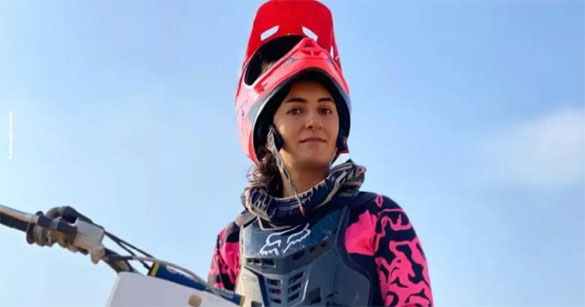
Noura Naraghi became Iran's first motocross champion after training in the U.S., then returned home despite knowing the constraints she would face
-----------
Sahar Mohammad-Hosseini races on circuits across Asia, representing Iran in international motorcycle competitions. Back home, she cannot legally ride that same motorcycle on the streets of Tehran.
The 26-year-old champion embodies a contradiction in the Islamic Republic: Iranian women are allowed to compete professionally in motorcycling events worldwide, yet they remain prohibited from obtaining motorcycle licenses in their own country.
"According to domestic and international regulations, and after reviewing athletes' records, the dispatch of the women's motorcycling champion to international competitions was examined by a special working group and approved," said Alireza Hashemizadeh, head of Iran's motorcycling delegation to recent Asia Cup competitions in Thailand.
Mohammad-Hosseini competed against riders from Thailand, India, Indonesia, Japan, South Korea, Nepal, the Philippines, and Sri Lanka in the September 12–14 championships - athletes who likely had no idea their Iranian competitor lacks basic road-riding privileges at home.
This paradox reflects Iran's complicated relationship with women's rights, where international sporting pressures have created opportunities that domestic laws still deny.
For the past 47 years, since the Islamic Revolution, Iranian women have been banned from obtaining motorcycle licenses.
Despite government promises, these restrictions remain unchanged, even as more women openly defy the ban by riding illegally in city streets.
The survival and growth of women's motorcycling in Iran stem from two forces: persistent advocacy by Iranian women and mounting international pressure on sports federations.
The International Motorcycling Federation, recognized by the International Olympic Committee (IOC) as the sole global authority for motor sports, requires member countries to organize women's competitions.
Recent IOC mandates have made women's participation in all sporting disciplines mandatory for member nations.
"Our goal is to send more female athletes to competitions, because the presence of our women in all disciplines is of special importance to the Asian Federation," Hashemizadeh told the official IRNA news agency.
Iran's Motorcycling and Automobile Federation had to allow women's competitions or risk suspension.
This international leverage has created a unique space in which Iranian women can pursue professional motorcycling careers while remaining second-class citizens on their own roads.
Mohammad-Hosseini's journey highlights the obstacles Iranian women face in pursuing their passion.
She began motorcycling in 2018 and obtained a professional certificate from Iran's federation in 2019 - valid only for racing tracks, not public roads.
Her achievements include winning national women's motor racing championships in the 250cc class, recording the best time at Tehran's Azadi track, and claiming four championship titles.
The 2023 documentary Bread, Love, 1000 Motorcycle depicted Mohammad-Hosseini's life with her husband, fellow motorcyclist Hamed Moradi.
Her success has opened possibilities for a new generation of Iranian women riders, though fundamental legal barriers remain.
Despite official prohibitions, Iranian women increasingly ride motorcycles on city streets, often without the mandatory hijab.
The visible presence of female riders has prompted officials to consider possible reform. In August, Kazem Delkhosh, vice president for parliamentary affairs, announced that a bill to change motorcycle licensing laws had been sent to parliament.
Mousa Ghazanfarabadi, vice chairman of parliament's Article 90 Commission, told Tasnim news agency the bill would "probably" pass.
Public opinion remains divided over whether this represents genuine reform or political maneuvering.
Some view the sudden policy shift as an attempt to win popular support, while others believe authorities had no choice but to yield to women's persistent demands.
Several Iranian women have earned international recognition in motorcycling despite domestic restrictions.
Behnaz Shafiei, featured in MIC magazine's 2015 list of powerful and influential women, once said, "I wish to ride motorcycles freely in the streets."
Her simple statement encapsulated the dreams of thousands of Iranian women.
Noura Naraghi became Iran's first motocross champion after training in the U.S., then returned home despite knowing the constraints she would face.
As a member of the Baha'i religious minority, she faces double persecution - for her faith and her motorcycling activities. She has been temporarily forced to abandon the sport and take up surfing instead.
Shahrzad Nazifi received an eight-year prison sentence in 2021 for "being Baha'i" and "establishing illegal groups."
Tehran's Revolutionary Court classified her motorcycling group as an illegal organization.
Mahsa Ahmadi rose to fame as a stuntwoman, winning the Crystal Award at California's Action Icon ceremony in 2015.
She performed stunts in major films, including Skyfall, but like other Iranian women, she cannot legally ride motorcycles on her homeland's streets except while working.
Restrictions on women's motorcycling date back to the early years of the Islamic Republic, when Ruhollah Khomeini banned various activities, including chess and boxing, through religious decrees.
Source: iranwire.com
https://iranwire.com/en/women/144899-iranian-women-race-abroad-banned-at-home/
------
51% Of The Population, But Bangladesh’s Islamist Parties Resist Even 5% Direct Quota For Women MPs
18 Sep 2025
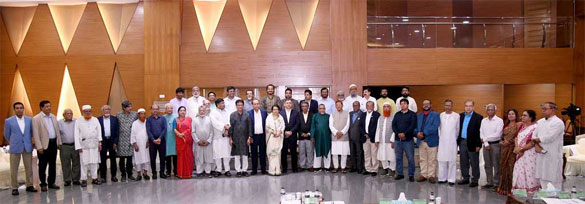
Women were notably absent on Jul 31, the final day of the second phase of talks between political parties and the National Consensus Commission.
------------
Despite women’s prominent role in Bangladesh’s pro-democracy uprising last year, efforts to improve their political representation face resistance, particularly from Islamist parties, as the country prepares for its next general election.
A final draft of the July Charter, prepared by the National Consensus Commission, proposes that political parties nominate at least 5 percent female candidates for the 300 directly elected seats in parliament.
But several Islamist parties, including Islami Andolan Bangladesh, Bangladesh Khelafat Majlis, and Nizam-e-Islami Party, have opposed even this modest quota.
The Charter’s authors had originally recommended that parties nominate at least 33 percent women candidates, aligning with long-standing demands from women’s rights groups and earlier reform commissions. But during the national dialogue, this proposal was gradually diluted, leading to deep disappointment among campaigners.
Badiul Alam Majumdar, a key member of both the Electoral Reform Commission and the Consensus Commission, admitted frustration at the outcome.
“There’s not much more we can do,” he said after talks with political parties ended in July.
While all major parties agree on increasing the number of reserved seats for women from 50 to 100, they remain divided over implementation.
The two left-leaning parties, the Communist Party of Bangladesh (CPB) and Bangladesher Samajtantrik Dal (BaSaD), want all 100 seats to be filled through direct elections, not party nominations.
Other proposals, such as a “rotating seat” system where different constituencies are reserved for women each cycle, failed to secure consensus.
The current draft keeps the 50 reserved seats in place and introduces a gradual increase in women’s participation: 5 percent women candidates in the next election; 10 percent in the following one, and a 5 percent increase in each cycle until the 33 percent target is met.
The phased approach would eventually be written into the Constitution. However, Jamaat-e-Islami, Islami Andolan, and Khelafat Majlis have voiced opposition, arguing that legally binding quotas may restrict women’s empowerment.
BNP BACKS 5%, ISLAMISTS DISSENT
The Bangladesh Nationalist Party (BNP), now the country’s main political party, has backed the 5 percent direct nomination proposal, with senior leader Salahuddin Ahmed noting: “It came from us, not any other party.”
In contrast, Islamist parties remain cautious.
“We support reserved seats but not mandatory direct nominations,” said Mia Golam Porwar, secretary general of Jamaat-e-Islami.
Gazi Ataur Rahman, spokesperson for Islami Andolan, said the 5 percent or 7 percent quotas were merely “suggestions”, adding that his party preferred a proportional representation system where women could rise through merit.
Mohammad Muntasir Ali, joint secretary general of Khelafat Majlis, argued that imposing quotas may “ultimately hinder women’s progress” and called for improved safety and enabling environments instead.
ACTIVISTS ‘FRUSTRATED’
Women’s groups have condemned the political parties’ failure to commit to stronger representation.
The Samajik Protirodh Committee, a coalition of 71 civic organisations, had called for 150 directly elected seats for women and full voting rights for all reserved positions.
Another forum, the Women’s Political Rights Forum, demanded 33 percent of all nominations go to women and that the 100 reserved seats be filled through direct elections.
Fauzia Moslem, president of the Bangladesh Mahila Parishad, said: “Women make up 51 percent of the population, yet we still don’t have fair political representation. It’s disappointing that parties refused even the 33 percent candidate quota.”
Prof Samina Luthfa Nitra of Dhaka University added, “Bangladeshi women are politically aware. They vote. There’s no justification for limiting their presence in parliament to party-nominated seats. One-third of candidates should be women and elected directly.”
Last year’s July Uprising, which led to the fall of the Awami League government, saw women play a prominent role on the frontlines of mass protests.
In its aftermath, hopes had risen that Bangladesh’s interim reform process would bring lasting change -- including genuine opportunities for women in elected politics.
But as negotiations around the July Charter reveal, symbolic inclusion remains easier to promise than deliver. And for now, it seems that the voices of women in the streets have yet to echo fully in the halls of power.
Source: bdnews24.com
https://bdnews24.com/bangladesh/e5af2f5bea69#google_vignette
------
Riyadh university launches initiative for Saudi craftswomen
September 17, 2025
RIYADH: Princess Nourah bint Abdulrahman University has launched an initiative to support and empower craftswomen across Saudi society, the Saudi Press Agency reported on Wednesday.
The scheme seeks to preserve national heritage and enhance its role in the field of handicrafts.
Held at the university’s college headquarters, the initiative focuses on empowering craftswomen through specialized educational and training programs, transforming handicrafts into sustainable economic projects, and creating new opportunities for cooperation and partnerships.
As part of the initiative, four specialized training workshops will be organized by handicrafts academies.
Each workshop will also include practical application sessions, helping participants refine their skills and produce innovative works.
The initiative establishes an interactive space for craftswomen and academics, facilitating the exchange of experiences, expertise and ideas that enrich the handicrafts sector.
A closing exhibition will showcase the pieces created during the workshops.
Source: arabnews.com
https://www.arabnews.com/node/2615709/saudi-arabia
-------
In landmark Syria elections, women still face electoral hurdles
By Marie Forestier
September 17, 2025
Syrians are about to complete a new and important step of the country’s transition after the overthrow of Bashar al-Assad’s regime last year: the formation of a transitional legislative assembly. The indirect electoral process is expected to be completed by the end of September.
The stakes are high because during their two-and-a-half-year renewable mandate set by the Constitutional Declaration adopted in March, the new parliament members will be tasked with passing laws that will shape the reconstruction and the new direction of the country. Therefore, it is crucial that all the components of the Syrian society are represented. According to the electoral framework, there will be “at least 20 percent of women” in the total of all the electoral committees. This provision has revived the discussion about the need for increased women’s inclusion in decision-making in Syria.
Under Assad, women made up only 10 to 12 percent of the members of parliament between 2007 and 2022, according to a report by the Syrian non-governmental organization (NGO), Musawa. Women’s participation was even lower at the local level, where they accounted for 2 percent of the members of local and municipal councils in 2011, reaching 11 to 12 percent in 2022, the organization found.
Since the fall of Assad, progress regarding women’s political participation has been limited. The interim government includes only one woman Minister. The Preparation Committee for the National Dialogue and the Constitutional Drafting Committee—transitional bodies tasked with completing milestones of the transition—both included two women out of seven members (30 percent). However, women accounted for approximately 20 percent to 25 percent of the participants in the National Dialogue Conference held in Damascus in February 2025, according to my conversations with organizers and participants.
Traditions and conservative social norms have hindered Syrian women’s political participation, despite their involvement in the 2011 revolution and during the war. Based on my conversations with women activists throughout Syria last spring, the requirement of joining the former governing Ba’ath Party and the fear of being associated with the corruption of the regime also deterred women from participating in politics under Assad. Therefore, the current transition offers an opportunity for women, despite the resistance of conservative parts of Syrian society and the authorities themselves.
Source: atlanticcouncil.org
https://www.atlanticcouncil.org/blogs/menasource/in-landmark-syria-elections-women-still-face-electoral-hurdles/
-------
Nearly 3,000 Executed in Iran Since Mahsa Amini’s Death, Rights Group Says
By Fidel Rahmati
September 17, 2025
Iran Human Rights reported nearly 3,000 executions since Mahsa Amini’s death, including women, protesters, and minors, describing them as tools of repression and intimidation.
The Norway-based Iran Human Rights (IHR) organization reported on Tuesday that at least 2,910 people, including 83 women, have been executed in Iran since September 2022.
The group said the wave of executions followed the death of Mahsa Amini in morality police custody and was aimed at instilling fear in society. Among those executed were 37 political and religious prisoners, 14 protesters, most linked to the “Women, Life, Freedom” movement, and four juvenile offenders.
More than half of those executed were convicted on drug-related charges, IHR said, noting that marginalized groups, including the Baluch minority, were disproportionately targeted.
Director Mahmood Amiry-Moghaddam said that although most victims were non-political prisoners, the executions served as a tool of political repression and intimidation to deter future protests.
He also urged the UN fact-finding committee to investigate Iran’s nearly 3,000 executions as crimes against humanity, pointing to widespread torture, unfair trials, and systematic use of the death penalty to silence dissent.
The report recalled that since Amini’s death, Iran has seen one of its largest protest movements in decades, with at least 551 demonstrators killed, including 68 children, and many others deliberately blinded by security forces.
It also documented the “Bloody Friday” massacre in Zahedan on September 30, 2022, when security forces opened fire on worshippers after Friday prayers, killing at least 104 people, including 14 children and four women.
Human rights advocates say the findings highlight the urgent need for greater global pressure on Tehran. They argue that raising the political cost of executions could help curb the regime’s reliance on the death penalty as a tool of repression.
Source: khaama.com
https://www.khaama.com/nearly-3000-executed-in-iran-since-mahsa-aminis-death-rights-group-says/
-------
3,000 Phulbaria women turn hogla leaf crafts into source of income
Sep 18, 2025
In the remote villages of Phulbaria upazila in Mymensingh, women are turning simple hogla leaves (elephant grass) into ray of their hope. What was once a plant growing unnoticed has now become the part of dreams.
Around 3,000 women from 25 villages are now supporting their families by crafting artistic household items from hogla leaves , earning a steady income and gaining a renewed sense of dignity.
Saleha Begum from Chandpur village said they make different types of items from hogla leaf rope supplied by local entrepreneurs and earn about Tk 7,000 a month.
Afroza Begum of Shibrampur village said she gets good financial support from the job.
Earnings vary depending on work capacity, with many workers making between Tk 10,000 and Tk 12,000 a month.
The women said they are satisfied with the income, as it allows them to work while managing their household chores.
BD Creation, a non-government organisation (NGO), stepped in in 2013 to help the women of Phulbaria become more self-reliant by producing hogla leaf products.
Golam Sarwar, operation manager of BD Creation in Mymensingh, said they also export the items to Europe.
The products include shopping baskets, kitchen baskets, flower tubs, tissue boxes, floor mats and showpieces, said Mohammad Shah Alam, proprietor of HA Handicrafts.
He said there are 400 workers under his firm who earn an average of Tk 10,000 per month.
"I serve orders worth around Tk 20 lakh per month and the sales volume is increasing," added Alam.Md Sumon Mia, proprietor of SM Handicraft, said around 200 women in Bhalukjan village are involved in the work, with numbers increasing as order volumes rise. Zaman Mia, another entrepreneur, added that the organisation provides the raw materials and engages the women to produce the items.Dr Fakir Azmal Huda, professor of agricultural economics at Bangladesh Agricultural University, said demand for handicrafts made from natural fibre is increasing both at home and abroad, which is a good sign for the promotion of the sector.
Source: thedailystar.net
https://www.thedailystar.net/news/bangladesh/news/3000-phulbaria-women-turn-hogla-leaf-crafts-source-income-3988881
--------
TNSTC cancels licenses after Muslim woman denied bus entry in Tiruchendur
September 17, 2025
The Tamil Nadu State Transport Corporation (TNSTC) has revoked the licenses of a private bus operated by VVS Tours & Travels and its conductor following an incident where a Muslim woman was denied entry in Tiruchendur district.
The burqa-clad woman, en route to Kayalpattinam in Thoothukudi district with a valid ticket, was stopped by the conductor despite other passengers being allowed to board. This sparked a heated argument, captured on video, which has since gone viral on social media.
In the footage, the woman questions the conductor’s decision, while he cites instructions from the bus owner as the reason for refusing her entry. He even provided the owner’s contact number.
The escalating dispute drew attention after the video spread widely, prompting swift action from TNSTC. The corporation condemned the discriminatory behavior and canceled the licenses of both the bus company and the conductor involved.
The incident has raised concerns about inclusivity in public transportation, with authorities emphasizing strict adherence to non-discriminatory policies. The viral video has fueled public outrage, highlighting the need for accountability in private transport services operating under state oversight. — With Agencies Inputs
Source: muslimmirror.com
https://muslimmirror.com/tnstc-cancels-licenses-after-muslim-woman-denied-bus-entry-in-tiruchendur/
-------
URL: https://newageislam.com/islam-women-feminism/iranian-women-race-ride-motorcycles/d/136887