
Islamophobia In UK Media: Fahima Mohamed Calls Out Hate And Intimidation
New Age Islam News Bureau
29 December 2025
· Islamophobia in UK media: Fahima Mohamed calls out hate and intimidation
· UN: Iran Must Stop Execution of 67-Year-Old Iranian Woman
· AISPLB seeks anti-lynching law, hijab rights, UCC review
· Afghanistan Journalists Center Report: Media and Women’s Voices Under the Blade of Taliban Censorship
· In Inez Baranay's new novel, three Muslim women meet a Turkish freedom fighter in Gandhi's India
· WFP Lays Off 41 Female Nutrition Staff in Kapisa as Afghanistan Faces Worsening Hunger Crisis
· British Muslim woman faces backlash after posting positive experience at Ben Gurion Airport
· Tajnuva Jabeen resigns from NCP, quits election race
· IAF to show second Iranian female-directed feature film
Compiled by New Age Islam News Bureau
URL: https://newageislam.com/islam-women-feminism/islamophobia-uk-media-intimidation/d/138224
-------
Islamophobia in UK media: Fahima Mohamed calls out hate and intimidation
29 December 2025
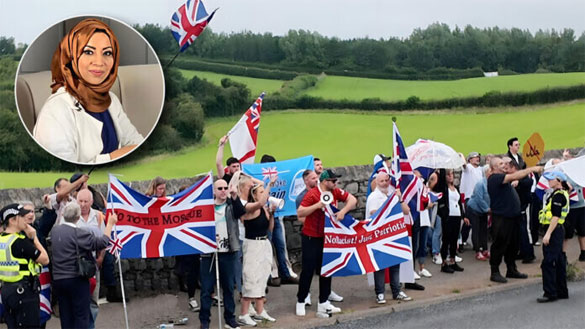
British Muslim commentator Fahima Mohamed has condemned racist and Islamophobic abuse she faced after appearing on UK media platforms. She said the hostility reflects deep problems in British society, where Muslim women are disproportionately targeted.
-------------
AhlulBayt News Agency: British Muslim commentator Fahima Mohamed has spoken out after suffering racist and Islamophobic abuse following appearances on mainstream programmes such as Good Morning Britain and GB News. She said the hatred directed at her reflects a worsening climate in the UK.
Over the past two years, Mohamed has appeared on several media platforms to discuss issues such as immigration, social cohesion, law, and public policy.
She explained that she is invited because she offers perspectives based on her lived experience as a Muslim woman, her professional work, and her knowledge of UK law. Her views, she stressed, are lawful, moderate, and within the boundaries of legitimate debate.
However, she noted that the online reaction to her recent appearances reveals a troubling reality in Britain—one that is hateful and hostile to free speech.
The intensity of abuse she receives is far greater than that directed at others, and often worse than what Muslim men face. She said the difference is clear: she is a Muslim woman, visibly wearing a hijab, speaking confidently on live television, which some find intolerable.
What begins as disagreement quickly escalates into racism and bigotry. She has repeatedly been told she “doesn’t belong here,” should “go back to a Muslim country,” and is a “threat” simply for speaking her mind.
She has been called vile names, including “f**king Muslim,” for expressing herself on TV, despite claims that Muslim women are supposedly oppressed and silenced.
After her appearances, she is heavily trolled online, bombarded with hateful private messages, and even receives threatening emails.
The abuse has escalated to the point where she contacted police after discovering her personal information was being searched online, with racist messages sent to companies she works with—accusing her falsely of being “racist and hateful.” She described this as intimidation, not debate.
Mohamed said her life in Britain began after fleeing apartheid in South Africa. She built a life over decades, worked hard, paid taxes, raised children, and lived by the law. Yet, she explained, none of this matters to those who see only a Muslim woman speaking publicly and decide she must be silenced.
She added that Muslims are constantly dragged into media debates about immigration, crime, and social failures—issues that are not the fault of Muslims or Islam.
She pointed to grooming gang scandals as an example of selective outrage, where horrific crimes committed by individuals are wrongly used to smear the entire Muslim community.
She argued that this hostility is not about protecting victims or improving policy, but about control—deciding who is allowed to speak and who is scapegoated.
Despite the hate, Mohamed vowed to continue speaking out, calling out hypocrisy and double standards, and refusing to allow hate to silence her.
She said her voice is legitimate, lawful, and relevant, and while disagreement is expected, the abuse of Muslims in media must end.
The fact that a Muslim woman speaking within the law attracts such hostility, she argued, says more about British society than about her or her faith.
She concluded that if Britain is serious about free speech and equality, it must confront Islamophobia and recognise the abuse as racism disguised as patriotism.
She stressed that racism, Islamophobia, and hate against Muslim women must never be tolerated.
Source: en.abna24.com
https://en.abna24.com/news/1767298/Islamophobia-in-UK-media-Fahima-Mohamed-calls-out-hate-and-intimidation
------
UN: Iran Must Stop Execution of 67-Year-Old Iranian Woman
DECEMBER 28, 2025
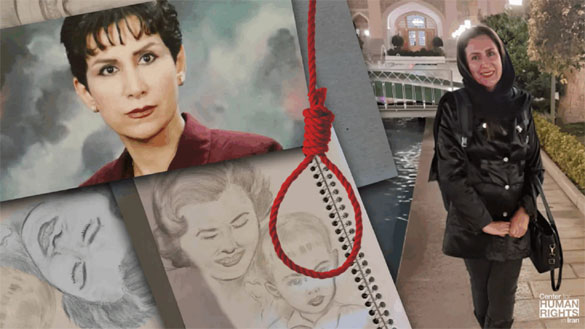
“What we see here is a mockery of justice that falls far short of the most basic international standards.”
At least 52 individuals currently facing death penalty for sham national security offences
December 28, 2025 — Top UN experts have called for the immediate halt to the execution of Zahra Shahbaz Tabari, a 67-year-old electrical engineer detained in Lakan Prison in Rasht.
Tabari was sentenced to death on October 25, 2025, by the Revolutionary Court of Rasht for baghi (armed rebellion), based on blatantly insufficient evidence and after a grossly unfair trial.
Citing the arrest at Tabari’s home without a warrant, prolonged interrogation and solitary confinement, confessions extracted under pressure, the denial of access to independent counsel, and a trial that lasted less than 10 minutes, the UN experts stated:
“The severe procedural violations in this case—including the unlawful deprivation of her liberty, the denial of effective legal representation, the extraordinarily brief trial, the lack of adequate time to prepare a defence, and the use of evidence that appears insufficient to support a charge of baghi—render any resulting conviction unsafe.”
The UN experts added:
“Ms. Tabari’s case shows a pattern of serious violations of international human rights law regarding fair trial guarantees and the inappropriate use of capital punishment for broad and ill-defined national security offences.
The UN noted that Tabari’s case represents one of at least 52 individuals currently facing the death penalty for broadly applied national security offences, including baghi, moharebeh (waging war against God), corruption on earth, and espionage.
Other women political prisoners have also faced execution for baghi, including the Iranian activist Pakhshan Azizi.
The use of the death penalty in the Islamic Republic has surged to levels not seen in many years, and includes the increased use of the death penalty in political cases as a tool to silence dissent and intimidate the population. More individuals are executed in Iran on a per capita basis than in any other country in the world.
The Islamic Republic’s application of the death penalty violates every single international standard and law on the use of capital punishment. It is applied after grossly unfair trials in which due process had been blatantly denied, it is used on a mass scale for political offenses, religious charges, and drug crimes that are forbidden under international law, and it is carried out disproportionally against members of minority groups and against juvenile offenders.
Read the full UN press statement below:
UN experts urge Iran to halt execution of a 67-year-old Iranian woman
23 December 2025
GENEVA – Iran must immediately stop the execution of Zahra Shahbaz Tabari, a 67-year-old electrical engineer detained in Lakan Prison in Rasht, UN experts* said today.
“Ms. Tabari’s case shows a pattern of serious violations of international human rights law regarding fair trial guarantees and the inappropriate use of capital punishment for broad and ill-defined national security offences,” the experts said.
Tabari was sentenced to death on 25 October 2025 by the Revolutionary Court of Rasht for baghi (armed rebellion against the foundations of the Islamic Republic of Iran) based on two pieces of evidence: a piece of cloth bearing the slogan ‘Woman, Resistance, Freedom’—a popular slogan from the 2022 protests—and an unpublished audio message. Authorities alleged she planned to install the cloth as a public banner to challenge the State.
Tabari was arrested during a raid on her home without a judicial warrant. She was interrogated for a month while held in solitary confinement and pressured to confess to taking up arms against the State and to membership in an opposition group. The trial, conducted via video conference, lasted less than 10 minutes.
The experts said Tabari had been denied access to a lawyer of her choosing and was represented by a court-appointed lawyer. The death sentence was issued immediately following the brief hearing.
“The severe procedural violations in this case—including the unlawful deprivation of her liberty, the denial of effective legal representation, the extraordinarily brief trial, the lack of adequate time to prepare a defence, and the use of evidence that appears insufficient to support a charge of baghi—render any resulting conviction unsafe,” the experts said.
The International Covenant on Civil and Political Rights, ratified by Iran in 1975, restricts the death penalty to ‘most serious crimes’, interpreted as intentional killing.
“This case involves no intentional killing and contains numerous procedural violations. To execute Tabari under these circumstances would constitute arbitrary execution,” the experts warned. “Criminalising women’s activism for gender equality and treating such expression as evidence of armed rebellion constitutes a grave form of gender discrimination,” they added.
“The debate around capital punishment has evolved to whether the death penalty per se constitutes a violation of international human rights law. But the way Iran’s judiciary sentences people to death is far removed from such legal discourse,” the experts said.
“What we see here is a mockery of justice that falls far short of the most basic international standards.”
“When a State exercises its power to take away life, it must meet corresponding obligations to rigorously follow due process guarantees, ensure complete transparency, and limit the scope of application to cases involving intentional killing” they said.
Tabari’s case represents one of at least 52 individuals currently facing the death penalty for broadly applied national security offences, including baghi, moharebeh (waging war against God), corruption on earth, and espionage.
Other women political prisoners have also faced execution for baghi. Some of these death sentences have been overturned, but Iranian activist Pakhshan Azizi is currently facing the death penalty for baghi.
“Iran’s systematic use of the death penalty for vaguely defined national security offences represents a serious departure from its international legal obligations,” the experts said.
The experts are in contact with Iranian authorities seeking immediate intervention to prevent this arbitrary execution.
Source: iranhumanrights.org
https://iranhumanrights.org/2025/12/un-iran-must-stop-execution-of-67-year-old-iranian-woman/
-------
AISPLB seeks anti-lynching law, hijab rights, UCC review
Dec 28, 2025
The All-India Shia Personal Law Board (AISPLB) on Sunday placed a series of demands before the government, including strict laws against mob lynching, a review of the proposed Uniform Civil Code (UCC), action against alleged corruption in Shia Waqf bodies, and protection of the constitutional right of Muslim women to wear hijab for educational purposes.
The demands were raised at the board’s annual convention held at the Asafi Imambara in Lucknow on Sunday.
Addressing the gathering, AISPLB general secretary Maulana Yasoob Abbas quoted Khutba number 46 of Nahj al-Balagha, citing Imam Ali: “The day people abandon the fight for their rights, injustice will begin to prevail upon them.” He said the community must continue to assert its rights and place its demands before the government.
Among the key resolutions adopted was a call for the Indian government to exert pressure on Saudi Arabia for the reconstruction of the shrine of Prophet Muhammad’s daughter at Jannatul Baqi, which remains in ruins.
The convention also demanded the enactment of strict laws to curb mob lynching, the formation of a committee on the lines of the Sachar Committee to assess the socio-economic condition of the Shia community, and separate reservations to enable targeted welfare and employment schemes.
Participants sought a reconsideration of the proposed UCC and called for a thorough investigation into alleged corruption and illegal sale of valuable properties belonging to Shia Waqf boards, particularly the Uttar Pradesh Shia Central Waqf Board. They demanded strict action against those responsible and a special law for the protection and maintenance of Waqf properties.
The convention further expressed concern over alleged corruption in the Husainabad and Allied Trust in Lucknow and the deteriorating condition of historic buildings under its control, calling for immediate remedial measures. It also asserted that the right of Muslim women to wear the hijab for educational purposes is guaranteed under the Constitution and should be fully implemented without obstruction.
The convention was presided over by AISPLB national president Maulana Saim Mehdi, who thanked clerics, intellectuals and representatives of community organisations for their participation and emphasised the relevance of the board, particularly for the youth.
Source: hindustantimes.com
https://www.hindustantimes.com/cities/lucknow-news/aisplb-seeks-anti-lynching-law-hijab-rights-ucc-review-101766932893811.html
-------
Afghanistan Journalists Center Report: Media and Women’s Voices Under the Blade of Taliban Censorship
DECEMBER 29, 2025
Amin Kawa
The Afghanistan Journalists Center (AFJC) said in its annual report that the Taliban have imposed severe restrictions on the activities of women in the media. The report’s findings show that the Taliban are using all their power to suppress the individual and social freedoms of the People of Afghanistan and, by restricting independent media, threatening and detaining journalists, and controlling public access to information, are rapidly constructing their own narrative and promoting a single-voice policy. The report states that in 2025, through censorship, inspections of media outlets, and the broadcast of forced confessions by journalists, the Taliban expanded an atmosphere of suffocation and fear across society. According to the report, the country’s media environment has effectively been stripped of pluralism and dissenting voices, and media outlets have not only lost their professional independence but have also been compelled to broadcast information approved or produced by the Taliban. The report adds that in 2025, at least 205 cases of violations against media and journalists were recorded.
The report further states that in 2025, the country’s media landscape was effectively emptied of pluralism and critical voices, and media outlets not only lost their professional independence but were also required to publish only information and narratives approved or produced by the Taliban. According to the organization, this situation has turned the single-voice policy into the dominant narrative in Afghanistan.
Concentration of Power and Weakening Of Formal Institutions
AFJC said that, unlike 2024, when signs of internal disagreement within the Taliban regime over how to deal with the media were visible, the 2025 report shows that these rifts have at least apparently diminished.
The report states that the “hard core of power” led by Kandahar has intensified the crackdown on the media. The findings indicate that the Taliban’s General Directorate of Intelligence and the Ministry for the Propagation of Virtue and Prevention of Vice, operating without a clear legal framework and with broad autonomy, have played the primary role in imposing restrictions on the media. According to the Afghanistan Journalists Center, this process has severely weakened the position of the Taliban’s Ministry of Information and Culture as the formal institution responsible for media affairs.
Suspended Law, Active Directives
According to the report, the “Mass Media Law” has effectively been suspended and, except in limited cases such as issuing or renewing media licenses and tax-related matters, has not been implemented. In contrast, restrictive directives that lack transparency and a legal framework have become the main basis for decision-making regarding media outlets and journalists. The report says journalists who ignored these directives or the Taliban’s Law for the Propagation of Virtue and Prevention of Vice faced threats, detention, and imprisonment, and media outlets that defied these orders were subjected to suspension or closure.
Statistics of Media Rights Violations
The Afghanistan Journalists Center reported that the Media Freedom Tracker recorded at least 205 cases of violations against media and journalists in 2025, an increase of about 13 percent compared to 2024. These cases include the killing of two journalists, the wounding of three others, 166 cases of threats, and 34 arrests of journalists. By the end of 2025, at least five journalists were still being held in Pul-e Charkhi Prison in Kabul and Bagram, and dozens of other journalists who had left the country were living in an uncertain situation in neighboring and regional countries.
Restrictions Imposed on the Media by The Taliban
The Afghanistan Journalists Center said the Taliban have imposed extensive bans on domestic media outlets and journalists. According to the report, women’s activities in state media have been banned, and media outlets have also been prohibited from covering demonstrations and civil protests.
Restrictions include limiting access to information, banning the publication of news, reports, and content production, banning the broadcast of music, prohibiting the presence of women in television dramas, banning the broadcast of films and serials, forcing women working in media to cover their faces, segregating women and men in media workplaces and banning interviews between them, restricting interviews with opponents and critics of the Taliban, banning the broadcast of international television channels in Afghanistan, and limiting the publication of commercial advertisements with political, security, and social content.
The report also mentions other restrictions, including a ban on criticizing the Taliban regime, a ban on photographing living beings, prohibition of working with or cooperating with exiled media outlets, banning the broadcast of women’s voices in media in some provinces, requiring media outlets to avoid using terms the Taliban describe as “foreign,” and obliging journalists and media to refer to the Taliban as the “Islamic Emirate and the government of Afghanistan.”
Image ban and closure of television stations
The Afghanistan Journalists Center reported that one of the most prominent restrictions in 2025 was the ban on images of living beings and on visual interviews with local Taliban officials. According to the report, this ban, which in 2024 was enforced in only six provinces, was expanded in 2025 to 17 additional provinces, covering a total of 23 provinces. The report says the consequence of this decision was the closure of or transformation of at least 21 local television stations into radio outlets. In addition, five other media outlets were shut down on charges of defying directives and attempting independent reporting.
Economic Pressure, the Final Blow to the Media
The report states that alongside the intensification of restrictions, media financial resources have sharply declined. A significant reduction in international aid and advertising revenue forced major media outlets to cut program production and reduce staff, and pushed smaller outlets to the brink of closure. According to the report, some of these media outlets continue operating only intermittently when they receive commercial advertisements.
Women, the First Victims
The report says women journalists have suffered the greatest harm from these policies, ranging from bans on working in state media to restrictions on appearing in programs, prohibitions on covering certain topics, forced face covering, and their complete removal from some media formats. These restrictions have systematically limited and erased women’s presence in public and media spaces.
Ban on Cooperation with Exiled Media
The report states that the Taliban have banned work and cooperation with exiled media outlets, including the Hasht-e Subh Daily, and ordered that any interaction with these outlets be avoided. The findings of the Afghanistan Journalists Center show that a large portion of the charges against journalists detained after the fall of the previous government, as well as against some media outlets that were shut down and had their activities halted, were related to cooperation with exiled media.
The Taliban Propaganda Machine
The report also reveals the establishment of an overt and covert propaganda system by the Taliban. Alongside official media such as national radio and television and the Bakhtar News Agency, networks of “virtual fighters” have become active on WhatsApp and other social media platforms, which, according to the report, are managed by intelligence. The role of these networks is described as promoting Taliban narratives and suppressing critical voices online.
Media outlets of the Taliban intelligence directorate
In its annual report, the Afghanistan Journalists Center said the Taliban’s General Directorate of Intelligence has established several media outlets, including radio, news websites, and online publications, to suppress opposing voices. The report says Radio Hurriyat, the publication Mithaq, the website Hindukush, and the website Al-Mersad are among the media outlets managed by Taliban intelligence to promote the group’s narrative and weaken opposing narratives. According to the report, these outlets operate in Pashto, Persian, Arabic, and English, and some produce content in nine languages and maintain an active presence on social media.
The report states that although Radio Hurriyat has not been officially approved, it was launched by the General Directorate of Intelligence in 2022 and focuses on domestic and regional security news and Taliban achievements. According to the report, Hurriyat produces multimedia content in Pashto, Persian, Arabic, and English and is active on social media platforms including X, Facebook, Instagram, Telegram, and YouTube.
The Center said Mithaq is active on YouTube and X and has recently focused more on improving Afghanistan’s security situation and on issues and challenges related to Pakistan. The report also states that the Hindukush website mainly focuses on domestic political opposition, civil activists, and even independent journalists, and produces and publishes media content in Pashto, Persian, and English.
The report specifies that the Al-Mersad website, focusing on defending the structure and policies of the Taliban regime, works on issues related to jihadist groups, especially ISIS. In recent months, this outlet has also focused on Pakistan’s role and policies in the region. Al-Mersad publishes its media content in nine languages, including Pashto, Persian, English, Turkish, Uzbek, Russian, Bengali, Urdu, and Maldivian, and is also active on social media.
The Media Activists Network of the Taliban Intelligence Directorate
The report says this network is mainly active on WhatsApp and has provincial groups in each province, with each group consisting of five to ten members. According to the report, members are selected from local government employees, especially young people and media activists supportive of the Taliban, and receive a specified amount for internet costs and a monthly salary. The report adds that the purpose of these groups is to direct the propaganda activities of the intelligence directorate, share content produced by intelligence, and determine relevant hashtags.
In addition, the report says “fighter” groups have been created by Taliban intelligence in each province, with each group having about 20 members. According to the report, these individuals are tasked with creating WhatsApp groups and anonymous social media accounts, publishing assigned media content, and resharing designated hashtags. Members of these groups receive up to 10,000 afghanis per month as salary and between 500 and 800 afghanis for internet expenses.
The Covert Campaign of the Taliban Ministry For The Propagation Of Virtue And Prevention Of Vice
The report also states that the Taliban Ministry for the Propagation of Virtue and Prevention of Vice runs a covert campaign. According to the report, in addition to enforcing the ban on publishing images of living beings and seeking to expand it, the ministry produces media content, especially visual material, and distributes it through some pro-Taliban media activists and popular online figures.
The Afghanistan Journalists Center emphasized that this situation has raised deep concerns about violations of the fundamental rights of journalists and media outlets and the restriction of basic freedoms in the country, and has posed serious threats to the future of media development and freedom of expression in Afghanistan.
Source: 8am.media
https://8am.media/eng/afghanistan-journalists-center-report-media-and-womens-voices-under-the-blade-of-taliban-censorship/
-------
In Inez Baranay's new novel, three Muslim women meet a Turkish freedom fighter in Gandhi's India
28 Dec 2025
Somak Ghoshal
In 1935, Halide Edib, who had fought alongside Mustafa Kemal Ataturk for the emancipation of Turkey from the Ottoman Empire in the 1920s, visited India to deliver a series of lectures. Her host, M.A. Ansari, was a prominent nationalist, follower and physician to M.K. Gandhi, and a progressive Muslim leader.
Edib spent several weeks in Delhi at Ansari’s residence, met the Who’s Who of polite society, as well as students at Jamia, before travelling to over half a dozen other Indian cities. She wrote a memoir of her time in the country, especially her impression of the days she spent with Gandhi, which was included in a volume paying tribute to the latter, after he was assassinated in 1948.
Based on this material, Inez Baranay’s latest novel, Soul Climate, recreates Edib’s experience of India. At once a work of deep research, imagination and deft storytelling, Baranay intersperses her chapters with her critique of Indian history, especially the persistence of communal politics of the 1930s into the present day.
While the factual scaffolding of the novel is based on papers accessed from online and archival sources, the imaginative retelling of Edib’s experiences is built around the lives of three young Muslim women, cousins by relation, who are grappling with personal and political questions in colonial India.
More than a decade away from Independence, Zoya, Aisha and Nuran are in thrall of their beloved Aunty Toy, who had been to jail due to her active role in Gandhi’s pacifist movement. They are educated and refined, brought up with the best values of the East and West.
Aisha and Nuran dazzle their interlocutors at Parisian salons with their gorgeous saris and polished repartee. Zoya, in contrast, is more introverted, entangled in her personal demons and estrangement from her mother. She finds solace in Ramana Maharishi’s ashram “in the south” of India, discovers a meditative calm there that leads her to a path that is strikingly different from Aisha’s desire to be a firebrand lawyer or Nuran’s dream of marriage to Sajjad, the man she loves.
Baranay’s limpid narrative weaves the destinies of these young women with Edib’s visit. The pages are rich with ideas of identity and nationalism, contrasting the paths adopted by Ataturk, who christened himself the father of modern Turkey, and Gandhi, who was crowned their great patriarch by Indians.
Baranay, who is Australian by citizenship, spent several years in India, scoured through books, papers and media reports in libraries and archives, and delved deeply into Edib’s writings, fiction as well as non-fiction, to create a composite portrait of a turbulent era. What gives her novel urgency is her frequent return to the present, connecting its political and social troubles with the legacies of caste and orthodox religiosity lingering from pre-Independence times.
Soul Climate, which borrows its title from Hadib’s description of her feeling for India, is bold in its attempt to mix biography and memoir with fiction, though the coexistence of all three genres isn’t always seamless. At times, Baranay tends to indulge the metafictional aspect overmuch, the lack of punctuations in her writing makes the syntax of her sentences knotty and, towards the end, she gets caught up in summarizing Edib’s memoirs rather than tying up her semi-fictional threads together.
Despite these niggles, the novel opens a fascinating window onto a period of India’s history when old and new cultures were melding to create a uniquely cosmopolitan national character.
Source: livemint.com
https://www.livemint.com/mint-lounge/art-and-culture/india-turkey-gandhi-halide-edib-inez-baranay-soul-climate-11766815709446.html
------
WFP Lays Off 41 Female Nutrition Staff in Kapisa as Afghanistan Faces Worsening Hunger Crisis
By Fidel Rahmati
December 29, 2025
The World Food Programme has laid off 41 nutrition staff in Kapisa, Afghanistan, amid alarming malnutrition rates and critical funding shortages threatening children and mothers.
The layoffs affect 41 female health and nutrition staff, sources say, citing severe budget shortfalls that forced the WFP to cut personnel in Kapisa province. Staff members expressed concern that the reduction comes at a critical time when malnutrition cases are rising sharply.
Local sources report that the dismissals have left communities vulnerable, as essential services for mothers and children are now limited or unavailable. One staff member stated that: “They fired everyone. They said there is no budget.”
According to a recent UN report, approximately 75 percent of Afghanistan’s population remains unemployed, leaving millions struggling to secure basic livelihoods amid ongoing economic and political crises.
The same report indicates that nearly 90 percent of Afghanistan households live below the poverty line, highlighting the urgent need for humanitarian assistance and sustainable development interventions.
United Nations humanitarian agencies have repeatedly warned of funding shortfalls in Afghanistan this year. The Integrated Food Security Phase Classification (IPC) predicts that 17.4 million people will face severe food insecurity during the coming winter.
UNICEF reports that 3.7 million children in Afghanistan are suffering from acute malnutrition. The agency aims to treat 1.3 million children facing moderate to severe malnutrition but is constrained by a lack of resources.
WFP officials have emphasized that nutrition and food insecurity are rapidly worsening in Afghanistan, particularly in provinces like Kapisa, where access to healthcare and food aid is limited. The layoffs could further hinder emergency response capabilities.
International observers note that donor fatigue and political instability have exacerbated funding challenges for humanitarian agencies in Afghanistan, making the crisis increasingly difficult to manage.
Reports warn that without immediate financial support, malnutrition rates could rise dramatically, endangering thousands of children and mothers across Afghanistan.
Source: khaama.com
https://www.khaama.com/wfp-lays-off-41-nutrition-staff-in-kapisa-as-afghanistan-faces-worsening-hunger-crisis/
-------
British Muslim woman faces backlash after posting positive experience at Ben Gurion Airport
By SHIR PERETS
DECEMBER 29, 2025
A British Muslim woman faced criticism and backlash after sharing her experience going through Ben-Gurion Airport security on TikTok on her way to visit the al-Aqsa Mosque earlier this month.
“The stories kind of put me off, but I'm here to share my story of immigration and security,” the woman, who goes by the username Sanam, said, adding that she hoped her positive experience would motivate others to visit.
“They gave me a coffee, they gave me a cheese sandwich… we weren't strip-searched or anything like that, it was all good.”
Many of the comments were shaming her for “promoting” the Israeli airport, asking, “How much did they pay you?” and criticising her for speaking positively of the state.
There was also an influx of comments from Israelis and Jews welcoming her to Israel and thanking her for sharing her story.
“Thank you for sharing this,” one user wrote. “I hope for better times and peace for all.”
'One city, three religions'
In another video, Sanam filmed herself outside the al-Aqsa Mosque and said she could hear Church bells “like Erdington High Street.”
“One city, three religions,” she wrote. However, when Israelis commented praising the country’s security and freedom of religion, she responded mockingly, laughing at them and correcting those writing “Israel" to “Palestine.”
Source: jpost.com
https://www.jpost.com/israel-news/article-881646
-------
Tajnuva Jabeen resigns from NCP, quits election race
Dec 28, 2025
National Citizen Party (NCP) Joint Convener Tajnuva Jabeen has resigned from her post and withdrawn from the upcoming 13th national parliamentary election, citing deep frustration over the party's policy-making process and its ongoing move to forge an alliance with Jamaat-e-Islami.
She made the announcement today at 12:45pm in a lengthy post on her verified Facebook account.
The resignation came just moments before the deadline for submitting nomination papers. In a heartfelt declaration, she wrote, "I have resigned from NCP today. With a deeply broken heart, I must say that I cannot take part in the upcoming national election."
She accused the party of prioritising "political strategy" over ideology and alleged a growing culture of "betrayal of trust".
Addressing supporters who had contributed to her campaign fund, Tajnuva pledged full refunds, saying, "I will return your donations one by one. Every single penny will be refunded."
Despite parting ways with the party, she made it clear that her fight for democratic change would continue.
"My voice and work for democratic transformation in this country will grow stronger and carry on with greater force," she added.
Source: thedailystar.net
https://www.thedailystar.net/news/bangladesh/politics/news/tajnuva-jabeen-resigns-ncp-quits-election-race-4067746
----
IAF to show second Iranian female-directed feature film
December 28, 2025
The 90-minute film is scheduled to be screened at the Nasseri Hall of the IAF at 5 p.m. and will be followed by a review session in the presence of the movie critic Shahram Ashraf Abyaneh, Mehr reported.
The second feature film made by a female director in Iran, “The Sealed Soil” traces the passive revolt of a young girl who resists to forced marriage, a transformation that can be seen as a metaphor for Iran's transition from tradition to modernity.
In pre-revolution Iran, a village girl's rejection of marriage leads her family to believe she's possessed, prompting them to consult an exorcist.
The film was shot without sound. Nabili later added dubbing and sound effects. “The Sealed Soil” met with international critical acclaim, notably winning an award at the London Film Festival in 1977.
The earliest surviving Iranian film directed by a woman, Nabili’s astonishing debut is a deftly observant and sensually attuned work that conjures the everyday plight of the female subject under the stifling patriarchy of village life in southwestern Iran.
The film follows Roo-Bekheir, a woman living in a remote village of Ghalleh Noo-Asgar, who must prepare to move to accommodate a state-ordered construction project. We watch as she goes about her everyday routine, a life structured as much by repetitiveness as by social repression.
Evoking Akerman and Bresson through its uncompromising rigor, yet marked by its own brand of low-key sensuality, “The Sealed Soil” is shot through with criticality and an attentiveness to the inner world of a woman rebelling, in her way, against stifling patriarchy, as she is caught between the traditional values of her small village and her own yearnings for independence and individuality.
Breathtaking in its directorial sophistication and restraint and unblinking in its critique of institutionalized misogyny, this too-long-underseen masterstroke of world cinema stands alongside Chantal Akerman’s “Jeanne Dielman” both in its formal rigor and its quietly radical vision of female rebellion.
Born in Iran in 1941, Marva Nabili studied painting at the University of Decorative Arts in Tehran, where she met filmmaker Fereydoun Rahnama. She later starred in his film “Siavash at Persepolis,” which won the Jean Epstein Award at the Locarno Film Festival. Encouraged by Rahnama, Nabili moved to London and later New York City, studying filmmaking at City University of New York and Goddard College.
Her debut feature film “The Sealed Soil” was named Outstanding Film of the Year at the London Film Festival, and Nabili received the Best New Director Award at Mostra Internazionale del Film d’Autore, Sanremo. Her film “Nightsongs,” which chronicles the lives of a Chinese immigrant family living in New York City, was one of the first screenplays developed through Robert Redford’s Sundance Institute and was later produced by the PBS series American Playhouse.
Source: tehrantimes.com
https://www.tehrantimes.com/news/522195/IAF-to-show-second-Iranian-female-directed-feature-film
--------
URL: https://newageislam.com/islam-women-feminism/islamophobia-uk-media-intimidation/d/138224