
Sadiya Azhar, Masood Azhar’s Sister To Lead Jaish-e-Mohammed's First Women’s Wing , Jamaat-ul-Mominaat, in Pakistan
New Age Islam News Bureau
09 October 2025
· Sadiya Azhar, Masood Azhar’s Sister To Lead Jaish-e-Mohammed's First Women’s Wing , Jamaat-ul-Mominaat, in Pakistan
· Italy’s Ruling Party Seeks Ban On Wearing Of Muslim Burqa, Niqab In Public Spaces
· Iranian Kickboxing Champion, Niloufar Hajian, Released From Prison on Bail
· Rights Activist, Behrouz Asadi, Urges German Mayor to Condemn Persecution of Baha’is in Isfahan
· Hijab, Daily Prayers: How Jaish-e-Mohammed Is Using Religion To Lure Indian Muslim Women
· People’s Tribunal For Afghanistan’s Women Begins In Spain
· Social Shaping In The Classroom: Regulations Of Islamic Headscarves In The Schools Of Germany, Turkey, And India
Compiled by New Age Islam News Bureau
------
Sadiya Azhar, Masood Azhar’s Sister To Lead Jaish-e-Mohammed's First Women’s Wing , Jamaat-ul-Mominaat, in Pakistan
By HT News Desk
Oct 09, 2025
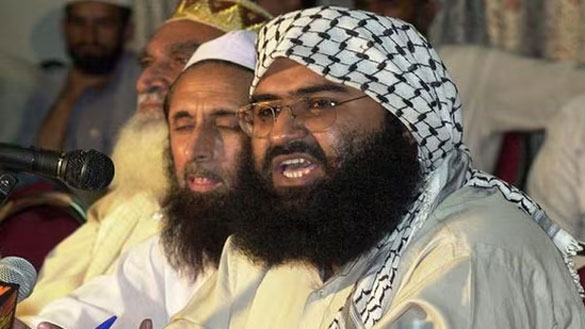
The move was revealed through a letter issued in the name of JeM chief and UN-designated terrorist Maulana Masood Azhar. (File)
------------
According to the letter shared by JeM’s propaganda outlet Al-Qalam Media, Jamaat-ul-Mominaat will function as the women’s brigade of the outfit.
WION, citing unnamed sources, reported that the wing will be led by Sadiya Azhar, the sister of Masood Azhar, whose husband Yusuf Azhar was killed during Operation Sindoor on May 7 when Indian forces targeted JeM’s Markaz Subhanallah base.
Recruitment drives are reportedly focusing on the wives of JeM commanders and economically vulnerable women studying at the group’s centres in Bahawalpur, Karachi, Muzaffarabad, Kotli, Haripur, and Mansehra.
Notably, the Indian military had targeted JeM's headquarters in Bahawalpur, southern Punjab, during Operation Sindoor. Following the strike, JeM commander Ilyas Kashmiri claimed in a video released last month that several members of Masood Azhar’s family were killed in the attack.
Traditionally, JeM, a Deobandi-rooted terror organisation, had barred women from joining armed jihad or participating in combat roles. However, after the Pahalgam terror attack and Operation Sindoor, the group appears to have revised its policy.
Intelligence inputs indicate that Masood Azhar and his brother Talha al-Saif jointly approved the inclusion of women in JeM’s operational structure, paving the way for this new female brigade.
Similar women's wings
While groups such as Islamic State or ISIS, Boko Haram, Hamas, and LTTE have a history of deploying female suicide bombers, organisations such as JeM, Lashkar-e-Taiba (LeT), and Hizbul Mujahideen (HM) had largely avoided this approach.
Post-Operation Sindoor, terror organisations, including JeM, HM, and LeT, have reportedly shifted base to Pakistan’s Khyber Pakhtunkhwa (KPK) province. In a desperate bid to rebuild their destroyed infrastructure, Pakistan-based handlers are reportedly seeking public donations.
https://www.hindustantimes.com/world-news/jaishemohammed-in-pak-forms-women-s-wing-led-by-masood-azhar-s-sister-her-husband-was-killed-in-operation-sindoor-101760000490358.html
-----
Italy’s Ruling Party Seeks Ban On Wearing Of Muslim Burqa, Niqab In Public Spaces
09.10.2025
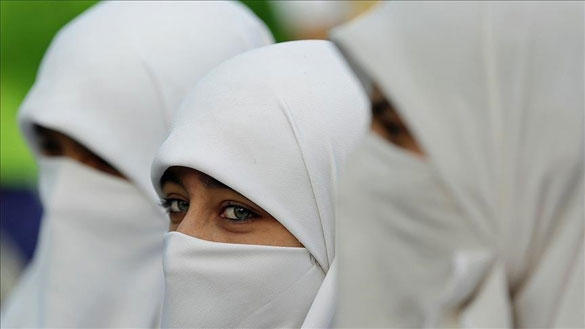
Italy's ruling Brothers of Italy party has announced plans to introduce a bill banning Muslim women from wearing the burqa and niqab in public spaces, labeling it a move against “Islamic separatism,” Politico reported Wednesday.
“Religious freedom is sacred, but it must be exercised in the open, in full respect of our constitution and the principles of the Italian state,” lawmaker Andrea Delmastro, one of the bill's initiators, said in a Facebook post Wednesday.
The burqa is a full-body garment covering a woman from head to toe and includes a mesh screen over the eyes. A niqab leaves the area around the eyes clear.
The ban would prohibit such garments in public spaces like shops, schools and offices, with fines ranging from €300 to €3,000 ($349 to $3,491) for violations.
The proposal is part of a broader bill addressing what the right-wing party of Prime Minister Giorgia Meloni has called “separatism.”
“It is a bill focused on regulating mosque funding and banning the full-face veil. It also targets forced marriages and requires religious groups not recognized by the state to disclose foreign funding,” said Sara Kelany, head of immigration for Brothers of Italy, at a news conference.
Source: aa.com.tr
https://www.aa.com.tr/en/europe/italy-s-ruling-party-seeks-ban-on-wearing-of-muslim-burqa-niqab-in-public-spaces/3711924
-----
Iranian Kickboxing Champion, Niloufar Hajian, Released From Prison on Bail
OCTOBER 8, 2025
An Iranian kickboxing champion and women's rights activist has been released from prison on bail.
Niloufar Hajian, a kickboxing champion, referee, and official coach, was freed from detention. She also competes in Muay Thai and jiu-jitsu.
Hajian was arrested on August 2, and her family was unaware of her whereabouts for some time after her detention.
No information was immediately available about the charges against her.
According to those close to her, Hajian returned to Iran after living abroad to take part in civil activities promoting women’s independence.
She had used posts on her Instagram page to remind Iranians of women’s citizenship rights.
Source: iranwire.com
https://iranwire.com/en/women/145408-iranian-kickboxing-champion-released-from-prison-on-bail/
------
Rights Activist, Behrouz Asadi, Urges German Mayor to Condemn Persecution of Baha’is in Isfahan
OCTOBER 8, 2025
A human rights activist in Germany has called on the mayor of Freiburg to publicly condemn the persecution of Baha’is and political prisoners in the city’s Iranian sister city, Isfahan.
Behrouz Asadi wrote to Martin Werner Walter Horn urging him to take a clear public position against the repression of Isfahan citizens and demand the release of all political prisoners and dissidents, according to a copy of the letter obtained by IranWire.
Freiburg and Isfahan have been sister cities since 2000.
“Partnership between cities should not become a tool for legitimizing a repressive regime, but should serve the people of both cities,” Asadi wrote.
He added, “Cultural exchange is honest and constructive when it is based on freedom, respect and human dignity.”
An appeals court in Isfahan upheld sentences against 10 Baha’i women totalling 90 years in prison.
Branch 47 of the Isfahan Provincial Appeals Court, headed by Firouz Ravanmehr and Ali Diani, confirmed the sentences this week.
The women were convicted of “propaganda against the Islamic Republic, conducting educational activities contrary to Islamic principles through promoting Baha’i beliefs among Muslims, and cooperating with hostile groups against the Islamic Republic.”
The court also banned the women from leaving the country for two years and from using social media for two years.
Asadi said in his letter that human rights violations in Isfahan have been reported repeatedly, but Freiburg officials have taken no position.
He also mentioned the continued imprisonment of Mahmoud Mehrabi, a political prisoner.
Freiburg is located in Baden-Württemberg state in southwestern Germany and borders France and Switzerland.
A street in Freiburg is named Isfahan to mark the sister-city relationship.
Asadi said previous letters to Freiburg officials went unanswered while Iran’s government exploits the partnership to advance its interests and project international legitimacy.
“We consider it our responsibility to draw attention to serious human rights violations in Iran, especially in your sister city of Isfahan,” he wrote.
Source: iranwire.com
https://iranwire.com/en/news/145416-rights-activist-urges-german-mayor-to-condemn-persecution-of-bahais-in-isfahan/
-------
Hijab, Daily Prayers: How Jaish-e-Mohammed Is Using Religion To Lure Indian Muslim Women
Oct 9, 2025
A new strategy deployed by the Pakistani terrorist organisation Jaish-e-Mohammed, targeting educated Muslim women across the border through emotive and religious appeals, has come to light, Indian intelligence agencies have learned.
Recently surfaced Urdu propaganda material uses pictures of Mecca and Medina, Quranic verses, and emotional appeals to motivate women.
In one of the images accessed by India Today TV, Jama’atul-Muminat’s clarion call to serve the faith through "daily prayers and charity" and "hijab" is actually meant to brainwash women and recruit them into the terror network.
Active since 2004, the organisation has been targeting unsuspecting women in Jammu and Kashmir, Uttar Pradesh, and South India, according to intelligence inputs.
The organisation operates in small groups through WhatsApp, Telegram, and madrasa networks. Evidence of a Pakistan connection has also been found.
How Are Women Being Brainwashed?
These groups use religious and emotive appeals as a hook to draw in educated Muslim women. Digital propaganda is being run, especially in urban areas. Objective: “Psychological warfare” – influencing minds to facilitate recruitment.
Religious terminologies such as “service of the faith,” “Ikhlas,” and “Nizam-e-Shariat,” along with emotional appeals like “This system is given by Allah” and “This light will spread across the world,” are being used to lure these women. The organisation’s activities are presented as “blessing,” “mercy,” and “protection.”
During Operation Sindoor, Indian strikes wiped out at least nine major terrorist hubs belonging to Jaish-e-Mohammed (JeM) and Hizbul Mujahideen (HM) in Pakistan-occupied Kashmir (PoK) and the Punjab province.
Ever since the attack, India Today TV has learnt that these terror outfits, with renewed funding, are surreptitiously shifting their bases to the rugged terrain along the Pakistan-Afghanistan border in a bid to evade Indian precision strikes in the future.
Despite the new terror camps’ considerable distance from the border and the Line of Control (LoC), Indian Army sources told India Today TV that they are never far enough and cannot escape retaliation if the need arises.
Last week, Indian Army chief Gen Upendra Dwivedi warned that Islamabad would be erased from the world map if it continued to back state-sponsored terrorism.
Source: indiatoday.in
https://www.indiatoday.in/india/story/jaish-e-mohammed-new-terror-outreach-using-religion-to-lure-indian-muslim-women-2800343-2025-10-09
-------
People’s Tribunal for Afghanistan’s Women Begins in Spain
October 9, 2025
A hearing into the Taliban’s treatment of women in Afghanistan opened on Wednesday in the Spanish capital, seeking to amplify the voices of victims and hold the group accountable for human rights violations.
Over the next three days, the People’s Tribunal for Afghanistan’s Women, a grassroots mechanism, will hear expert evidence and testimony from Afghan survivors as it considers the Taliban’s treatment of women and assesses it against international law.
People’s tribunals—also known as citizens’ tribunals or moral tribunals—are independent, symbolic courts established by civil society to investigate and document serious human rights violations when formal judicial mechanisms are absent, inaccessible, or complicit.
This one was set up by the Permanent Peoples Tribunal, a Rome-based body, at the behest of a group of four Afghan civil society organisations.
“Given the devastating human rights situation for women and girls in Afghanistan and ever-increasing restrictions, Afghan civil society identified a pressing need for redress,” said a statement issued before the tribunal opened.
“Alongside formal judicial processes, engaging a complementary, grassroots mechanism was crucial to amplify the voices of Afghan women and hold the Taliban accountable.”
Since returning to power in August 2021, the Taliban have systematically stripped women and girls of their right to education and work, imposed draconian dress rules and even barred them from leaving their homes unchaperoned.
The opening speech was given by Shaharzad Akbar, an exiled Afghan human rights defender and former chair of the Afghanistan Independent Human Rights Commission, whose group Rawadari was among those that requested the tribunal.
Akbar said the tribunal aimed to resist the normalisation of crimes and to provide a platform for women victims to share their stories of systematic human rights violations.
According to Akbar, women and girls in Afghanistan have experienced gender discrimination and violence for decades, and this tribunal provides an opportunity for their voices to be heard.
She further added that the tribunal is being held after years of effort, and that “gender-based oppression and injustice against women and girls in Afghanistan is its central focus.”
The tribunal is being held based on victims’ testimonies, evidence, and collected documentation, she said, calling on the international community to choose between normalising the Taliban’s crimes or standing with the women of Afghanistan.
Source: rukhshana.com
https://rukhshana.com/en/peoples-tribunal-for-afghanistans-women-begins-in-spain/
-------
Social Shaping in the Classroom: Regulations of Islamic Headscarves in the Schools of Germany, Turkey, and India
08 October 2025
In 2023, the global population of Muslims grew past two billion members. Around the world, states and societies have pushed visions of what women ought--and ought not--to wear. From 1997 until 2008, the Turkish military pressured its government to prohibit women wearing headscarves from attending universities. In Germany, the state has an obligation “to project a neutral image,” an obligation which the government claims “opposes the right to religious freedom,” thereby permitting bans on religious attire for public sector workers. Further, in many circumstances, private German employers may maintain their “neutral image” by prohibiting employees from wearing headscarves. Legal disputes over whether the state of Karnataka, India, may enforce school uniforms which prohibit headscarves led the state's High Court to hold that “wearing of hijab” is not an essential practice of Islam, declaring that individuals forgoing hijab would not be considered sinners.
The terms “hijab” and “headscarf” are not identical, but they are often used interchangeably and imprecisely. Hijab, literally meaning “curtain” or “partition,” refers to a broad range of sharia (divine) rules on modest attire and conduct and applies to both men and women. This Comment will focus on a particular form of hijab: wearing a headscarf to cover one's hair.
Many proponents of bans that limit women's ability to wear headscarves claim state intervention is necessary to promote certain values. These values usually include the preservation of secularism, the liberation of women, or the assimilation of minority groups. State regulation of headscarf-wearing undermines these efforts by mobilizing religious fundamentalists, diminishing the opportunities and agency of Muslim women, and hardening social divides.
This Comment contextualizes and evaluates the various legal frameworks used to regulate wearing headscarves in educational settings in Germany, Turkey, and India. First, this Comment identifies three values at play in the discussion of these regulations: secularism, religious expression, and feminism. Next, it will briefly describe the historical backgrounds that inform each of these states' approaches to this issue. After providing this necessary context, it will analyze the relevant legal structures in India, Germany, and Turkey which regulate--or have regulated--wearing headscarves. After comparing these approaches, this Comment will conclude by identifying the deficiencies in purported justifications for headscarf regulations.
I recognize and acknowledge that I am not directly affected by the regulations I will analyze in this Comment. My background is that of a white, Catholic American who grew up male. I did not grow up in a predominantly Muslim community and needed to undertake additional efforts to learn about the social, religious, and gender dynamics of these different communities. I hope that my efforts here will serve to meaningfully advance the ongoing discussion of whether and how states may regulate wearing headscarves.
The ideals of gender liberation, equality, and secularism are not inherently opposed to religious expression. Despite this, the governments of Germany, which holds dearly a principle of state neutrality; Turkey, which has recognized two different interpretations of secularism; and India, which is considering three different frameworks, each viewed wearing headscarves as a dangerous activity worthy of regulation. Though the exact regulations varied between each country, they operated on similar justifications.
Some declare that headscarves radiate an undesirable influence. In Germany and Turkey, proponents justified headscarf restrictions partly by arguing that wearing headscarves is more than a personal choice. It broadcasts to everyone who can see the headscarf: “Wearing a headscarf is okay.” Teachers wearing headscarves amplify this broadcast through their position as an authority figure. The existence of this amplified broadcast supports headscarf restrictions only where regulators already disagree with the statement, believing that headscarves ought not to be worn. As such, this proposition cannot, on its own, justify headscarf regulations.
Some stress that headscarves shatter the illusion of homogeneity. In Germany and India, proponents justified headscarf restrictions partly by arguing that wearing headscarves disrupts social order. When a Muslim woman or girl wears a headscarf, she is visibly Muslim. These proponents argue that by advertising one's Muslim-ness, a student causes the bullying and spite directed at her by other students and that a Muslim teacher is to blame when community members are incensed that a Muslim woman is allowed to teach children. This proposition supports headscarf regulation only where regulators believe (1) people have a duty to dress “normally” in public and (2) “normal” does not--and should not--include wearing headscarves. Neither premise is self-evident.
Some fear that headscarves undermine secularity and state neutrality. Regulators in each country assessed in this Comment argued that allowing individuals to choose whether to wear headscarves or not violates religious equality. Building off of the previous argument, proponents of regulations argue that religious beliefs cannot justify behavior which deviates from “normal.” In this framework, accommodations of religious practices do not promote equal access to education and opportunities; rather, they violate the equal enforcement of facially neutral rules--even where those rules disproportionately harm specific religious groups.
Arguments supporting headscarf regulations rest on deeper assumptions that headscarves are inherently harmful. Many proponents of these regulations argue that wearing a headscarf is inherently oppressive. It is true that many women wear headscarves because of coercion--state or private. This is oppression; it robs women of their agency to decide how to present themselves. It is also true that many women wear headscarves because they choose to. Regulations on headscarves also are oppression; they force women to choose between their education or career and their ability to decide how to present themselves. This choice is hardly free.
Headscarf related oppression is contextual. Where a state or society mandates headscarves, choosing to not wear a headscarf can be liberating. Where a state or society restricts headscarves, choosing to wear a headscarf can be just as liberating. The headscarf is not so simple as to mean one thing in every time and place.
After grappling with arguments and assumptions purportedly justifying headscarf regulations, each country assessed in this Comment has entertained arguments in favor of lifting them. In the last decade, both Germany and Turkey made impressive strides in this regard; however, their methods were markedly different. Germany's constitutional courts recognized that the country's freedoms of faith and profession of belief include a teacher's choice to wear a headscarf. Through official statements and parliamentary by-laws, Turkey lifted its extensive headscarf bans in spite of then-existing constitutional rules to the contrary and a history of military influence--some instances stronger than others--intended to maintain the bans.
India now faces a similar issue: whether to allow students to wear headscarves in state-run schools where mandated uniforms do not include headscarves. India, and other secular states, should avoid the temptation to maintain and legitimize an illusion of homogeneity. If the Indian Supreme Court looks to the examples of Germany and Turkey, it will find that secularism does not require banishing religion to the inner life of the citizen. Instead, secularism can be a powerful force for pluralism, ensuring that dominant groups cannot regulate minority groups--or at least their conspicuous identifiers--out of existence.
Source: racism.org
https://racism.org/articles/worldwide/oppressed-groups/406-muslims/12815-social-shaping=
------