
Melika Mohammadi Gazvar Olya Who Rallied For Liberties In Iran Is Now 'Looking For Freedom' From ICE Detention
New Age Islam News Bureau
28 September 2025
• Melika Mohammadi Gazvar Olya Who Rallied For Liberties In Iran Is Now 'Looking For Freedom' From ICE Detention
• The World Has No Interest For The Plight Of Iran's Women
• Jewish And Arab Women Promote Coexistence Through Culinary Experiences
• Delhi 'Godman' Swami ChaitanyanandaAccused Of Molesting 17 Female Students Arrested From Agra
• Family Of British Couple Held In Iran Say Their Health Is Deteriorating In Prison
• Iran Women’s Volleyball Team Heads To Uzbekistan For Central Asian Nations League
Compiled by New Age Islam News Bureau
-----
Melika Mohammadi Gazvar Olya Who Rallied For Liberties In Iran Is Now 'Looking For Freedom' From ICE Detention
Mehdi BOUZOUINA
September 28, 2025
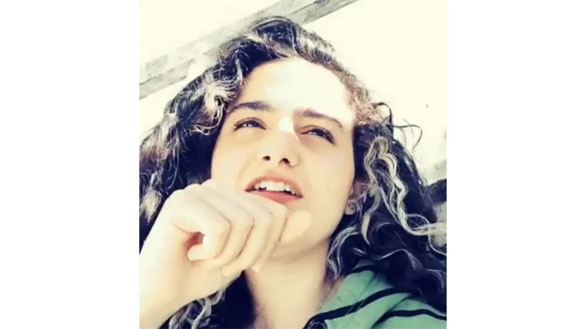
Melika Mohammadi Gazvar Olya before her arrest in the US.
--------------
Melika Mohammadi GazvarOlya fled Tehran after participating in the “Woman, Life, Freedom” protests following the September 2022 death of Mahsa Amini in custody. After a dangerous journey across Central America, she was detained upon arrival in the US. The young Iranian asylum-seeker has been incarcerated for nearly three years in an ICE detention center near the Mexican border.
In the fall of 2022, Melika Mohammadi GazvarOlya, like hundreds of young Iranian women, took to the streets of Tehran to protest against the Islamic regime’s mandatory hijab laws.
The September 16, 2022, death in custody of Mahsa Amini, a student who was arrested for “inappropriate clothing”, had sparked the “Woman, Life, Freedom” protests across the country that were rattling the regime.
Melika, like many of the young women protesters, marched bareheaded and posted images of her defiance on social media. It was her way of demonstrating her dissent.
When the crackdown came, it was sweeping and brutal. Fearing for the safety of her mother and two younger sisters, Melika, then just 20, and her father made the difficult decision to flee. They left Iran for Turkey, took a flight to Nicaragua and then made their way to the United States.
For Melika and her father, it meant weeks of walking and taking bus rides through Central America, an arduous trek made hazardous by extortionate smugglers, criminal gangs and corrupt local officials that has led Amnesty International to call the migrant route “the Most Dangerous Journey”.
On the road, Melika witnessed physical and sexual abuse. Far from the comfort of home, the young Iranian woman lived with the constant fear of danger while grappling with the unfamiliarity of a different culture, language and landscapes of the places she passed. “It’s hard when you are on the road – you don’t have your place, your bed, your food – everything was different,” she told FRANCE 24.
At the end of January 2023, Melika and her father finally reached Ciudad Juarez, a teeming Mexican city on the US-Mexico border considered the last stop on the migrant route to the USA. Like many refugees crossing the Rio Grande River separating Mexico and the US state of Texas, she surrendered to US border guards, hoping to quickly obtain asylum.
But it was the start of another ordeal, one she hadn’t expected. Immediately after her arrest, Melika exchanged her civilian clothes for a prison uniform.
The young woman, who wants to study medicine, saw her dreams shattered as soon as she realised she was being transferred to the custody of US Immigration and Customs Enforcement (ICE) at the infamous El Paso Service Processing Center (EPSPC), where a recent Amnesty International report documented “serious human rights violations”. It was a rude welcome to the land of free. “I felt like my world was falling apart,” she recalled.
Melika had made it from Iran to the US, but her legal ordeal on American soil had just begun. At a Texas district court, an immigration judge ordered her deportation to Iran, even though her life was in danger in her homeland.
One day, after nearly 10 months in detention, Melika was escorted by ICE agents into a van with tinted windows and driven away. It was only when she stepped out onto the tarmac of El Paso airport that she realised what was happening. Nearly two years later, Melika remembers that fateful day with clarity. “In October 2023, ICE drove me away in a van – without telling me where we were going. Then I realised we were on an airport tarmac – and I started crying. An officer kindly told me I had the right to refuse the flight, and so I did," she recalled in an interview from detention with FRANCE 24.
Saved from boarding that flight out of the US, Melika has since been supported by the Las Americas Immigrant Advocacy Center association, an El Paso-based NGO providing legal services to immigrants and advocating for their human rights.
Earlier this year, there was a second attempt to deport her. In March, Las Americas, the Center for Constitutional Rights, and Texas A&M School of Law Civil Rights Clinic submitted a petition for a writ of habeas corpus, allowing detainees to challenge the legality of their confinement, to a Texas court.
As her case grinds through the courts, and advocacy groups exhaust every legal means at their disposal, Melika has been sharing a dormitory with around 70 fellow inmates. After more than two years and eight months, she has seen cell mates, mostly from Latin America, come and go, with many of them deported to their countries of origin within a few weeks.
Along the way, the now 23-year-old Iranian woman picked up Spanish, improved her English and is now fluent in both languages. “I make new friends all the time, I watch them leave as new ones arrive. And those ones end up leaving as well. I am wondering if I will ever find my freedom again,” she said.
Despite the legal, bureaucratic and political obstacles, Zoe Bowman, supervising attorney at Las Americas, is working doggedly to try to secure parole for Melika. "We are challenging her prolonged detention at a federal court level," said Bowman, noting the 2001 landmark Supreme Court ruling in the Zadvydas v. Davis case set the maximum “presumptively reasonable” period of detention after a deportation order at six months. It’s a threshold that has long been exceeded in Melika’s case.
Donald Trump's return to the White House has virtually closed America’s doors to asylum seekers. During his 2024 campaign, Trump repeatedly slammed the Biden administration’s use of “catch and release”, which refers to the practice of releasing migrants and asylum seekers to the community while they await immigration hearings.
The subsequent build-up of detainees since “catch and release” was scrapped has sparked a rapid expansion of temporary migrant detention centers, including the new “Alligator Alcatraz” in Florida, which Trump inaugurated in July. Granting asylum, an already difficult process under the Biden administration, has become virtually non-existent under the second Trump presidency.
Melika’s unwavering optimism took another blow after the 12-day US-Israel war on Iran. For several days, as fighter jets rained down munitions on Iran, Melika had no news from her family back home. She quickly realised that Iranian refugees were now being targeted by US authorities. Tom Homan, the White House “border czar” appointed by Trump to head ICE, has publicly expressed concern about potential Iranian “sleeper cells", fueling the paranoia of the MAGA base.
“My father, who had been granted parole a few months ago, was picked up by ICE right after the strikes. He is now in another detention center in Arizona and I am having a very hard time getting news from him,” lamented Melika, who communicates with the outside world via messaging apps on her mobile, when it works in the detention center.
Life at the El Paso processing center is tough with 5.30am military-like wakeup calls, rationed toilet paper, deplorable hygiene and limited medical care. In its May 14 report, Amnesty International expressed particular concern about the quality of the food, which is poorly balanced and sometimes even spoiled. “They always feed us some bread with peanut butter and chips,” said Melika.
After more than two years behind bars, the young Iranian woman has become a point of reference for new arrivals, guiding and supporting them in an oppressive environment.
Former inmates who shared Melika’s detention cell remember the young Iranian woman as a beacon of hope, providing some humanity as she maintained a semblance of dignity in an inhospitable space where overcrowding, lack of privacy, deprivations and constant noise are part of everyday life.
“Some days we would cast our shadows against the wall, posing as if we were doing a photo shoot. Without a phone, we pretended to take pictures. It was our way of passing the time. We danced and drew a lot,” recalled her former cellmate Edgarlys Castaneda-Rodriguez. A Venezuelan asylum seeker, Castaneda-Rodriguez spent several “traumatic” weeks in the same dormitory as Melika before being granted conditional release. She now lives in New York and has to wear an electronic ankle bracelet.
Castaneda-Rodriguez reveals that a fellow inmate even attempted to take her own life a few weeks ago in the cell she shared with her Iranian friend.
Three years after Amini's death, Melika remains stuck in El Paso with no certainty about the outcome of her asylum application. She tries to remain hopeful: “I took a road I didn't know, and went to a place I never had any plans to go to,” she said. “I am still here, all this time, and I’m still looking for freedom.”
Source: ca.yahoo.com
-----
The world has no interest for the plight of Iran's women
Hassan Rouhani
Sep 27, 2025
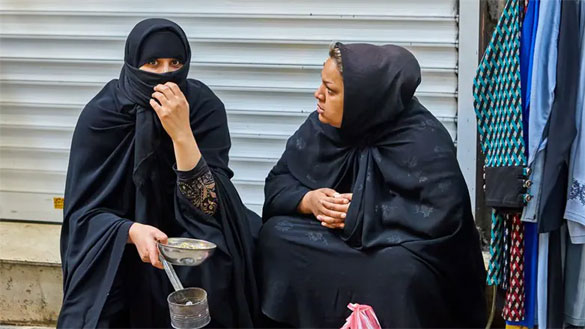
Iran hijab
---------
Diplomacy is often portrayed as a noble pursuit, a pathway to peace. Yet diplomacy with dictatorships is never neutral. When leaders extend talks to regimes that openly declare their hostility, they risk legitimizing tyranny and undermining those who resist it.
Just days ago, Iran’s so-called Supreme Leader, Ali Khamenei, made his position unmistakably clear. He rejected direct negotiations with the United States, calling them a “dead end” and branding American demands as “bullying.” His rhetoric is nothing new, but the timing is revealing, while his proxies intensify attacks on Israel, he simultaneously slams the door on compromise. This is the regime’s pattern using the mirage of diplomacy to buy time, sow division, and expand aggression.
Recent developments at the United Nations further illustrate the tension. Iranian officials attending the General Assembly in New York faced new U.S. restrictions on their movements, confined to a small radius around U.N. headquarters. Tehran quickly objected, calling the measures a violation of diplomatic norms. But the episode highlights a deeper truth: even within international forums, engagement with the Islamic Republic is marked by mistrust and pressure, not mutual respect.
To normalize Tehran under such conditions is reckless. It strengthens a system that thrives on exporting terror, silencing dissent, and treating Israel as its eternal enemy.
Worse, it betrays the people inside Iran, especially women who risk everything to demand freedom. Every time the international community sits with Tehran as if it were a normal government, those women’s voices are pushed further into the shadows. The world forgets that the real Iran is not Khamenei’s court of loyalists but the millions who once chanted “Woman, Life, Freedom” in the streets.
That resistance has not faded. Just weeks ago, Iranians around the world gathered for Mahsa Day, marking the anniversary of Mahsa Amini’s death. The demonstrations led largely by women and supported by the organized opposition abroad showed that the fight for freedom remains alive. These rallies are not symbolic; they are lifelines for those still resisting inside Iran, reminding the world that the regime’s grip is far from absolute.
From my vantage point as an Iranian woman living in the United States, I have watched with both pain and pride. Pain, because I know the brutality of this regime. Pride, because I see my people, especially women, stand defiantly against it. To negotiate with Tehran without conditions is not pragmatism; it is appeasement. It rewards cruelty and punishes courage.
Israel, standing on the front line of Iran’s hostility, knows better than most that a regime fueled by ideology cannot be pacified by dialogue alone. Every concession is read in Tehran not as goodwill but as weakness. Every handshake on the world stage becomes a propaganda victory at home.
This is not to say diplomacy has no place. Dialogue can serve narrow, verifiable ends such as nuclear inspections or humanitarian exchanges but only under strict conditions and constant scrutiny. What cannot happen is the transformation of Tehran into a “normal” partner while its leader openly declares negotiations useless and its militias rain terror across the region.
The choice before the West is clear: either grant legitimacy to a regime that denies freedom at home and wages war abroad, or stand firmly with those under attack in Israel, the Iranian women resisting tyranny, and the global opposition who march for Mahsa and embody the true fight for dignity and peace. History has already taught us what appeasement yields. We cannot afford to repeat it.
Source: www.israelnationalnews.com
https://www.israelnationalnews.com/news/415479
-----
Jewish and Arab women promote coexistence through culinary experiences
September 28, 2025
Two women from northern Israel – Jewish-Israeli EtiFreiberger and Bedouin Arab-Israeli SheherazadeBargutSweidan – have transformed their personal friendship into Rolling, a grassroots initiative that promotes coexistence between Arab and Jewish women through food and shared culinary experiences.
The project places a particular emphasis on building stronger connections among teenage girls from both communities. Freiberger, who lives in Kibbutz Adamit, and Sweidan, who lives in the nearby Arab village of Arab al-Aramshe, now work side by side to bridge divides through the kitchen.
“We want to be a flag for communities that want shared living but are afraid. There’s nothing to fear – it is our duty to live together,” Freiberger said, adding that the shared experience of being women transcends ethnic, cultural, and religious differences.
“For me and Sheherazade, it’s not about Jew or Bedouin, we’re two women who want good, shared lives for our families and communities,” she explained. “We already live on the same mountain, so why not do it in the best, safest, most welcoming way?”
Freiberger noted the strong bond between Kibbutz Adamit and Arab al-Aramshe. “The closeness to Arab al-Aramshe is not only physical but also emotional. We started Rolling – at first we wanted to roll dreams, and later we rolled both dreams and food. They rolled grape leaves, we rolled sushi, and we would meet between the two communities. When one of our friends from the kibbutz passed away, all the women from the village came. That shows the bond,” she said.
Sweidan echoed her friend’s message of unity: “The girls of Arab al-Aramshe and Adamit share the same path home, and they should also share values, experiences and a way of life.”
Living in close proximity to the Lebanese border, residents of Adamit and Arab al-Aramshe face a daily threat from Hezbollah rockets and drones. But instead of letting fear divide them, women from both communities are working to turn this shared danger into a foundation for unity.
“The first activities were painting bomb shelters and recording a song in both languages in a studio,” explained Freiberger. “All our thinking is in two voices, in two languages, but along one path. Later, we will also hold a meeting with the mothers. There are many encounters between the people of Adamit and those of Aramshe, but not between the teenagers. I decided to make that happen. From the moment my initiative was accepted, I received full cooperation from the council. I am in constant contact with Doa, the director of the community center in Adamit, and with Sheherazade, who leads the project.”
While much of the world’s media remains focused on the war in Gaza, Freiberger and Sweidan have an inspiring and peaceful vision for the future.
“There is a clear message here in a time when we lack hope,” Freiberger said. “We want to establish a path between the village and the kibbutz, and it will be a path of hope, coexistence and partnership. The joint work we are doing here on the mountain should resonate across the country – in partnership between Arabs and Jews. We want to be a flag for those communities that want coexistence but are a little afraid. Not only is there nothing to fear, it is our duty to live together.”
For Sheherazade, the goal is deeply personal. "I come from a place of coexistence. I grew up in a mixed city, lived in the United States for several years, and I understand the importance of living together," she explained. "When we came back to Israel, we decided to enroll our children in the Ma’ayanot school and in the kindergarten at MoshavBezet. I wanted my children to receive an integrated education.”
Sweidan emphasized that true friendships rise above ethnic and cultural divisions. “I have always lived together with Jews, and it always seemed like a duty in our reality. It doesn’t matter to me whether my friend is Jewish or Arab; we celebrated together, we marked the holidays together, we grieved together. We have nowhere else to go; we share the same destiny, we are in the same boat, and in our case, on the same mountaintop.”
At the heart of the project is a simple truth: women share the same hopes and fears, regardless of culture or religion. “We are all mothers, we all worry, we all want to raise our children in peace,” Sweidan noted. “We decided the children should know why one wears one kind of head covering and another wears a different one, why one fasts on Yom Kippur and another on Ramadan. I love connecting women from all walks of life. We can create change and make an impact. When we were together in Poland, as an Arab woman who grew up in Acre and studied in a Christian school, I realized the power of Jewish history. From that, I understood how important it is for each side to understand the history, religion and faith of every group.”
This spirit of partnership has also inspired contributions from others. In the weeks following the October 7 massacre, Arab-Israeli Bedouin businessman Sami Alkarnawi, who owns five hotels across Israel, offered free accommodations to around 3,000 displaced Israelis, demonstrating how shared humanity can break down barriers in times of crisis.
Source: Femalecricket.com
https://allisraelnews.com/jewish-and-arab-women-promote-coexistence-through-culinary-experiences
-----
Delhi 'godman' Swami Chaitanyananda accused of molesting 17 female students arrested from Agra
Sep 28, 2025
NEW DELHI: Delhi Police have arrested self-styled 'godman' Swami Chaitanyananda Saraswati, accused of sexually harassing 17 female students and running a web of financial fraud.
Police allege the 62-year-old former chairman of a Delhi management institute exploited students from economically weaker sections (EWS) by confiscating their mobile phones and academic certificates, leaving them unable to complain.
“He marked students first and asked them to deposit their phones so they could focus on studies, ” a friend of one of the victims told PTI. “This created a sense of fear, as every student’s career was locked there.”
Additional sessions judge Hardeep Kaur said custodial interrogation was necessary to establish the “entire chain of fraud” and noted that the accused was not traceable.
Court documents describe how Saraswati allegedly created a fraudulent trust to divert funds and properties belonging to Sri Sharada Institute of Indian Management Research and a Sringeri-based religious body.
Investigators said Saraswati opened multiple bank accounts using different names and withdrew over Rs 50 lakh after an FIR was filed against him in August. Police are examining the trail of transactions linked to the alleged misappropriation of funds.
Complainants told police that Saraswati and his aides threatened students with expulsion or failure if they resisted his advances. “Girls were frequently warned that their careers would be destroyed if they opposed him,” one victim’s friend alleged.
The first complaint was lodged in March by a student under the EWS quota, who said she was asked to pay an additional Rs 60,000 or work at the institute without salary.
Source: Timesofindia.com
-----
Family of British couple held in Iran say their health is deteriorating in prison
Aneesa Ahmed
27 Sep 2025
The family of Lindsay and Craig Foreman, a British couple detained in Iran on espionage charges, have said their health is deteriorating in prison.
The pair, both 52 and who previously split their time between Spain and England, were seized in Kerman, central Iran, and taken into custody in January while on an around-the-world motorcycle tour.
Iran said in February the Foremans were accused of entering the country “posing as tourists” to gather information. The couple, from East Sussex, deny the allegations.
Lindsay’s son, Joe Bennett, said that the family have “real concerns” about the pair’s health, and that his mother has been on a drip in prison and Craig has had several illnesses including stomach bugs and the flu.
“It’s to my understanding that my mum was on a drip last week. Unsure as to why, but obviously very, very concerning for us as a family.”
This comes as the couple face court today in Iran, and the family said it is “deeply worrying” that the Foreign, Commonwealth and Development Office (FCDO) appears not to have been kept informed.
Bennett told Sky News that the family was “anticipating to hear” any news after a court appearance, and “it might be seven to 10 days after today’s hearing” before they get an update.
The family have known little about the couple’s whereabouts or condition throughout their detention, but last month learned through the Foreign Office that Lindsay has been transferred to Qarchak women’s prison near the capital.
Craig was believed to have been moved to Tehran’s infamous central prison, also known as Fashafouyeh, which is about 30km (18 miles) south of the capital and has a similar reputation.
The FCDO warns all British and British-Iranian nationals not to travel to Iran because of a “significant risk of arrest, questioning or detention”.
A spokesperson said previously: “We are deeply concerned by reports that two British nationals have been charged with espionage in Iran. We continue to raise this case directly with the Iranian authorities.
Source: Www.Theguardian.com
-----
Iran Women’s Volleyball Team Heads to Uzbekistan for Central Asian Nations League
2025/09/28
Tehran - BORNA - The event was originally slated to take place in Kathmandu, Nepal, from October 10–16. However, due to recent instability in Nepal, the CAVA executive board reassigned hosting rights to Uzbekistan, moving the competition forward to September 29–October 6. Four countries — Iran, Tajikistan, Kyrgyzstan, and Uzbekistan — confirmed their participation under the revised schedule.
Iran’s squad, featuring players such as Shabnam Alikhani, Aytak Salamat, ElahehPoursaleh, Zahra Karimi, and NazaninAlizadeh, left Tehran early Sunday morning. The team is led by South Korean head coach Lee Do-Hee and supported by a full staff including assistant coaches, fitness trainers, analysts, and medical personnel.
The tournament is seen as a key platform for Iran’s women’s program to assert itself in Central Asia and build momentum toward broader Asian competitions. In addition to the athletes, Iranian referee ZeinabHaqi will also officiate at the event, further underlining Iran’s active presence across the sport.
Source: Borna.News
-----
URL: https://newageislam.com/islam-women-feminism/melika-mohammadi-rallied-iran-freedom-detention/d/137013