
Mehwish Carves a Niche as First Muslim Woman Lawyer in Maharashtra’s Sopara
New Age Islam News Bureau
14 July 2025
· Mehwish Carves a Niche as First Muslim Woman Lawyer in Maharashtra’s Sopara
· A Vindication for African Women in the Adaptation and Mitigation Policy-Making Process
· Iran President Emphasizes Unity, Advocates For Women's Role In Social Participation
· Women Played Key Roles In Syria’s Revolution. Now They’ve Been Pushed To The Margins
· From Kerala To The Kingdom: The Untold Stories Of Women Breaking Stereotypes In Saudi Arabia
· Toronto Woman Charged In Suspected Hate-Motivated Assault Involving Hijab-Wearing Victim
· Women’s voices drove anti-fascist struggle forward: Ali Riaz
Compiled by New Age Islam News Bureau
URL: https://newageislam.com/islam-women-feminism/muslim-woman-lawyer-maharashtra-sopara/d/136175
-----
Mehwish Carves a Niche as First Muslim Woman Lawyer in Maharashtra’s Sopara
Mohammad Bin Ismail
July 14, 2025
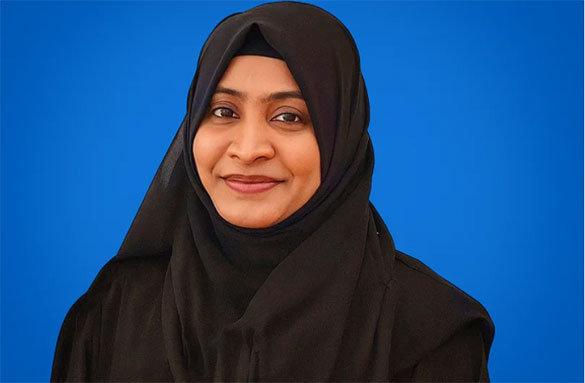
NEW DELHI — In a proud moment for the Muslim community of Sopara, the ancient port and trade centre of Maharashtra, Benji Mehwish Abdul Rehman has etched her name in the annals of history as the first Muslim woman lawyer from the village. Her remarkable achievement includes topping Mumbai University with an outstanding 87% in the LLB examination is a testament to her relentless hard work and dedication.
Mehwish’s journey is not just about academic success but also about breaking social barriers. Coming from a modest middle-class family — her father, Abdul Rehman, works as an electrician — Mehwish’s path was filled with financial challenges. Yet, these hardships never dimmed her spirit or determination to succeed.
“I belong to the middle class. My father is an electrician, and I was aware of this from the beginning, so I always focused on studying hard. To make a unique identity in the society by working hard, that was my motto,” Mehwish told Clarion India over the phone. She recalled how financial struggles made her educational journey tough, but the unwavering support from her family helped her overcome every obstacle. During this time, many problems came up, but with the help of my family, I faced these problems with a smile. In this journey, my grandfather, grandmother and parents always stood by me like a rock. I secured the first position in every class.”
Her academic record speaks for itself: after passing her SSC in 2015 from Anjuman Khairul Islam Urdu High School, with 84%, she continued to shine with 80% in HSC from RB Harris Junior College and 84% in BCom from AE Kalsekar College in 2021. Clearing the bar examination from Viva College, Virar, with 87% (CGPA 9.2), she secured first position in both Mumbai University and Viva College.
Mehwish’s success carries extra significance as it comes from a community often overlooked and sidelined in mainstream narratives. Sopara, a village with deep historical roots, now celebrates this milestone that challenges the stereotypes around Muslim women and their place in education and professional fields.
Mehwish’s grandfather, Benji Rizwan Muhammad, a respected social activist in the region, played a vital role in guiding and encouraging her career choice. “The decision of which field to choose after graduation was difficult for me because all the courses were very expensive. In such a situation, by the grace of Allah Almighty, my grandfather guided me and encouraged me to become a lawyer,” she said.
She also credits the financial help from the Waja Mohalla Juma Masjid Trust and the Sidha Educational, Social and Cultural Organisation. “If these two trusts had not supported me financially by providing scholarships, this success would have been difficult,” she said gratefully.
Abdul Rehman, Mehwish’s father, expressed his pride: “My daughter is committed to discipline in her studies. We always encouraged her and provided her with whatever we could.” The support from the family, often the backbone for Muslim girls pursuing education, is a reminder that strong family encouragement can overcome societal pressures and economic difficulties.
Local social worker Zubair Ahmed Butke praised Mehwish’s achievement. “Mehwish has increased the glory of Sopara village and our Waja Mohalla by passing the bar exam. She is a role model for our community and shows that with hard work and determination, Muslim girls can reach great heights,” he said.
Mehwish now plans to practice law at Vasai Court and is preparing for her LLM. She also aspires to practice in the Bombay High Court, showing ambition that goes beyond personal success, reflecting a commitment to serve and uplift her community through the legal system.
Her story comes at a time when Indian Muslims, especially women, face various challenges related to education, economic opportunities, and social acceptance. Mehwish’s success is a beacon of hope, breaking through the barriers set by a society where many still hold biases and misunderstandings about Muslims, particularly Muslim women.
Her rise is a clear rebuttal to those who underestimate Indian Muslims or limit their potential by social or religious stereotypes. This achievement demands recognition and respect for the many silent struggles Muslim families endure in supporting their daughters’ education and professional dreams.
Community leaders and activists hope Mehwish’s story will inspire more families in Sopara and beyond to invest in girls’ education and help dismantle the barriers that have held back many Muslim girls. It also raises a call for greater institutional support to provide scholarships and opportunities to deserving students from minority communities.
Mehwish’s journey highlights a broader issue: while India prides itself on secularism and equal opportunity, the lived reality for many Muslims is often marked by discrimination and neglect. Success stories like hers push against this narrative and remind the nation of the rich talent and determination within Muslim communities waiting to be nurtured.
In contrast, some sections of the Hindu majority, especially in surrounding areas, have often failed to create an environment conducive to the educational and professional growth of Muslims. Many Muslim students face discrimination and a lack of resources, making achievements like Mehwish’s even more remarkable.
In conclusion, Mehwish’s story is not just her personal victory but a triumph for the entire Indian Muslim community. It sends a strong message that Muslim girls from modest backgrounds can break social barriers, excel academically, and contribute meaningfully to society when given support and opportunity.
Her rise deserves to be celebrated widely — as a beacon of hope and a clear example that when families and community come together to support girls’ education, the results can be extraordinary.
Source: clarionindia.net
https://clarionindia.net/mehwish-carves-a-niche-as-first-muslim-woman-lawyer-in-maharashtras-sopara/
------
A Vindication for African Women in the Adaptation and Mitigation Policy-Making Process
Aya Kamil
Jul 14 2025

doidam10/Depositphotos
---------
Charting a Sustainable Development Goal-compliant future meeting the objectives of the Paris Agreement, hinges on the meaningful inclusion of women leadership in charting adaptation and mitigation strategies. Successful delivery of the Sustainable Development Goals, particularly the following, Climate Action, Gender Equality, No Poverty, Peace & Justice and Strong Institutions will remain fragmented without efficient gender-responsive measures. Re-centering the role of women in the policy-making space is critical as new research evinces new insights for practitioners and academics alike to closely re-examine the climate-gender nexus. On the African continent, women bear the brunt of climate-ripple effects. Gender-based asymmetries of power remain salient in asset control and traditional adaptation and responsive strategies alike. Limited access to financial capital, educational resources, land management and household decision-making severely constrains women and girls’ resilience capacity. These barriers jeopardize women’s cardinal contributions as guarantors of traditional ecological stewardship and ‘custodians of Indigenous Knowledge.’
Addressing the climate-gender nexus is gaining momentum regionally. The African Negotiator Group’s engagement with the United Nations’s Framework on Climate Change (UNFCCC) Lima Work Program on Gender (LPGW) signals political will from African decision makers to deliver on gender action. Increasingly, environmental justice and gender equality are taking up space as is the case with the budding Gender Action Plan (GAP) discussed at the ongoing Subsidiary Bodies 62nd Session in Bonn. However, the gender action ‘ambition cycle’ risks stalling if the flurry of roadmaps, blueprints and action plans aren’t implemented.
Gender responsive measures must be substantial, a step away from performative virtue signaling, and not fall prey to pink and green washing. Regionally, the way forward is two-fold. Firstly, investing in continental agency-centered strategy to build capacity for female policy makers to lead on the adaptation and mitigation portfolios. Think youth negotiators program, early-career mentoring initiatives with the African Group of Negotiators Experts Support (AGNES) group, unlocking internship opportunities with national environmental ministries and upscaling female leadership in leading negotiations. The second pillar is disbursing funds through regional institutions such as the African Union (AU), and the African Development Program (AfDB) for research, collecting data, and popularizing study findings on the climate-gender nexus feeding in program design and implementation of gender-aware ecosystem- based adaptation.
To better understand the workings of the African policy ecosystem on gender particularly, it is necessary to overview hallmarks of gender climate action. These include but are not limited to the Lima Work Program, SDG 5, the AU’s sixth item of its Agenda 2063, and the outcomes of COP20 & 21. Established in 2014 with the goal to weave in gender considerations into the workings of multilateral UNFCCC-negotiations, it is central to the annual conduct of the Conference of Parties meetings (COPs). The LWPG is the flagship outcome of COP20 with decision (18/CP.20). The LWPG sets a precedent for institutionalized efforts to tackle the climate-gender nexus. It scales up implementation, and is subject to improvement as the launch of the new Gender Action Plan, hopes to address worries of gender-blind decision making. At the SB62, ongoing workshops are taking place to launch the GAP at COP30. The successful extension of the LWPG at COP29 is a positive signal from parties for gender-sound UNFCCC processes. Alongside the UNFCCC, regional bodies such as the African Union are devising gender positive provisions, namely through Agenda 2063.
Agenda 2063 by the AU is a strategic blueprint for collective action and multi-sectoral efforts to uplift African livelihoods. It includes seven aspirations and twenty goals. Presented at the African Union Summit in February 2024, Agenda 2063’s roll out plan is five-legged, each implementation phase running for a decade. Commonly referred to as the First Ten Year Implementation (FTYIP), the initial roll out phase launched in 2014, and resumed in 2023. This Pan-African roadmap signals an institutionalized move towards embedding gender in African policy. For observers, a close read of Agenda 2063 implies that full-fledged fulfillment of sustainable development and prosperity are contingent on the comprehensive and intersectional promises of Aspiration six. Building upon the SDGs , Aspiration Six and Seventeen work in tandem with SDG 5, Gender Equality.
Item six defends a people-centered approach for development. It enumerates gender equality as its first objective. It reads, ‘Full gender equality in all spheres of life, strengthening the role of Africa’s women through ensuring gender equality and parity in all spheres of life (political, economic and social); eliminating all forms of discrimination and violence against women and girls.’ In contrast to the Agenda’s ambitious gender action strategy, assessments reveal low-levels of implementation progress, with as little as ten countries delivering over fifty percent of their objectives. In figures, the piecemeal fulfillment of Agenda 2063 is all the more obvious, with mere 23.8% fulfillment of the goals in 2022.
To leapfrog the normative stalling of gender action and optimize engagement of the climate-gender nexus, responsive measures should effectively cascade down from the macro and meso policy scale to the micro-locally bound community level. By shepherding the way forward, the AU, in close collaboration with the African Group of Negotiators (AGN) can engineer timely response measures to course-correct, and boost gender-sound policy implementation via a two-fold strategy. Response measures are understood as policy actions by member states – signatories of both the 1992 Rio Convention and the latter 2015 Paris Agreement- materializing in work programs, national blueprints, and/or long-term strategies to deliver a net-zero future for all. These are additions to the UNFCCC-mandated Nationally Determined Contributions (NDCs) and National Adaptation Plans (NAPs) release.
Firstly, by building a synergy between substantive leadership and action. Women’s visibility and lead in the adaptation and mitigation portfolios should mirror the implementation of well-informed, strategic, timely and effective policies on the ground. In the UNFCCC, contexts, the AU and the AGN can maximize their capacity-building efforts to ensure a pipeline for women’s professional and academic training to substantively lead on the adaptation and mitigation portfolios that are most relevant for women’s livelihoods in the continent.
Encouraging, mobilizing and training technical experts fluent in the gendered impacts of climate-ripple effects is key. It is achievable by encouraging track specialization in climate finance and legal literacy of certain articles such as Article 7.1 and Article 6.2, respectively delineating adaptation and mitigation provisions. It is a powerful accelerator for an organic integration of the climate-gender in draft text and amendments at the COPs. Additionally, building expertise at the crux of thematic and dimensions targets of the UAE Framework on Global Climate Resilience is another venue for inputs to the gender-climate nexus. Laser-focus interventions by the AGN accounting for gender action in the elaboration of the assessment, planning, implementation and monitoring, evaluation and learning of the UAE Consensus is another option for harboring gender-conscious policies. If such course of action is taking place, it will become a precedent that may positively influence the ongoing negotiations of the Baku Adaptation Plan, and add a much-needed gender angle to the work on indicators.
Though ripe with opportunities to tackle the gender-climate nexus, the UNFCCC ecosystem isn’t the only arena to do so. AU states have ample opportunities to act locally and integrate the interlocking of gender action to climate issues via academic research, collection of new data and the institutionalization of gender-aware ecosystem-based adaptation. Particularly relevant to agricultural and agri-food settings, a group-based approach to ecosystem-based adaptation, implies gender considerations as it contextualizes context-dependent climate vulnerabilities.
Group-based approaches factor the institutional makeup of given communities to adapt, their varying social capitals, ‘and the ability of community members to work collectively, and their ability to access resources and information from higher-level institutions such as government agencies and nongovernmental agencies.’ Integrating these considerations in adaptive capacity means designing size-fit early-warning systems and tailored adaptive measures responding to a particular community’s challenges with the right analysis and subsequent answer to its gender-climate nexus realities. Note that the group-rights based approach is multilayered as it accounts for numerous variables, including but not exclusive to, group and community specifics, organizational structure and institutional ties – philanthropy funding, public-private partnerships.
Exploring response measures to the climate-genders nexus in the African context is a useful exercise to optimize solutions to the extreme weather events of Africans, particularly women and girls. These gender responsive measures and best practices outlined in the previous paragraph are borne out of immersive experiences in the international climate negotiation fora and in-the field eye-testimonies of climate-stricken communities. These recommendations are by no means exhaustive, rather they provide a template, and a food for thought exercise for research, practitioners and policy makers alike to ramp up their efforts in collaborating cross-sectorally to deliver an adequate response to the demands of the gender-climate nexus in the African continent. If the African Union and AGN are successful in solving this riddle: delivering a contextualized policy response for each national context while maintaining a cogent, coordinated and coherent AU-wide action plan, a gender-sound, climate-resilient future will be on the horizon.
Source: e-ir.info
https://www.e-ir.info/2025/07/14/a-vindication-for-african-women-in-the-adaptation-and-mitigation-policy-making-process/
-------
Iran President emphasizes unity, advocates for women's role in social participation
14 July 2025
AhlulBayt News Agency: Iran's President Masoud Pezeshkian underscored that all segments of the society, particularly women, can play a crucial role in social affairs to foster unity and cohesion.
In a meeting with officials from the Vice Presidency for Women and Family Affairs and the National Population Headquarters, Pezeshkian remarked on Sunday that officials must recognize that women are a vital part of society, possessing a more conducive environment and a greater share in social participation.
Women, as wives, have a significant influence on men, and as mothers, they impact families and children. They also possess strong motivations for social roles; therefore, officials in the Vice Presidency for Women and Family Affairs play an important and effective role in harnessing and directing this potential, the president urged.
Pezeshkian stated that the only way to build Iran is through accepting diverse perspectives, fostering unity and empathy. He also emphasized that by accepting and promoting capacities of all people, challenges can be overcome.
Highlighting that Iran belongs to all Iranians, Pezeshkian asserted that the only criterion for the superiority of individuals is piety. He defined piety as proper performance that is cost-effective and yields higher productivity and efficiency; thus, authorities must accept that women are a significant part of society.
He also emphasized that officials should not deprive individuals of their potential due to differing opinions. Just because someone disagrees with them does not necessarily mean they are an enemy; therefore, authorities have no right to impose their views on others by force.
According to the president, during the 12-day war imposed by the Zionist regime, officials witnessed that even those who opposed them, including women criticized for their hijab, took a stand against the aggressive regime and made their voices heard at gatherings, as they consider Iran their homeland.
He further said that the people even compromised on some of their demands and grievances to prevent the enemy from taking advantage; hence, officials must appreciate this support from the people and recognize that all individuals, regardless of beliefs, ethnicity, race, language, or gender, are Iranians with a deep sense of belonging to Iran.
Source: abna24.com
https://en.abna24.com/news/1707574/Iran-President-emphasizes-unity-advocates-for-women-s-role-in
--------
Women played key roles in Syria’s revolution. Now they’ve been pushed to the margins
July 14, 2025
The end of the oppressive Assad regime in Syria in late 2024 has been broadly welcomed on the global stage – underscored by the fact the United States and European Union have now lifted sanctions against the country.
However, women have been marginalised by Syria’s new leadership. That’s a problem for Syrian women, of course, but it also puts at risk prospects for sustainable peace in Syria.
A growing body of research, including our own, shows a direct correlation between gender equality and peace.
Syria now stands at a crossroads. Will it ensure women’s meaningful participation and follow a path to peace? Or will things head in the other direction?
This is more urgent than ever. Failure to grapple with women’s rights in Syria risks plunging the nation further into extremist violence.
Women excluded both before and after Assad’s rule
After decades in power, the harsh Assad regime was overthrown late last year by rebels led by Sunni Islamist militant group Hayat Tahrir al-Sham.
But women – who were marginalised politically and economically under Assad – continue to be systematically excluded from decision-making in the new government.
This is even though women played an essential role in the Syrian revolution. They organised protests and advocated for rights (often at great personal risk).
They endured sacrifices such as imprisonment, torture, disappearance and displacement.
Yet, only one woman was appointed to Syria’s immediate post-Assad caretaker government. She didn’t get a ministerial title.
The caretaker government spokesman reportedly suggested women’s “biological and physiological nature” makes them unsuitable for certain government roles.
Reports allege the man initially appointed as Syria’s new minister of justice previously oversaw executions of women accused of being sex workers.
Some Syrian activists are concerned Hayat Tahrir al-Sham will enforce a gendered and conservative interpretation of Islamic law, which prevailed in its previous stronghold of Idlib (a city in northwestern Syria).
Limited roles for women
A key moment came when the new Syrian government held a “national dialogue conference” earlier this year. This conference was to establish a forward-looking “political identity” for Syria.
Of the seven-member conference preparatory committee, only two were women.
There was no representation on the preparatory committee from several of Syria’s diverse communities, including Kurdish, Alawite and Druze groups.
Most members had strong ties with Hayat Tahrir al-Sham or other Islamist factions.
About 200 of the 1,000 delegates at the conference were women. However, their input in legislative and security committees was minimal.
Only one of 18 conference recommendations referred (in a limited way) to women.
Following the national dialogue conference, new Syrian President Ahmed Hussein al-Sharaa signed into force a constitutional declaration that set a five-year transition period and established the interim government.
Senior figures in the new government described the declaration as guaranteeing women’s political and economic rights.
Yet only one of Syria’s 23 ministers is a woman: Hind Kabawat, appointed as minister of social affairs and labour. This “soft” portfolio is commonly associated with gendered expectations around care and welfare.
Key ministries were allocated to al-Sharaa’s all-male long-time comrades from Hayat Tahrir al-Sham’s base in Idlib.
Change is possible
A just and sustainable peace requires proactive measures to integrate women into leadership roles in Syria.
Change is possible. For example, constitutional mandates could guarantee minimum representation for women in ministerial leadership and judicial positions, which would better reflect the diversity of Syrian society.
Independent mechanisms could be established to investigate and address gender-based injustices. This would need to provide accountability for past abuses and protect women’s rights under the post-Assad system.
As we have previously noted, there cannot be a “collective forgetting” of crimes Syrian women experienced in the past.
Economic empowerment initiatives would also help foster women’s financial independence and participation in public life.
Public awareness campaigns could also highlight women’s contributions to the revolution and their essential role in nation-building.
Syria at a crossroads
With the recent lifting of sanctions by the US and EU, and ongoing regional instability globally, Syria stands at a crossroads.
The G7 Summit in May 2025 emphasised the global community’s renewed focus on women’s participation in peace processes.
Influential middle-power countries can play a key role by reviewing sanctions and tying humanitarian aid to the promotion of human rights, gender inclusion and pluralistic governance.
Source: theconversation.com
https://theconversation.com/women-played-key-roles-in-syrias-revolution-now-theyve-been-pushed-to-the-margins-257358
-------
From Kerala to the Kingdom: The untold stories of women breaking stereotypes in Saudi Arabia
Jul 14, 2025
2.6 million Indians contribute significantly to Saudi Arabia’s economy. Female Workforce participation up from ~23% to ~35–36%, with rising leadership and SME ownership.
Labour reforms, protected contracts, and embassy-endorsed advocates like Manju ensure safety and rights enforcement. From hospitality and education to STEM, healthcare, and wellness job avenues are growing.
Persisting hurdles such as Saudization, legal friction, and cultural biases still limit full expat female participation.
Expanding Indian Presence in the Kingdom
Indian expat population: As per the Indian Ministry of External Affairs (MEA 2024), 2.59 million Indians live in Saudi Arabia, making them the largest expatriate group.
Expat composition: The General Authority for Statistics Saudi Arabia (GASTAT) also confirms that expats account for 44.4% of the Kingdom’s total population of around 38 million in 2024..
Labour force reality: Migrants account for 56.5% of total employment, and remarkably, 89% of private-sector jobs are filled by non-Saudis.
India-born employees dominate key sectors: construction, healthcare, retail, hospitality, and now increasingly technology and education.
Vision 2030 & Women's Workforce Trailblazing
Female labour force jump: As per GASTAT, Saudi women’s workforce participation surged from 23.2% in 2016 to ~34–36% by 2022–2024, exceeding Vision 2030’s 30% target.
Leadership & entrepreneurship: Over 78,000 women hold senior management roles (Q3 2024), 551,318 businesses registered in 2023 by women, and nearly 450,000 freelance permits issued.
Anti-discrimination and autonomy: Women gained equal pay laws, the ability to drive (2017), protection against harassment, and the right to travel, access credit, and own businesses without male guardianship.
Reforming the System: Tools Empowering Expats
Saudi has introduced robust labour programs tailored for expats, benefitting women significantly:
Musaned (2014): A digital, standardised contract system implemented via licensed agencies ensures transparency, clarity in wages, and a channel to file grievances.
Qiwa& Labour Reform Initiative (2021): These platforms improve employer-employee relations, enforce contracts, facilitate mobility, and make health insurance and heat-safety mandatory.
Bilateral labour agreements: Bilateral agreements such as India-Saudi collaboration enables information-sharing and investigation of labor practices, reducing mismatches and exploitation .
Human Stories in the Spotlight
ManjuManikuttan (Kerala → Al Khobar)
Profile: Moved to Saudi in 2011 as a beautician; now a celebrated social worker through Navayugam.
Impact: Took over the women's deportation centre after mentor’s death. Rescued hundreds of Indian women workers misled into domestic jobs in precarious situations.
Recognition: In 2019, she became the only non-resident woman awarded the Nari Shakti Puraskar by President Kovind at Rashtrapati Bhavan.
Notable rescue: Helped “Chandrika,” an accountant duped into domestic work, until her safe return to India.
Legacy: Officially authorised by Indian embassy and supported by Saudi authorities at Dammam's deportation centre which illustrates her deep-rooted credibility.
Nouf al‑Marwaai (Saudi → Indian-recognised visionary)
Profile: Saudi national who founded the Arab Yoga Foundation in 2010. Pioneered mainstream acceptance of yoga in KSA .
Impact: Certified 700+ instructors and trained over 10,000 practitioners by 2019 .
Honour: Became the first Saudi woman to receive India’s Padma Shri in 2018 for cross-cultural wellness contributions.
Significance: Her journey highlights the growing acceptance of female-led initiatives and cultural bridges in Saudi Arabia.
Emerging Opportunities for Women Expats
Indian women are now entering diverse, meaningful roles:
Beyond domestic labour: Expansion into hospitality, healthcare, finance, education, IT, and STEM fields.
Growth sectors in 2025: Renewable energy, digital transformation, healthcare expansion, tourism (NEOM, giga-projects), FinTech, construction, and education are hotspots.
Protection & support: Women-only transit, childcare, mandatory health insurance, summer-hour rules, and anti-harassment laws ensure a safer environment.
Challenges: Navigating Gaps & Headwinds
Despite progress, obstacles persist:
Saudization: Preference for Saudi nationals in private sector hiring limits expat access, impacting skilled expat women in IT and corporate roles.
Gender & nationality bias: Reddit voices echo that expat women face tougher competition for corporate roles as Saudis are prioritised .
Legal frameworks vs execution: World Bank highlights that though legal reforms are robust (score 50/100), implementation mechanisms like childcare, parental leave, and financial inclusion need strengthening.
Continued discrimination & unequal networks: Expats still struggle with bias, lower salaries, or fewer promotion chances compared to locals .
What Lies Ahead:
Regulated safety nets: Platforms like Musaned and Qiwa, and embassy-backed advocates like Manju offer concrete protection and recourse.
Diverse career paths: Women can build careers in new sectors; STEM gigs, digital health, education roles, hospitality, entrepreneurship, and wellness (e.g., yoga studios).
Inspiration & purpose: Stories of women like Manju shows expat women can lead, innovate, and gain recognition.
Alignment with mega-programs: Saudi’s economic diversification means demand for skilled female talent is rising especially in giga-projects and tech ventures.
Supportive ecosystem: Infrastructure (women-only transport, childcare), legal protections, and bilateral agreements are in place, though bridging gaps remains critical.
Source: indiatimes.com
https://timesofindia.indiatimes.com/world/middle-east/from-kerala-to-the-kingdom-the-untold-stories-of-women-breaking-stereotypes-in-saudi-arabia/articleshow/122431787.cms
---------
Toronto woman charged in suspected hate-motivated assault involving hijab-wearing victim
July 14, 2025
Toronto police have arrested and charged a woman in connection with a suspected hate-motivated assault involving Islamophobic remarks made toward a woman wearing a hijab.
The incident occurred on July 10, around 2:10 p.m., in the area of Finch Avenue West and Weston Road in North York. According to investigators, the accused allegedly approached the victim, made Islamophobic comments, and then physically assaulted her.
Roxanne Ingram, 52, of Toronto, has been charged with assault and breach of probation. She appeared in court on July 11.
Police confirmed the investigation is being treated as a suspected hate-motivated offence.
Authorities are urging anyone with information related to the incident to come forward and contact investigators.
Source: citynews.ca
https://toronto.citynews.ca/2025/07/14/toronto-woman-charged-hate-motivated-assault/
-------
Women’s voices drove anti-fascist struggle forward: Ali Riaz
Jul 14, 2025
Professor Ali Riaz, vice-president of the National Consensus Commission, today said that the courageous mobilisation of female students, particularly from Dhaka University, played a pivotal role in intensifying the anti-fascist movement in July last year. "Students from various universities, especially female students of Dhaka University, took to the streets late at night. Their powerful voices galvanised the movement and, in the face of collective resistance, forced the fascist regime to gradually retreat," he said.
Prof Riaz noted that the Ministry of Cultural Affairs has officially recognised July 14 as "Women's Day in July" in honour of their contribution.
Speaking at the opening session of the 13th day of the commission's second phase of discussions with political parties, held at the Doel Hall of the Foreign Service Academy in Dhaka, he said the collective resistance during the July uprising ultimately compelled the former fascist regime to step back.
"The anti-fascist struggle in July began with student protests against discrimination. The events of July 14 gave the movement a decisive new direction."
Commission members Justice MdEmdadul Haque, Dr Iftekharuzzaman, Badiul Alam Majumdar, Safar Raj Hossain, Md Ayub Mia, and Special Assistant to the Chief Adviser Monir Haidar were present at the session.
Prof Riaz underscored the importance of institutionalising women's participation in nation-building, stating that such formal recognition is essential to ensuring their dignified inclusion in politics, governance, and lawmaking.
He expressed hope that political consensus on the matter would soon be achieved.
Today's session was attended by representatives of 30 political parties, including the Bangladesh Nationalist Party (BNP), Bangladesh Jamaat-e-Islami, National Citizens Party (NCP), GonoOdhikar Parishad, Gonosonghoti Andolon, Communist Party of Bangladesh (CPB), Revolutionary Workers Party, and Amar Bangladesh (AB) Party.
Discussions focused on two key topics: women's political representation and the establishment of a bicameral legislature.
Source: thedailystar.net
https://www.thedailystar.net/news/bangladesh/news/womens-voices-drove-anti-fascist-struggle-forward-ali-riaz-3939231
------
URL: https://newageislam.com/islam-women-feminism/muslim-woman-lawyer-maharashtra-sopara/d/136175