
Hundreds Protest In Jaffa After Arab Woman Allegedly Pepper-Sprayed By Jews
New Age Islam News Bureau
14 December 2025
• Hundreds protest in Jaffa after Arab woman allegedly pepper-sprayed by Jews
• Female genital mutilation driven by local customs in southern Iran - study
• Fake weddings in Pakistan signal a cultural shift
• Women’s Meeting in Madrid: Afghanistan Under the Shadow of Repression and Global Silence
• 'Nowadays parents in Pakistan bring their daughters to learn cricket'
• Amran – Two Events Commemorate International Muslim Women's Day
• Aqsa School in Bridgeview, first all-girls Muslim school in the U.S., celebrates 40 years
Compiled by New Age Islam News Bureau
URL: https://newageislam.com/islam-women-feminism/protest-arab-woman-allegedly-jews/d/138001
-----
Hundreds protest in Jaffa after Arab woman allegedly pepper-sprayed by Jews
By Noam Lehmann
14-12-2025
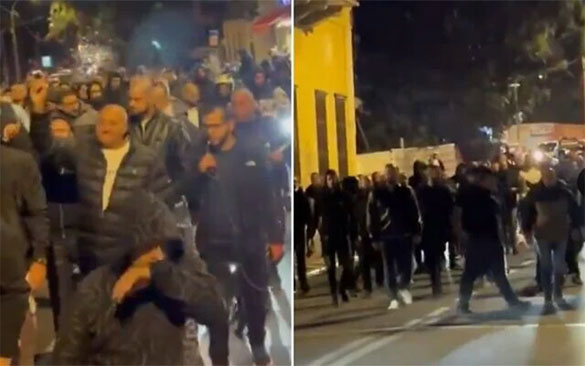
Arab residents of Jaffa protest against an attack on a pregnant community member, in an incident allegedly motivated by racism, December 13, 2025. (Screenshot from X, used in accordance with Clause 27a of the Copyright Law)
------------
Hundreds of Arab residents of Jaffa marched in protest Saturday after a pregnant woman from the community was allegedly pepper-sprayed by Jews while she was driving her car in the city’s Ajami neighborhood.
The Israel Police said in a statement that an altercation developed between the woman and several others, who apparently sprayed her and then fled the area in southern Tel Aviv-Jaffa.
Footage published by the Arab48 news site showed protesters marching to the site of the attack while chanting: “Tell the Shin Bet dogs we’re not afraid of conflict,” referring to Israel’s internal security agency.
Speaking to the protesters, former Knesset member and former Tel Aviv-Jaffa council member Sami Abu Shehadeh accused the government of complicity in the attack, which he said included verbal abuse and spitting on the woman, according to Arab48.
“This assault is not an individual incident, but rather a new episode in a systematic policy targeting the people of Jaffa and our Palestinian nation at large,” said Abu Shehadeh, head of the Palestinian nationalist Balad party.
“We hold the police and Israeli government fully responsible for this assault, and for every assault like it,” said Abu Shehadeh. “Official silence is complicity in the crime.”
Abu Shehadeh referred to the assailants as settlers. It was unclear if his intention was to Jews living in the West Bank, in Jaffa, or in Israel generally.
Police said that the woman had gone to a hospital to seek medical care. Officers were searching for suspects but did not make any arrests, according to the police statement, which did not specify the nationality of either the victim or the assailants.
They later announced that a Muslim cleric was arrested Sunday morning in Jaffa on suspicion of inciting violence at the march. The suspect, in his 30s, was not named.
“During the march, racist chants were heard that could cause a disturbance of order and harm public order,” police said. “Later that night, the suspect was heard on social media calling for a disturbance of order, including racist chants against Jews.”
Source: www.timesofisrael.com
-----
Female genital mutilation driven by local customs in southern Iran - study
14-12-2025
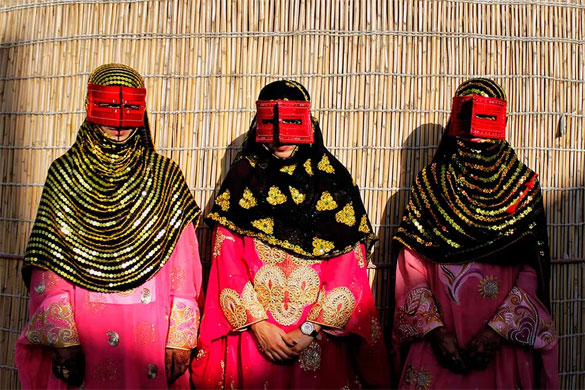
File photo of women in Iran’s southern Hormozgan province
------------
Astudy on female genital mutilation (FGM) in Iran’s southern Hormozgan province finds the practice is sustained chiefly by family dynamics, gender stereotypes and local customs that often outweigh religious mandates.
Published by researchers at Islamic Azad University, the peer-reviewed paper appears in Social Problems of Iran (Autumn 2025) and uses grounded-theory interviews with 15 women (2022–23) to map causal drivers, intervening factors, strategies, and outcomes.
The authors report that cutting persists within kinship networks that link family honor to control over female sexuality, while misinformation and limited access to alternative medical or religious views reinforce continuity.
“The central category indicates the impact of religious and family institutions in the continuation and reproduction of the traditional pattern,” the paper said, adding that “local customs outweigh religious mandates, with religion serving more as a legitimizing discourse.”
They say women’s responses evolve from silence and avoidance in childhood to negotiation, alliance-building and seeking medical advice in adulthood, with education, urbanization and social-media advocacy widening pathways to change.
Reported outcomes include physical pain, reduced sexual satisfaction, traumatic recall and social withdrawal. “FGM causes physical, sexual or psychological harm or suffering to women.”
According to the paper, common misconceptions about the practice include beliefs that FGM preserves a girl’s “purity,” prevents immoral behavior or is a religious obligation.
Another woman described the experience as sudden and violent. “I was confused and completely unprepared. Like a chicken you grab to slaughter. Two female relatives held me down, tightly gripping my arms and legs, and then they took out the blade.”
FGM is practiced in several regions of Iran, particularly in western and southern provinces including Hormozgan, Kordestan, Kermanshah, West Azarbaijan, Ilam and Lorestan.
The most common form documented in Iran is Type I FGM, involving partial or total removal of the clitoris or prepuce. Procedures are typically carried out by traditional midwives or elderly women using basic tools such as razor blades, often without anesthesia.
Iranian law does not explicitly criminalize FGM. There have been no known prosecutions, and official responses have largely been muted.
Source: www.iranintl.com
https://www.iranintl.com/en/202512146587
-----
Fake weddings in Pakistan signal a cultural shift
Mavra Bari
14-12-2025
The wedding stage looks inconspicuous at first glance: marigold-laden, with bright, cheery yellow tones adorning where the bride and groom sit.
It seems like a typical Pakistani mehndi — part of the country's traditional three-day wedding festivities — yet a closer look reveals something unusual: the groom is a woman. This isn't a same-sex marriage but a "fake wedding," an organized event giving people the chance to get together and enjoy a spectacular night out free from social pressure.
Pakistan's fake wedding trend, which has been gaining traction since 2023, replicates the aesthetics and festivities of a "real" wedding, but without the lifelong commitment or family pressures that usually define Pakistani marriages.
This type of event increased in popularity after a fake wedding organized by the Lahore University of Management Sciences (LUMS) in 2023 gained considerable national and global attention on traditional and social media.
The media coverage caused a significant backlash and criticism alongside its increasing popularity among young people and influencers.
Sairam H. Miran, a former president of the LUMS Student Council, told DW that students at the university faced considerable "online abuse" after footage from the event went viral.
"There is a tendency that people and media focus more on LUMS as an elite university which is out of touch with reality that gets far more traction than any positive news about the same students," said Miran.
"Just like in the rest of the world, it is possible for university students in Pakistan to have fun and excel at their core jobs at the same time."
LUMS, like many other Pakistani universities, organizes weekly social events for students and believed that fake weddings provided a more traditional and socially-sanctioned space for celebration and fun.
However, following the backlash, the student council and university took several precautions to ensure students' safety and privacy, such as not allowing influencers post on public pages.
"There were consequences for the admin who are answerable to donors and parents, and we students who did not consent to becoming viral faced problems with our families as well," Zara*, a LUMS student who graduated in 2023, told DW.
Enjoying wedding festivities without societal pressure or the watchful eyes of family is exactly why these fake wedding events are so attractive — especially to women.
A Pakistani bride's hands wearing jewelry and designed with henna are shown during her wedding ceremony in Islamabad, Pakistan (2022 file)A Pakistani bride's hands wearing jewelry and designed with henna are shown during her wedding ceremony in Islamabad, Pakistan (2022 file)
The mehndi event of a traditional Pakistani wedding brings women together to apply henna, sing, dance and celebrateImage: Rahmat Gul/AP Photo/picture alliance
Rida Imran, founder of Hunar Creative Market, organized a collaborative women-only fake wedding with other artisans, artists, content creators and event managers in November.
Imran told DW that the mehndi event of a traditional Pakistani wedding, usually the first-day event of a typically three-day wedding, especially brings women together to apply henna, sing, dance and celebrate.
"Even though wedding celebrations are such an integral part of our culture and tradition, women still face a lot of scrutiny in how they act, look and celebrate," said Imran.
Punjrush, a standup comedian and content creator who played the role of "bride," shared that, as a single woman, she never imagined experiencing such a "drama-free wedding." She usually feels there is tension between family members or pressures to follow social norms.
She added that the event felt like a "decolonizing moment," since brand promotions and exhibitions follow a Westernized template, whereas Pakistan's shaadi (wedding) culture is authentically South Asian.
In addition to authenticity, the sense of safety women feel at fake weddings stands in sharp contrast to other events in the country, such as raves and parties, which are often shadowed by uncertainty and safety concerns.
For example, in October 2024, police raided a Halloween party in Karachi, the capital of Pakistan's Sindh province, an event widely circulated through news reports and social media and labeled as a "vulgar activity." Many female attendees had their photos and videos leaked online, breaching their privacy.
According to Shifa Leghari, a journalist and social commentator, Pakistan's fake weddings provide a much safer space for women without attracting suspicion from authorities or family members as it is a socially acceptable form of celebration.
"These events are also often ticketed or curated so they have controlled entry points and are very culturally appropriate, so people especially women are free to enjoy and men know to act respectfully as well as it is part of the culture of the wedding," said Leghari.
Within the industrial complex of Pakistani weddings, fake weddings have carved out a considerable niche, yet there is speculation about whether this trend fuels the ever-expanding lavish wedding industry or provides an alternative market outside the mainstream.
Pakistan's wedding ecosystem — including venues, catering, designer fashion, jewelry, photography and makeup artists — is estimated to be worth at least 900 billion Pakistani rupees (€2.7 billion/$3.2 billion) annually.
Some organizers of fake weddings argue that rather than toeing the line, they provide alternative standards, ideas, vendors and services as they are based on creativity rather than a "copy-paste style" of most traditional weddings.
More affordable and innovative wedding services are mushrooming, driven by social media and the marketing boost provided by fake weddings.
For instance, organizers of a fake wedding in Islamabad called 'Shaam-e-Mastana' (celebratory evening) are trying to set a new standard for what weddings can be, by bringing together folk music, fashion and cultural tradition.
Aqeel Muhammad, an event curator, compared Pakistan's fake weddings to the annual Met Gala, a parade of jaw-dropping outfits at the Metropolitan Museum of Art in New York City.
Source: www.dw.com
https://www.dw.com/en/fake-weddings-in-pakistan-signal-a-cultural-shift/a-75130128
-----
Women’s Meeting in Madrid: Afghanistan Under the Shadow of Repression and Global Silence
Amin Kawa
14-12-2025
The third special meeting on women of Afghanistan, titled “Hear Us,” was held in Madrid, Spain. At the meeting, several women’s rights activists, human rights defenders, and former diplomats condemned the critical situation of women’s rights in Afghanistan and warned about the consequences of normalizing relations with the Taliban. Participants emphasized that the Taliban’s actions against women constitute “crimes against humanity.” According to them, more than half of the women of Afghanistan have been excluded from public life, and the international community must condition any engagement with the Taliban on respect for human rights and support for women’s justice-seeking efforts. Spain has also announced that a room in its Ministry of Foreign Affairs has been named in honor of women and girls of Afghanistan to recognize their resistance and efforts.
The third special meeting on women of Afghanistan, titled “Hear Us,” was organized by Women for Afghanistan and held on Friday, 21 Qaws, in Madrid, Spain, corresponding to December 12, 2023. Dozens of women’s rights activists and political figures attended the meeting. Several female political activists, human rights defenders, some former diplomats, and protesting women participated in the event.
Spain’s Ministry of Foreign Affairs announced that a room in the ministry will be named in honor of women and girls of Afghanistan to recognize their resistance and efforts. Referring to the women’s meeting room, the Spanish foreign minister said that this is the same room where, in 2022, during the first edition of the “Hear Us” meeting, the first photographs of many women of Afghanistan were taken, and it will now be named after women of Afghanistan.
Richard Bennett, the United Nations Special Rapporteur on human rights, said at the third Madrid meeting on the situation of women in Afghanistan that the Taliban’s actions against women amount to “crimes against humanity.” He warned about the consequences of normalizing relations with the Taliban and stressed that a system of gender apartheid should be applied against the Taliban. According to him, the human rights situation in Afghanistan has worsened, the Taliban have dismantled legal and judicial structures and institutions supporting women, and women have been severely affected by these conditions.
The UN Special Rapporteur on human rights called on countries around the world to condition any engagement with the Taliban on respect for human rights, especially women’s rights. He added, “The ideal of Afghanistan is not lost, and we must not turn away from it. This is a test for us. The Taliban must be held accountable, and normalizing relations with them is both morally and strategically wrong.” Bennett stressed that clear conditions must be set for engagement with the Taliban and that no relations should be established without meeting these conditions. He called on countries to uphold their commitments and support the rights of women and citizens of Afghanistan. He emphasized that the Taliban must be held accountable and said that the group has targeted women, ethnic minorities, human rights activists, and former government employees.
Fawzia Koofi, a political activist and one of the organizers of the meeting, said that out of 260 decrees issued by the Taliban, 161 have been against women. According to her, there is no right that the Taliban have not taken away from women. She added that these decrees have been issued both in written and verbal form.
Ms. Koofi added: “The Taliban allow women to beg, but they do not allow them to become doctors, because becoming a doctor gives women dignity.” According to her, the right of a human being to live with dignity and peace has been taken away from women of Afghanistan. Regarding the Taliban’s claim of providing security, she said: “The Taliban say they have brought security, but is there no security in a cemetery?” She stressed that, contrary to the Taliban’s claims, this group has been a source of insecurity and war in Afghanistan.
José Manuel Albares, Spain’s foreign minister, announced at the meeting of women activists in Madrid that his country will not recognize the Taliban. He stressed that the Taliban regime is “illegitimate” and added that Spain is committed to supporting the rights of women of Afghanistan and that achieving real peace is not possible without their participation. He also emphasized that the Taliban’s restrictions on women and girls constitute an “attack on human rights” and that the international community must support their rights.
Mr. Albares said: “The negotiation process must be based on gender equality, and women must be part of decision-making processes. Over the past four years, the human rights crisis has deepened, and women are suffering the most. Today, 18 million women have been removed from public life.”
Spain’s foreign minister said, “Today we are here to ensure that your voice, the voice of free women of Afghanistan, is clearly heard around the world and that your image becomes a model showing that speaking out is possible, justice is possible, freedom is possible, and all of these are things that neither you nor we will ever relinquish.”
Referring to the courage and resilience of women of Afghanistan, Mr. Albares said: “No one can stop you, because you have chosen the most difficult yet the bravest path. You decided to speak when they wanted to silence you, you decided to claim your rights when they wanted to discriminate against you, and you decided to organize when they wanted to isolate you.”
Michelle Bachelet, former United Nations High Commissioner for Human Rights, said at the meeting that the struggle of women and girls of Afghanistan to obtain their rights is no longer just a domestic issue but has become a “global struggle.” Addressing the activists and women present, she added, “You are not alone in this fight. We will use every platform and every opportunity to defend your rights.” Referring to the dire situation of women and girls in Afghanistan, Bachelet stressed: “Afghanistan will not be able to progress without the active participation of half of its population.”
Negara Mirdad, a former diplomat and one of the participants in the meeting, said that some countries, especially European countries, continue their engagement with the Taliban under the label of “technical contacts,” which weakens women’s justice-seeking efforts. According to her, there is also a form of informal recognition of the Taliban in the region, which complicates efforts to ensure accountability. She emphasized that despite these difficult conditions, the international community can still take practical actions.
Ms. Mirdad added that pressure mechanisms against the Taliban must be protected, and even if countries choose to engage with the Taliban, the independent investigative mechanism recently approved by the UN Human Rights Council should not be weakened. Mirdad stressed that in no engagement with the Taliban should human rights or cooperation with this mechanism be compromised. She added: “Justice-seekers must pay attention to the balance between advocacy and political pressure by countries on the Taliban, because a reduction in political pressure can weaken support for justice-seeking.”
Spain had previously hosted a people’s tribunal for women of Afghanistan and is now also hosting this meeting. According to Spain’s Ministry of Foreign Affairs, these actions are aimed at providing an opportunity for the voices of victims and women of Afghanistan to be heard, condemning the normalization of repression, and opening new paths for the pursuit of justice.
It is worth noting that the second “Hear Us” meeting was also held in Spain with the participation of more than 50 women, and the current meeting was held as a continuation of the outcomes of the 2024 meeting. Before that, another meeting was held in Tirana, Albania, where women and girls presented their views on widespread human rights violations, especially violations of women’s rights, in separate sessions and called on the international community to hear their voices.
Source: 8am.media
-----
'Nowadays parents in Pakistan bring their daughters to learn cricket'
Zaigum Azam
13 Dec 2025
Pakistan women’s cricket is at a moment of quiet recalibration, balancing ambition with structure and long-term planning. From grassroots expansion to high-performance reforms, the PCB’s women’s wing is attempting to widen its base while sharpening its elite edge.
In an exclusive interview with Daily Sun’s Zaigum Azam, PCB Director and Women's wing Chairman Rafia Haider spoke about the real state of the game in Pakistan, pathway challenges, league ambitions, leadership transitions and why patience, not shortcuts, is central to their vision.
Rafia Haider: We are taking different initiatives to develop women’s cricket in Pakistan. Recently we have dedicated the High-Performance Centre in Karachi for our Women's Cricket, where they attend their camps and train round the year. Women's U19 team was given separate team management and that HPC facility, where they prepared for the Bangladesh tour and we have seen good results right away. Separate team managements have been given to the national team and U19 or emerging teams for focused player development. Now we are eyeing to have school cricket for girls. It will help us develop a vaster pipeline for women's cricket which we feel is essential to develop the growth of women’s cricket in the country.
Rafia: I won’t say there are flaws rather I would say we have challenges and we are ready to face those challenges. For us taking women cricket to grass root level is the biggest challenge and we are making plans to overcome those challenges through school and U15 tournaments planned in future.
Rafia: It is under discussion but not finalized as yet. Of course, it is going to be a huge move whenever it happens so we'll take everyone on board and do our homework properly before its fruition.
Rafia: We are trying to establish the pathway that would help us have a strong pipeline as we feel if we can nurture these Under-19 cricketers, they will go a long way but our biggest challenge is to have the right pathway so that we are producing cricketers to fill the void from national level to age-level.
We have regularised domestic tournaments for U19 and senior or emerging side and now focusing on u15 and u23 tournaments to keep players engaged.
Rafia: Our management is supporting us fully and we are getting whatever is required so we can certainly say women’s cricket is an integral part of PCB. The commitment and support by the Board is commendable and we have made great strides in past two years under current management. More importantly people are embracing women’s cricket like nowadays parents bring their daughters to learn cricket and it indicates we are culturally also embracing women’s cricket.
Rafia: Although we failed to earn success, we came quite close against some of the big teams and couple of matches were abandoned so we cannot say we have failed in the World Cup. What we feel is that now we need to develop for high pressure or high stakes environment and be consistent because this is one area probably we are lacking behind and we are working on to make sure we have a fitter unit in the coming days. The World Cup result does not show our true potential considering in 2025 we played 15 matches winning six matches with three being washed out.
Daily Sun: Former Test batter Mohammad Wasim’s contract was not renewed as the head coach. Who is going to be the new coach – Bismah Maruf or Wahab Riaz?
Rafia: Fatima is good leader and we are happy with her performance as a captain. She has the right qualities to be a good captain and we will continue to support her.
Source: www.daily-sun.com
-----
Amran – Two Events Commemorate International Muslim Women's Day
14 Dec 2025
Amran (Saba) – The Women's Authority in Amran Governorate commemorated International Muslim Women's Day – the anniversary of the birth of Lady Fatima al-Zahra (peace be upon her) – with two events in Amran city.
During the events, highlights from the life of Lady Fatima al-Zahra (peace be upon her) were presented, showcasing her distinguished faith and noble character, which led her to the pinnacle of spiritual and human perfection.
Source: www.saba.ye
https://www.saba.ye/en/news3607364.htm
-----
Aqsa School in Bridgeview, first all-girls Muslim school in the U.S., celebrates 40 years
By Marie Saavedra
December 14, 2025
A celebration in the southwest suburbs as 2026 will mark 40 years since a muslim family made history.
The first all-girls Muslim school in the United States was formed in Bridgeview, Illinois. Decades later, the graduates of the Asqa School are living proof of a family's promise kept.
"And my mother, God bless her soul, was very kind and she always said, 'Look,' to me and to my brother and stuff like that, 'the only thing that will save you in this life is if you hit the books," he said.
So, he did, using his mother's words and her battle with ovarian cancer to motivate his career in medicine in the United States. Then, when he and his wife, Widad, had their own children, that sentiment stuck.
They wanted them to learn at an all-girls private Islamic school. So, he and like-minded families helped found the very first one in the United States, right here in Bridgeview. That was 40 years ago.
"Uh, my father would often say, you know, as a Palestinian refugee, 'You can lose your home, you can lose your land, but no one can take your education from you," Tammie said.
Aqsa School shares its name with the third-holiest site in the Muslim world, which includes this famous gold-domed mosque in Jerusalem. It depicts a student-painted mural, as is the literal translation of Aqsa, meaning "farther," somewhere Mahmoud's mother always wanted him to go.
He said he's sharing his mother's message as he wanted to please her, and in doing so, using the pillars of education and faith to inspire its roughly 350 students.
In its four decades, the school has grown to serve girls and boys in elementary school, then only girls from 6th grade to 12th grade.
"I felt like I'd been pushed to the best of my abilities. Like I've been not doubting myself. I've been getting confirmation that I wanted and needed all this time, and I've grown so much more," Nazer said.
She's involved in AP classes, student council, Model UN, and off-campus leadership opportunities that expose the girls to more of the world and reflect well on this tight-knit community.
"I think too, once they know who we are, they're like, they're like everybody else. They want, you know, good jobs, good schools, uh, safe environment, all of these things, like everybody else, as Americans," he said.
Aqsa has decades worth of graduates who've gone on to esteemed universities like Michigan and Northwestern, even Ivy League institutions like Yale.
where I need to be.' I knew I wanted to serve, and I knew I wanted to serve community, and I felt that this was how I could do it best," Tammie said.
"This school gave me so much, I felt like I had to come back," Nadia said. "It was because, you know, we've got dreams to dream for kids. We've got kids to believe in. We've got kids who we've got to motivate to believe in themselves."
By turning a personal calling into their professional work, both women are demonstrating another pillar of Aqsa School service. They expect every student who passes through these halls to give back when and where they can.
"It's the actual embodiment of your faith. And we always say, 'if someone graduates here with straight As but doesn't have good character, we haven't done our job," Tammie said.
With those guiding principles, these two continue the family business, inspired by their father and generations of Palestinians before them.
"You have to think of the future, and these girls and these children, our children, they are the future of this country now," Mahomoud said.
Source: www.cbsnews.com
https://www.cbsnews.com/chicago/news/aqsa-school-celebrates-40-years/
-----
URL: https://newageislam.com/islam-women-feminism/protest-arab-woman-allegedly-jews/d/138001