
RJD Condemns Bihar Jewellery Shop Owners' Decision To 'Restrict' Customers With Hijabs, Niqabs
New Age Islam News Bureau
07 January 2026
· RJD condemns Bihar jewellery shop owners’ decision to ‘restrict’ customers with hijabs, niqabs
· TayyebehHekmat, First Woman Executed in Iran in 2026
· Syria’s Quiet Crisis of Drug-Related Violence Against Women
· Women Detained in Yazd Say They Were Threatened with Rape in Custody
· Nationwide Uprising in Iran Enters a New Phase with Active Role of Women
· The Growing Presence of Saudi Women at the Dakar Rally
· NikhathFathima's mission has empowered girls, poor kids through education
· Tinubu Appoints First Female Head of Nigerian Law School
· Women entrepreneurs’ trade fair to hold in Kwara, targets 30,000 participants
Compiled by New Age Islam News Bureau
----
RJD condemns Bihar jewellery shop owners’ decision to ‘restrict’ customers with hijabs, niqabs
07-01-2026
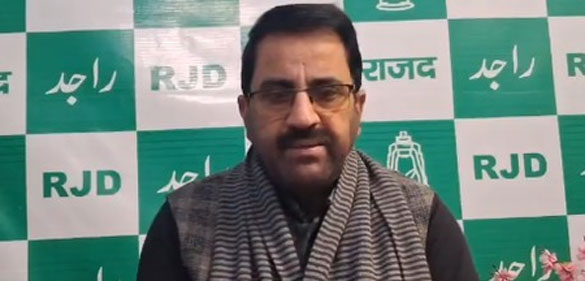
Patna, Jan 7 (IANS) A decision by a jewellery shop owners’ body in Bihar to restrict the entry of customers with covered faces, including women wearing hijabs or niqabs, has triggered political controversy in the state. Reacting strongly, RJD state spokesperson Ejaz Ahmed termed the move unconstitutional and against India’s constitutional traditions. “Targeting hijabs and niqabs in the name of security hurts religious sentiments and amounts to an attempt to curtail the fundamental right to religious freedom guaranteed under the Constitution,” Ahmed said. He further claimed that BJP and RSS members were behind such an agenda and accused the jewellery shop owners of promoting it. He urged the shop owners to immediately withdraw the decision, warning that it would weaken India’s constitutional and secular fabric. Meanwhile, the All India Jewellers and Gold Federation (AIGJF) on Tuesday said that the decision, stating that customers whose faces are covered with hijabs, burqas, scarves, helmets, or similar items will not be allowed to enter jewellery showrooms unless their faces are visible. According to the federation, jewellery purchases will only be permitted after proper facial identification. Ashok Kumar Verma, State President of the All India Jewellers and Gold Federation, told IANS on Tuesday that Bihar has become the first state to formally implement such a rule statewide. He clarified that the decision is purely based on security concerns and not targeted at any specific community. “Today, the price of 10 grams of gold is around Rs 1.40 lakh, and one kilogram of silver costs about Rs 2.5 lakh. Several robbery incidents have occurred where people enter shops in groups with their faces fully covered. They wear helmets or veils and commit thefts. This decision is aimed at preventing such crimes,” Verma said. Verma emphasised that the federation is not banning the burqa or hijab, but merely requesting customers to briefly show their faces while shopping. He added that the rule applies equally to men who cover their faces with scarves or helmets. “Our intention is not discrimination. When a customer and a shopkeeper interact face-to-face, a sense of trust is established,” he said, adding that the rule is for everyone, not any particular community. Verma also stated that he had discussed the issue with the Patna City Central Superintendent of Police, who raised no objections. He claimed similar precautionary measures are already being followed in some districts of other states. Responding to questions about possible protests, Verma said there was no scope for controversy. “No staff member will forcibly remove anyone’s hijab or burqa. We will only make a polite request. There is no question of confrontation,” he said. The issue has sparked a broader debate in Bihar over the balance between security measures and religious freedom, with political reactions continuing to pour in.
Source: indianews.com.au
https://indianews.com.au/rjd-condemns-bihar-jewellery-shop-owners-decision-to-restrict-customers-with-hijabs-niqabs/
-------
Tayyebeh Hekmat, First Woman Executed in Iran in 2026
January 6, 2026
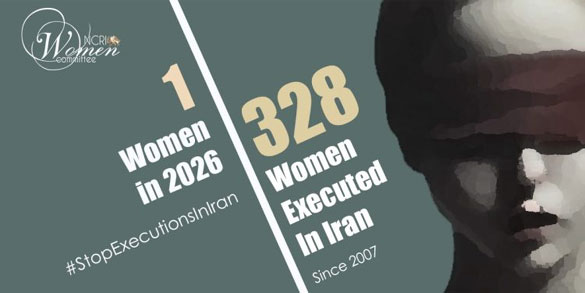
TayyebehHekmat, a 53-year-old woman and mother of three, was executed in Zanjan Central Prison at dawn on Tuesday, January 6, 2026. She is the first woman executed in Iran in 2026.
TayyebehHekmat had been arrested approximately seven years ago on charges of murdering her husband and was sentenced to qisas (retribution in kind).
As of the time of this report, TayyebehHekmat’s execution has not been officially announced by Iranian state media or judicial authorities.
Many of the women executed by the Iranian regime are themselves victims of domestic violence and discriminatory family laws. A significant number have acted in self-defense.
Iran, the world record holder in executing women
According to data recorded by the Women’s Committee of the National Council of Resistance of Iran, at least 328 women have been executed in Iran since 2007.
Since MasoudPezeshkian took office, the clerical regime has executed 2,968 prisoners, including 88 women. In 2025 alone, 2,201 executions were recorded in Iran—more than double the number carried out in 2024 (1,006).
The Women’s Committee of the National Council of Resistance of Iran once again calls on the United Nations and relevant agencies, the European Union and its member states, as well as all human rights defenders, to take immediate action to save the lives of death-row prisoners and to halt the rampant executions in Iran.
Source: wncri.org
https://wncri.org/2026/01/06/tayyebeh-hekmat-first-woman-executed-in-2026/
-------
Syria’s Quiet Crisis of Drug-Related Violence Against Women
JANUARY 06, 2026
Idlib, Syria—This wasn’t the first time that Fatima,* 29, was beaten by her husband, but it was the first time that she was hospitalized for it. Eventually, his abuse landed her in an intensive care unit. She suffered a miscarriage from the trauma.
The mother of two, who resides in the northwestern Syrian city of Idlib, said that her husband grew addicted to captagon pills in early 2023 and has been extorting her for money or jewelry ever since to fund his addiction. He insists that they give him happiness and strength, she said.
Fenethylline (Captagon) is a highly addictive pharmaceutical drug, originally produced in Germany in the 1960s — legally — as a treatment for hyperactivity, depression and narcolepsy. But it was eventually outlawed due to its side effects of heart risk and hallucinations.
Its addictive and hallucinogenic features are why counterfeit captagon drugs have persisted as a popular party drug, particularly in the Middle East.
According to a report by the Arab Center for Research and Policy Studies, Syria has become the largest producer and exporter of manufactured drugs. Despite efforts by neighboring countries to combat this threat, drugs continue to flow in large quantities, with 1,251 drug shipments seized in the Middle East between 2016 and 2022.
From 2011 to 2024, Syria was embroiled in a civil war between the Syrian government and opposition factions, resulting in the deaths of over half a million Syrians. 6.8 million Syrians have been displaced abroad.
Amid the chaos of war and the division of Syria into areas of influence, with the presence of four government or de facto authorities — the Syrian regime, the Syrian Democratic Forces (SDF), Hayat Tahrir al-Sham, and areas controlled by the opposition-affiliated interim government — the manufactured drug trade expanded and became more entrenched in Syria’s economy. The captagon trade alone grew into a billion-dollar industry that largely funded the regime and its loyalists.
In December 2024, opposition factions seized the capital city of Damascus, and former President Bashar al-Assad fled to Russia, ending a brutal regime that lasted for over 50 years. After the fall, the country’s Anti-Narcotics department said it seized some 13 warehouses and drug manufacturing plants, including 320 million captagon tablets.
One addiction treatment center run by the Syrian Green Crescent Society in northern Syria admits patients on a voluntary basis—with their informed consent—and offers medical and psychological support. And while stigma prevents many from accessing such rehabilitation facilities, many of those who have passed through this clinic’s doors were involved in violent crimes against their family members, said Qaiser al-Sayed, the society’s director.
After Fatima was discharged from the hospital, she filed a complaint against her husband in court but said the judge had insisted on reconciliation. “He was arrested and released only a few days later after paying a bribe,” she said.
Fatima now lives in her parents’ home — without her children — as she struggles to obtain a legal divorce.
She is considered lucky to have even survived: Others, like Aisha al-Sayeh, 23, from Aleppo, were not spared. Al-Sayeh was killed by her husband at the beginning of last year in a well-publicized case. Her husband was addicted to H-Bose (another street name for crystal methamphetamine in Syria, according to the Syrian Observatory for Human Rights), al-Sayeh’s sister Nida told WMC Women Under Siege. “He would constantly beat and abuse her.”
The United Nations reported that violence against women in Syria remains a persistent reality due to the complex effects of the prolonged crisis, displacement, and economic deterioration.
“Syria has recently witnessed a significant increase in cases of violence against women and girls, including domestic and spousal abuse, which in some cases has resulted in death,” said NourBakir, a psychologist in Idlib.
Bakir said that there are already many social justifications for domestic violence in Syrian society, including discipline. Adding the unpredictable behavior of a head of household suffering from drug addiction, Syrian women often find themselves forced to “endure the mood swings” of their husbands.
While the transitional government under Ahmed al-Sharaa has done well to dismantle the country’s narcotics infrastructure, the issue of demand remains—not just abroad but within. Drug abuse is now widespread in Syria, including among youth, who were once target consumers under the Assad regime.
According to a 2024 MedGlobal report, addiction cases have increased, especially among young people around the ages of 14 and 15, who overwhelmingly cited “escape from reality” as their motivation for drug use.
Students were deprived of their education due to war and displacement. And now, compounded by crises of unemployment and poverty in post-war Syria—along with the affordability and accessibility of these substances—the fight against drug abuse and violence in the country risks spilling over to succeeding generations. For Syrian families, the drug crisis threatens to unravel them from the inside.
Statistics on drug-related violence against women remain threadbare, and while the government continues to seize large stockpiles of pills, it must also integrate more comprehensive reporting data on the holistic consequences of this crisis to truly address it.
Source: womensmediacenter.com
https://womensmediacenter.com/women-under-siege/syrias-quiet-crisis-of-drug-related-violence-against-women
------
Women Detained in Yazd Say They Were Threatened with Rape in Custody
JANUARY 6, 2026
IRANWIRE
Human rights groups say women arrested during recent protests in the central Iranian city of Yazd were threatened with sexual violence while in custody, raising renewed concerns about the treatment of female detainees amid nationwide demonstrations.
According to a report released on January 5, 2026, by the Boroumand Foundation, an independent human rights organisation monitoring arrests and detentions across Iran, security forces loyal to the Islamic Republic transferred at least 20 women protesters to solitary confinement units in the women’s ward of Yazd Central Prison over two days.
The women were detained during anti-government protests that have intensified across multiple Iranian cities in recent weeks.
Multiple detainees told trusted sources that at least two of the women were threatened with rape by agents of the Intelligence Organisation of the Islamic Revolutionary Guard Corps (IRGC) at the time of their arrest. Activists say such threats are frequently used to intimidate female protesters and suppress dissent.
The Boroumand Foundation and other rights monitors have confirmed the identities of nine women formally arrested in Yazd: ReyhanehZare, FarzanehGolestani, Maryam Zare, Sara Nosrati, MarziyehAzarang, Sogol Salari, ElhamFallah, Mina Arzha, and Sara Bostan.
According to rights groups, these identities have been verified through multiple independent sources, including prison records and activist testimonies.
Sources familiar with conditions inside Yazd Central Prison describe a deteriorating situation in both the men’s and women’s wards. Rights observers say approximately 100 men are currently detained in the male section of the prison.
Source: iranwire.com
https://iranwire.com/en/news/147342-women-detained-in-yazd-say-they-were-threatened-with-rape-in-custody/
-------
Nationwide Uprising in Iran Enters a New Phase with Active Role of Women
January 7, 2026
On Tuesday, January 6, 2026, Iran’s nationwide uprising entered a new and decisive phase of confrontation with the country’s clerical dictatorship. The protests have now spread to at least 110 cities across Iran, and the identities of 32 people killed during the uprising have been confirmed.
Alongside the widely heard chants of “Death to Khamenei” and “Death to the dictator,” a defining slogan echoed across cities nationwide: “This year is the year of sacrifice, Seyed Ali (Khamenei) will be overthrown.”
Tehran: The Bazaar Rises, Clashes Spread Across the Capital
Early Tuesday morning, the heart of Tehran witnessed a surge of protest led by bazaar merchants and rebellious youth. Large sections of the Grand Bazaar went on full strike as shopkeepers closed their businesses and launched protest gatherings. Despite the deployment of water cannons, a heavy presence of riot police, plainclothes agents, and at least 20 buses transporting security forces, the clerical regime failed to suppress the demonstrations.
At the same time, central areas of Tehran were placed under intense security lockdown. Security forces even used ambulances to transport personnel. From 3:00 p.m. onward, protests and clashes intensified in the southern districts of the capital. In all these areas, protesters chanted “Death to Khamenei” and “Death to the dictator.”
Demonstrations also continued in western and parts of northern Tehran. By evening, clashes peaked in Sadeghieh, Tajrish, and Enghelab Street. Security forces fired tear gas to disperse crowds but failed to regain control. Tear gas was even fired at Sina Hospital in the Hassan Abad area. Protests were also reported in the Khak-e Sefid district.
Meanwhile, students at Tehran’s all-female Al-Zahra University joined the uprising, chanting anti-regime slogans.
Shahrekord and Ilam: Prominent Role of Women, Direct Confrontations Erupt
In Shahrekord, widespread demonstrations erupted with a strong and visible presence of women. Protesters clashed directly with special forces units after security forces blocked major routes to prevent gatherings. Residents responded by setting fires in the streets to stop security units from advancing.
In one striking scene, a young woman stood alone in front of a water cannon, openly defying and humiliating the regime’s forces.
Bazaar merchants in Shahrekord were also on strike.
In Abdanan, in Ilam Province, the city was effectively taken over by protesters and rebellious youths. Crowds controlled the streets, and when IRGC forces attempted to attack demonstrators, they were met with organized resistance. A store owned by the Revolutionary Guard Corps was set on fire, and security forces, unable to confront the crowds, retreated to the rooftop of a police station. Fearing the spread of the uprising, authorities cut off electricity to the city.
Malekshahi and Ilam: Public Fury After Killings
On Tuesday morning, victims of the uprising in Malekshahi, Ilam Province, were buried amid massive public participation, including large numbers of young women and girls. Funeral processions turned into protest marches, with chants of “Death to Khamenei,” “Death to the IRGC,” and “This year is the year of sacrifice, Seyed Ali (Khamenei) will be overthrown.”
Outrage over the killings of January 3 and 4 in Malekshahi and Ilamfueled further clashes. Protesters chanted, “I will kill the one who killed my brother.” During confrontations with riot police, several security forces were reportedly killed or injured, while others fled the scene. A state-owned bank was set on fire. Eyewitnesses reported that security forces retreated, leaving parts of the city effectively liberated.
Universities and Cities Nationwide Join the Uprising
On Monday night, January 5, in Tabriz, demonstrators chanting “An honorable Iranian—both the Shah and the Sheikh are disgraceful” blocked security supply routes by throwing firebombs and setting trash bins ablaze.
In Mashhad, protesters blocked roads on Ghayour Street while chanting “Death to the oppressor, whether Shah or (the mullahs’) Leader.”
At Birjand University, students chanted slogans such as “We didn’t give martyrs to compromise,” “I will kill the one who killed my brother,” and “Neutrality is betrayal.” Security forces later stormed the university and the women’s dormitory, arresting a number of students.
From 1:00 p.m. until midnight on January 6, protests and clashes continued across dozens of cities, including Arak, Songhor, Eslamabad-e Gharb, Isfahan (Yazdanshahr and Koushk), Shahrekord, Mashhad, Nourabad-e Mamasani, Hafshejan, Kuhdasht, Malekshahi, Jask, Qasr-e Shirin, Kermanshah, Ilam, Abdanan, Sari, Mojanabad in Khorasan Province, Neyriz in Fars Province, Mehrshahr, Qazvin (Alvand), Kerman University of Art, and Mahabad.
In Borujerd, residents marched in the evening chanting “Death to the dictator.”
In Mashhad, riot police attacked demonstrators in 17 Shahrivar Square using tear gas, but protesters resisted, chanting “Freedom, freedom.”
In Isfahan and Shiraz, residents attempted to free recently arrested protesters as anti-regime slogans filled the streets.
In Kermanshah, nighttime demonstrations reached their peak as large crowds confronted security forces.
Night protests were also reported in Lahijan, Qom, Tabriz, Birjand, and Sari.
Scale and Significance
By midnight on Tuesday, January 6, protests had erupted in more than 90 cities across 27 provinces. Approximately 20 cities, including Borujerd, Yazdanshahr, Koushk, Malekshahr, and ChenarAsadabad in Hamedan Province, joined the uprising for the first time.
The breadth, intensity, and coordination of these protests underscore a critical shift: Iran’s uprising has entered a new phase in which streets, universities, bazaars, and neighborhoods have simultaneously become arenas of direct confrontation with the clerical regime, driven in large part by the courage, leadership, and determination of women.
Source: wncri.org
https://wncri.org/2026/01/07/nationwide-uprising-iran-new-phase/
-------
The Growing Presence of Saudi Women at the Dakar Rally
BY FELICITY CARTER
JAN 06, 2026
Amid the thunder of engines and the unforgiving terrain of the world’s most demanding test of endurance, women at the Dakar Rally in Saudi Arabia are driving it forward.
Now in its seventh edition in the Kingdom, the Dakar Rally has become a platform for local development, with infrastructure, training pathways, and professional opportunities, and so, the rally has become a space where Saudi women can compete and contribute at the highest level.
The Growing Presence of Saudi Women at the Dakar Rally
That progression is seen via Dania Akeel, one of the most accomplished Saudi competitors in rally raid. The Jeddah-based driver has built her reputation through results; cue her victory in the T3 Challenger Class stage at Dakar last year, followed by a win at the Abu Dhabi round of the FIA World Rally-Raid Championship, securing her third overall place in the series.
For Akeel, Dakar it’s all about discipline, decision-making, and the constant recalibration demanded by one of motorsport’s most exacting environments, “It’s such a wonderful adventure. In the Dakar Rally, you see the consequences of your decision-making instantly,” says Akeel. “It’s not an easy thing to do, but we are all here by choice, so we put ourselves through this experience for different reasons. I love to drive, but in these conditions, you learn a lot about yourself — it’s addictive.”
Racing on home soil adds another dimension with Saudi Arabia’s vast and varied landscapes, from coastal stretches to deep desert, it requires adaptability and resilience. Off the track, Akeel is all too aware of her visibility and the expectations that come with it, “The Dakar Rally is really tough, but it’s about how quickly you can adapt to change. It’s always evolving and pushing you to different places. Are you resisting it or working with it? And when I’m outside of the car, I feel a sense of responsibility as people are following my progress and that obviously has an impact.”
That visibility is already influencing the next generation and the Saudi Next Gen programme, which is now in its second year, has been established to identify and develop emerging rally talent, offering exposure not only to driving but also to navigation, mechanics, and endurance racing.
Among those set to compete in the 2026 Dakar is Reem Al Aboud, a 25-year-old driver from Jeddah, partnered with 23-year-old co-driver ShrooqAlamri from Riyadh. Al Aboud’s motorsport journey began in karting before she made history as the first Saudi woman to drive a Formula E car. Speaking on Akeel’s influence, she says, “Dania Akeel is an inspiration to all Saudi women wanting to join motorsports because she achieved so much in such a short amount of time. She proved that it’s possible to achieve what you want to dream of.”
Al Aboud goes on to share, “It’s an absolute honour. To have this opportunity to represent Saudi Arabia in such an amazing global competition is a goal I’ve been chasing since I first started racing. And I’ve had a lot of young Saudis asking how they can get involved, where to go, how to get a racing licence.”
Aside from the competitive stages, Saudi women are also increasingly visible behind the scenes. From event operations to leadership roles, the motorsport ecosystem is broadening. MaissDabbour, Director of Guest Management & Protocol at the Saudi Motorsport Company, has witnessed this transformation first-hand.
“There has been a clear and positive increase in women working for SMC,” She says. “Across different departments and at varying levels of responsibility, contributing not only to operations, but also to leadership, strategy, and decision-making. The barriers to entry have significantly reduced. There are clearer pathways, stronger institutional support, and more opportunities across the motorsport industry.”
Inspired by the impact of representation, she goes on to add, “Visible success creates belief. When the next generation sees women like Dania Akeel succeeding at the highest level, it shifts the mindset from ‘is this possible?’ to ‘where do I fit?’”
As host of the Dakar Rally once again, Saudi Arabia continues to embed women within the structure of the sport, with progress measured in kilometres covered. Asked what message she hopes to pass on, Akeel shares, “I want women to do what they want. To feel that they can make educated choices, to inform themselves, and have the right qualities to pursue their targets. My message is to do what comes naturally. Do it well, excel at it, work hard, and focus. Life is short, so we should all contribute what we have — everyone has something to give.”
The Dakar Rally Saudi Arabia 2026 is now underway and will run until January 17, 2026, spanning 14 race days across a demanding and varied route. With competitors from 49 nationalities and hundreds of vehicles across multiple categories, the rally remains one of the sport’s ultimate tests today.
Source: prestigeonline.com
https://www.prestigeonline.com/hk/lifestyle/culture-plus-entertainment/saudi-women-dakar-rally/
-------
NikhathFathima's mission has empowered girls, poor kids through education
Sreelatha Menon
07-01-2026
Can a single person reach out to so many people, and see them rise to a life of respect, dignity and financial freedom? It may be possible with money, but for an ordinary woman to lead teams on education in many centres for three decades and reach goals and create a template for effective and efficient social engineering is an extraordinary feat.
NikhathFathimaSohail heads the MWA Matriculation School in Chennai; she is co-chair of the Academy for Women, and part of several other education-related organisations for Muslim youth and women.
It all started as a student of the Sacred Heart School, which has famous alumni like Jayalalitha, Jayanti Natarajan and Kanimozhi. As part of NCC, she would join projects related to an orphanage, and that triggered her passion for education and philanthropy.
She went on to set up five learning centres for children with learning disabilities, heading a school with 1,500 students. "I worked for 30 years for girls and for their social uplift in Tamil Nadu," she says about her work as the co-chair of the Academy for Women under the umbrella of AIH.
The passion to help children and the destitute - a reflection of life as a little young school girl - has lit the lives of hundreds of youths, mostly girls.
Early in her life, she was elected co-chair of the Academy, whose trustees included the Nawab of Arcot and her grandparents, whose families have been close to the Nawab for generations.
Asked if it was easy to gain the position as a woman, she says, "It is never easy. But when you get the opportunity, one wants to empower girls, and to keep the environment women-friendly."
She cites the example of her real estate business, which is a business cum training model. "I identify youth in need of employment, single mothers, widows, and others from the community, often without degrees and cut off from mainstream job entry points. They come for a 20,000 pay package. I train them and find them jobs where their earnings can go up to Rs 30v000 a month.
"They learn to use English, and that is an empowering tool for these young men and women," she says.
She plans to turn the MWA School of 1500 students into a ramp-friendly school this year. "We want more differently-abled students in the school, and for that, we have to ramp it well," she says.
The school, which will celebrate its centenary in 2027, gives free education to 20 per cent of the students. The school boasts of an all-round development model giving importance to sports, religion, English language skills, as well as other parts of the state curriculum.
She feels that education has helped the uplift of Muslim women in the state, unlike in other parts of the country.
She attributes this to the Pereyra movement and how the Dravidian culture is very enveloping and inclusive, making citizens prioritise their Tamil identity before anything else. "People have been smart enough in southern India to understand that they have to fight for opportunities. So, Muslims in southern India have been better off than in the north, and their relationship with other communities has also been cordial. There has been a sentiment of live and let live, especially among the Brahmins here. Things are good unless the vitiating and divisive winds from the north do not creep into our state," she says.
Being on the board of the Organisation of Muslim Educational Institutions and associations in all of Tamil Nadu, she has a say in the running of 300 schools affiliated with OMEIAT under it.
An alumnus of the Sacred Heart School, Nikhat was formerly president of its alumni association, SHAA, which had famous persons like J Jayalalitha, Jayanti Natarajan and Kanimozhi as members.
But her biggest contribution is as the lead of the Academy for Women under the AHI. It offers courses for intermediate girls. It covers 180 girls enrolled in courses in counselling, fashion design, and tailoring.
She says the secret of managing social enterprises involving money is not plenty of wealth. You need time, not money. And you need good financial management. With that, you try to create an income rather than merely do charity, she says.
In the training institutes she runs, she applies the same strategy. We get sponsors for our students. We don’t make a profit, but at the same time, we don’t make losses either. I also have to know the market for jobs to succeed, she says.
"There is a huge demand for teachers in psychology. So, girls finishing a one-year diploma get jobs in schools and other institutions," she says.
She says it is important to know about one’s own religion and also other texts. "We know more about Ramayana than modern kids," she says. "It only broadens our outlook. So, we teach our students about religion. The reason is that no religion teaches hate."
She feels that ignorance creates suspicions and misunderstandings between communities. Talking of Islam, she says that ``salamvalaikum’’ means I wish peace upon you. How can someone wish harm on the other person?
Nikhat Fatima, 55, the mother of three children and grandchildren, wants to wind down and withdraw from most of the responsibilities. "I’ve already handed over leadership in most of these organisations," she says, in a tone that suggests a peace that comes from decades of service.
Source: awazthevoice.in
https://www.awazthevoice.in/changemaker-news/nikhath-fathima-s-mission-has-empowered-girls-poor-kids-through-education-47628.html
-----
Tinubu Appoints First Female Head of Nigerian Law School
January 6, 2026
By Doris Ijeoma Israel
President Bola Ahmed Tinubu has approved the appointment of Dr. OlugbemisolaTitilayoOdusote as the new Director-General of the Nigerian Law School, effective January 10, 2026, for a four-year term.
This was contained in a statement signed by BayoOnanuga, Special Adviser to the President on Information and Strategy.
Dr. Odusote, 54, is currently the Deputy Director-General and Head of the Lagos Campus.
Her appointment marks the first time a woman will lead the institution since it was established in 1962.
Naija News reports that she will take over from Professor Isa HayatuChiroma, whose eight-year tenure ends on January 9, 2026.
Dr. Odusote earned her LL.B and LL.M degrees from Obafemi Awolowo University, focusing on company and commercial law, and later completed a PhD in Law at the University of Surrey in the United Kingdom, with research in Public Law and the administration of justice.
Dr. Odusote joined the Nigerian Law School as a lecturer in 2001 and has held several roles, including head of the academic department, director of academics, and head of campus.
She also spent time as a visiting scholar at Nottingham Trent University in the UK.
Throughout her career, she has contributed to many local and international law journals and participated in legal education conferences.
She has also served on committees for the Council of Legal Education and the Nigerian Bar Association.
As Director-General, Dr. Odusote will oversee the school’s academic programs, administrative operations, and strategic plans across all campuses.
She will act as the main liaison with the Council of Legal Education, the Body of Benchers, and the Nigerian Bar Association.
Source: naijanews.com
https://www.naijanews.com/2026/01/06/tinubu-appoints-first-female-head-of-nigerian-law-school/
-------
Women entrepreneurs’ trade fair to hold in Kwara, targets 30,000 participants
January 6, 2026
Muslim women entrepreneurs, under the aegis of Muslimapreneur, on Tuesday announced that scores of Muslim women entrepreneurs in Kwara State are set to organise a trade fair aimed at empowering women-led businesses, strengthening local enterprises, and contributing to the state’s economic development.
Briefing journalists ahead of the three-day fair in Ilorin, the state capital, Fatimah SaliuAdejumoke, founder of BaytuTejmeel and convener of the group, explained that the Muslim women entrepreneurs are committed to changing the business narrative among women engaged in halal (lawful) enterprises.
Adejumoke, who noted that women contribute significantly to household income, food security, manufacturing, services, and creative industries across the state, however, lamented that yet many of these businesses remain informal, unseen, and unsupported.
“This trade fair is not just about buying and selling. It is a purpose-driven platform created to address a real gap we see every day: women running viable businesses but lacking visibility, structured markets, and access to opportunities that allow them to scale sustainably.
“At this trade fair, over 30,000 participants and attendees will experience a well-organized marketplace that brings together businesses from diverse sectors—food and beverages, fashion, beauty, agro-processing, services, creative industries, and more.
“It will also serve as a space for networking, brand exposure, partnership building, and community engagement”, she said.
Adejumoke, further explained that though the initiative is Muslimah-led and values-driven, adding that the trade fair is open to all vendors and the general public.
She said that the fair would take place before the forthcoming Ramadan season, adding that it is expected to serve purpose of pre-Ramadan, Ramadan and eid el fitrisallah shopping slated between January 30th and February 1st, 2026.
“Our guiding principles are ethical business practices, quality products, professionalism, and inclusivity.
“We are intentional about structure, order, and impact. Our goal is not a one-off event, but the foundation of a recurring economic platform that supports small and medium enterprises, creates employment, and encourages local production”.
She called on policymakers, institutions, and private stakeholders to partner with the women entrepreneurs in amplifying the vision.
“To the people of Kwara State, this trade fair is an invitation to support local businesses, to invest in women-led enterprises, and to participate in building an economy that is inclusive and sustainable.
“We are confident that this initiative will deliver measurable impact from increased sales and brand visibility for vendors, to stronger business networks and economic activity within our state”.
Source: businessday.ng
https://businessday.ng/news/article/women-entrepreneurs-trade-fair-to-hold-in-kwara-targets-30000-participants/