
Sushila Karki First Female Chief Justice of Nepal, Now Frontrunner To Lead Interim Govt
New Age Islam News Bureau
11 September2025
· Sushila Karki First Female Chief Justice of Nepal, Now Frontrunner To Lead Interim Govt
· Hardliner Pressure Forces Out Iran's Female Arts Chief, Nadereh Rezaei
· "I Got Picked Last Because I Wore The Hijab, They Wouldn't Call Me Selina, They'd Call Me Hijabi, So I Stopped Going"
· Former Iranian Police Official Says No Law Bans Motorcycle Licenses for Women
· Police Investigate 'Hate Crime' Against Muslim Schoolgirl In Glasgow
· IBPC Dubai Launches ‘Women’s Collective’ To Empower Female Entrepreneurs And Professionals Across The UAE
· Reproductive Rights and Muslim Women: A Report on Health, Autonomy, and Legal Frameworks
· Iranian Rapper’s Sister Claims Pardon, Lawyer Denies Confirmation
Compiled by New Age Islam News Bureau
URL: https://newageislam.com/islam-women-feminism/sushila-karki-female-chief-justice-nepal/d/136801
----
Sushila Karki First Female Chief Justice of Nepal, Now Frontrunner To Lead Interim Govt
Sep 10, 2025
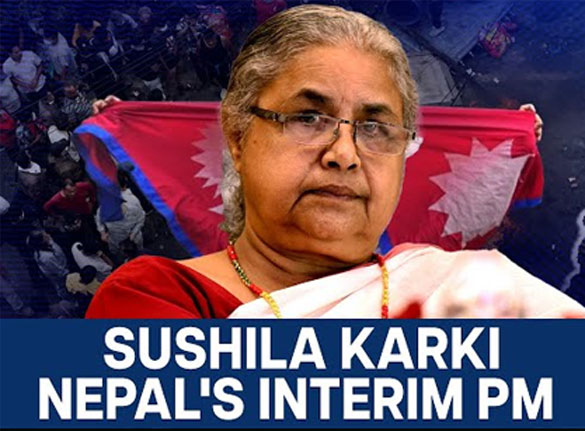
Nepal’s Gen Z protest movement has chosen former Chief Justice Sushila Karki as its interim leader, news agency ANI reported citing sources. In a virtual meeting lasting nearly four hours, young organisers agreed that no youth connected to political parties should assume the role, and settled on Karki as the figure to represent them in upcoming negotiations, local media outfit Khabarhub reported.
The decision came as Kathmandu remains under curfew, with soldiers deployed to restore order after government buildings, politicians’ homes and even the parliament were torched by furious demonstrators. The protests, triggered by a controversial social media ban, have spiralled into a wider rejection of corruption, nepotism and entrenched political elites. At least 19 people have been killed and hundreds injured since the unrest began.
Who is Sushila Karki?
Karki made history in 2016 when she became Nepal’s first female chief justice. But her tenure was cut short the following year when lawmakers filed an impeachment motion accusing her of “delivering biased verdicts” and interfering in the executive’s jurisdiction. The motion followed her court’s decision to overturn the government’s police chief appointment, ruling that seniority had been unfairly bypassed.
Although she was automatically suspended while the investigation proceeded, the impeachment process failed to secure the necessary two-thirds majority before her retirement in June 2017.
Born on June 7, 1952 in Biratnagar, Nepal.
Studied Law at Tribhuvan University (1978) and Political Science at Banaras Hindu University (1975).
Served as Chief Justice of Nepal from July 2016 to June 2017, the first woman to hold the post.
Faced impeachment in 2017 after ruling against political interference in police appointments.
Previously worked as a justice of the Supreme Court, senior advocate, and law professor.
Author of a book on gender equality and long-time member of human rights and women’s judicial organisations.
Recognised with awards including the Sambhav Kanoon Puraskar (2004).
Earlier, Kathmandu’s young mayor, Balendra Shah, widely known as “Balen” also emerged as a likely figure to lead the interim government. The 35-year-old rapper-turned-politician, studied structural engineering at Visvesvaraya Technological University in India. He rose to prominence through Nepal’s underground hip-hop scene, using his music to speak out against corruption and inequality. In June 2023, he made headlines by banning Indian films in Kathmandu over a line in Adipurush.
Source: indiatimes.com
https://timesofindia.indiatimes.com/world/south-asia/nepal-unrest-who-is-sushila-karki-first-female-chief-justice-and-now-frontrunner-to-lead-interim-govt/articleshow/123810053.cms
-------
Hardliner Pressure Forces Out Iran's Female Arts Chief, Nadereh Rezaei
SEPTEMBER 11, 2025
ATA MAHAMAD
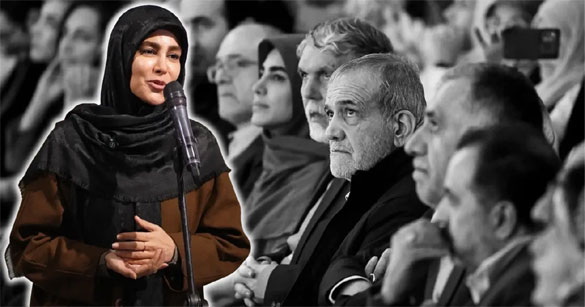
Rezaei made history last year when she became the first woman to serve as deputy minister of arts in Iran's Ministry of Culture and Islamic Guidance
-----------
The Instagram like seemed harmless enough.
Nadereh Rezaei, Iran's deputy culture minister, had simply clicked approval on a post about a female singer's online concert.
Within hours, hardline media were calling it proof of her support for "norm-breakers" who violated the Islamic Republic's cultural red lines.
Rezaei made history last year when she became the first woman to serve as deputy minister of arts in Iran's Ministry of Culture and Islamic Guidance.
Nine months later, that groundbreaking tenure came to an abrupt end.
Culture Minister Abbas Salehi dismissed Rezaei this week and replaced her with Mohammad Mehdi Ahmadi, a conservative figure whose appointment signals a sharp pivot away from the cultural openness Rezaei had championed.
The dismissal followed months of criticism from hardline lawmakers and media, who accused the 44-year-old former publisher of undermining traditional values and exceeding her authority.
Rezaei's brief but turbulent tenure reflects the deep tensions within Iran's theocratic system between reformist aspirations and conservative resistance.
Her supporters viewed her as a voice for Iran's younger generation and a symbol of cultural progress.
Her critics saw her as a dangerous liberal whose actions threatened the Islamic Republic's core principles.
The beginning of the end for Rezaei can be traced to a canceled concert by singer Homayoun Shajarian.
The concert, planned for Tehran's Azadi Square, was called off at the last minute, sparking public disappointment and political finger-pointing.
Rezaei issued a public apology, telling Iranians in a video message: "Unfortunately, what was supposed to be realized for people's joy, for whatever reason, did not happen, and we apologize to the people of Iran and artists."
She said her ministry had worked for two months to coordinate the event.
But documents later revealed that Rezaei had submitted the necessary paperwork to the Interior Ministry only five days before the scheduled performance.
Critics seized on this as evidence of poor planning and administrative incompetence. Hardline politicians went further, casting her as the main advocate for a concert they viewed as culturally inappropriate.
Rezaei's problems also stemmed from her political past.
Born in 1981, she entered Iran's male-dominated political sphere with a history of activism that made conservatives uneasy.
In 2008, she was among 466 political and civil activists who signed an open letter to then-U.S. President Barack Obama.
The letter criticized American sanctions on Iran, arguing they strengthened hardliners rather than promoting democratic change.
It warned that continuing sanctions would "remove the opportunity for peaceful change" and urged Obama to create conditions for "confidence-building and serious negotiations."
For Iran's principlists - conservative politicians who emphasize adherence to the Islamic Revolution's founding principles - the letter represented an unacceptable appeal to a foreign power.
When Rezaei was appointed to lead Scientific and Cultural Publications in 2019, and later when she joined President Masoud Pezeshkian's administration, critics repeatedly cited the Obama letter as proof of her disloyalty.
As deputy culture minister, Rezaei quickly found herself at the center of cultural battles.
She supported the "Koocheh" street art festival, which conservatives accused of promoting Western values.
She liked social media posts by female singers performing without hijab, triggering accusations that she endorsed "norm-breakers."
Her appointment of Kambiz Norouzi, a lawyer imprisoned in 2009 during post-election protests, to a legal working group in her department further inflamed critics.
Parliament member Fathollah Tavassoli questioned why someone with a "security background," a euphemism for having been jailed for political activities, was given a government role.
Tavassoli also raised concerns about Rezaei's family, saying that her siblings had been political prisoners.
In Iran's political environment, such connections can doom careers regardless of an individual's own actions or qualifications.
The pressure intensified over the summer. In August, parliament issued a "yellow card" - a formal warning - to Culture Minister Salehi, partly due to controversies surrounding Rezaei's department.
For many Iranians, particularly younger citizens and women, Rezaei represented hope for gradual change within the system.
Her supporters say she worked to reconcile artists who had been at odds with the government, particularly during the 12-day war with Israel in June.
"She had become a symbol of openness in culture and art," wrote one social media user after her dismissal.
"Interestingly, authoritarians and monarchists became allies in their enmity toward her and any effort to strengthen the bonds of Iran's pluralistic society."
Mohammad Ali Abtahi, a reformist politician, criticized the dismissal as evidence of the government's retreat under hardline pressure.
But conservatives celebrated Rezaei's removal. Parliament member Morteza Mahmoudi called it "pleasant" and expressed hope that future appointments would go to "specialists who believe in the foundations of the Islamic Republic."
Journalist Abdolreza Davari, who had previously questioned Rezaei's qualifications, wrote that her "appointment was a mistake by the Minister of Culture that was corrected yesterday."
Source: iranwire.com
https://iranwire.com/en/features/144722-hardliner-pressure-forces-out-irans-female-arts-chief/
--------
"I Got Picked Last Because I Wore The Hijab, They Wouldn't Call Me Selina, They'd Call Me Hijabi, So I Stopped Going"
September 11, 2025
Natasha Turney
"I got picked last because I wore the hijab, they wouldn't call me Selina, they'd call me hijabi, so I stopped going."
A fan of sport, Selina tried a local female team but says she faced racism and alienation.
The experience made her lose confidence and feel worthless.
Then, after giving birth, she sunk into depression, struggling with her mental and physical health, a time she describes as the "the lowest point in her life".
But then she found about a class to help women at the Pakistani Community Centre in Normanton, Derby, which led to her joining the weekly exercise sessions.
Some names have been changed to protect the identities of the women who have shared their experiences.
Research from Sport England shows 42% of British Muslim women are "inactive" - almost double the figure for the female population as a whole.
Meanwhile about 30% of British Muslim women aged 65 or older say they are in "bad or very bad health", compared to just 13% of females overall, according to the latest Census data.
This is highlighted by charity The Health Foundation, which shows Derby's Normanton and Arboretum wards as having one of the lowest life expectancy rates in the city.
It has prompted the exercise project, which aims to empower more Muslim women to become more active to positively impact their health and mental wellbeing.
'We reclaimed this space'
Selina is among 300 women who have been attending fitness classes every week there over the past three years.
Inspired by older women who take part in Pilates and soccercise, Selina has not only seen an improvement in her health but a renewed outlook on life.
No longer depressed, Selina now has a focus, training to be a coach to deliver sport sessions at the centre.
"We reclaimed this space because we don't have to try to fit in," she said.
"We are who we are, we are proud to be who we are and we are not scared."
One of the fitness class participants, Habiba - not her real name - told the BBC she wanted to exercise, even though her husband told her not to.
The 68-year-old exercises to help ease the pain of her arthritis, and has not stopped despite saying her husband's priority was that she looks after him, the house and the children.
"My husband says 'you don't need to do this'," she said.
"I make sure I cook, clean and everything is done in the house before I leave, so he can't complain when I'm not there."
Also struggling with joint pain, Habiba visited the centre in secret having heard about the sessions, wanting to learn how to swim in her late 60s despite never stepping foot in a pool before.
Habiba recalls there being a cultural "taboo" attached to women of a certain age in their community exercising.
She wants to stay active and although her husband doesn't agree, she said: "I'm lucky my son is supportive and backs me."
Habiba said by regularly taking part in swimming and Pilates sessions, she had seen a significant improvement in her health, with joint pain reduced and movement eased.
"I do everything for him [my husband], so now I want to do something for myself," she said.
A relative of Habiba told the BBC the classes were not something their community would have previously thought of doing.
"The majority of our Asian people don't do these things, don't go out and about, they don't go swimming as well, I think because of the culture. But now we're more aware of it, we do," they said.
The latest Census information shows the largest ethnic group in Normanton and Arboretum wards is Asian, with Islam the most widely practised religion.
It is also one of the most deprived areas of the city.
The link between deprivation and poor health was highlighted by The Muslim Council of Britain as part of its own 2025 Census report.
Neighbours Hawa and Anaiya attend Pilates and IT classes weekly, supported by their families.
But they told us their friend has been unable to join them.
"Her family's not supportive that much, they said she can't come here," Anaiya said.
'Teach other girls'
Hawa and Anaiya explained how their husbands have embraced their desire to better themselves through the classes at the Pakistani Community Centre, which they said had helped them both physically and mentally.
"We're very confident now," said Anaiya.
"Before we came here we were very shy," Hawa added, explaining that previously, she was unable to go to GP appointments with her children without her husband.
"We learn something, and now we teach other girls to come here and join the centre," she said.
The women's exercise project was initially set up by Amjad Ashraf, and the team from DE23 Active - a five-year project promoting physical activity in the Normanton and Arboretum wards.
Also a member of the Derby Health Inequalities Partnership, Amjad has worked with Derby City Council to get the most inactive people moving.
He said research he conducted within Normanton highlighted the barriers stopping women getting active, including safety, prioritisation of household chores and their faith needs.
"In certain households, families weren't comfortable initially in sending women out into spaces for physical activity as it has stigma and taboo attached to it," he said.
"It's about educating people so we overcome that taboo that's linked with physical activity."
He is also concerned by life expectancy in Normanton and Arboretum.
Local authority figures show that the average lifespan for both women and men in these areas was up to 10 years lower than other wards in Derby.
'I was embarrassed'
Back at the centre, swimming coach Tahira recalls her childhood.
"From a young age, no-one encouraged us to do exercise, go swimming or do any type of sport," Tahira - a mother of two - said.
It's a far cry from how she has brought up her own daughter, Aliyah, who works at the centre and is described as one of the driving forces there.
However, Tahira recalls how even just a few years ago, she would not even go walking.
"I was embarrassed to go outside and go for a walk in the park for fear of being judged by others worried about what people would think about culture and religion," she said.
After being encouraged to come along to the first session by her daughter, her mum was completely transformed.
Tahira's dream to learn to swim was enabled through the local leisure centre introducing new measures to ensure the privacy of the women.
Now, as a coach, she helps others to find freedom in exercise.
"We have blinds so no-one can look in, female lifeguards and I stand by the doors so the women feel safe and secure," Tahira said.
"I've seen the women in my community gain that confidence. Women from the older generations who suffered with joint pains have told me how much it's helped them."
Source: bbc.com
https://www.bbc.com/news/articles/ce397wpy338o
--------
Former Iranian Police Official Says No Law Bans Motorcycle Licenses for Women
SEPTEMBER 10, 2025
A former Iranian traffic police deputy said on Wednesday that no specific law prohibits women from obtaining motorcycle licenses, calling the restriction a legal gap rather than an official ban.
Einollah Jahani, former deputy of Iran’s traffic police, told ISNA news agency that Article 20 of traffic violations law mentions only men receiving motorcycle licenses while remaining silent on women.
“This should not be interpreted as a prohibition for women, but rather the law needs amendment,” Jahani said.
He said women’s requests for motorcycle riding have increased significantly due to economic conditions and traffic concerns.
Women can own motorcycles and receive official documents from police, he said.
Addressing “Islamic dress code concerns,” Jahani said mandatory safety helmets provide head covering and remove objections.
Women would need driving school training, exams, and testing like men after legal changes, he said.
Last month, Iran submitted legislation to parliament that would allow women to obtain motorcycle licenses, potentially ending a decades-old prohibition.
Kazem Delkhosh, deputy assistant to the presidency’s parliamentary affairs office, announced the bill to amend the traffic violations handling law.
Delkhosh said current laws exclude women from obtaining motorcycle licenses, creating legal and insurance problems.
He said women involved in motorcycle accidents cannot receive insurance coverage because they lack valid licenses.
“This legal gap is dangerous not only for women, but for other citizens as well,” Delkhosh said.
Iran has restricted women’s rights in numerous areas since the 1979 Islamic Revolution, including mandatory hijab requirements and travel restrictions.
Source: iranwire.com
https://iranwire.com/en/women/144706-former-iranian-police-official-says-no-law-bans-motorcycle-licenses-for-women/
-------
Police investigate 'hate crime' against Muslim schoolgirl in Glasgow
10TH SEPTEMBER
By James Walke
POLICE are investigating an alleged hate crime against a Muslim schoolgirl in a Glasgow suburb.
The incident in Newton Mearns occurred around 4pm on Monday near Harvie Avenue.
A post by several local organisations, including the local mosque – the Newton Mearns Islamic Centre – said a Muslim schoolgirl was walking home from Eastwood High School that afternoon when she was assaulted by a man who also made threatening comments against Muslims.
The organisations also expressed concern over a previous incident on that same street which also involved a young 15-year-old girl.
“Therefore, we have also asked the relevant authorities to tell us what more can be done to protect school children and prevent any future incidents like this taking place,” they wrote.
“Furthermore, we need to make sure that Islamophobic incidents are treated as hate crimes and dealt with accordingly.”
A Police Scotland spokesperson said: "Officers have received a report of a hate crime which happened near Harvie Avenue, Newton Mearns, Glasgow, around 4pm on Monday, 8 September, 2025.
"Enquiries are ongoing and officers will be carrying out increased patrols in the area."
Source: thenational.scot
https://www.thenational.scot/news/25456809.police-investigate-hate-crime-muslim-schoolgirl-glasgow/
-------
IBPC Dubai launches ‘Women’s Collective’ to empower female entrepreneurs and professionals across the UAE
September 10, 2025
Dubai, United Arab Emirates: The Indian Business and Professional Council (IBPC Dubai) announced today the launch of its Women’s Collective, a new initiative aimed at equipping the next generation of female entrepreneurs and professionals in the UAE.
A strategic extension of IBPC Dubai’s commitment to driving inclusion, leadership visibility, and growth within the Indian business community, it targets advocacy, high-value networking, and practical mentorship.
The Women’s Collective kicks off on September 12 with a compelling fireside chat between renowned humanitarian sector consultant Haya Mashhood and Suaad Al Suwaidi, a pioneering Emirati engineer, adventurer, and award-winning wildlife photographer. The event, open exclusively to female IBPC Dubai members, will take place at 4:00 PM at the Taj Business Bay, setting the tone for a season of meaningful dialogue and inspiration.
This initiative follows IBPC Dubai’s launch of the Affiliate Tier Membership, which offers access to valuable resources through a highly affordable, subsidized annual fee. The new tier underscores IBPC’s strategic commitment to promoting inclusive leadership and supporting emerging talent within one of the world’s most dynamic business ecosystems.
“The IBPC Dubai Women’s Collective is more than an event, it’s a movement. We are curating spaces where women can gain visibility, build powerful networks, and receive mentorship from trailblazers like Suaad Al Suwaidi,” said Jayshree Gupta, Governor, IBPC Dubai and founder of the law firm, The In-house Company. “As the UAE continues to champion diversity and innovation, we are proud to support this national vision by elevating Indian businesswomen who are shaping the future.”
Suaad Al Suwaidi, the featured speaker for the launch event, exemplifies the spirit of innovation and resilience the Women’s Collective aims to highlight. She is renowned for documenting wildlife globally and has captured rare and compelling imagery in some of the world’s most extreme environments, from the freezing Himalayas to the intense heat of India’s jungles. Her work has been featured by National Geographic, CNN Arabic, MBC, and Nikon, and she has received multiple honours including the prestigious Mother Teresa Award for Peace.
Beyond photography, Suaad is a global advocate for wildlife conservation and cross-cultural understanding. A TEDx speaker and frequent guest at international forums and embassies, she uses her platform to inspire environmental awareness and social impact. Her presence sets a high benchmark for the calibre of speakers in the Women’s Collective, reflecting IBPC Dubai’s commitment to elevating diverse, world-class voices.
“With a laser focus on networking, advocacy, mentorship, and visibility, the new tier and the Women’s Collective work together to address gaps in representation and leadership, while actively nurturing new pathways to success,” concluded Ms. Gupta.
For more information on the Affiliate Tier and upcoming events in the Women’s Collective
Source: zawya.com
https://www.zawya.com/en/press-release/companies-news/ibpc-dubai-launches-womens-collective-to-empower-female-entrepreneurs-and-professionals-across-the-uae-atczlqjb
--------
Reproductive Rights and Muslim Women: A Report on Health, Autonomy, and Legal Frameworks
September 10, 2025
Reproductive rights have emerged as a central concern within global gender justice discourses, embodying the values of equality, dignity, and bodily autonomy. International instruments such as CEDAW and ICESCR affirm women’s entitlement to control fertility and access healthcare, while Indian constitutional jurisprudence—most notably in Suchita Srivastava v. Chandigarh Administration and K.S. Puttaswamy v. Union of India—has extended the ambit of Article 21 to include reproductive autonomy and decisional privacy. Yet, the lived experiences of Muslim women in India expose persistent gaps between normative recognition and practical realization. Data from NFHS-5 highlights lower contraceptive use, reduced antenatal care, and fewer institutional deliveries among Muslim women compared to other communities. These disparities reflect structural marginalization, inadequate healthcare infrastructure, and entrenched sociocultural stigmas rather than religion alone.
Legal and social frameworks further complicate reproductive justice. While statutory instruments such as the Medical Termination of Pregnancy Act and the PCPNDT Act provide formal safeguards, implementation remains uneven, especially in marginalized regions. Muslim personal law, though not directly regulating contraception or abortion, indirectly influences reproductive outcomes through its governance of marriage, divorce, and maintenance, reinforcing patriarchal authority and perpetuating early marriage, economic dependence, and constrained autonomy. Simultaneously, nationalist discourses often frame Muslim fertility as a demographic threat, deepening stigmatization and hindering access to healthcare.
Reproductive autonomy for Muslim women is thus restricted by intersecting axes of gender, religion, socio-economic status, and minority identity. Intersectionality offers a crucial analytical lens, illustrating that legal recognition alone cannot dismantle the structural and cultural constraints that impede agency. This paper argues that advancing reproductive rights for Muslim women necessitates a multidimensional strategy: strengthening healthcare infrastructure, ensuring culturally sensitive policy interventions, reforming discriminatory legal frameworks, and fostering community-level empowerment. Only through such an integrated approach can constitutional guarantees of reproductive autonomy translate into substantive, lived realities.
Introduction
Reproductive rights have emerged as a cornerstone of contemporary gender justice debates, embodying the principles of equality, dignity, and bodily autonomy. Globally, these rights have been articulated in international instruments such as the Convention on the Elimination of All Forms of Discrimination Against Women (CEDAW) and the International Covenant on Economic, Social and Cultural Rights (ICESCR), both of which emphasize the right of women to control their fertility and access adequate healthcare services.[1] In India, constitutional jurisprudence has progressively expanded the ambit of Article 21, recognizing reproductive autonomy as part of the right to life and personal liberty.[2]The Supreme Court in Suchita Srivastava v. Chandigarh Administration affirmed that “a woman’s right to make reproductive choices is a dimension of ‘personal liberty’ as understood under Article 21 of the Constitution.”.[3] Similarly, in K.S. Puttaswamy v. Union of India, the Court’s recognition of the right to privacy fortified the basis for reproductive autonomy by affirming decisional freedom in intimate matters.[4]
Despite these normative affirmations, reproductive rights remain unequally distributed in practice. Muslim women, in particular, face structural barriers that undermine their ability to realize these rights. As the National Family Health Survey (NFHS-5) demonstrates, Muslim women report lower contraceptive usage, higher unmet needs for family planning, and lower rates of institutional deliveries compared to women from other communities.[5] These outcomes are not simply reducible to religious conservatism but stem from socio-economic marginalization, regional disparities in healthcare infrastructure, and community-level stigmas.
The intersection of Muslim personal law and constitutional principles adds further complexity. Personal law regulates aspects of marriage, divorce, and maintenance that indirectly shape women’s reproductive autonomy by reinforcing patriarchal authority within families.[6] Early marriage, for instance, contributes to early pregnancies, jeopardizing maternal health and limiting women’s choices. At the same time, nationalist discourses often instrumentalize Muslim women’s reproductive lives, framing their fertility rates as threats to demographic balance, thereby reinforcing stigmatization rather than addressing systemic inequities.[7]
Health and Reproductive Rights
Access to adequate healthcare forms the backbone of reproductive rights, encompassing maternal health, contraception, family planning, and safe abortion. For Muslim women in India, health disparities are both a cause and consequence of structural marginalization. According to the National Family Health Survey-5 (NFHS-5), Muslim women report lower rates of institutional deliveries, antenatal care, and contraceptive use compared to Hindu and Christian women, reflecting both socio-economic disadvantage and insufficient healthcare provision in Muslim-majority areas.[8]These disparities manifest in higher maternal morbidity and mortality, as well as unintended pregnancies, highlighting the critical link between reproductive rights and health infrastructure.
Poverty and regional disparities exacerbate the challenges. Many Muslim populations are concentrated in urban slums or underdeveloped rural regions where access to public health services is limited, and private healthcare is often unaffordable.[9] Consequently, Muslim women are more likely to rely on under-resourced government facilities, which often face shortages of personnel, medicines, and equipment necessary for safe maternal and reproductive healthcare.[10] The combination of economic marginalization and infrastructural inadequacies restricts women’s ability to exercise reproductive choice in practice, even when legal provisions guarantee it.
Family planning illustrates another dimension of health-related reproductive rights. NFHS-5 data indicates that contraceptive prevalence among Muslim women lags behind that of women from other religious communities.[11] While public discourse often attributes this disparity to religious conservatism, empirical research demonstrates that socio-economic barriers, misinformation, and cultural stigma play a larger role.[12]Women frequently encounter resistance from spouses or elders, limiting their ability to adopt contraception or space pregnancies. The cumulative effect is repeated pregnancies and heightened health risks, which in turn restrict educational and employment opportunities, perpetuating cycles of marginalization.
Abortion services are similarly affected by structural and socio-cultural barriers. Although the Medical Termination of Pregnancy Act, 1971 (amended 2021) provides for legal abortion under specific circumstances, Muslim women—particularly in rural or socio-economically marginalized contexts—face challenges in accessing these services.[13] Barriers include lack of awareness, limited availability of certified facilities, and fear of social stigma.[14] Consequently, unsafe abortions continue to contribute to maternal morbidity and mortality in Muslim communities. The discrepancy between formal legal entitlement and practical accessibility underscores a critical gap in the realization of reproductive rights.
These health-related challenges illustrate that reproductive rights are inseparable from broader structural and institutional factors. It is insufficient to recognize reproductive choice as a constitutional or statutory entitlement without addressing the systemic inequities that prevent its exercise. Ensuring reproductive rights for Muslim women requires not only legal reform but also sustained investment in healthcare infrastructure, culturally sensitive delivery of services, and targeted outreach to marginalized populations.[15]
Autonomy and Sociocultural Norms
Autonomy is a central pillar of reproductive rights, encompassing a woman’s capacity to make informed and voluntary decisions regarding her body, fertility, and reproductive life.[16]For Muslim women in India, reproductive autonomy is frequently constrained by patriarchal family structures, religious interpretations, and broader societal stereotypes. In many families, reproductive decisions—including spacing of children, use of contraception, and abortion—are influenced or controlled by husbands, in-laws, or extended kin networks, thereby limiting women’s agency.[17] This familial control is often reinforced by cultural expectations regarding childbearing, including a preference for male children, which can compel women into repeated pregnancies irrespective of health or personal choice.[18]
Religious norms further shape reproductive decision-making. While Islamic jurisprudence provides diverse interpretations regarding contraception and abortion, conservative readings often dominate in practice, constraining women’s autonomy.[19] For example, contraception is permissible under many interpretations of Shariah, yet social and cultural stigmas frequently discourage its use. Similarly, abortion is allowed under certain conditions in Islamic law—generally before 120 days of gestation—but community-level taboos and fear of social censure deter women from exercising this right.[20] Such religiously informed social norms intersect with patriarchal family structures to curtail autonomy in practice.
Societal narratives and political discourses further limit reproductive choice. Public and media narratives often portray Muslim fertility as a demographic threat, framing Muslim women’s reproductive decisions as politically and socially suspect.[21] This stigmatization reinforces gendered and religious stereotypes and discourages women from accessing reproductive health services. Healthcare providers may also internalize these societal biases, leading to discrimination in service delivery.[22] Consequently, Muslim women’s autonomy is not only circumscribed by familial or community pressures but also by systemic prejudice in broader society.
Intersectionality theory provides a useful lens to understand these dynamics, highlighting how overlapping axes of identity—gender, religion, socio-economic status—interact to shape reproductive autonomy.[23]Muslim women are positioned at the intersection of religious minority status, gendered expectations, and often economic marginalization, which collectively influence their reproductive choices and access to healthcare.[24] Legal recognition of reproductive rights, while necessary, is insufficient without addressing the sociocultural structures that inhibit their exercise. Interventions aimed at enhancing autonomy must therefore combine legal reform, community education, and social transformation, ensuring that women can make reproductive decisions free from coercion, stigma, and structural barriers.[25]
Ultimately, reproductive autonomy for Muslim women is constrained not only by religion or personal law but also by the socio-economic and political contexts in which they live. A holistic understanding of reproductive rights must situate autonomy within these intersecting social realities, acknowledging that legal entitlements cannot be fully realized without corresponding changes in social norms, family dynamics, and institutional practices.
Legal Frameworks and Rights Discourses
The legal framework governing reproductive rights in India is multifaceted, encompassing constitutional guarantees, statutory provisions, and personal laws, each of which plays a distinct role in shaping the reproductive autonomy of Muslim women. The Constitution provides the foundational basis for gender equality and personal liberty. Articles 14 and 15 guarantee equality before the law and prohibit discrimination on the basis of religion, while Article 21 recognizes the right to life and personal liberty, which has been judicially interpreted to include bodily integrity and reproductive choice.[26] In Suchita Srivastava v. Chandigarh Administration, the Supreme Court explicitly recognized that a woman’s reproductive decisions fall within the ambit of personal liberty under Article 21.[27]Additionally, the landmark decision in K.S. Puttaswamy v. Union of India reinforced privacy as a fundamental right, providing a legal basis for autonomy in intimate and reproductive matters.[28]
Statutory law further supports reproductive rights. The Medical Termination of Pregnancy Act, 1971 (amended 2021), provides a legal framework for abortion, establishing conditions under which a woman may terminate her pregnancy safely and legally.[29] The Pre-Conception and Pre-Natal Diagnostic Techniques (Prohibition of Sex Selection) Act, 1994, addresses sex-selective practices and aims to reduce gender discrimination in reproductive decisions.[30]Public health policies under the National Health Mission also aim to expand access to maternal healthcare and family planning services.[31]Despite these provisions, implementation remains uneven, particularly in regions with high Muslim populations, limiting the practical realization of reproductive rights.[32]
Muslim personal law operates in parallel to these constitutional and statutory frameworks and indirectly influences reproductive autonomy. Personal law governs marriage, divorce, and maintenance, creating conditions that shape women’s reproductive choices. Early marriage, prevalent in certain Muslim communities, contributes to early pregnancies and constrains educational and employment opportunities.[33] Economic dependence on spouses or lack of maintenance further discourages women from exercising agency over reproductive decisions.[34] While personal law does not directly regulate abortion or contraception, its patriarchal structures exert significant influence over women’s reproductive lives.[35]
The debate surrounding a Uniform Civil Code (UCC) illustrates the tensions between gender justice and religious identity. Advocates argue that a UCC would remove discriminatory practices within personal law and enhance women’s rights, including reproductive autonomy.[36] Critics caution that a uniform approach risks overlooking socio-economic disparities and the specific needs of minority women, emphasizing that substantive equality requires more than legal codification; it necessitates attention to structural barriers and healthcare access.[37]Thus, advancing reproductive rights for Muslim women requires an integrated approach that harmonizes constitutional protections, statutory rights, and culturally sensitive reforms while addressing socio-economic inequities.
In sum, the legal landscape affirms reproductive rights in principle but often fails in practice due to structural, cultural, and institutional barriers. A nuanced approach is needed—one that respects religious diversity, addresses systemic inequalities, and ensures that constitutional guarantees translate into lived realities for Muslim women. Such an approach requires synergy between law, policy, and social reform to make reproductive autonomy meaningful and accessible.
Conclusion
The reproductive rights of Muslim women in India represent a complex intersection of health, autonomy, and legal frameworks. While constitutional guarantees and statutory provisions affirm reproductive choice as a fundamental right, the lived experiences of Muslim women reveal persistent barriers rooted in socio-economic marginalization, patriarchal norms, and systemic inequities. Maternal health disparities, limited access to contraception and safe abortion services, and cultural stigmas collectively impede the exercise of reproductive autonomy.[38]Autonomy is constrained not only by family and community pressures but also by discriminatory societal narratives that frame Muslim women’s reproductive decisions as politically or demographically problematic.[39]
Legal frameworks provide an essential foundation but are insufficient on their own. Constitutional provisions—particularly Articles 14, 15, and 21—guarantee equality and personal liberty, while judicial interpretation has recognized reproductive choice as integral to the right to life.[40]Statutory provisions, such as the Medical Termination of Pregnancy Act and the Pre-Conception and Pre-Natal Diagnostic Techniques Act, codify women’s rights to safe reproductive healthcare.[41]Yet, in practice, these rights are undermined by inadequate healthcare infrastructure, regional disparities, and the indirect influence of patriarchal personal law, which governs marriage, divorce, and maintenance.[42] Economic dependence, early marriage, and social pressures further constrain women’s agency, demonstrating that legal recognition alone cannot ensure substantive reproductive rights.[43]
The debate over a Uniform Civil Code highlights the broader challenge of reconciling gender justice with religious identity. While legal codification may address some discriminatory practices, it cannot substitute for policies and interventions that address structural inequalities, healthcare access, and social empowerment.[44] Advancing reproductive rights for Muslim women requires an integrated, rights-based approach that combines constitutional protections, statutory reforms, culturally sensitive policy measures, and community engagement. Intersectionality provides a critical analytical lens, emphasizing that gender, religion, socio-economic status, and political marginalization intersect to shape reproductive outcomes.[45]
Practical interventions must therefore extend beyond the courtroom. Investment in healthcare infrastructure, targeted outreach in marginalized communities, and public awareness campaigns addressing reproductive health and autonomy are essential. At the community level, initiatives to challenge patriarchal norms and promote women’s decision-making power are crucial. Legal reforms should be complemented by measures that make reproductive rights actionable and accessible in daily life.[46]Only by addressing the structural, social, and legal dimensions collectively can reproductive autonomy be realized in practice.
In conclusion, reproductive rights for Muslim women cannot be understood solely as a matter of personal law or legal entitlement. They must be recognized as lived entitlements that require systemic support, social empowerment, and robust legal protection. By situating the issue at the intersection of health, autonomy, and legal frameworks, this paper underscores the need for a comprehensive, intersectional approach that affirms reproductive autonomy as both a constitutional principle and a practical reality for Muslim women in India.[47]Achieving this requires collaboration among law, policy, healthcare, and civil society to ensure that reproductive rights are meaningful, substantive, and equitable.
[1] Convention on the Elimination of All Forms of Discrimination Against Women art. 16, Dec. 18, 1979, 1249 U.N.T.S. 13;
[2]INDIA CONST. art. 21.
[3] Suchita Srivastava v. Chandigarh Admin., (2009) 9 S.C.C. 1, ¶ 22 (India).
[4] K.S. Puttaswamy v. Union of India, (2017) 10 S.C.C. 1 (India).
[5] Ministry of Health & Family Welfare, National Family Health Survey-5 (2019–21), Int’l Inst. for Population Sciences (2021).
[6] Flavia Agnes, Family Law and Constitutional Claims 16 (Oxford Univ. Press 2011).
[7] Zoya Hasan, Politics of Inclusion: Castes, Minorities, and Affirmative Action 210–15 (Oxford Univ. Press 2009)
Source: muslimmirror.com
https://muslimmirror.com/reproductive-rights-and-muslim-women-a-report-on-health-autonomy-and-legal-frameworks/
------
Iranian Rapper’s Sister Claims Pardon, Lawyer Denies Confirmation
SEPTEMBER 10, 2025
The sister of imprisoned Iranian rapper Amirhossein Maghsoudloo, known as Tataloo, said on Tuesday her brother received a pardon from Iran’s Supreme Leader, but his lawyer denied any official confirmation.
In a video posted online, Maghsoudloo’s sister said she was told that the singer had been pardoned and would be released soon.
However, lawyer Atefeh Hazegh told Tasnim news agency that the judiciary had not announced anything about pardoning the rapper, who was sentenced to death and imprisonment.
“I do not confirm news and rumours that Mr. Maghsoudloo has been pardoned because nothing about this matter has been announced to us by the judiciary,” Hazegh said.
She added that if Tataloo had been pardoned, he would have told his lawyers by now.
Last month, authorities announced the judiciary had accepted Tataloo’s “repentance.”
Iran’s judiciary media center reported on Tuesday that Supreme Leader Ali Khamenei had agreed to pardon many convicts.
The judiciary’s deputy said criteria were sent to the Supreme Leader, who agreed that those meeting the standards could receive sentence reductions or full pardons.
Hazegh said she had no precise information about whether Maghsoudloo was included in the pardon.
On December 4, 2023, Iranian media reported that Turkish police arrested Tataloo following a complaint from the Iranian consulate in Istanbul, accusing him of harassing members and staff.
He was subsequently handed over to Iranian police.
The tattooed rapper criticized the Iranian government’s human rights record in his songs and on social media.
However, Tataloo later adopted a conservative stance and urged his fans to vote for hardliners in the 2017 presidential elections.
His most famous single, “Nuclear Energy,” released before the 2015 nuclear deal with world powers, asserted Iran’s right to self-defence.
The accompanying music video, shot on a warship in the Persian Gulf, fuelled speculation that the Iranian establishment had co-opted him.
Instagram blocked Tataloo’s account in 2019 for anti-women content and for promoting child marriage.
In his Instagram stories, Tataloo claimed he planned to establish a “Sultan’s Palace” in Türkiye and invite girls between 15 and 20 to join.
Source: iranwire.com
https://iranwire.com/en/society/144707-iranian-rappers-sister-claims-pardon-lawyer-denies-confirmation/
--------
URL: https://newageislam.com/islam-women-feminism/sushila-karki-female-chief-justice-nepal/d/136801