
Tajikistan Parliament Approves Controversial Ban On Hijab And Islamic Garments
New Age Islam News Bureau
21 Jun 2024
·
Tajikistan Parliament Approves Controversial
Ban On Hijab And Islamic Garments
·
UN Expert Condemns Taliban 'Crimes' Against
Afghan Women, Girls
·
Women’s Mentorship Program Launched At 2024 FIA
Conference
·
Nigeria Absent In List Of Top 10 Best African Countries
For Women
·
Game Changer: Extreme Heat Stifles Women’s
Sports In Pakistan
·
Empowering Women Researchers in Egypt Through
IP
·
Egypt Mourns 20-Year-Old Football Female Fans
Dying After AhlyVictory
Compiled by
New Age Islam News Bureau
URL:
Tajikistan
Parliament Approves Controversial Ban On Hijab And Islamic Garments
JUNE 22,
2024
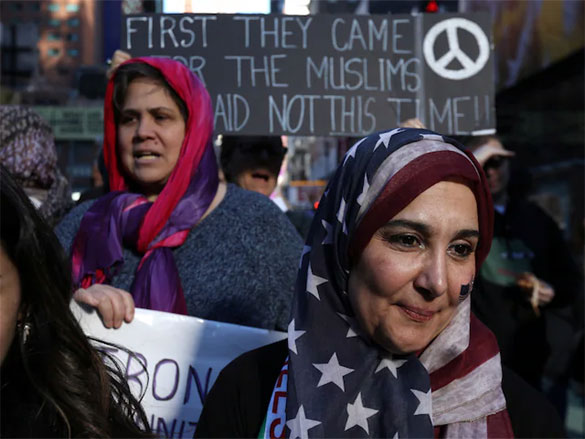 A woman
wearing a U.S. flag hijab is pictured during an I am Muslim Too rally in Times
Square, Manhattan, New York, U.S. February 19, 2017. (Reuters File Photo)
A woman
wearing a U.S. flag hijab is pictured during an I am Muslim Too rally in Times
Square, Manhattan, New York, U.S. February 19, 2017. (Reuters File Photo)
---------------
Tajikistan
is set to implement a ban on the hijab and other Islamic garments, following
the approval of a controversial law by its parliament. The bill is likely to
cause an uproar among the mostly Muslim population of the tightly controlled
former Soviet republic, which borders Taliban-ruled Afghanistan.
The
upper house, Majlisi Milli, passed the legislation on June 19, prohibiting
children’s festivities during Eid al-Fitr and Eid al-Adha, according to US
government-funded Radio Free Europe (RFE). The bill, initially passed by the
lower chamber, MajlisiNamoyandagon, on May 8, aims to curb the wearing of what
it terms “alien garments.”
‘PROPER
EDUCATION AND SAFETY’
The ban
on children’s holidays is intended to ensure “proper education and safety”
during religious observances, Radio Ozodi reported, citing a head of the
Religion Committee. During the 18th session of the Parliament chaired by
President Rustam Emomali, changes to Tajikistan’s laws concerning cultural
practices, teacher roles in children’s upbringing, and parental duties were
also endorsed.
Penalties
for violating the new regulations include substantial fines. Individuals could
face fines up to 7,920 somonis, while companies may be fined up to 39,500
somonis. Officials and religious leaders face even steeper fines, with
penalties potentially reaching 54,000 and 57,600 somonis respectively.
The
legislation has ignited debate within the country’s predominantly Muslim
population, with officials linking such attire to Islamic extremism. According
to Radio Free Europe, this decision led to the condemnation of the Union of
Islamic Scholars and the declaration of “jihad” by some clerics in Afghanistan.
Some religious figures, officials, university professors and bloggers in
Tajikistan responded to these calls.
HISTORY
In 2017,
Rahmon mandated a special commission to establish a “suitable” dress code for
men and women after criticising women for wearing “foreign” black attire. His
comments targeted the growing popularity of black Islamic dress in Tajikistan,
despite previous denouncements dating back to 2015. This initiated a campaign
against the hijab, with institutional leaders instructing employees to refrain
from wearing it at work.
Tajikistan
has a history of restricting the hijab, beginning with a Ministry of Education
ban in 2007, initially targeting students and later expanding to encompass all
public institutions. Despite claims of enforcement through special teams and
occasional police actions, officials deny widespread crackdowns reported by
some women.
The
Central Asian country in recent years has promoted traditional clothing through
campaigns advocating for national attire. Initiatives included widespread text
messages encouraging the wearing of traditional Tajik outfits, culminating in
the 2018 publication of a detailed guidebook on recommended attire.
Source: news18.com
https://www.news18.com/world/tajikistan-parliament-approves-controversial-ban-on-hijab-and-islamic-garments-8939697.html
--------
UN
Expert Condemns Taliban 'Crimes' Against Afghan Women, Girls
June 18,
2024
By Ayaz
Gul
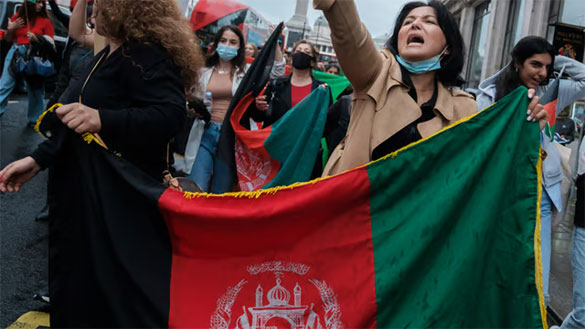 The
Taliban will attend for the first time what will be the third Doha conference
since U.N. Secretary-General Antonio Guterres launched the process more than a
year ago. (Representational Image: Unsplash)
The
Taliban will attend for the first time what will be the third Doha conference
since U.N. Secretary-General Antonio Guterres launched the process more than a
year ago. (Representational Image: Unsplash)
--------------
ISLAMABAD
— The United Nations human rights expert for Afghanistan warned Tuesday against
side-lining the rights and voices of women at an upcoming international meeting
with the country's fundamentalist Taliban leaders.
The
special rapporteur, Richard Bennett, issued the warning while presenting his
latest report on the Taliban’s allegedly intensifying rights violations against
Afghan women and girls to the U.N. Human Rights Council in Geneva.
“Following
extensive research, consultation, and analysis, it finds that the Taliban’s
institutionalized system of gender oppression established and enforced through
its violations of women's and girls’ fundamental rights is widespread and
systematic and appears to constitute an attack on the entire civilian
population, amounting to crimes against humanity,” Bennett reported.
"The
gravity and scale of the crimes can’t be overstated. We have a collective
responsibility to challenge and dismantle this appalling system and to hold
those responsible to account,” said the U.N. expert.
Bennett
shared his findings as the U.N. prepares to host a two-day meeting of
international envoys on Afghanistan in Doha, Qatar, commencing June 30. The
Taliban will attend for the first time what will be the third Doha conference
since U.N. Secretary-General Antonio Guterres launched the process more than a
year ago.
Afghan
civil society groups and representatives reportedly have not been invited to
the third Doha huddle, even though they attended the second this past February.
The Taliban refused to join those discussions unless their delegates could be
accepted as the sole representatives of Afghanistan.
Guterres
rejected the Taliban’s demands in a post-meeting news conference. The U.N. has
stated that the Doha process is aimed at developing a coherent and unified
world approach to engagement with the Taliban.
Bennett
said Tuesday the upcoming meeting presents an important opportunity to affirm
that civil society, including women, are "meaningful participants"
and that women's rights are central to discussions.
“The
Taliban are not recognized as a government and should not be treated as such.
They must not be allowed to dictate the terms of U.N.-hosted meetings,” Bennett
said.
“Failure
to learn the lessons of the past and sidelining human rights could have
devastating and long-lasting consequences,” he added. “The Taliban’s
institutionalization of its system of gender oppression should shock the
conscience of humanity.”
The
Taliban have dismissed international criticism of their governance, including
restrictions on women’s access to education and employment, saying their
policies are aligned with Afghan culture and their harsh interpretation of
Islamic law.
On
Sunday, the Taliban’s foreign ministry spokespersons formally confirmed that
its delegation would attend the third Doha conference.
“The
agenda and participation list of the upcoming Doha meeting shared with the
Islamic Emirate after two months of discussions with the U.N., it was decided
in principle to participate in the said meeting,” Abdul Qahar Balkhi said. He
used the official title of their men-only government, which is yet to be
recognized by the world.
“If
there are any changes to the agenda and participation, it would naturally
affect our decision, which we will share with all sides at that time,” Balkhi
cautioned.
Bennett
urged the international community to use an “all-tools approach” centered on
justice and accountability, incorporating human rights and women’s voices in
political processes and diplomatic engagement while dealing with the Taliban.
“It’s
incumbent on us all to take decisive action to stand with Afghan women and
girls, hold the perpetrators accountable, and restore dignity, equality, and
justice for all.”
The
Taliban stormed back to power in Afghanistan almost three years ago, banning
girls ages 12 and older from attending secondary school. They have also barred
women from working in public and private sectors, including the U.N, except for
Afghan health care and a few other departments.
Women
are not allowed to travel long distances by road or air unless accompanied by a
male relative and are banned from visiting public places such as parks, gyms,
and bathhouses.
The
Taliban’s return to power in August 2021 led to the worsening of economic and
humanitarian conditions in the impoverished country of more than 40 million
people, which is reeling from years of war and the devastation of natural
disasters.
Source: voanews.com
https://www.voanews.com/a/un-expert-condemns-taliban-crimes-against-afghan-women-girls/7660677.html
------
Women’s
mentorship program launched at 2024 FIA conference
June 20,
2024
PARIS:
FIA President Mohammed Ben Sulayem has launched two projects at the FIA 2024
conference in Samarkand, Uzbekistan: the women in motorsport mentorship
programme and the concussion awareness campaign.
Linked
live to the FIA Women in Motorsport networking event, the women in motorsport
mentorship programme pairs experienced women already in the sport — mentors —
with those wanting to start their career — mentees — facilitating
knowledge-sharing as well as personal and professional growth while fostering a
culture of learning and collaboration.
The
program offers opportunities for mentors to share their experiences and
perspectives to accelerate the mentee’s development, while providing invaluable
guidance, support and insights that will help them to navigate their
professional journey.
Participants
will connect through a digital platform, ensuring flexible interaction
regardless of location, and ease of scheduling and resource sharing online. The
application process for club participation and individual registrations is
designed to be straightforward and efficient, with each club receiving a
dedicated email containing a link to apply. Clubs are permitted to nominate up
to two participants and applications will be processed on a “first come, first
serve” basis.
Ben
Sulayem said: “It is important that motor sport diversifies and FIA is
committed to making our sport more accessible to all. The women in motorsport
mentorship programme will help to create a network of support and learning for
women, ensuring accessibility and opening up new opportunities in line with our
commitment to equality, diversity and inclusion. I am proud to work with so
many accomplished women in our sport and I champion their voices.”
Meanwhile,
the concussion awareness campaign, supported by funding from the FIA
foundation, was launched through the collaboration of the FIA medical and
safety teams with the aim of educating and raising awareness of concussion,
including signs, symptoms and red flags in an effort to further protect motor
sport competitors.
The
educational content, created to be used across social platforms and as
printable assets, is available to all member clubs, in any club’s language of
choice, reflecting the FIA’s commitment to improving accessibility and
inclusivity.
Ben
Sulayem said: “I have experienced concussion first-hand, away from the race
track. I have felt the symptoms and dealt with the aftermath. I understand the
critical importance of this issue. Thanks to the FIA medical and safety team,
we will provide an educational and accessible approach to identifying and
combating concussion in our sport, ensuring the safety of all current and
future competitors.”
By
educating drivers on how to spot concussion, the steps to take if concussed,
and how to return to racing, this knowledge-sharing will help keep motor sport
as safe as possible. It also encourages racers to seek out assistance from the
medical team if symptoms are felt. They will not return to racing unless
cleared by the relevant international and national authorities.
Source: arabnews.com
https://www.arabnews.com/node/2534076/motorsport
--------
Nigeria
absent in list of top 10 best African countries for women
Nigeria
has been left out of the top 10 best countries in Africa for women with Namibia
leading the pack, according to report by the World Economic Forum’s Global
Gender Gap Index.
Coming
in second position is South Africa with Mozambique, Burundi and Rwanda taking
third, fourth and fifth spots respectively.
Recall
in recent time, several African countries have made remarkable progress in
reducing gender inequality, signaling a period of empowerment and advancement
for women across the continent.
Through
conscientious efforts in economics, health, education, and politics, the
narrative of gender inequality is being significantly transformed.
While
some African communities still face severe gender equality challenges, many
others are making notable advancements in ensuring women’s proper representation
and participation.
One of
the most significant achievements is the increased political representation of
women in numerous African nations, setting a benchmark for gender equality in
governance.
Literacy
rates among young women have also experienced a considerable rise, creating a
ripple effect of empowerment that extends to their families and communities.
Despite
the progress, some African communities still grapple with pronounced gender
equality issues.
However,
the overall trend indicates that Africa is gradually moving closer to
eliminating the gender gap.
The
World Economic Forum’s Global Gender Gap 2024 Insight report highlights the
progress made by several countries in just one year.
Here is
the list of the top 10 African countries according to the World Economic
Forum’s Global Gender Gap Index:
Top 10
best African countries for women in 2024
Namibia
South
Africa
Mozambique
Burundi
Rwanda
Cape
Verde
Liberia
Eswatini
Zimbabwe
Botswana
Source: vanguardngr.com
https://www.vanguardngr.com/2024/06/nigeria-absent-in-list-of-top-10-best-african-countries-for-women/
--------
Game
changer: extreme heat stifles women’s sports in Pakistan
June 21,
2024
Pakistani
student Aqsa Shabbir is hot, tired and frustrated. A keen field hockey player,
she can no longer train during the day because of a brutal heatwave, she can’t
sleep at night and she fears she will not play well in a tournament at the end
of June.
The
17-year-old, who lives in Jacobabad in the southern Sindh province, already had
to overcome many obstacles - like many girls who live in Pakistan’s smaller
cities where exercising in public is frowned upon - and the heatwave is making
things harder.
Two
years ago, Jacobabad was named the hottest city on earth after temperatures
reached 51 degrees Celsius (124 Fahrenheit). This year, as a heatwave seared
southeast Asia, temperatures shot up to 52 degrees Celsius (126 Fahrenheit) in
May.
“We
cannot keep waiting for the weather to get better - it won’t,” Shabbir told
Context by phone from Jacobabad.
Rising
temperatures are one more barrier for women and girls who want to stay active
in a country where there are few training spaces available to them, apart from
private sports clubs reserved for the wealthy.
A 2022
study found that the main obstacles to participating in sport in the
Muslim-majority country are “religious and cultural limitations, a lack of
permission from parents, and a lack of sports facilities and equipment”.
Now add
extreme heat, linked to climate change, to the list.
Shabbir
is a member of the Star Women’s Sports Academy in Jacobabad, the only women’s
sports club in the city of nearly 300,000 people. The girls have started
training later in the day in a bid to beat the heat but parents are unhappy
with their daughters returning home late on their own.
And
there is little rest at night either. Shabbir says the one air conditioner her
family has invested in provides “little comfort” because of frequent power
cuts. The long days and nights are affecting her performance.
“I am
not playing my best,” she said.
HaseenaSoomro,
who plays hockey at the same club, is equally frustrated.
“Of
course the heat impacts our game,” the 19-year-old said. “The heat makes you
sluggish, and this game is defined by speed.”
‘Long
and unbearable’ summer
Sport
has long been an often unaffordable luxury for girls from low-income households
in Pakistan. It costs money to get to the few sports clubs available and even
eating well is costly.
Some
sports clubs try to help out with expenses but Erum Baloch, who founded the
club in Jacobabad where Shabbir and Soomro play, says that can also be
difficult.
And now
she is also grappling with the challenge of training her team on outdoor
pitches during what she calls the “long and unbearable” summers.
The
situation is complicated by the fact that the women wear long clothing when
training. Even though Baloch’s club is in a women’s government college, the
girls she coaches are uncomfortable swapping shalwarkameez for jogging pants,
never mind cooler shorts.
“Families
don’t like them wearing pants … shorts is too far-fetched a concept,” said
Baloch. “Until society is ready, we need to concentrate on (making) sports for
women acceptable instead of letting a dress come in our way.”
Farwa
Batool, from Khairpur city in Sindh, wears long sleeves beneath her T-shirt to
cover her arms and also wears a hijab when she plays field hockey.
“You
cannot imagine the heat we bear,” she said, adding that she envies the men who
can wear just shorts and T-shirts. She gets up at 5.45 am to train at the mixed
gender club, hoping no men will be around.
“If we
could have women-only grounds, or women timings are introduced with men
strictly not allowed, we too can be free of yards of cumbersome clothing.”
In
Jacobabad, Baloch is hoping to get financing from the government or a sponsor
to pay for an indoor facility with air conditioning.
Unsustainable
expenses
Zamzam
Allahbuksh said she pays out of pocket to top up water and ice supplies at the
women’s sports club she runs in Mirpurkhas, 230 km (143 miles) east of
Pakistan’s largest city Karachi.
“I don’t
want them catching a heatstroke,” she said.
To
manage costs, she has introduced games like football and volleyball because she
does not have enough equipment for everyone to play cricket or field hockey.
“At
least with one football or one volleyball, quite a few girls can play a sport,”
she said.
Baloch,
too, arranges for drinking water every day for her 43 field hockey players
along with oral rehydration solutions but this is not sustainable.
“I don’t
know how long I can carry on doing this,” she said. “We cannot train girls on an ad hoc basis -
there needs to be a continuous and full government support for them, if they
want to play their best.”
As heat
threatens the viability of the few facilities available to women and girls,
Baloch said she hopes they don’t lose out on the opportunities sports can
provide.
Some of
the athletes Baloch has coached went on to attend university on sports
scholarships.
Bushra
Arif, a former field hockey player, is keenly aware of what sport offers girls
in her country.
“Sports
teach lifelong values like endurance, teamwork, confidence, overcoming
challenges,” said Arif, now the director of physical education at Khursheed
Begum Girls Degree College in Hyderabad in Sindh.
Despite
all the challenges, Shabbir is trying to look on the bright side ahead of her
important tournament in the neighbouring Sukkur district.
“Who
knows, we may outdo other teams from other cities with relatively lower
temperatures, being more acclimatised to this extreme heat.”
Source: eco-business.com
https://www.eco-business.com/news/game-changer-extreme-heat-stifles-womens-sports-in-pakistan/
--------
Empowering
Women Researchers in Egypt Through IP
June 18,
2024
The
National Intellectual Property Academy of Egypt (NIPA) and the WIPO Academy
concluded a joint cooperation project in April 2024 to upskill and educate
women researches across the country on how to integrate an intellectual
property (IP) strategy into their work.
The
project included an online training phase, followed by an in-person mentoring
phase, both of which were spearheaded by the WIPO-certified trainers of NIPA, a
WIPO intellectual property training institution (IPTI).
What was
the project about?
Over 500
Egyptian women researchers applied for the program to learn how to leverage the
IP elements of their works-in-progress, and ultimately 75 candidates from
different industries were selected for this highly competitive opportunity.
Through the project, the participants were empowered to make more informed
decisions about their IP.
The
training component covered the basics of IP, in addition to IP policies in
Egyptian academic institutions, and effective IP management techniques for
commercialization and monetization. Each lesson featured real-life case studies
from Egypt, making it easier for the participants to grasp the practical
aspects of the topics covered.
The
mentorship phase was dedicated to one-on-one sessions with NIPA trainers and a
business expert on how to structure business models and IP strategies for
ongoing research initiatives. After participating in the project, some of the
now IP-aware researchers began to file for IP protection and commercialize
their IP assets following the step-by-step guidance offered in the mentorship
phase.
More
about WIPO’s joint projects with IPTIs
The
project is one of the 30+ joint cooperation projects the WIPO Academy
implements with established IPTIs to meet local training needs and empower
beneficiaries on the ground. In this particular case, the project was developed
to forge an inclusive and gender diverse innovation ecosystem in Egypt.
What our
beneficiaries are saying?
Dr. Heba
Talat Mahmoud EbeedIMAGE: DR. HEBA TALAT MAHMOUD EBEED
The
program helped me become more familiar with the requirements for obtaining
patents and other means of protecting my business. I had previously attended
many webinars and workshops hosted by NIPA on various IP topics and general IP
matters, but I gained new knowledge learning about different cases shared by
other participants. I now understand how to utilize different types of IP
protections, such as patents and trademarks, to safeguard my business. The training
was very valuable, as it provided me with a wealth of technical details and
ideas to apply to my universal mosquito repellant product for humans and pets.
I plan to apply for a patent and trademark, and I will follow the advice I
received during the mentorship about contacting partners and investors.
Dr. Heba
Talat Mahmoud Ebeed
Dr. Mona
Al-ShemyIMAGE: DR. MONA AL-SHEMY
I was
thrilled to have participated in the program. It was an honor to receive
customized mentoring from IP trainers, seasoned experts, and accomplished
business leaders. My colleagues and I have immensely benefited from our
mentors' expertise in pinpointing IP assets, harnessing IP rights, crafting a
business strategy, and promoting our innovations. I am deeply thankful to the program,
which has been pivotal in our journey to uncover and capitalize on our IP. I
will now apply the knowledge gained to seek possible investors to commercialize
my recently patented innovation and I intend to apply for trademark
registration as well.
Dr. Mona
Al-Shemy
Source: wipo.int
https://www.wipo.int/academy/en/news/2024/news_0037.html
--------
Egypt
mourns 20-year-old football female fans dying after Ahly victory
20 June,
2024
Hundreds
of Egyptians joined the burial service of two female football fans who lost
their lives in a road accident earlier this week following a football match
between the Cairo-based Al-Ahly Club and the Alexandria Al-Ittihad Club in the
local Premier League.
The
names of two Egyptian women, both aged 20, Narges Saleh and Nourhan Nasser, who
were college students, have been trending on social media over the past 48
hours as football fans across the country sadly shared pictures and video clips
of them celebrating the victory of Ahly for the last time.
Ahly is
known for being the most popular football club in Egypt, with the highest
victory rates in the country's history over its challengers.
Local
news outlets reported that on Tuesday, 18 June, a truck driver reportedly hit
the two close friends as they crossed the highway outside Burj El-Arab stadium
on the outskirts of the Mediterranean city of Alexandria. They died from their
sustained injuries shortly after being rushed to a nearby hospital.
The
suspect has been remanded in custody, pending further investigations, after the
local prosecutor ordered him to undergo a test for narcotics.
The
local prosecution's office has further ordered all surveillance footage taken
by cameras on the road be analysed by the crime lab for more insight into the
case.
The
tragic death of the two young women has evoked sympathy all over Egypt and
beyond, prompting Saudi royal advisor and businessman, Turki Al Al-Sheikh, also
known for his investments in Egyptian football, to mourn them on his Facebook
page and invite their families to Saudi Arabia to perform the Umrah ritual in
Mecca City and visit Medina, the home of Muslim Prophet Muhammed's mosque.
Ahly
Club head, former legendary footballer Mahmoud El-Khatib and other iconic
football figures officially mourned the two young women. A delegation of the
Ahly board members represented the club in their burial service on Wednesday
and expressed their condolences to the two distressed families.
No further details on the incident have yet
been released by the authorities. It remains unclear whether the driver fled
the scene or stayed and claimed responsibility.
"Several
factors are expected to be legally considered, as per the Egyptian law, when
prosecuting a driver who caused the death or the injury of a pedestrian such as
driving under the influence of alcohol or drugs, illegal speed limit and
mechanical malfunction," lawyer Mohamed Ibrahim told The New Arab.
"But
since the case has been trending on social media platforms, the driver is
expected to face trial before the court of public opinion first, and even
expected to attract attention to traffic laws in the country," he added.
Source: newarab.com
https://www.newarab.com/news/egypt-mourns-football-female-fans-dying-after-ahly-victory
--------
URL: https://newageislam.com/islam-women-feminism/tajikistan-parliament-ban-hijab-islamic/d/132547