
United Nations Deputy Chief Urges World Not To Ignore Rights Abuses In Afghanistan
New Age Islam News Bureau
06January 2026
· United Nations deputy chief urges world not to ignore rights abuses in Afghanistan
· Jadavpur University hijab row: Fact-finding panel seeks removal of English HoD during probe
· Pakistan halts deportation of Sikh woman from India who converted to Islam
· Shakirova named Iran’s women’s basketball head coach
· Kongra Star calls for global women's solidarity with women in Iran against oppression
· I write stories featuring ‘normal Muslims’—what else can we be like?: Andaleeb Wajid
· Saudi women shine with heritage crafts at Makkah’s Global Village
Compiled by New Age Islam News Bureau
URL: https://newageislam.com/islam-women-feminism/un-deputy-chief-afghanistan-rights-abuses/d/138327
------
United Nations deputy chief urges world not to ignore rights abuses in Afghanistan
By Milad Sayar
January 6, 2026
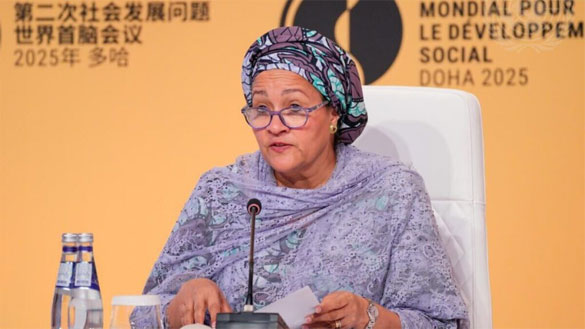
Amina Mohammed, the United Nations’ deputy secretary-general, has urged the international community not to turn a blind eye to human rights violations in Afghanistan, saying millions of women and girls face severe restrictions under Taliban rule.
In a post on X on Sunday, Mohammed said women and girls in Afghanistan were being denied fundamental rights, including access to education, work, security and freedom of movement.
“Millions of women and girls in Afghanistan face severe restrictions on their fundamental rights,” she wrote. “The world must not close its eyes to these violations. Women’s rights are human rights — everywhere.”
Mohammed, who is widely regarded as the second-most senior official at the United Nations, has previously travelled to Afghanistan. In January 2023, she visited Kabul and later Kandahar, the southern city seen as the centre of power for the Taliban. That visit drew criticism from some human rights activists, who questioned engagement with Taliban leaders amid growing restrictions on women.
Some Afghan citizens say the human rights situation has continued to deteriorate.
“For nearly four years, there has been no attention to the rights of Afghan women and girls,” said a resident of Baghlan province. “Schools have not reopened, universities remain closed, and there are no job opportunities. The situation is getting worse every day, with no real action taken.”
Since returning to power in 2021, the Taliban have barred girls from attending secondary school, closed universities to women, restricted women’s employment and imposed strict limits on their movement in public.
The measures have drawn widespread international condemnation and have deepened Afghanistan’s diplomatic isolation. Rights groups say the restrictions have worsened the country’s humanitarian and economic crises.
The International Criminal Court has issued arrest warrants related to alleged crimes in Afghanistan, while other international and civil society mechanisms are reviewing cases involving alleged human rights violations.
Despite those efforts, human rights activists and Afghan citizens continue to call for more concrete international action to address what they describe as systematic abuses, particularly
against women and girls.
Source: amu.tv
https://amu.tv/219732/
------
Jadavpur University hijab row: Fact-finding panel seeks removal of English HoD during probe
6 Jan 2026
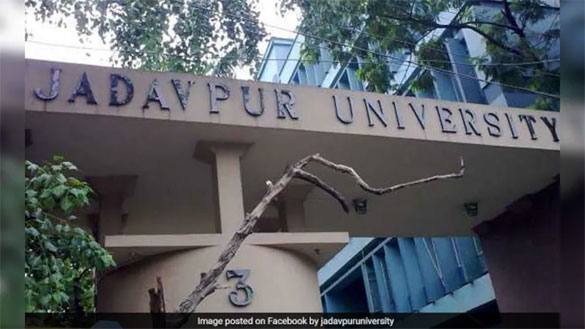
Kolkata: A fact-finding committee probing the hijab-related controversy at Jadavpur University has recommended that the head of the English department be relieved of her post while the inquiry is underway, sources said. The recommendation was forwarded to vice-chancellor Chiranjib Bhattacharya after the committee’s first meeting on Monday. However, committee member Padmasree Kazi Masum Akhtar, the Governor’s nominee on the university’s Executive Council, opposed the move and submitted a formal note of dissent. The committee is scheduled to meet again on January 19 to hear faculty members, research scholars and students.
The five-member panel, chaired by Syed Tanveer Nasreen of the University of Burdwan, was constituted following allegations that during fifth-semester examinations on December 22, two third-year students were asked to remove their hijabs on suspicion of using unfair means. Students alleged that the head of the English department, Saswati Halder, asked one examinee to remove her hijab and, upon her refusal, took her to a departmental room where she was compelled to do so. A similar allegation was reported from another examination hall. Bhattacharya said the report had been received and would be examined.
“We have received the report. Everything will be reviewed and an appropriate decision will be taken,” he said. According to sources, Halder stated in her written submission to the authorities that the checks were conducted to prevent copying and that all students were subjected to scrutiny, not only those wearing hijab. She said she had apologised to the two students and added that incriminating material related to unfair means was recovered from two other students who were not wearing hijab. Sources said Halder told the committee that she bore no communal bias and argued that removing her from the post before completion of the inquiry would amount to punishment without a finding of guilt. Akhtar, who dissented, said the checks were within examination norms and not driven by any communal intent. He said Halder had reported several students from other communities for suspected unfair means in her role as head of department and invigilator. “Checking whether students had headphones or Bluetooth devices in their ears is not abnormal. When nothing was found, she apologised repeatedly,” he said, adding that recommending her removal before completion of the inquiry was humiliating and amounted to punishment without a finding of guilt.
Source: millenniumpost.in
https://www.millenniumpost.in/bengal/ec-illegally-using-mobile-apps-developed-by-bjps-it-cell-to-conduct-sir-alleges-mamata-642869
-------
Pakistan halts deportation of Sikh woman from India who converted to Islam
Jan 6, 2026
Plans to deport Indian national Sarabjeet Kaur from Pakistan were abruptly put on hold at the Wagah border, triggering fresh questions over her legal status and the circumstances under which she continues to stay across the border.
The deportation of Sarabjeet Kaur, who married a Pakistani national during a recent visit, could not be carried out despite arrangements being made to send her back to India. Pakistani authorities stopped the process at the last moment. While no official explanation was offered, Pakistani media reports pointed to documentation-related issues behind the decision.
The 48-year-old had travelled to Pakistan on November 4 as part of an Indian pilgrim group to attend the birth anniversary celebrations of Baba Guru Nanak. Within a day of her arrival, developments took a dramatic turn.
On November 5, Sarabjeet Kaur reportedly converted to Islam, married a Pakistani national, Nasir Hussain, and adopted the name Noor Hussain. Since then, she has been staying in Pakistan without valid authorisation, according to reports.
The sudden halt to her deportation has left her status unclear, with no clarity on when or how the process will resume. The case has drawn attention due to its sensitive cross-border implications, particularly given the manner and timing of her marriage and change of religion during a religious visit.
Source: indiatoday.in
https://www.indiatoday.in/india/story/pakistan-halts-deportation-of-sikh-woman-sarabjeet-kaur-from-india-who-converted-to-islam-2847457-2026-01-06
------
Shakirova named Iran’s women’s basketball head coach
January 6, 2026
A former Russian international player, Shakirova brings elite experience to Team Melli, having competed in three Olympic Games in 1992, 1996, and 2000.
Her long career at the highest level of international basketball has shaped her reputation as a disciplined and knowledgeable coach.
Prior to joining Iran, Shakirova led the Kazakh men’s club Aktobe, gaining valuable experience in club management and player development across different basketball cultures. Her appointment reflects Iran’s intention to build on recent progress and further strengthen the women’s program.
Shakirova replaces Greek coach Eleni Kapogianni, who played a key role in the team’s recent growth. Under Kapogianni’s leadership, Iran’s women showed clear improvement in regional and continental competitions, laying a solid foundation for the future.
Source: tehrantimes.com
https://www.tehrantimes.com/news/522507/Shakirova-named-Iran-s-women-s-basketball-head-coach
--------
Kongra Star calls for global women's solidarity with women in Iran against oppression
5 January, 2026
The Relations Office of the Kongra Star issued a statement to the public opinion in terms of the popular protests that have been ongoing in Iran and East Kurdistan since December 28th.
The statement was read by the office member Hevin Musa in the Ashrafiyeh neighborhood of Aleppo, in the presence of dozens of Kongra Star members and representatives from various women's movements.
The statement began by noting that the authoritarian and dictatorial regimes have historically been a major obstacle to societal development due to their reliance on absolute power and the suppression of individual and collective freedoms, leading to the stifling of creativity, weakening political participation, and marginalizing the most vulnerable groups, especially women.
The statement pointed out that these regimes share similar tools of oppression, deeming the Iranian regime as a blatant example of imposing unjust laws and restrictions on women, such as the mandatory hijab and the curtailment of civil and political rights, thus transforming women's bodies and lives into arenas of control.
The statement noted that this type of governance makes the women and the peoples' resistance essential for preserving human dignity and the right to freedom.
In this context, the statement recalled the 2022 uprising in Iran and East Kurdistan, during which the slogan "Jin, Jiyan, Azadi" (Women, Life, and Freedom) was chanted. It emphasized that women were at the heart and soul of that revolution, leading the way and confronting repression with awareness and determination.
The statement made clear that this role made women a direct target of the Iranian regime, which resorted to mass arrests, the use of sexual violence as a political weapon, media defamation, and field killings in an attempt to break their will and silence their voices.
The statement mentioned that among the victims of this repression was the young woman Sajer Etemadi, who died from her wounds after being shot by regime forces while participating in protests in Farsan. It asserted that her death was not an isolated incident, but rather a stark illustration of the heavy price women in Iran pay daily for freedom.
The statement affirmed that targeting women in Iran is part of a recurring pattern among authoritarian regimes that rule peoples by force, and that the struggle of Iranian women is linked to the struggles of women in Syria and around the world.
In closing, the women expressed their complete solidarity with women in Iran and with every woman facing oppression and discrimination under authoritarian regimes, noting that the slogan "Jin, Jiyan, Azadi" has become a global call against tyranny, reminding everyone that the freedom of peoples begins with the freedom of women.
The statement also appealed to women in Iran, Syria, and the world to intensify their struggle and transform it into a collective force capable of confronting oppression, defending rights, and establishing justice and equality in societies suffering from tyranny and discrimination.
Source: hawarnews.com
https://hawarnews.com/en/kongra-star-calls-for-global-womens-solidarity-with-women-in-iran-against-oppression
------
I write stories featuring ‘normal Muslims’—what else can we be like?: Andaleeb Wajid
Jan 05, 2026
MAJID MAQBOOL
Andaleeb Wajid is a Bangalore-based writer and author of 51 novels since her debut novel Kite Strings (2009), spanning several genres including romance, young adult (YA), horror, mystery, children’s books, and a recently published memoir on grief, Learning to Make Tea for One, which chronicles her personal losses during the second wave of COVID-19 in 2021, when her husband and mother-in-law passed away. She uses the everyday act of making tea as a lens to explore survival, loneliness, and rebuilding daily life while grappling with grief and loss of loved ones. Her novel, The Henna Start-Up, swept up several awards in 2024/25 such as The Neev Book Award, the Author Award, and the Crossword Awards, and her novel Asmara’s Summer was adapted for screen and released as a popular web series, Dil Dosti Dilemma (2024), on Amazon Prime.
Andaleeb likes to think of her writing as creating a world wherein women have the agency to choose for themselves, to not settle, and to come into their own. “I think I also want my writing to create a realisation of the sense of self in women, where they are not just someone in relation to someone else, but people in their own right,” she says. Andaleeb loves reading and writing YA fiction, and is hoping to find new and exciting things to write about in Malaysia, where she moved with her sons last year. Her forthcoming book, a YA novel, Have You Met Me? will be published by Harper Collins in May/June this year. Excerpts:
Tell us about your earliest memories of reading and the kinds of books, comics, or magazines you read while growing up that first drew you into stories.
My earliest memories of reading were mostly comics that I found in my grandmother’s home in Vellore—Phantom, Richie Rich, Mandrake, and then I progressed to reading Enid Blyton, which my aunt introduced me to. My father was an avid reader as well, but he read in Urdu which I hadn’t learnt at that time. Nevertheless, he got me the books I asked for, which were the ones kids in my time read—Nancy Drew, Hardy Boys, etc. I also had several copies of the magazine Misha which was very popular in the late 1980s and early 90s. What fascinated me about reading was how easily it could take me out of where I was, into another world altogether and the more I read, the more I wanted that.
When did the idea of becoming a writer first feel real to you? Were there particular authors, teachers, or family members who encouraged you to take your writing seriously?
I was eight when I decided I wanted to become a writer. It was a solitary moment in father’s home office in Hong Kong where we used to go for our summer vacations when we were kids. He wasn’t in the office then, so I went in and sat on the revolving chair, which I found very fascinating. But as the chair spun, and my hands found the desk as the chair slowed down, I had this intense urge to do something, to write, and I decided that was what I was going to do.
My family members have always been very encouraging, but one especially, my granduncle Mohammed Abdul Latheef, who was a professor of English and the head of the department at New College, Chennai, loved receiving the stories I would write and post to him. He would always applaud my efforts and push me to keep writing. Unfortunately, he passed away a few years before my first novel was published, and he didn’t get to see me become a writer.
Bengaluru is a constant setting in many of your books. How has the city shaped your imagination and your understanding of urban middle-class life as you explore it in your work?
As a writer, I’ve always wanted to be authentic in everything I write. For this, I had to draw from my own experiences, and they were rather limited, I felt. So I focused on what I knew, what I could see, and what I could access, and this became the lens through which I saw my stories in the world. Until 2025, I’d never lived anywhere else other than Bengaluru, so it became natural that my writing would feature the city that I called my home. I’ve been in this city for more than four decades, and I’ve seen its evolution, so a good deal of my understanding comes from my lived experiences here.
You write across multiple genres—from romance and YA novels to horror and mystery. How do you switch from one genre to another in your writing process, and which genre feels most creatively rewarding for you at this point in your career?
I switch genres when I feel like I’ve been tied down to a particular one for a long time. Also, there are times when I just feel like working on a horror novel instead of romance, so I give in to those creative urges and see where it takes me. Writing romance feels easy, but it isn’t because I don’t want to go down the clichéd path. I want to write something that feels fresh every time, and that can be difficult. Writing horror is very challenging because creating fear and unease in the reader’s mind is not easy. Fear is a very subjective matter after all.
As for the most creatively rewarding, it would have to be writing Young Adult fiction, which has always been closest to my heart. As I grow older, I used to feel I wouldn’t be able to connect with young adults easily. I still feel there are some hits and misses, but the feeling of needing to find oneself, the feeling of insecurity, and that confusion seem to be something that’s universal across young adults, irrespective of the generation they belong to.
Over the past two decades you have published a number of books while also managing your family responsibilities. How challenging has it been to balance family life with consistent writing practice, and what has helped you sustain this rhythm of bringing out a book every year or so?
I’ve been very lucky to have a supportive family from the very beginning of my writing career. They’ve indulged me and let me do what I want, which is a privilege, I’ve realised, because I’ve seen other writers struggle in this same thing. My challenge has been to be consistent more than anything else.
In your books, Muslim women feature prominently as main protagonists. Do you feel contemporary Indian fiction still lacks nuanced portrayals of the everyday lives of Muslim women beyond the usual stereotypes? What kinds of stories about them do you wish were written about more often?
I think I’ve always seen myself as belonging to the mainstream and not the “other”. And this was something I’ve always taken for granted. So when I started writing books, naturally, I was going to centre Muslim women because who else will tell our stories if not someone with the lived experience of what it means to be a Muslim woman? I can’t make a blanket statement about contemporary Indian fiction and how Muslim women have been portrayed in it because to be honest, I haven’t read that much recently.
My reading has mostly revolved around reading YA and middle grade fiction written by Indian authors which undeniably has my heart. As for the stories that I wish were written, I think I want to see stories of Muslim women owning who they are and going out to achieve whatever they want, just like everyone else. I want to see stories where there isn’t a “saviour” who comes in to show the right way. I want to see stories of Muslim women putting themselves first. Like Abir in my novel The Henna Start-up.
Do you ever feel the burden of being seen as a “representative” voice for your community when you write about Muslim characters, especially in today’s polarised climate where Muslims are frequently stereotyped and demonized in mainstream media and Bollywood movies? How do you negotiate that expectation?
When I started writing, I never really considered this aspect. My only focus was on telling a good story and telling it well. If the characters were Muslim, that was entirely incidental. Even now, I write stories featuring “normal Muslims” but the onus has shifted and I’m often lauded for bringing this aspect into the world, so people can see what “normal Muslims” are like. And this frankly baffles me. What else can we be like? And then I see the stereotyping and demonising in popular culture and I understand that as much as I shrug it off, it has become important in its own way. I don’t take the responsibility lightly now but it also makes me very uneasy.
In your YA novels and children’s books, young characters are constantly negotiating peer pressure, social media, and family expectations. When you meet young readers and teens, what are some of the anxieties, desires, and ambitions they most want to see reflected in the books they read?
While young adults of all generations go through their own tumult, I think teens today have been through more than their share, be it the pandemic, unrest across the world, wars, and also because they have access to information and misinformation at the same time. I think with so much stimulation, there’s always a temptation to disconnect, to cocoon themselves in things that make sense to them in a way that won’t to someone from another generation. But what I have seen is that there’s an underlying need to be understood, even if they’re unable to communicate it. I’ve always thought of books as safe spaces, so I try to create a safe space for them in mine as well, to let them understand that there are times when life will be out of control and it’s okay if they can’t verbalise it or articulate it right away.
In today’s age of constant screens and social media distractions, how can children and teens discover the joy of reading more books? What role can parents and teachers play to help in this regard?
For a good number of children, reading is always connected to something that brings tangible results, especially in the eyes of their parents. The focus is always on “learning” and making sure that it can be applied somewhere in the real world (exams). These are things that instantly rob the joy from reading. If children are allowed to read for pleasure, they will certainly read more, although it is getting more and more difficult, given the lack of attention spans and the access to a lot of mind-numbing entertainment. But the point is: read to enjoy, not always to learn. That might tip the scales in the favour of reading, I hope.
In your recent memoir, you write about the grief of losing your husband and mother-in-law during the spread of COVID-19. Did the act of writing this memoir help you make sense of that loss, and has it changed the themes you want to explore more in your future work?
Writing is how I make sense of the world around me. So naturally, writing the memoir was a way for me to understand who I have become in the aftermath of that loss. But it was also about healing, about preserving the reality of those lockdown days, of looking at what happened before memories fade. Before 2021, I did write about death. I’ve seen it first-hand over the years of course. In fact, I wrote about a protagonist’s father dying in More Than Just Biryani and I felt I had conveyed the despair and anguish of the mother adequately.
But somewhere, I think there was a mild sense of detachment, a feeling that this isn’t how I would react if I were in that position. But going through it, losing my husband in the pandemic, made me realise that nothing could really prepare me for losing my loved ones like that. That I might have bounced back seemingly easily, and I might look normal on the outside, but on the inside, there was a well of grief that didn’t let go of me easily. So I think in the books I’ve written since then, I feel like I have tackled death differently. In my latest novel Until We Meet Again, the protagonist’s father dies, but there’s a world of difference in the way I handled it now and the way I wrote it in More Than Just Biryani.
Could you name a few writers and books—Indian or international—that you return to often, that have also influenced and shaped your own writing over the years?
There are so many! In India, I absolutely devour anything that Shabnam Minwalla writes. There are others as well, who are “auto-buy” authors for me, such as Bijal Vachcharajani, Menaka Raman, Lavanya Karthik, Paro Anand, Aparna Kapoor and Sanjana Kapoor to name a few. I also love books by Shilpa Suraj, Apeksha Rao, Zarreen Khan and Milan Vohra. I recently read Rudraneil Sengupta’s The Beast Within and loved it.
Internationally, my tastes veer towards romance, crime and YA fantasy, so I enjoy books by Lisa Jewell, Ali Hazelwood, Clare Mackintosh, Gillian McAllister, Sabaa Tahir, Leigh Bardugo and Holly Jackson to name a few. I’m not sure if these have actively influenced my work but I read for pleasure and to decompress and I’m sure subliminally, they’ve helped me become a better writer.
When you look back at your writing and publishing journey so far, what are some key lessons it has taught you that might be useful for writers who are just starting out?
So, publishing is a long process and the key is to not lose patience. Things happen slowly on that front. It was also one of the reasons I switched to self-publishing some of my romance novels. But what I’ve learnt is that it helps to write in a bubble. By that, I mean, it’s easy to lose hope and feel despair when you see others succeed. It’s important to stay focused on your own work and know that things will work out for you when the time is right. It might not happen immediately, but have faith that it will happen eventually. So don’t get distracted by the accolades that others are receiving, be it publishing deals or awards, or movie adaptation deals. Good things come to those who wait (and keep writing!)
For readers interested in books that explore contemporary Muslim lives in India, are there any novels or nonfiction works you would recommend?
I would highly recommend Zara Chowdhary’s The Lucky Ones. It’s gut-wrenching and real.
Source: thehindu.com
https://frontline.thehindu.com/interviews/andaleeb-wajid-muslim-women-fiction/article70474370.ece
-----
Saudi women shine with heritage crafts at Makkah’s Global Village
January 05, 2026
RIYADH: Saudi Arabia women are taking center stage at Global Village in Makkah with their heritage-inspired crafts.
The women’s creations form part of Makkah’s Winter Season offerings, which includes cultural performances. There are several international pavilions also set up, the Saudi Press Agency reported on Monday.
This year, the Saudi pavilion features traditional clothing and embroidered fabrics, reflecting the cultural richness of the Kingdom’s regions, and underscoring the role of women in preserving and modernizing traditional handicrafts.
Through interactive booths and workshops, the craftswomen engaged with visitors, offering live demonstrations of weaving, embroidery, knitting, and other skills passed down through generations.
The event provides a valuable platform for the women to boost the marketing of their small businesses, and generate direct economic benefits, the SPA reported.
The pavilion attracted significant visitor interest, with attendees eager to learn about how local culture is expressed through handmade products.
The Global Village includes a wood-carving corner, where artisans are showcasing traditional skills.
Part of the winter season activities, the village serves as an integrated cultural and tourism platform.
Source: arabnews.com
https://www.arabnews.com/node/2628341/saudi-arabia
------
URL: https://newageislam.com/islam-women-feminism/un-deputy-chief-afghanistan-rights-abuses/d/138327