
UN warns worsening conditions for women journalists in Afghanistan on Press Freedom Day
New Age Islam News Bureau
04 May 2026
· UN warns worsening conditions for women journalists in Afghanistan on Press Freedom Day
· Why women over 50 should prioritise workouts for heart health and muscle strength, UAE doctors explain
· Mahsa Amini death protest: Iran executes man convicted of killing security officer in 2022
· Queen arrives in Uzbekistan for special visit
· NCP's Nusrat Tabassum to miss oath for reserved seat in parliament tonight
· Women in Saudi Arabia break ground in construction
· Nilambur Ayesha: The woman who defied bullets, built a stage of resistance
Compiled by New Age Islam News Bureau
-------
UN warns worsening conditions for women journalists in Afghanistan on Press Freedom Day
By Fidel Rahmati
May 3, 2026
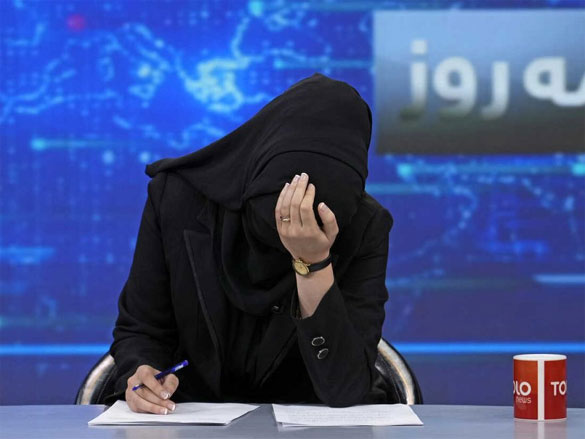
Richard Bennett warned that media restrictions in Afghanistan have intensified, with women journalists facing significantly harsher conditions than their male counterparts.
Marking World Press Freedom Day on May 3, Bennett said female reporters are confronted with discrimination, movement restrictions, and strict dress code requirements that severely limit their ability to work.
He stressed the need for urgent protection of journalists, particularly women, and called for stronger safeguards to ensure their safety and ability to continue professional activities.
Bennett said data from the Afghanistan Journalists Center showed at least 32 journalist detentions recorded in 2025 alone, reflecting growing pressure on independent media.
He added that shrinking civic space, censorship of books and publications, and restrictions on access to information have further undermined freedom of expression across the country.
Journalists, he noted, increasingly face punishment even for activity on social media, highlighting the expanding scope of restrictions on public discourse.
According to Reporters Without Borders, Afghanistan remains among the lowest-ranked countries globally in press freedom, with conditions deteriorating sharply in recent years.
RSF reports that many independent outlets have closed or operate under strict controls, forcing journalists into self-censorship to avoid reprisals from authorities.
The organization also says female journalists have been disproportionately affected, with many barred from working, sidelined from public roles, or forced into exile.
UNESCO warned on World Press Freedom Day that manipulation of information fuels division and erodes public trust, emphasizing the importance of reliable information.
UNESCO said access to verified and independent information is essential for building peaceful, just, and resilient societies, and called for stronger protection of journalists worldwide.
Media watchdogs say press freedom is under increasing strain worldwide due to conflict, political pressure, and the spread of disinformation, putting journalists at greater risk.
Freedom of expression is guaranteed under Article 19 of the Universal Declaration of Human Rights, but enforcement remains weak in countries facing instability and restrictive governance.
Analysts warn that continued restrictions in Afghanistan risk silencing independent voices, further isolating society and limiting public access to credible and diverse sources of information.
Source: khaama.com
https://www.khaama.com/un-warns-worsening-conditions-for-women-journalists-in-afghanistan-on-press-freedom-day/
------
Why women over 50 should prioritise workouts for heart health and muscle strength, UAE doctors explain
May 04, 2026
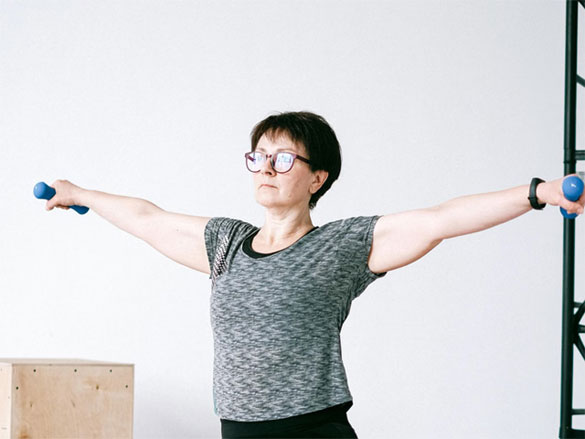
The exercise helps preserve mobility, independence, muscle strength, bone density, and cognitive health well into older age.
-------------
At 65, she feels younger than she did at 45.
Dubai-based Anuradha Chatterjee feels that she is living her second life. "I've been a homemaker my whole life, looking after my husband and children, sending them off to college. My husband died a few years ago, and I was all alone at home. I was just listless and so idle, and I felt physically weak," she adds.
So, she started with a few brief walks. She would get exhausted, but it was oddly exhilarating. And then she gradually extended her walks from 15 to 20 minutes. "I felt adventurous enough to try a treadmill," explains Chatterjee. Over the course of the year, the spurts burst forth. It spread to dumbbells, and yoga. "I pushed myself gently, but not too much. I just gave myself a goal, to be fit. And it made me feel alive, younger than I felt," she says.
Her lesson through the years: It's never too late. Nothing is ever too late.
Nevertheless, it takes time to get there. For many women, midlife can arrive like an ambush. The body changes before life slows down, and the energy dips. The sleep patterns become unpredictable and the weight shifts in alien ways. Suddenly, recovery feels prolonged, and stress resides resolutely in the body.
As they juggle between careers, caregiving, parenting and emotional labour, movement tends to slip on the priority list. However, doctors emphasise that midlife might be the most important time for women to stay physically active, not for aesthetic value, but for their own metabolism and health.
And research does point to this. A study, published in PLOS Medicine, tracked over 11,000 women for 15 years and found that those who consistently met recommended activity levels in their 50s and 60s had significantly better long-term health outcomes.
Women who remain active during midlife, according to studies, significantly reduce their risk of early death, especially from cardiovascular disease, diabetes, osteoporosis, and other chronic illnesses. Furthermore, exercise helps preserve mobility, independence, muscle strength, bone density, and cognitive health well into older age.
It becomes a biological reset point, as Dr. Kinda Al Ani, Consultant Obstetrician & Gynaecologist at Medcare Women & Children Hospital, notes.
The hormonal shift
Midlife does represent a major turning point in women’s health, as the body begins transitioning through perimenopause and menopause. At this point, the hormones shift dramatically as the estrogen levels decline, and the effects ripple through nearly every system in the body.
As Dr. Susan Thomas, Specialist Obstetrics & Gynaecology, Aster Hospital, Qusais explains, the shift contributes to an accelerated rise in chronic disease risk, particularly affecting cardiovascular, metabolic and musculoskeletal systems, with effects that compound into later life.
During this difficult time, the decline in estrogen affects the heart, brain and metabolism, along with the increased tendency for weight gain around the abdomen, accelerated bone density loss and higher vulnerability to chronic diseases, as Dr Al Ani says.
The danger is that many of these changes happen gradually, making it easy for women to dismiss symptoms as simply part of ageing.
But doctors stress this phase is also a critical window for intervention. “This stage offers a key window for preventive intervention, where consistent physical activity, balanced nutrition, and overall lifestyle management can meaningfully alter health trajectories, reducing the risk of early mortality and long-term disability,” says Dr Thomas.
Women in midlife don’t need intense workouts to gain strong health benefits—moderate, consistent activity is enough. The most protective approach is a balanced routine that includes regular cardio (like brisk walking or cycling) to support heart and metabolic health, strength training a few times a week to maintain muscle and bone density, some weight-bearing movement (like walking or light jogging) for bone health...
Source: gulfnews.com
https://gulfnews.com/uae/why-women-over-50-should-prioritise-workouts-for-heart-health-and-muscle-strength-uae-doctors-explain-1.500527749
------
Mahsa Amini death protest: Iran executes man convicted of killing security officer in 2022
May 3, 2026
Iran President Masoud Pezeshkian led administration reportedly executed a man who was convicted of killing a security officer during the protests in the country in 2022.
According to judiciary’s news outlet Mizan, the defendant was identified as Mehrab Abdollahzadeh, whose death sentence was upheld by the Islamic Republic’s Supreme Court in 2025.
The report added that Abdollahzadeh was primarily responsible for the death of security officer Abbas Fatemiyeh in 2022 during a nationwide protest sparked after the killing of a young woman, Mahsa Amini in police custody.
Mizan reported that Abdollahzadeh confessed to the crime of assaulting the security officer. However, rights group HRANA stated that in order to extract forced confessions, Abdollahzadeh was subject to torture.
The rights group HRANA, in a post on X stated, “Mehrab Abdollahzadeh, a political prisoner, was executed today after being convicted of “corruption on earth” over alleged involvement in a killing during the 2022 protests.”
Who was Mahsa Amini?
Mahsa Amini was a 22-year-old Kurdish woman, who was detained by the Iranian security personnel, and died in state custody in relation to state-imposed religious dress in September 2022.
Iranian police arrested Amini for not wearing a “proper” hijab as the security apparatus was tasked with enforcing public morals in Tehran.
It was reported that Amini was beaten in police custody and afterwards officials took her to Vozara Police Station, where she was again reportedly beaten for not wearing “proper” hijab and was later admitted to a hospital after she suffered heart attack or stroke.
Amini went into coma and passed away on September 16, 2022, which sparked a nationwide crackdown in the Islamic Nation against the regime and then Supreme Leader Ayatollah Khamenei.
The 2022 protests in Iran is considered as one of the violent and most brutal demonstrations in Iranian history, wherein more than 550 people were killed and 20,000 detained by security forces, according to human rights groups.
Source: indianexpress.com
https://indianexpress.com/article/world/iran-execution-mehrab-abdollahzadeh-2022-protests-mahsa-amini-fallout-10670846/
------
Queen arrives in Uzbekistan for special visit
3 May 2026
Her Majesty Raja Zarith Sofiah, Queen of Malaysia, lands in Tashkent for a special visit, including a royal address at an Islamic civilisation conference.
KUALA LUMPUR: Her Majesty Raja Zarith Sofiah, Queen of Malaysia, has arrived in Tashkent, Uzbekistan, in conjunction with a special visit to the country.
According to a post on His Majesty Sultan Ibrahim, King of Malaysia’s official Facebook page tonight, Her Majesty arrived at Tashkent International Airport at 3.10 pm local time and was received by Uzbekistan’s Minister of Preschool and School Education Ezozkhon Karimova and Deputy Foreign Minister Bobur Usmanov.
Also present were Malaysia’s Ambassador to Uzbekistan Ilham Tuah Illias, Director-General of Higher Education Datuk Prof Dr Azlinda Azman, Universiti Teknologi Malaysia (UTM) Board of Directors chairman Tan Sri Azman Mokhtar, and UTM vice-chancellor Prof Dr Mohd Shafry Mohd Rahim.
During the special visit, the Queen, in her capacity as UTM Chancellor, is scheduled to deliver a royal address at a royal conference themed “Scientific Traditions in Islamic Civilisation: Sources, Potential and Challenges” at the International Islamic Civilisation Centre in Tashkent on May 5.
Higher Education Minister Datuk Seri Dr Zambry Abd Kadir is also scheduled to attend the conference.
Raja Zarith Sofiah is also scheduled to witness the exchange of five Memoranda of Understanding (MoUs) between UTM and the Centre of Islamic Civilisation as well as universities in Uzbekistan.
Her Majesty departed for Uzbekistan from the Royal Hangar at Senai International Airport, Johor, this morning.
Source: thesun.my
https://thesun.my/news/malaysia-news/queen-arrives-in-uzbekistan-for-special-visit/
------
NCP's Nusrat Tabassum to miss oath for reserved seat in parliament tonight
3 MAY 2026
Nusrat Tabassum, joint convener of the National Citizen Party (NCP) and a nominee of the Jamaat-e-Islami-led 11-party alliance for a women’s reserved seat, will not be gazetted as a member of parliament today despite her nomination being declared valid, the Election Commission (EC) said.
The EC said the gazette may be issued tomorrow, subject to legal developments.
On April 30, the commission published a gazette declaring 49 lawmakers elected unopposed to women’s reserved seats in the 13th National Parliament. They are scheduled to take oath at 9:00pm tonight, leaving Nusrat the only one yet to be sworn in.
Election Commissioner Abdur Rahmanel Masud said the delay was due to procedural requirements, including time for appeals and withdrawal after a nomination is declared valid.
He added that a writ petition filed by NCP leader Monira Sharmin was also under consideration.
“We are keeping that in view as well. So, it cannot be said for certain that the gazette will be published tomorrow. It depends entirely on the court. If the court issues a rule, we will have to take a new decision.”
He added, “There is only one seat (remaining). If it is allocated to Nusrat and the court later rules in favour of Monira, we will have to reconsider.”
Asked whether Nusrat’s membership would be cancelled if the court later issues an order in favour of Monira Sharmin, EC Masud replied, “Of course it will be cancelled. That would mean there are two candidates. Then we can decide between them, or it may go to a vote. The Jamaat alliance would vote to select the candidate.”
Meanwhile, Monira Sharmin today formally wrote to the EC, requesting that Nusrat’s gazette not be published until the High Court hears her writ petition challenging the cancellation of her candidacy, which is scheduled for hearing tomorrow.
Source: thedailystar.net
https://www.thedailystar.net/news/bangladesh/news/ncps-nusrat-tabassum-miss-oath-reserved-seat-parliament-tonight-4166621
-----
Women in Saudi Arabia break ground in construction
JUMANA KHAMIS
May 03, 2026
DUBAI: Women are steadily reshaping construction environments across Saudi Arabia, bringing new perspectives to one of the region’s most traditionally male-dominated industries as the country pushes forward with large-scale development projects.
From quarry floors to high-level project management, professionals across the sector say the transformation is less about headlines and more about everyday realities — in how teams collaborate, make decisions and structure the workplace.
Female workforce participation in Saudi Arabia has risen sharply, increasing from around 17 percent in 2017 to roughly 35 percent in recent years, according to official data from General Authority for Statistics and the Ministry of Human Resources and Social Development.
The shift reflects broader reforms under Vision 2030, which have expanded access to employment across sectors, including construction, engineering and project management.
For Sevgi Gul Gode, a stone consultant with Versatile International in Saudi Arabia, that change is most visible on-site.
Working across quarries and major construction projects, she operates in an environment that demands both technical precision and physical presence.
“I trained as a mining engineer and discovered that the natural stone sector offered a uniquely rich intersection of geology, design, and large-scale construction,” she told Arab News, adding that the field combines “engineering rigour, aesthetic judgement and logistical problem-solving.”
But Gode’s early interest in mining developed into hands-on experience across quarry operations, quality control and supply chains, before evolving into consultancy roles on large-scale projects in the Middle East.
On site, her role is both technical and highly physical. “A typical day might start with quarry visits, walking among the blocks, surrounded by the raw character of the stone,” she explained.
Her role brings together multiple disciplines, requiring close coordination across teams.
Earlier in her career, that presence often drew scrutiny. “Being a woman in quarries and stone factories attracted attention and sometimes hesitation,” she said. “But high-quality outcomes quickly turned curiosity into confidence.”
That shift, she added, has been reinforced by a broader change across the industry.
“Today the dynamic is very different … stakeholders recognize my expertise and rely on my guidance,” she said, pointing to stronger collaboration and growing professional trust.
In recent years, Gode has seen a rise in female representation across construction environments in Saudi Arabia.
“On site I now see many women architects and designers, and a clear increase in women across the industry, including engineers,” she said, noting that women are expanding into areas ranging from infrastructure to structural fields.
“Women bring complementary perspectives to work, adding depth, and attention to detail, both technically and aesthetically,” she added.
At the same time, Gode is clear that the demands of the job remain unchanged.
“This is a high-risk workplace, and every decision must be accurate, fast, and responsible,” she said. “Being a woman in such a field is not a limitation — it’s a strength.”
Similar observations are shared at the industry level by Rachael Jones, head of specialist services at JLL in Saudi Arabia, whose career spans more than two decades across property and construction.
“Working in a male-dominated industry has presented both challenges and valuable learning opportunities,” she said, noting that early hurdles around credibility were overcome through preparation and technical expertise.
Jones points to Saudi Arabia’s broader transformation under Vision 2030 as a key driver of change, with major projects creating demand for a more diverse workforce.
“The Kingdom’s ongoing transformation … has expanded opportunities for women across many sectors, including construction and engineering,” she told Arab News.
While there is progress to be made, Jones said this growing participation of women in the workforce is being driven by both policy and demand, as large-scale projects across the Kingdom require broader and more diverse talent pools.
Within construction teams, professionals say the impact is tangible but often subtle. “As teams bring together a broader range of perspectives, discussions around problem-solving have become more thoughtful and well-rounded,” Jones said, pointing to improvements in collaboration, planning and decision-making processes.
Companies are adapting site conditions, policies and professional development pathways to support a broader workforce, from better-fitting protective equipment to more flexible working arrangements and clearer leadership pipelines.
At the same time, the scale of Saudi Arabia’s construction pipeline — including mega-projects such as Diriyah, the Red Sea development and Qiddiya — is accelerating demand for talent across all levels of the sector for both men and women.
“The economic imperative is clear,” Jones said. “These projects require deep and diverse talent pipelines, and fully engaging the entire workforce, including women, is essential.”
Maha Almutlaq, founder of Bureau Bayn, said the role of women in shaping Saudi Arabia’s built environment is evolving beyond participation into influence.
“It’s not just about being present anymore, it’s about where women are positioned and how involved they are in shaping projects,” she said, pointing to a broader change in how decisions are made across the sector.
Working at the intersection of design, culture and construction, she collaborates closely with multiple teams to address the market’s needs and guide how projects are developed.
“We sit at the center of strategy (the why), curatorial thinking (the who), and design disciplines (the how),” she told Arab News.
By bringing stakeholders together, Almutlaq works to align teams around a shared goal and outcome.
“Saudi women are stepping into more roles across our industry, and that’s already enriching the ecosystem in a tangible way,” she said.
“We are not replacing our male counterparts but rather enriching what they do,” she added, noting that this collaboration is strengthening how projects are delivered.
In a sector traditionally defined by technical delivery, she believes there is a growing push toward more integrated approaches.
“As a female-led company, we are actively involved in shaping the direction of projects, not just supporting their delivery,” said Almutlaq.
She also emphasized the importance of design in determining how projects are experienced, particularly in Saudi Arabia where long-term engagement is a growing focus.
“Construction then becomes the execution of that vision. Without that clarity at the beginning, you risk delivering something that works technically, but doesn’t fully connect with the audience it’s meant for,” she said, adding that women bring “unique perspectives, lived experiences, and expertise,” and make up half of the national population.
These developments in the Kingdom are also being supported by changes at the education level, with more women graduating in engineering, architecture and construction-related disciplines, feeding into a sector increasingly shaped by digital tools, remote collaboration and new project delivery models.
“Younger Saudis, both men and women, are entering the workforce with fresh perspectives on equality and career development,” Jones said.
For Gode, the message to those considering entering the field is straightforward. “Don’t hesitate — construction and engineering reward curiosity, discipline and practical skill,” she said.
Source: arabnews.com
https://www.arabnews.com/node/2642179/saudi-arabia
------
Nilambur Ayesha: The woman who defied bullets, built a stage of resistance
Lakshmi Athira
04 May 2026
MALAPPURAM: Nilambur Ayesha, the indomitable force who shattered barriers to become the state’s first Muslim woman theatre artist, steps into her ninth decade with a legacy forged in courage, resistance and uncompromising artistry. Her life is not merely a story of performance, but a defiant march against religious orthodoxy that sought to silence her.
At a time when the stage was closed to women from conservative Muslim households, Ayesha walked into the spotlight at just 16, confronting hostility that ranged from social ostracism to outright violence. For generations of Malayalis, the very mention of drama evokes her name, a testament to a contribution that redefined Malayalam theatre.
Born into a once-prosperous family in Nilambur, Ayesha’s early life was marked by upheaval. Her father’s sudden death pushed the family into crisis. At 13, she was forced into marriage with a man decades older. The relationship lasted only days, leaving her to raise an infant daughter alone. She survived by selling rice and grinding grain, battling poverty with relentless determination.
It was in these harsh circumstances that playwright E K Ayamu invited her to act in a play staged by the Nilambur Yuvajana Kala Samithi. Backed by her brother Manu Muhammed but opposed by her mother, Ayesha chose the stage over submission. “No one who cannot save us has the right to punish us,” she declared, stepping into a world that would test her endurance at every turn.
The backlash was swift and brutal. When she first performed at Farooq Lakshmi Talkies under the banner of the Communist movement, it sent shockwaves through society. A Muslim woman on stage was seen as an act of rebellion. Stones were hurled at her during a performance in Nadapuram, leaving her bleeding, yet she refused to abandon the stage. In Manjeri, gunfire erupted during a play, narrowly missing her. In another incident, she was assaulted inside a make-up room. Each attack was meant to break her spirit. None succeeded.
Ayesha recalls those years with unflinching clarity. “I can never forget that. My first play was ‘Ijjh Nalla Mansan Aakan Nokku’. There was fierce opposition. The shooting incident when I was 16 was part of that. But I was not ready to give up and go back,” she said. “The Communist movement was always with me.”
Her journey extended beyond theatre into cinema, where she carved a notable presence. She acted in films such as Kandam Becha Kottu, Kavyamela, Kuttikkuppayam, Olavum Theeravum and Paleri Manikyam. She also performed with leading drama troupes, including K T Mohammed’s Kalinga Theatre, and took on demanding roles, including four characters in Kurangu Rasayanam.
Hardship followed even at the peak of her artistic journey. Driven by financial distress, she worked as a domestic worker in Riyadh, Saudi Arabia, for 19 years. Yet, she returned to the stage with renewed resolve, eventually performing in more than 29,000 shows.
Ayesha’s life has since entered academic discourse, studied by undergraduate students as part of their curriculum. Her journey, documented in Basheer Chungathara’s work, stands as a powerful narrative of resistance and artistic integrity.
Her achievements have been widely recognised. She received the Kerala Sangeetha Nataka Akademi Award for Best Actress in 2002, the SL Puram Sadanandan Award for overall contribution, and the Kerala State Film Award for Second Best Actress in 2011. The film Ayesha, starring Manju Warrier, draws inspiration from her life in the Gulf.
Reflecting on her journey, Ayesha says, “Whatever cinema has captured of my life has given me joy. It feels like my life has been accepted.”
Her legacy is now being celebrated in a three-day tribute organised by the Moyinkutty Vaidyar Mappila Kala Academy in Kondotty. The ‘Navathi Adharam’ celebrations opened with a film festival featuring works connected to her life and career. The final day included the screening of a documentary and a gathering of theatre workers, culminating in a felicitation where CPM state secretariat member M Swaraj honoured the veteran artist.
Ayesha did not merely perform on stage. She fought for her place on it, and in doing so, redrew the boundaries of art, courage and freedom.
Source: newindianexpress.com
https://www.newindianexpress.com/states/kerala/2026/May/04/nilambur-ayesha-the-woman-who-defied-bullets-built-a-stage-of-resistance
-------