
“Shariah-Compliant Uniform” for Muslim Women Nurses in Sri Lanka
New Age Islam News Bureau
08 November 2025
· “Shariah-Compliant Uniform” for Muslim Women Nurses in Sri Lanka
· Casting Couch Iranian Style: A Creepy Director Lures Young Women Into His Web Of Deceit And Coercion In ‘1001 Frames’
· Salma Khatum Becomes First Woman In Bangladesh Women's Cricket Selection Panel
· Afghanistan Back In Focus, But Women Remain Invisible
· Bihar Polls: Muslim Women's Struggle For Basics Lost In Din Of Campaigning
URL: https://newageislam.com/islam-women-feminism/uniform-muslim-women-nurses-sri-lanka/d/137571
-------
“Shariah-Compliant Uniform” for Muslim Women Nurses in Sri Lanka
8 November 2025
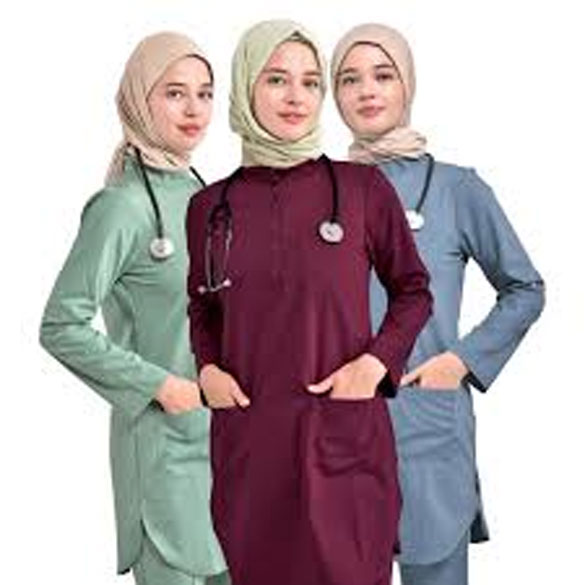
Ensuring dignity and inclusivity in the workplace is vital for a diverse nation like Sri Lanka. Among the issues calling for thoughtful consideration is the request for Muslim female nurses to be permitted a Shariah-compliant uniform within the state health sector.
In Islam, it is obligatory for women to cover their bodies except for the hands and face. The current standard nursing uniform, however, does not fully meet these religious requirements. A formal appeal has therefore been made to the relevant authorities to introduce modest modifications that would allow Muslim nurses to wear a headscarf, long-sleeved blouse, and either full-length trousers or a longer skirt paired with stockings—changes that are modest, simple, and professional.
Unfortunately, this reasonable request has faced rejection on the basis of concerns that it may lead to other ethnic groups demanding alternative uniforms, such as the lama saree or osariya. Such comparisons are misplaced, as the proposed changes for Muslim nurses do not alter the overall professional appearance or standard of the uniform. Consequences of Denying the Request Refusing to allow a Shariah-compliant uniform can have several negative implications:
1. Discouragement of Muslim women from pursuing nursing education and entering the profession.
2. Migration to the private sector, where religious accommodation is more flexible.
3. Loss of diversity and inclusivity in government hospitals, depriving patients of care from Muslim nurses.
4. Reduced job satisfaction and morale, as nurses may feel they are compromising their faith.
5. Potential shortage of nurses in the state health sector.
6. Conversely, permitting a modest and faith-sensitive uniform could encourage a significant increase in Muslim girls joining the nursing profession.
This matter is not merely about attire—it is about respecting cultural and religious identity within a professional framework
It is hoped that Health Minister Dr. Nalinda Jayatissa will give renewed consideration to this appeal, fostering an environment where every professional can serve with both competence and conscience.
Source: dailymirror.lk
https://www.dailymirror.lk/opinion/Making-Nurses-Uniforms-Shariah-Compliant-for-Muslim-Women/172-324423
-------
Casting Couch Iranian Style: A Creepy Director Lures Young Women Into His Web of Deceit and Coercion in ‘1001 Frames’
Nov 7, 2025
Courtesy of Maaa Film
----------
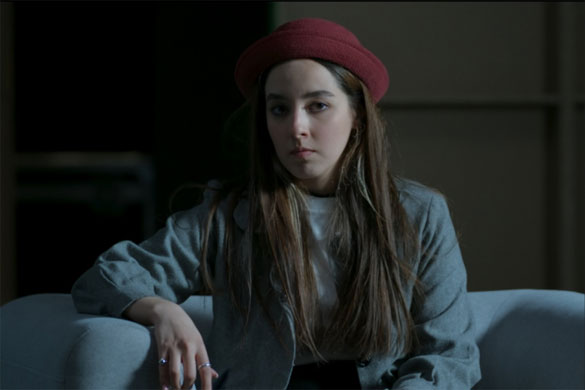
“1001 Frames,” which screened at Thessaloniki Film Festival this week, is composed of a series of creepy scenes from auditions conducted in Tehran, Iran. But it could be any city.
During the auditions, wannabe actors are asked to improvise scenes including being a cat, being trapped in a room, and being propositioned by a famous director. In fact, the last one is for real as the aspiring thespians eventually discover. It is at that point that the film contorts itself into a horror movie.
In the auditions, the actors are told the film for which they are auditioning is inspired by “One Thousand and One Nights,” also known as “The Arabian Nights,” an Arabic folktale in which the central character, Scheherazade, has to keep her captor, the king, amused by telling him stories so she isn’t killed.
U.S.-Iranian director Mehrnoush Alia came up with the idea after a conversation with a friend in Iran. “A friend that I knew was trying to become an actress and she was in similar situations,” she says. “She was told: You have to do this in order to get a role, so she gave up on acting and married very young, and became a very depressed woman. Her life changed, like she became a completely different person. So, I watched how, when you kill somebody’s dream, the person completely changes.”
When she moved to the U.S., where she attended Berkeley and Columbia as a film school graduate, she “was in a lot of audition rooms for my own student films and my friends’ student films, for films that were unpaid and by students who didn’t really know what they were doing, and we were getting a lot of applications, like hundreds.
“And just being in that position of power, sitting on the other side of the camera when they walk into the room, very vulnerable, they are opening themselves up, that felt very uncomfortable for me as somebody who has always been on the other side – like my mom is very controlling, I grew up in Iran which is like a very controlling culture obviously, so I think I was kind of identifying with them.”
It also reminded her of an Iranian film, “Salam Cinema,” directed by Mohsen Makhmalbaf, made 30 years ago. She was a kid when she watched it in a cinema with her father in Iran, and it made a big impression on her.
“It happens in an audition room as well. This very famous filmmaker, Mohsen Makhmalbaf, who was at the height of his career, put an ad in the newspaper for an audition and thousands of people showed up and they would fight. The way it was done, it was just showing the power of cinema and how desperate people are. The film starts with this long tracking shot, and you watch how they throw application forms in the air and the people were jumping to grab them and fighting over those papers. And in the film, the filmmaker is constantly telling the actors: cry now, laugh now, sing, dance, whatever, and things of that nature, and I remember I felt very uncomfortable in that cinema. I was laughing with the audience. I was having a great time. It’s a very entertaining film, but at the same time it made me feel very uncomfortable, just being aware of this power.”
While she was a student, she started writing a film that she “wanted to be told from the perspective of the audition camera, because I thought that gaze, that male gaze, that we have had in the history of cinema since its beginning, it’s a scary thing for me because I could see how when the actresses come into the room, actors and actresses, they felt vulnerable, and also it reminded me of walking down the streets in Tehran when I was a young woman, and the men are just ogling, just watching you, scanning you from top to toe. It was a cultural thing. I felt like all men feel entitled to do that. So I decided to use that and put the audience in that place, focusing on the discomfort that people feel in front of the camera.”
An added twist in the film is that the man who plays the director is Alia’s partner, Mohammad Aghebati, a theater director in Tehran. Most of the wannabe actresses in the film are played by his students, with whom he has done improvisation, and so he knows their limits, and he’s also the casting director for the film. “I knew a lot of them because we hang out together all the time, so I knew them from social settings,” she said.
“The character is so different from him as a person. He thought he had to be very aggressive and I had to keep reminding him that you are not supposed to be like that. Because he was getting agitated by the role. He really hated his character. So I think he was hiding behind this aggression. But he was starting from an aggressor point of view. I was like, ‘No, these situations usually don’t have that kind of aggression, at least not at the beginning. No, you need to go softer. You need to be more of a smooth talker.’ But he was not getting it. I had to keep reminding him that you have to be a player. He was actually one of the hardest to direct, because he’s a theater director, and he’s such a good director, but it’s hard to direct a director.”
When she’s shown the film, she finds it elicits a strong response in the audience, with both women and men finding that it reminds them of similarly uncomfortable situations.
“Women and men come and talk to me, and a lot of them thank me, because they say they have had similar experiences. Some of them are in tears. And you can just feel the emotion in the room. In the States, I recently screened it at the University of North Carolina for 18 and 19 year old students, all freshmen, at the film school. And it was really interesting to see how American audiences relate to it.
“I was told that 10 of the women were out in the bathroom crying, and the students lined up to talk to me afterwards. Men and women shared their observations. The men I talked to mentioned that they’ve experienced similar situations. But some women have actually gotten deep into what the situation was, you know, and it’s really interesting to see how the work gains their trust. Some of them mentioned that it was a story that they haven’t told anyone. So it was really interesting to just see how it gains their trust and gets them to talk. So, that whole storytelling part of it is interesting.”
Source: variety.com
https://variety.com/2025/film/global/1001-frames-thessaloniki-mehrnoush-alia-1236572770/
-------
Salma Khatum Becomes First Woman In Bangladesh Women's Cricket Selection Panel
Nov 8, 2025
Bangladesh Cricket Board announced on Saturday that they have included former national team captain Salma Khatun in the women's selection panel.
Salma is the first-ever woman cricketer from the country to be appointed to the selection panel that currently comprises Sazzad Ahmed (Chief of Women's Selection panel) and Sojol Chowdhury, who works mainly with the age-group teams.
"We had a short meeting where we made four to five key decisions. One of them was the appointment of Salma Khatun as the first-ever woman selector for our women's national team. She will be working alongside Shipon, who currently serves as the chief selector for the women's side," said Iftekhar Rahman Mithu, chairman of BCB's media committee, on Saturday.
"You all know Salma was named ICC's best bowler and top all-rounder back in 2014-15. She captained Bangladesh from 2008 to 2015 and has been a pillar of women's cricket in the country. I think this is a revolutionary decision by our president, as having someone like Salma involved will provide great support for women's cricket. This is the first time such an appointment has been made in Bangladesh," he added
Meanwhile, Iftekhar announced that they have also included former national pacer Hasibul Hossain Shanto in the men's national selection panel.
A post in the three-member national selection that is headed by Gazi Ashraf Hossain went vacant after Hannan Sarkar decided to step down to concentrate on his coaching career. Former left-arm spinner Abdur Razzak is the other member of the men's selection panel.
"You know there was a vacant spot in the men's selection panel. Hasibul Hossain Shanto has been selected to fill that position. From now on, he will work alongside Abdur Razzak and Gazi Ashraf Hossain Lipu," said Iftekhar.
"His experience, involvement with the Bangladesh team, and the interview process were all taken into consideration. As you know, there are one or two others working as selectors elsewhere, but Shanto was brought in because he is more experienced. Having played at the top level for Bangladesh for a long time, he was the natural choice for the role," he added.
Source: cricbuzz.com
https://www.cricbuzz.com/cricket-news/135670/salma-khatum-becomes-first-woman-in-bangladesh-womens-selection-panel-cricbuzzcom
-------
Afghanistan back in focus, but women remain invisible
Maryam Rahmani
7 November 2025
Over the past four years, Afghanistan has only made headlines when it serves a political goal, when danger rises, or when new decrees take more rights away. These brief moments of attention rarely lead to real action, lasting policy change, or support to restore the freedoms that are being eroded.
Too often, international decisions are driven by politics, alliances, or trade, rather than human rights or the rule of law. The struggles of Afghan women become secondary, pushed aside while leaders focus on their own agendas. Headlines flare and fade, but daily restrictions on education, employment, and movement continue, mostly unnoticed. Without consistent pressure, accountability, and a real focus on rights over politics, the loss of freedoms for Afghan women will continue. Gender apartheid becomes the new normal while the world looks away.
Digital spaces under siege
The recent nationwide internet shutdown highlights the Taliban’s tightening control over every aspect of life, especially for women. Officially blamed on ‘technical problems,’ it effectively cut off access to education, news, and essential communication. Independent observers see it as a deliberate attempt to silence voices, restrict information, and tighten authority, leaving women increasingly isolated and powerless.
In a society where even digital space is now under strict control, Afghan women face yet another barrier to exercising their basic rights. If such disruptions happen again, the consequences could be severe, disabling the economy, obstructing humanitarian coordination, and isolating the entire population from the outside world. For women, who already face restrictions on education, employment, and public presence, another prolonged shutdown would erase one of the last remaining spaces for connection, learning, and participation in Afghan society. Even though the internet is now working again, it is no longer safe. Strict monitoring and control of all digital activity increases the risks for women.
Shrinking pathways for protection
Pathways for asylum and protection are closing, and women’s rights continue to be treated as negotiable. The UK has already ended its major resettlement and relocation schemes, the Afghan Relocations and Assistance Policy (ARAP) and the Afghan Citizens Resettlement Scheme (ACRS), leaving hundreds of women human rights defenders, journalists, and activists in limbo. Many were never informed that the schemes would end, and now live with uncertainty and fear, unable to apply or reunite with their families.
At the same time, political speech in Europe is growing harsher. Reform UK has openly said that under a Reform government, even Afghan women asylum seekers would be deported back to Taliban-controlled Afghanistan. Meanwhile, recent reports show that twenty European countries including France, Germany, and Austria have held discussions on tightening deportation policies for Afghan refugees, signalling a coordinated push to send women and girls back to unsafe conditions.
In Pakistan and Iran, Afghan refugees, especially women, are facing increasing harassment, random detention, and forced deportation. Thousands have already been sent back across the border, despite clear risks to their lives. Many have no documentation, no legal aid, and no reliable authority to turn to. The fear is constant; women who once worked for human rights and peace are now forced into hiding. Borders are tense, and deportations continue without accountability.
The United States has revived conversations around military access to Bagram Airbase, while China and Russia are primarily pursuing their own strategic and economic interests, often overlooking the humanitarian and human-rights crises on the ground. European governments, meanwhile, are reinforcing border controls and deportation policies all without recognising the gendered realities of these decisions.
The collapse of civil society
Many women-led organisations, once strong voices for justice, are now struggling to survive. Donor priorities have shifted, international attention has faded, and most organisations are forced to focus only on keeping their doors open instead of pushing for change. Women’s rights are treated as an afterthought, a box to tick, or a symbolic gesture.
It has been four long years of restrictions, four years of exclusion, and four years without any tangible progress. The systems that once supported activism and civil society are collapsing, leaving women and their organisations isolated, struggling, and increasingly unheard.
The UN’s failure and global silence on Afghanistan
What is happening in Afghanistan goes beyond a policy failure, it reflects a collapse of global solidarity and moral responsibility. Governments continue to issue statements of ‘concern,’ especially regarding Afghan women and girls. Yet without real action, funding, or safe pathways for those at risk, these words are hollow.
Criticism is often aimed at the UN for its inaction, but the UN is only as strong as its member states. Each government that stays silent, avoids taking a clear stand, or prioritises political convenience over human rights weakens the institution designed to protect people in crisis.
The refusal to hold the Taliban accountable has hollowed out the UN’s human rights mandate. For Afghan women and girls, this failure translates into daily fear, lost opportunities, and shrinking hope. More broadly, it threatens the credibility of the international community and underscores a troubling willingness to let political expediency override justice.
This inaction risks normalising oppression and sends a message that the voices of the most vulnerable can be ignored without consequence.
What next?
Afghanistan is now making headlines again, but rarely do these acknowledge the reality for Afghan women and girls: 1,460 days of education denied, rights curtailed, and futures compromised. Afghan women are not statistics or short-lived headlines. They are mothers, daughters, students, teachers, and activists. Their voices persist, but their struggles are too often ignored or put at risk in political deals.
Afghan women face detention, threats, exile, and silencing, yet they continue to resist. The question for the international community is this: what more do you need from Afghan women to take concrete action? What guidance, knowledge, and leadership can Afghan women offer so that global policies, aid, and actions truly reflect their realities, amplify their voices, and create real change? Not token gestures, not symbolic statements, but true partnership, listening, following their lead, and giving them platforms where their experience shapes action.
Action, not attention
The international community has a choice: it can continue giving empty words and temporary concern, or it can commit to long-term, meaningful action. Afghan women deserve genuine partnership, support, and help that lets them lead the necessary change.
Womankind calls on the UN, EU, States, philanthropy, funders and INGOs to:
Funders, philanthropists and INGOs
Directly fund women-led organisations in Afghanistan and the diaspora
Support community Wi-Fi hubs, SMS/radio updates, and offline learning kits so women in both villages and cities can continue learning safely
Equip women-led NGOs and civil society groups with secure messaging apps, encrypted storage, and satellite communication devices
Provide training on digital safety and secure communication to protect staff and community members
Provide platforms within international decision-making spaces, conferences, and media outlets for women to influence policies and programs, not just participate symbolically
Publish clear, actionable reports on the state of women’s rights, education access, and safety to keep the situation and demands of Afghan women on the agenda
UN, EU, and Member States
Stop deportations and forced returns to Taliban-controlled Afghanistan
With formal resettlement programs closed, create alternative pathways for protection. These might include humanitarian corridors, emergency visa schemes, or temporary safe zones for at-risk women and girls
Ensure Afghan women refugees and asylum seekers can access legal support, healthcare, education, and psychosocial services to ensure meaningful protection
Encourage coordinated EU monitoring to ensure women are not exposed to further danger
Use sanctions, international monitoring, and UN mechanisms to demand compliance with human rights obligations
Ensure international aid is channelled to women led organisations and those directly protecting women’s rights
True global responsibility is shown not by words alone, but by clear actions and decisions that create lasting change. Courage cannot be their only shield, the world must act decisively, consistently, and without compromise to make sure Afghan women are never again made invisible.
Source: alliancemagazine.org
https://www.alliancemagazine.org/blog/afghanistan-back-in-focus-but-women-remain-invisible/
———-
Bihar Polls: Muslim women's struggle for basics lost in din of campaigning
08-11-2025
In the narrow lanes of Purnia and the dusty settlements of Sitamarhi, the stories of the quiet resilience of Muslim women echo from every household. However, these stories are not reaching the leaders who are promising to bring in schemes that would change the lives of women in the State.
Bihar has gone through the first phase of the Assembly election on November 6, and the second phase is scheduled on November 11.
“I left school after Class 6,” says Zahra, a 28-year-old mother of four from Purnia. “There was no toilet for girls, and the school was two kilometres away. My parents said I should help at home.”
In another village, Fatima, 32, recalls her experience: “When I was pregnant, the health centre was far, and I had to borrow money to reach the hospital.”
Meanwhile, Amina, 17, adjusts her dupatta as she speaks softly, “My sister was married at 16. I followed the same path. What choice did I have?”
These voices tell a shared story of systemic neglect of Muslim women of Bihar, the state which has seen the first phase of polling for the Assembly elections and is all set for
Muslim women’s population in Bihar is nearly 88 lakhs, yet their voices do not seem to matter.
This reporter spoke to women from some of the most deprived and backward areas of the state. Their stories reveal three major challenges -- poor access to healthcare, barriers to education and early marriage, and economic marginalisation – as key challenges in their lives.
For many Muslim women in Bihar, even basic healthcare remains out of reach. A study by the Asian Development Research Institute (ADRI) found that only 42% of Muslims in Bihar use government hospitals, and almost half of pregnant Muslim women said no ASHA or ANM worker visited them before delivery.
“During my pregnancy, the ASHA came only after I called her several times,” Fatima explains. “I gave birth at home because I couldn’t afford transport.”
Her experience is shared by many in the districts like Araria, Madhubani, and Katihar, where many Muslim families live, and clinics are few and far between. Poor infrastructure, distance, and restrictions on women’s movement make it hard to access healthcare.
The National Family Health Survey (NFHS-5) shows that over 60% of women in Bihar are anaemic, with Muslim-majority districts reporting some of the highest numbers.
Poverty, lack of medical outreach, and gender inequality together create a cycle of neglect, one that leaves women vulnerable to preventable health risks, often without any help.
The next barrier starts early at school. Despite several government schemes, the dropout rate among Muslim girls in Bihar remains high. A study by Patna College found that female literacy among Muslims is just 31.5%, far below the state average.
“I used to walk two kilometres to school,” Zahra recalls. “When I turned twelve, my parents worried about safety and asked me to stay home.”
For Amina, the story is similar. “After Class 8, there was no bus to school. My father said marriage was better than wasting time.”
Such decisions, often driven by fear or financial pressure, cut short girls’ education and trap them in early marriages. According to NFHS-5, nearly 40% of women aged 20–24 in Bihar were married before 18, one of the highest rates in India.
Education is more than just reading and writing; it opens the door to confidence, awareness, and independence. But for many Muslim girls in Bihar, that door is still half-shut, leaving them with few options and even fewer dreams.
Even outside the home, opportunities for Muslim women are scarce. They are among the least represented in formal jobs or self-help groups (SHGs). An ADRI report shows that only 8.8% of households under Bihar’s ‘Jeevika’ women’s livelihood program are Muslim, a striking gap considering Muslims make up nearly 17% of the population.
“I sell vegetables in the market,” says Fatima. “There’s no shade, no security. When it rains, I lose everything. If I fall sick, there’s no income at all.”
Most Muslim women work in informal jobs as domestic workers, farm labourers, or street vendors without social security or financial stability. Cultural restrictions, lack of access to training, and limited mobility make it harder to break this cycle.
“I wanted to join a self-help group,” says Zahra, “but the meeting time clashed with household work. My husband said it wasn’t necessary.”
Their contribution to the local economy remains invisible, even when they carry routine family responsibilities.
Some local interventions show that real change is possible when outreach meets empathy. Mobile health camps, female health volunteers from the same communities, catch-up education programs for adolescent girls, and market-linked skill training for women vendors have shown encouraging results.
In areas where NGOs worked with panchayats to identify out-of-school girls and connect them with government schemes, early marriage rates and school dropouts decreased noticeably.
They say solutions to these problems lie in strengthening maternal health outreach in minority areas, improving school infrastructure and safety for girls and creating women-led economic programs that offer credit, training, and market access.
Change for Muslim women in Bihar doesn’t require big promises, just consistent effort and genuine inclusion.
Source: awazthevoice.in
https://www.awazthevoice.in/women-news/bihar-polls-ignored-stories-of-muslim-women-s-struggle-for-basics-43530.html
--------
URL: https://newageislam.com/islam-women-feminism/uniform-muslim-women-nurses-sri-lanka/d/137571