
Women Bleeding, Buried Under Debris, Were Left Unattended As Taliban Rule Bans Rescuers From Touching Women And Girls
New Age Islam News Bureau
05 September 2025
• Women Bleeding, Buried Under Debris, Were Left Unattended As Taliban Rule Bans Rescuers From Touching Women And Girls
• Eithar Hayyan To Become Second Saudi Woman To Compete In Professional Fighters League
• Kerala High Court Denies Citizenship To Pakistan-Born Sisters
• Students Sue Arizona State University Police After Being Forced To Remove Hijabs
• Melania Trump Warns 'Robots Are Here' In Rare Public Outing
• Sharjah Business Women Council opens global gateway for UAE’s female tech founders at Expand North Star 2025
• Samiya Hijab Latest Viral Video Full Sparks Outrage and Deep Reflection
Compiled by New Age Islam News Bureau
URL: https://newageislam.com/islam-women-feminism/women-bleeding-taliban-bans-unattended/d/136732
-----
Women Bleeding, Buried Under Debris, Were Left Unattended As Taliban Rule Bans Rescuers From Touching Women And Girls
September 05, 2025
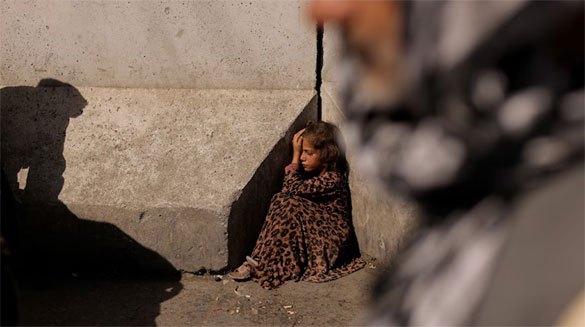
The quake has exposed the consequences of Taliban-era restrictions that have gutted Afghanistan’s healthcare system.
------------
When the first emergency teams reached 19-year-old Bibi Aysha’s village in Kunar Province more than 36 hours after Sunday’s 6.0-magnitude earthquake, she thought help had finally arrived. Instead, the sight of an all-male team filled her with dread.
“They gathered us in one corner and forgot about us,” Aysha told The New York Times, describing how wounded men and children were carried out while women, some bleeding, some buried under debris, were left unattended.
Afghan cultural norms, strictly enforced by the Taliban, forbid physical contact between men and women who are not related. That meant no male rescuer could touch Aysha, her neighbours, or the other female waiting in pain under the rubble.
In nearby Mazar Dara, volunteer TahzeebullahMuhazeb said he watched female survivors remain trapped beneath rubble because the all-male medical teams hesitated to pull them out.
“It felt like women were invisible,” the 33-year-old told The New York Times. “The men and children were treated first, but the women were sitting apart, waiting for care.”
More than 2,200 people died and 3,600 were injured in the quake that flattened villages across eastern Afghanistan. But aid workers and women on the ground told The New York Times the disaster has laid bare Afghanistan’s gender apartheid in the starkest way yet.
“Women and girls will again bear the brunt of this disaster,” said Susan Ferguson, UN Women’s special representative for Afghanistan, in a statement. She urged that their needs must be at the heart of response and recovery.
The quake has exposed the consequences of Taliban-era restrictions that have gutted Afghanistan’s healthcare system. Last year, women were banned from medical education, worsening the shortage of female doctors and rescue workers.
Girls are barred from studying beyond sixth grade. Women cannot travel without a male companion. They are excluded from most jobs, including with aid organisations. Even female employees of the United Nations have faced such harassment that agencies told them to work from home.
The result: when disaster strikes, women have nowhere to turn. A New York Times journalist who visited Mazar Dara saw no women among the medical or rescue teams. In one district hospital, not a single female staff member was present.
The Taliban-run Ministry of Health admitted there was a lack of female staff in quake-hit areas. Spokesman Sharafat Zaman said the government was “deploying the largest number of female doctors and nurses” in hospitals across Kunar, Nangarhar and Laghman provinces.
But survivors told New York Times that on the ground, help for women remained elusive. In Aysha’s village, no female aid worker had arrived even four days after the quake.
Eastern Afghanistan continues to shudder with aftershocks, one measured 5.6 on Thursday. For women like Aysha, the trauma goes beyond tremors.
She and her 3-year-old son have spent nights out in the open, soaked by rain, unable to reach shelters. Her husband works in the city. “God saved me and my son,” she told The New York Times. “But after that night, I understood, being a woman here means we are always the last to be seen.”
Source: moneycontrol.com
------
Eithar Hayyan To Become Second Saudi Woman To Compete In Professional Fighters League
04 September ,2025
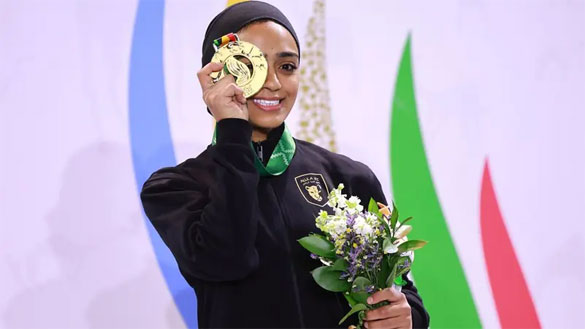
Saudi Arabian fighter Eithar Hayyan. (Supplied)
-----------
Saudi Arabian fighter Eithar Hayyan is set to make her amateur mixed martial arts debut at the Professional Fighters League’s (PFL) MENA semi-finals in Riyadh, making her only the second Saudi woman to compete in the league.
The decorated Taekwondo fighter will face Egypt’s Marwa “Bad Kitty” Abdelmonem in an amateur women’s strawweight showcase bout scheduled for September 27 at The Arena in Riyadh.
“Life’s hardships shaped me into a fighter who refuses to surrender, and now I rise – ready to step into the cage on September 27, not just to compete, but to begin a new chapter,” she added.
The Riyadh event will also showcase semifinal bouts in the bantamweight, featherweight, lightweight, and welterweight divisions, with winners advancing one step closer to PFL MENA championship gold.
Source: Alarabiya.net
-----
Kerala High Court Denies Citizenship To Pakistan-Born Sisters
Sep 5, 2025
KOCHI: Kerala high court has ruled that Pakistan-born people seeking Indian citizenship cannot bypass the mandatory requirement of renouncing their Pakistani nationality.
A division bench of Justices Sushrut Arvind Dharmadhikari and VM Syam Kumar overturned recently a single-judge order that had directed Union govt to grant citizenship to two women living in Thalassery of Kerala's Kannur district. The bench allowed an appeal filed by Union govt, holding that a renunciation certificate from Pakistan is indispensable and cannot be replaced by other documents.
"The Citizenship Act, 1955, does not recognise dual citizenship," the court said. "An individual can be treated as an Indian citizen only if recognised exclusively by the Indian state, without competing claims from any other country."
The case dates back to 2008 when the women's father Muhamed Maroof returned to India from Pakistan with govt permission. Maroof, born in Kannur's Kottayam-Malabar village, had moved to Pakistan in 1977 with his grandmother before working in UAE. His daughters were born in Pakistan and later shifted with the family to Thalassery.
The sisters applied for Indian citizenship, producing an NoC from Pakistan high commission instead of a renunciation certificate. They said under Pakistan's citizenship law, renunciation papers can only be issued after turning 21, and by then they had already surrendered their Pakistani passports. The single bench accepted this plea.
The division bench disagreed, ruling that both minors and adults must formally renounce foreign citizenship to qualify. "Unless Pakistani citizenship is renounced under Section 14A of the Pakistan Citizenship Act, 1951, Indian citizenship cannot be claimed," the court said. The order leaves the petitioners legally Pakistani citizens in the eyes of both countries.
Source: Indiatimes.com
Please click the following URL to read the text of the original Story
------
Students sue Arizona State University police after being forced to remove hijabs
Sep 5, 2025
Four Muslim women arrested during a pro-Palestine student encampment at Arizona State University (ASU) last year have filed a lawsuit accusing campus police and other authorities of violating their constitutional rights by forcibly removing their hijabs and keeping them uncovered for more than 24 hours.
The lawsuit, first reported by The Arizona Republic, was filed in July and centers on the April 26, 2024, raid on the encampment. According to court documents, ASU police, acting under orders from the Maricopa County Sheriff’s Office, forced several women in custody to remove their hijabs after dozens of protesters were charged with trespassing and taken to jail.
Among those subjected to the removal were Fatima Jabardi, Noor Odeh, Noura Abdalla, and Salam Jabaieh, who said they were left exposed on the journey to jail and throughout their detention until their release the following evening. The plaintiffs argue that the forced removal left them with lasting trauma, describing “mental anguish, physical and emotional distress, humiliation and embarrassment.”
The filing stressed that “at no time were Plaintiffs violent, disruptive or dangerous. At no time did Plaintiffs assault, harass or otherwise intimidate anyone.”
The hijab, a religious head covering worn by Muslim women, is widely recognized under US law as protected religious attire. Advocacy groups and civil rights lawyers have long argued that forcing women to remove it in the presence of unrelated men is both a profound violation of privacy and a breach of First Amendment rights.
“This is not about a trespass. This is about speech,” attorney David Chami, who is representing the women, told AZFamily, a CBS News affiliate. “There was absolutely no justification for stripping those women of their religious head coverings. It would be like stripping somebody who’s not a Muslim, a woman having her top and bra removed in public. I mean, it is that level of humiliation.”
The Maricopa County Sheriff’s Office policy states that detainees should be granted “reasonable accommodations” for religious garments, and that removal should last only as long as necessary. Yet, the women were kept without their hijabs until after their release.
Cases of police forcing hijab removal are not uncommon in the United States, with similar incidents reported in New York, California, Minnesota, and Arizona in recent years. Most have been settled privately.
The four plaintiffs are now seeking both compensatory and punitive damages, as well as a declaration from the court that their constitutional rights were violated.
Source: Royanews.tv
https://en.royanews.tv/news/62818
-----
Melania Trump Warns 'Robots Are Here' In Rare Public Outing
Sept. 5, 2025
First Lady Melania Trump made a rare public appearance at the White House on Thursday, telling the crowd that "the robots are here" and that it is "our responsibility to prepare America's children" for the AI-driven decades ahead.
"Our future is no longer science fiction," she said. "During this primitive stage, it is our duty to treat AI as we would our own children – empowering, but with watchful guidance."
The event - a meeting of a White House AI education task force established earlier this year - was one of so far only a handful of public events for a first lady who has proven both elusive and influential since her husband returned to the White House.
Born MelanijaKnavs in Slovenia, the 55-year-old first lady and former fashion model was, for a time, often described as an "enigma" - less public than her predecessors, with fewer speeches and public engagements.
Her relative absence during long stretches of her husband's ultimately successful 2024 campaign even prompted a flurry of news articles with headlines asking "Where is Melania?".
But since the start of the second administration in January, Mrs Trump has taken what some have described as a more active - and focused - approach to a role that is largely undefined and that morphs from administration to administration.
Much of her attention has been on children, building on a previous "Be Best" initiative created during Mr Trump's first term, which focused on well-being and combated cyberbullying and opioid abuse.
In addition to her recent work on AI, she was instrumental in pushing through the Take It Down Act which criminalised posting "intimate images" - real or AI-generated - online without an individual's consent.
EinavRabinovitch-Fox, a professor at Case Western Reserve University and historian who focuses on first ladies, told the BBC that while "it's not unusual" for those in the role to focus on young people, Mrs Trump has taken a different tack.
"First ladies do usually focus on realms that are seen as more feminine, such as children and education. Things that have been historically gendered," she said. "What is maybe unusual with Melania is her approach."
As an example, Ms Rabinovitch-Fox noted that the Take It Down Act was heavily focused on the platforms that host revenge porn, requiring that they remove any illicit content within 48 hours or penalising them if they fail to act.
And while focused on education, Thursday's White House event saw Mrs Trump not surrounded by young people, but by cabinet members, administration officials and representatives of private sector heavyweights such as IBM and Google.
Anita McBride, the director of American University's First Ladies Initiative - and one-time chief of staff to former First Lady Laura Bush - said that such events demonstrate a key change for Mrs Trump when compared to her first term.
"There are outside players that are willing to work with her, that maybe did not want to work with her before," she said. "[Some organisations] were reluctant to meet her the first time around. She had a hard time convening roundtables. She did not have a strong structure around her."
By focusing her efforts on the technological, business and legislative aspects of education and protecting children, Ms McBride said that Mrs Trump "adds an element of urgency" around fast-moving emerging technologies.
President Trump has also said the first lady has offered scepticism of previous conversations with Russian President Vladimir Putin, to whom she penned a letter in August saying it was "time to protect children and future generations worldwide".
The letter - and her focus on children - did not go unnoticed. In the weeks that followed, she received letters from both Ukrainian First Lady OlenaZelenska and Turkish First Lady Emine Erdogan.
Former First Lady Nancy Reagan, for example, famously exchanged letters with Mikhail Gorbachev's wife Raisa, and others, such as Pat Nixon and Rosalyn Carter, travelled the world for humanitarian reasons and shuttle diplomacy.
Ms McBride said that Mrs Trump's letter to Putin, however, demonstrates that while perhaps less visible than some of her predecessors, she is willing to engage on the topics that are of particular interest to her.
"She was born in a country that was under Soviet influence, and has a level of sensitivity that maybe others don't have," she said. "She doesn't have to be present on everything, but wants to be present on issues that are more connected to her interests, and where she can make a difference."
Looking forward to the next three years of the administration, Ms McBride said she believes Mrs Trump will continue to be extremely selective about where she weighs in as first lady.
"She does it on her terms," she said. "She's about quality, not quantity. She's not going to be constrained by how anyone else in the past has done the role."
Source: bbc.com
Please click the following URL to read the text of the original Story
https://www.bbc.com/news/articles/cn82lp7y3pro
-----
Sharjah Business Women Council opens global gateway for UAE’s female tech founders at Expand North Star 2025
September 04, 2025
Sharjah: The Sharjah Business Women Council (SBWC) has launched a unique opportunity for the UAE’s most innovative female tech entrepreneurs, announcing it is now accepting applications from women-led startups to secure fully sponsored participation at Expand North Star 2025 in Dubai.
The global startup and investor event, organised by Dubai World Trade Centre and hosted by the Dubai Chamber of Digital Economy in partnership with GITEX Global, will run from October 12 to 15 at Dubai Harbour. Now in its 10th edition, it is considered the largest gathering of its kind in the world, connecting founders with global investors, venture capitalists, and technology leaders.
Under the initiative, SBWC will select eight UAE-based female founders to showcase their businesses on an international platform. Each sponsored startup will receive a premium exhibition pod at the event, offering visibility to thousands of visitors from more than 100 countries.
In addition, the winners will be granted automatic entry into the prestigious ‘Supernova Challenge,’ billed as the world’s largest startup pitch competition, which carries a prize pool of $214,000 in equity-free grants, including a top prize of $100,000.
Maryam Bin Al Shaikh, Director of SBWC, said the initiative reflects the council’s mission to put Emirati and UAE-based women entrepreneurs at the forefront of global innovation.
“Beyond our comprehensive business ecosystem at SBWC, one of our core missions is to ensure that the pioneering women shaping the UAE’s economy have the opportunity to excel on the global stage,” she said. “By empowering our members at Expand North Star, we not only support their growth but also position them to become the next generation of leaders shaping innovation for the entire region. The ‘Supernova Challenge’ is where great ideas meet global opportunity, and we are proud to open that door for female-led startups.”
To qualify, applicants must be the founder or co-founder of a licensed startup operating for less than five years and headquartered in the UAE. The lead founder must also hold membership with the Sharjah Business Women Council, which can be applied for at the time of registration. Applications will be reviewed by a selection committee using a set of criteria that includes innovation, market potential, business model strength, traction, and team capability.
In addition to competing in the flagship Supernova Challenge, selected founders will also be eligible for two specialised competitions. The Sustainability Leaders Pitch Competition, powered by North Star Impact, will award a $10,000 grant to startups driving positive environmental and social change. Meanwhile, the Fintech &Blockchain Disruptor Award, supported by Fintech Surge & Future Blockchain Summit, will provide another $10,000 grant to the most innovative solution in the financial technology space.
Operating under the patronage of Her Highness Sheikha Jawaher bint Mohammed Al Qasimi, Wife of His Highness the Ruler of Sharjah, SBWC has long been committed to empowering women in business. The Council supports members with networking opportunities, training, mentorship, and advocacy, ensuring that female entrepreneurs have the tools and platforms needed to succeed.
By sponsoring participation at Expand North Star 2025, SBWC continues to build on its vision of establishing Sharjah as a centre of excellence for female-led innovation and enterprise, while contributing to the UAE’s wider strategy of positioning itself as a hub for global entrepreneurship.
Source: Gulfnews.com
-----
Samiya Hijab Latest Viral Video Full Sparks Outrage and Deep Reflection
September 5, 2025
A new video featuring TikToker Samiya Hijab has gone viral. The clip, circulating on social media, is being labeled by many as a “leaked” or “private” video. The situation has stirred serious concern across the internet.
The incident reportedly took place earlier this week. According to major outlets like Geo News and The Express Tribune, the video may have been linked to a personal dispute involving the influencer. While authorities are investigating, the clip continues to be shared — illegally — by users online.
Many people watch viral videos without thinking. But not all trending content is ethical or legal. In the case of Samiya Hijab, the video may have been posted without her consent. Sharing such content violates privacy, and watching it supports the problem.
Platforms have a responsibility to remove such content. But viewers are also responsible. Every click creates demand. That demand pushes others to keep leaking and posting such content.
Most users don’t realize they are breaking digital laws. Or that they could face legal issues. Even more seriously, they’re part of a cycle of abuse.
This isn’t just about one viral video. It’s about internet culture. When private videos go viral, victims suffer long-term damage. Their mental health, career, and personal lives may never recover.
Also, many of these so-called “video links” are scams. They often redirect users to malware, phishing, or hacking sites. Looking for these videos is risky. You can lose your personal data or get trapped in cybercrime.
If you’re searching for these videos, you’re part of the problem. It’s time for internet users to stop feeding the dark side of digital media. Be human. Be responsible.
Source: Zoombangla.com
-----
URL: https://newageislam.com/islam-women-feminism/women-bleeding-taliban-bans-unattended/d/136732