
In Syria, Kidnappings of Women and Girls Fuel a Minority Group's Fears
New Age Islam News Bureau
03 April 2026
· In Syria, Kidnappings of Women and Girls Fuel a Minority Group’s Fears
· CAIR Welcomes Hate Crime Charge for Spitting Attack on Muslim Woman in New Mexico
· Human Rights Report Says Situation in Afghanistan Has Deteriorated on All Fronts
· 'I'm a Muslim woman in a hijab, the abuse is unrelenting' - Inside Birmingham's election battle
· Asiya Andrabi is no women’s rights advocate. She does not speak for Indian Muslims
· ‘Jungle raj in state’: BJP demands TMC minister Sabina Yeasmin’s arrest over Malda incident
· Sima Samar Says Silence Over Girls’ Education Has Deepened Afghanistan’s Crisis
· Syrian journalist: Women’s participation key to Syria’s constitutional legitimacy
Compiled by New Age Islam News Bureau
------
In Syria, Kidnappings of Women and Girls Fuel a Minority Group’s Fears
April 3, 2026
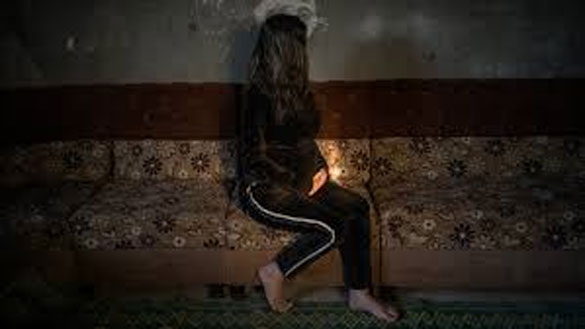
A 16-year-old girl left her home in northwest Syria last May to visit a shop and disappeared.
Weeks later, an anonymous stranger phoned her distraught family and said that he had the teenager and would let her go if they paid thousands of dollars in ransom, according to four people involved in her case.
The family paid the ransom and the girl returned in August, more than 100 days after she had been kidnapped. She told confidants that she had been held in a dank basement and was regularly drugged and raped by strangers, the four people said.
A medical exam turned up yet another shock: She came home pregnant.
Since rebels ousted the dictator Bashar al-Assad in late 2024, panicked families and activists trying to help have regularly sounded the alarm on social media that women and girls from Syria’s Alawite minority have mysteriously disappeared or been kidnapped. Many fear that their sect is being targeted as retribution for the brutality of Mr. al-Assad, who also belongs to the Alawite sect, an offshoot of Shiite Islam.
The government has denied that Alawite women and girls are being targeted by kidnappers, saying that it has confirmed only one such case.
But a New York Times investigation based on dozens of interviews with Alawites who say they were kidnapped, their relatives and others involved in their cases found that these abductions have been common and often brutal.
The Times verified the kidnappings of 13 Alawite women and girls, in addition to one man and one boy. Five said they had been raped. Two came home pregnant.
The family of one woman said it sent $17,000 to kidnappers who never released her, and provided screenshots of ransom demands and the money transfers. A 24-year-old said she had been held for three weeks in a filthy room where men raped her, beat her, shaved her head and eyebrows and cut her with razor blades. Her relatives also paid the kidnappers and in this case secured her release, according to four people involved in her case.
Syrian activists say they know of scores of such kidnappings but details are difficult to confirm because victims and their families are too scared to talk.
Most people who spoke with the Times did so on condition of anonymity for fear of reprisals from the government or the kidnappers. The Times is not identifying most of those who were kidnapped for the same reason.
The Times corroborated accounts from people who had been kidnapped and their relatives, as well as through social media posts announcing when they were taken and returned, ransom messages sent by kidnappers and interviews with medical and aid workers who spoke with the abductees after their release.
The kidnappings took place against a backdrop of deep distrust between the Alawites, who make up about one-tenth of Syria’s population, and the new government. Mr. al-Assad relied heavily on his sect in his military and security services while in power.
That led many of the Sunni Muslim former rebels who now run Syria to associate the Alawites with the ousted regime.
Last March, that anger fueled days of sectarian violence in northwestern Syria that left about 1,400 people dead, according to a U.N. investigation. The inquiry found that some government security forces had participated in the killing, leaving many Alawites afraid of them.
Many of the kidnapped women and girls, along with their relatives, said the government had failed to take their cases seriously.
Nour al-Din Baba, the Interior Ministry spokesman, said in an interview that he could not respond to The Times’ findings unless it provided the names for the cases it had verified, which The Times declined to do. He said that pregnancies did not prove kidnappings and that ransom messages could be fabricated.
“For all of those ransoms, where is the proof?” he said.
He added that he stood by a government investigation released in November that examined 42 reported kidnappings and found that only one of them was “real.”
In the other cases, he said, the women were involved in prostitution or other crimes, ran away with lovers or fled domestic troubles. They and their families, he said, then claimed they had been kidnapped to avoid social stigma.
The kidnap victims and their relatives painted a very different picture, one of women and girls grabbed off the street by armed men near their homes or while running errands.
They reported being taken by fellow Syrians or by foreign jihadists who had come to Syria during the country’s 13-year civil war, hoping to establish an Islamic state. Many women and girls reported that their captors had insulted Alawites, saying they deemed them permissible to rob and rape — a view propagated by Islamist extremists.
One 33-year-old was kidnapped by four armed men last summer, according to the woman and two others involved in her case said. Like other abductees, she recalled her captors asking whether she was Alawite. She said yes and they replied that they were “‘going to have a good time,’” she recalled.
“They wanted to humiliate the Alawites,” she said.
Rima Flihan, the executive director of the Syrian Feminist Lobby, a nonprofit organization that has tracked kidnapping cases, said sectarian revenge drove the abductions.
“It is systematic and it is targeting this community,” she said. “They are trying to make the community vulnerable.”
The Times also documented five cases of Alawite women who had disappeared and remain missing, although it was not possible to determine whether they had been abducted.
One of them, Etab Jadid, 41, disappeared in May after buying ice cream near Syria’s Mediterranean coast, according to her mother, Rabiha Shabbah. The family had reported her disappearance to the police but had received no updates and have not been contacted by any kidnappers.
The Times could not independently confirm all the details of the cases. But they overlapped with or bore striking similarities to others documented by rights groups. Amnesty International said in July that it had credible reports of 36 similar kidnappings and had documented eight cases.
In August, a U.N. commission said it had documented six such cases and received “credible reports” of dozens more that it was still investigating.
The Syrian Feminist Lobby has counted 80 Alawite women and girls who have disappeared since early 2025, Ms. Flihan said. Twenty-six of the cases were confirmed kidnappings, including of women who suffered physical or psychological abuse, she said.
Ten have returned home, three are still missing and the status of the other 13 remains unclear, she said, adding that the government had not supported those who had returned.
“They are more shaming the women than seeing them as survivors,” she said.
All of the families that spoke to The Times said they had reported their cases to the security forces. While some dealt with sympathetic officers, many said the security personnel had been dismissive or accused the missing women and girls, without evidence, of using drugs or running away with their boyfriends.
Some security officers told the families of those who had returned to lie about what had happened.
Walaa Ismael, 24, said she was abducted near the university where she was studying in the central city of Homs in May. Her captors demanded a ransom of $15,000 but let her go after activists spread news of her disappearance online and her widowed mother told her captors that she could not pay.
Ms. Ismael described her kidnappers as criminals motivated by money, not sectarianism. After she returned, she said, security officers told her family to say that she had been visiting a friend.
“I said no,” her mother, Iktimal Salameh, recalled. “I put out a video to tell everyone what happened.”
In an interview, a police investigator who spoke on condition of anonymity because he was not authorized to talk to journalists, said he had worked on 10 reported kidnappings and that nine of them had been “fake.” One was real, and the woman had come home pregnant.
“It destroyed her life,” he said.
Many of the women and girls who have returned said they suffer from trauma that has disrupted their educations, careers and sleep. Some have separated from their husbands and a few have fled Syria, fearing their kidnappers could come for them again.
One 19-year-old was held for a few days last summer by a foreign jihadist, she and three others with knowledge of her case said. Since then, she said, she had been depressed, lost her love of sports and abandoned her plans to go to university.
“I used to go out with my friends, but now I don’t want to leave the room,” she said. “I’m scared of the people around me.”
The pregnant 16-year-old told confidants that her captors had given her sleeping pills and allowed strangers to rape her. She was released for a ransom of about $2,500 and returned to her family, poor farm laborers.
Abortion is illegal in Syria, even in cases of rape. She wanted to keep the baby anyway.
“It is my child,” she said. “What did it do wrong?”
In February, she gave birth to a healthy baby girl.
Ben Hubbard is the Istanbul bureau chief, covering Turkey and the surrounding region.
Source: nytimes.com
https://www.nytimes.com/2026/04/03/world/middleeast/syria-kidnapping-alawite-woman-girls.html
-------
CAIR Welcomes Hate Crime Charge for Spitting Attack on Muslim Woman in New Mexico
April 2, 2026
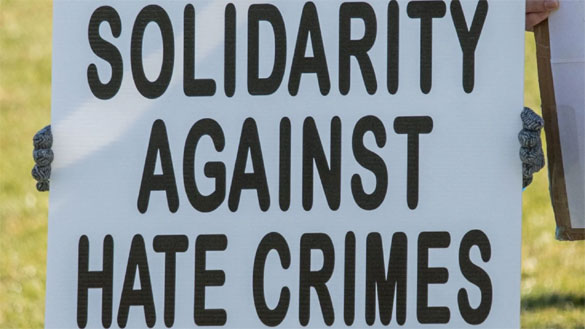
The Council on American-Islamic Relations (CAIR), the nation’s largest Muslim civil rights and advocacy organization, today welcomed the decision by authorities in New Mexico to file a hate crime charge for an alleged spitting and battery attack on a Muslim woman in Albuquerque’s Old Town district.
According to reports, a local man has been charged in connection with the incident, which reportedly involved the suspect spitting on and assaulting a Muslim mother. During the incident, the Muslim woman was reportedly asked, “Are you Christian?,” and was told she would “burn in Hell.”
CAIR said the attack reflects a disturbing pattern of bias-motivated harassment targeting Muslims or those perceived to be Muslim.
In a statement, Washington, D.C.-based CAIR said:
“We welcome the decision to pursue a hate crime charge in this disturbing case and commend law enforcement for addressing the apparent bias motivation behind the attack. No one should be targeted, harassed, or assaulted because of their faith or appearance.
“This alleged act of hatred is part of a broader rise in anti-Muslim incidents nationwide. It is essential that authorities respond swiftly and decisively to send a clear message that such behavior will not be tolerated.
“We urge community leaders and public officials to continue speaking out against bigotry in all its forms and to work proactively to ensure the safety and dignity of members of all minority communities.”
CAIR noted that Muslim women, particularly those who wear religious attire such as the hijab, are often disproportionately targeted in bias-motivated incidents.
Yesterday, CAIR’s Arizona chapter called on state and federal law enforcement authorities to investigate a threatening letter sent to a mosque in Glendale, Arizona, as a possible hate crime.
Anyone who experiences or witnesses a hate incident to report it to local authorities and civil rights organizations. GO TO: https://www.cair.com/report/
According to CAIR’s most recent civil rights report, complaints of anti-Muslim bias and discrimination have continued to rise nationwide, reflecting an ongoing pattern of Islamophobia impacting communities across the country.
Source: cair.com
https://www.cair.com/press_releases/cair-welcomes-hate-crime-charge-for-spitting-attack-on-muslim-woman-in-new-mexico/
-----
Human Rights Report Says Situation in Afghanistan Has Deteriorated on All Fronts
By Fidel Rahmati
April 3, 2026
A new report by the Afghanistan Human Rights Center says rights and freedoms have been systematically violated across the country, with women, journalists, activists and former security personnel among the most affected. The report describes a widening climate of fear, repression and shrinking civil liberties.
The report says women and girls faced the harshest forms of discrimination in last year, while the Taliban’s morality law further increased pressure on women’s daily lives. It warns that if the ban on girls’ education above sixth grade continues until 2030, around 4 million girls could be denied secondary education and lose access to higher learning entirely.
It also documents arbitrary arrests, torture and abuse in Taliban detention centers, especially against women’s rights activists, journalists, former security forces and civil society figures. The report says some detainees were tortured in intelligence detention sites, including the feared Directorate 40, and that some cases involved sexual abuse, particularly against women activists. Broader reporting by rights groups and press freedom monitors has also documented arbitrary detention and mistreatment of journalists under Taliban rule.
The report further criticizes the Taliban’s justice system, saying courts lack independence and are run under a rigid interpretation of Islamic law, while women have been fully removed from judicial institutions. It says the morality law gives Taliban enforcers sweeping powers to detain, threaten and punish people without due process, while public floggings and executions have increased. UN and rights reporting has also warned that the Taliban’s legal changes weaken fair trial protections and expand corporal punishment.
The report says the broader humanitarian situation has also worsened sharply, with children facing hunger, abuse, forced marriage, lack of schooling and recruitment risks, while millions of Afghans continue to suffer from food insecurity, malnutrition and economic decline. International agencies say Afghanistan remains one of the world’s worst humanitarian crises, with millions in urgent need of food and nutrition support.
Since 2021, the Taliban have imposed sweeping restrictions on women’s education, work, movement, media freedom and public life, drawing repeated condemnation from the United Nations and international rights groups. Afghanistan remains the only country in the world where girls are barred from secondary and higher education.
Human rights organizations say these restrictions are no longer isolated abuses but part of a structured system of repression, especially against women and dissenting voices. Analysts warn that continued impunity, institutionalized discrimination and weakening rule of law could deepen Afghanistan’s political, social and economic isolation.
Source: khaama.com
https://www.khaama.com/human-rights-report-says-situation-in-afghanistan-has-deteriorated-on-all-fronts/
-----
'I'm a Muslim woman in a hijab, the abuse is unrelenting' - Inside Birmingham's election battle
Jane Haynes
03 Apr 2026
Nosheen Khalid's phone pings as another response drops in to her TikTok video promoting her Birmingham City Council Independent election campaign in Alum Rock.
"Another filthy Muslim standing for election. They all need deporting."
Ping. "This woman wants to get hurt. She is begging for it. She is inviting it."
Ping. "High chance of self detonation."
Ping. "Which country is this, Pakistan? Just go home."
Even more insulting, denigrating and abusive messages follow. Some are threatening. One abuser posted her address and phone number in a bid to scare her.
Nosheen, 39, admits she has become worryingly immune to the insults and the tropes because of their sheer volume.
She is not alone in facing this kind of attack online and, more worryingly, in person.
Her experience echoes the abuse and misogyny encountered by other women in the city who step into the public arena.
This is the reality of standing for public office in Birmingham in 2026, where keyboard warriors and bots can invade spaces and minds with a click, she says.
"It's unrelenting," says Nosheen.
A Muslim woman in a hijab who is not afraid to speak her mind, she says the majority of those abusing her are racist, many of them repeating tired stereotypes and tropes.
But there are also misogynistic attack voices from inside her own community, particularly among the socially conservative who believe women should stay at home and leave politics to men.
Nosheen is seeking to take one of the two Alum Rock seats from Labour incumbent Mariam Khan, currently cabinet member responsible for health and social care in the city, and new candidate Ansar Ali Khan.
Also standing alongside Nosheen is Shaukat Mahmood, 54, another disgruntled former Labour supporter and well-known activist in the area, who helped found the Mega Mela in Ward End Park and serves as a liaison and education officer at a local mosque.
Other political parties are also putting up candidates in the seat, with Reform, the Conservatives and the Lib Dems all pledging a full slate across the city. Candidate lists will be published next week.
At a recent full council meeting, councillors from all sides of the chamber related their own experiences of harassment and abuse on the campaign trail or while representing their area.
Current councillor Mariam Khan, who also wears a hijab, recognises Nosheen's experiences. "As a woman who has been in public life for over a decade, I am all too familiar with the abuse that female politicians and candidates face. By all means challenge us on our views, but there should be no place for abuse in politics."
Nosheen shared her phone screen with Birmingham Live as comments came in on TikTok in response to a post about a local community issue. Some had been hidden by TikTok's filtering from public view but remain visible to the recipient.
"I have never in my life faced such abuse and horrific, layered sexual and violent comments. Just absolute nastiness," she said as she scrolled through the incoming abuse.
It's the same on her Facebook page, a method of communication being used by candidates across the city. "It's really disgusting. Then I have people in my own (heritage) community saying get back in the kitchen, there is no place for you, as well."
There is abuse about faith, being a woman, skin colour and appearance, all piling into dehumanising the recipient.
A typical day for Nosheen and other candidates of colour involves deleting and blocking hundreds of racially abusive comments. Many of the abusers proudly display the Union flag or the Cross of St George as they tell her, in various colourful and disgusting ways, to 'go home'.
"This is home, though," she smiles, casting her eye out of the cafe window into Alum Rock Road. "It's a vibrant community that I care about, the place I was born and raised, and I have no plans to leave," she says.
"What I love about it is the people here - people who set up the community activities, the litter picks, the street watch, the business people who are entrenched in this community, and deserve better."
A former Labour activist, Nosheen sat on the party's local government committee and helped select candidates before becoming disillusioned with the party's direction of travel in 2023.
"I always felt like you can make the most change from behind the scenes but I feel like when you are have a certain skill set, you have the ability to raise your voice and communicate effectively for your community and people, and and you see them being neglected year after year, election cycle after election cycle, there comes a point where you think, if I don't do it, who's going to do it?
"Am I going to wait for someone else to come and do it? As uncomfortable as it is, as thankless a job as it is, and despite the abuse that comes with it - because there is so much abuse - you've got to wake up and say, well, do we allow Alum Rock to carry on down the trajectory it's currently going on, which is just deprivation upon deprivation and complete decimation of public services? Or do you say, I'm gonna at least try to change it, at whatever personal cost that might be?
"This is the fifth most deprived ward, of 69, in Birmingham, and what frustrates this community is a fear that the dial is not moving in favour of those at the bottom end of the heap, but instead for those at the top.
"So, despite the personal challenge, it's a cause worth fighting for. I care enough about Alum Rock to do it despite that. I have young kids....my family's future depends on ensuring that our areas are adequately resourced, on ensuring that there are youth services and ensuring that we don't walk through rubbish and anti social behaviour hotspots on the way to the shops or on the way to the school."
She recalls finding a bag of machetes on a litter pick in a park and found that 'nobody was that surprised'. These are not things that we should be having to come across. This shouldn't be the norm, not here, not anywhere."
But, she said there was an apparent acceptance that some areas of the city will face problems and the response of the authorities often reflects that
TikTok and other social media firms say they have a range of measures in place to deter and block abusive content.
TikTok has a set of Community Guidelines that state they do not allow violent or hateful organisations or individuals on their platform. "We also do not allow hate speech, hateful behaviour, or promotion of hateful ideologies on our platform."
The firm says it uses a combination of technology and moderation teams to enforce our rules and 'regularly train our safety professionals to help them better detect hateful behaviour, symbols, terms, and offensive stereotypes, and to help them identify and protect counter speech.'
Source: birminghammail.co.uk
https://www.birminghammail.co.uk/news/midlands-news/im-muslim-woman-hijab-abuse-33703026
-----
Asiya Andrabi is no women’s rights advocate. She does not speak for Indian Muslims
AMANA BEGAM
03 April, 2026
Kashmiri separatist Asiya Andrabi’s son wrote a message after she was given life imprisonment in March. Some described it as a plea on behalf of his mother, but he framed it not as an appeal, but as a reminder of what he called a systematic effort to suppress political dissent.
The irony was difficult to ignore. Andrabi’s son Ahmad was sent abroad to study and build a life for himself, while the organisation she founded, Dukhtaran-e-Millat, drew many young people into a cycle of agitation and violence—some radicalised, others losing their lives in the process.
For those who don’t know, for one instance, Andrabi was a central figure in the “Quit Jammu and Kashmir” 2010 campaign, mobilising support through her network during periods of unrest that left over a hundred people dead. Many of them were young.
Asiya Andrabi’s religious vision
I was surprised by the relative absence of international coverage around it. There was little in the way of sustained coverage or opinion—beyond a handful of pieces in international outlets, some written by her son, and others, such as Al Jazeera. Some present Andrabi as a figure who spent her life advocating for women’s rights.
I remember pausing at that claim, trying to make sense of it. The organisation she founded operated during the early years of militancy in Kashmir and issued threats against women who did not wear a burkha or purdah (veil). Some women were attacked with acid.
To describe such a figure as a defender of women’s rights shows how narratives are constructed and what they choose to omit. I am writing this column because someone had to call a spade, a spade. For the sake of our next generation, the community I belong to, we deserve to know the truth beyond simplistic and us v/s them story.
Andrabi was not simply an activist or a separatist leader. Her politics went beyond dissent into an explicit endorsement of violence. She openly admitted in her interview to The Guardian that she supports attacks on Indian police and soldiers, as well as inflammatory rhetoric directed at political leaders, including the assassination of the Indian Prime Minister.
What set her apart from other separatist voices was the framework she operated within. She saw the Kashmir issue not from a political angle, but for her, it was rooted in a religious vision that sought to reshape the separatist movement itself.
Moreover, anyone who believes she is fighting for justice or self-determination needs to look more closely at what she is actually advocating. This is not a vision of a just or equal society but one shaped by a theology, where rights and freedoms are defined by a rigid interpretation of religion.
In such a system, there is little space for individual liberty. Women, in particular, would be expected to conform to imposed moral codes — something already reflected in the kind of threats issued against women without a burkha by Andrabi’s organisation. And her vision leaves no room for a Jammu and Kashmir that belongs equally to all its people — across religions, identities, and beliefs. It imagines a space defined by exclusion, not coexistence. A society not very different in spirit from Pakistan, but perhaps even more rigid in its ideological purity.
Exclusionary politics
As Indian Muslims, we need to ask ourselves whether we can stand behind any idea that denies equality to us within India. If the answer is no, then we should oppose and reject, with the same conviction, figures like Asiya Andrabi, who advocate against a similar vision for others.
More to it, people like Andrabi who present themselves as defenders of justice for Muslims, reveal a very different reality when you look closely. I remember first coming across her while researching caste dynamics among Kashmiri Muslims. It was striking to read how someone who speaks so strongly about Muslim identity and rights reportedly opposed her own son’s marriage because the girl belonged to a darzi (tailor) family.
That stayed with me.
It exposes a contradiction we often ignore. It is easier to speak about a community’s interest in public, to take strong positions against the “other,” but much harder to confront inequalities within. It’s another thing to claim to stand for a just society and to practice that in real life.
And that is the ground reality of many such figures. They speak the language of justice outwardly, but inwardly, the same structures of exclusion remain untouched.
Source: theprint.in
https://theprint.in/opinion/asiya-andrabi-separatist-indian-muslims/2895843/
------
‘Jungle raj in state’: BJP demands TMC minister Sabina Yeasmin’s arrest over Malda incident
Tanusree Bose
Apr 3, 2026
Terming the Wednesday night incident where seven judicial officers were gheraoed by protesters over the deletion of names from electoral rolls in Malda district as a “planned attack” by the TMC, the BJP sought the arrest of the accused involved and a fair probe into the matter.
During a press conference held by Leader of Opposition in Bengal Assembly, Suvendu Adhikari, and state BJP president Shamik Bhattacharya, the latter said: “What happened in Malda has crossed all the limits.This is a planned attack to break the connection between north and south Bengal.”
Adhikari claimed that the gherao and violence in Kaliachak was orchestrated from the “top level of the TMC in Kolkata under the leadership of CM Mamata Banerjee”, with local leader Sabina Yeasmin executing the plan on the ground.
“Efforts are being made to obstruct this (SIR) process — conducted as per Supreme Court directives — by creating religious divisions and disrupting administrative and constitutional procedures,” alleged Bhattacharya.
“There has been a silent demographic invasion. Fake currency is being distributed, making Murshidabad an epicentre,” he said.
“We don’t have any issues with Indian Muslims. Wednesday’s incident was a planned attempt to incite riots. The lower judiciary is under threat. We are the only political party that has said infiltration must be stopped. Only Indians should be on the electoral roll,” Bhattacharya added.
Alleging that the judiciary is under threat, Adhikari said: “The judiciary has been continuously under attack in Bengal. It has faced a ‘threat culture’”.
“The TMC leaders have started attacking the Supreme Court. What happened in Malda is a continuation of this kind of behaviour by the TMC,” he added.
Describing the Malda incident as “organised crime” while alleging the involvement of local TMC leadership, Adhikari demanded “immediate arrest of those involved and a fair investigation”. Adhikari specifically named Yeasmin as the “primary architect of implementation” of the alleged plan at the district level.
“Sabina Yeasmin, Minister of State of North Bengal Development of West Bengal, was given charge to orchestrate this attack. The entire plan was made by the TMC in Kolkata. This is an alarming situation. I demand that Yeasmin and others be arrested,” Adhikari said.
“Evidence was also tampered with during the RG Kar incident. Those anti-nationals should be questioned,” he added.
He also raised concerns about illegal infiltration, demographic changes in border areas, and security-related issues, stating that a “silent demographic invasion” has been ongoing for a long time, impacting the state’s social and administrative structure. Meanwhile, veteran politician and TMC MLA Kanai Mondal joined the BJP on Thursday. He has served as the MLA for Nabagram in Murshidabad district for three consecutive terms, representing CPI(M) from 2011-2021 and TMC since 2021. A senior BJP leader described his joining “as significant for strengthening the BJP’s organisational base in north Bengal, especially in Murshidabad”.
Meanwhile in New Delhi, the BJP said “jungle raj” was prevalent in West Bengal under Chief Minister Mamata Banerjee. BJP national spokesperson Gaurav Bhatia alleged that stones were hurled at the vehicle in which the judicial officers were travelling. They were held hostage in a state where “neither maa, nor maati, nor manush” are safe, the BJP leader said. “The Supreme Court has today shown a mirror to the Mamata Banerjee government and issued clear directions,” Bhatia said, referring to the apex court’s stance on the incident.
Source: indianexpress.com
https://indianexpress.com/article/cities/kolkata/jungle-raj-in-state-bjp-demands-tmc-minister-sabina-yeasmins-arrest-over-malda-incident-10616352/
------
Sima Samar Says Silence Over Girls’ Education Has Deepened Afghanistan’s Crisis
By Fidel Rahmati
April 3, 2026
Former Afghanistan Human Rights Commission chief Sima Samar says men in Afghanistan have failed to meaningfully resist the continued denial of education to girls and women, warning that years of silence have deepened the country’s social and human rights crisis.
Speaking at an online event on Thursday, Samar said the fifth year of the ban on girls’ education has caused irreparable damage to Afghanistan and is worsening living conditions in both cities and rural areas. She said the long-term impact will be felt across society for years to come.
Samar also criticized the lack of public reaction, saying many people gather in large numbers to watch public punishments, but have not shown the same collective response to the denial of girls’ and women’s right to education. She added that even within families, many men have not done enough to defend that right.
She warned that the world must not allow human rights abuses in Afghanistan to become normalized. Her remarks come as the Taliban continue to ban girls above the sixth grade from attending school and women from entering universities, while restrictions have also expanded into medical and professional education.
Human rights groups say the Taliban’s policies amount to gender apartheid, arguing that the restrictions are not only discriminatory but are systematically removing women and girls from public life, education and future employment.
Afghanistan remains the only country in the world where girls and women are formally barred from secondary and higher education. UNESCO says millions of girls have now been denied schooling, while the number continues to grow with each academic year that begins without them.
Aid agencies and rights organizations have repeatedly warned that the education ban is not only harming girls individually, but also weakening Afghanistan’s economy, healthcare system and long-term development by cutting off future teachers, doctors, nurses and professionals.
Samar’s warning reflects a growing fear among Afghan rights advocates that silence and inaction are helping turn one of the country’s gravest human rights crises into a permanent reality. Without pressure from both inside and outside Afghanistan, the cost of that silence will continue to fall most heavily on Afghan girls.
Source: khaama.com
https://www.khaama.com/sima-samar-says-silence-over-girls-education-has-deepened-afghanistans-crisis/
-----
Syrian journalist: Women’s participation key to Syria’s constitutional legitimacy
3 April, 2026
As debate intensifies over the future of Syria’s constitutional process, calls are growing to rebuild the constitutional framework on more just and inclusive foundations, particularly regarding women’s rights and their role in political life. Rights advocates and media voices stress that any constitution lacking genuine legitimacy and meaningful participation of women will fall short of achieving real democratic transformation.
Amid criticism of the current transitional phase, the need for a new foundational path is emerging—one that reflects the will of Syrian men and women, establishes genuine transitional justice, and ensures that violations are not repeated. It is also emphasized that the absence of sufficient legal and institutional guarantees could entrench discrimination and undermine trust in any future political process.
“Real, not symbolic equality”
In this context, Syrian journalist Farah Al-Aqil stressed the necessity of enshrining real equality between men and women within a constitution that enjoys genuine legitimacy. She added: “It must be drafted with explicit guarantees against discrimination and ensure women’s participation in political decision-making. This is linked to a constitutional framework not subject to a transitional authority that overrides the text, as any guarantees in such a context would remain merely formal.”
“Justice without exception”
On the judiciary and transitional justice, Al-Aqil emphasized the need to ensure clear independence of the judicial system, stressing the importance of establishing an independent transitional justice body with powers of investigation and referral. She also called for the creation of specialized judicial chambers to address war crimes and gender-based violence, contributing to accountability and justice.
She further highlighted the necessity of affirming that sexual violence crimes should not be subject to statutes of limitations nor included in any form of amnesty. She stressed the importance of providing effective legal protection, as well as psychological and legal support for survivors and witnesses, ensuring their rights are safeguarded and their trust in the justice process is strengthened.
End of the “grey phase”
Al-Aqil believes that priority should be given to ending the current transitional phase, noting that it lacks legitimacy and exceeds the constitutional declaration. She called for opening a new founding process based on the free will of Syrians.
She added: “Achieving comprehensive justice is the essential gateway to any discussion of equality; rights cannot be built in its absence.”
Representation, not marginalization
She also noted that meaningful women’s participation requires forming an elected founding body representing Syrians, with guaranteed female representation of no less than 40–50% in the drafting committee. This includes publishing draft constitutions for public debate and organizing hearings both inside the country and in the diaspora, while ensuring legal protection for participants to guarantee meaningful—not symbolic—engagement.
Warning for the future
In conclusion, Syrian Druze journalist Farah Al-Aqil warned that the absence of clear guarantees for women’s rights could exclude half of society from political life and produce a constitution lacking legitimacy.
Source: hawarnews.com
https://hawarnews.com/en/syrian-journalist-womens-participation-key-to-syrias-constitutional-legitimacy
------