
The Bad Girl of Urdu Literature-Part-1
By Rakhshanda Jalil
04 Jan, 2012
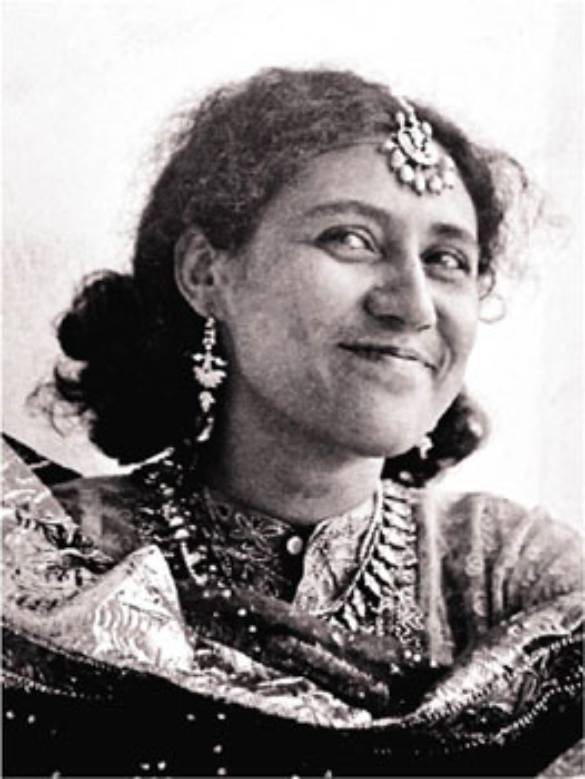
Rashid Jahan was a woman of many parts: a brilliant and hardworking doctor, a dedicated member of the Communist Party, a committed political organizer, a founder- member of the Progressive Writers' Association, an active member of Indian Peoples Theatre Association (IPTA), a life-long campaigner for women's rights, and a free-spirited writer whose life was cut short by cancer at the age of 47. Given her many-splendoured personality, it is unfortunate that her legacy today - a half-century after her death - is celebrated by only one set of people, those who see her as an icon of The Movement. While the Movement and the Communist Party shaped and moulded her, giving form and substance to her desire to bring about lasting social changes, it is important to revisit Rashid Jahan's legacy and examine it for both its humaneness and individuality. Her lifelong friend and sister-in-law, Dr Hamida Saiduzzafar describes her thus: 'Considering that Rashid Jahan was the first woman in Urdu who addressed herself squarely, consistently and forcefully to the myriad problems of the middle and lower-middle class woman in Indian society, she can rightly be called Urdu literature's first "angry young woman".'
Her writing shows us the depravity behind the so-called respectability of sharif families
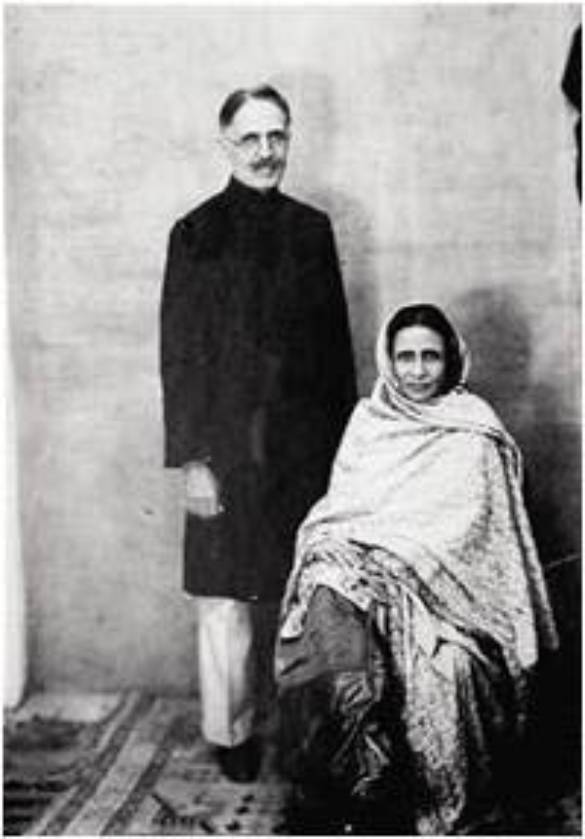
Born on 25th August 1905, she was the eldest of five children born to Sheikh Abdullah and his wife Waheeda Begum. Rashid Jahan grew up in a home that was brimming with new ideas and lit by the Lamp of the New Light. Education, especially of the girl child, was a subject dear to the Abdullahs and both husband and wife devoted themselves to setting up the first girls' school in Aligarh in 1906 - a year after the birth of Rashid Jahan - that was later to become the Aligarh Women's College. Hoping to encourage others by his own example, it was to this school that Sheikh Abdullah sent the young Rashid Jahan every morning in a covered palanquin. And it was here that she received an all-rounded education that included both a study of the Quran and modern science. At home, her father, Papa Miyan as he was fondly called by family, friends and students, would read her stories from Shakespeare, while her mother introduced her to the world of women's journals such as Khatoon, Ismat and Tehzeeb-e-Niswan. In school, her teachers, particularly the headmistress, a young Bengali Christian from Calcutta, introduced her to Tagore and Bankim Chandra. Talking about her years growing up in the midst of a family as eclectic and liberal as hers, Rashid Jahan once wrote, "We have slept on the mattress of women's education and covered ourselves with the quilt of women's education from our earliest consciousness."
Rashid Jahan grew up in a home that was brimming with new ideas
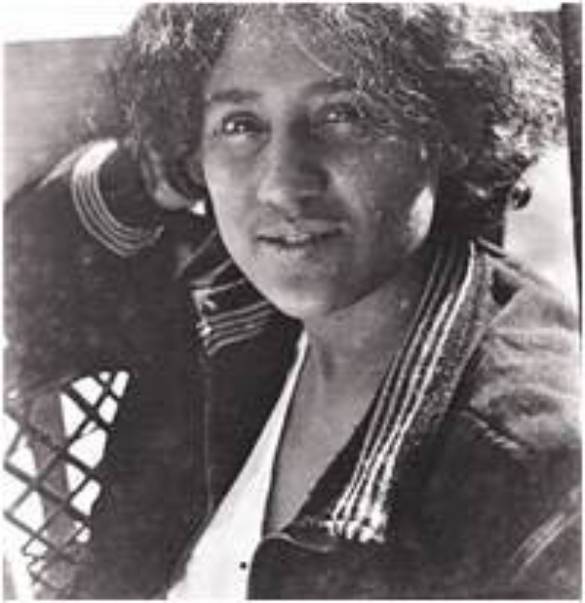
At 16 she left the cloistered world of Aligarh and the safe confines of the Girls' School to study at the Isabella Thoburn College in Lucknow. Here, new intellectual vistas began to open up. She read Dickens and Keats and Shelley as also Tolstoy, Pushkin and the Russian masters, as well as Maupassant and Balzac. While still in college, she wrote her very first story called "When the Tom Tom Beats" in English that was later translated by Ale Ahmad Suroor into Urdu under the title "Salma" and became quite popular. After matriculation from Lucknow in 1922, she went to study Medicine at the Lady Harding Medical College in Delhi. She joined the UP Medical Service in 1929 and after having served her first stint of service in Bulandshahar was posted in Lucknow in 1931. After a brief flirtation with the Congress and a spell of wearing Khadi she found her true calling with the Communist Party, which she officially joined in 1933.
It was in Lucknow that Rashid Jahan blossomed and became the centre of a charmed circle of intellectually-charged and politically-driven young people. Here she met Sajjad Zaheer, Ahmad Ali, Kaifi Azmi, Ali Sardar Jafri, Majaz, and Sahibzada Mahmuduzzafar whom she was to marry in 1934. It was here in Lucknow, too, that the explosive Angarey was published in December 1932. Angarey contained five short stories by Sajjad Zaheer, two by Ahmad Ali, one by Mahmuduzzaafar, one short story and a play by Rashid Jahan. Given the provocative title and the deliberate defiance of existing literary norms by the four young writers, the book unleashed a storm of controversies and marked a turning point in the history of Urdu literature. Critics panned it for its crudeness and immaturity. Religious leaders expressed outrage and outright condemnation, some maulvis went so far as to issue fatwas (decrees) against the book and its authors. Newspapers and journals published angry editorials and articles denouncing the book, calling it a "filthy pamphlet... which has wounded the feelings of the entire Muslim community... and which is extremely objectionable from the point of view of both religion and morality." All but five copies of the book were burnt when the Imperial government gave in to mounting pressure and banned Angarey in March 1933. Ahmad Ali wrote:
While still in college, she wrote her very first story
'We knew the book would create a stir, but never dreamt it would bring the house down. We were condemned at public meetings and private; bourgeois families hurried to dissociate themselves from us and denied acquaintance with us, especially with Rashid Jahan and myself... people read the book behind closed doors and in bathrooms with relish but denounced us in the open. We were lampooned and satirized, condemned editorially and in pamphlets... (and) our lives were threatened.'
Lampooned as Rashid Jahan 'Angarewali' by the baser elements in the vernacular press, she became the public face of Angarey. Being a woman and having written so bravely and boldly about sexual matters in a largely puritanical, patriarchal milieu, naturally, she came in for the worst ire of those who most vehemently opposed a book such as Angarey and all that it stood for. Obviously, different people viewed her in different ways:
In progressive families she became a symbol of the emancipated woman; in conservative homes an example of all the worst that can occur if a woman is educated, not kept in purdah, and allowed to pursue a career.
She officially joined the Communist Party in 1933
She was lampooned as Rashid Jahan 'Angarewali' by the baser elements in the vernacular press
Unconcerned with the fuss and melodrama surrounding Angarey, Rashid Jahan continued ploughing her own furrow. Always a stormy petrel, she had become first 'Doctor' Rashid Jahan, in itself a novelty for the daughter of a respectable Muslim family, then Comrade Rashid Jahan and now she was being called Rashid Jahan Angare Wali. Path-breaking and unconventional as she was, there was actually nothing in her two contributions to Angarey that can be termed either "vile" or "blasphemous". Dilli ki Sair is a simple story simply told and has few claims to literary excellence. On the surface, it seems an unlikely contender for any sort of incendiary intent. A woman from Faridabad is taken to Delhi for an outing. At the railway station itself, her husband meets an acquaintance and goes off on his own, leaving her to guard the luggage. Wrapped in her burqa, she stands on the railway platform for hours watching the world go by. By the time her husband returns, she has lost all zest for seeing the sights and only wants to return home. The two-page story says more about the lack of concern shown by many husbands than voluminous novels by far more articulate authors. The story is a brief but penetrating meditation on life behind the 'veil' and the blindness of male privilege towards the experience of women behind the purdah.
The other piece in Angarey is a one-act play called Parde ke Peeche. Here Rashid Jahan digs deep not only into her experiences in dealing with female patients but also the time she had spent in the Old Delhi neighbourhood of her maternal grandparents' home. She employs authentic, idiomatic speech to portray life in the cloistered confines of the women's quarter of a typical Muslim household in Delhi. She also describes the setting in minute detail: sozni -covered floor with sausage-shaped pillows called gau-takhiyas scattered about for easy reclining, paandan, ugaldan, surahi and on the ceiling a pink-frilled hand-pulled cotton fan. Two women sit, chatting and cutting betel nut. The older is about 40 years of age; her name is Aftab Begum. The younger, who looks harried, tired and depressed, is Muhammadi Begum. We are told she was born the year Queen Victoria died; that makes her 32 but she looks nearly double her age. A lady doctor who comes to examine her is dumbfounded by the discrepancy between her biological age and her prematurely withered looks. Married at 18, Muhammadi Begum has borne children in all the years since; except twice, that is, once when her husband was abroad and once when they had fought. She suffers from pyorrhea and has had several teeth pulled out and that too because her husband came back from abroad and told her that her breath stank. Her children are pale, thin, emaciated, querulous, under-nourished, unkempt and rowdy. She has several ayahs who nurse the smaller kids and try to keep peace among the older ones. She herself has never been allowed to nurse a child since her husband has a voracious sexual appetite. 'Doesn't matter if it is night or day, he wants his wife. And not only his wife. He goes the rounds to other women too.' She means prostitutes. And she is fed up with the ayahs; the last one had VD which she passed on to Muhammadi Begum's four-month old baby who eventually died a painful death with pus-filled blisters all over his body. We hear more about men being worse than animals when it comes to assuaging their sexual appetite in a manner reminiscent of Ahmed Ali's Badal Nahin Aate and Mahmuduzzafar's Jawanmardi.
Like Rashid Jahan's other writings, both before and after Angarey, the two pieces expose the enclosed and oppressive world of Muslim women. Slaves to their husband's demands and tethered against their will to outworn religious and social dogmas, these women still manage to emerge not as victims but as thinking individuals who have the capacity and the desire to change their lot. All they need is encouragement. Parde ke Peeche brings to life not just a mise en scene from the lives of real women but also speaks to us in a real language about real issues that no respectable woman would bring up in public - second marriages, sexual abuse, child marriages, the vagaries of the reproductive system, the pains and pleasures of breast feeding, the lack of care for contraception and hence the over-large families. These are conversations that can, strictly speaking, only be heard behind a curtain. Rashid Jahan draws that curtain aside momentarily, showing us the depravity behind the so-called respectability of sharif families. Ending as it does, on a high note with no resolution in sight, the play encourages us to think. We are left to dwell on a bewildering range of issues from family, marriage, sex, morality, husband-wife relations, health, hygiene to family planning and family politics - all of which have a direct bearing on a woman's emotional and physical well-being.
Writing in her autobiography, Dr Hamida Saiduzzafar notes:
'Rashida always had a rebellious spirit. Quite early in life she was aware of the social injustice and inequality in society. As a practical person, the diagnosis was not enough for her; she wanted a treatment, a cure. Of all the people of her class and her generation, Rashida had the least difficulty in identifying herself with, or relating to, the "common people". One reason, of course, was her family background... The other reason was that she came into contact with all sorts of people in the course of her medical studies, and she made it a point to treat her patients not only medically but also psychologically.'
[To Be Continued...]
Source: The Friday Times
URL for Part-2: https://www.newageislam.com/islamic-culture/rakhshanda-jalil/the-bad-girl-of-urdu-literature---part-ii/d/9978
URL for Part-1 : https://newageislam.com/islamic-culture/the-bad-girl-urdu-literature/d/9929