
Mullahs and Heretics: A Secular History of Islam (Part 1)
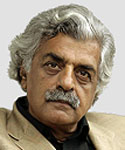
By Tariq Ali
October17-19, 2014
I never believed in God, not even between the ages of six and ten, when I was an agnostic. This unbelief was instinctive. I was sure there was nothing else out there but space. It could have been my lack of imagination. In the jasmine-scented summer nights, long before mosques were allowed to use loudspeakers, it was enough to savour the silence, look up at the exquisitely lit sky, count the shooting stars and fall asleep. The early morning call of the muezzin was a pleasant alarm-clock.
There were many advantages in being an unbeliever. Threatened with divine sanctions by family retainers, cousins or elderly relatives – ‘If you do that Allah will be angry’ or ‘If you don’t do this Allah will punish you’ – I was unmoved. Let him do his worst, I used to tell myself, but he never did, and that reinforced my belief in his non-existence.
My parents, too, were non-believers. So were most of their close friends. Religion played a tiny part in our Lahore household. In the second half of the last century, a large proportion of educated Muslims had embraced modernity. Old habits persisted, nonetheless: the would-be virtuous made their ablutions and sloped off to Friday prayers. Some fasted for a few days each year, usually just before the new moon marking the end of Ramadan. I doubt whether more than a quarter of the population in the cities fasted for a whole month. Café life continued unabated. Many claimed that they had fasted so as to take advantage of the free food doled out at the end of each fasting day by the mosques or the kitchens of the wealthy. In the countryside fewer still fasted, since outdoor work was difficult without sustenance, and especially without water when Ramadan fell during the summer months. Eid, the festival marking the end of Ramadan, was celebrated by everyone.
One day, I think in the autumn of 1956 when I was 12, I was eavesdropping on an after-dinner conversation at home. My sister, assorted cousins and I had been asked nicely to occupy ourselves elsewhere. Obediently, we moved to an adjoining room, but then listened, giggling, to a particularly raucous, wooden-headed aunt and a bony uncle berating my parents in loud whispers: ‘We know what you’re like . . . we know you’re unbelievers, but these children should be given a chance . . . They must be taught their religion.’
The giggles were premature. A few months later a tutor was hired to teach me the Koran and Islamic history. ‘You live here,’ my father said. ‘You should study the texts. You should know our history. Later you may do as you wish. Even if you reject everything, it’s always better to know what it is that one is rejecting.’ Sensible enough advice, but regarded by me at the time as hypocritical and a betrayal. How often had I heard talk of superstitious idiots, often relatives, who worshipped a God they didn’t have the brains to doubt? Now I was being forced to study religion. I was determined to sabotage the process.
It didn’t occur to me at the time that my father’s decision may have had something to do with an episode from his own life. In 1928, aged 12, he had accompanied his mother and his old wet-nurse (my grandmother’s most trusted maid) on the pilgrimage to perform the hajj ceremony. Women, then as now, could visit Mecca only if they were accompanied by a male more than 12 years old. The older men flatly refused to go. My father, as the youngest male in the family, wasn’t given a choice. His older brother, the most religious member of the family, never let him forget the pilgrimage: his letters to my father always arrived with the prefix ‘al-Haj’ (‘pilgrim’) attached to the name, a cause for much merriment at teatime.
Decades later, when the pores of the Saudi elite were sweating petro-dollars, my father would remember the poverty he had seen in the Hijaz and recall the tales of non-Arab pilgrims who had been robbed on the road to Mecca. In the pre-oil period, the annual pilgrimage had been a major source of income for the locals, who would often augment their meagre earnings with well-organised raids on pilgrims’ lodgings. The ceremony itself requires that the pilgrim come clothed in a simple white sheet and nothing else. All valuables have to be left behind and local gangs became especially adept at stealing watches and gold. Soon, the more experienced pilgrims realised that the ‘pure souls’ of Mecca weren’t above thieving. They began to take precautions, and a war of wits ensued.
Several years after the trip to the Holy Land my father became an orthodox Communist and remained one for the rest of his life. Moscow was now his Mecca. Perhaps he thought that immersing me in religion at a young age might result in a similar transformation. I like to think that this was his real motive, and that he wasn’t pandering to the more dim-witted members of our family. I came to admire my father for breaking away from what he described as ‘the emptiness of the feudal world’. 1
Since I did not read Arabic, I could learn the Koran only by rote. My tutor, Nizam Din, arrived on the appointed day and thanks to his heroic efforts, I can at least recite the lines from the opening of the Koran – ‘Alif, lam, mim . . .’ – followed by the crucial: ‘This book is not to be doubted.’ Nizam Din, to my great delight, was not deeply religious. From his late teens to his late twenties, he had worn a beard. But by 1940 he’d shaved it off, deserted religion for the anti-imperialist cause and dedicated himself to left-wing politics. Like many others he had served a spell in a colonial prison and been further radicalised. Truth, he would say, was a very powerful concept in the Koran, but it had never been translated into practical life because the mullahs had destroyed Islam.
Nizam Din soon realised that I was bored by learning Quranic verses and we started to spend the allotted hour discussing history: the nationalist struggle against British imperialism, the origins of terrorism in Bengal and the Punjab, and the story of the Sikh terrorist Bhagat Singh, who had thrown a bomb in the Punjab Legislative Assembly to protest against repressive legislation and the 1919 massacre of Jallianwallah Bagh. Once imprisoned, he had refused to plead for mercy, but renounced terrorism as a tactic and moved closer to traditional Marxism. He was tried in secret and executed by the British in the Central Jail in Lahore, a 15-minute walk from where Nizam Din was telling me the story. ‘If he had lived,’ Nizam Din used to say, ‘he would have become a leader the British really feared. And look at us now. Just because he was a Sikh, we haven’t even marked his martyrdom with a monument.’
Nizam Din remembered the good times when all the villages in what was now Pakistan had Hindu and Sikh inhabitants; many of his non-Muslim friends had now left for India. ‘They are pygmies,’ he would say of Pakistan’s politicians. ‘Do you understand what I’m saying, Tariqji? Pygmies! Look at India. Observe the difference. Gandhi was a giant. Jawaharlal Nehru is a giant.’ Over the years I learned far more about history, p0litics and everyday life from Nizam Din than I ever learned at school. But his failure to interest me in religion had been noted.
A young maternal uncle, who had grown a beard at an early age, volunteered to take on the task. His weekly visits to our house, which coincided with my return from school, irritated me greatly. We would pace the garden while, in unctuous tones, he related a version of Islamic history which, like him, was unconvincing and dull. There were endless tales of heroism, with the Prophet raised to the stature of a divinity, and a punitive Allah. As he droned on, I would watch the kites flying and tangling with each other in the afternoon sky, mentally replay a lost game of marbles, or look forward to the Test match between Pakistan and the West Indies. Anything but religion. After a few weeks he, too, gave up, announcing that my unbeliever’s inheritance was too strong.
During the summer months, when the heat in the plains became unbearable, we would flee to the Himalayan foothills, to Nathiagali, then a tiny, isolated hill resort perched on a ridge in a thick pine forest and overlooked by the peaks. Here, in a relaxed atmosphere with almost no social restrictions, I met Pashtun boys and girls from the frontier towns of Peshawar and Mardan, and children from Lahore whom I rarely saw during the winter became summer friends. I acquired a taste for freedom. We had favourite hiding places: mysterious cemeteries where the tombstones had English names on them (many had died young) and a deserted Gothic church that had been charred by lightning.
We also explored the many burned houses. How were they burned? I would ask the locals. Back would come the casual reply. ‘They belonged to Hindus and Sikhs. Our fathers and uncles burned them.’ Why? ‘So they could never come back, of course.’ Why? ‘Because we are now Pakistan. Their home is India.’ Why, I persisted, when they had lived here for centuries, just like your families, and spoke the same language, even if they worshipped different gods? The only reply was a shrug. It was strange to think that Hindus and Sikhs had been here, had been killed in the villages in the valleys below. In the tribal areas – the no-man’s-land between Afghanistan and Pakistan – quite a few Hindus stayed on, protected by tribal codes. The same was true in Afghanistan itself (till the mujahedin and the Taliban arrived).
One of my favourite spots in Nathiagali lay between two giant oaks. From here one could watch the sun set on Nanga Parbat. The snow covering the peak would turn orange, then crimson, bathing the entire valley in its light. Here we would breathe the air from China, gaze in the direction of Kashmir and marvel at the moon. Given all this, why would one need a multi-layered heaven, let alone the seventh layer that belonged to us alone – the Islamic paradise?
One day, to my horror, my mother informed me that a mullah from a neighbouring mountain village had been hired to make sure I completed my study of the Koran. She had pre-empted all my objections. He would explain what each verse meant. My summer was about to be wrecked. I moaned, groaned, protested, pleaded and tantrumed. To no avail. My friends were sympathetic, but powerless: most of them had undergone the same ritual.
Mullahs, especially the rural variety, were objects of ridicule, widely regarded as dishonest, hypocritical and lazy. It was generally believed that they had grown beards and chosen this path not out of spiritual fervour, but in order to earn a crust. Unless attached to a mosque, they depended on voluntary contributions, tuition fees and free meals. The jokes about them mostly concerned their sexual appetites; in particular, a penchant for boys below a certain age. The fictional mullah of the storytellers and puppet-shows who travelled from village to village was a greedy and lustful arch-villain; he used religion to pursue his desires and ambitions. He humiliated and cheated the poor peasants, while toadying to landlords and potentates.
On the dreaded day, the mullah arrived and, after eating a hearty lunch, was introduced to me by our family retainer, Khuda Baksh (‘God Bless’), who had served in my grandfather’s household and because of his status and age enjoyed a familiarity denied to other servants. God Bless was bearded, a staunch believer in the primacy of Islam, and said his prayers and fasted regularly. He was, however, deeply hostile to the mullahs, whom he regarded as pilferers, perverts and parasites. He smiled as the mullah, a man of medium height in his late fifties, exchanged greetings with me. We took our seats round a garden table placed to catch the warming sun. The afternoon chorus was in full flow. The air smelled of sun-roasted pine needles and wild strawberries.
When the mullah began to speak I noticed he was nearly toothless. The rhymed verse at once lost its magic. The few false teeth he had wobbled. I began to wonder if it would happen, and then it did: he became so excited with fake emotion that the false teeth dropped out onto the table. He smiled, picked them up and put them back in his mouth. At first, I managed to restrain myself, but then I heard a suppressed giggle from the veranda and made the mistake of turning round. God Bless, who had stationed himself behind a large rhododendron to eavesdrop on the lesson, was choking with silent laughter. I excused myself and rushed indoors.
The following week, God Bless dared me to ask the mullah a question before the lesson began. ‘Were your false teeth supplied by the local butcher?’ I enquired with an innocent expression, in an ultra-polite voice. The mullah asked me to leave: he wished to see my mother alone. A few minutes later he, too, left, never to return. Later that day he was sent an envelope full of money to compensate him for my insolence. God Bless and I celebrated his departure in the bazaar café with mountain tea and home-made biscuits. My religious studies ended there. My only duty was to substitute for my father once a year and accompany the male servants to Eid prayers at the mosque, a painless enough task.
Some years later, when I came to Britain to study, the first group of people I met were hard-core rationalists. I might have missed the Humanist Group’s stall at the Fresher’s Fair had it not been for a spotty Irishman, dressed in a faded maroon corduroy jacket, with a mop of untidy dark brown hair, standing on a table and in a melodious, slightly breathless voice shouting: ‘Down with God!’ When he saw me staring, he smiled and added ‘and Allah’ to the refrain. I joined on the spot and was immediately roped into becoming the Humanist rep at my college. Some time afterwards when I asked how he had known I was of Muslim origin rather than a Hindu or a Zoroastrian, he replied that his chant only affected Muslims and Catholics. Hindus, Sikhs and Protestants ignored him completely.
My knowledge of Islamic history remained slender and, as the years progressed, Pakistan regressed. Islamic studies were made compulsory in the 1970s, but children were given only a tiny sprinkling of history on a foundation of fairytales and mythology. My interest in Islam lay dormant till the Third Oil War in 1990. 2 The Second Oil War in 1967 had seen Israel, backed by the West, inflict a severe defeat on Arab nationalism, one from which it never really recovered. The 1990 war was accompanied in the West by a wave of crude anti-Arab propaganda. The level of ignorance displayed by most pundits and politicians distressed me, and I began to ask myself questions which, until then, had seemed barely relevant. Why had Islam not undergone a Reformation? Why had the Ottoman Empire not been touched by the Enlightenment? I began to study Islamic history, and later travelled to the regions where it had been made, especially those in which its clashes with Christendom had taken place.
Judaism, Christianity and Islam all began as versions of what we would today describe as political movements. They were credible belief-systems which aimed to make it easier to resist imperial oppression, to unite a disparate people, or both. If we look at early Islam in this light, it becomes apparent that its Prophet was a visionary political leader and its triumphs a vindication of his action programme. Bertrand Russell once compared early Islam to Bolshevism, arguing that both were ‘practical, social, unspiritual, concerned to win the empire of this world’. By contrast, he saw Christianity as ‘personal’ and ‘contemplative’. Whether or not the comparison is apt, Russell had grasped that the first two decades of Islam had a distinctly Jacobin feel. Sections of the Koran have the vigour of a political manifesto, and at times the tone in which it addresses its Jewish and Christian rivals is as factional as that of any left-wing organisation. The speed with which it took off was phenomenal. Academic discussion as to whether the new religion was born in the Hijaz or Jerusalem or elsewhere is essentially of archaeological interest. Whatever its precise origins, Islam replaced two great empires and soon reached the Atlantic coast. At its height three Muslim empires dominated large parts of the globe: the Ottomans with Istanbul as their capital, the Safavids in Persia and the Mughal dynasty in India.
A good place for a historian of Islam to start would be 629 AD, or Year 8 of the new Muslim calendar, though that had yet to come into being. In that year, 20 armed horsemen, led by Sa’d ibn Zayd, were sent by Muhammad to destroy the statue of Manat, the pagan goddess of fate, at Qudayd, on the road between Mecca and Medina. For eight years Muhammad had tolerated the uneasy coexistence of the pagan male god Allah and his three daughters: al-Lat, al-Uzza and Manat. Al-Uzza (the morning star, Venus) was the favourite goddess of the Quraysh, the tribe to which Muhammad belonged, but Manat was the most popular in the region as a whole, and was idolised by three key Meccan tribes that Muhammad had been desperately trying to win over to his new monotheistic religion. By Year 8, however, three important military victories had been won against rival pagan and Jewish forces. The Battle of Badr had seen Muhammad triumph against the Meccan tribes despite the smallness of his army. The tribes had been impressed by the muscularity of the new religion, and Muhammad must have deemed further ideological compromise unnecessary. Sa’d ibn Zayd and his 20 horsemen had arrived to enforce the new monotheism.
The keeper of Manat’s sanctuary saw the horsemen approach, but remained silent as they dismounted. No greetings were exchanged. Their demeanour indicated that they had not come to honour Manat or to leave a token offering. The keeper didn’t stand in their way. According to Islamic tradition, as Sa’d ibn Zayd approached the beautifully carved statue of Manat, a naked black woman seemed to emerge from nowhere. The keeper called out: ‘Come, O Manat, show the anger of which you are capable!’ Manat began to pull out her hair and beat her breasts in despair, while cursing her tormentors. Sa’d beat her to death. Only then did his 20 companions join him. Together they hacked away until they had destroyed the statue. The sanctuaries of al-Lat and al-Uzza were dealt with in similar fashion, probably on the same day.
A seventh-century prophet could not become the true spiritual leader of a tribal community without exercising political leadership and, in the Peninsula, mastering the basics of horsemanship, sword-play and military strategy. Muhammad had understood the need to delay the final breach with polytheism until he and his companions were less isolated. However, once the decision to declare a strict monotheism was taken, no concessions were granted. The Christian Church had been forced into a permanent compromise with its pagan forebears, allowing its new followers to worship a woman who had conceived a child by God. Muhammad, too, could have picked one of Allah’s daughters to form part of a new constellation – this might even have made it easier to attract recruits – but factional considerations acted as a restraint: a new religious party had to distinguish itself forcefully from Christianity, its main monotheistic rival, while simultaneously marginalising the appeal of contemporary paganism. The oneness of a patriarchal Allah appeared the most attractive option, essential not only to demonstrate the weakness of Christianity, but also to break definitively with the dominant cultural practices of the Peninsula Arabs, with their polyandry and their matrilineal past. Muhammad himself had been the third and youngest husband of his first wife, Khadija, who died three years before the birth of the Islamic calendar.
Historians of Islam, following Muhammad’s lead, would come to refer to the pre-Islamic period as the Jahiliya (‘the time of ignorance’), but the influence of its traditions should not be underestimated. For the pre-Islamic tribes, the past was the preserve of poets, who also served as historians, blending myth and fact in odes designed to heighten tribal feeling. The future was considered irrelevant, the present all-important. One reason for the tribes’ inability to unite was that the profusion of their gods and goddesses helped to perpetuate divisions and disputes whose real origins often lay in commercial rivalries.
Muhammad fully understood this world. He belonged to the Quraysh, a tribe that prided itself on its genealogy and claimed descent from Ishmael. Before his marriage, he had worked as one of Khadija’s employees on a merchant caravan. He travelled a great deal in the region, coming into contact with Christians, Jews, Magians and pagans of every stripe. He would have had dealings with two important neighbours: Byzantine Christians and the fire-worshipping Zoroastrians of Persia.
Muhammad’s spiritual drive was fuelled by socio-economic ambitions: by the need to strengthen the commercial standing of the Arabs, and to impose a set of common rules. He envisioned a tribal confederation united by common goals and loyal to a single faith which, of necessity, had to be new and universal. Islam was the cement he used to unite the Arab tribes; commerce was to be the only noble occupation. This meant that the new religion was both nomadic and urban. Peasants who worked the land were regarded as servile and inferior. A Hadith (a reported saying of Muhammad’s) quotes the Prophet’s words on sighting a ploughshare: ‘That never enters the house of the faithful without degradation entering at the same time.’ Certainly the new rules made religious observance in the countryside virtually impossible. The injunction to pray five times a day, for example, played an important part in inculcating military discipline, but was difficult to manage outside the towns. What was wanted was a community of believers in urban areas, who would meet after prayers and exchange information. Unsurprisingly, peasants found it impossible to do their work and fulfil the strict conditions demanded by the new faith. They were the last social group to accept Islam, and some of the earliest deviations from orthodoxy matured in the Muslim countryside.
The military successes of the first Muslim armies were remarkable. The speed of their advance startled the Mediterranean world, and the contrast with early Christianity could not have been more pronounced. Within twenty years of Muhammad’s death in 632, his followers had laid the foundations of the first Islamic empire in the Fertile Crescent. Impressed by these successes, whole tribes embraced the new religion. Mosques began to appear in the desert, and the army expanded. Its swift triumphs were seen as a sign that Allah was both omnipotent and on the side of the Believers.
These victories were no doubt possible only because the Persian and Byzantine Empires had been engaged for almost a hundred years in a war that had enfeebled both sides, alienated their populations and created an opening for the new conquerors. Syria and Egypt were part of the Byzantine Empire; Iraq was ruled by Sassanid Persia. All three now fell to the might and fervour of a unified tribal force.
Force of numbers didn’t come into it – nor did military strategy, although the ability of the Muslim generals to manoeuvre their camel cavalry and combine it with an effective guerrilla-style infantry confused an enemy used to small-scale nomadic raids. Much more important was the active sympathy which a sizeable minority of the local people demonstrated for the invaders. A majority remained passive, waiting to see which side would prevail, but they were no longer prepared to fight for or help the old empires.
The fervour of the unified tribes, on the other hand, cannot be explained simply by the appeal of the new religion or promises of untold pleasures in Paradise. The tens of thousands who flocked to fight under Khalid ibn al-Walid wanted the comforts of this world. 3
In 638, soon after the Muslim armies took Jerusalem, Caliph Umar visited the city to enforce peace terms. Like other Muslim leaders of the period, he was modestly dressed; he was also dusty from the journey, and his beard was untrimmed. Sophronius, the Patriarch of Jerusalem, who greeted him, was taken aback by Umar’s appearance and the absence of any attendant pomp. The chronicles record that he turned to a servant and said in Greek: ‘Truly this is the abomination of desolation spoken of by Daniel the Prophet as standing in the holy place.’
The ‘abomination of desolation’ did not remain for long in Jerusalem. The strategic victories against the Byzantines and the Persians had been so easily achieved that the Believers were now filled with a sense of their own destiny. After all, they were, in their own eyes, the people whose leader was the final Prophet, the last ever to receive the message of God. Muhammad’s vision of a universal religion as precursor to a universal state had captured the imagination, and furthered the material interests, of the tribes. When German tribes took Rome in the fifth century, they insisted on certain social privileges but they succumbed to a superior culture and, with time, accepted Christianity. The Arabs who conquered Persia preserved their monopoly of power by excluding non-Arabs from military service and temporarily restricting intermarriage, but although willing to learn from the civilisations they had overpowered, they were never tempted to abandon their language, their identity or their new faith.
The development of medicine, a discipline in which Muslims later excelled, provides an interesting example of the way knowledge travelled, was adapted and matured in the course of the first millennium. Two centuries before Islam, the city of Gondeshapur in south-western Persia became a refuge for dissident intellectuals and freethinkers facing repression in their own cities. The Nestorians of Edessa fled here in 489 after their school was closed. When, forty years later, the Emperor Justinian decreed that the school of Neoplatonic philosophers in Athens be closed, its students and teachers, too, made the long trek to Gondeshapur. News of this city of learning spread to neighbouring civilisations. Scholars from India and, according to some, even China arrived to take part in discussions with Greeks, Jews, Arabs, Christians and Syrians. The discussions ranged over a wide variety of subjects, but it was the philosophy of medicine that attracted the largest numbers.
Theoretical instruction in medicine was supplemented by practice in a bimaristan (hospital), making the citizens of Gondeshapur the most cared for in the world. The first Arab who earned the title of physician, Harith bin Kalada, was later admitted to the Court of the Persian ruler Chosroes Anushirwan and a conversation between the two men was recorded by scribes. According to this the physician advised the ruler to avoid over-eating and undiluted wine, to drink plenty of water every day, to avoid sex while drunk and to have baths after meals. He is reputed to have pioneered enemas to deal with constipation.
Medical dynasties were well established in the city by the time of the Muslim conquest in 638. Arabs began to train in Gondeshapur’s medical schools and the knowledge they acquired began to spread throughout the Muslim Empire. Treatises and documents began to flow. Ibn Sina and al-Razi, the two great Muslim philosopher-physicians of Islam, were well aware that the basis of their medical knowledge derived from a small town in Persia.
A new Islamic civilisation emerged, in which the arts, literature and philosophy of Persia became part of a common heritage. This was an important element in the defeat by the Abbasids, the cosmopolitan Persian faction within Islam, of the narrow nationalism of the Arab Umayyads in 750. Their victory reflected the transcending of Arabism by Islam, though the last remaining prince of the Umayyads, Abdel Rahman, managed to escape to al-Andalus, where he founded a caliphate in Córdoba. Rahman had to deal with the Jewish and Christian cultures he found there, and his city came to rival Baghdad as a cosmopolitan centre.
Caliph Umar’s successors fanned out from Egypt to North Africa. A base was established and consolidated in the Tunisian city of al-Qayrawan, and Carthage became a Muslim city. Musa bin Nusayr, the Arab governor of Ifriqiya (present-day Libya, Tunisia and most of Algeria), established the first contact with continental Europe. He received promises of support and much encouragement from Count Julian, the Exarch of Septem (Ceuta in Morocco). In April 711, Musa’s leading lieutenant, Tarik bin Ziyad, assembled an army of 7000 men, and crossed over to Europe near the rock which still bears his name, Jabal Tarik (or Gibraltar). Once again, the Muslim armies profited from the unpopul-arity of the ruling Visigoths. In July, Tarik defeated King Roderic, and the local population flocked to join the army that had rid them of an oppressive ruler. By the autumn, Córdoba and Toledo had both fallen. As it became clear that Tarik was determined to take the whole peninsula, an envious Musa bin Nusayr left Morocco with 10,000 men to join his victorious subordinate in Toledo. Together, the two armies marched north and took Zaragoza. Most of Spain was now under their control, largely thanks to the population’s refusal to defend the ancien régime. The two Muslim leaders planned to cross the Pyrenees and march to Paris.
Rather than obtain permission from the Caliph in Damascus, however, they had merely informed him of their progress. Angered by their cavalier attitude to authority, the Commander of the Faithful dispatched messengers to summon the conquerors of Spain to the capital; they never saw Europe again. Others carried on the struggle, but the impetus was lost. At the Battle of Poitiers in October 732, Charles Martel’s forces marked the end of the first Muslim century by inflicting a sobering defeat on the soldiers of the Prophet: naval bases remained in the South of France – at Nice and Marseille, for example – but, for now, Islam was largely confined to the Iberian Peninsula. A century later, the Arabs took Sicily, but could only threaten the mainland. Palermo became a city of a hundred mosques; Rome remained sacrosanct. Xenophobic northern Italians still refer to Sicilians as ‘Arabs’.
In 958, Sancho the Fat left his cold and windy castle in the Kingdom of Navarre in search of a cure for obesity, and went south to Córdoba, the capital of the western caliphate and, thanks to Caliph Abderrahman III, Europe’s main cultural centre. Its closest rival lay in distant Mesopotamia, where a caliph from another dynasty presided over Baghdad. Both cities were renowned for their schools and libraries, musicians and poets, physicians and astronomers, mullahs and heretics, and also for their taverns and dancing girls. Córdoba had the edge in dissent. There, Islamic hegemony was not forcibly imposed; there had been genuine debates between the three religions, producing a synthesis from which native Islam benefited greatly.
The Great Mosque in Córdoba could only have been created by men who had participated in the city’s intellectual ferment. The architects who built it in the eighth century understood that it was to represent a culture opposed to the Christian one which chose to occupy space with graven images. A mosque is intended as a void: all paths lead to emptiness, reality is affirmed through its negation. In the void, only the Word exists, but in Córdoba (and not only there) the Mosque was also intended as a political space, one in which the Koran might be discussed and analysed. The philosopher-poet Ibn Hazm would sit amid the sacred columns and chastise those Believers who refused to demonstrate the truth of ideas through argument. They would shout back that the use of the dialectic was forbidden. ‘Who has forbidden it?’ Ibn Hazm would demand, implying that they were the ones who were the enemies of true faith. In Baghdad they spoke half in admiration, half in fear, of the ‘Andalusian heresy’.
It would be hundreds of years before this culture was obliterated. The fall of Granada, the last Muslim kingdom in al-Andalus, in 1492 marked the completion of that process: the first of Europe’s attempted final solutions was the ethnic cleansing of Muslims and Jews from the Iberian Peninsula. When he visited Córdoba in 1526, Charles I of Spain rebuked his priests: ‘You have built what can be seen anywhere and destroyed what is unique.’ The remark was generous enough, but Charles had not realised that the mosque had been preserved at all only because of the church that now lay inside it.
At the beginning of the 11th century, the Islamic world stretched from Central Asia to the Atlantic coast, though its political unity had been disrupted soon after the victory of the Abbasids. Three centres of power emerged: Baghdad, Córdoba and Cairo, each with its own caliph. Soon after the death of the Prophet, Islam had divided into two major factions, the Sunni majority and a Shia minority. The Sunnis ruled in al-Andalus, Algeria and Morocco in the Maghreb, Iran, Iraq and the regions beyond the Oxus. The Fatimid caliphs belonged to the Shia tradition, which claimed descent from the fourth Caliph, Ali, and his wife Fatima, the daughter of the Prophet. The Fatimid caliphs had ruled parts of North Africa and lived in Tunisia till a Fatimid expeditionary force under the command of the legendary Slav General Jawhar captured Egypt, and Jahwar established a dynasty complete with caliph and built a new city – Cairo.
(To Be Continued)
Tariq Ali is the author of The Obama Syndrome (Verso).
This
essay originally appeared in the London Review of Books in 2002.
Source:
http://www.counterpunch.org/2014/10/17/a-secular-history-of-islam/
URL: https://newageislam.com/islamic-history/mullahs-heretics-secular-history-islam-part-1/d/99665