
Gujarati Muslim Cosmopolitanism: Zohran Mamdani’s New York Win Revives A Forgotten History
New Age Islam News Bureau
13 November 2025
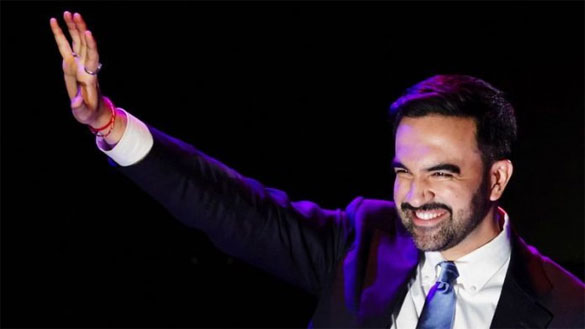
File photo of Zohran Mamdani | Reuters 2025
----------
· Gujarati Muslim Cosmopolitanism: Zohran Mamdani’s New York Win Revives A Forgotten History
· Delhi Terror Attack: CCTV Captures Umar Nabi Leaving Mosque Near Turkman Gate Before Red Fort Blast
· IEA Minister: Islamabad Asked Us to Issue Fatwa Against Tehrik-i-Taliban Pakistan’s War in Pakistan
· Israel’s President Says ‘Shocking’ Settler Violence Against Palestinians Must End
· Bodies Of Terrorists Float In River As Boko Haram, ISWAP Fighters Clash
-----
India
· Before And After Red Fort Blast, The 2 Clerics Arrested, 800 Kilometres Apart
· Delhi Blast: Al-Falah University Gets Show-Cause From NAAC Over 'False Accreditation Claims'
· White-Collar Terror Module: Counter Intelligence Kashmir Continues To Carry Out Raids Across Valley
· NIA Raids In Gujarat, Bengal, And 3 Other States In Al-Qaida Terror Conspiracy Case
· Sri Sri Ravi Shankar Meets Mirwaiz Umar Farooq In Srinagar; Urges Youth For Peace, Harmony
· Kolkata Nakhoda Mosque Trustees Condemn Red Fort Attack As ‘Barbaric’
· Congress Minister, Karnataka CM’s Adviser Basavaraj Rayareddi Suspect BJP Link In Delhi Blast
· Property Of Former J&K Bar Association President Seized Under UAPA On DGP’s Orders
· Brother Of Arrested Cleric In White Collar Terror Case Says 'He's Innocent'
-----
South Asia
· UN Warns 90 Percent of Families in Afghanistan Face Food Shortages
· Higher Education Minister, OIC Delegation Discuss Expansion of Academic Cooperation
· Afghanistan Wushu Team Departs for Islamic Solidarity Games in Riyadh
· KM Plans Implementation of 258 Urban Development Projects This Year, Mujahid
· Dhaka voices displeasure over Hasina’s interviews
· Security tightened at ICT ahead of date announcement of Hasina’s verdict
· Jamaat, allies threaten indefinite sit-in at Jamuna
-----
Mideast
· Israel Announces Demolitions Of Palestinian Homes To Build Incineration Plant
· Israel attacked Palestinian water sources over 250 times in 5 years: Research
· Palestinian NGO cannot appeal UK court ruling over F-35 parts to Israel
· Rubio expresses concern West Bank violence could hurt Gaza peace efforts
· Theft of Roman statues from Syria’s main museum believed to be the work of an individual
· Gaza patients face a painful wait as hospitals sag under burden of cases
· Lebanese say Israel preventing post-war reconstruction
· Coalition led by Iraqi PM Sudani comes first in Iraq’s election, commission says
· Israeli Forces Demolish House in Silwan, South Aqsa Mosque
----
Africa
· ‘Tinubu Has No Sympathy For Islamist Jihadist Groups’ – Dahiru
· People Who Abused Me Have Come Back To Praise Me – Obasanjo
· Nigerian Military, Chad Officials Meet Amidst ‘Closure’ Of Border Over Trump’s Threat
· UN urges Libya to shut migrant detention centres
· Six people die in a stampede during military recruitment in Ghana
------
Arab World
· New Initiative To Advance Kingdom’s Volunteering Goals
· Saudi Arabia sends condolences to Turkiye after 20 troops die in plane crash
· Saudi Arabia protects rare marine ecosystems with 2 new reserves
· Saudi FM meets with counterparts on sidelines of G7 meeting in Canada
· Saudi academy launches Arabic immersion program
· Riyadh festival to celebrate Saudi, Chinese culture
· Saudi forces join air, missile drill in UAE
-------
Europe
· Gardaí Arrest Third Man Over Alleged Far Right Plot To Attack Mosque
· Watford mosque plan applicant explains vision for former church
· ANCA's revanchist drive targets Azerbaijan’s peacekeeping role in Gaza
· I can't take any more of this, Andrew told Epstein, released emails show
· Italy investigates claims of tourists paying to shoot civilians in Bosnia in 1990s
· Will Zelensky survive? Ukraine’s Western media backers react to the latest corruption scandal
-----
North America
· CAIR Calls for Hate Crime Probe of Harassment Targeting Praying Muslim Teenagers
· A ‘Historic’ Visit Wrapped In Old Distrust: The Harsh Truth About Syria’s White House Moment
· Halal Investing Finds Broader Appeal Beyond Faith Based Roots
· California revokes 17,000 commercial driver's licenses for immigrants
-----
Southeast Asia
· BRI-MI Unveils Indonesia’s First Sharia Asset-Backed Securities, Marking a Milestone in Islamic Investment
· Govt waging all-out war on cartels and smuggling to save nation, says Anwar
· Anwar says Putrajaya accepts court ruling on Sabah funds, denies political motive
· Malaysia eyes semiconductor hub status as AI reshapes global economy, says Anwar
· Govt waging all-out war on cartels and smuggling to save nation, says Anwar
· Malaysia, Singapore and Indonesia eye wider JS-SEZ collaboration, says Tengku Zafrul
Compiled by New Age Islam News Bureau
URL: https://newageislam.com/islamic-world-news/gujarati-muslim-new-york-forgotten-history/d/137623
--------
Gujarati Muslim Cosmopolitanism: Zohran Mamdani’s New York Win Revives A Forgotten History
Anirudh Kanisetti
13 November, 2025
File photo of Zohran Mamdani | Reuters 2025
-----------
The election of Zohran Mamdani as Mayor of New York last week has struck a surprising chord in the world’s media — especially considering he is technically the head of just one American city’s administration. But the buzz around this young Indian-origin Muslim, an avowed democratic socialist, is a ripple in a much older ocean.
A speaker of Gujarati, Bengali, Arabic, Hindi, Luganda, and Spanish, Mamdani is a reflection of a long-forgotten Indian Muslim cosmopolitanism. The Gujarati Muslim communities he descends from once challenged the Dutch for hegemony in Indonesia; poured money into schools, hospitals, and printing presses from Japan to Arabia; and helped the British Empire consolidate its grip over Africa. To this day, that Indian Muslim history still echoes — in high-end London auction houses as much as in the working-class boroughs of New York.
Gujaratis in the Indian Ocean
This column began with a rather innocuous tweet pointing out that Mamdani’s multilingualism would have made him a fortune in the early modern Southeast Asian spice trade. As of writing, it has racked up over one million views and 54,000 likes — and it’s a pretty accurate reflection of what propelled Gujarati Muslims to international trade superstardom in the first place.
In her paper ‘Gujarat’s Trade with South East Asia (16th and 17th centuries)’, historian Ruby Maloni describes the great port of Khambhat in Gujarat as having “stretched out two arms — one towards Aden, the other towards Malacca.” While Banias were especially prominent in East Africa and the Persian Gulf at the time, Gujarati Muslim merchants dominated the Malacca trade, conveying relatively cheap block-print textiles from manufactories in Ahmedabad deep into Southeast Asia to trade for spices.
The most prominent among these merchants effectively formed ‘dynasties’ closely linked to the Mughal court, among others. But there was also a strong aspect of caste-based collective organisation, paralleling that of Hindu and Jain Gujaratis.
Nowhere was this more evident than in Surat, perhaps the most impressive port on India’s west coast. Its multilingual babble included Gujarati, Arabic, Persian, Urdu, Dutch, English, and Portuguese. Certainly, there were clear distinctions between caste and religious groups, and within their communities Gujarati merchants — Hindu and Muslim alike — could be quite rigid. At the same time, in interpersonal and business relationships, their shared Gujarati heritage encouraged cosmopolitan attitudes.
Historian Jawaid Akhtar offers several examples in his paper ‘The Culture of Mercantile Communities in Mughal Times.’ In Surat, Armenian merchants were in business with Parsis and Muslims; Vaishnavite Bhatias, despite a taboo against crossing the ocean, jointly owned cargo and ships with Muslims. Akhtar cites documentary evidence of Bania men adopting Muslim practices such as offering dowers to their wives. Muslim and Hindu merchants also collectively represented their grievances to Mughal authorities.
On one occasion in 1669, when the Qazi of Surat compelled a Vaishnavite Bania to convert to Islam, nearly 8,000 merchants — apparently of all religions — emigrated to Bharuch in protest against this infringement of their privileges.
Gujarati Muslims quickly identified Europeans as a threat to their trade dominance in Southeast Asia. Maloni notes that Dutch East India Company records mention their difficulties with these merchants, who took them on through price wars and by installing their own candidates as port authorities. It seemed that there was nothing the Dutch could do to prevent Gujarati Muslims from trading. The Sultanate of Johor welcomed ships belonging to the merchant Haji Zahid Beg, who bought tin in flagrant defiance of Dutch embargoes. Other merchants, Maloni writes, hired cargo space on English ships; the spectacularly wealthy merchant Abdul Ghafur of Surat even flew Dutch flags on his own ships. It was only when the Dutch forcibly colonised much of Indonesia that Gujarati Muslims finally lost their grip on Malacca. But by then, new opportunities were already emerging on the horizon.
The rise of ‘Corporate Islam’
As the Mughal juggernaut began to shake and unravel in the 18th century, the old order of great merchant princes and dynasties started to fall apart. Surat, repeatedly raided by the Maratha king Shivaji, faced growing competition from the East India Company’s new port at Bombay.
Three Gujarati Muslim communities — the Bohras, Memons, and Khojas — who had hitherto been relatively small-time traders, found themselves ideally placed to benefit from the changing political landscape. Zohran Mamdani descends from the last of these.
In his seminal book No Birds of Passage: A History of Gujarati Muslim Business Communities, 1800–1975, historian Michael O’Sullivan notes that these three groups had spread “as far east as Ujjain, as far west as Karachi, as far south as Poona, and as far north as Udaipur… They thus inhabited a territory that was, by the reckoning of an Indian lexicographer in the 1840s, larger than Great Britain and Ireland, with their shared mother tongues [Gujarati] serving as the principal language of business in Central and Western India.”
The Bohras, Memons and Khojas had all converted to Islam around the 15th century, but their social and cultural practices varied drastically. Subgroups were affiliated with various Sunni and Shia sects; some were Ismaili and revered the Aga Khans, while others traced descent by region and worshipped Sufi saints.
What these groups shared, though, was the jamaat — an institution that O’Sullivan describes as a form of “corporate Islam”. Essentially, members of each jamaat shared some resources in common — schools, hospitals, that sort of thing. Particularly wealthy members, who often held senior religious positions, also maintained private family trusts and companies.
What the jamaat ensured, O’Sullivan writes, was a mechanism for organisation, exclusivity, and interpretation, allowing these communities to adapt the changing contours of Islamic practice to an era of globalisation. Jamaats could mobilise capital, human resources, and theological flexibility at a rate few other Indian institutions could match.
Collectively, these Gujarati Muslim jamaats emerged as some of the most powerful Indian economic forces of the late 19th and early 20th centuries. Though now outshone in the popular imagination by Parsi and Bania entrepreneurs, Gujarati Muslims similarly negotiated with the Marathas and the British, benefited from the Opium Wars, and switched soon after to manufacturing all sorts of commercial goods, especially in Bombay.
In the 1840s, Gujarati Muslims commissioned pioneering printed texts — in Gujarati — including travelogues and cultural primers for new markets like China. Their growing wealth also funded spectacular mansions, such as those in Sidhpur, now eerily abandoned. It was Gujaratis, perhaps more than any other Indian group, who built the financial infrastructure of the British Raj in East Africa — a migration line from which Zohran Mamdani himself descends.
All of this amounted to a decisive shift in the centre of gravity of Indian Ocean Islam. It was for this reason that the Aga Khan, revered by Ismaili Khojas, moved his seat from Iran to Bombay before Partition.
A cosmopolitanism forgotten
The versions of Islam promoted by Gujarati Muslims absorbed the modernist vocabulary of capital accumulation and inheritance, frequently splintering into new jamaats as they expanded into ever-new markets and cultures.
At the same time, as researcher Danish Khan notes, Gujarati Muslims attained positions of leadership and influence in Bombay well before they had even set foot in the United States of America. “The first Muslim baronet in colonial India,” he writes, “was a Khoja and the first Muslim ICS officer was a Sulaimani Bohra. Badruddin Tyabji and Rahimtoola Sayani were the first two Muslim Presidents of Congress party. Sir Adamjee Peerbhoy presided over the first session of the Muslim League in Karachi.”
But with the rise of pan-Islamic and Hindu nationalism in the early 20th century, the scales swung once again, and mercantile, oceanic histories were overridden by grievances inspired by long-dead inland kings.
Where does the history of Gujarati Muslims fit now? Mamdani’s election is ironic on many levels. In Bombay, once the historic home of the community, a BJP politician declared, in response to Mamdani’s victory in New York, that “We won’t allow any Khan to become mayor.”
The fact is that before and since, the history of Gujarati Muslims has, for all intents and purposes, disappeared into the ever–widening gap between radical Hindutva and radical Islam. Every news cycle, it seems, tears India’s many intertwined histories further apart.
Source: theprint.in
Please click the following URL to read the text of the original Story
https://theprint.in/opinion/zohran-mamdani-gujarati-muslims-history/2782963/
------
Delhi terror attack: CCTV captures Umar Nabi leaving mosque near Turkman Gate before Red Fort blast
Nov 13, 2025

NEW DELHI: New CCTV footage has emerged showing suspect Dr Umar Nabi, who allegedly drove the explosives-laden car, leaving a mosque near Turkman Gate just hours before the blast on Monday evening.
Investigators are studying the visuals to track Umar Nabi’s movements and identify any accomplices involved in the attack.
View this post on Instagram
The footage is expected to provide critical insights into the planning and coordination of the terror plot.
Foiled terror conspiracy: Accused planned simultaneous blasts with IEDs and NPK fertiliser
The investigation into the deadly car blast near Delhi's Red Fort, which claimed 13 lives, continues to unfold. On Thursday, investigative agencies revealed that around eight suspects were allegedly planning coordinated explosions at four different locations, with each pair assigned a specific target city.
Preliminary findings indicate that the accused groups had planned to move in pairs, each carrying multiple improvised explosive devices (IEDs) for simultaneous attacks. Those under scrutiny include individuals with links to previous terror cases, notably Red Fort blast accused Dr Muzammil, Dr Adeel, Dr Umar, and Shaheen.
Sources said the police were able to thwart a major terror conspiracy aimed at executing a series of blasts across multiple Indian cities.
The accused reportedly raised approximately Rs 20 lakh in cash, which was handed over to Umar to cover operational expenses. These funds were allegedly used to procure over 20 quintals of NPK fertiliser— a blend of Nitrogen (N), Phosphorus (P), and Potassium (K) that can be used to extract explosive material — worth around Rs 3 lakh from Gurugram, Nuh, and nearby areas, intended for IED preparation.
Investigators have also found that Umar had created a Signal app group with two to four members to securely coordinate their activities.
Source: indiatimes.com
Please click the following URL to read the text of the original Story
https://timesofindia.indiatimes.com/city/delhi/delhi-terror-attack-cctv-captures-umar-nabi-leaving-mosque-near-turkman-gate-before-red-fort-blast/articleshow/125290547.cms
-------
IEA Minister: Islamabad Asked Us to Issue Fatwa Against Tehrik-i-Taliban Pakistan’s War in Pakistan
By Fidel Rahmati
November 12, 2025
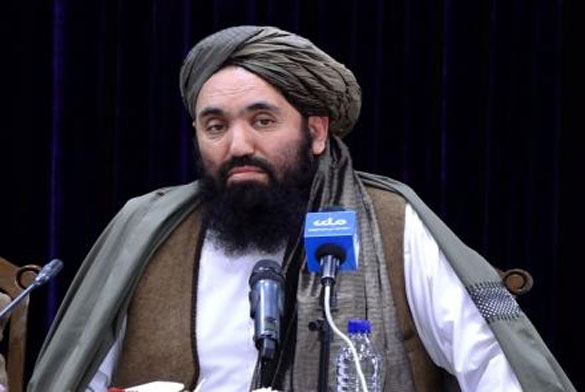
Member of negotiation team in Istanbul, Rahmatullah Najib said Islamabad asked the group to issue a fatwa declaring the Tehrik-i-Taliban Pakistan war unjust.
A senior Taliban official said Islamabad has asked the group to denounce the Tehrik-i-Taliban Pakistan (TTP) insurgency and issue a religious decree against its war in Pakistan.
Rahmatullah Najib, deputy interior minister in the Taliban administration and a member of the negotiation team in Istanbul, said Pakistan’s demands included condemning the TTP’s war, preventing cross-border attacks, and relocating its members from Afghanistan territory.
Najib stated that the Taliban does not bear responsibility for such requests, adding that the group, in turn, demanded Pakistan stop violating Afghanistan airspace and take action against Islamic State hideouts on its soil.
Talks between the Afghanistan and Pakistan in Istanbul ended without agreement on a mechanism to monitor and combat cross-border militancy, sources familiar with the matter told local media.
Pakistan’s Prime Minister Shehbaz Sharif said peace in the region depends on curbing militant groups operating from Afghanistan, urging Kabul to take “credible action” against them.
Amid escalating tensions, the Taliban have reportedly halted imports of Pakistani goods, further straining trade relations between the two neighbors.
Analysts say the failure of the talks underscores deep mistrust and competing security priorities, as both sides face growing domestic and regional pressure to contain militancy.
Source: khaama.com
Please click the following URL to read the text of the original Story
https://www.khaama.com/rahmatullah-najib-islamabad-asked-us-to-issue-fatwa-against-war-in-pakistan/
------
Israel’s president says ‘shocking’ settler violence against Palestinians must end
November 12, 2025
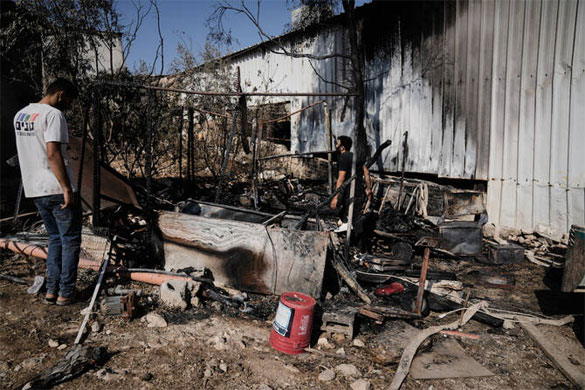
Palestinians survey damage in an industrial zone following an attack by Israeli settlers the previous day in the West Bank village of Beit Lid, near Tulkarm, Nov. 12, 2025. (AP)
-------------
JERUSALEM: Israel ‘s president on Wednesday condemned what he called a “shocking and serious” attack by Jewish settlers against Palestinians in the West Bank, calling for an end to a growing wave of settler violence in the occupied territory.
President Isaac Herzog’s comments added a powerful voice to what has been muted criticism by top Israeli officials of the settler violence. Herzog’s position, while largely ceremonial, is meant to serve as a moral compass and unifying force for the country.
Herzog said the violence committed by a “handful” of perpetrators “crosses a red line,” adding in a social media post that “all state authorities must act decisively to eradicate the phenomenon and to strengthen the IDF fighters and security forces who protect us day and night.”
His remarks came after dozens of masked Israeli settlers attacked the Palestinian villages of Beit Lid and Deir Sharaf in the West Bank on Tuesday, setting fire to vehicles and other property before clashing with Israeli soldiers.
A top Israeli commander echoed Herzog, saying that such violence by an “anarchist fringe” from within the Israeli settler community is unacceptable and will be dealt with “firmly.”
Central Command Chief Maj. Gen. Avi Bluth denounced what he called an “unacceptable situation” that forces significant resources to be diverted from bolstering security and conducting counterterrorism operations.”
“The reality in which anarchist fringe youth act violently against innocent civilians and against security forces is unacceptable and is extremely serious,” Bluth said. “It must be dealt with firmly.”
Settler violence has surged
Tuesday’s violence in the West Bank was the latest in a series of attacks by young settlers that have surged since the war in Gaza erupted two years ago. The attacks have intensified in recent weeks as Palestinians harvest their olive trees in an annual ritual.
The UN humanitarian office last week reported more Israeli settler attacks on Palestinians in the West Bank in October than in any other month since it began keeping track in 2006. There were over 260 attacks, the office said.
Palestinians and human rights workers accuse the Israeli army and police of failing to halt attacks by settlers. Israel’s government is dominated by far-right proponents of the settler movement including Finance Minister Bezalel Smotrich, who formulates settlement policy, and Cabinet minister Itamar Ben-Gvir, who oversees the nation’s police force.
In Tuesday’s incident, the army said soldiers responded to settler attacks in two Palestinian villages. It said the settlers fled to a nearby industrial zone and attacked soldiers and damaged a military vehicle. Israeli police said four Israelis were arrested in what it described as “extremist violence,” while the Israeli military said four Palestinians were wounded.
Palestinian official Muayyad Shaaban, who heads the government’s Commission against the Wall and Settlements, said the settlers set fire to four dairy trucks, farmland, tin shacks and tents belonging to a Bedouin community.
He said the attacks were part of a campaign to drive Palestinians from their land and accused Israel of giving the settlers protection and immunity. He called for sanctions against groups that “sponsor and support the colonial settlement terrorism project.”
Palestinians react angrily
In Beit Lid, residents said they don’t want their lives ruled by fear of settler violence.
Mahmoud Edeis said the violence is undermining his family’s right to live in safety.
“To feel that my children are safe, that when I go to sleep I can say, ‘Okay, there’s nothing (to worry about),’” he said. “But at any moment something could happen … This can’t go on. It can’t be that we keep living our whole lives in a state of fear and danger.”
Amjad Amer Al-Juneidi, who works at a dairy factory that was attacked Tuesday, said the “fully organized” attack saw one person carrying gasoline-filled cans, another prying open the factory door with a crowbar and a third individual igniting the fuel.
“Their entry into the company wasn’t random. It was organized, and they had a fully organized tactic for how to carry out the burning,” Al-Juneidi said.
Source: arabnews.com
Please click the following URL to read the text of the original Story
https://www.arabnews.com/node/2622366/middle-east
-------
Bodies Of Terrorists Float In River As Boko Haram, ISWAP Fighters Clash
November 12, 2025
By Enioluwa Adeniyi
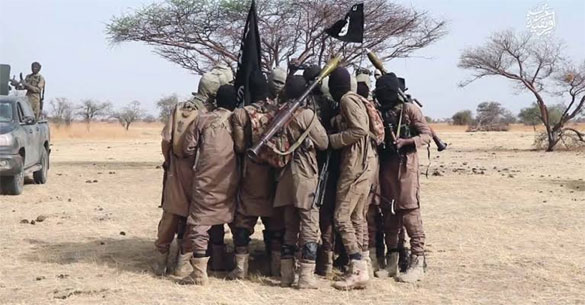
At least 200 Islamic State West Africa Province (ISWAP) fighters have reportedly been killed following a bloody confrontation with rival Boko Haram insurgents along the Lake Chad axis in Nigeria’s North-East.
Naija News reports that the violent supremacy battle occurred on Sunday near Dogon Chiku, a strategic location on the shores of Lake Chad, which has long served as a stronghold for both factions.
According to counter-insurgency expert and security analyst, Zagazola Makama, who disclosed the development in a post on his verified 𝕏 handle (formerly Twitter), the confrontation was one of the deadliest between the two jihadist groups in recent months.
Makama wrote, “More bodies of ISWAP found after a deadly clash that resulted in the killing of 200 fighters by Boko Haram.”
He also shared disturbing footage showing lifeless bodies of ISWAP combatants floating in a river, believed to be along the Lake Chad channel.
The two militant groups have been locked in a violent rivalry since ISWAP broke away from Boko Haram in 2016 following internal divisions over ideology, leadership, and strategy.
Since then, both factions have engaged in repeated territorial battles in the Lake Chad Basin, competing for control of key camps, supply routes, and influence among local communities.
The Lake Chad Basin, spanning Nigeria, Chad, Niger, and Cameroon, continues to serve as a volatile zone for extremist operations, despite years of military campaigns by the Multinational Joint Task Force (MNJTF).
The North-East region, particularly Borno State, remains one of the most affected by insurgent attacks, banditry, and communal violence.
Source: naijanews.com
Please click the following URL to read the text of the original Story
https://www.naijanews.com/2025/11/12/bodies-of-terrorists-float-in-river-as-boko-haram-iswap-fighters-clash/
------
India
Before and after Red Fort blast, the 2 clerics arrested, 800 kilometres apart
by Naveed Iqbal +1 More
November 13, 2025
Two clerics, 800 kilometres apart – in Kashmir’s Shopian and Haryana’s Faridabad – are among those arrested by the J&K police in the alleged terror module that has now been linked to the Red Fort blast. While one, police claim, indoctrinated some in the module, the other rented his premises to a doctor who allegedly stockpiled explosives there.
In Shopian’s Nadigam area, the family and colleagues of cleric Irfan Ahmad Wagay never had an inkling he was on the police radar. “I have never seen him do anything but pray,” said his wife, Fatima, sitting at their home.
Wagay, locally known as “mufti sahab”, is one of the seven men who were arrested before the Red Fort blast as part of the J&K police’s probe into the “inter-state and transnational” module, linked with proscribed terrorist organisations, Jaish-e-Mohammad and Ansar Ghazwat-ul-Hind.
Fatima and three of Wagay’s sisters told The Indian Express that he was taken from their Nadigam home on October 18. “He came home from Srinagar on Saturday as he always would. Had a cup of tea in the compound of the house and left for namaz. After dinner, everyone retired to their rooms, and the police knocked around 11 pm,” his older sister Sabi Jaan said.
The fourth of seven siblings, 24-year-old Wagay studied in formal school until the third grade. According to the family, his grandfather initiated him into religious studies, and he was enrolled at Darul Uloom Bilalia in Lal Bazar, Srinagar.
Before and after Red Fort blast, two clerics arrested, 800 km apart The mosque on the Al Falah campus in Faridabad where Ishtiyaq was a cleric.
After completing his basic religious education here, Wagay went to Deoband to continue his studies and train to become a Mufti in 2017-18.
“We were married in 2021,” Fatima, who is pregnant, said. The couple also have a three-year-old child. According to Fatima, Wagay spent the last seven years leading prayers at a mosque in a locality at Naik Bagh, Nowgam (Srinagar). “I used to visit him there often. We would both come home to Shopian on the weekend,” she said.
The family said that they are not familiar with the names of any of the other accused in the case. On October 19, multiple Jaish-e-Mohammad posters were found pasted at different locations in Bunpora Nowgam, Srinagar, threatening and intimidating police and security forces.
The police investigation would go on to unravel the “terror module” along with the arrest of Wagay and six others, including Arif Nisar Dar, Yasir-ul-Ashraf, and Maqsood Ahmad Dar, all residents of Nowgam, where Wagay led prayers.
The investigation led the police to Anantnag, Ganderbal and Shopian. And subsequently, they conducted searches at Faridabad, alongside the Haryana Police, and at Saharanpur, with the UP Police, arresting three doctors, while a fourth – Umar Nabi, the Red Fort blast suspect – gave them the slip.
Wagay’s family claimed he had never been called for questioning in the past, and “our home has never been searched before”. At the masjid in Nowgam, where he worked as an Imam, committee president Farooq Ahmad said, “Every Saturday, he would go home and come back Monday afternoon. This is shocking for everyone who prays here.”
Before and after Red Fort blast, two clerics arrested, 800 km apart Wagay’s house in Nadigam in Shopian, J&K. He was taken away by police on October 18.
He said the search of his room was conducted almost three weeks after they picked him from Shopian.
The family denied knowledge of any posters and said that he was engaged with religious texts. “His phone and laptop have been taken by the police,” his wife said. She said that the family tried to locate him at different police stations in Srinagar, but in vain.
In Haryana
At the residence of Maulana Ishtiyaq in Haryana’s Dhauj, his wife did not wish to speak to outsiders, and his eldest daughter, aged 17, did most of the talking. She has three younger siblings.
Ishtiyaq has been taken by the J&K police to Srinagar in connection with the alleged terror module. Officials said he hails from Mewat and was the cleric at a mosque inside the Al Falah campus, where three doctors linked to the module were working.
Ishtiyaq, investigators say, is one of five brothers who are also in the same profession across Haryana and Rajasthan.
He has a house in Dahar Colony of Fatehpur Taga village, where he rented out one of the rooms to Dr Muzammil Ganai, one of the key accused in the terror module.
It was at this rented accommodation that police found the explosives during raids on Sunday and Monday.
His children said that while they do not go to school, Ishtiyaq would teach them reading and writing at home.
His daughter said no one from the university or the extended family has been in touch since the detention.
She said their father’s salary of Rs 10,000 came from the university on the 7th of every month, which was also used for the upkeep of the mosque where he was the imam. The family makes another Rs 10,000 from selling buffalo milk.
Their home on the mosque campus is a simple one, with a courtyard, a single room and a kitchen.
“We do not keep or take photos of the family. The one phone we had was our father’s, which officials have taken away,” she said.
Villagers said mostly university employees and staff prayed at the mosque.
Source: indianexpress.com
Please click the following URL to read the text of the original Story
https://indianexpress.com/article/india/before-and-after-red-fort-blast-the-2-clerics-arrested-800-kilometres-apart-10362069/
-------
Delhi blast: Al-Falah University gets show-cause from NAAC over 'false accreditation claims'
13 Nov 2025
NEW DELHI: The National Assessment and Accreditation Council (NAAC) has issued a show-cause notice to Al-Falah University, which is under scanner in connection with the Delhi blast probe, for displaying false accreditation on its website, officials said on Thursday.
In the show-cause notice, the NAAC said it has noted that the Al-Falah University, "which is neither accredited nor applied for accreditation by NAAC", has publicly displayed on its website that "Al-Falah University is an endeavour of Al-Falah Charitable Trust, which has been running three colleges on the campus, namely Al Falah School of Engineering and Technology (since 1997, Graded A by NAAC), Brown Hill College of Engineering and Technology (since 2008), and Al-Falah School of Education and Training (since 2006, Graded A by NAAC)."
"This is absolutely wrong and misleading the public, especially the parents, students and stakeholders," the show-cause notice read.
The NAAC has sought an explanation and directed the university to remove the NAAC accreditation details from its website and any other publicly available or distributed documents.
On Monday, a high-intensity blast ripped through a car near Red Fort in Delhi, killing 13 people and injuring several others, hours after the busting of a "white collar terror module".
The arrested included three doctors linked to Al-Falah University.
Source: newindianexpress.com
Please click the following URL to read the text of the original Story
https://www.newindianexpress.com/cities/delhi/2025/Nov/13/delhi-blast-al-falah-university-gets-show-cause-from-naac-over-false-accreditation-claims
-------
White-collar terror module: Counter Intelligence Kashmir continues to carry out raids across Valley
13.11.25
The Counter Intelligence wing of Jammu and Kashmir Police on Thursday carried out raids at several locations across the Valley in connection with the "white-collar terror module" and the recent blast near Delhi's Red Fort, officials said.
Around 10 persons, including three government employees, have been picked up for questioning from various parts of Kashmir.
The officials said the investigators picked up the suspects from Anantnag, Pulwama and Kulgam districts during overnight raids.
The raids are currently being carried out by Counter Intelligence Kashmir (CIK) at 13 locations, they said.
Around 15 people have been detained for questioning, and several digital devices and incriminating materials have been recovered, the officials said.
Further details are awaited, they added.
Earlier on Wednesday, Anantnag Police carried out coordinated raids in the district amid a massive crackdown against the banned organisation Jamaat-e-Islami (JeI). Meanwhile, in Kulgam, police are carrying out a crackdown against the anti-national elements, checking vehicles at the Navyug tunnel.
The raids were based on credible intelligence inputs indicating attempts by JeI-linked elements to revive their activities under different fronts, police officials said.
They said the raids were carried out at several locations across the 10 districts of the Kashmir valley -- Srinagar, Ganderbal, Budgam, Baramulla, Bandipora, Kupwara, Anantnag, Kulgam, Pulwama, and Shopian.
In north Kashmir's Baramulla district, police in Sopore launched a major coordinated operation and carried out a district-wide counter terror and separatist ecosystem action, by conducting simultaneous raids at over 30 plus locations across Sopore, Zaingeer, and Rafiabad areas with the assistance of other security forces, they said.
Meanwhile, security agencies have recovered the diaries of Delhi blast case accused Dr Umar and Dr Muzammil, which mention the dates November 8 to 12, indicating that the planning was underway for such an incident during that period, sources said.
According to the sources, the diary also contained the names of about 25 individuals, most of them hailing from Jammu and Kashmir and Faridabad.
According to the information from the diaries, it can be said that the blast was to be carried out as part of a well-planned conspiracy.
These diaries were recovered on Tuesday and Wednesday from Dr Umar's room number four and Muzammil's room number 13. Additionally, police recovered a diary from Muzammil's room, the same location where they recovered 360 kg of explosives in Dhauj, located just 300 meters from Al-Falah University.
The diaries carried code words which investigators are now piecing together. The agencies are also looking into whether different vehicles were being prepared for the blasts.
According to sources, after the i20 and EcoSport, it was learned that the suspects were planning to prepare two more vehicles for the blast to expand the target.
Investigation agencies on Thursday informed that around eight suspects were allegedly preparing to execute coordinated explosions at four locations, with each pair assigned to a specific target city.
Source: telegraphindia.com
Please click the following URL to read the text of the original Story
https://www.telegraphindia.com/india/white-collar-terror-module-counter-intelligence-kashmir-carries-out-raids-across-valley/cid/2132653
-------
NIA raids in Gujarat, Bengal, and 3 other states in al-Qaida terror conspiracy case
November 13, 2025
The National Investigation Agency (NIA) on Wednesday carried out raids at 10 locations across five states in connection with the al-Qaida Gujarat terror conspiracy case, which involves illegal Bangladeshi immigrants.
According to officials, the searches were conducted at premises linked to several suspects and their associates in West Bengal, Tripura, Meghalaya, Haryana, and Gujarat. During the operation, the agency seized digital devices and various incriminating documents, which have been sent for forensic examination.
The case, registered as RC-19/2023/NIA/DLI, was filed by the NIA in June 2023 under provisions of the Unlawful Activities (Prevention) Act, the Indian Penal Code, and the Foreigners Act.
Investigations so far have revealed that four Bangladeshi nationals — identified as Mohd. Sojibmiyan, Munna Khalid Ansari alias Munna Khan, Azarul Islam alias Jahangir alias Aakash Khan, and Abdul Latif alias Mominul Ansari — had entered India illegally using forged identity documents. The accused were reportedly associated with the banned terror group Al-Qaida.
The probe has found that the men were engaged in raising and transferring funds to Al-Qaida operatives in Bangladesh and were also involved in radicalising Muslim youth.
On November 10, 2023, the NIA filed a chargesheet against five accused before the NIA Special Court in Ahmedabad. The agency said the investigation is ongoing to trace the wider network, connections, and financial routes linked to the terror group’s activities in India and abroad.
Source: indianexpress.com
Please click the following URL to read the text of the original Story
https://indianexpress.com/article/india/nia-raids-in-gujarat-bengal-in-al-qaida-terror-case-10362303/
------
Sri Sri Ravi Shankar meets Mirwaiz Umar Farooq in Srinagar; urges youth for peace, harmony
Fayaz Wani
13 Nov 2025
SRINAGAR: The spiritual guru and founder of Art of Living Foundation, Sri Sri Ravi Shankar, on Thursday met Hurriyat Conference chairman and cleric Mirwaiz Umar Farooq at his Srinagar residence.
Sri Sri Ravi Shankar visited the Nageen residence of Mirwaiz today and held deliberations with him.
“During the cordial meeting, both leaders discussed the importance of peace, compassion, and inter-faith harmony in today’s world,” stated a statement issued by Mirwaiz Manzil, the office of Mirwaiz.
It stated that Sri Sri, who was visiting Kashmir after seven years, expressed happiness at being back in the Valley and lauded its spiritual and cultural heritage as a symbol of coexistence.
“Mirwaiz welcomed him and reiterated that the institution of the Mirwaiz remains committed to peace and dialogue as the most humane and effective means of addressing issues and resolving differences,” the statement said.
It stated that both leaders agreed that injustice and disempowerment lead to radicalisation that threatens peace.
Mirwaiz appreciated Sri Sri Ravi Shankar’s recent anti-drug outreach in the Valley.
On Sri Sri Ravi Shankar’s upcoming visit to Central Jail Srinagar, Mirwaiz stressed that a compassionate and humane approach must guide efforts for the release of political prisoners and youth, and urged the leader to play his role in this.
“Both leaders agreed that sustained dialogue and mutual understanding are essential to promote peace and human dignity,” added the statement.
On November 11, Sri Sri Ravi Shankar addressed hundreds of college and university students from Kashmir at Bakshi Stadium in Srinagar for the “Edu-Youth Meet” in a major youth mobilisation drive against drug abuse.
He had called upon youth to take collective action against drugs and violence and to redefine education as a path of happiness, creativity, and compassion.
Sri Sri urged Kashmiri youth to uphold communal harmony and embrace love over conflict. “Kashmiri youth stand for communal harmony.”
Source: newindianexpress.com
Please click the following URL to read the text of the original Story
https://www.newindianexpress.com/nation/2025/Nov/13/sri-sri-ravi-shankar-meets-mirwaiz-umar-farooq-in-srinagar-urges-youth-for-peace-harmony
-------
Kolkata Nakhoda Mosque Trustees Condemn Red Fort Attack As ‘Barbaric’
Nov 13, 2025
Kolkata: The trustees of Nakhoda Mosque in central Kolkata have strongly condemned Monday's attack near the Red Fort in Delhi, calling it a "deeply distressing and unpardonable act of barbarism".
In a statement issued on Wednesday evening, the trustees expressed profound grief over the incident that claimed several lives and left many injured. They extended condolences to the bereaved families and wished a speedy recovery for the injured. "We convey our heartfelt condolences to the families who lost their loved ones and wish recovery to those injured in this unpardonable act of barbarism. In this hour of grief, we stand in solidarity with the bereaved. We stand united as a nation," said Nasser Ebrahim, a trustee.
Source: indiatimes.com
Please click the following URL to read the text of the original Story
https://timesofindia.indiatimes.com/city/kolkata/nakhoda-mosque-trustees-condemn-red-fort-attack-as-barbaric/articleshow/125284521.cms
------
Congress Minister, Karnataka CM’s Adviser Basavaraj Rayareddi Suspect BJP Link In Delhi Blast
Nov 12, 2025
Bengaluru: Housing minister BZ Zameer Ahmed Khan and chief minister Siddaramaiah's economic adviser Basavaraj Rayareddi sparked controversy by suggesting a possible BJP link behind the suicide bombing in Delhi that killed 13 people.
"There is a certain amount of doubt behind the timing of the bomb blast," said Rayareddi in Koppal. "It came a day before polling in Bihar. This doubt has risen because it is said BJP and PM Modi can go to any extent (for power)."
Khan, who met AICC president Mallikarjun Kharge in Bengaluru, voiced similar suspicion. "What is surprising is that the blast happened a day before elections," he said. "Media outlets have questioned the timing. I too have heard that there are some links between the bombers and politicians. If this is true, then whoever is using the bombing for political gains, neither he nor his family shall fare well in life."
Rejecting any link between Islam and terrorism, Khan added: "Nowhere in Islam does it say to indulge in terrorism. They are not Muslims."
On Tuesday, Siddaramaiah said only an investigation would determine why the incident occurred a day before polls in Bihar. He also questioned the pattern of such incidents during elections. "What is the reason for terrorist attacks in the country during elections?" he asked on ‘X'.
AICC president Mallikarjun Kharge demanded a full probe by the Centre. "In the national capital, despite having so many intelligence and investigation agencies, the Centre failed in ascertaining this dastardly attack. However, we will wait for the probe report to come and raise the matter during the winter session of Parliament (from Dec 1)," he said.
BJP state president B Y Vijayendra condemned the remarks, calling Congress members "irresponsible and insensitive" and indulging in "low-level politics".
BJP MLC CT Ravi accused Congress of politicising a national tragedy. "The blast may prove politically beneficial for Congress. Does it mean it should have happened after the elections?" he asked.
Source: indiatimes.com
Please click the following URL to read the text of the original Story
https://timesofindia.indiatimes.com/city/bengaluru/congress-minister-cms-adviser-suspect-bjp-link-in-delhi-blast/articleshow/125278926.cms
--------
Property of former J&K Bar Association president seized under UAPA on DGP’s orders
November 12, 2025
Acting tough against those engaged in anti-national activities, J&K DGP Nalin Prabhat on Wednesday ordered attachment of the residential property of the former president of the J&K High Court Bar Association, Mian Abdul Qayoom, in Srinagar under the Unlawful Activities (Prevention) Act (UAPA) in connection with a 2009 case related to an anti-India seminar allegedly addressed by several separatist leaders and also for “concealing incriminatory material and furtherance of terrorist activities”.
The property was attached after the DGP approved the attachment of the two-storeyed bungalow along with land measuring 2 Kanals, 1 Marla, and 90 sqft situated in the posh Bulbul Bagh, Barzulla, Srinagar, in FIR No 157/09 u/s 120, 120-B, 121, 153-A RPC, 13, 38 and 39 UAPA, of PS Shaheed Gunj, Srinagar.
The case pertains to 31 December 2009 when the Police Station Shaheed Gunj received information to the effect that “on the death anniversary of the Pakistan leader Late Ali Mohammad Jinnah, a seminar was organized by separatist leaders led by Feroz Ahmad Khan, vice chairman Muslim League at Hotel Jahangir Srinagar, in which, amongst others, the participants including Aasia Andrabi, Shabir Ahmad Najar (District President Muslim League), Mian Abdul Qayoom (at that time President Bar Association) delivered anti-India speeches and raised anti national slogans. They stressed that the future of Kashmir depends upon Pakistan and there should be Islamic law in J&K”.
During the investigation, police recorded witness statements confirming that the participants had made inflammatory remarks, provoked the audience, and advocated the secession of Jammu & Kashmir.
The order further mentioned that a search of Mian Qayoom’s residence, conducted after obtaining a magistrate’s warrant, led to the recovery of banned literature, a Hizbul Mujahideen letterhead with seal impression, a press note-type document, a letter addressed by Syed Salahuddin to then US President Bill Clinton, and another Hizbul Mujahideen seal impression in Urdu. Independent witnesses and an Executive Magistrate were present during the search.
The property registered under mutation no 338, in the name of Mian Abdul Qayoom, thus falls within the ambit of “proceeds of terrorism” in terms of section 2(g) of UAPA and is liable to be attached in FIR No 157/09, of PS Shaheed Gunj, Srinagar, the DGP ordered.
Source: thestatesman.com
Please click the following URL to read the text of the original Story
https://www.thestatesman.com/india/property-of-former-jk-bar-association-president-seized-under-uapa-on-dgps-orders-1503510983.html
-------
Brother Of Arrested Cleric In White Collar Terror Case Says 'He's Innocent'
Nov 13, 2025
The brother of the arrested Imam Mohammad Ishityaq, Mohammad Shahbad, claimed his brother's innocence in the white-collar terror case links on Wednesday, stating that the accusations against him are entirely wrong.
In an interview with ANI, Shahbad said, "He has been the imam of that masjid of Al Falah University for the last 20 years. I had deployed him there before his marriage. He and his family live there. We keep visiting each other frequently. He had bought a land in Fatehpur and had built rooms for rent. One of those rooms was rented by this doctor (Muzammil). We don't know when he rented that room."
Defending his brother further, Shahbad added, "No one keeps an eye on the day-to-day activities of the tenant. We visit our tenants only to collect rent. The media now reports that weapons and explosives have been recovered from the room of that tenant. The accusations against my brother are absolutely wrong. My family has never had any accusations. All my brothers are imams."
The National Investigation Agency is likely to visit Al-Falah Medical College in Faridabad's Dhouj as part of its extensive probe into the Delhi car blast case, which has involvement of a Jaish-e-Mohammad (JeM) module.
Al-Falah Medical College is the place from where additional weapons, pistols, and explosives were recovered on November 8.
The medical college has become a key focus area in the probe after security agencies recovered the explosives from its premises during coordinated search operations.
Investigations have established that a doctor named Muzammil, employed at Al-Falah Medical College, was arrested for his alleged involvement with the module. Another member, Dr Umar, also worked at the same institution. He managed to evade arrest when agencies intensified their crackdown on the network.
The fugitive Umar, cornered by the agencies' sustained action, likely acted in panic and desperation, which eventually led to the blast near the Red Fort. He was killed in the incident. The CCTV footage indicates that Dr Umar of this module was driving the vehicle involved in the explosion.
Meanwhile, the Union Cabinet, chaired by Prime Minister Narendra Modi, on Wednesday expressed its profound grief over the loss of lives in the terrorist incident involving a car explosion near the Red Fort in Delhi on Monday evening.
The Cabinet observed two minutes' silence in honour of the innocent lives lost.
Source: ndtv.com
Please click the following URL to read the text of the original Story
https://www.ndtv.com/india-news/brother-of-arrested-cleric-in-white-collar-terror-case-says-hes-innocent-9624975
-------
South Asia
UN Warns 90 Percent of Families in Afghanistan Face Food Shortages
By Fidel Rahmati
November 13, 2025
The United Nations warns that 90 percent of families in Afghanistan face severe food shortages, as economic pressures, crises, and returning refugees worsen hunger across the country.
The United Nations Development Programme (UNDP) said nine out of ten Afghanistan families have been forced to reduce food consumption or sell assets to survive, a situation worsened by returning migrants from Pakistan and Iran.
Kanni Wignaraja, UNDP Regional Director for Asia and the Pacific, warned that restrictions on women working in humanitarian operations and reconstruction projects reduce access to essential services, harming families and communities.
UNDP Resident Representative Stephen Rodriguez stressed that area-focused reconstruction can ease pressure on returnee regions and prevent secondary displacement, supporting longer-term recovery and resilience.
The report, released Wednesday, November 13, is based on a survey of nearly 49,000 Afghan households, including more than 1,500 returnee families. The return of approximately 2.3 million people is placing severe strain on the country’s recovery efforts.
Returnees, especially in rural areas, face sharply reduced access to healthcare, clean water, and education, with women and girls suffering the most, the UNDP said.
The report found that 88 percent of returnee families and 81 percent of host communities are in debt due to declining incomes, rising living costs, and economic pressures from disasters and crises. Household debts range from $373 to $900, while average monthly income is around $100.
Recent earthquakes in Nangarhar, Kunar, and Samangan provinces have compounded challenges, highlighting the need for targeted, area-focused investment in returnee regions to support recovery and stability.
Source: khaama.com
Please click the following URL to read the text of the original Story
https://www.khaama.com/un-warns-90-percent-of-families-in-afghanistan-face-food-shortages/
-------
Higher Education Minister, OIC Delegation Discuss Expansion of Academic Cooperation
November 13, 2025
KABUL: Mawlavi Neda Mohammad Nadeem, the country’s Minister of Higher Education, inn a meeting with Dr. Tarek Ali Bakhit, Assistant Secretary-General of the Organization of Islamic Cooperation (OIC) and the organization’s Special Envoy for Afghanistan, discussed academic cooperation, the ministry said in a statement on Wednesday.
During the meeting, the two sides discussed Afghanistan’s higher education system, including the expansion of master’s and doctoral programs in Afghan universities, the completion and equipping of modern laboratories, and the establishment of academic cooperation with member countries of the OIC, the statement said.
They also exchanged views on resuming the construction of the Islamic University in Nangarhar province, a project seen as an important step toward enhancing Afghanistan’s academic capacity and fostering educational ties among Muslim nations, according to the statement.
Source: thekabultimes.com
Please click the following URL to read the text of the original Story
https://thekabultimes.com/higher-education-minister-oic-delegation-discuss-expansion-of-academic-cooperation/
------
Afghanistan Wushu Team Departs for Islamic Solidarity Games in Riyadh
November 13, 2025
The Afghanistan national Wushu team has departed for Saudi Arabia to participate in the ongoing 6th Islamic Solidarity Games, being hosted in the city of Riyadh.
According to Mohammad Khalid Hotak, Secretary General of the Afghanistan Wushu Federation, three Afghan athletes will represent the country in these prestigious international competitions, which bring together athletes from across the Islamic world.
The Afghan delegation includes Shamsuddin Haji Zada in the 60-kilogram weight category, Jafar Sultani in the 70-kilogram category, and Asadullah Ehsan competing in the 85-kilogram division. All three athletes have undergone intensive training in Kabul in preparation for the event and are hopeful of achieving strong results on the international stage.
The Islamic Solidarity Games, which have been underway for more than ten days, are a major multi-sport event organized under the auspices of the Organization of Islamic Cooperation (OIC). The competition promotes friendship, unity, and athletic excellence among Muslim-majority nations.
Officials from the Afghanistan Wushu Federation expressed optimism that participation in such events not only enhances Afghanistan’s presence in international sports but also serves as an inspiration for young athletes in the country.
Wushu — a martial art that combines combat techniques and performance — has gained growing popularity in Afghanistan over the past decade, and Afghan competitors have achieved success in several regional tournaments.
The Afghan athletes will compete later this week as part of the Riyadh games’ combat sports segment. The Kabul Times
Source: thekabultimes.com
Please click the following URL to read the text of the original Story
https://thekabultimes.com/afghanistan-wushu-team-departs-for-islamic-solidarity-games-in-riyadh/
------
KM Plans Implementation of 258 Urban Development Projects This Year, Mujahid
November 13, 2025
KABUL: The Kabul Municipality has planned a total of 258 development projects across the city during the current year, with an estimated budget of 8.12 billion Afghanis.
Zabihullah Mujahid, the spokesman of the Islamic Emirate, said in a statement on Wednesday that 170 of these projects have already been completed, while the remaining ones are currently under construction in various parts of the capital.
These initiatives are part of a broader urban development strategy aimed at improving public infrastructure, transportation systems, sanitation, and beautification efforts across Kabul.
In addition to government-funded initiatives, 142 other projects are being financially supported by charitable and humanitarian organizations.
The Kabul Municipality has assumed full responsibility for managing and monitoring the implementation of these projects to ensure transparency, efficiency, and compliance with technical standards.
The municipality reiterated its commitment to working collaboratively with partner institutions and donors to achieve sustainable urban development that meets the growing needs of the capital’s population.
Source: thekabultimes.com
Please click the following URL to read the text of the original Story
https://thekabultimes.com/km-plans-implementation-of-258-urban-development-projects-this-year-mujahid/
-------
Dhaka voices displeasure over Hasina’s interviews
Nov 13, 2025
Bangladesh yesterday expressed displeasure over the interviews of former prime minister Sheikh Hasina published by Indian media outlets.
The Ministry of Foreign Affairs formally conveyed Dhaka's displeasure to New Delhi by summoning Indian Deputy High Commissioner in Dhaka Pawan Badhe, a senior official at the Ministry of Foreign Affairs told UNB.
Officials reportedly conveyed that harbouring a fugitive currently under trial for crimes against humanity and granting her a platform to "spread hatred and advocate terrorist acts inside Bangladesh" is detrimental to fostering a constructive bilateral relationship between the two countries.
The Indian diplomat was asked to convey to New Delhi Bangladesh's request to stop Hasina's access to media, said a diplomatic source.
The AFP, Reuters and the Independent (UK) also interviewed Hasina recently.
Source: thedailystar.net
Please click the following URL to read the text of the original Story
https://www.thedailystar.net/news/bangladesh/news/dhaka-voices-displeasure-over-hasinas-interviews-4033791
-------
Security tightened at ICT ahead of date announcement of Hasina’s verdict
Nov 13, 2025
Security has been tightened in and around the International Crimes Tribunal (ICT) ahead of the announcement of the verdict date in the crimes against humanity case filed against former prime minister Sheikh Hasina and two others over incidents during the July mass uprising.
The verdict date is scheduled to be announced today by the International Crimes Tribunal-1, led by Justice Md Golam Mortuza Mojumder.
Meanwhile, Awami League, whose political activities are banned, has announced a "Dhaka lockdown" programme centring the verdict announcement.
Members of the police, Border Guard Bangladesh (BGB), and the Armed Police Battalion (APBn) have been deployed in and around the court area, while army patrols were also seen.
"To prevent any possible acts of sabotage and to maintain law and order, the Dhaka Metropolitan Police (DMP) has deployed extra police force across the city," said Talebur Rahman, DC (Media) of the DMP. He added that in addition to the police, members of other security forces have also been deployed.
Law enforcement agencies have set up multiple checkpoints at Dhaka's entry points since Wednesday, conducting searches of public transport and suspicious individuals. The checks continued this morning as part of heightened security measures.
A group of 10 to 12 individuals under the banner of "Janajot Biplobi Mancha" brought out a procession from Doel Chattar near the Mazar Gate around 11:00am today, demanding the death penalty for ousted Prime Minister Sheikh Hasina.
However, law enforcement personnel intercepted them at the Mazhar Gate as they attempted to march toward the International Crimes Tribunal. Later, the protesters began a sit-in program beside the Mazar Gate.
Meanwhile, a group of 10 to 12 individuals under the banner of "Janajot Biplobi Mancha" brought out a procession from Doel Chattar near the Mazar Gate around 11:00am today, demanding the death penalty for ousted Prime Minister Sheikh Hasina.
However, law enforcement personnel intercepted them at the Mazhar Gate as they attempted to march toward the International Crimes Tribunal. Later, the protesters began a sit-in program beside the Mazar Gate.
Source: thedailystar.net
Please click the following URL to read the text of the original Story
https://www.thedailystar.net/news/bangladesh/news/security-tightened-ict-ahead-date-announcement-hasinas-verdict-4033841
------
Jamaat, allies threaten indefinite sit-in at Jamuna
Nov 13, 2025
Jamaat-e-Islami, Islami Andolan Bangladesh and six other like-minded parties yesterday warned that they may launch an indefinite sit-in programme until their five-point demand is met.
"We want to solve the issues through discussion -- we sought an appointment with the chief adviser," said Jamaat Secretary General Mia Golam Parwar in a press conference at Moghbazar's Al-Falah auditorium.
After meeting with him, if the demands are not fulfilled, the eight-party alliance will go for an indefinite sit-in programme in front of Jamuna, the chief adviser's residence, he added.
Meanwhile, Nasiruddin Patwary, the chief organiser of the National Citizen Party, also expressed solidarity with the five-point demand of the eight-party alliance.
"We express solidarity with their movement -- we are still in this," he said while speaking at the launch of the National Health Alliance -- a joint platform of healthcare professionals and students -- at the Dhaka Reporters Unity.
The five-point demands include holding a referendum on the order of the July National Charter before the national election, holding national election under a proportional representation (PR) system, ensuring a level playing field for all, ensuring visible justice of the previous "fascist government" and banning the activities of the "dictatorial collaborators" Jatiya Party and the 14-party alliance.
"Our main demand is now to hold a referendum on the order of the July National Charter before the national election," Parwar said, adding that they want the polls to be held on time in February next year.
Mujibur Rahman, Jamaat's Nayeb-e-Ameer and former MP, read out the next programmes at the press conference.
The leaders and activists of the eight parties will occupy the streets nationwide today to resist any untoward incidents surrounding the likely announcement of the verdict date in a case against former Prime Minister Sheikh Hasina.
"We urge all the patriotic, anti-fascist forces to join us on the streets," he said.
The alliance announced demonstrations and protest marches at the district and metropolitan levels on Friday to press home their demands.
Its top leaders will meet at 11:00am on Sunday and decide on the sit-in programme through a press conference if demands remain unmet.
The leaders of Khelafat Majlish, Bangladesh Khelafat Majlish, Bangladesh Khelafat Andolon, Nezame Islam Party, Jatiya Ganatantrik Party and the Bangladesh Development Party also joined the press conference.
Source: thedailystar.net
Please click the following URL to read the text of the original Story
https://www.thedailystar.net/news/bangladesh/politics/news/fair-price-farmers-more-urgent-referendum-4033701
-------
Mideast
Israel announces demolitions of Palestinian homes to build incineration plant
November 12, 2025
LONDON: An Israeli project to construct a waste incineration plant north of occupied East Jerusalem will result in the demolition of two apartment buildings that house dozens of Palestinian families, according to an advocacy group.
Residents of homes and agricultural lands in the village of Qalandiya have been notified by Israeli authorities about the upcoming demolition and eviction in late November to facilitate the construction of a waste treatment and energy recovery facility.
Authorities will confiscate approximately 32 acres of agricultural land to demolish part of the Separation Barrier and reroute it to accommodate the plant within Jerusalem’s municipal boundaries. The area contains at least seven residential buildings housing hundreds of residents, as reported by the Wafa news agency.
In April, the Israeli government reinstated two dormant confiscation orders from 1970 and 1982 to serve as a “legal basis” for newly issued eviction orders against Palestinian residents in the area, according to reports from Wafa and the advocacy group Peace Now.
Eden, a development company owned by the Jerusalem Municipality, was tasked in May to construct the waste facility at the Qalandiya site. The Israeli Ministry of Environmental Protection is allocating approximately $3 million to finance the relocation of a section of the Separation Barrier.
“The government’s appetite for annexation and dispossession knows no bounds. As if there were no other place in the Jerusalem area to build a waste facility besides the few remaining (acres) left to Qalandiya’s residents after decades of expropriations and fences,” Peace Now said.
“This would constitute a blatant violation of international law and basic moral principles to expel residents living under occupation for the sake of a plant serving the occupying power,” it added.
Palestinian residents are preparing to launch a legal challenge to prevent their removal after being given 20 days to evacuate in late October.
Source: arabnews.com
Please click the following URL to read the text of the original Story
https://www.arabnews.com/node/2622368/middle-east
-------
Israel attacked Palestinian water sources over 250 times in 5 years: Research
November 12, 2025
LONDON: Palestinian water sources have been attacked more than 250 times in the past five years by Israeli military personnel and settlers.
New research published by the California-based Pacific Institute found that water infrastructure in Gaza and the West Bank had been targeted with bombs and machinery on 90 occasions since January 2024, and also identified cases of poisoning.
Israeli forces were recorded attacking Palestinians trying to collect water on numerous occasions, including eight people killed by sniper fire in February 2024 and a series of airstrikes in Gaza in April this year that hit two schools, leaving at least 100 injured and destroying latrines and a desalination plant.
Around 90 percent of all water infrastructure in Gaza has been damaged or destroyed by Israel over the last two years, with the Israeli military also blocking civilian access to many areas still with safe water.
In July, 10 Palestinians were killed at Nuseirat refugee camp in Gaza, including six children, and another 16 were injured while waiting for water at a distribution point.
More than 1,000 Palestinians have died in Gaza while seeking aid amid severe shortages of food, water and medicine, leading a group of UN experts to accuse Israel of weaponizing water scarcity.
Denying access to safe water constitutes a war crime under the Geneva Conventions and is against international humanitarian law.
“Israel has systematically used water to displace and segregate the Palestinian population in their own territories, illegally occupied since 1967, as part of its strategy of apartheid and progressive colonization,” said Pedro Arrojo-Agudo, UN special rapporteur on the human rights to safe drinking water and sanitation.
“Such practices in Gaza, but also in other armed conflicts such as Sudan, constitute violations of international law, and have been documented as patterns of behavior that constitute war crimes and crimes against humanity, that in the case of Gaza in particular, are an important part of a genocidal strategy.”
Israeli settlers, meanwhile, have targeted water infrastructure in the occupied West Bank frequently. In April, settlers destroyed water pipes in the villages of Bardalah and neighboring Khirbat.
Access to drinking water that is both safe and affordable is recognized as a human right by the UN.
Source: arabnews.com
Please click the following URL to read the text of the original Story
https://www.arabnews.com/node/2622360/middle-east
-------
Palestinian NGO cannot appeal UK court ruling over F-35 parts to Israel
November 12, 2025
LONDON: A Palestinian NGO was on Wednesday refused permission to appeal a court ruling that Britain lawfully allowed F-35 fighter jet parts to be indirectly exported to Israel, despite accepting they could be used to breach international humanitarian law.
Al-Haq, a Palestinian rights group based in the Israeli-occupied West Bank, unsuccessfully challenged Britain’s Department for Business and Trade over its decision last year to exempt F-35 components when it suspended export licenses for arms that could be used in the war in Gaza.
The group last month asked the Court of Appeal for permission to challenge a lower court ruling that found Britain’s decision was lawful and dismissed Al-Haq’s challenge.
The Court of Appeal refused permission, ruling that it was a matter for the government to decide whether national security issues relating to the supply of F-35 components outweighed an assessment that Israel was not committed to complying with international humanitarian law.
When it suspended export licenses in 2024, Britain assessed that Israel was not committed to complying with such law in its military campaign, which Gaza health officials say killed more than 68,000 Palestinians.
But Britain did not suspend licenses for British-made F-35 components, which go into a pool of spare parts Israel can use on its existing F-35 jets.
London’s High Court rejected the challenge in June, saying in its ruling that then-business minister Jonathan Reynolds was “faced with the blunt choice of accepting the F-35 carve-out or withdrawing from the F-35 program and accepting all the defense and diplomatic consequences which would ensue.”
The Court of Appeal heard Al-Haq’s application for permission to appeal as Israel and Palestinian militant group Hamas signed an agreement last month to cease fire and free Israeli hostages in exchange for Palestinian prisoners.
In a similar case earlier this month, a Dutch appeals court confirmed a decision to throw out a case brought by pro-Palestinian groups to stop the Netherlands exporting weapons to Israel and trading with Israeli settlements in occupied Palestinian territories.
Source: arabnews.com
Please click the following URL to read the text of the original Story
https://www.arabnews.com/node/2622353/middle-east
------
Rubio expresses concern West Bank violence could hurt Gaza peace efforts
November 13, 2025
WASHINGTON: US Secretary of State Marco Rubio expressed concern on Wednesday that the latest spate of violence by Israeli settlers in the Israeli-occupied West Bank could spill over and undermine US-backed peace efforts in Gaza.
“I hope not,” Rubio told reporters after a meeting of Group of Seven foreign ministers in Canada, when asked whether the West Bank events could endanger the Gaza ceasefire. “We don’t expect it to. We’ll do everything we can to make sure it doesn’t happen.”
Source: arabnews.com
Please click the following URL to read the text of the original Story
https://www.arabnews.com/node/2622417/middle-east
-------
Theft of Roman statues from Syria’s main museum believed to be the work of an individual
November 12, 2025
DAMASCUS: Investigators believe that the theft of several ancient statues dating back to the Roman era from Syria’s national museum was likely the work of an individual, not an organized gang, officials said Wednesday.
The National Museum of Damascus was closed after the heist was discovered early Monday. The museum had reopened in January as the country recovers from a 14-year civil war and the fall of the 54-year Assad dynasty last year.
On Wednesday, a security vehicle was parked outside the main gate of the museum in central Damascus while security guards stood nearby. People weren’t allowed in because of the ongoing investigation.
Two officials from Syria’s Directorate-General for Antiquities and Museums said that progress has been made in the investigation and that results are expected soon. They spoke on condition of anonymity, because they weren’t allowed to speak about the details of the investigation to the media.
“God willing we will reach good results,” one of the officials said.
The country’s largest museum houses priceless antiquities. After the civil war started in March 2011, security was improved with metal gates and surveillance cameras, and authorities moved hundreds of artifacts to Damascus from around the country.
The Culture Ministry released a statement late Wednesday with drawings of the six missing statues representing the Roman goddess of Venus. The ministry posted the registration number at the museum of each of the statues of the goddess of love as well as their height, of which the highest is 40½ centimeters (around 16 inches).
The statement urged that whoever has information about the statues come forward and contact the ministry through a telephone number or email address that were provided.
The theft angered Damascus residents who said that such acts tarnish the image of Syria as the country tries to rebuild from a war that left around 500,000 people dead.
“This is not only an aggression on the Syrian state, but an aggression on Syrian civilization,” resident Waddah Khalifeh said when asked about the theft. He expressed fears that the thieves might aim to smuggle the statues and sell them abroad.
On Tuesday, the Directorate-General for Antiquities and Museums said that the theft didn’t affect activities at the museum and that the public was visiting the facility as usual.
But an Associated Press journalist who tried to enter the museum on Wednesday was told that all sections, including those that are outdoors, were closed because of the investigation.
The museum reopened on Jan. 8, a month after rebels ousted President Bashar Assad, ushering in a new era for the country. Fearful of looting, the museum had briefly closed after a rebel offensive ended five decades of Assad family rule.
The years of conflict had badly affected areas including the historic central town of Palmyra, once held by the Daesh group. In 2015, IS members destroyed mausoleums in Palmyra’s UNESCO World Heritage site, which is famous for its 2,000-year-old Roman colonnades, other ruins and priceless artifacts.
“I hope that these pieces will be returned, because this is good for the new Syria,” said another resident, Hussein Abu Al-Kheir, referring to post-Assad Syria.
Source: arabnews.com
Please click the following URL to read the text of the original Story
https://www.arabnews.com/node/2622386/middle-east
------
Gaza patients face a painful wait as hospitals sag under burden of cases
November 12, 2025
CAIRO/GAZA: Fourteen-year-old Mohammed Wael Helles has been waiting for surgery on a serious spinal injury caused by an Israeli airstrike for nearly two months, one of thousands of Gazans waiting for urgent treatment in Gaza’s battered health system.
Helles was a top student with aspirations of becoming a doctor when he was wounded weeks before a ceasefire that paused two years of warfare. The attack, which killed the driver of his vehicle, tore his spinal cord and fractured three vertebrae.
“I’m still young, at the start of my life,” he said from his hospital bed in Khan Younis after waking from his injury 50 days ago to find he was partially paralyzed.
Israel’s devastating military campaign in Gaza, triggered by the deadly Hamas attacks of October 7, 2023, has injured at least 170,000 Gazans, according to local health authorities, and pushed most Gazans into unsanitary tent camps ravaged by disease, adding to the strains on a shattered health system.
More than a month after Israel and the Palestinian militant group Hamas agreed a ceasefire, only about half of the crowded territory’s 36 hospitals are even partially functional, according to the World Health Organization and they are hobbled by shortages of staff, equipment, medicine and fuel.
HOSPITAL STAFF WORKING DAY AND NIGHT
Despite the severity of Helles’ injury and the fact that Nasser hospital, where he is waiting for treatment, is the biggest in southern Gaza, he may have longer to wait because it now serves a much larger population than before due to the destruction of other facilities.
Mohammed Saqer, the hospital’s head of nursing and spokesperson, said staff were working day and night but could only operate on up to 100 patients a day — a fraction of those who need help.
“Even if they need urgent surgeries we have to postpone them so that we give priority to top urgent cases,” Saqer said of patients on the waiting list.
“This has led to many patients losing their lives.”
DOCTORS MAKE ‘WORST AND MOST DIFFICULT’ DECISIONS
In northern Gaza, where more than half the population lives and where war damage is far worse, the situation is even more critical, said Mohamed Abu Selmia, head of Gaza City’s Al-Shifa hospital.
At Al-Shifa alone, there were 40,000 delayed surgeries, Abu Selmia said, describing the decisions on whose lives to save first — and whose surgeries should be delayed — as the “worst and most difficult test doctors are forced to make.”
Patients whose surgery is delayed often deteriorate, he said, with leg injuries sometimes eventually requiring amputation and cancer patients finding their disease has spread.
Eyad Al-Baqari, 50, was wounded when an Israeli airstrike hit a nearby building in Gaza City and falling masonry broke his leg. He needs surgery to implant pins to fix his leg but has been waiting for three months.
He has no choice but to walk to collect food and water for his family and his injury is worsening. “The doctors told me some of the bones in my foot were damaged further,” he said.
SOME IMPROVEMENT SINCE CEASEFIRE
There have been some improvements since the ceasefire went into effect on October 10, after which more aid started to flow into Gaza. Only 14 hospitals had been operating before the truce, compared to 18 now, more fuel and medical supplies are coming in, and the WHO has launched a vaccination program.
While Israel says it has allowed in the daily 600 trucks of supplies required under the truce deal, the Hamas-run Gaza government says barely 150 a day have been entering.
Israel’s military did not immediately respond to a request for comment on damage to hospitals and delays to the entry of needed medical equipment and medicine.
Abu Selmia said more than 60 percent of medicines he needs at Al-Shifa were completely unavailable and there were no working MRI machines or mammography devices in Gaza.
Fuel shortages cut the amount of electricity available as well as reducing ambulance availability, he said. Staff shortages are also a problem, with 1,700 doctors and nurses killed by bombardment and another 350 in detention in Israel, he said.
“The health sector remains in a state of total collapse,” Abu Selmia told Reuters. “Some patients lose their lives before they get a chance to receive treatment.”
Source: arabnews.com
Please click the following URL to read the text of the original Story
https://www.arabnews.com/node/2622377/middle-east
------
Lebanese say Israel preventing post-war reconstruction
November 12, 2025
MSAILEH: When engineer Tarek Mazraani started campaigning for the reconstruction of war-battered southern Lebanon, Israeli drones hovered ominously overhead — their loudspeakers sometimes calling him out by name.
Despite a ceasefire struck last November aiming to put an end to more than a year of fighting with Hezbollah, Israel has kept up near-daily strikes on Lebanon.
In addition to hitting alleged militants, it has recently also targeted bulldozers, excavators and prefabricated houses, often saying they were part of efforts to restore Hezbollah infrastructure.
The bombing has prevented tens of thousands of people from returning to their homes, and has made rebuilding heavily-damaged border villages — like Mazraani’s Hula — almost impossible.
“For us, the war has not ended,” Mazraani, 61, told AFP.
“We can’t return to our villages, rebuild or even check on our homes.”
In cash-strapped Lebanon, authorities have yet to begin reconstruction efforts, and have been hoping for international support, particularly from Gulf countries.
They have also blamed Israeli strikes for preventing efforts to rebuild, which the World Bank estimates could cost $11 billion.
Eager to go back home, Mazraani established the “Association of the Residents of Border Villages” to call for the return of displaced people and the start of reconstruction.
He even started making plans to rebuild homes he had previously designed.
But in October, Israeli drones flew over southern villages, broadcasting a message through loudspeakers.
They called out Mazraani by name and urged residents to expel him, implicitly accusing him of having ties with Hezbollah, which he denies.
Asked by AFP, the Israeli army would not say on what basis they accuse Mazraani of working with Hezbollah.
“They are bombing prefabricated houses, and not allowing anyone to get close to the border,” said Mazraani, who has moved to Beirut for fear of Israel’s threats.
“They are saying: no reconstruction before handing over the weapons,” he added, referring to Israel’s demand that Hezbollah disarm.
‘Nothing military here’
Amnesty International has estimated that “more than 10,000 structures were heavily damaged or destroyed” between October of last year — when Israel launched a ground offensive into southern Lebanon — and late January.
It noted that much of the destruction followed the November 2024 truce that took effect after two months of open war.
Just last month, Israeli strikes destroyed more than 300 bulldozers and excavators in yards in the Msaileh area, one of which belonged to Ahmed Tabaja, 65.
Surrounded by burned-out machinery, his hands stained black, Tabaja said he hoped to repair just five of his 120 vehicles destroyed in the strikes — a devastating loss amounting to five million dollars.
“Everyone knows there is nothing military here,” he insisted.
The yards, located near the highway, are open and visible. “There is nothing to hide,” he said.
In a nearby town, Hussein Kiniar, 32, said he couldn’t believe his eyes as he surveyed the heavy machinery garage his father built 30 years ago.
He said Israel struck the family’s yard twice: first during the war, and again in September after it was repaired.
The first strike cost five million dollars, and the second added another seven million in losses, he estimated.
“I watched everything burn right before my eyes,” Kiniar said.
The Israeli army said that day it had targeted “a Hezbollah site in the Ansariyah area of southern Lebanon, which stored engineering vehicles intended to rebuild the terrorist organization’s capabilities and support its terrorist activity.”
Kiniar denied that he or the site were linked to Hezbollah.
“We are a civilian business,” he said.
Disarmament disagreements
In October, Israel killed two engineers working for a company sanctioned by the United States over alleged Hezbollah ties.
Under US pressure and fearing an escalation in strikes, the Lebanese government has moved to begin disarming Hezbollah, a plan the movement and its allies oppose.
But Israel accuses Beirut of acting too slowly and, despite the stipulation in the ceasefire that it withdraw, it maintains troops in five areas in southern Lebanon.
Hezbollah, meanwhile, insists Israel pull back, stop its attacks and allow reconstruction to begin before it can discuss the fate of its weapons.
In the aftermath of the 2006 war with Israel, Hezbollah spearheaded rebuilding in the south, with much of the effort financed by Iran.
But this time, the group’s financial dealings have been under heightened scrutiny.
It has insisted the state should fund post-war reconstruction, and it has only paid compensation for its own associates’ rent and repairs.
For three long seasons, olive grower Mohammed Rizk, 69, hasn’t been able to cultivate his land.
He now lives with his son just outside the city of Nabatiyeh, having been forced out of his border village where his once-vibrant grove lies neglected.
“The war hasn’t ended,” he said. “It will only be over when we return home.”
Source: arabnews.com
Please click the following URL to read the text of the original Story
https://www.arabnews.com/node/2622341/middle-east
------
Coalition led by Iraqi PM Sudani comes first in Iraq’s election, commission says
November 12, 2025
BAGHDAD: A coalition led by Iraqi Prime Minister Mohammed Shia Al-Sudani came first in Iraq’s parliamentary election, the Independent High Electoral Commission said on Wednesday.
His coalition received 1.317 million votes in Tuesday’s election, the commission said.
Reuters reported earlier that Sudani placed first, citing two electoral commission officials with knowledge of the results.
Sudani was seeking a second term in Tuesday’s election, but many disillusioned young voters saw the vote simply as a vehicle for established parties to divide Iraq’s oil wealth.
However, Sudani tried to cast himself as the leader who could make Iraq a success after years of instability, arguing he had moved against established parties that brought him to power.
No party can form a government on its own in Iraq’s 329-member legislature, so parties build alliances with other groups to become an administration, a fraught process that often takes many months.
The final total turnout in Iraq’s parliamentary election reached 56.11 percent, the electoral commission said earlier on Wednesday.
“The voter turnout is clear evidence of another success, reflected in the restoration of confidence in the political system,” Sudani said in a televised speech following the announcement of the initial results.
Source: arabnews.com
Please click the following URL to read the text of the original Story
https://www.arabnews.com/node/2622318/middle-east
------
Israeli Forces Demolish House in Silwan, South Aqsa Mosque
12 Nov 2025
Israeli forces demolished a house in the town of Silwan, south of Al-Aqsa Mosque, on Wednesday.
Palestinian local sources reported that Israeli municipality crews manually demolished the home of Qudsi Musa Badran in the al-Bustan neighborhood of Silwan, south of the Al-Aqsa Mosque, after he had begun demolishing it himself days earlier to avoid hefty fines.
A week prior, Israeli authorities had forced Badran to demolish his home in the al-Bustan neighborhood of Silwan, south of the Al-Aqsa Mosque, as part of their policy aimed at displacing Qudsis and Judaizing Palestinian neighborhoods in the city.
The house is located in an area subject to constant pressure from Israeli authorities, who frequently issue demolition orders under the pretext of building without a permit. Meanwhile, Palestinians in Quds face extreme difficulty in obtaining building permits within occupied Quds. The demolition of Badran's house comes amid escalating demolition operations carried out by the Israeli occupation authorities in Quds this year. Statistics indicate that 93 buildings were demolished in the city by the end of May, including 53 homes. Other reports show that more than 623 homes and structures have been destroyed in the West Bank, including Quds, since the beginning of this year, as part of a campaign aimed at displacing Palestinians and imposing Israeli control.
The house demolitions in the Al-Bustan neighborhood constitute a continuation of Israel's policy of ethnic cleansing and pressure on Palestinian citizens. They emphasize that these measures increase their daily suffering and exacerbate the housing crisis in the holy city.
Source: saba.ye
Please click the following URL to read the text of the original Story
https://www.saba.ye/en/news3588605.htm
-------
Africa
‘Tinubu Has No Sympathy For Islamist Jihadist Groups’ – Dahiru
November 13, 2025
By Richard Ogunsile
Public affairs analyst Majeed Dahiru has dismissed allegations suggesting that President Bola Tinubu harbours religious bias, insisting that the President cannot be accused of bigotry or sympathy toward extremist groups.
Dahiru stated this on Wednesday during an interview on Channels Television’s Politics Today, where he also highlighted Tinubu’s efforts in mobilising the military to confront security threats across the country within his two years in office.
Defending the President’s record, Dahiru said Tinubu has never been associated with any form of sectarian leaning or extremist sympathies.
According to him, “President Tinubu has not by any sense of imagination been accused of religious bigotry or having sympathy with Islamist jihadist terror groups. Absolutely not.”
He stressed that while the President may face criticism on other governance issues, accusations of religious extremism hold no ground.
“You can criticise him for every other thing but nobody can actually criticise him for this because he does not qualify for such criticism,” Dahiru added.
Dahiru argued that as Commander-in-Chief, Tinubu has no reason—nor has he shown any inclination—to ignore attacks on any religious group, including Christians.
“Absolutely not. You can criticise him for every other thing but nobody can actually criticise him for this because he does not qualify for such criticism.
“That alone is something to bargain to say, ‘Look, I am the President of this country. I am the Commander-in-Chief. There is no way I will preside over a country and sit idly and allow, encourage the killings of Christians,” Dahiru stated.
The analyst noted that while Christian communities in some parts of Nigeria have suffered violent attacks, the government has recorded significant gains in the fight against insurgency and violent extremism.
Donald Trump’s Christian Genocide Claims
Naija News reports that Dahiru’s comments follow a recent statement by United States President Donald Trump, who declared that Christianity faces an “existential threat” in Nigeria due to what he described as a “mass slaughter” of Christians.
Trump wrote, “Christianity is facing an existential threat in Nigeria. Thousands of Christians are being killed. Radical Islamists are responsible for this mass slaughter.”
The U.S. President urged Congressman Riley Moore and House Appropriations Chairman Tom Cole to investigate the matter, warning that the United States “cannot stand by while such atrocities are happening.”
He said Nigeria had been marked as a “country of particular concern”, insisting that something must be done to stop the killings.
The Federal Government, however, has rejected claims of a Christian genocide, insisting that while insecurity remains a challenge, there is no targeted extermination of Christians in the country.
Dahiru’s defence adds to the government’s position, underscoring that Tinubu has taken steps to strengthen counterinsurgency operations and reduce sectarian tensions nationwide.
Source: naijanews.com
Please click the following URL to read the text of the original Story
https://www.naijanews.com/2025/11/13/tinubu-has-no-sympathy-for-islamist-jihadist-groups-dahiru/
-------
People Who Abused Me Have Come Back To Praise Me – Obasanjo
November 13, 2025
Former President Olusegun Obasanjo has claimed that people who once insulted him have now become his praise singers.
He stated this on Wednesday while joining the Governor of Oyo State, Seyi Makinde to inaugurate the new Ibadan Central Bus Terminal at Iwo Road, a facility comprising two mega bus stations with waiting halls, ticket spaces, eateries, public conveniences, open vehicular parking, a power-generating house, water reservoir, elevators, and escalators.
Obasanjo urged Makinde not to be discouraged by criticisms of his administration, saying those who abuse leaders today often return to praise them later.
Describing Makinde as an Omoluabi, Obasanjo advised him to remain focused on ongoing developmental efforts, asserting, “Those abusing you today would praise you tomorrow. I was also abused too, and they have come back today to praise me. That is how it is.”
He praised the governor for making Ibadan livable through people-centered projects and noted that the construction of the terminals at Ojoo, Challenge, and Iwo Road would ease movement for residents. Obasanjo said the developments in Ibadan benefit the wider South-West region.
He added, “Makinde, you have done so well. You are making Ibadan livable and you have been trying to make everyone living in Ibadan and the state comfortable. Ibadan, in population, is the third largest city in Nigeria but in land area, it is the largest.
“So, to move from point A to B in Ibadan is longer than moving from point A to B in the other two cities said to be larger than Ibadan in population, Lagos and Kano. If you are going to make it convenient for people to live and trade in Ibadan, there must be availability of transportation, and that is what these bus terminals are meant for.”
Obasanjo also commended Makinde personally, saying, “You invited me three days ago to this event; I didn’t hesitate. I came here because you are an Omoluabi. Before anyone can invite me to an event three days to the time, he must be someone I hold in high esteem. For you, if you call me a day to the event, I will come. You resemble me in a lot of ways. When people tell me Makinde is doing this infrastructure and all that, I always tell them why won’t he do it? He is an engineer; a professional engineer, who knows how to fix things. But you have added another feather to the cap, you are now also into politicalengineering.”
Source: naijanews.com
Please click the following URL to read the text of the original Story
https://www.naijanews.com/2025/11/13/people-who-abused-me-have-come-back-to-praise-me-obasanjo/
------
Nigerian Military, Chad Officials Meet Amidst ‘Closure’ Of Border Over Trump’s Threat
November 12, 2025
By Enioluwa Adeniyi
The Chadian government has held a strategic meeting with top Nigerian military officials to enhance cross-border cooperation on security and trade in the Lake Chad Basin region.
The meeting followed reports that Chad recently tightened its border controls with Nigeria after receiving intelligence about alleged foreign military movements across parts of West Africa.
According to a statement on Wednesday by Sani Uba, the media information officer of Operation Hadin Kai, the Chadian Consul General in Maiduguri, Bisso Youssouf Mbodou Mbami, led a delegation on a courtesy visit to the headquarters of the Joint Task Force (JTF) in Borno State.
Uba said discussions focused on improving coordination between both countries in combating cross-border crime, insurgency, and enhancing economic cooperation.
Mbami, in his remarks, called for “stronger security and economic collaboration” between Nigeria and Chad, stressing that sustained partnership is vital to ending terrorism and restoring stability in the Lake Chad Basin.
He commended the Nigerian military for its efforts in counter-terrorism operations, describing the synergy between both forces as “a model of regional partnership.”
The Chadian envoy also underscored the importance of continuous dialogue to address trade and border management challenges.
“Mutual understanding and cooperation are key to sustaining border commerce and trust,” Mbami said, adding that Chad was sensitising its citizens about Nigeria’s trade laws and contraband restrictions.
He noted that improving relations between both countries would not only secure borders but also boost legitimate trade and strengthen socio-economic ties among border communities.
Nigeria Reaffirms Commitment To Regional Security
Responding, the Theatre Commander of Operation Hadin Kai, Major General Abdulsalam Abubakar, described Chad as “a trusted brother and strategic ally” with whom Nigeria shares deep historical, cultural, and security ties.
Abubakar reaffirmed Nigeria’s commitment to the Multinational Joint Task Force (MNJTF), saying it remains the backbone of regional security efforts across the Lake Chad Basin.
“It is our duty to protect legitimate trade and ensure that goods and livelihoods do not fall into the hands of terrorists,” Abubakar said, promising to address all issues raised by the Chadian delegation.
He also stressed the importance of intelligence sharing among regional partners, noting that collaboration was key to defeating insurgency and stabilising the area.
The meeting concluded with both delegations reaffirming their shared commitment to regional peace and sustainable development.
Uba said the visit featured discussions on regional stability, cross-border commerce, and the welfare of Chadian citizens residing in Nigeria.
He added that the engagement ended with the exchange of souvenirs, the signing of the visitors’ register, and a group photograph.
Source: naijanews.com
Please click the following URL to read the text of the original Story
https://www.naijanews.com/2025/11/12/nigerian-military-chad-officials-meet-amidst-closure-of-border-over-trumps-threat/
------
UN urges Libya to shut migrant detention centres
November 12, 2025
Libya is facing renewed pressure to shut down detention centers where rights groups say migrants and refugees are being tortured, abused, and in some cases, killed.
At the UN countries including Britain, Spain, Norway, and Sierra Leone raised alarm over the treatment of migrants in Libya, a key transit point for Africans fleeing conflict and poverty toward Europe.
Some migrants have been held in warehouses by traffickers, subjected to violence and extortion. A Dutch court case has exposed grim details, while a UN agency says bodies found in mass graves bore gunshot wounds.
Norway’s ambassador urged Libya to end arbitrary detentions, and Britain called for UN investigators to have unrestricted access.
In an open letter, rights groups accused armed factions of operating with impunity, blocking justice and committing widespread abuses.
Libya’s acting foreign minister, Eltaher Salem Elbaour, acknowledged the country’s struggles but said Tripoli’s UN-backed government is working to ensure human rights are respected during a fragile transition.
He cited cooperation with the International Criminal Court and a new joint committee to oversee detention centers.
Libya’s human rights record is under review as part of a UN process that scrutinizes all 193 member states, a process the United States notably skipped last week.
Source: africanews.com
Please click the following URL to read the text of the original Story
https://www.africanews.com/2025/11/12/un-urges-libya-to-shut-migrant-detention-centres/
-------
Six people die in a stampede during military recruitment in Ghana
November 13, 2025
At least six people lost their lives in a tragic crowd crush during a military recruitment exercise at Accra's El-Wak Sports Stadium in Ghana.
The stampede occurred early Wednesday morning before the event officially began, triggered by a sudden surge of applicants who overwhelmed security and rushed through the stadium gates.
Thousands of young Ghanaians, amid a youth unemployment rate of around 13%, had gathered hoping to secure a spot in the Ghana Armed Forces.
The recruitment deadline had been extended by a week to accommodate applicants who faced challenges with the online registration process, leading to a larger-than-expected turnout.
The crush resulted in multiple injuries, with several people currently receiving emergency medical care at the 37 Military Hospital in Accra. Authorities have secured the area, and calm has since been restored as the recruitment process continues under tighter security.
The Ghana Armed Forces have expressed condolences to the families of the deceased and promised a thorough investigation to understand the causes of the incident and prevent future occurrences.
This tragic event highlights the intense demand for military jobs in Ghana as young people seek employment opportunities in a competitive job market.
Source: africanews.com
Please click the following URL to read the text of the original Story
https://www.africanews.com/2025/11/12/six-people-die-in-a-stampede-during-military-recruitment-in-ghana/
------
Arab World
New initiative to advance Kingdom’s volunteering goals
November 12, 2025
JEDDAH: A professional volunteering initiative was launched during the fifth Hajj Conference and Exhibition, which concluded on Wednesday in Jeddah.
A joint effort by the Ministry of Hajj and Umrah and the National Center for the Non-Profit Sector, the initiative aims to leverage professional expertise to support organizations and entrepreneurs serving pilgrims.
It seeks to boost specialist engagement in volunteering and advance the Kingdom’s national volunteering goals, the Saudi Press Agency reported.
The initiative covers areas such as enhancing the pilgrim experience through nonprofits, developing strategies and business models, ensuring financial sustainability and identifying investment opportunities.
It also focuses on strengthening institutional and human capabilities, applying digital transformation and AI, and advancing performance indicators for the nonprofit sector.
Organized in collaboration with the Pilgrim Experience Program, the four-day event drew local and international delegates exploring the latest services and technologies for pilgrims.
Pavilions featured representatives from Islamic countries, Hajj and Umrah companies, and experts in smart transport, health, security and housing. Government agencies showcased new digital initiatives and smart monitoring systems to improve efficiency.
Innovation platforms highlighted crowd management, rapid response systems and advanced health solutions, ensuring pilgrims’ safety and smooth movement, the SPA added.
As part of the conference, a panel on photographic and documentary filmmaking was held on Wednesday, focusing on photography’s role in documenting the Hajj journey and the services provided to pilgrims.
The session highlighted the human and cultural dimensions of Hajj, describing it as a global event marked by diversity and spirituality.
Speakers emphasized that photography and documentaries preserve Hajj’s visual memory, serving as educational tools that convey pilgrims’ experiences and emotions while showcasing the Kingdom’s efforts to serve them.
Arab photographers shared their experiences, noting photography’s universal power to transcend language and culture, promoting understanding and human connection among nations.
The discussion stressed developing Saudi photographers’ skills to tell visual stories reflecting Hajj’s values and humanitarian messages, and the importance of modern technologies and collaboration among academic and professional institutions to document the Hajj experience innovatively and professionally.
Another session explored Hajj’s cultural and social dimensions, focusing on the symbols, customs and traditions that shape the collective memory of Muslim societies.
Speakers emphasized that Hajj is not only a religious duty but also a profound human and cultural experience influencing the shared consciousness of the Muslim world.
They highlighted the importance of documenting oral histories and heritage artifacts, and fostering partnerships among universities, museums and research centers to advance scholarship.
Museums and folk artifacts play a key role in preserving Hajj’s memory, as photographs, personal belongings and gifts brought by pilgrims reflect its human dimension.
Speakers said that preserving and exhibiting these items ensures that Hajj’s spiritual, cultural and historical legacy is conveyed to future generations.
Source: arabnews.com
Please click the following URL to read the text of the original Story
https://www.arabnews.com/node/2622352/saudi-arabia
-------
Saudi Arabia sends condolences to Turkiye after 20 troops die in plane crash
November 13, 2025
RIYADH: The Saudi Ministry of Foreign Affairs on Wednesday evening sent condolences to authorities in Turkiye after a Turkish military aircraft crashed in Sighnaghi, eastern Georgia, killing 20 soldiers.
In its message, the ministry affirmed the Kingdom’s solidarity with the government of Turkiye after the tragic incident, the Saudi Press Agency reported.
Earlier, Ankara had confirmed that 20 of its soldiers died the previous day when a C-130 cargo plane serving as a military transport crashed in Georgia while flying from Azerbaijan to Turkiye. It was the deadliest incident involving the NATO member state’s troops since 2020, when 33 soldiers were killed in combat in Syria.
Source: arabnews.com
Please click the following URL to read the text of the original Story
https://www.arabnews.com/node/2622419/saudi-arabia
-----
Saudi Arabia protects rare marine ecosystems with 2 new reserves
November 12, 2025
RIYADH: Saudi Arabia’s Council of Ministers has included the Ras Hatiba and Blue Holes marine areas on the Kingdom’s national list of reserves, the Saudi Press Agency reported recently.
The move reflects Saudi Arabia’s commitment to protecting biodiversity and advancing sustainable development goals under Vision 2030, the SPA reported.
Mohammed Qurban, CEO of the National Center for Wildlife, said the decision followed extensive biological, natural, and social studies confirming the two reserves’ unique biodiversity, and economic and tourism value.
Located northwest of Jeddah, Ras Hatiba covers 5,715 sq. km and features coral reefs, mangroves, and seagrass beds — key habitats for green turtles, dugongs, whales, dolphins, and sharks.
The Blue Holes areas are rich in marine life, including turtles, fish, mammals, and invertebrates. Their discovery was first announced in 2022 after 20 such formations were found along the southern Red Sea coast.
With the addition of these two protected areas, the Kingdom’s nature reserves now cover 16.1 percent of its territory, up from 6.5 percent, and moving closer to the national goal of 30 percent by 2030.
Source: arabnews.com
Please click the following URL to read the text of the original Story
https://www.arabnews.com/node/2622363/saudi-arabia
------
Saudi FM meets with counterparts on sidelines of G7 meeting in Canada
November 12, 2025
RIYADH: Saudi Foreign Minister Prince Faisal bin Farhan met with the Indian Minister of External Affairs Subrahmanyam Jaishankar on the sidelines of the G7 meeting being chaired by Canada on Wednesday.
The two ministers discussed relations between the Kingdom and India and ways to strengthen and develop them in various fields, Saudi Press Agency reported.
The latest regional and international developments and topics of common interest were also reviewed.
Prince Faisal arrived in the Niagara Region, Ontario earlier on Wednesday to participate in the G7 ministerial meeting. The Kingdom is participating as an invited country.
The two-day meeting will discuss global economic and security challenges including issues related to maritime security, energy security, and vital minerals.
Prince Faisal also met with US Secretary of State Marco Rubio and discussed relations between their countries and ways to develop them in a manner that serves common interests.
They also discussed the most prominent regional and international developments and efforts being made with regards to them.
Prince Faisal later met with Ukraine’s Minister of Foreign Affairs Andrii Sybiha and Canadian Minister of Foreign Affairs Anita Anand.
The Kingdom’s Foreign Minister also took part in a session on Maritime Security and Prosperity.
The meeting discussed ways to support the security and safety of waterways and enhance international cooperation to ensure the smooth flow of maritime trade.
It also discussed the importance of unifying efforts to protect international supply lines and maintain the stability of navigation in order to promote international trade and support global economic growth.
Source: arabnews.com
Please click the following URL to read the text of the original Story
https://www.arabnews.com/node/2622362/saudi-arabia
--------
Saudi academy launches Arabic immersion program
November 12, 2025
RIYADH: The King Salman Global Academy for Arabic Language has opened registration for the second edition of its Language Immersion Program for non-native speakers.
Held at the academy’s Riyadh headquarters, the program will run in four sessions throughout 2026, the Saudi Press Agency reported on Wednesday.
The two-month program immerses participants in real-life Arabic settings, enhancing speaking, listening, writing, and reading skills through practical teaching and interaction with native speakers.
It also integrates Saudi heritage and culture, giving learners a deeper understanding of the language’s context, the SPA added.
Interested participants can register at arabiccenter.ksaa.gov.sa. The first edition attracted more than 8,000 applicants from over 70 countries.
Source: arabnews.com
Please click the following URL to read the text of the original Story
https://www.arabnews.com/node/2622401/saudi-arabia
------
Riyadh festival to celebrate Saudi, Chinese culture
November 12, 2025
RIYADH: The upcoming third Common Ground Festival in Riyadh will celebrate the rich cultures of Saudi Arabia and China, it has been announced.
The event will be held at Malfa Hall in Misk City from Dec. 24 to Jan. 6, 2026, the Kingdom’s Ministry of Culture stated in a release carried by the Saudi Press Agency.
The festival is a multi-sensory cultural event exploring the universal languages of art, cuisine, performance, and design.
This year’s edition will have art exhibitions, live performances, and collaborative displays, inviting visitors to experience culture through sight, sound and emotion, the SPA reported.
The program will also feature activities inspired by historical trade routes, where artisans and vendors present traditional crafts, handmade goods, tea and coffee offerings, and cultural souvenirs from both countries.
Culinary activations will be held to highlight shared hospitality traditions, the SPA reported.
Source: arabnews.com
Please click the following URL to read the text of the original Story
https://www.arabnews.com/node/2622400/saudi-arabia
-----
Saudi forces join air, missile drill in UAE
November 12, 2025
RIYADH: The Royal Saudi Air Force and the Royal Saudi Air Defense Force are taking part in the ATLC-35 aerial warfare and missile defense exercise in the UAE, alongside allied nations.
ATLC-35, one of the region’s key joint air exercises, aims to boost combat readiness, improve operational planning, and simulate realistic air and missile warfare scenarios, the Saudi Press Agency reported on Wednesday.
The Royal Saudi Air Force is participating with Tornado aircraft, conducting defensive and offensive operations, combat search and rescue, night flights, and aerial refueling.
The exercise is part of a series of drills to share expertise, refine air combat tactics, and strengthen military cooperation among participating nations.
Source: arabnews.com
Please click the following URL to read the text of the original Story
https://www.arabnews.com/node/2622343/saudi-arabia
-------
Europe
Gardaí arrest third man over alleged far right plot to attack mosque
Michael O'Toole
12 Nov 2025
Gardaí are questioning another suspect over an alleged far right plot to attack a mosque.
Two men have already been charged over the alleged plot and officers from the anti-terror Special Detective Unit made their move on a third suspect in an operation on Wednesday morning.
Sources tell us the man is suspected of taking part in an an alleged propaganda video that was seized as part of a Garda operation last week into an alleged far right plot to target a mosque in Galway. And we have also learned that Garda detectives suspect the video - which featured four men - was filmed in the house of the man who was arrested on Wednesday.
He was arrested at the home in Portlaoise, Co Laois as part of an ongoing cross border investigation between the Garda and PSNI. He can be held for up to three days.
Gardaí confirmed the arrest in a statement on Wednesday. It said: “This afternoon, Wednesday, 12 November 2025, Gardaí arrested a third male in Co. Laois as part of this cross border terrorism related investigation.
"The male, aged in his 30s, is currently detained under Section 30 of the Offences Against the State Act, 1939 at a Garda Station in the midlands. The investigation continues to be led by An Garda Síochána Special Detective Unit. No further information is available at this time.”
Source: irishmirror.ie
Please click the following URL to read the text of the original Story
https://www.irishmirror.ie/news/irish-news/crime/gardai-arrest-third-man-over-36237613
------
Watford mosque plan applicant explains vision for former church
13 Nov 2025
By Fintan McGuinness
The team behind plans to turn a former North Watford church into a mosque and community space have explained their vision to "reinvigorate" the space.
Proposals to convert Leavesden Road Baptist Church, which ceased operating in 2021 due to the pandemic's impact on a "stretched congregation", were submitted to Watford Borough Council last week.
They would see it refurbished and extended to become a mosque, community facility and nursery, but there was a mixed response amid concern the church would be lost as a heritage and community asset.
However, Watford-born applicant Shabaz Khaliq, who operates CageFit Gyms in Greycaine Road, told the Observer the goal is to bring the site back into active use to serve the community.
Alongside community Imam Ustadh Younes and Watford Islamic Centre project manager Mohammad Shoaib, he said: “We recognise that many church buildings across the country have fallen out of use.
“Rather than allow this one to stand empty, our goal is to reinvigorate it as a space for service, care, and community connection.
“The centre will remain open to people of all faiths and backgrounds.”
Mr Khaliq, 40, first took over the vacant building in January 2024 and the site has already been used for youth clubs, elderly circles, a library supporting literacy among children with English as an additional language, health sessions, and workshops.
However, the full project – which is estimated to take around three years to complete – would provide a permanent future for the building.
The team added: “We are mindful of local traffic concerns and have been careful to ensure our activities are well managed.
"In fact, by providing an additional place of worship and community hub in this area, we help reduce congestion across Watford more broadly, giving residents more local options rather than just concentrating in a few sites.
“The building’s owner also operates CageFit Gyms in Watford, a space that brings families together to train and improve wellbeing."
They continued: “We intend to extend that same ethos here – promoting family life, unity, and positive contribution.
“We are active members of this community and take pride in the inclusive, constructive role we play in Watford’s social fabric.”
The planning application is still pending council consideration.
There are also plans to turn the former St Thomas United Reform Church, in Langley Road, Watford, into a mosque as a separate project from a different group.
Source: watfordobserver.co.uk
Please click the following URL to read the text of the original Story
https://www.watfordobserver.co.uk/news/25617907.watford-mosque-plan-applicant-explains-vision-former-church/
------
ANCA's revanchist drive targets Azerbaijan’s peacekeeping role in Gaza
12 November 2025
In recent weeks, the Armenian National Committee of America (ANCA) has embarked on yet another campaign of disinformation. This time, attempting to pit Azerbaijan against Palestine. The effort reflects not only a calculated act of political sabotage but also a revealing example of how diaspora lobbying, driven by revanchism and historical grievance, continues to distort Washington’s policy in both the South Caucasus and the wider Middle East.
According to sources and public advocacy statements, ANCA has mobilised its media and lobbying network to portray Azerbaijan’s peacekeeping mission to Gaza as a threat to regional balance, while falsely insinuating that Baku’s actions contradict Muslim solidarity with the Palestinian cause. It is a narrative built on cynical distortion, one designed to erode the trust that Azerbaijan has long fostered with the Muslim world and to provoke discord among nations that share deep religious and humanitarian ties.
For decades, Azerbaijan has been a consistent supporter of the Palestinian people and their right to statehood under international law. The country’s position is neither opportunistic nor rhetorical; it is embedded in its foreign policy and reflected in its voting record at the United Nations and the Organisation of Islamic Cooperation. The proposed deployment of an Azerbaijani peacekeeping contingent to Gaza, coordinated with regional partners and in line with the principles of humanitarian protection, is intended to contribute to stability, not escalation. Yet, for ANCA, any positive initiative associated with Azerbaijan must be met with obstruction, no matter how beneficial it may be for regional peace.
This latest campaign reveals a familiar playbook. ANCA, the most visibly radical and revanchist-leaning Armenian-American lobby, operates through a network of political pressure, social media agitation, and partnerships with sympathetic NGOs to shape congressional and media narratives. Its overarching goal is to isolate Azerbaijan diplomatically and to keep the shadow of the Garabagh conflict alive, even after the full restoration of Azerbaijan’s territorial integrity in 2023. By invoking Palestine, an emotionally charged cause in global politics, ANCA seeks to manipulate Muslim sentiment, positioning Armenians as victims and Azerbaijanis as aggressors, despite the overwhelming evidence to the contrary.
It is no secret that ANCA has long exercised disproportionate influence in Washington. Through campaign donations, advocacy events, and an entrenched presence on Capitol Hill, it has managed to turn narrow ethno-nationalist agendas into broader human rights talking points. The result is often the distortion of reality, where aggressors are cast as victims and peacebuilders as threats. Its ongoing campaign to pressure the US government into excluding Azerbaijan from the list of countries contributing peacekeeping forces to Gaza is only the latest manifestation of this strategy.
The irony, however, runs deep. By attempting to block Azerbaijan’s participation in peacekeeping operations, ANCA effectively undermines the very stability that Armenia itself could benefit from. A peaceful South Caucasus, interconnected through trade, infrastructure, and diplomacy, would serve all regional populations, including the Armenians of Armenia proper. Yet ANCA’s revanchist mindset cannot tolerate a post-war reality in which Azerbaijan is a regional stabiliser and an emerging bridge between East and West. It aims to perpetuate tension, even if that means encouraging divisions within the Muslim world.
A dangerous logic is at play here. By framing Palestinians as sympathetic to the Armenian cause and by extension, hostile to Azerbaijan, the ANCA is not only falsifying political alignments but also sowing interreligious discord. In truth, Palestine has never positioned itself against Azerbaijan; both countries have historically enjoyed warm diplomatic relations, and their peoples share the bonds of Islamic heritage and mutual respect. ANCA’s attempt to turn Muslims against one another represents not mere propaganda, but a moral corruption of advocacy, an act that, as one observer noted, “outsmarts the devil’s thinking.”
At a geopolitical level, this campaign coincides with a broader shift in the region’s power dynamics. The United States under President Donald Trump has sought to recalibrate its Middle East policy through pragmatic engagement and the expansion of the Abraham Accords framework. Azerbaijan’s potential role as a peacekeeping contributor aligns with Washington’s interest in promoting stability and cooperation among its regional partners. Yet ANCA’s lobbying threatens to derail this process by injecting toxic ethno-political narratives into what should be a shared humanitarian effort.
Indeed, ANCA’s history of opposing US-Azerbaijan cooperation is well-documented. From blocking military assistance under Section 907 of the Freedom Support Act to lobbying against energy partnerships in the Caspian, the organisation has persistently worked to restrict Baku’s strategic room for manoeuvre. Today, it goes further, seeking to influence the White House to reverse decisions already approved at the highest level, even if that means challenging the authority of President Trump himself. Such behaviour exposes the hubris of diaspora politics when it begins to believe it can override elected governments in pursuit of historical vengeance.
What is particularly troubling is the extent to which such campaigns damage America’s credibility as a neutral actor in post-conflict regions. When Washington’s foreign policy appears hostage to well-funded diaspora lobbies, its diplomatic consistency suffers. Allies begin to question US intentions, while adversaries exploit the divisions. For Azerbaijan, however, such attacks have become almost routine, tests of resilience for a nation that has learned to counter not only military aggression but also the wars of narrative fought far from its borders.
To understand ANCA’s aggression is to appreciate its fear: the fear of irrelevance in a changing geopolitical landscape. As Azerbaijan consolidates peace, strengthens its alliances with Türkiye and Pakistan, and positions itself as a connector between the South Caucasus, the Middle East, and Central Asia, the Armenian lobby faces an existential dilemma. Its raison d’être, opposition to Azerbaijan’s progress, is eroding. Hence, it seeks new theatres of confrontation, whether in Washington’s corridors of power or in the echo chambers of social media.
But the world has moved on. The South Caucasus today is defined not by frozen conflicts but by corridors, connectivity, and cooperation. Azerbaijan’s constructive engagement in Gaza or elsewhere represents a continuation of that vision; a vision based on peace, not provocation. ANCA’s revanchist tactics, by contrast, belong to a bygone era of grievance politics.
Ultimately, the choice before Washington is not between Armenia and Azerbaijan, or between competing lobbies, but between stability and sabotage. If the United States wishes to maintain its credibility as a global peacemaker, it must resist being swayed by the narrow, divisive agendas of diaspora politics. And if the Armenian lobby insists on setting fires between nations and communities, even those bound by faith, then it should be called what it is: an obstacle to peace in both the Caucasus and the Middle East.
Source: azernews.az
Please click the following URL to read the text of the original Story
https://www.azernews.az/analysis/250132.html
-------
I can't take any more of this, Andrew told Epstein, released emails show
13 November 2025
Sean Dilley
Andrew Mountbatten-Windsor told Jeffrey Epstein and Ghislaine Maxwell "I can't take any more of this", when he was first alerted 14 years ago that a British newspaper was about to run a report about the trio.
His email conversation with the US-based pair was among documents from the estate of the convicted sex offender Epstein that were released on Wednesday, including some mentioning Donald Trump.
The former prince's response came after he was forwarded a right-of-reply email that the Mail on Sunday had sent Maxwell in March 2011, which made numerous claims about Andrew.
According to files released on Wednesday, Andrew's reply reads: "What's all this? I don't know anything about this! You must SAY so please. This has NOTHING to do with me. I can't take any more of this."
The latest release comes after Andrew was requested by Democrats in US Congress to answer questions as part of its investigation into Epstein, who died in jail in 2019 while awaiting trial on sex trafficking offences.
Democratic member of the House Oversight Committee, Congressman Suhas Subramanyam, told BBC Two's Newsnight that Andrew had not yet responded to the Committee's invitation to testify before the committee.
He said the former prince "doesn't have to get on a plane to testify, he can do it remotely".
Virginia Giuffre - a prominent accuser of Jeffrey Epstein - alleged Andrew had sex with her three times as a teenager.
Andrew, who has denied the allegations, reached an out-of-court settlement with Giuffre in 2022 which contained no admission of liability or apology.
He was stripped of all his titles earlier this month after Giuffre's posthumous memoir threw new focus on Andrew's ties to Epstein and Maxwell.
Trump mentioned in emails
Three emails from the Epstein estate, released by Democrats on the Congressional House Oversight Committee, indicate that Trump was mentioned several times by Epstein in emails exchanged with Maxwell, who is currently serving a 20-year prison sentence for sex trafficking.
They also released emails between Epstein and the author Michael Wolff, who has written numerous books about Trump.
One email from Epstein to Maxwell, sent in April 2011, claims that Trump spent hours at Epstein's house with a person whose name was redacted.
Epstein wrote: "I want you to realize that the dog that hasn't barked is Trump.. [VICTIM] spent hours at my house with him."
The White House later said the unnamed "victim" referenced was Giuffre, who died by suicide earlier this year.
In a statement, the White House said Giuffre "repeatedly said President Trump was not involved in any wrongdoing whatsoever and 'couldn't have been friendlier' to her in their limited interactions".
Giuffre said in a 2016 deposition that she never saw Trump participate in any abuse. And in a memoir released this year, she did not accuse the president of any wrongdoing.
Within hours, House Republicans then released thousands more documents to counter what they said was a Democratic effort to "cherry-pick" documents. They also said it had been an attempt to "create a fake narrative to slander President Trump".
Hours after the latest publication of emails, the newly-sworn in Democratic Congresswoman Adelita Grijalva signed a petition, meaning it now has sufficient numbers to force a House vote that could require the US Department of Justice to release all the Epstein files.
The office of House of Representatives Speaker Mike Johnson said the House would hold that vote next week.
Epstein on Andrew photo
Source: bbc.com
Please click the following URL to read the text of the original Story
https://www.bbc.com/news/articles/cglgj08erywo
------
Italy investigates claims of tourists paying to shoot civilians in Bosnia in 1990s
13 November 2025
Sarah Rainsford
The public prosecutor's office in Milan has opened an investigation into claims that Italian citizens travelled to Bosnia-Herzegovina on "sniper safaris" during the war in the early 1990s.
Italians and others are alleged to have paid large sums to shoot at civilians in the besieged city of Sarajevo.
The Milan complaint was filed by journalist and novelist Ezio Gavazzeni, who describes a "manhunt" by "very wealthy people" with a passion for weapons who "paid to be able to kill defenceless civilians" from Serb positions in the hills around Sarajevo.
Different rates were charged to kill men, women or children, according to some reports.
More than 11,000 people died during the brutal four-year siege of Sarejevo.
Yugoslavia was torn apart by war and the city was surrounded by Serb forces and subjected to constant shelling and sniper fire.
Similar allegations about "human hunters" from abroad have been made several times over the years, but the evidence gathered by Gavazzeni, which includes the testimony of a Bosnian military intelligence officer, is now being examined by Italian counter terrorism prosecutor Alessandro Gobbis.
The charge is murder.
The Bosnian officer apparently revealed that his Bosnian colleagues found out about the so-called safaris in late 1993 and then passed on the information to Italy's Sismi military intelligence in early 1994.
The response from Sismi came a couple of months later, he said. They found out that "safari" tourists would fly from the northern Italian border city of Trieste and then travel to the hills above Sarajevo.
Source: bbc.com
Please click the following URL to read the text of the original Story
https://www.bbc.com/news/articles/c3epygq5272o
------
Will Zelensky survive? Ukraine’s Western media backers react to the latest corruption scandal
12 Nov, 2025
The corruption scandal currently enveloping Ukraine is being described in stark – and even dire – terms by Kiev’s most ardent Western media backers. Although hardly the first instance of corruption coming to light under Zelensky’s rule, many commentators see this week’s events as the gravest threat the Ukrainian leader has faced thus far. Here’s a sampling of what’s being said.
Owen Matthews penned a widely read piece for The Spectator titled ‘The scandal that could bring down Volodymyr Zelensky’ in which he described the investigation as possibly having “momentous consequences for Zelensky’s political future.”
“A full-scale war seems to be about to break between independent anti-corruption agencies and Zelensky’s inner circle, and the consequences are likely to be ugly,” Matthews warns, while describing in vivid terms the power struggle between Ukraine’s National Security Service (SBU), which is loyal to Zelensky and “wields considerable domestic power through its control of the judicial system and prisons” and the country’s Western-backed anti-corruption agencies.
Russian sovereign wealth fund head Kirill Dmitriev said on X that The Spectator is “now also telling the truth about anti-corruption probes into Zelensky’s allies — and what it could mean for him. The simultaneous shift in tone across outlets is not a coincidence. It’s profound and significant.”
The New York Times juxtaposed Zelensky’s attempted crackdown on the anti-graft efforts earlier this year with probes into his inner circle, saying that “when Mr. Zelensky moved to cripple the anti-corruption agencies, they had been investigating members of his inner circle, according to anti-corruption activists.”
Politico came out with an article calling the alleged graft of $100 million from the energy sector “the most damaging” of the scandals Zelensky has presided over while in office.
Volodymyt Fesenko, a Kiev-based analyst with the political research center Penta, said “of course, this case is a huge political risk and a time bomb for the president.” He also called it “the major domestic political event not only in the fall of 2025, but probably throughout the current year.”
Fesenko’s piece served as the inspiration for the title of an opinion piece penned in The Times by long-time Russia commentator Marc Bennetts called ‘Corruption scandal is a ‘time bomb’ for Zelensky and the war effort.’
Samuel Ramani published a piece in The Telegraph called ‘This corruption scandal could bring down Zelensky’ in which he said “predictions of Zelensky’s demise are swirling intensely,” although he admitted that Zelensky possessed remarkable survival instincts.
Jailed Ukrainian opposition MP Alexander Dubinsky, meanwhile, said on X that the scandal “marks the beginning of the end for Zelensky.”
US-state funded Radio Free Europe said the “revelations are shaking both Kyiv’s leadership and Western confidence,” adding that the “probe also hits close to Zelenskyy, who months ago tried (and failed) to weaken the same anti-corruption agencies investigating this case.”
Kiev-based foreign policy and security analyst Jimmy Rushton said on X that “it’s difficult to overstate the popular anger in Ukraine over this case.” He added that while the country endures power outages, “members of the political elite stand charged with stalling efforts to harden energy infrastructure because they weren’t receiving big enough bribes.”
Last but not least, a picture of a golden toilet in one of the bathrooms of the apartment of Zelensky’s long-time business partner Timur Mindich, known as 'Zelensky’s wallet', has gone viral on social media. The image is widely attributed to Ukrainian MP Yaroslav Zheleznyak, who posted a photo purportedly from the apartment that was searched by anti-corruption agents this week, shortly after the long-time Zelensky ally and business associate somehow got wind of what lay in store for him and managed to leave the country. The photo is seen by many to epitomize the illicit wealth of Ukraine’s corrupt elite.
Source: rt.com
Please click the following URL to read the text of the original Story
https://www.rt.com/russia/627711-zelensky-scandal-survive-corruption/
-------
North America
CAIR Calls for Hate Crime Probe of Harassment Targeting Praying Muslim Teenagers
November 12, 2025
The Texas chapter of the Council on American-Islamic Relations (CAIR-Texas), a chapter of the nation’s largest Muslim civil rights and advocacy organization, today called on law enforcement authorities to investigate the alleged assault and harassment of Muslim youth while they were praying outdoors as a possible hate crime.
CAIR-Texas also commended the targeted young people for their patience and courage during the incident.
Video posted online shows a man verbally abusing the praying young people using anti-Muslim slurs, mocking their act of worship, invading their personal space and putting his hand over several of their heads. The alleged harasser also told the Muslim worshipers that they “need Jesus” while circling them and shouting insults. Despite the intimidation and harassment, the Muslim youth continued their prayers peacefully.
In a statement, CAIR-DFW Executive Director Mustafaa Carroll said:
“This disturbing incident is a clear example of anti-Muslim hate and religious intimidation. No young person should be harassed, mocked or targeted with bigotry simply for practicing their faith.
“We urge law enforcement authorities to investigate this as a possible assault and hate crime and ensure the alleged perpetrator is held accountable for any violations state laws or federal civil rights laws. We also call on state and national political leaders and officials to stop spreading anti-Muslim misinformation, which inevitably leads to such bias-motivated acts.
“These young people should also be congratulated for maintaining their composure during this shameful harassment.”
Carroll said CAIR-Texas is urging community members who experience or witness anti-Muslim harassment to report incidents to law enforcement and to contact CAIR for legal assistance.
Earlier this month, CAIR-Houston called on law enforcement authorities to investigate a reported hate incident targeting Muslim students at the University of Houston (UH) during prayer as a possible hate crime and commended the university for its response.
ast month, CAIR-Texas condemned an “un-American and unconstitutional” bill filed by Rep. Chip Roy (R-TX) that would ban Muslim immigrants from America and deport any Muslim immigrants already present under the guise of targeting any immigrant “who adheres to Sharia law.”
Also last month, CAIR-Texas called on state leaders to repudiate a violent anti-Muslim social media post shared by Texas Agriculture Commissioner Sid Miller that depicts “Islam” as a snake squeezing a cowboy’s leg, with a knife labeled “solution” being used to kill it.
In September, CAIR-Texas expressed concerned about an incident in McKinney, Texas, in which a man reportedly entered the Sufaraa Center without permission, began questioning people and reportedly stated, “There should be no mosques in the USA.”
CAIR-Texas also condemned Governor Abbott’s inflammatory social media post falsely claiming that he had signed laws banning “Sharia law” and “Sharia compounds” in Texas.
In August, CAIR released an analysis of the fearmongering led by Texas Governor Greg Abbott and anti-Muslim campaigner Amy Mek around a Muslim-led development project, EPIC City. The analysis places the attack in the context of both a continuing tradition of Texas political figures engaging in anti-Muslim actions and a broader national pattern of fearmongering around Muslim-led development projects.
Earlier this year, CAIR released its 2025 Civil Rights Report, Unconstitutional Crackdowns, which reveals that Islamophobia remains at record-high levels nationwide.
CAIR’s mission is to protect civil rights, enhance understanding of Islam, promote justice, and empower American Muslims.
La misión de CAIR es proteger las libertades civiles, mejorar la comprensión del Islam, promover la justicia, y empoderar a los musulmanes en los Estados Unidos.
Source: cair.com
Please click the following URL to read the text of the original Story
https://www.cair.com/press_releases/cair-texas-calls-for-hate-crime-probe-of-harassment-targeting-praying-muslim-teenagers-commends-youth-for-courage/
------
A ‘historic’ visit wrapped in old distrust: The harsh truth about Syria’s White House moment
12 Nov, 2025
For decades, Washington treated Damascus as untouchable. Now, for the first time since Syria gained independence in 1946, a Syrian head of state has walked through the doors of the White House. Interim President Ahmed al-Sharaa’s official visit to Washington marks a remarkable moment – not only for Syria-US relations, but for the broader political landscape of the Middle East. A handshake that would have been unthinkable just a few years ago now signals a subtle but significant shift in how the West perceives Damascus.
This was already the third meeting between the two leaders in less than a year. Their first encounter took place in May during a meeting of the Gulf Cooperation Council, and the second occurred in September at a dinner at the UN General Assembly in New York. Against that backdrop, al-Sharaa’s current visit looks like the next step in a dialogue that has become structured, pragmatic, and increasingly institutionalized.
The historical context makes the meeting even more striking. The last senior Syrian official to set foot in the White House was then-Foreign Minister Farouk al-Sharaa in 1999, who took part in peace talks with Israel under the administration of President Bill Clinton.
Farouk – a cousin of Ahmed al-Sharaa’s father – was a key figure of the ‘old guard’ from the Hafez Assad era and later served as vice president under Bashar Assad until 2014, when his path diverged from that of the ruling establishment.
That lineage adds another layer of meaning to Ahmed al-Sharaa’s appearance in Washington. The family name once associated with Ba’athist orthodoxy is now linked to a new generation of Syrian leadership seeking pragmatism and legitimacy in global politics.
Al-Sharaa’s visit carried both diplomatic and symbolic weight. It represented a reappraisal of Syria’s place in the region’s balance of power. The timing was significant: Only a week before the trip, al-Sharaa was removed from the US Treasury Department’s list of ‘specially designated global terrorists’, where he remained for over a decade. His transformation from an Islamist dissident to a pragmatic leader capable of mediating among rival power centers – both domestic and foreign – has become a defining feature of Syria’s new political reality.
During the White House meeting, US President Donald Trump alluded to his guest’s past with a characteristic shrug: “Everyone has a difficult past,” he said, setting a tone of blunt pragmatism that resonated throughout the visit. Political calculus, not ideology, was the real engine behind the renewed dialogue.
Al-Sharaa himself handled the issue directly but without defensiveness. In an interview with Fox News, he noted that he was only 19 during the tragic events of September 11, 2001 – “very young,” as he put it – and that the following years were a period of personal and ideological transformation. He deliberately positioned himself as a man who outgrew radicalism and embraced statecraft. According to al-Sharaa, his discussions with the US president focused “not on the past, but on the present and future of Syria,” which Washington increasingly sees as both a geopolitical actor and a potential economic partner.
Soon after his visit, the White House took concrete steps: The US partially eased sanctions, allowing the export of most civilian goods – including American software and technology – to Syria. The move, though largely symbolic, suggested a willingness to test new terms of engagement.
In al-Sharaa’s own words, these measures reflected a “new perception” of Syria. Once seen primarily as a pariah state and a source of regional instability, Syria is now being re-evaluated – at least in certain circles in Washington – as a possible partner for stabilization and post-war reconstruction. The Syrian leader underscored that the gas sector could become a key field of cooperation between Damascus and Washington. “Syria has entered a new era,” he declared, “and this will build on a new strategy with the United States.”
Yet, behind this rhetoric of optimism, the situation is far from straightforward.
A cautious thaw under tight constraints
Despite bold talk of sanctions relief, the reality is far more limited. Washington has only suspended a few provisions of the Caesar Act for 180 days – a temporary measure authorized by Secretary of State Marco Rubio. According to an official statement from the Treasury’s Office of Foreign Assets Control (OFAC), sanctions continue to apply to any cooperation involving Syria’s partners in Moscow or Tehran.
Moreover, any export of dual-use goods still requires special approval from the US authorities. In practice, this means Washington continues to maintain a firm economic grip on Damascus. Talk of “restoring sovereignty” sounds at this stage more like diplomatic rhetoric than a genuine policy shift.
The partial lifting of sanctions is a political gesture – a way for the Trump administration to test al-Sharaa’s pragmatism without committing to a full reset. Syria’s leadership understands this perfectly well. As much as Damascus wants to restore trade and attract investment, it also recognizes that the Caesar Act remains a powerful lever for Washington to dictate the terms of engagement. This asymmetric dynamic leaves Syria in a gray zone – formally sovereign, but still economically dependent on external approval.
The Israeli question: An unmovable line
A second and perhaps even deeper obstacle lies in Syria’s unwavering stance on Israel. While al-Sharaa’s rhetoric has been noticeably moderate – he called on West Jerusalem to “exercise restraint” following Israeli airstrikes – he has categorically refused to join the Abraham Accords. For Washington, this came as a disappointment: The White House had hoped that Syria might be ready for gradual normalization with the Jewish state. But for Damascus, the matter is non-negotiable.
The Golan Heights remain, in Syrian eyes, occupied territory, and peace with Israel is impossible until the issue is resolved. This position is embedded in Syria’s national identity and political culture. No government – whether that of Hafez Assad, Bashar Assad, or Ahmed al-Sharaa – can afford to renounce it without losing legitimacy at home.
The Kurdish factor: An enduring fault line
The Kurdish issue remains another unresolved pillar of Syria-US relations. For years, Washington has relied on Kurdish forces in northeastern Syria as its key local ally in counter-terrorism operations. Damascus, however, views Kurdish autonomy as a direct challenge to Syria’s territorial integrity. These regions, rich in oil and gas, also represent a vital economic resource that Damascus cannot easily concede.
The US, regardless of administration, has shown no intention of withdrawing from Kurdish-controlled areas. Both Democrats and Republicans see their presence there as a strategic foothold. As a result, any dialogue between Washington and Damascus will inevitably run into questions of internal sovereignty – an obstacle that no diplomatic handshake can easily resolve.
Economic reconstruction: Promises and paradoxes
Economically, Syria stands on fragile ground. The country’s reconstruction needs are enormous – with estimates reaching hundreds of billions of dollars. Ironically, much of the damage was caused by military campaigns launched or supported by the US and its allies. This makes the issue of funding reconstruction both politically and morally charged.
For the Trump administration, the idea of large-scale investment in Syria is a non-starter. With budget constraints at home and opposition in Congress, Washington’s willingness to underwrite rebuilding efforts is minimal. Even among Trump’s advisers, skepticism runs deep. Many believe al-Sharaa’s status as ‘interim president’ is too uncertain to justify long-term engagement. The prospect of a new political reshuffle in Damascus makes American investment a risky bet.
For Damascus, however, the logic is different. Economic cooperation – even limited – signals legitimacy and political rehabilitation. Al-Sharaa’s government hopes that selective easing of sanctions could attract Gulf or European investors, opening pathways that remain formally consistent with US policy. Yet, without a full lifting of restrictions, Syria’s economy remains confined to a narrow channel, its growth potential limited by Western approval mechanisms.
Balancing great powers: A pragmatic strategy
Contrary to early Western predictions, al-Sharaa has not broken ties with Russia, nor has he tilted fully toward the US. His approach has been marked by deliberate balance – a state-centric pragmatism that seeks stability rather than ideological alignment.
His first official visit after taking office was to Moscow, where he met with President Vladimir Putin and reaffirmed the continuity of strategic cooperation. Only afterward did he travel to Washington. The order of these visits was symbolic: It underscored Syria’s intention to preserve its partnership with Russia while opening a new channel to the US.
Al-Sharaa has also made clear that he supports Russia’s continued military presence in Tartus and Khmeimim, calling it a stabilizing factor in Syria’s security architecture.
In his view, Russian bases act as deterrents against extremism and external interference – an argument that finds tacit understanding even among other regional actors, from Türkiye to the Gulf monarchies. These countries, while wary of Moscow’s influence, recognize that the Russian military footprint contributes to regional balance and prevents the re-emergence of chaos.
Relations with Iran remain the most delicate dimension of al-Sharaa’s foreign policy. While Syria and Iran shared close ties during the war, Damascus has lately shown caution in its dealings with Tehran. The new administration appears intent on redefining this relationship in more transactional, less ideological terms.
Analysts suggest that Moscow now serves as a quiet mediator between Damascus and Tehran, helping to smooth tensions and coordinate regional diplomacy. This triangular dynamic – with Russia balancing between Iran and Syria – is acceptable to other regional powers as well, including Türkiye and the Gulf states, all of whom seek to prevent another destabilizing escalation.
The White House, too, is aware of these undercurrents. Despite rhetoric about Syria’s ‘democratization’, Washington understands that pushing Damascus away from Moscow could easily backfire, reigniting the very instability the region is trying to contain.
A leader of balance in a fragmented world
Taken together, these developments reveal a Syrian leadership that is learning to navigate the multipolar order with growing sophistication. Ahmed al-Sharaa has positioned himself as a careful tactician – neither a Western client nor a Russian, but a regional player seeking maneuvering space between great powers. His foreign policy is built on cautious multi-vector diplomacy aimed at one overriding goal: Safeguarding Syria’s sovereignty and security in a world where both are constantly under pressure.
In that sense, his visit to Washington was indeed historic. It broke long-standing taboos, softened rhetoric, and produced a few tangible outcomes. But to call it a new era in Syria–US relations would be premature. Deep structural contradictions – sanctions, Israel, the Kurds, and reconstruction – remain unresolved. Until these are addressed institutionally rather than symbolically, the partnership will stay limited and fragile.
Ahmed al-Sharaa’s trip may have opened the door to dialogue – but for now, that door remains only half-open.
Source: rt.com
Please click the following URL to read the text of the original Story
https://www.rt.com/news/627675-historic-visit-old-distrust/
------
Halal Investing finds broader appeal beyond faith based roots
By Anam KhanOpens in new window
November 12, 2025
Once seen as a niche market, Halal Investing is gaining traction with investors for reasons beyond faith.
While the growth is driven by Canada’s 1.5-million-strong Muslim population, interest is expanding outside the community as investors look for alternatives that promote sustainability and long-term value creation, said Samir Azam, Portfolio Manager at RBC in an interview with BNN Bloomberg on Wednesday.
“I believe it’s got a broader appeal just because of the values and the ethical beliefs,” said Azam.
Halal Investing means it is compliant with Islamic values and Sharia law. Halal means ‘permissible’ in Arabic.
The global Islamic finance market is widely reported to have a current value of $5.4 trillion as of last year.
Canada’s halal finance sector is small but growing. Major banks like RBC, CIBC, and Wealthsimple now offer halal-screened investment options which didn’t exist a decade ago.
What is Halal Investing?
Azam describes Halal Investing as a subset of Responsible Investing which incorporates environmental, social and governance factors (ESG) and is recognized and actively promoted by the United Nations.
The RBC Halal Investing wealth management page says both practices focus on investments that are “morally acceptable and bring positive societal impact” and “may also exclude companies from their portfolio that produce products and services that are engaged in tobacco, weapons and alcohol.”
Halal Investing goes further to exclude companies involved in activities with excessive debt, interest, pork, adult entertainment and gambling.
“It’s more focused on real economic activity,” said Azam.
Shariah-compliant total assets doubled to $60 billion in 2023 from 30 billion in 2013 according to Morningstar data. Mutual funds and ETFs also doubled in that time period but the numbers are likely understated because some assets under management were not reported.
Azam said the framework promotes long term investing, pushing capital toward more sustainable benefits in society.
“Technology, AI could be part of that, or healthcare or sustainable manufacturing,” said Azam.
He said portfolios are structured with four assets that include equities, commodities, Real Estate Investment Trusts (REITs) and certain fixed income instruments which are asset based, not interest based.
“So there is a little bit larger menu. So it’s not just equity focus,” said Azam.
He says gold remains a key holding because it is a real asset and an inflation hedge.
“You got to own the real assets. You got to find vehicles that has real backing of gold and silver,” said Azam adding that Halal Investing focuses on financially healthy companies that meet clear ethical ratios.
Debt and cash must each be below 30 per cent of market value, and income from non-permissible activities must stay under 5 per cent of total revenue.
Competitive in the markets
A recent study published by Global Business and Finance Review found that Islamic stock indices “tend to outperform conventional indices during crisis periods, particularly in developing economies and in the short term.”
An S&P Indices report also states that the S&P 500 Shariah outperformed the S&P 500 after the 2008 financial crisis when “financials significantly underperformed overall, and information technology and health care outperformed the broader market.”
The S&P Dow Jones Indices launched Shariah indices in 2006 by applying Shariah screens to the S&P 500, S&P Europe 350, and S&P Japan 500. A factsheet shows the the S&P 500 Shariah Index gained 8.9 per cent in Q3 2025, slightly outperforming S&P Global BMI which was 8.7 per cent.
The Toronto Stock Exchange doesn’t have a Shariah index yet but its first halal ETF, Wealthsimple Shariah World Equity ETF (WSHR), launched in 2021, now valued at $390 million.
Source: bnnbloomberg.ca
Please click the following URL to read the text of the original Story
https://www.bnnbloomberg.ca/business/2025/11/12/halal-investing-finds-broader-appeal-beyond-faith-based-roots/
-----
California revokes 17,000 commercial driver's licenses for immigrants
Nov 13, 2025
California plans to revoke 17,000 commercial driver's licenses given to immigrants after the Trump administration raised concerns about people in the country illegally improperly receiving licenses to drive a semitruck or a bus. But Gov. Gavin Newsom said that isn't the reason.
The licenses were revoked because state officials discovered their expiration dates went past when the drivers were legally allowed to be in the United States, based on DMV documents, the California's State Transportation Agency said.
Both the Democratic governor's office and the Republican Trump administration's Transportation Department agreed that these licenses violated the existing standard that were in place before Transportation Secretary Sean Duffy recently tightened the rules following a nationwide commercial driver's license audit launched after a driver in the country illegally made a U-turn and caused a crash in Florida that killed three people.
Fatal truck crashes in Texas and Alabama earlier this year also highlight questions about these licenses. A fiery California crash involving an illegal immigrant truck driver last month that killed three more people only added to the concerns.
Duffy said Wednesday that California's action to revoke these licenses is an admission that the state had acted improperly even though the state had previously defended its licensing standards. California launched its review of commercial driver's licenses the state had issued after Duffy raised concerns.
Duffy previously imposed new restrictions on which immigrants can qualify for one of these commercial driver's licenses. He said earlier this fall that California and five other states had improperly issued commercial driver's licenses to noncitizens, but California is the only state Duffy has taken action against because it was the first one where an audit was completed. The reviews in the other states have been delayed by the government shutdown, but the Transportation Department is urging all of them to tighten up their standards.
Duffy revoked $40 million in federal funding because he said California isn't enforcing English language requirements for truckers, and he reiterated Wednesday that he will take another $160 million from the state over these improperly issued licenses if they don't invalidate every illegal license and address all the concerns. But revoking these licenses is part of the state's effort to comply.
"After weeks of claiming they did nothing wrong, Gavin Newsom and California have been caught red-handed. Now that we've exposed their lies, 17,000 illegally issued trucking licenses are being revoked," Duffy said. "This is just the tip of iceberg. My team will continue to force California to prove they have removed every illegal immigrant from behind the wheel of semitrucks and school buses."
Newsom's office said that every one of the drivers whose licenses are being revoked had valid work authorizations from the federal government.
"Once again, the Sean 'Road Rules' Duffy fails to share the truth - spreading easily disproven falsehoods in a sad and desperate attempt to please his dear leader," Newsom's spokesman Brandon Richards said.
The new rules for commercial driver's licenses that Duffy announced in September make getting commercial driver's licenses extremely hard for immigrants because only three specific classes of visa holders will be eligible. States will also have to verify an applicant's immigration status in a federal database. These licenses will be valid for up to one year unless the applicant's visa expires sooner than that.
Under the new rules, only 10,000 of the 200,000 noncitizens who have commercial licenses would qualify for them, which would only be available to drivers who have an H-2a, H-2b or E-2 visa. H-2a is for temporary agricultural workers while H-2B is for temporary nonagricultural workers, and E-2 is for people who make substantial investments in a U.S. business. But the rules won't be enforced retroactively, so those 190,000 drivers will be allowed to keep their commercial licenses at least until they come up for renewal.
Those new requirements were not in place at the time these 17,000 licenses were issued. But these drivers were given notices that their licenses will expire in 60 days.
Duffy said in September that investigators found that one quarter of the 145 licenses they reviewed in California shouldn't have been issued. He cited four California licenses that remained valid after the driver's work permit expired - sometimes years after.
Newsom's office said the state followed guidance it received from the U.S. Department of Homeland Security about issuing these licenses to noncitizens.
Source: indiatimes.com
Please click the following URL to read the text of the original Story
https://timesofindia.indiatimes.com/world/us/california-revokes-17000-commercial-drivers-licenses-for-immigrants/articleshow/125288173.cms
-------
Southeast Asia
BRI-MI Unveils Indonesia’s First Sharia Asset-Backed Securities, Marking a Milestone in Islamic Investment
November 12, 2025
Jakarta (ANTARA) - Indonesia’s Islamic finance market reached a major milestone as PT BRI Manajemen Investasi (BRI-MI) listed the nation’s first Sharia Asset Backed Securities of Collective Investment Contract (hereinafter referred as KIK-EBA Syariah) on the Indonesia Stock Exchange (IDX), marking a significant step in the significant development of transparable and sustainable investment instruments.
The product, named KIK EBA Syariah BRI-MI Jakarta Lingkar Baratsatu (BJLB1), represents a significant breakthrough in advancing Sharia asset based investments within the capital market and underscores the growing investor appetite for innovative, alternative investment instruments rooted in Islamic principles.
This historic milestone was witnessed firsthand by capital market authorities, including I Made Bagus Tirthayatra, Executive Director of the Capital Market Licensing Department at the Financial Services Authority (OJK), and I Gede Nyoman Yetna, Director of Company Valuation at the Indonesia Stock Exchange (IDX).
The event was also attended by representatives from the Indonesia Stock Exchange, along with strategic partners including PT Jakarta Lingkar Baratsatu (JLB) as the Originator, Maybank Indonesia as the Custodian Bank, PT Bank Rakyat Indonesia (Persero) Tbk as the Escrow Agent, and BCA Sekuritas as the Arranger.
Tina Meilina, President Director of BRI Manajemen Investasi, described the listing as a defining moment that reinforces BRI-MI’s role as a pioneer in developing credible and sustainable Sharia based investment instruments.
“The listing of KIK EBA Syariah BRI-MI JLB1 on the exchange today proves that Sharia principles, transparency, and economic value can coexist harmoniously within one credible investment vehicle,” said Tina Meilina, President Director of BRI-MI.
The product marks a transformation in the role of Indonesia’s Islamic capital market, from being an investment alternative to becoming a strategic funding source for national infrastructure development. With a total issuance value of IDR 1.95 trillion and an AAA rating from Pefindo, BJLB1 stands as a testament to the maturity and reliability of Sharia-compliant financial products in Indonesia.
The launch of KIK EBA Syariah BRI-MI JLB is also expected to catalyze further growth in Indonesia’s Sharia finance sector, which still holds vast potential for expansion. Through this milestone, BRI Manajemen Investasi reaffirms its commitment to strengthening the national Sharia investment ecosystem and supporting the government’s agenda for inclusive and ethical sustainable financing.
Source: antaranews.com
Please click the following URL to read the text of the original Story
https://en.antaranews.com/news/391457/bri-mi-unveils-indonesias-first-sharia-asset-backed-securities-marking-a-milestone-in-islamic-investment
-------
Govt waging all-out war on cartels and smuggling to save nation, says Anwar
13 Nov 2025
BANGI, Nov 13 — The Madani government’s resolve to wage an all-out war against cartels and smuggling represents an extraordinary effort to save the nation and its people, said Prime Minister Datuk Seri Anwar Ibrahim.
Anwar, who also serves as Finance Minister, emphasised that the problem of cartels and smuggling is not new, having persisted for decades, but was left unchecked in the past due to a lack of capability and political will.
He therefore expressed appreciation to enforcement agencies, including the Malaysian Anti-Corruption Commission (MACC), the Inland Revenue Board (LHDN), and the Royal Malaysia Police (PDRM), for their role in advancing the government’s resolve.
“(This commitment) carries great risks for the MACC, LHDN, and PDRM, as they (the cartels) have become deeply entrenched. But we continue to place our trust in Allah SWT.
“The measures we have taken are extraordinary…just imagine, after decades of neglect, tens of billions of ringgit have been lost…(this commitment) is our effort to save the nation and its people,” he said when officiating the International Malaysian Higher Education Institutions Islamic Studies Convention 2025 here today.
Anwar also reproached a small group of individuals for remaining silent in the face of enforcement agencies’ success in dismantling cartels and tackling smuggling in the country.
“If you listen to the debates in Parliament, no one speaks up. You could say a few government MPs (support the efforts to crack down on cartels), but on the other side (the opposition) remains completely silent.
“I am grateful to the MACC and the police for carrying out their duties to protect our country. I have raised the issue of smuggling in Parliament (for example), containers were moving in and out of our ports with goods being smuggled in and out,” he said.
Previously, Anwar emphasised the government’s commitment to eradicating corruption, misappropriation, and cartel activities, following strict enforcement measures that successfully restored national revenues totalling RM15.5 billion over two years.
Meanwhile, Anwar called on students at the Faculty of Islamic Education to leverage the latest technologies, including artificial intelligence (AI), as a new approach to strengthening the propagation of Islam.
“Ideally, they (students) should have a specialised field of study…(now) we have multidisciplinary (programmes), which also includes AI,” he added.
The International Malaysian Higher Education Institutions Islamic Studies Convention 2025 brings together the nation’s scholars and academic leaders to advance Islamic studies in Malaysia, grounded in knowledge, wisdom, and unity.
Also in attendance were Higher Education Minister Datuk Seri Dr Zambry Abd Kadir, Minister in the Prime Minister’s Department (Religious Affairs) Datuk Dr Mohd Na’im Mokhtar, and Dean of the Faculty of Islamic Studies at Universiti Kebangsaan Malaysia (UKM), Prof Datuk Dr Mohd Izhar Ariff Mohd Kashim. — Bernama
Source: malaymail.com
Please click the following URL to read the text of the original Story
https://www.malaymail.com/news/malaysia/2025/11/13/govt-waging-all-out-war-on-cartels-and-smuggling-to-save-nation-says-anwar/198235
-------
Anwar says Putrajaya accepts court ruling on Sabah funds, denies political motive
By R. Loheswar
13 Nov 2025
BANGI, Nov 13 — Prime Minister Datuk Seri Anwar Ibrahim today said the government has accepted a recent court decision involving Sabah’s allocation, which saw the amount rise from RM150 million to RM600 million, stressing the move has nothing to do with the coming state election.
“We have made a decision against the decision of the court — from RM150 million to RM600 million. So it’s a big jump,” he told reporters after an event at Universiti Kebangsaan Malaysia (UKM) today.
Asked if the decision was linked to the state polls or political considerations, Anwar replied:
“No, because we have accepted it. I mean, I have issues with the judgment, but if we didn’t want to do it, we wouldn’t have countless meetings to try and implement it.”
He said several discussions on the matter had been held in the past, including those involving Deputy Prime Minister Datuk Seri Fadillah Yusof.
“How many times, how many meetings have Dato’ Seri Fadillah had and chaired? A lot. I myself have chaired some of it — in Kuching, in KK, in KL,” he said.
Anwar reiterated that the government’s focus was to ensure fairness and accountability in handling Sabah’s allocations.
The prime minister said future discussions with the state government would continue as part of the federal commitment to resolving Sabah’s financial entitlements.
On Tuesday, Anwar said that negotiations over Sabah’s 40 per cent special grant will be expedited once a new state government is formed.
A court order directed Putrajaya to initiate the mandatory review of the special grant due to Sabah, and also agreed in principle to implement Articles 112C and 112D of the Federal Constitution, Anwar said during the prime minister’s question time in the Dewan Rakyat.
Source: malaymail.com
Please click the following URL to read the text of the original Story
https://www.malaymail.com/news/malaysia/2025/11/13/anwar-says-putrajaya-accepts-court-ruling-on-sabah-funds-denies-political-motive/198212
-------
Malaysia eyes semiconductor hub status as AI reshapes global economy, says Anwar
13 Nov 2025
BANGI, Nov 13 — Malaysia must move swiftly to become a regional hub for semiconductors and digital technology amid the rapid growth of artificial intelligence (AI) and global digital transformation, Prime Minister Datuk Seri Anwar Ibrahim said.
Speaking at the opening of the 2025 International Higher Education Islamic Studies Convention here today, Anwar, who is also Finance Minister, stressed that new technological advancements must be mastered and leveraged for national development and economic growth.
“We cannot lag behind. Malaysia must become a semiconductor hub and rapidly advance in mastering emerging digital technologies and artificial intelligence,” he said.
Anwar urged all stakeholders, including students from the Faculty of Islamic Studies, to explore the field of semiconductors, which offers new opportunities and significant economic benefits.
“There must be a new approach or subject within the Faculty of Islamic Studies. We cannot follow old methods because AI evolves threefold in just one year,” he added.
Anwar also emphasised that the country’s semiconductor policy should be clearly defined, noting that Malaysia’s political stability enables the swift and effective implementation of such policies.
The prime minister had previously highlighted that the nation’s electrical and electronics (E&E) and semiconductor industries require strong international networks, including collaboration with major powers like the United States and China, to ensure sustainable growth.
The 2025 International Higher Education Islamic Studies Convention brings together scholars and academic leaders to uphold knowledge, wisdom, and unity in strengthening Islamic studies in Malaysia.
Also present were Higher Education Minister Datuk Seri Dr Zambry Abd Kadir, Minister in the Prime Minister’s Department (Religious Affairs) Datuk Dr Mohd Na’im Mokhtar, and Universiti Kebangsaan Malaysia (UKM) Dean of the Faculty of Islamic Studies Prof Datuk Dr Mohd Izhar Ariff Mohd Kashim. — Bernama
Source: malaymail.com
Please click the following URL to read the text of the original Story
https://www.malaymail.com/news/malaysia/2025/11/13/malaysia-eyes-semiconductor-hub-status-as-ai-reshapes-global-economy-says-anwar/198237
------
Govt waging all-out war on cartels and smuggling to save nation, says Anwar
13 Nov 2025
BANGI, Nov 13 — The Madani government’s resolve to wage an all-out war against cartels and smuggling represents an extraordinary effort to save the nation and its people, said Prime Minister Datuk Seri Anwar Ibrahim.
Anwar, who also serves as Finance Minister, emphasised that the problem of cartels and smuggling is not new, having persisted for decades, but was left unchecked in the past due to a lack of capability and political will.
He therefore expressed appreciation to enforcement agencies, including the Malaysian Anti-Corruption Commission (MACC), the Inland Revenue Board (LHDN), and the Royal Malaysia Police (PDRM), for their role in advancing the government’s resolve.
“(This commitment) carries great risks for the MACC, LHDN, and PDRM, as they (the cartels) have become deeply entrenched. But we continue to place our trust in Allah SWT.
“The measures we have taken are extraordinary…just imagine, after decades of neglect, tens of billions of ringgit have been lost…(this commitment) is our effort to save the nation and its people,” he said when officiating the International Malaysian Higher Education Institutions Islamic Studies Convention 2025 here today.
Anwar also reproached a small group of individuals for remaining silent in the face of enforcement agencies’ success in dismantling cartels and tackling smuggling in the country.
“If you listen to the debates in Parliament, no one speaks up. You could say a few government MPs (support the efforts to crack down on cartels), but on the other side (the opposition) remains completely silent.
“I am grateful to the MACC and the police for carrying out their duties to protect our country. I have raised the issue of smuggling in Parliament (for example), containers were moving in and out of our ports with goods being smuggled in and out,” he said.
Previously, Anwar emphasised the government’s commitment to eradicating corruption, misappropriation, and cartel activities, following strict enforcement measures that successfully restored national revenues totalling RM15.5 billion over two years.
Meanwhile, Anwar called on students at the Faculty of Islamic Education to leverage the latest technologies, including artificial intelligence (AI), as a new approach to strengthening the propagation of Islam.
“Ideally, they (students) should have a specialised field of study…(now) we have multidisciplinary (programmes), which also includes AI,” he added.
The International Malaysian Higher Education Institutions Islamic Studies Convention 2025 brings together the nation’s scholars and academic leaders to advance Islamic studies in Malaysia, grounded in knowledge, wisdom, and unity.
Also in attendance were Higher Education Minister Datuk Seri Dr Zambry Abd Kadir, Minister in the Prime Minister’s Department (Religious Affairs) Datuk Dr Mohd Na’im Mokhtar, and Dean of the Faculty of Islamic Studies at Universiti Kebangsaan Malaysia (UKM), Prof Datuk Dr Mohd Izhar Ariff Mohd Kashim. — Bernama
Source: malaymail.com
Please click the following URL to read the text of the original Story
https://www.malaymail.com/news/malaysia/2025/11/13/govt-waging-all-out-war-on-cartels-and-smuggling-to-save-nation-says-anwar/198235
-------
Malaysia, Singapore and Indonesia eye wider JS-SEZ collaboration, says Tengku Zafrul
By Muhammad Yusry
13 Nov 2025
KUALA LUMPUR, Nov 13 — Malaysia, Singapore and Indonesia have begun discussions on trilateral cooperation under the Johor-Singapore Special Economic Zone (JS-SEZ), said Investment, Trade and Industry Minister Datuk Seri Tengku Zafrul Abdul Aziz.
He said that during a meeting with Singapore’s Deputy Prime Minister and Minister for Trade and Industry Gan Kim Yong, and Indonesia’s Coordinating Minister for Economic Affairs Airlangga Hartarto at the recent ASEAN Summit, the three parties agreed to study the idea in greater detail before moving to formal discussions.
“Senior officials from all three countries will now examine the opportunity in depth. While the concept has been discussed before, this will be the first time it is being studied comprehensively,” he said at a press conference after presenting MITI’s report card for the third quarter of 2025.
He noted that the JS-SEZ has already seen positive development and that expanding it trilaterally could bring significant benefits, but emphasised that careful analysis is needed first.
“Logically, it should be possible. If we expand it, it could bring more advantages, but we need a detailed study before any formal steps,” he said.
On Oct 24, Gan said Singapore is exploring a tripartite collaboration with Malaysia and Indonesia to attract investors and businesses to the JS-SEZ, as well as the Batam, Bintan and Karimun (BBK) islands.
The JS-SEZ is a collaborative initiative between Malaysia and Singapore to boost cross-border economic growth, while the BBK is a special economic region in Indonesia, where Singapore is a major investor.
The JS-SEZ covers major development zones such as Iskandar Malaysia, Forest City, the Pengerang Integrated Petroleum Complex, and Desaru, with a total land area spanning approximately 357,128 hectares.
Source: malaymail.com
Please click the following URL to read the text of the original Story
https://www.malaymail.com/news/malaysia/2025/11/13/malaysia-singapore-and-indonesia-eye-wider-js-sez-collaboration-says-tengku-zafrul/198206
--------
URL: https://newageislam.com/islamic-world-news/gujarati-muslim-new-york-forgotten-history/d/137623