
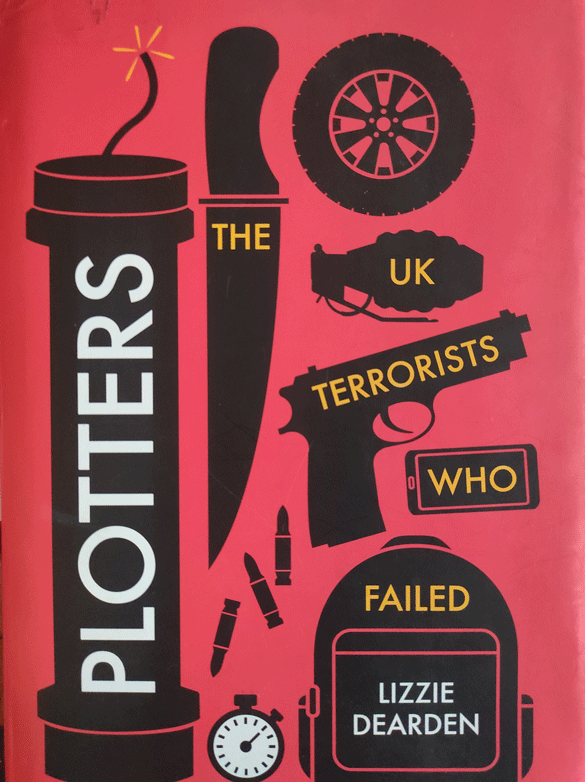
Plotters: The UK Terrorists Who Failed
By Mushtaq Ul Haq Ahmad Sikander, New Age Islam
07 May 2026
A sharp, unsettling analyses of how radicalisation, ideology, and social alienation shape failed terror plots in modern Britain.
Main Points:
The book focuses on failed terror plots in the UK rather than successful attacks, showing how close many of them came to causing mass harm.
· It explores radicalisation on both Islamist and far-right sides, highlighting a cycle of reciprocal extremism.
· It examines the role of online propaganda, prisons, families, and social alienation in pushing vulnerable people toward violence.
· It discusses the work of counter-terrorism agencies such as Prevent, while also stressing the human cost of surveillance and suspicion.
· It raises important questions about double standards in how terrorism is defined and judged, especially in relation to race and ideology.
Plotters: The UK Terrorists who Failed
Author: Lizzie Dearden
Publisher: C. Hurst & Co. Publishers Ltd, London
Year of Publication: 2023
Pages 232
ISBN 9781787389298
This book isn't just a record of failed attacks; it's a terrifying, well-researched look at how everyday people in the UK get caught up in violence, ideology, and despair. Dearden, who has been writing about terrorism for The Independent for years, tells a compelling story that cuts through the sensationalism and fear that often surround discussions about terrorism. The book doesn't talk about the successful attacks that make the news around the world. Instead, it talks about the ones that didn't work, either because of luck, intelligence, or the quiet work of security agencies.
Plotters is really about the modern face of radicalisation. It shows how the ideas behind both Islamist extremism and far-right nationalism have changed, mixed, and fed off of each other in a deadly cycle of "reciprocal radicalisation." Dearden tells readers about the UK-based al-Muhajiroun network and how its legacy lives on even though it is banned. This group, which had ties to ISIS, had a big impact on how many British Muslims who later got involved in terror plots saw the world. People like Anjem Choudary and his followers inspired a generation of would-be jihadists who thought they were fighting to protect Islam from Western aggression.
One of the book's most disturbing parts is about the 2017 Westminster Bridge attack by Khalid Masood. Masood, who was born in Britain and converted to Islam, ran over people with his car and then stabbed a police officer to death. Dearden says that the violence itself isn't the only thing that makes this event important; it's also the ripple effect it had. ISIS quickly took responsibility for the attack, saying it was part of their call to attack "non-Muslims in their own lands." Masood's one act of violence was a sign of a bigger change: terrorists didn't have to be trained in Syria or Iraq anymore. They could get a knife or rent a car and scare people from inside.
Dearden contends that these purported "lone wolves" are not genuinely solitary. Through the dark web of propaganda, glorification, and belonging, they are linked. A lot of these attackers didn't have any formal military or religious training. They were all brought together by a need for meaning and a love of destruction. Dearden's strength is that she can make even these people seem human without excusing what they did. She shows how broken families, failed relationships, and disillusionment can lead to extremism.
She also talks about a scary trend: the rise of neo-Nazism and far-right terrorism. Dearden says that almost half of the terror plots that have been stopped in the UK now involve white, non-Muslim extremists. Many of these extremists are motivated by hatred of Muslims or violent nationalism. This cycle of hate, where ISIS-inspired attacks lead to far-right violence, which then leads to more Islamist extremism, is a vicious cycle. The book says that "Islamist violence" isn't the only way to understand terrorism today. It's a bigger problem with ideology, identity, and belonging in modern Britain.
Dearden shows how the Prevent program and counter-terrorism operations have stopped dozens of plots, usually at the last minute. But she also talks about the huge human cost: families torn apart when loved ones become "Subjects of Interest," surveillance that invades people's private lives, and the mental toll of always being suspected. Dearden calls them "frustrated travellers," and many of them wanted to go to Syria to join ISIS but couldn't leave the country. They were stuck in Britain and often turned their anger inward, planning attacks back home instead.
The book also talks about how prisons have become places where people become more radical. People who used to be criminals, like petty thieves, drug dealers, and gang members, often find a sense of redemption, brotherhood, and excitement in extremist ideology. Dearden calls the "criminal-terror nexus" the line that separates crime from terrorism. A moving example is of a woman who used to be a drug addict and became an extremist after being told she couldn't join ISIS. She felt rejected and chose to bring the war home. Dearden's depiction of these individuals is neither sympathetic nor simplistic; it encapsulates the intricate complexity of human vulnerability and manipulation.
Radical clerics and their online sermons still have a big impact, spreading ideas of purity and revenge. But Dearden also talks about how radicalisation can start at home. Sometimes families don't know—or don't want to believe—that a member is looking at extremist content online. Kids are also getting more and more involved, with their first exposure to violence coming from gaming forums, encrypted chats, or extremist memes. Online propaganda is so easy to get that people can plan attacks before they reach adulthood. Their view of the world is shaped more by algorithms than by imams.
Dearden says that the COVID-19 pandemic made things even more complicated. Lockdowns made it harder for people to get together in person, but they made it easier for people to become radicalised online. It was harder to keep an eye on extremists as they moved into digital echo chambers. At the same time, the far right used the crisis to spread hate towards minorities, conspiracy theories, and anti-lockdown feelings. People were violent towards civilians, including health workers and immigrants, in the name of "patriotism."
The book talks about the double standards in how terrorism is seen and punished. Muslim attackers are quickly called "terrorists," but white people who commit similar acts of violence are more likely to be called "mentally ill" or "socially maladjusted." Dearden contends that this disparity not only skews public perception but also undermines the legal infrastructure essential for addressing far-right extremism. For example, many neo-Nazis who go to Ukraine to fight are not charged with terrorism because the laws don't cover their reasons for doing so. She warns that this selective blindness is a threat to national security.
Dearden stays focused on the human side of things through all of these stories. Her reporting is full of details, like conversations with police officers, intelligence analysts, families of the plotters, and even some of the terrorists who didn't succeed. What comes out is a sad picture of a society that is dealing with anger, alienation, and ideology. The failure of these plots is not only a victory for intelligence work, but also a reminder of how close the country often comes to disaster.
Plotters is an investigation into morality and an expose. It asks tough questions: Why do some people find meaning in destruction? How does a society make enemies of its own? And why do we put some acts of terror in one group and downplay others? Dearden's book doesn't give simple answers. Instead, it gives us something more rare: a thoughtful, caring, and deeply disturbing look at the world we live in. It shows a broken world where ideas thrive on despair, where prisons and online forums become breeding grounds for hate, and where the war on terror has turned into a war for belonging. Lizzie Dearden says that every failed bomb or intercepted message has a story behind it—a life that could have gone in a different direction. And maybe the key to stopping the next one is to understand those stories.
…
M. H. A. Sikander is Writer-Activist based in Srinagar, Kashmir.
URL: https://newageislam.com/books-documents/plotters-uk-terrorists-who-failed-/d/139933
New Age Islam, Islam Online, Islamic Website, African Muslim News, Arab World News, South Asia News, Indian Muslim News, World Muslim News, Women in Islam, Islamic Feminism, Arab Women, Women In Arab, Islamophobia in America, Muslim Women in West, Islam Women and Feminism