
Israeli Denunciation Of Mass Anti-War Protests Across The Globe As Anti-Semitic Deepens The Hole Israel Finds Itself In
 By
Dr. James M. Dorsey for New Age Islam
By
Dr. James M. Dorsey for New Age Islam
18 June
2024
Israel Has Enshrined On An Altar That Notion,
Valid For Most Non-State Actors Battling Conventional Military Forces, By
Insisting It Will Destroy Hamas Militarily And Politically.
------
The Gaza
war has changed that paradigm.
It has
produced neither a military nor a political victory.
Adding fuel
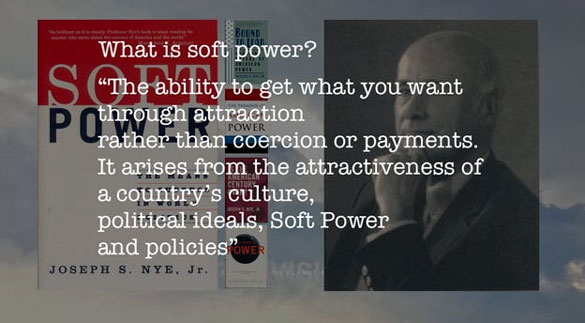
to the fire, Israel has abandoned the notion that soft power is as important as
hard power in the vein of scholar Joseph Nye, who recently cautioned that
“ignoring or neglecting soft power is a strategic and analytic mistake.”
 Credit:
Thaivision
Credit:
Thaivision
-----
Mr. Nye
noted that “in the short run, swords are mightier than words, but in the long
run, words guide swords.”
It’s advice
Israel has failed to heed. As a result, Israel is losing two wars in Gaza, the
war itself and the battle for hearts and minds.
All Hamas
needs to do to declare victory is to survive.
Israel has
enshrined on an altar that notion, valid for most non-state actors battling
conventional military forces, by insisting it will destroy Hamas militarily and
politically.
Israel’s
problem is that Hamas is likely to survive even if it were to kill Hamas’ Gaza
leader, Yahya Sinwar. Israel’s most wanted man, Mr. Sinwar, has eluded Israeli
forces since the war erupted last October.
Israel has
also failed to achieve its other war goals – the rescue of Hamas-held hostages
and ensuring Gaza does not remain a launching pad for Palestinian resistance.
 Credit: IDF Spokesman
------
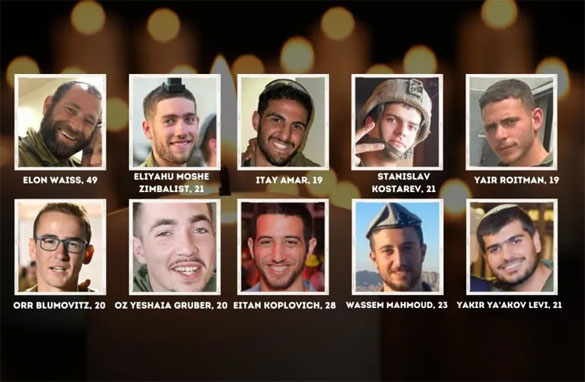
This
weekend, Palestinians killed ten Israeli soldiers, the highest toll in one day
since January, while Israel Defence Forces (IDF) spokesman Daniel Hagari
conceded that Israeli would not be able to militarily rescue all the remaining
116 hostages, 41 of which are believed to have been killed in captivity during
the war.
“We will
not be able to return everyone home in this way,” Mr. Hagari said.
In the battle
for hearts and minds, Israel wasted no time in destroying initial empathy in
response to the brutality of Hamas’ October 7 attack that killed more than
1,100 primarily civilian Israelis and foreigners and led to the kidnapping of
250 others.
The vast
majority of more than 100 hostages who have regained their freedom since
October 7 were released in November in a prisoner exchange with Hamas. Israel’s
military has rescued only seven.
Israel’s
self-inflicted defeat in the war for hearts and minds may be more consequential
than its inability to crush Hamas on the battlefield despite severe body blows
inflicted on the group.
Within a
matter of months, Israel went from being able to claim a moral high ground to a
country indicted in the International Court of Justice (ICJ) on charges of
genocide and whose leaders risk the International Criminal Court issuing arrest
warrants for alleged war crimes.
Winning the
war for hearts and minds would have been an uphill battle no matter what, given
the tens of thousands of Palestinians killed and wounded by Israeli forces and
the physical devastation of Gaza’s infrastructure, not to mention stepped-up
Israeli repression on the West Bank and tacit endorsement of vigilante settler
attacks on Palestinians and aid convoys en route to Gaza.
Israel
seems bent on ensuring it ends the war as a pariah in much of the world by
hindering the unfettered flow of humanitarian relief needed to address the
consequences of its curtailing of food, fuel, water, and electricity and
destruction of Gaza’s health sector.
Adding fuel
to the fire, Israel has shown no empathy for the plight of innocent
Palestinians and no acknowledgment that Palestinians have rights, too. Instead,
Israeli leaders have repeatedly made genocidal statements and obstructed
efforts to achieve a ceasefire.
To be sure,
Hamas has displayed similar insensitivity but that has no impact on Israel’s
global standing.
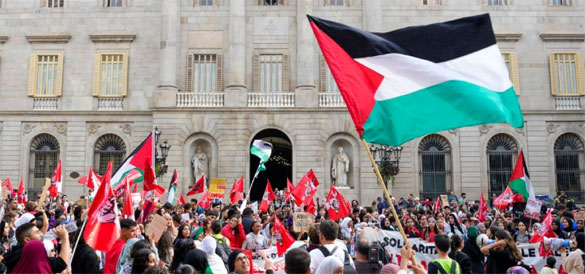 Anti-war
protest in Barcelona. Credit: EPA
Anti-war
protest in Barcelona. Credit: EPA
------
Israeli
denunciation of mass anti-war protests across the globe as anti-Semitic and
dismissal of public opinion polls that show Western public opinion turning
against Israel has only deepened the hole Israel finds itself in.
It’s a hole
that Israel will find difficult to extricate itself from.
Worse,
Israel’s Gaza war conduct and antithetical public relations posture, like its
West Bank settlement and other policies, have hardened positions on both sides
of the divide, making a resolution of the Israeli-Palestinian conflict ever
more elusive.
It risks
giving currency to Hamas’ notion that a long-term ceasefire in Gaza, and more
broadly between Palestinians and Israelis, may be the only thing that is
achievable.
Israel’s
self-dug grave will likely reinforce Hamas’ contention that a two-state
resolution of the Israeli-Palestinian conflict should entail a long-term ‘Hudna’
or armistice rather than Palestinian recognition of the Jewish state.
Israel
asserts that Hamas’ notion of a long-term ‘Hudna’ or armistice rather
than Palestinian recognition of the Jewish state in the context of two states
demonstrates the group’s determination to destroy Israel and maintain the right
to armed resistance.
Unlike the
Palestine Liberation Organisation’s (PLO) recognition of Israel in the 1980s as
the prelude to the creation of a Palestinian state alongside Israel, Hamas’
2017 amended Charter envisions two states living side-by-side without
recognising one another and, presumably, without maintaining full diplomatic
relations.
Rejecting
any Israeli rights and all United Nations resolutions and other international
agreements that recognize equal national rights for Israelis and Palestinians,
the Charter stipulates that “there shall be no recognition of the legitimacy of
the Zionist entity… Without relinquishing any Palestinian rights, Hamas considers
the establishment of a fully sovereign and independent Palestinian state, with
Jerusalem as its capital, along the lines of the 4th of June 1967…to be a
formula of national consensus…
Resistance and jihad for the liberation of Palestine will remain a
legitimate right, a duty, and an honour for all the sons and daughters of our
people and our Ummah,” the global Muslim community of the faithful.
Some Hamas
officials have since sought to walk back their insistence on the right to wage
armed struggle.
Ceasefire
negotiator Khalil al-Hayya suggested in April that Hamas would agree to a truce
of five years or more, lay down its weapons, and convert into a political party
if an independent Palestinian state is established along pre-1967 borders.
With support
among Palestinians for a two-state resolution of the Israeli-Palestinian
conflict dropping dramatically, according to a recent public opinion survey,
Hamas’ position is likely to gain increased currency among Palestinians, even
if Israel rejects it out of hand.
This
month’s survey by the Palestinian Centre for Policy and Survey Research showed
that support in Gaza for two states had almost halved from 62 per cent in March
to 32 per cent in June while remaining constant at one-third of the West Bank population.
Azzam
Tamimi, a 69-year-old scholar and journalist with close ties to Hamas,
suggested that a long-term hudna rather than a peace agreement “is the only way
you can have disengagement; you can have a real ceasefire.”
Mr. Tamimi
argued that Hamas’ notion “is a de facto recognition of the status quo, but
it’s not a de jure recognition.”
Insisting
that he would “never, ever accept the legitimacy of the occupation of my
mother’s house in Beersheba,” Mr. Tamimi said he “would accept, and, I believe,
most Palestinians represented by Hamas would accept, the idea that this
conflict is not delivering what either side is expecting, and therefore it’s
not a bad idea to disengage to stop fighting…for ten years, 15 years, or 30
years... During that period, people can have a respite. Then there will be a
new generation emerging and let future generations decide what they want to do
about this conflict.”
Hamas and
Mr. Tamim’s notion may strike a chord with Palestinians but is certain not to
nudge Israel closer to the negotiating table.
Leaving
aside Israel’s goal of destroying Hamas and the Netanyahu government’s
rejection of a two-state solution, Israel for decades insisted that any
Palestinian counterpart would have to recognize the Jewish state de jure and abandon
armed struggle.
It also
demanded the Palestinians agree to prioritisation of Israeli security concerns
even if Palestinians have equally legitimate worries.
To be sure,
two states in historic Palestine irrespective of whether they have de jure or de
facto relations, would likely resemble India and Pakistan, nations carved out
of one another in 1947, that remain at loggerheads 77 years later.
Even so,
many in the West echo Italian Prime Minister GiorgiaMeloni’s belief that
“Israel has fallen into a trap, a Hamas trap that had the aim of isolating it.”
Ms. Meloni added at this weekend’s Group of Seven summit that “it seems to be
working."
Expanding
on Ms. Meloni’s belief, former Israeli peace negotiator Daniel Levy argued that
“by using its force in this indiscriminate way, from day one saying it would
cut…all food, fuel, water, and electricity from the civilian population in
Gaza, this is a huge self-inflicted defeat for Israel. Reputational, moral,
legal, economic… This is going to shift the power balance...Hamas is going to
come out of this stronger… Israel is going to come out of this weaker… and this
is of Israel’s own making.”
-----
Original
Headline: Israeli Setbacks Empower Hamas
-----
Dr. James M. Dorsey is an Adjunct Senior Fellow
at Nanyang Technological University’s S. Rajaratnam School of International
Studies, and the author of the syndicated column and podcast, The Turbulent
World with James M. Dorsey.
URL:
New Age Islam, Islam Online, Islamic Website, African Muslim News, Arab World News, South Asia News, Indian Muslim News, World Muslim News, Women in Islam, Islamic Feminism, Arab Women, Women In Arab, Islamophobia in America, Muslim Women in West, Islam Women and Feminism