
Mahatma Gandhi Was Much Admired by Shyama Prasad Mukherjee and Even Suhrawardy
By
Saquib Salim, New Age Islam
30 January
2024
Mohandas
Karamchand Gandhi is the most respected and admired as well as criticized and
despised public figure from India. Myths, disinformation, and half-truths are
often used to question his commitment to humanity in general and Indians in
particular.
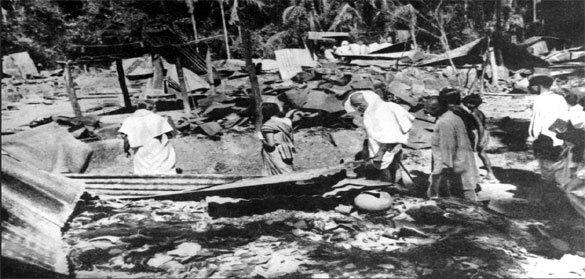
Mahatma Gandhi inspecting the houses destroyed in the post-partition
violence
-----
Every year
we see several Facebook posts, tweets, etc. on 15 August questioning why Gandhi
was not in Delhi when India attained independence. A photograph in which Gandhi
is seen with H. S. Suhrawardy, the then Muslim League leader and Chief Minister
of Bengal at his house in Kolkata on 15 August 1947 accompanies such rants.
It's a fact that Gandhi was in Bengal as India attained freedom from the
British where he was trying to douse the fire of communal violence. The
partition of India had pushed Muslims and Hindus to the brink of a civil war.
Critics
often see Gandhi’s efforts to stop this mayhem as his 'bias' against Hindus by
his critics. They ask why he went to Bengal where mostly Muslims were killed
and not to places where Hindus were under attack.
Interestingly,
a year ago, Gandhi faced a similar question from the Muslim League. After the direct-action
day violence in which mostly Hindus suffered at the hands of Muslim League-led
mobs; they asked him why he didn't show empathy for Muslims.
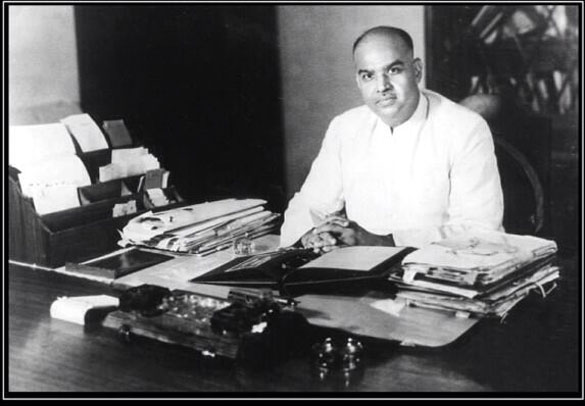
Shyama
Prasad Mukherjee
-----
Harijan
Newspaper reported (October 27 1946) quoted Gandhi as he addressed his
followers in New Delhi, “He was not going to Bengal to pass judgment on
anybody. He was going there as a servant of the people and he would meet Hindus
and Muslims alike. Some Muslims looked upon him as an enemy today. They had not
always done so. But he did not mind their anger. Were not his religionists
angry with him at times?”
Interestingly,
people who criticise Gandhi for his role in 1947 often admire Shyama Prasad
Mukherjee for stopping the riots in Bengal. They should know that Mukherjee was
among the those who invited Gandhi to Bengal in August 1947.
Vina
Mazumdar in her autobiography Memories of a Rolling Stone notes, “While other
leaders were preparing to celebrate the coming of independence, Gandhiji
started on his journey back to Noakhali, accompanied by his chief interpreter,
Prof. N.K. Bose. Before the train reached Howrah, Shyama Prasad Mukherjee and
H.S. Suhrawardy, the Chief Minister of Bengal, met Gandhiji and requested him
to get down at Howrah and to use his presence to prevent the massacre of
Muslims at the dawn of independence.
“Shyama
Prasad said, ‘We came together to convince you that we need your presence if we
are to hold back the frenzy.’”
It was the
power of Gandhi’s character, which even critics should acknowledge, that a
Muslim League leader like Suhrawardy, who led the killings of Hindus a year ago
during the direct-action day, was sitting with him singing Bhajans in praise of
Hindu gods. Suhrawardy was singing Raghupati Raghav Raja Ram, wearing a lungi
and vest like a common Bengali Hindu.
Hamidul Huq
Choudhury in his Memoirs noted that after the direct-action day killings when
Gandhi arrived in Kolkata (then Calcutta) Syama Prasad Mukherjee accompanied
him at every important place along with Pyarelal (Gandhi’s secretary).
Suhrawardy did not listen to Gandhi and even misbehaved with him.
Choudhury
wrote that at the time of the Partition, Suhrawardy along with Gandhi, “used to
move around with him preaching the gospel of Hindu‐Muslim unity.”
Shyama
Prasad Mukherjee was the leader of Hindu Mahasabha and went on to form Bhartiya
Jana Sangh (the predecessor of the present-day BJP). He believed that only
Gandhi was the solution to the problems Bengal was facing in 1946 and 1947.
URL: https://newageislam.com/current-affairs/mahatma-gandhi-syama-mukherjee-suhrawardy/d/131612
New Age Islam, Islam Online, Islamic Website, African Muslim News, Arab World News, South Asia News, Indian Muslim News, World Muslim News, Women in Islam, Islamic Feminism, Arab Women, Women In Arab, Islamophobia in America, Muslim Women in West, Islam Women and Feminism