
What Do We Think Of "Al-Ghaib"?
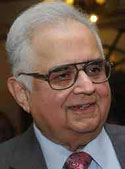
By Ghulam Mohiyuddin, New Age Islam
28 February 2026
In Islamic terminology, Al-Ghaib refers to "The Unseen"—a realm of reality that lies beyond the reach of human sensory perception and empirical measurement. It is not merely "the unknown" (which could eventually be discovered by science), but "the unknowable" by way of human intellect alone.
The Quran establishes belief in the Ghaib as the foundational requirement for faith. It encompasses several layers:
· The Divine: The essence and attributes of Allah.
· The Celestial: Beings such as Angels and Jinn.
· The Historical: Events of the past and the lives of Prophets revealed through revelation.
· The Escatological: The "End Times," the life in the grave, and the finality of Heaven and Hell.
Ultimately, the Ghaib represents the transcendent dimension of existence, asserting that the physical world is only a fraction of what truly exists.
Proponents of the Ghaib—both theologians and philosophers—argue that the concept is supported by logic, intuition, and the limitations of science.

The Argument from Design: Scholars argue that the "seen" world is so intricately fine-tuned that it points toward an "unseen" Designer. Just as one infers the existence of a programmer by looking at complex software, the existence of the Ghaib is inferred through the mathematical and biological order of the universe.
The Limits of Empiricism: Supporters argue that human senses are biologically limited. We accept the existence of "unseen" forces like gravity, dark matter, or the consciousness of others based on their effects. Therefore, it is logically consistent to accept a metaphysical realm based on its "signs" in the material world.
The Moral Necessity: Without the Ghaib (specifically the Afterlife), the human desire for ultimate justice remains unfulfilled. The concept provides a rational basis for objective morality, suggesting that human actions have weight beyond their immediate physical consequences.
Criticisms of the Ghaib generally arise from the frameworks of materialism, secular humanism, and skepticism.
The Burden of Proof: The most frequent criticism is that the Ghaib lacks falsifiability. Critics argue that if a claim cannot be tested, measured, or potentially proven wrong through observation, it cannot be considered "truth." From this perspective, the Ghaib is viewed as a "God of the gaps" argument—filling in the blanks of human ignorance with supernatural explanations.
Logical Inconsistency: Some skeptics point to the "Problem of Evil." They argue that if an "Unseen" All-Powerful and All-Merciful God existed, the "Seen" world would not contain such profound suffering. For critics, the state of the material world contradicts the described nature of the Ghaib.
Socio-Psychological Critique: Critics like Freud or Marx argued that the concept of the Unseen is a "projection" of human needs. They suggest that humans invented the Ghaib as a coping mechanism for the fear of death or as a tool for those in power to keep the masses obedient by promising rewards in an unverified afterlife.
As can be seen, we have no real knowledge of Ghaib. We have ideas, often contradictory, and beliefs which cannot be either proven or disproven. But the concept has become so necessary to the rest of our belief system that we cannot challenge it, unless we can imagine an Islam which is based on realism, logic and science.
…
Ghulam Mohiyuddin M.D. is a retired psychiatrist.
URL: https://newageislam.com/debating-islam/what-do-we-think-al-ghaib/d/139056
New Age Islam, Islam Online, Islamic Website, African Muslim News, Arab World News, South Asia News, Indian Muslim News, World Muslim News, Women in Islam, Islamic Feminism, Arab Women, Women In Arab, Islamophobia in America, Muslim Women in West, Islam Women and Feminism