
Religious Pluralism and Hindu-Muslim Unity: A Bright Value of India

By Dr. Zafar Darik Qasmi, New Age Islam
Abstract:
India’s identity is deeply connected with religious pluralism and Hindu–Muslim unity. Living together with respect and cooperation has been India’s strength for centuries. Social peace, progress, and prosperity are not possible without unity, harmony, and mutual understanding. Growing hatred in society weakens Hindu–Muslim relations and damages India’s noble traditions. History shows that cooperation between communities played a major role in India’s freedom struggle.
The writings of Professor Akhtarul Wasey strongly support human unity, pluralism, and mutual respect. Through the thoughts of Sir Syed Ahmad Khan and Maulana Abul Kalam Azad, he explains that Islam encourages human love and peaceful coexistence. India has always welcomed people of different religions, cultures, and languages, making it a natural home of diversity.
Muslims have lived in India since the early centuries of Islam, sometimes as subjects, sometimes rulers, and today as equal citizens. India’s strength lies in protecting diversity, not forcing uniformity. Religious pluralism must be preserved to maintain India’s unity and identity.
Main Points:
· Religious pluralism is a core value that defines India’s cultural and social identity.
· Hindu–Muslim unity is essential for peace, harmony, and national progress in India.
· History proves cooperation among communities strengthened India and helped achieve independence.
· Indian Muslims evolved from subjects and rulers to equal partners in democratic governance.
· Unity in diversity must be protected; forced uniformity weakens India’s social fabric.
…
To preserve India’s pluralistic values and its centuries-old tradition of living together, Hindu–Muslim unity is a very important factor. It is clear that all efforts related to Hindu–Muslim unity can bear fruit only when there is a genuine spirit of dialogue, interaction, and mutual understanding among us. Unity, harmony, cooperation, and collective living are such essential values for the progress and prosperity of any society that without them, the idea of a peaceful and healthy social order becomes impossible.
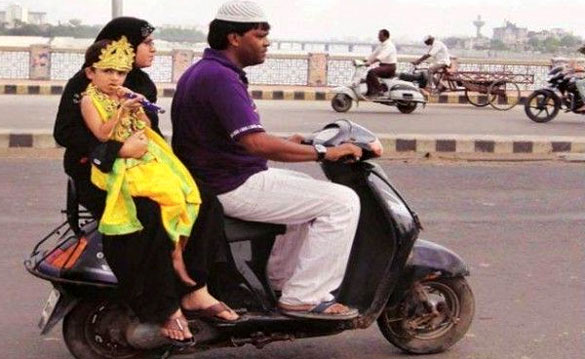
The mutual hatred or dislike that we see growing in India today is largely because we are, knowingly or unknowingly, weakening Hindu–Muslim relations. History bears witness to the fact that when cooperation and collective struggle were strong, the British were forced to leave India. Therefore, those opportunistic elements who are prisoners of self-made political interests and narrow gains, and who seek to divide this unity today, must remember that their actions will not only damage the unity of two communities but will also weaken those transparent and noble traditions of India which the world immediately associates with strong Hindu–Muslim harmony.
For this reason, it is necessary to promote such literature that strengthens the spirit of Hindu–Muslim cooperation and togetherness. In this context, the valuable and meaningful writings of Professor Akhtarul Wasey provide rich material on human unity, humanism, mutual love, and compassion. His thoughts serve as a guiding light for Indian society. Some excerpts are presented below.
In his article “Elements of Pluralism in the Thought of Sir Syed and Maulana Azad”, Professor Akhtarul Wasey quotes Sir Syed Ahmad Khan as saying:
“Those who believe that sincere friendship and heartfelt love towards people of other religions is forbidden are mistaken. Whatever God has placed in human nature is true and just. We should maintain sincere friendship and genuine love with all people, regardless of their religion. However, such love and friendship should be at the level of human love, not religious love. Religious love without unity of faith or belief is not possible. I believe that this guidance has been given to us by our true religion, Islam.”
(Tahzeeb-ul-Akhlaq, Vol. 5, 1291 AH, p. 58)
In the same article, Professor Akhtarul Wasey has cited several important statements of Maulana Abul Kalam Azad concerning patriotism and Hindu–Muslim unity. One such quotation is as follows:
“Let the seventy million Muslims of India unite with their twenty-two crore Hindu brothers so that together they may become one nation and one people. I wish to tell my Muslim brothers that after the voice of God, the greatest voice was that of Prophet Muhammad (peace be upon him), who drafted a treaty stating: ‘We make peace with all the tribes living around Madinah, we agree together, and we all wish to become one nation and one community.’”
(Quoted from Professor Akhtarul Wasey’s article)
The need for Hindu–Muslim unity and harmony cannot be denied at all. Practically speaking, this unity still exists today, and we can see its examples during festivals, weddings, and various social activities. However, it is also true that certain vested interests have begun to weaken this relationship. Therefore, the traditions that once strengthened our social bonds must be actively revived and promoted again.
It is also important to note that religious pluralism is one of India’s most significant values and an inseparable part of its identity. Professor Akhtarul Wasey has repeatedly highlighted the importance of religious pluralism in his writings. In his article “Elements of Pluralism in the Thought of Sir Syed and Maulana Azad”, he discusses in detail the necessity, usefulness, and positive outcomes of pluralism in India. This article was published in the book Danish-e-Rahbeen (2017), edited by Dr Haris and published by Brown Publications, New Delhi.
In this article, he writes:
“It is said that India is one of the earliest homes of humanity. The first human steps were taken on this land, and from here human populations spread to other parts of the world. In later periods, the greenery, prosperity, and beauty of this land continued to attract people. Whether conquerors, traders, religious preachers, or displaced people from other regions, this land welcomed all with open arms. It successfully united diverse groups into a single social fabric that respects all religious, cultural, and linguistic traditions of the world.
India’s unique character has established it as a centre of major religious, cultural, and linguistic traditions. This is why people from any part of the world do not feel like strangers in India. Instead, they see their own colours reflected in its diversity and salute its greatness. India’s pluralism is not a modern development but part of its ancient tradition. This pluralism is both religious and linguistic.
The social divisions that trouble many countries today have existed in India for a long time, yet India has also made successful efforts to resolve them in various ways.”
Regarding Islam and Muslims, he further explains that Muslims have been present in India since the earliest centuries of Islam (7th century CE). Over time, Indian Muslims have lived in different roles:
At times, they lived in a subjugated position, sometimes as rulers, and in the modern democratic and secular system, as equal citizens sharing power. They are neither rulers nor subjects but partners in governance who participate in making and implementing decisions.
This long experience has resulted in a rich legal and intellectual tradition in India, where solutions exist for Muslims living as rulers, subjects, or partners in power. While India’s plural society and shared culture did face challenges over the centuries, its spirit of “unity in diversity” acted like a river that connected different banks, ensuring togetherness despite apparent differences.
This detailed discussion highlights India as a great centre of religious pluralism and explains why pluralism is essential for a society like India. It teaches that pluralism can be strengthened only when people protect their own beliefs while fully respecting the beliefs and religious traditions of others.
In this context, Professor Akhtarul Wasey writes in his article “Uniform Civil Code: A Puzzle to Understand, Not to Impose”, published in Roznama Inquilab on 1 May 2022:
“In a country where almost, all religious traditions of the world exist together, where pride is taken in unity amid diversity, where the Constitution recognises 22 languages, and where customs and lifestyles change every few miles, India cannot be imagined without its religious diversity. Just as rivers flowing from different sources merge into the Arabian Sea and the Bay of Bengal to form the Indian Ocean, India’s unity is created by its diverse religious communities.
Yet today, repeated attempts are being made to turn this diversity into uniformity, particularly through demands for a Uniform Civil Code. Those who demand it often cannot clearly explain what they actually mean by it. Can Hindu marriage exist without seven rounds according to Sanatan tradition? Can Sikhs marry without the Guru Granth Sahib as witness? Can Christians marry without vows taken before a priest? Can Muslims, Sunni or Shia, marry without religious authorities? If not, then why insist on uniformity?”
India’s traditions are diverse, and every religion has its own unique features. This diversity enriches Indian society and gives it a distinct identity among world civilisations. Preserving this rich variety of social customs, family systems, and personal laws is the collective responsibility of all citizens.
Colouring India in a single shade is neither right nor wise. Doing so will damage the centuries-old social relationships that form the true strength of the nation.
—
Dr. Zafar Darik Qasmi is an author and a New Age Islam Regular Columnist.
URL: https://newageislam.com/interfaith-dialogue/hindu-muslim-unity-value-of-india/d/138434
New Age Islam, Islam Online, Islamic Website, African Muslim News, Arab World News, South Asia News, Indian Muslim News, World Muslim News, Women in Islam, Islamic Feminism, Arab Women, Women In Arab, Islamophobia in America, Muslim Women in West, Islam Women and Feminism