
‘Punjabiyat First’: Villagers Come Together To Restore Mosques Abandoned After Partition

By
Raakhi Jagga
July 10,
2023
Brick by
brick, in villages across Punjab, efforts are on to tear down the walls raised
by Partition. In a state that saw the Muslim population plunge from more than
40% at the time of Independence to 1.93% now, villagers are opening purse
strings and, often, Gurdwaras to help restore abandoned mosques.
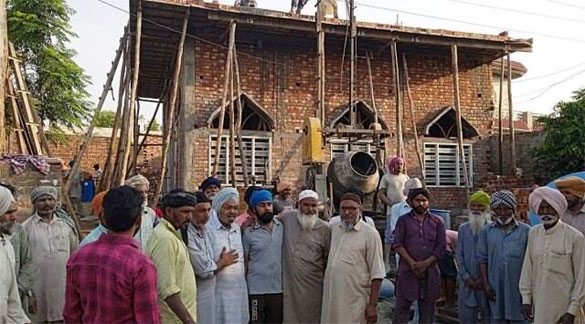
One of the mosques under restoration is in Bakhatgarh village in Barnala
district, where the initiative was taken by Amandeep Singh, a farmer, who in
December 2022 donated 250 sq yards for the construction of a mosque. (Express
photo)
------
More
than 165 have been restored in the past few years, says the Punjab branch of
the Jamaat-e-Islami Hind.
One of
these under restoration is in Bakhatgarh village in Barnala district, where the
initiative was taken by Amandeep Singh, a farmer, who in December 2022 donated
250 sq yards for the construction of a mosque. Soon, money was pouring in from
fellow villagers. After Rs 2 lakh were raised, neighbouring villages pitched in
with cement and bricks. A local Muslim family installed a submersible pump for
the mosque.
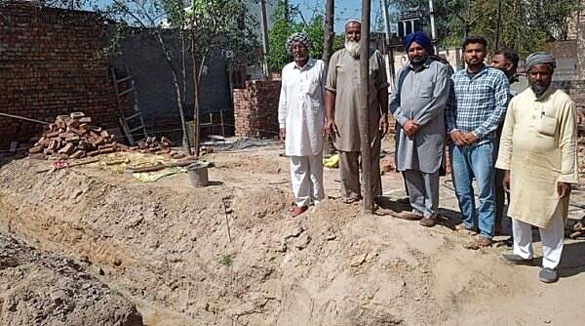
Punjab mosques The day the foundation stone was laid, Amandeep recalls,
the entire Bakhatgarh village, including its 15 Muslim families, shared langar,
a communal meal. (Express photo)
------
“In
addition, Muslim families from Uttar Pradesh donated around Rs 6 lakh after
coming to know of the restoration,” says Moti Khan.
The day the
foundation stone was laid, Amandeep recalls, the entire village, including its
15 Muslim families, shared langar, a communal meal.
Among those
present was the family of Said Khokar Khan. In his 80s, Khan says, “When
Partition happened, we used to live in Ballo village of Bathinda. Our Hindu and
Sikh brothers and sisters did not let us go to Pakistan… we didn’t want to
leave either. Saanu Pind Waale Bakhatgarh Pind Vich Le Aaye. Sadi Rakhiya
Kitti. Sada Bhaichara Ajj Vi Kayam Hai (The villagers got us to Bakhatgarh,
about 20 km away from Ballo. They ensured we were safe. Our brotherhood is
intact even now).”
Amandeep is
hopeful the mosque will be ready before the next Eid, and Muslims in the
village can finally offer prayers closer to home.
In Jitwal
Kalan village, located in Malerkotla district, about 52 km away, Jagmel Singh,
a Youth Congress leader, took the lead, donating 1,200 sq yards of land for a
mosque. The family also contributed Rs 51,000, and in August 2021, the
foundation stone was laid by Muhammad Usman Ludhianvi, the Naib Shahi Imam of
Jama Masjid, Ludhiana.
Inspired by
Jagmel, other villagers pitched in, with around Rs 5 lakh collected in
donations.
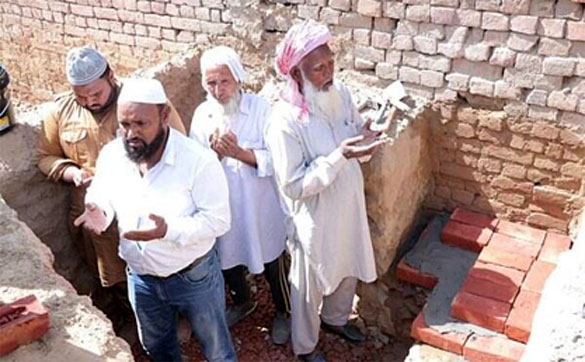
Punjab mosques Amandeep is hopeful the mosque in Bakhatgarh will be
ready before the next Eid, and Muslims in the village can finally offer prayers
closer to home. (Express photo)
-------
In January
last year, the mosque’s prayer hall was opened to the public. Now, only some
finishing touches are left, with no help required from the Waqf board so far.
In March
this year, a proud Buta Singh, the sarpanch of Kutba Bahmania village in
Barnala, was witness to the inauguration of the village’s first mosque since
the earlier one fell into disuse post-Partition, with all of Kutba Bahmania’s
Muslims having migrated to Pakistan barring two families.
Mohammad
Hanif of Jamaat-e-Islami Hind talks about a 120-year-old abandoned mosque being
restored in Sherpur Sodhian village in Dhuri. The day the foundation stone was
laid, the village distributed Meethe Chawal (sweet rice) to celebrate.
Naib Shahi
Imam Usman Ludhianvi mentions a personal experience, from Mallah village in
Ludhiana, with just one Muslim family remaining, where Hindus and Sikhs rallied
together to restore a mosque in 2016. The work was undertaken by the Habib
Charitable Trust founded by his late father.
The Shahi
Imam also gives the example of Bhaloor village in Moga district, where
restoration work on an abandoned mosque is ongoing. The day the work began, in
January 2021, he says, it was raining. So the function was held in the village Gurudwara.
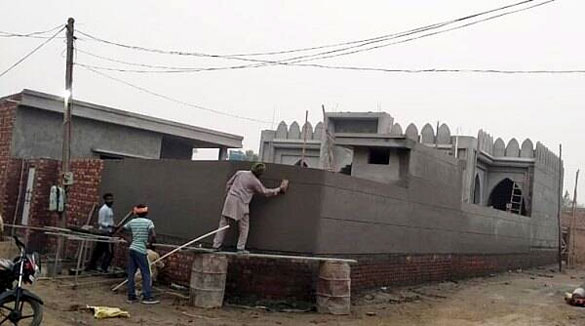
Punjab mosques Mosque being restored in Bhaloor village of Moga district
of Punjab. (Express photo)
-------
Says the
Shahi Imam: “In Punjab, we all live as Punjabis, and not as Sikhs, Hindus or
Muslims. Punjabiyat keeps us moving. We celebrate Eid, Gurpurab and Diwali
together, there are interfaith Langars.”
Latif
Ahmed, the CEO of the Punjab Waqf Board, says they have only provided “reasonable
aid” for the repair and construction of mosques. The board has on its rolls
1,362 Muslim clerics, employed by various masjids, who are provided a monthly
salary of around Rs 6,000 each, apart from about 37 imams.
As per the
1941 Census, the last before Independence, undivided Punjab had a Muslim
population of 53.2%. In the districts which would eventually come to India
(including those in Haryana and Himachal Pradesh, that were part of Punjab at
the time), the Muslim population was about 32.3%.
In the
divisions of Jalandhar, Hoshiarpur, Ludhiana, Ferozepur, Gurdaspur and
Amritsar, Muslims numbered 42.55% in the 1941 Census.
Gurbhajan
Gill, a renowned Punjabi poet and cultural activist, says, “The drive behind
restoration of mosques could partially be linked to migration of workers from
different states to Punjab, with a significant number of them being Muslims who
need a place to worship.”
However, he
says, that doesn’t lessen the significance of the move in a state scarred by
Partition, where after Independence, around 50% of the abandoned mosques
eventually became Gurdwaras.
According
to Dr Shalini Sharma, professor of sociology in Punjab Agricultural University,
Ludhiana, the reason the state has been able to put the rancour of Partition
behind is the dominant ideology of the Sikh gurus. “It guides people to live in
harmony and brotherhood. If we go to Pakistan’s Punjab too, the hospitality and
respect we get are commendable. Both sides of Punjab are also open to ties.”
Commenting
on the absence of an anti-Muslim narrative in Punjab politics, Sharma adds:
“Also, the Jat Sikh community is dominant here, especially in rural areas. This
community is politically in power, owns land, and is in a majority. They are as
wary as Muslims about a ‘Hindu’ agenda… Hence in Punjab, one doesn’t see
anti-Muslim politics or even a drive to change Muslim names of places.”
Moti Khan,
25, says his family has never felt a divide from other villagers in Bakhatgarh.
“I am the fourth generation of my family living in this village… many more are
going to be here.”
-----
Source: ‘Punjabiyat
First’: Villagers Come Together To Restore Mosques Abandoned After Partition
URL:
New Age Islam, Islam Online, Islamic Website, African Muslim News, Arab World News, South Asia News, Indian Muslim News, World Muslim News, Women in Islam, Islamic Feminism, Arab Women, Women In Arab, Islamophobia in America, Muslim Women in West, Islam Women and Feminism