
Sufism and the Spirit of Hindu-Muslim Unity in Maharashtra

By Sahil Razvi, New Age Islam
20 May 2026
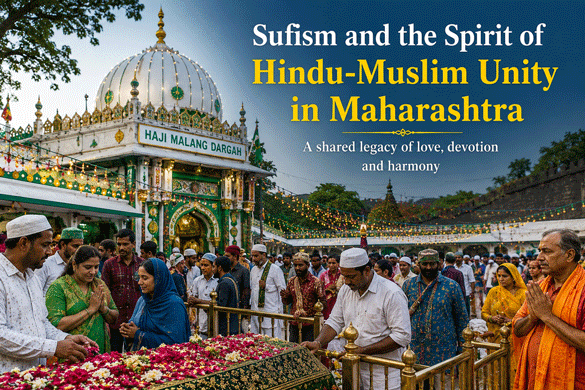
Sufism in Maharashtra strengthened Hindu-Muslim unity through teachings of love, equality, and service. Shared devotion at dargahs like Haji Malang and Khuldabad reflects the state’s rich syncretic culture, where people of different faiths continue to gather in peace and harmony.
Main Points:
· Sufism in Maharashtra promoted love, equality, and communal harmony.
· Sufi and Bhakti traditions together shaped a shared cultural heritage.
· Dargahs like Haji Malang attract devotees from all religions.
· Urs festivals encourage social bonding through langar and qawwali.
· Maharashtra’s Sufi shrines remain symbols of peace and pluralism.
Sufism in Maharashtra. Emerging as a spiritual path emphasising divine love (ishq), humility, service to humanity (khidmat-e-khalq), and the unity of all beings, Sufi traditions found fertile ground in the Deccan region. Here, they interacted with the Bhakti movement, creating a composite culture that transcended religious boundaries. Maharashtra’s Sufi shrines (dargahs) have long served as vibrant spaces of interfaith pilgrimage, where Hindus and Muslims alike seek blessings, healing, and peace, reflecting the region’s enduring secular ethos.
Sufi saints in Maharashtra promoted brotherhood, echoing the teachings of broader Indian Sufism. This inclusive spirit aligned with Bhakti saints like Dnyaneshwar, Eknath, and Tukaram, who emphasised inner devotion over ritualism and rejected caste hierarchies. The resulting syncretism strengthened social cohesion in a diverse society.
Prominent Sufis who shaped Maharashtra’s spiritual landscape include figures associated with the Chishti and other orders. Their lives and messages highlighted universal love and equality. Hazrat Haji Malang (also known as Malang Baba), a revered saint believed to have arrived from the Middle East in the 11th-12th century, settled in Kalyan (Thane district). His teachings embodied core Sufi ideals. Tawheed, equality of all people regardless of faith or caste, detachment from materialism, and selfless service. His dargah on Malanggad hill stands as a living testament to these values.
Another key figure is Hazrat Sayyad Shah Murtuza (Murtuza Shah Baba) of Aurangabad, who lived around the 16th century. He propagated oneness of God, divine love (Ishq-e-Haqiqi), service to humanity, and inner purification. He integrated with local Marathi and Dakhani culture, communicating in accessible languages and emphasising humility and simplicity over formalism. As one scholar notes in the Sufi tradition, “The true Sufi is not concerned with names and forms but with the essence that unites all beings.”
In the “Valley of Saints” at Khuldabad (near Aurangabad), Chishti Sufis like Muntajibuddin Zar Zari Zar Baksh and Burhanuddin Gharib settled in the 14th century during the Tughlaq era. This area, housing tombs of numerous saints including Mughal emperor Aurangzeb, became a centre of Sufi activity promoting peace between Hindus and Muslims.
Broader Sufi wisdom, such as that echoed by Hazrat Jalaluddin Rumi (whose influence permeates Indian Sufi thought), reinforces these messages: “Out beyond ideas of wrongdoing and rightdoing, there is a field. I’ll meet you there.” Or, “Love is the bridge between you and everything.” Such teachings underscore the Sufi focus on transcending divisions through love and unity.
Several dargahs in Maharashtra exemplify Hindu-Muslim unity through shared devotion.
Haji Malang Dargah, Kalyan (Thane district). This hilltop shrine attracts lakhs of pilgrims of all faiths during the annual Urs. Hindus, Muslims, Christians, and Parsis visit, offering flowers, chadars, and tying threads for wishes. Rituals blend Sufi and local Hindu practices like lighting lamps. The shrine’s management has historically involved Hindu (including Brahmin) custodians alongside Muslims, symbolising shared guardianship. It remains a model of inclusivity despite occasional controversies.
Sakaladi Baba Dargah (Hazrat Syed Allauddin Zia Chishti), Ravna Parada, Ambad Taluka, Jalna district: A powerful symbol of composite culture, this dargah draws large numbers of Hindu devotees for mannat (vows) and spiritual solace. Hindus and Muslims jointly participate in rituals, the annual Urs (with sandal procession, langar, and qawwali), and management. Hereditary mujawars (caretakers) include Hindus from the Pohre village (e.g., from Gaware caste). Miracles attributed to the saint, such as the purity of sacrifice areas and flowing water not touching the chadar, reinforce faith across communities. The entire village contributes to the Urs, highlighting collective harmony.
As the “Valley of Saints,” this area hosts numerous Chishti shrines. Devotees from diverse backgrounds visit, coexisting with nearby Hindu sites like the Bhadra Maruti Temple. It underscores the historical Sufi emphasis on unity in the Deccan. Other sites, including those linked to Shah Sharifuddin Abdal in Balapur or syncretic figures like Shirdi Sai Baba (whose legacy blends Sufi and Bhakti elements), further illustrate this shared heritage.
These dargahs continue to function as spaces of healing, wish-fulfilment, and cultural exchange in 21st-century Maharashtra. Annual Urs festivals draw massive crowds, fostering social bonds through langar (community kitchens) and qawwalis. However, they occasionally face politicisation, as seen in disputes over Haji Malang, testing the region’s syncretic traditions.
Historians and scholars affirm that Sufi dargahs served as “real spaces of cultural synthesis, beyond the reach of political orthodoxy.” They reinforced Maharashtra’s identity as a land of pluralism, where spiritual charisma draws people toward higher truths irrespective of faith.
In an era of polarisation, the living legacy of Sufism in Maharashtra, embodied in its saints’ teachings of love and equality, and in dargahs visited by millions, offers a timeless blueprint for unity. As devotees of all communities continue to flock to these shrines, they affirm that shared faith and mutual respect remain at the heart of the state’s composite culture.
…
A regular contributor to New Age Islam, Sahil Razvi is a research scholar specialising in Sufism and Islamic History. He is an alumnus of Jamia Millia Islamia.
URL: https://newageislam.com/interfaith-dialogue/sufism-spirit-hindu-muslim-unity-maharashtra/d/140091
New Age Islam, Islam Online, Islamic Website, African Muslim News, Arab World News, South Asia News, Indian Muslim News, World Muslim News, Women in Islam, Islamic Feminism, Arab Women, Women In Arab, Islamophobia in America, Muslim Women in West, Islam Women and Feminism