
Rights of Muslim Women in a Global Context: An Islamic, Rational, and Civilizational Review
By Kaniz Fatma, New Age Islam
18 March 2026
Main Points
· Islam grants women equal human dignity, recognizing them as independent individuals with balanced rights and responsibilities.
· Many challenges faced by Muslim women today arise not from Islam, but from its misinterpretation or misuse in different societies.
· Islamic teachings ensure women’s rights in education, property, marriage, and social participation, emphasizing justice and compassion.
· A balanced approach, combining faith, reason, and ethics, makes Islam a comprehensive framework for protecting women’s rights globally.
----
In the contemporary world, where the discourse of human rights dominates global conversations, women’s rights have emerged as a central and widely debated issue. Whether on platforms like the United Nations, within human rights organizations, or across international media, discussions about women’s freedom, autonomy, and equality are taking place with great intensity. Yet, amid this widespread debate, a fundamental question continues to arise: has woman truly been granted her rightful status? More specifically, is the narrative constructed about Muslim women based on objective reality, or does it reflect political and cultural biases?
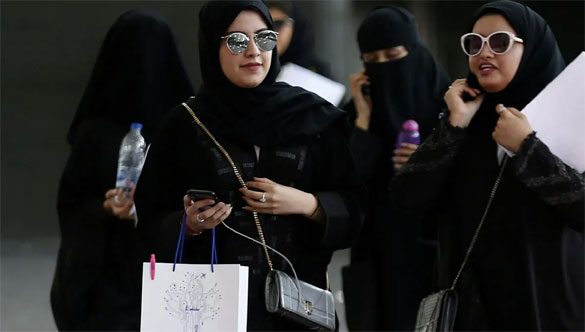
A review of recent global reports presents a complex and contrasting picture. On one hand, restrictions imposed on women in countries like Afghanistan are widely condemned as serious violations of human rights, particularly where access to education, employment, and freedom of movement is curtailed. On the other hand, developments such as the establishment of a Women’s Police Institute in Syria, attracting thousands of applicants, demonstrate that the role of women in Muslim societies is not only being acknowledged but actively expanded. Similarly, the appointment of a woman to a high judicial position in Malaysia, and global dialogues in New York focusing on the leadership of Muslim women, indicate that Muslim women are not merely symbols of oppression but also representatives of leadership, intellect, and social contribution.
These contrasting realities invite deeper intellectual and analytical reflection. The real question is not whether challenges faced by Muslim women exist; undoubtedly, they do, and in serious forms. Rather, the critical inquiry is about the root cause of these challenges. Are they a result of Islamic teachings, or do they arise from a deviation from those teachings?
Islam, as a religion rooted in natural law (deen al-fitrah) and a system of justice, recognizes women as complete and independent human beings. The Qur’an clearly states:
“O mankind, fear your Lord, who created you from a single soul…”
This verse establishes the principle of human equality, affirming that both men and women originate from the same essence and share equal human dignity. Furthermore, the Qur’an declares:
“And women have rights similar to those (of men) over them, according to what is fair.”
This verse not only highlights the balance between rights and responsibilities but also lays the foundation of ethical and social equality essential for any civilized society.
The status granted to women in Islamic teachings is not merely theoretical; it is practical, comprehensive, and deeply rooted in social reality. In the field of education, the Prophet Muhammad (peace be upon him) stated:
“Seeking knowledge is obligatory upon every Muslim.”
This command applies equally to both men and women. Islamic history bears witness to the significant contributions of women in the fields of Hadith, jurisprudence, exegesis, and other sciences. Hazrat Ayesha (may Allah be pleased with her), for example, was not only a distinguished scholar of Hadith but also an authority in legal matters, whose opinions were accepted by leading companions.
In terms of economic rights, Islam granted women a level of financial independence that, even today, is not fully realized in many societies. Women have the right to own property, engage in business, and exercise full control over their earnings. Their consent in marriage is mandatory, and their share in inheritance is clearly defined. These rights were established at a time when, in many parts of the world, women themselves were treated as property rather than as rightful owners.
However, when we encounter reports of restrictions on women’s education or mobility in certain countries, it becomes necessary to critically examine whether such practices align with Islamic principles. From both rational and religious perspectives, the answer is clearly negative. Islam made the pursuit of knowledge obligatory, and during the time of the Prophet Muhammad (peace be upon him), women actively participated in learning within the Prophet’s Mosque (Masjid-e-Nabawi). Therefore, denying women access to education contradicts the very spirit of Islam rather than representing it.
Similarly, incidents of domestic violence, such as the reported case of an Irish woman who fled alleged abuse by her husband in the United Arab Emirates and later sought legal protection in Dublin, as reported by The Irish Times, raise serious ethical concerns. The Prophet (peace be upon him) said:
“The best among you is the one who is best to his wife.”
This teaching establishes not only a moral ideal but also a social and legal standard. Any form of abuse, coercion, or oppression stands in direct contradiction to the Islamic principles of justice and compassion.
In the Western world, movements under the banner of feminism have undeniably played an important role in advocating for women’s rights. However, at times, these movements appear to lack balance. The concept of absolute freedom, rejecting all forms of moral or social boundaries, can disrupt both human nature and social harmony. In contrast, Islam presents a balanced framework where freedom is accompanied by responsibility, and rights are guided by ethical limits.
The issue of the hijab further illustrates this contrast. In many Western narratives, the hijab is portrayed as a symbol of oppression. In reality, many Muslim women view it as an expression of identity, dignity, and spiritual commitment. Initiatives such as “Hijab Day” aim to foster better understanding of this practice and encourage interfaith dialogue.
On a global level, the leadership of Muslim women is increasingly visible. International discussions, such as those held in New York, have recognized the significant role Muslim women play in addressing global challenges. This demonstrates that Muslim women are not passive subjects of discourse but active, informed, and influential contributors to society.
Likewise, the success of a female judge in Malaysia and the inclusion of women in policing roles in Syria highlight that when Islamic principles are properly understood and implemented, women not only progress but also play a vital role in societal development.
In conclusion, it becomes evident that the rights granted to women in Islam are comprehensive, balanced, and aligned with human nature. The real issue does not lie within Islamic teachings themselves but in their misinterpretation, misapplication, and, at times, distortion due to political or cultural agendas.
The need of the present time is to understand the true spirit of Islam, to implement its principles of justice and compassion in society, and to ensure not only the recognition but also the protection of women’s rights in practice. A truly civilized, balanced, and sustainable society can only exist where women are granted their rightful status, and Islam defined this status centuries ago.
Therefore, if the world genuinely seeks to uphold women’s rights, it must move beyond slogans and engage with a system that harmonizes reason, human nature, and moral values. Such a system, undoubtedly, is found in Islam.
…
Kaniz Fatma is an Islamic scholar (Aalimah and Faazilah) and a regular columnist for New Age Islam.
New Age Islam, Islam Online, Islamic Website, African Muslim News, Arab World News, South Asia News, Indian Muslim News, World Muslim News, Women in Islam, Islamic Feminism, Arab Women, Women In Arab, Islamophobia in America, Muslim Women in West, Islam Women and Feminism