
THE INDIAN MINDSCAPE: Swami Vivekananda, Sri Aurobindo and Jawaharlal Nehru's Contribution Towards Regeneration of India
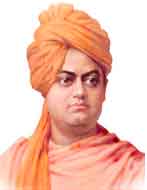
Swami Vivekananda And Sri Aurobindo's Contribution Towards Regeneration of
By Jagmohan
Swami Vivekananda and Sri Aurobindo were the two towering figures of the Indian renaissance who contributed most to the regeneration of the Indian mindscape and the consequent reflowering of the Indian culture. About the former, whose birth anniversary was observed on 12 January, the latter had recorded: “British rule has been the record success in history in the hypnosis of a nation. It persuaded us to live in a ‘death of the will’, creating in ourselves the condition of morbid weakness the hypnotist desired, until the master of a mightier hypnosis laid his finger on India’s eyes and cried, ‘Awake’. Then only was the spell broken, the slumbering mind realised itself and the dead soul lived again.”
This awakening created a great turning point in Indian history. For about a thousand years after the fall of Harsha’s empire, decay and degeneration had set in, and the Indian mind had suffered a long spell of drought and desertification with a few meadows of green appearing here and there.
The lofty thoughts produced by the once powerful and profound mind were submerged in the desert sand of the times. And society was plagued with scores of evils ~ superstitions, fatalism, caste oppression, sati, child marriage, callousness towards women, etc.
In the early phase of British rule, an influential section of leadership even attempted to bury the few strands of the Indian culture that were still visible from underneath the desert sand. Lord Macaulay made the intentions clear in his well-known Minute of 1835: “We must have a class of persons, Indians in blood and colour, but English in taste, in opinions, in morals, and in intellect.” He went to the extent of saying: “Who could deny that a single shelf of a good European library is worth the whole native literature of
It was in those dreary and depressing circumstances that Swami Vivekananda appeared on the scene like a hurricane, blowing out the desert sand and bringing to surface the treasures of Indian thought and philosophy. In a voice ringing with poetic perception and passion, he declared: “Here is the same
Such stirring declarations, made by Swami Vivekananda, during his extensive tours in the country, generated a wave of self-confidence in the nation and also a will to stand up and be counted. An intellectual and spiritual environment conducive to the growth of the freedom movement was created.
Being a cultured savant par excellence, Swami Vivekananda did not denounce the western civilisation or the Indian baiters like Macaulay but showed them the deep chinks in their civilisational armoury: “You, Christians, who are fond of sending out Christian missionaries to save the souls of heathens, why do you not try to save their bodies from starvation. It is an insult to a starving man to offer him religion.”
At the same time in a dignified tone and tenor, Swami Vivekananda brought home to the outside world how superior was the pattern of Indian thought and how unique was the Hindu religion. In his famous address to the Chicago World Parliament of Religions, delivered in September 1893, he expounded the essence of Indian civilisation and culture with unmatched eloquence and clarity: “I am proud to belong to a religion which has taught the world both tolerance and universal acceptance... The Hindus regard all religions as so many attempts of the human soul to realise the Almighty, determined by the conditions of its birth and association and each of these marked a stage of progress.
Every other religion lays down certain fixed dogmas and tries to force society to adopt them. It places before society only one coat which must fit Jack and John and Henry, all alike. If it does not fit John or Henry, he must go without a coat to cover his body”.
The impact of his speech was tremendous. Indian civilisation and culture was placed on the highest pedestal. So too was the prestige of Indians. This is evident from a comment in the American press: “We send missionaries to Vivekananda’s people. It would be more fitting that they should send missionaries to us.” Later, reflecting upon Swami Vivekananda’s visit to
Sri Aurobindo expanded the ambit of Swami Vivekananda’s thoughts and took the movement for cultural regeneration to greater heights. Functioning from his somewhat secluded ashram in Pondicherry, he served the country as a powerful lighthouse of inspiration, showing to its people the right way ~ the way of emancipating the soul of India and building a great future for her on the foundation of her great past. He infused confidence in the otherwise diffident nation by constantly reminding the people: “Ours is the eternal land, the eternal people, the eternal religion, whose strength, greatness and holiness may be overloaded but never, even for a moment, cease”. Time and again, he said: “
What did Sri Aurobindo mean when he talked of
Such views, propagated through his extensive writings, thrilled a good part of the nation and created new confidence, new urges and a new sense of mission. They also made the Western world take greater interest in
Sri Aurobindo wanted Poorna Swaraj, complete freedom, for
Unfortunately, only a few strands of the great movement for the cultural regeneration of
The writer is a former Governor of J&K and a former Union minister.
http://www.thestatesman.net/page.news.php?clid=3&theme=&usrsess=1&id=240509
---
Swami Vivekananda’s speech
By Madhu
Swami Vivekananda (January 12 1863 -July 4 1902), whose pre-monastic name was Narendranath Dutta (Narendranath Dut-tta), was one of the most famous and influential spiritual leaders of the philosophies of Vedanta and Yoga. He was the chief disciple of Ramakrishna Paramahamsa and the founder of Ramakrishna Math and Ramakrishna Mission. He is a major figure in the history of the Hindu reform movements.
While he is widely credited with having uplifted his own nation,
The following is a link that seems has Audio of Swami Vivekananda’s Speech at
http://www.newageislam.com/NewAgeIslamPlayVideo.aspx?Film=NAI100024519
---
THE DISCOVERY OF
by: Jawaharlal Nehru
(Excerpts about Swami Vivekananda)
About the same period as Swami Dayananda, a different type of person lived in
Essentially religious and yet broad-minded, in his search for self-realization he went to Moslem and Christian mystics and lived with them for years, following their strict routines. He settled down at Dakshineshwar near
People who went to visit him, and some who were even inclined to scoff at this simple man of faith, were powerfully influenced, and many who had been completely westernized felt that here was something they had missed. Stressing the essentials of religious faith, he linked up the various aspects of the Hindu religion and philosophy and seemed to represent all of them in his own person. Indeed he brought within his fold other religions also.
Opposed to all sectarianism, he emphasized that all roads lead to truth. He was like some of the saints we read about in the past records of Asia and Europe; difficult to understand in the context of modern life, and yet fitting into India's many-collared pattern and accepted and revered by many of her people as a man with a touch of the divine fire about him. His personality impressed itself on all who saw him, and many who never saw him have been influenced by the story of his life. Among these latter is Romain Rolland, who has written a story of his life and that of his chief disciple, Swami Vivekananda.
Vivekananda, together with his brother disciples, founded the non-sectarian Ramakrishna Mission of service. Rooted in the past and full of pride in
Having seen this Hindu sanyasin once, it was difficult to forget him or his message. In
He preached the monism of the Advaita philosophy of the Vedanta, and was convinced that only this could be the future religion of thinking humanity. For the Vedanta was not only spiritual but rational and in harmony with scientific investigations of external nature. ``This universe has not been created by any extra-cosmic God, nor is it the work of any outside genius. It is self-creating, self-dissolving, self-manifesting, One Infinite Existence, the Brahma.''
The Vedanta ideal was of the solidarity of man and his inborn divine nature; to see God in man is the real Godvision; man is the greatest of all beings. But the abstract Vedanta must become living-poetic-in everyday life; out of hopelessly intricate mythology must come concrete moral forms; and out of bewildering Yogi-ism must come the most scientific and practical psychology.''
Caste, which was necessary and desirable in its early forms, and meant to develop individuality and freedom, had become a monstrous degradation, the opposite of what it was meant to be, and had crushed the masses. Caste was a form of social organization which was and should be kept separate from religion. Social organizations should change with the changing times. Passionately Vivekananda condemned the meaningless metaphysical discussions and arguments about ceremonials, and especially the touch-me-notism of the upper castes. ``Our religion is in the kitchen. Our God is the cooking-pot, and our religion is: `don't touch me, I am holy.''
He kept away from politics and disapproved of the politicians of his day. But again and again he laid stress on the necessity for liberty and equality and the raising of the masses. ``
Become an Occidental of occidentals in your spirit of equality, freedom, work and energy, and at the same time a Hindu to the very backbone in religious culture and instincts.'' Progressively Vivekananda grew more international in outlook: ``Even in Politics and Sociology, problems that were only national twenty years ago can no longer be solved on national grounds only. They are assuming huge proportions, gigantic shapes. They can only be solved when looked at in the broader light of international grounds. International organizations, international combinations, international laws are the cry of the day. That shows solidarity.
In science, every day they are coming to a similar broad view of matter.'' And again: ``There cannot be any progress without the whole world following in the wake, and it is becoming every day clearer that the solution of any problem can never be attained on racial, or national, or narrow grounds. Every idea has to become broad till it covers the whole of this world, every aspiration must go on increasing till it has engulfed the whole of humanity, nay the whole of life, within its scope.''
All this fitted in with Vivekananda's view of the Vedanta philosophy, and he preached this from end to end of
The fact of our isolation from all the other nations of the world is the cause of our degeneration and its only remedy is getting back into the current of the rest of the world. Motion is the sign of life.'' He once wrote: ``I am a socialist not because I think it is a perfect system, but half a loaf is better than no bread. The other systems have been tried and found wanting. Let this one be tried, if for nothing else, for the novelty of the thing.''
Vivekananda spoke of many things, but the one constant refrain of his speech and writing was abhaya - be fearless, be strong. For him man was no miserable sinner but a part of divinity; why should he be afraid of anything? ``If there is a sin in the world it is weakness; avoid all weakness, weakness is sin, weakness is death.''
That had been the great lesson of the Upanishads. Fear breeds evil and weeping and wailing. There had been enough of that, enough of softness. What our country now wants are muscles of iron and nerves of steel, gigantic wills which nothing can resist, whith can penetrate into the mysteries and the secrets of the universe, and will accomplish their purpose in any fashion, even if it meant going down to the bottom of the ocean and meeting death face to face.'' He condemned occultism, and mysticism... these creepy things; there may be great truths in them, but they have nearly destroyed us....
And here is the test of truth - anything that makes you weak physically, intellectually and spiritually, reject as poison, there is no life in it, it cannot be true. Truth is strengthening. Truth is purity, truth is all-knowledge....
These mysticisms, in spite of some grains of truth in them, are generally weakening....
Go back to your Upanishads, the shining, the strengthening, the bright philosophy, and part from all these mysterious things, all these weakening things. Take up this philosophy; the greatest truths are the simplest things in the world, simple as your own existence.'' And beware of superstition. ``I would rather see everyone of you rank atheists than superstitious fools, for the atheist is alive, and you can make something of him. But if superstition enters, the brain is gone, the brain is softening, degradation has seized upon the life....
Mysterymongering and superstition are always signs of weakness.’ Most of these extracts have been taken from Lectures from
``Whether we call it Vedantism or any ism, the truth is that Advaitism is the last word of religion and thought and the only position from which one can look upon all religions and sects with love. We believe it is the religion of the future enlightened humanity. The Hindus may get the credit of arriving at it earlier than other races, they being an older race than either the Hebrew or the Arab; yet practical Advaitism, which looks upon and behaves to all mankind as one's own soul, is yet to be developed among the Hindus universally.
``On the other hand our experience is that if ever the followers of any religion approach to this equality in an appreciable degree in the plane of practical work-a-day life-it may be quite unconscious generally of the deeper meaning and the underlying principle of such conduct, which the Hindus as a rule so clearly perceive - it is those of Islam and Islam alone....
``For our own motherland a junction of the two great systems, Hinduism and Islam.-Vedanta brain and Islam body-is the only hope.
``I see in my mind's eye the future perfect India rising out of this chaos and strife, glorious and invincible, with Vedanta brain and Islam body.''
This letter is dated Almora, 10th June, 1898 - footnote
So Vivekananda thundered from Cape Comorin on the southern tip of
Article URL: https://newageislam.com/islam-pluralism/the-indian-mindscape-swami-vivekananda,/d/1132
New Age
Islam, Islam Online, Islamic Website, African Muslim News, Arab World News, South
Asia News, Indian Muslim News, World Muslim News, Women in Islam, Islamic Feminism, Arab Women, Women In Arab, Islamophobia in America, Muslim Women in West, Islam Women and Feminism