
Israel Should Learn Technology Is Not a Solution to Problems Arising Out of Public Policy and Politics
By New Age Islam Staff Writer
9 October 2023
Israel's 12 Military Campaigns In Gaza So Far Have Ended
In Ugly Stalemate.
Main Points:
1.
Egypt and Syria had stormed Israel in
1973.
2.
Hamas has been at war with Israel for the
last 70 years but could not be eliminated.
3.
Israel has been spending hugely to guard
against Hamas.
1.
5.Israel's Iron Dome is a white elephant.
4.
Iron Dome needs $80,000 to down one Hamas
rocket made with $100.
5.
IDF is a victim of self-delusion.
-----
The Israel-Hamas war has been going on since Saturday
morning. Hamas caught Israeli forces and intelligence unawares despite the fact
that Israel had deployed more internal security battalions to the West Bank
anticipating attacks from Hamas. Israel has been confronting Hamas and other
Islamic countries both diplomatically and militarily. Its survival is ensured
only by the disunity of the Arab world. In October 1973, Egypt and Syria had
stormed Israel to seize back Sinai. Since then, Israel has had to fight hostile
neighbours because of its occupationist ambitions to create a greater Israel.
Israel has launched 12 military campaigns against Hamas so far and has not been
able to eliminate it. It has installed Iron Dome defence system and boasted of
its accuracy and efficacy but the 7000 plus rockets fired by Hamas on 7
October, 2023 broke the myth that it can protect Israel from any aerial
assault. Iron Dome needs $80,000 to down one Hamas crude rocket made with only
$100. Therefore, it has proved a white elephant. This proves that it may not
defend Israel from sophisticated missiles of developed nations. It was good
only for Hamas and Hezbollah.
The IDF and the Israel government have proved to be
suffering from self-delusion. They have not realised that technological
superiority does not present solutions to problems arising out of wrong public
policies or political mistakes. That Hamas has bounced back with greater
strength and better war strategy proves this point. Israel has lost more than
700 lives apart from more than hundred hostages despite spending billions of
dollars on Iron Dome. Now Israel has started blockade of Gaza, a step that will
only go against it. The action betrays its frustration. After not being able to
rein in Hamas, it is making Palestinians its soft target. Benjamin Netanyahu
wants to show his people that he is avenging the death and abduction of
Israelis. The blockade will create a humanitarian crisis and evoke condemnation
from the world community.
The timing of Hamas attacks shows that Hamas wanted to
sabotage the process of normalisation of relations between Saudi Arabia and
Israel initiated by the US which if achieved will result in the further
isolation of Palestinians. Therefore, Hamas wanted to get a place in the
negotiation table. The ongoing confrontation has put a hold on the process as
Saudi Arabia faces a moral dilemma. The lesson from the 70 years of hostilities
between Israel and Palestinians is that insurgency cannot be fought with sheer
and brutal force but with pragmatic and judicious approach. The sooner Israel
realises this the better.
-------

By
Praveen Swami
08 October,
2023
The Real
Objective Of The Violence Is Likely Political: Hamas Is Letting Israel And Saudi
Arabia Know It Can Sabotage The United States-Backed Process Of Diplomatic
Normalisation On Which The Geopolitical Future Of The Middle East Is Being
Rebuilt
-------
The words
had come on Friday morning, directly from the Angel, the top-secret Israeli
source at the core of Egypt’s establishment. “The Egyptian army and the Syrian
army are about to launch an attack on Israel on Saturday, October 6, 1973,
towards evening,” Israeli intelligence officer Freddy Einy telegraphed to Prime
Minister Golda Meir’s military secretary, Yisrael Lior. “Egyptian troops would
push across the Suez Canal into the Sinai, to a depth of 10 kilometres, and
then hold their line.”
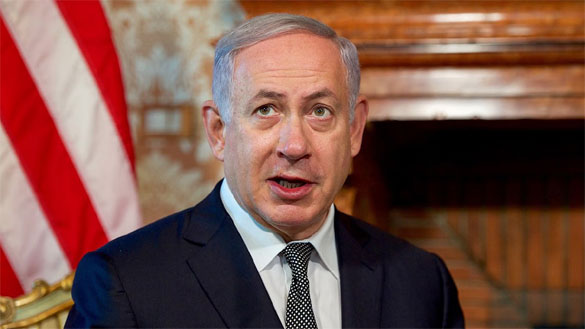
File
photo of Israeli PM Netanyahu | Commons
------
Fifty years
since then, Hamas assault units have struck across the Israel-Gaza border under
cover of fire from thousands of low-technology rockets, drawing the Israel
Defence Forces (IDF) into murderous skirmishes at up to a dozen small towns and
villages. Hamas assault teams have succeeded in killing 250 troops and
civilians.
Little
doubt exists Israel’s intelligence and defence forces were blind to the looming
threat. Earlier this summer, Emmanuel Fabien reported, the Israeli military had
deployed some 25 internal security battalions to the West Bank, instead of the
usual 13, to police violence between far-Right settler groups and Palestinians.
Hamas,
unlike the Egyptian army in 1973, knows it cannot recover territory or defeat
the IDF in combat. This might be called a war by politicians, but it more
closely resembles traditional insurgent raiding. And, like Egypt, it knows that
while it can overwhelm static defence lines, it can’t go much further.
The real
objective of the violence is likely political: Hamas is letting Israel and
Saudi Arabia know it can sabotage the United States-backed process of
diplomatic normalisation on which the geopolitical future of the Middle East is
being rebuilt. Hamas wants a place at the table—and it has the support of
Palestinians living through the perpetual nightmare in Gaza who are unwilling
to end resistance in return for a few more Saudi jobs or some economic aid.
Like the
1973 war, the crisis that has exploded now holds out three important lessons
for all nation-states confronted with long insurgencies and terrorism. First,
nation-states that sit on their hands and wonder what to do next often discover
their adversaries have used the time to sharpen their claws. Second, there is
no technology or tactic that guarantees a State perpetual superiority over
weaker adversaries; the successful conduct of war demands endless intellectual
creativity.
And
finally, the use of force, no matter how skilled and well-resourced, is a
means, not an end: Lacking the will to resolve underlying political and social
problems gives adversaries time and space to perpetuate a conflict.
The Lessons
Of Yom Kippur
“The Third
Temple is in danger,” mumbled the legendary military commander and defence
minister Moshe Dayan the morning after Egyptian and Syrian troops stormed
Israel’s borders on 6 October 1973. In 1967, Israel had annihilated the flower
of Egypt’s military in days; this time, less than 24 hours into the war, it was
clear things were different. The war hero seemed incoherent: At one moment, he
advocated Israeli withdrawal from part of the Sinai; at others, use of Israel’s
nuclear bombs.
From
Israeli archives declassified just days ago—little of it so far available in
English—it is clear Israel intelligence on the prospect of war was heavily
influenced by intellectual filters designed by Major-General Eli Ze’ira, the
IDF head of intelligence.
The
intelligence konseptzia, or conception, held among other things that Egypt
would not go to war until it had the means to paralyse Israel’s Air Force with
equipment like long-range bombers capable of targeting airfields deep inside
the country.
Former US
State Department official Michael Doran writes in a brilliant essay that when
the king of Jordan made a secret visit to Israel to warn the Prime Minister of
imminent war, Ze’ira proved impossible to persuade. Less than 24 hours before the war began,
Mossad recorded that the Soviet Union was evacuating its military advisors.
Ze’ira again refused to take the threat seriously.
Looking
back, this was not unreasonable. What possible motive might Egyptian President
Anwar El-Sadat have for starting a war in which thousands of deaths were
certain, unless he hoped to be able to seize back the Sinai, lost in 1967? The
loss had given Israel access to oil as well as control over the Suez
Canal—shocks that Egypt could survive only by becoming a Soviet client State.
The IDF
didn’t know that El-Sadat had settled for a much more complex strategy,
Lieutenant-Colonel Steven Meek notes, which accepted Israeli dominance of the
air. Instead, he hoped only to protect small zones of Egyptian incursion into
Sinai with new-generation Soviet air defence missiles like the SAM-6. Egyptian
armoured officers had studied Israeli armoured manoeuvre tactics obsessively
and concluded that IDF tanks could be defeated by shoulder-fired missiles.
Lulling the
IDF deeper into sleep, even as it practised its own revolution in military
affairs, Egypt staged mobilisations of troops and military manoeuvres no less
than 22 times from 1972 to 1973—on average, once a month. After a while, the
Israelis barely noticed.
The words
of the Angel—the legendary agent revealed to have been former President Gamal
Abdel Nasser’s son-in-law, Ashraf Marwan—finally shook Israeli complacency. The
country now ordered a mobilisation. There was no actual response, though, even
as Egyptian soldiers began to take the last steps toward attacking the
thinly-held fortresses through which Israel protected Suez.
A Victim
Of Self-Delusion
Following
the 1973 war, the Agranat Commission savaged the key actors responsible for
these failures and recommended the sacking of both Ze’ira and Chief of Staff
David Elazar. Fifty years of historical study and introspection, though, tells
us the problem was deeper than intelligence misjudgements. Prime Minister Meir
was doggedly resistant to pre-emptive strikes after receiving warnings from the
US. Even as Russia and Egypt prepared for the strike, the US States was pushing
Israel not to act.
Less than a
week into the war, declassified documents show, Israel’s cabinet was
dangerously worn, fearing the worst: Instead of the quick war it had hoped for,
there was a massive conventional conflict that consumed men and materiel on an
industrial scale. It was only after a gargantuan United States airlift began
that the tide began to reverse.
This time
around, too, Israel will be dependent on external military aid—in some cases,
the result of the trap of seeing technology as a solution to complex problems
of public policy and politics. Israel’s Iron Dome, designed to protect critical
strategic installations, was promised by political leaders to guard the public
from harm. Each interceptor, though, is estimated to cost over $80,000, while
Hamas produces crude rockets for $100 or less.
Former
Israeli special forces officer colonel Yossi Langotsky had warned several years
ago that the high-technology Gaza wall, in which the IDF and political
leadership placed great faith, could—and would—be penetrated. Indeed, mobs
stormed parts of the fence in 2018, a warning of the kinds of threats now
demonstrated in stark relief.
Worst, the
IDF let itself focus on protecting settlements in the West Bank, a key
political constituency for Prime Minister Benjamin Netanyahu’s government.
These commitments deepened extremist Jews escalated tensions with other
religious communities in the West Bank.
Like all
armies and bureaucracies, the IDF has shown it can be a victim of
self-delusion. The Director for the United States Bureau of Intelligence and
Research, Ray Cline, noted that they “were brainwashed by the Israelis who
brainwashed themselves”.
There’s
little doubt the tactically skilled and well-resourced IDF will succeed in
crushing Hamas incursions in the next few days. What follows, though, could
have enormous consequences. The 2006 and 2014 invasions of Gaza caused enormous
civilian hardship and losses to the IDF, but did not end Israel’s terrorism
problem. The French scholar Jean-Pierre Filiu has noted that all 12 military
campaigns in Gaza ended in some kind of ugly stalemate.
“Israel has
tried everything in Gaza and failed repeatedly,” Filiu notes.
The time
has come for Israel to consider if allowing the Palestinian question to fester
serves its own interests, including stability at home and a secure place in the
wider Middle East geopolitical order.
-----
Praveen Swami is ThePrint’s National Security
Editor. Views are personal.
(Edited by Humra
Laeeq)
Source: Israel-Gaza
Crisis Holds Brutal Lessons In How Not To Fight Terrorism & Insurgencies
URL: https://newageislam.com/islam-politics/israel-gaza-crisis-terrorism-insurgencies/d/130861
New Age Islam, Islam Online, Islamic Website, African Muslim News, Arab World News, South Asia News, Indian Muslim News, World Muslim News, Women in Islam, Islamic Feminism, Arab Women, Women In Arab, Islamophobia in America, Muslim Women in West, Islam Women and Feminism