
Maulana Hami's Shadow Empire: Allegations and Kashmir's Faith Crisis
By Mushtaq Ul Haq Ahmad Sikander, New Age Islam
22 January 2026
The ongoing controversy between maulana Ghulam Rasool Hami & Sandeep Mawa over forgery, land grabs, luxury cars, and family frauds is still raging.
Main points:
· Social media battles between Hami's pious testimonials and accusations of exploiting devotees.
· There is State patronage shielding Hami, mirroring godmen scandals elsewhere.
…
The Shadow Empire of Maulana Ghulam Rasool Hami: Allegations, Power Plays, and Kashmir's Fractured Faith
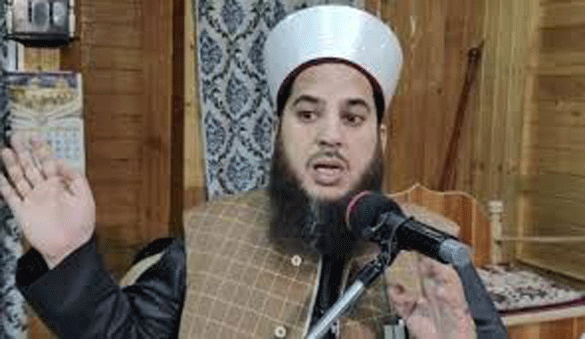
In the simmering valleys of Kashmir, where faith and politics have long intertwined like the roots of ancient chinar trees, a storm refuses to subside. The controversy surrounding Maulana Ghulam Rasool Hami, a prominent Barelvi cleric, continues to rage, fuelled by a torrent of allegations and counter-allegations that paint a picture of forgery, land grabs, lavish indulgences, and a carefully constructed empire built on the backs of the devout. Hami's name evokes reverence among his followers and revulsion among detractors, with social media emerging as the modern battleground for this clash. Dr. Sandeep Mawa, a vocal critic, regularly floods his platforms with exposés—documents, videos, and testimonies alleging Hami's occupation of state lands, possession of luxury cars disproportionate to declared means, and a web of fraudulent dealings that enriched his family while impoverishing the gullible. In response, Hami's loyalists unleash a digital counteroffensive, sharing glowing testimonials of his spiritual guidance, miracle healings, and unassailable piety, dismissing critics as agents of enmity or apostasy. Yet, amid this cacophony, one truth stands stark: the courts alone can sift guilt from innocence. Media trials, no matter how viral, yield no verdicts, only deeper divisions. Still, certain facts emerge from the fog, illuminating not just Hami's alleged misdeeds but a systemic malaise plaguing Kashmir's religious landscape.
To fully unpack this, consider Kashmir's turbulent history as the fertile ground for such figures. The 1989-90 insurgency wave saw thousands of youth cross the LoC, trained in Pakistan camps, returning as militants who embedded in villages, towns and cities. Families, out of compulsion or conviction, hosted them—sharing scarce rations during curfews, hiding them from CRPF raids. By mid-1990s, counter-insurgency flipped the script: many surrendered via Ikhwan networks, becoming renegades. Government rehabilitation was pragmatic—jobs in J&K Police's Special Task Force or Village Defence Committees, pensions for "reformed" fighters. Ambitious ones launched NGOs, ostensibly for orphans or widows, but often as patronage machines. Political parties absorbed them; figures like Kuka Parrey morphed from militants to MLAs. These same men later targeted their ex-hosts: a family feeding a militant in 1992 might find its breadwinner jailed in 1998 on "sympathizer" charges, as renegades climbed anti-militancy ladders. Hami's ascent parallels this opportunism, sans arms. Sufism, once Kashmir's resistance to orthodoxy, became his vehicle. Traditional Rishis like Nund Rishi (Nooruddin) critiqued sultans, living in caves; Lal Ded's vakhs mocked materialism. But now, amid flux, Barelvi mullahs like Hami repackaged Sufism as "moderate Islam," gaining state favour against Salafi rivals, accessing power corridors once barred.
Hami's halo was meticulously crafted. Blind followers propagated tales of his regular "deedar"—visionary encounters with Prophet Muhammad (peace be upon him) in dreams—whispered in shrines and shared in WhatsApp groups. This narrative wove a persona of otherworldly piety, drawing crowds to his gatherings and coffers to his trusts. Such claims aren't unique; medieval Sufi hagiographies abound, but Hami's served contemporary ends, akin to how Mirza Ghulam Ahmad's visions birthed Ahmadiyya controversies. Yet, peel back the mysticism, and allegations of earthly empire-building surface. His family, including a brother and elder sister, stands accused of land brokerage laced with fraud. Victims claim they were lured into deals with forged documents, only to be left holding worthless papers while Hami kin pocketed crores. Specific cases, per Mawa's posts, include a 2018 Srinagar plot where a resident paid 1.5 crore upfront; mutation stalled, police deterred complaints. When the duped approached for redress, police intervention followed—not for justice, but to warn them off. "Stay away from his family," they were reportedly told, a chilling testament to Hami's deep ties with state machinery—perhaps via Waqf officials. Connections ran deeper: even bureaucrats and police officers fell victim. They bought land from the Hami brood, paid handsomely in black money, yet titles never transferred. When confronted, the family taunted, "Where did you get so much cash?" Silenced by their own illicit gains, these corrupt officials dared not file cases, their complicity chaining them to silence. This pattern suggests not mere opportunism but a symbiotic dance with power. The state, aware of these shadows, allegedly shielded Hami, deploying him as an asset to maintain grip over the masses—much like the infamous cases of Ram Rahim's Dera Sacha Sauda, with its rapes and murders under political cover till 2017, or Asaram Bapu's ashrams, crumbling in 2013 amid similar land-and-lust scandals. In Kashmir, Hami's role echoed: post-2019, his "Sufi conferences" aligned with Delhi's narrative, buying impunity.
Kashmir's religious personalities often helm vast empires, their revenues unquestioned streams from public donations funnelled into personal fiefdoms. Mosques swell with offerings, shrines brim with nazarana, yet audits are rare, transparency scarcer. Hami's case merely spotlights a norm: trusts balloon into businesses, charity into real estate. Politicians, ever pragmatic, court these figures for electoral muscle. A mullah's endorsement sways voters; his silence quells protests. In return, they receive protection, land allotments, and policy nods. Hami's alleged land occupations—state plots morphed into madrasas or family villas—fit this template, his luxury cars (SUVs gleaming amid Srinagar's modest lanes) symbols of unscrutinised bounty. Social media amplifies the farce: Dr. Mawa's posts unearth revenue trails from dubious donors to Hami's garages; followers retort with videos of his "selfless" service, feeding the poor or leading prayers. The debate polarizes, but facts persist—rehabilitation-era militants now in power, Sufi cloaks donned for clout, forged deeds enabling land heists. Economically, this drain: donations meant for iftar or orphans fund sedans, while genuine needy languish.
This saga underscores a profound betrayal of Kashmir's spiritual heritage. True Sufism, as embodied by the Rishis, preached wahdat al-wujud—unity of being—rejecting materialism's snares. They lived ascetically, critiquing rulers from afar. Post-Mughal, Kubrawi and Naqshbandi orders influenced courts subtly, but never dominated. Colonial era saw Barelvi-Deobandi rifts; post-Partition, Kashmir's syncretic strain held. Insurgency radicalized it—Wahhabi funds challenged Sufi shrines. Hami's model inverts this: worldly ambitions draped in devotional garb. His "dream visions" echo historical hagiographies but serve modern PR, much like televangelists peddling divine proximity for donations. The renegade parallel is poignant—militants who ate at family tables turned informants; Hami, fed by devotees' faith, allegedly fed his family's greed. State complicity seals the triad: government, godman, graft. Like Ram Rahim's empire or Asaram's, Hami's network thrived under patronage, still not collapsing even when exposures mounted. In Kashmir, the insurgency's aftermath amplified this. Surrendered militants, granted jobs via the Special Police Officers scheme or Village Defence Committees, gained leverage. Ambitious ones formed NGOs blending rehabilitation with influence. Hami's Barelvi outfit tapped similar veins, positioning him as a counter to Wahhabi strains, earning official nods. Socially, it erodes trust: youth see hypocrisy, fuelling cynicism or extremism.
Land frauds form the controversy's gritty core. Reports detail Hami kin using benami transactions, fake mutations, and influence to seize state endowments—plots in prime areas like Srinagar's uptown. A victim, as per Dr. Mawa's uploads, invested lakhs in a "guaranteed" deal brokered by Hami's sister; post-payment, documents vanished, police labelled him a troublemaker. Another tale: a cop's slush fund funnelled into Hami land, only for the family to renege, smirking at the source. Such impunity screams connections—perhaps to J&K Waqf Board insiders, revenue officials, or UT administration allies. Lavish cars? Fleet sightings contradict Hami's ascetic image, with registration probes hinted at black money from Gulf donors or local "tithes." Donors, often poor pilgrims from Anantnag or Kupwara, fund this via "zakat" mislabelled as empire fuel. Politicians exploit it: election seasons see Hami's blessings invoked, his crowds marshalled—recall 2024 assembly polls where proxies allegedly benefited. Followers, blinded by piety myths, defend fiercely, religion's grip turning critique into blasphemy, echoing global patterns from Turkey's Gülen to India's Ramdev.
Yet, the saddest reality is religion's mass hypnosis. Politicians wield godmen as vote banks; blind adherents sustain the charade, excusing sins in devotion's name—psychologically, it's cognitive dissonance, faith overriding evidence. Kashmir's history—Sufi saints democratizing Islam, Rishis fostering syncretism with Shaivism—now funds fiefdoms. Renegades who betrayed hosts mirror mullahs betraying faith. Courts may adjudicate Hami, but the system endures unless scrutiny pierces the veil. Dr. Mawa's persistence and followers' rebuttals signal awakening, yet media's echo chamber risks further alienation. Reforms beckon: mandatory Waqf audits, RTI on rehab jobs, Sufi heritage boards independent of politics. Civil society, academics, true ulema must lead. True reform demands auditing religious trusts, probing militant rehabilitations, reclaiming Sufism's purity. Until then, Hami's shadow lingers, a cautionary tale of power's corruption in paradise lost.
Kashmir watches, divided. Will justice prevail, or will the empire endure? Only time—and tribunals—will tell. In reclaiming faith from fraud, lies hope for healing.
…
M.H.A. Sikander is Writer-Activist based in Srinagar, Kashmir.
URL: https://newageislam.com/islam-politics/maulana-hamis-shadow-empire-kashmir-faith-crisis/d/138542
New Age Islam, Islam Online, Islamic Website, African Muslim News, Arab World News, South Asia News, Indian Muslim News, World Muslim News, Women in Islam, Islamic Feminism, Arab Women, Women In Arab, Islamophobia in America, Muslim Women in West, Islam Women and Feminism