
Beyond Identity Politics: Why AIMIM's Rise Challenges India's Secular Democratic Space
By New Age Islam Special Correspondent
30 January 2026
The electoral fortunes of AIMIM and the enduring personal popularity of Asaduddin Owaisi reflect real political anxieties in parts of India’s Muslim population. These anxieties are legitimate and deserve a sympathetic hearing. But the remedy cannot be the permanent institutionalisation of identity-based politics that isolates communities and forecloses the possibility of cross-community democratic coalitions. A liberal secular vision insists on a politics that listens to grievances and fixes them through institutions, fair law and public policy, while insisting that shared citizenship and public goods remain the central concerns of political life.
Major points:
AIMIM’s changing shape, especially in places like Maharashtra. In recent civic elections, the party bagged a surprising number of seats—way beyond what anyone expected.
Suddenly, cities in Vidarbha, Chhatrapati Sambhajinagar, and other spots saw AIMIM winning ward afterward. The party’s not shy about fielding local faces, sometimes even non-Muslims, and they’ve learned how to work the ground, going door-to-door and figuring out what each neighbourhood actually needs.
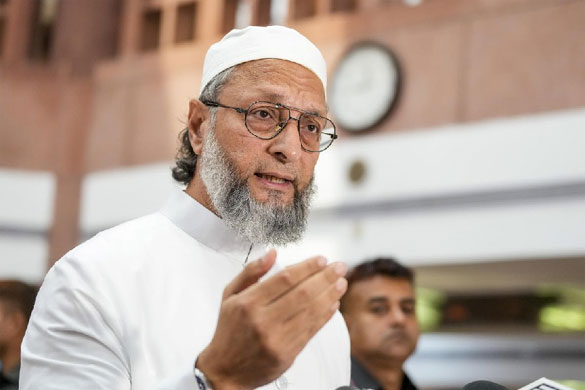
When identity feels like it’s under attack, politics gets sharper, and people get defensive. AIMIM presents itself as the defender, the shield. For Muslims who feel exposed, that promise is powerful.
A liberal secular response to AIMIM’s rise should do at least three things. It should be honest about why AIMIM has a base, it should critique the political consequences of identity-centric mobilisation, and it should offer practical alternatives that restore cross-community democratic politics.
Let’s be honest: the way AIMIM, under Asaduddin Owaisi, has been gaining ground is one of the big stories in Indian politics right now. Suddenly, conversations about Muslim representation, political identity, and agency aren’t sticking to the usual script. Owaisi’s gone from being the undisputed leader in Hyderabad to someone whose party is popping up in places like Maharashtra—and even further out—where once nobody would’ve guessed AIMIM could matter. It’s not just a local party anymore.
This piece, coming from a liberal-secular angle, takes a hard look at what’s happening. We’ll dig into the latest election results, try to make sense of why AIMIM is catching on with some Muslim voters, and—here’s the tough part—lay out why this trend should worry anyone who cares about a plural, democratic India. At the end of the day, if you believe in democracy, equality, and the idea of shared citizenship, this matter.
What the recent results say
Start with the basics: Owaisi himself. In 2024, he didn’t just win Hyderabad—he blew everyone else out of the water, winning by more than three lakh votes. That kind of margin isn’t just about party machinery or luck. It’s about personal popularity and the loyalty he’s built over the years. The big media houses talked about it for days, and you could feel it on the ground, too. Hyderabad isn’t just AIMIM’s base; it’s Owaisi’s fortress.
But it’s not just about Hyderabad anymore. AIMIM’s changing shape, especially in places like Maharashtra. In recent civic elections, the party bagged a surprising number of seats—way beyond what anyone expected. Suddenly, cities in Vidarbha, Chhatrapati Sambhajinagar, and other spots saw AIMIM winning ward afterward. The party’s not shy about fielding local faces, sometimes even non-Muslims, and they’ve learned how to work the ground, going door-to-door and figuring out what each neighbourhood actually needs.
Add it all up, and you see two things. First, Owaisi’s grip on Hyderabad is as strong as ever. Second, AIMIM isn’t just sitting tight—it’s pushing out, testing the waters in new places, and trying out different alliances and strategies. That mix—solid base at home, hungry for growth elsewhere—changes the game. It’s worth paying attention to.
Why some Muslim voters are going with AIMIM?
You can’t just dismiss the voters who are turning to AIMIM, and it’s lazy to say they’re all driven by the same thing. For a lot of people, politics isn’t some grand theory—it’s about who actually listens and who shows up. When you feel ignored, discriminated against, or pushed to the side-lines, you look for someone who promises to speak up for you and fight for your dignity.
In Hyderabad, plenty of Muslims see AIMIM as that voice. Owaisi’s speeches, his presence in Parliament, the way he goes after issues that matter to the community—they all add up. Mainstream secular parties, sure, they’ve put up Muslim candidates, but when it comes to actually standing up for Muslim issues, they often fall short. AIMIM doesn’t dance around it: they talk about identity, legal rights, communal violence, and respect—loudly, all the time. On the ground, their local campaigns focus on real stuff: fixing civic problems, creating jobs, sorting out sanitation. It’s not just talks; it’s visible work.
There’s more to it, though. A lot of Muslims just don’t trust the old secular parties anymore. Congress and others promised protection, said they’d stand up for minorities, but when push came to shove—especially after repeated losses or a weak response to violence—people lost faith. Frustration and anger set in, and suddenly, a party that says, “We’re your voice, no compromises,” starts to look appealing. AIMIM has picked up that momentum.
And then there’s the big picture: rising Hindutva politics and polarisation. When identity feels like it’s under attack, politics gets sharper, and people get defensive. AIMIM presents itself as the defender, the shield. For Muslims who feel exposed, that promise is powerful.
Why does the trend raise serious concerns for secular democracy?
From a liberal, secular standpoint, there are several reasons to be uneasy about AIMIM’s rise as an electoral force beyond Hyderabad. These are not arguments against political representation of minorities; rather, they are worries about the political logic that underpins group-based mobilisation when it substitutes for broad, cross-community democratic politics.
First, politics that are narrowly communal in orientation risk hardening identity categories and entrenching social segregation. Democracy works best when parties compete over policy, governance and inclusive social visions. When parties organise primarily along religious lines, voters get fewer incentives to invest in cross-community coalitions that address public goods and structural reform. Over time, that weakens the political incentives for parties and leaders to build universalist platforms—on schooling, health, jobs and infrastructure—that benefit citizens across identities. When a significant section of political mobilisation pivots onto religious identity, public debate narrows, and polarisation deepens.
Second, a politics driven by communal assertion is easily absorbed into a zero-sum logic. If parties win by maximising the turnout of one community and by emphasising grievance politics, the strategy can produce short-term gains but longer-term costs: it deepens fear among other communities, invites reciprocal identity mobilisation, and reduces the space for shared problem-solving. In a diverse society, the search for exclusively community-based seats and loyalties can make governance brittle and polarised, with electoral coalitions hardened more by identity than by policy choices.
Third, the ideological orientations of groups matter. AIMIM’s rhetoric and positions often court controversy because they foreground a certain reading of communal history and present politics that can alienate allies and accentuate communal divides. Even if the party does useful local work, the overall public posture, when it is framed as exclusive advocacy, feeds into narratives used by hard-line majoritarian forces to argue that Muslims are separatist or not committed to secular citizenship. This is a profoundly paradoxical outcome: a party seeking to strengthen the Muslim voice can inadvertently strengthen arguments that Muslims are incompatible with shared citizenship.
Fourth, political competition that invests heavily in religious symbolism and grievance can eclipse the development agenda. For communities facing socioeconomic deficits, the long-term solution lies in education, economic inclusion, legal reforms and institutional empowerment. Parties that focus on identity at the expense of programmatic engagement with these structural issues risk stalling real progress. In municipal and assembly politics, winning wards matters, but sustained improvement in education and employment requires alliances and policy work that transcend identity alone.
Fifth, the outward expansion of a party like AIMIM transforms local political ecologies. When AIMIM contests seats in regions where parties had been bearing the responsibility of negotiating secular coalitions, the entry can fragment anti-majoritarian vote patterns. This fragmentation sometimes helps the majoritarian party by dividing the opposition or reducing strategic alliances. In many contests where the secular vote is split among two or more parties, a unified majority bloc may win. The strategic effect can be perverse: a party focused on consolidation of one community’s vote can, by dividing the anti-majoritarian front, contribute indirectly to the majoritarian ascendency.
What a liberal secular response should be
A liberal secular response to AIMIM’s rise should do at least three things. It should be honest about why AIMIM has a base, it should critique the political consequences of identity-centric mobilisation, and it should offer practical alternatives that restore cross-community democratic politics.
The first task is to acknowledge failure. Secular parties must reflect on why they lost touch with parts of the Muslim electorate. If people feel their lives and rights are better protected under parties that foreground identity, that points to a deficit in the record of mainstream secular parties. Governments and secular leaders must demonstrate, through policy and practice, that they can deliver justice, safety and opportunity. This means credible and fast institutional redress for communal violence, transparent enforcement of civil rights, and meaningful socio-economic programmes that uplift disadvantaged neighbourhoods.
Second, secular parties and civic voices must re-emphasise universalist policy platforms. Public services—public education, healthcare, jobs, housing and urban infrastructure—should be the central themes. When secular parties articulate a clear program for the material betterment of poor and middle-class neighbourhoods, they can recapture political ground by addressing voter priorities that cross religious lines. The point is not to ignore identity but to broaden the politics to encompass the common needs that citizens of all communities share.
Third, civil society and political leaders must rebuild trust in institutions. Trust in the police, judiciary and local governance institutions is essential. When these institutions are perceived as biased or unresponsive, communities look for alternatives. Measures to make policing more accountable, to ensure impartial application of the law, and to strengthen legal aid access for marginalised communities can all reduce the appeal of politics that offers protection primarily along communal lines.
Fourth, secular space must insist on inclusive leadership development. The pipeline for political leadership in many places is narrow. Parties that cultivate diverse, locally rooted leaders who can speak both to their communities and across communities perform a bridging function. This will require greater efforts at training, local engagement and opening party structures to new activists beyond old networks of patronage.
Fifth and finally, a liberal secular strategy must be courageous in defending plural norms. This involves not simply arguing for cross-community economic programs but also standing for cultural pluralism in everyday life: protecting religious freedom for minorities, resisting censorship of minority voices, and combating hate speech consistently. It means insisting that citizenship is equal and that no community’s rights should be subordinated to the majoritarian will.
Why simply denouncing AIMIM is not enough
Some critics call for the outright rejection of AIMIM and its politics. That response is both politically naive and counterproductive. Denunciation without alternatives pushes voters into defensive trenches and reduces the credibility of secular parties among the very voters they need to win back. The right response is not only to critique but to compete: to craft a political offering that is programmatic, that addresses immediate needs and that rebuilds trust.
A part of this is practical coalition building. Secular parties should negotiate alliances strategically to avoid fragmenting the anti-majoritarian vote in critical contests. An honest assessment of seat sharing, candidate selection and common platforms can prevent avoidable losses. But coalition management is tactical; the deeper work is programmatic: delivering visible improvements in local governance, ensuring equitable service delivery and winning back the loyalty of voters whose concerns were neglected.
The dangers of reciprocal hardening
One of the most worrying dynamics in a polarised polity is reciprocal hardening: each side moves to outbid the other’s identity claims, leading to escalating antagonism. When a party like AIMIM amplifies a politics of assertion, a majoritarian partner can use that assertion as proof that Muslims are not stakeholders in a shared civic order. The result is political hardening on both sides. To avoid such a spiral, mainstream parties must resist the temptation to frame community mobilisation as proof of disloyalty. Instead, they should present inclusive platforms that neutralise the need for defensive politics.
At the same time, leaders within the Muslim community who care about long-term integration should discourage narrow, zero-sum strategies. They must acknowledge the legitimate grievances that push voters toward identity politics while explaining the costs of exclusive mobilisation. This requires delicate political work—empathy, narrative building and policy delivery.
The role of media and public conversation
The media plays a central role in shaping how these developments are understood. Sensationalist coverage that reduces complex electoral shifts to simple labels—“communal”, “Islamist”, “ghetto politics”—does not help. Responsible journalism should illuminate on-the-ground reasons why voters shift allegiances: local governance, candidate quality, service delivery, perceptions of security and dignity. It should also provide space for long-form analysis of the structural issues—education, employment, urban marginalisation—behind electoral choices.
Public conversation should not treat Muslim voters as a monolith. The Muslim electorate is diverse in language, class, region and opinion, and narratives that collapse that diversity into a single frame do a disservice to democratic debate. Coverage must balance reporting on emotive events with deep reporting on policy outcomes.
Practical public policy priorities to reclaim secular ground
A programmatic approach that reclaims secular ground is not only political rhetoric; it requires policy actions. A few priorities deserve emphasis.

First, invest in urban public education. Poor public schooling in many Muslim-dominated neighbourhoods fuels long-term disadvantage. Focused funding, teacher training, community engagement and scholarship programs for disadvantaged students can change trajectories.
Second, expand skill development and local employment. Vocational training that links directly to local economic opportunities can reduce the sense of economic exclusion that feeds defensive identity politics.
Third, ensure legal and institutional safeguards. Fast response mechanisms for communal incidents, community policing initiatives that build local trust and legal aid services for victims of discrimination are all necessary.
Fourth, promote inclusive civic projects. Urban sanitation, housing repair, bus routes and market facilities matter to voters. Delivering such public goods breaks the logic that politics is only about identity.
Fifth, encourage cross-community civic participation. Cultural events, interfaith festivals and joint civic action on common problems build social capital. Political parties and civil society should underwrite such initiatives, not treat them as peripheral.
What secular space must be retained in rhetoric and practice?
Secularism in India is not mere separation of religion and state in the abstract; it is a lived public commitment to equal respect for all faiths, to neutrality and to the primacy of citizenship. The secular space must retain three core elements.
First, it must retain institutional neutrality. The state must protect all citizens equally and avoid policies that favour or penalise religions. This neutrality must be visible in policing, in the courts, and in public administration.
Second, it must retain an ethics of inclusion. Public rhetoric should recognise plural identities as a strength. Leaders must model inclusive language and preserve spaces where differing beliefs and cultures can coexist.
Third, it must retain a commitment to redistributive justice. Secularism without material equity is empty. State policies must correct structural inequities that disproportionately affect certain communities if secularism is to be meaningful.
A path forward: reclaiming politics for citizenship
AIMIM’s rise is a symptom of deeper political dynamics: failed representation, economic marginalisation, institutional distrust, and the lure of identity as a shelter. A liberal secular response must address these causes rather than merely their manifestation. Reclaiming politics for citizenship involves programmatic policy work, better local governance, honest coalition politics and a consistent public defence of plural values.
Political leaders on the secular side must show humility, willingness to reform and the capacity to implement policies that deliver results. They must engage communities as equals, not as vote banks. Civil society must press for accountability and for the strengthening of institutions. And citizens of all communities should insist that politics returns to debate about education, health and livelihoods, even as we protect cultural pluralism and religious freedom.
Conclusion
The electoral fortunes of AIMIM and the enduring personal popularity of Asaduddin Owaisi reflect real political anxieties in parts of India’s Muslim population. These anxieties are legitimate and deserve a sympathetic hearing. But the remedy cannot be the permanent institutionalisation of identity-based politics that isolates communities and forecloses the possibility of cross-community democratic coalitions. A liberal secular vision insists on a politics that listens to grievances and fixes them through institutions, fair law and public policy, while insisting that shared citizenship and public goods remain the central concerns of political life. The challenge is to fashion politics that respects plural identities and yet refuses to be confined by them. That is the task before India’s secular parties, civil society and thoughtful citizens today.
…
New Age Islam, Islam Online, Islamic Website, African Muslim News, Arab World News, South Asia News, Indian Muslim News, World Muslim News, Women in Islam, Islamic Feminism, Arab Women, Women In Arab, Islamophobia in America, Muslim Women in West, Islam Women and Feminism