
Muhammad ibn Musa al-Khwarizmi (780–850): The Father of Algebra
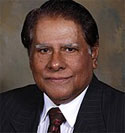
By M. Basheer Ahmed M.D, New Age Islam
04 May 2026
The Golden Age of Islamic Scholarship
Between the 7th and 14th centuries, the Muslim world became a brilliant knowledge center. While much of Europe experienced the Dark Ages, cities such as Baghdad, Damascus, Cairo, and Córdoba flourished with science, culture, and learning. These cities had libraries, schools, and observatories that attracted students from Europe, Africa and Asia.
To understand how advanced they were, two libraries are compared: the monastery of St. Gall in Europe had approximately 36,000 books (a large number for its time), while the library of Córdoba held over 500,000 books. This shows the Muslim world’s commitment to knowledge.
During this Golden Age, Muslim scholars preserved and expanded ancient knowledge through original research. They translated important works from Greek, Roman, Persian, and Indian sources, improved them, and made new discoveries in the process.
What fuelled this Golden Age? A culture that values learning, curiosity, and the search for truth. Many scholars believed that understanding the universe honoured God’s creation and that the pursuit of knowledge (called ilm) was a sacred duty.
Centers of Learning: The First Global Knowledge Networks
At the heart of this movement was the House of Wisdom (Bait al-Hikmah) in Baghdad. Founded by Caliph Harun al-Rashid and expanded by his son al-Ma’mun, it was the most advanced research center of its time. Scholars translated key works from earlier civilizations and made new contributions to astronomy, mathematics, medicine, and philosophy.
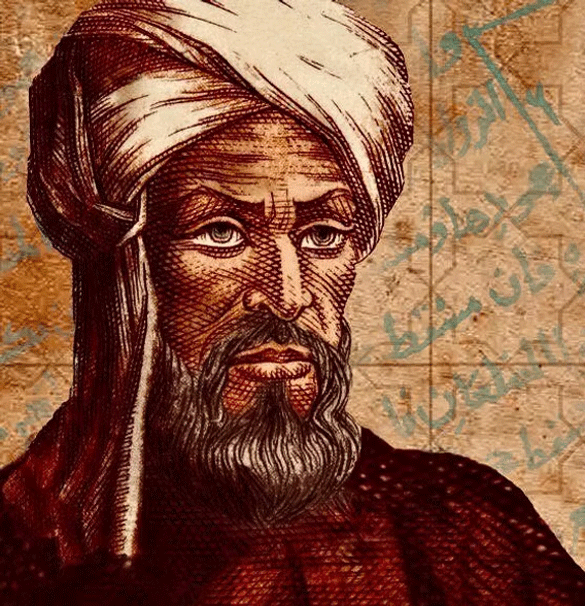
It was in this environment that Muhammad ibn Musa al-Khwarizmi created his most important work. He introduced the concept of zero, refined decimal fractions, developed algebra, and advanced geometry and trigonometry. He is known as the Father of Algebra and Grandfather of Computer Science.
At the House of Wisdom, al-Khwarizmi learned ancient Greek and Indian mathematics. He studied the Indian numeral system (0–9) and wrote a book on what is now called Arabic numerals. This book was later translated into Latin in the 12th century and helped introduce these numerals to Europe. It may also be the first time that zero was used as a placeholder. Al-Khwarizmi saw the huge advantages of zero and the decimal system over Roman numerals, which Europe still used at the time.
The Book That Changed Mathematics
Al-Khwarizmi was born in 780 CE in Khwarazm (present-day Uzbekistan). He was invited by Caliph al‑Ma’mun to join the House of Wisdom, where he worked between 813 and 833 CE.
Around 820 CE, al-Khwarizmi wrote his most famous book:
al-Kitāb al-Mukhtaṣar fī Ḥisāb al-Jabr wal-Muqābala (The Compendious Book on Calculation by Completion and Balancing)
This book established algebra as a separate field of mathematics. Al-Khwarizmi wrote it to solve real-life problems like inheritance, trade, land measurement, and legal issues. Therefore, he is called the Father of Algebra.
Where does the word “algebra” originate?
From al-jabr, one of the operations described by al-Khwarizmi.
Before al-Khwarizmi, mathematics focused mostly on specific numbers. He introduced a new way of thinking: abstract reasoning, in which symbols and patterns represent general ideas. This makes mathematics more powerful and flexible.
His book explains step-by-step how to solve linear and quadratic equations. For example, he showed how to solve equations like:
ax² + bx = c
He called this “squares plus roots equal numbers.” He did all of this without using symbols like x or x²—he wrote everything in words. This shows how clear and organized his thinking was.
Modern science confirms the importance of learning Algebra
Algebra is a unique branch of mathematics. The abstractness of algebra causes the brain to think in a completely new pattern. When the brain is stimulated to think, the hair-like dendrites of the brain grow more extensive and more complex enabling more connections with other brain cells which resulted to increase our use of brain power
Three main parts of his book:
Mathematical expressions and equations
Practical measurement
Inheritance and legal calculations
The first part introduces systematic methods for solving equations—methods that students still learn today.
Quadratic Equations: A New Way of Thinking
One of al-Khwarizmi’s greatest achievements was solving quadratic equations using geometric proofs and logical reasoning. This was not just mathematics; it was a shift in human thinking. It encourages logic, structure, and generalization, which are essential skills in science and technology.
Where “Algorithm” Comes From
The word algorithm comes from the Latin version of his name, Algorithmic.
Today, algorithms power almost everything: smartphones, computers, search engines, encryption, and artificial intelligence. Al-Khwarizmi’s real gift was not just solving equations, it was creating a clear, repeatable process for solving problems. This idea is the foundation of modern computer science.
The Numerals That Changed the World
Al-Khwarizmi also wrote a book on numbers called Kitab al-Jam‘ wa-l-Tafriq bi-Hisab al-Hind (The Book of Addition and Subtraction According to the Hindu Method). The original Arabic version has been lost, but a Latin translation survives. Through this book, Europe learned about the numbers 1–9 and the revolutionary symbol, 0.
The idea of zero, combined with the decimal place-value system, completely transformed mathematics. Europe did not fully adopt these numerals until the 1200s, but once it did, calculations became much faster and easier. This improved trade and later helped make the Scientific and Industrial Revolutions possible.
Problems that took days with Roman numerals could be solved in minutes with Arabic numerals.
Without this change, Europe would have been much poorer, economically, culturally, and scientifically. The modern technology industry would not exist without the contributions of Al-Khwarizmi
Astronomy and Geography
Al-Khwarizmi was also an astronomer. His book, Zīj al-Sindhind, combined Greek and Hindu astronomy. It included calculations of the Sun, Moon, and planets, as well as methods for predicting eclipses. He wrote about calendars, spherical astronomy and moon visibility. His astronomical tables became a standard reference worldwide and were translated into Latin and Chinese languages.
In geography, he wrote Kitab Ṣūrat al-Arḍ (The Book of the Shape of the Earth), which corrected the mistakes in earlier maps. Under his direction, 70 geographers mapped the major regions, cities, and trade routes. His work listed the latitude and longitude of 2,400 locations. He even created a map showing the Pacific coast of South America approximately 700 years before Columbus discovered America.
How Al-Khwarizmi’s Work Spread to Europe
Al-Khwarizmi helped create a new way of thinking about mathematics. He separated algebra from basic arithmetic and introduced a more abstract and logical approach.
One scholar he influenced was Leonardo of Pisa, better known as Fibonacci. After traveling through North Africa and the Middle East, Fibonacci discovered al-Khwarizmi’s work and saw that Hindu-Arabic numerals were far better than Roman ones. In 1202, Fibonacci wrote Liber Abaci, which spread these ideas throughout Europe. Merchants, bankers, and students quickly adopted this new system.
Another translator, Adelard of Bath, brought al-Khwarizmi’s tables and other works to Western Europe. Without this shift, Europe’s scientific and economic progress would have been significantly slower. Modern Applications of Algebra and Algorithms Today, algebra and algorithms power almost everything: email, online banking, medical imaging, space exploration, encryption, and artificial intelligence. Al-Khwarizmi’s influence is everywhere in modern science and technology.
Al-Khwarizmi’s work shaped the intellectual history of both the East and the West. His writings on algebra, arithmetic, astronomy, and geography have been foundational texts for centuries. They influenced the Renaissance, Enlightenment, and Industrial Revolution. His ideas helped build the scientific and technological world we live in today.
Major Works of Al-Khwarizmi
Kitab al-Jabr wa al-Muqabala (Algebra)
Kitab al-Jam‘ wa-l-Tafriq (Hindu-Arabic numerals)
Kitab Ṣūrat al-Arḍ (Geography)
Istikhrāj Ta’rīkh al-Yahūd (Jewish calendar)
Kitab al-Rukhmat (Sundials)
A Message to Young People
In today’s fast-moving, technology-driven world, al-Khwarizmi’s legacy sends a powerful message to young people: Knowledge gives you strength. Curiosity is a duty. Learning is a form of service to humanity.
Many young Muslims today are unaware of this rich heritage. Knowing this history is not just a matter of pride; it is a source of strength.
However, there is a deeper truth: civilization is a shared project. Knowledge has been passed from culture to culture and generation to generation. Now, this responsibility lies with you.
Al-Khwarizmi’s legacy teaches us: You are the inheritors of al‑Khwarizmi’s legacy—not only his discoveries, but his curiosity, his courage, and his commitment to learning
\Knowledge is a form of worship.
Learning is a duty.
Innovation is a service to humanity.
Excellence is your inheritance.
His story is not a call to rest on past accomplishments. It is a call to rise. If your ancestors in the 9th century built the foundations of algebra and algorithms—tools that would one day make computers and space travel possible—what can you build in the 21st century?
The next breakthroughs will be achieved by those who can connect cultures, disciplines, and ideas. Al-Khwarizmi used math to solve real human problems: fair trade, inheritance, land measurement, and water management. Let your pursuit of knowledge be guided by the same purpose: to serve humanity.
Young Muslims must not allow their history to be forgotten or distorted. Study, innovate, and contribute, just as al-Khwarizmi did. The world needs scientists, engineers, thinkers and problem solvers. It requires young people who believe that learning is empowering and that knowledge brings dignity.
Al-Khwarizmi’s legacy is not a relic of the past.It is a call to action. Let al-Khwarizmi’s life be your roadmap, guiding you to study, innovate, and lead with brilliance and purpose.
New Age Islam, Islam Online, Islamic Website, African Muslim News, Arab World News, South Asia News, Indian Muslim News, World Muslim News, Women in Islam, Islamic Feminism, Arab Women, Women In Arab, Islamophobia in America, Muslim Women in West, Islam Women and Feminism